What happens when God is suddenly silent? Rachael shares movingly of her experiences as a teenager and beyond. She eventually found hope in the Psalms and learning how to lament. That someone before her could voice her feelings gave her a language with which to communicate with God. She learned to lament. I believe you’ll find her post so encouraging:
It was a running joke when I was small girl that if I were saying grace, we’d better get the microwave on standby as the food would be cold by the time I’d finished praying. As a young child, prayer felt as natural to me as breathing, a near-constant conversation between my God and I.
As I grew older however, the easy connection became strained, even more so when I first developed mental illness at fourteen. Prayer no longer felt like a two-way conversation, but talking into the ether. I was bombarded by questions about who I was and what I believed about the God I felt had abandoned me to myself. I can’t remember ever doubting God’s existence, but the distance grew into what felt like an unreachable chasm. I got stuck on the idea that I couldn’t pray for myself, that God couldn’t possibly care for a messed up teenager living a comfortable life when there was so much struggle and poverty going on in the world. My vision of God shrunk with my ability to pray and I began to believe that the miraculous encounters I heard about from friends attending summer festivals were totally outside of my reach.
I’d been writing in a diary since the earliest days of my illness; and when someone wrote Psalm 40 in a card to me during a particularly dark period, I began to address my writings to God. Suddenly I was no longer venting my pain into the void, but into the presence of the Father I’d given my life to aged five.
The words of Psalm 40 became my own prayer;
“I waited patiently for the LORD; he turned to me and heard my cry. He lifted me out of the slimy put, out of the mud and mire; he set my feet on a rock and gave me a firm place to stand. He put a new song in my mouth, a hymn of praise to our God.”
There was something astounding to me that someone had expressed my despair before God all those years ago and yet was able to declare that God had met them in the midst of the pit. It was not the flash of light miracle I so craved, but something began to change for me. As my writing became my prayer, I started to rediscover the closeness with God that I had been missing.
I would later learn to call the prayers I was writing lament – that as I learned to express my despair before the God of hope, He was opening up the possibility that perhaps the gospel truth of our belovedness was not lost to me, that I was not lost to Him.
I began to almost crave the more reflective times in church life of Advent and Lent, the ancient liturgy and story of the God moving into the neighbourhood and experiencing the breadth of our humanity, the darkness of Good Friday and the silence of Holy Saturday met me where I was and I didn’t feel as if I had to fake jubilation in the same way that I felt was expected at Christmas and Easter.
Over the past few years however, I have begun to appreciate the call of Romans to “weep with those who weep and rejoice with those who rejoice”, the recognition from Ecclesiastes that “There is a time for everything, and a season for every activity under the heavens.“ The seasons of life; of happiness and sorrow are experienced as the family of God and our times of corporate prayer and worship should have space for the joy and the pain to be expressed together in community.
Our God has given us the gift of prayer and community through every season of life so that through it all we may listen for the heartbeat of God whose love remains steadfast.
Rachael Newham is the Mental Health Friendly Church Project Manager at Kintsugi Hope and the author of two books. Her most recent And Yet was chosen as a part of The Big Church Read. Rachael founded the Christian mental health charity ThinkTwice and led it for a decade. She writes and speaks widely on issues of theology and mental health. You can keep in touch with her on Facebook, Twitter or Instagram.
Order 7 Ways to Prayhere for more ways to encounter God, including resources for small groups.
Michelle and I may be many miles apart, from California to London, but her warmth and encouraging words make her feel close. She shares movingly about the power of prayer in an unlikely place as she and her son experienced it. Her post is a bit longer than some, but I think you’ll want to brew a cuppa or grab an iced tea as she shares her story…
In the last several years, God has helped me to know His presence with me and within me in ways I wouldn’t have imagined as a young girl. I don’t doubt He’s with me – listening, communicating, doing all that He has planned in my life. He’s with me even in the middle of my waiting, in my anger and sorrow, as He takes my hand and tells me He loves me.
Amy Boucher Pye’s 7 Ways to Pray: Time-Tested Practices for Encountering God has taught me new prayer practices and made some practices I didn’t even realize I was doing more intentional and meaningful. For instance, in John 15, through the story of the vine and its branches, Jesus tells us of our connection to Him and the Father. Amy shares it like this:
Consider how the vine needs the branches, and the branches need the vine: without branches, the vine won’t produce fruit, and without the vine, the branches won’t receive the necessary nutrients to live. This image points to one of the amazing truths of the Christian faith: that God through Christ condescends to make His home in us. That is, although He is all-powerful and all-knowing, He restricts Himself to working in and through us with all of our limitations and failings” (p. 48).
This truth has helped me to see that God is with me – in me and in others – encouraging us to yield to His Spirit so we can produce the sweetest of His fruit.
Being the mother of my son, my gift from God (neurodiverse, now 24 years old, and the most awesome person I could ever hope to know), has nurtured practicing the presence of God and the practice of examen in my life. As happened one day at the DMV (Department of Motor Vehicles)…
I took in the dingy, crowded space filled with many. Standing. Sitting. Waiting. We were grateful the sun was shining, shedding a little bit of sparkle and warmth on this otherwise somewhat chilly government building. My then 19-year-old son, Jared, was taking his driver’s permit test. And life being the mixed bag of joy and sorrow that it is, this event was an occasion for both. As a parent of child with learning and developmental differences, I’ve experienced a brand of the joy/sorrow blend that is all its own. Joy and sorrow are inextricably linked. They are not only each other’s ally, they are life-long pals. And you just never know when they will show up to the party, even when the party is at the local DMV.
We were both a little twitchy – a frighteningly lovely mix of excitement, trepidation, hope, and fear that accompanies adventures and new endeavors. Having forgotten the umpteenth piece of documentation the DMV requires to verify we really are who we say we are required us to run home. “I’ll save your spot,” the employee said. We thanked him and hoped our doubtful facial expressions didn’t belie our optimistic gratitude. We reentered the building and the stern-faced, kind employee who said he would save our scheduled appointment time was true to his word. With an almost imperceptible, expectant smile he waved us forward as if he had been looking for us to walk through the front door. We thanked him from the bottom of our hearts but didn’t want to make a fuss.
On to the next gentleman employee, proudly clad in a USC t-shirt with the low hum of Earth, Wind and Fire playing in the background. “My cousin went to USC,” Jared offered. “Oh yeah? My son goes there.” My son’s simple words opened the door to a conversation that linked us beyond the impersonal to connection. The employee could see we enjoyed his choice of music and took us under his wing.
Now you may be thinking this is all a bunch of hooey. After all, who gets taken care of so lovingly at the DMV? Well, you don’t know my son. In him resides THE SON, Whose Love covers all and bridges any gap. Even between joy and sorrow. Even between the minutiae and most important. Even at the DMV. And Jared’s heart – a willing and reliable vessel for the Love of Jesus – spilled all over the DMV that day.
With a pointing finger, our friend shuttled us to the unforgiving folding chairs that would be our perch for the better part of the day. Here we sat nervously waiting for Jared’s number to come up. Finally, it was his turn. “Good luck, my love. You’re gonna do great!” I said with a touch of confidence and hesitant hope. “Thank you, Mom,” he delivered with a look of both “Duh” and “Do you really think so?” Life. Mixed bag, indeed.
As he settled in front of the computer, Jared asked questions and sought assurance from the employees who offered answers and comfort without reservation. Being neurodiverse, Jared processes information in his own timing, which can sometimes be perceived by others as slow. But this just gave him time to make more friends with the employees. They had already formed an informal rooting section and he hadn’t even started the test. By the end of several hours, complete with a malfunctioning computer, he had a cheering section who sent him smiles, prayers, and good vibes. The patience, kindness, gentleness, and encouragement of these employees was palpable.
As I waited for my son to complete the test, our USC t-shirt-wearing friend left his post to see if Jared was doing okay. He asked me “if he could comprehend, because he seems like he can comprehend.” I was taken aback because we’d established a connection with him, and his words left me feeling oddly betrayed. Comments like that still sting – and I’ve been fielding them now for 24 years. I viewed this gentleman from my lens of frustration, impatience, sorrow, and yes, my own bias. But he was genuinely interested and cared. It wasn’t him. It was lifelong pals, Joy and Sorrow being themselves; doing their thing; working in my corner of the world.
After I blinked back the tears and refocused, I could see it for what it was – an opportunity for the fruit of the Spirit to enter in. Aah yes, so nice to see you, Joy. Thank you for rejoining your friend, Sorrow. Who just blindsided me, by the way. Maybe it’s just me, but it seems like she’s always doing that, though she means no harm. These two gave me yet another chance to share the truth humbly and gently about neurodiversity and cognitive processing skills. Slower processing doesn’t mean nonexistent. And an individual’s seemingly halting verbal skills often don’t match his limitless capacity for understanding and expression. Jared is the poster boy for these truths.
As joy and sorrow work together, they always manage to give way to the ultimate – the joy of Jesus through His Holy Spirit that shines through my son. The Holy Spirit and my son conspire regularly and manage to bring out the best in darn near everyone. My son invites each person he encounters to be a better version of themselves. He engages with others expecting the best and I’ve witnessed over and over how people rise to this loving expectation. Jesus, through my son, transforms people right before my eyes and I get to be a part of the miracle – God’s lifesaving, limitless, all-inclusive Love that produces in each of us the fruit of His Spirit – “love, joy, peace, patience, kindness, goodness, faithfulness, gentleness, and self-control” (Galatians 5:22–23). Our DMV experience was no exception.
After a long day, Jared and I walked back into the sunlight, a mom with her permit-wielding son, proud and relieved. On this day, in the DMV, God created for me yet another opportunity to know joy and sadness a little more intimately. Yes, I mourn at how my son (and others with special needs) is seen and not fully understood and appreciated by much of the world. But I delight in the way, without fail, he, through the love of Jesus, brings a smile to the people with whom he interacts. I lament at how much harder he works than his neurotypical peers, but I rejoice in how his efforts gather a cheering section and unite people in encouragement, kindness, patience, gentleness, and support. And most of all, I weep with joy in the great undeserved blessing our Holy Father has given me at being able to share this side of heaven with my Spirit filled, joy-generating Jared!
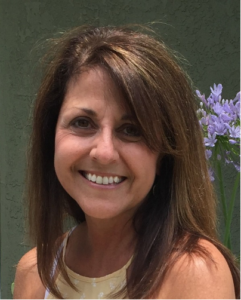
Michelle Vergara gratefully shares life with Derek, her husband of 30 years, and Jared, her son of 24 years, both of whom make her laugh and help her daily to be who God intends her to be. She also enjoys the fun and sometimes loud company of her 6 Italian brothers and sisters, nieces, and nephews. Michelle has worked for 35 years in education with children ages birth through college who are neurodiverse with developmental and learning differences. She currently works at Stowell Learning Center, a private cognitive educational program in Southern California. The children and families she has the privilege of working with always inspire her. Michelle enjoys her time with Jesus; spending time with her husband, son, and extended family; singing; reading (especially about health, wellness, nutrition, and the brain); writing; and spending as much time as possible at the beach.
Order 7 Ways to Prayhere, including in the US, UK, and Australia. You’ll also find lots of resources for small groups – videos and a leader’s guide – here.
Watching Liz Carter during the pandemic via social media moved me as I wondered how she coped with shielding even from her own family over so many months. How did she not lose hope? One way was praying through worshiping, as she outlines in her powerful post. I’m grateful she shares with us the wisdom gained in the trenches.
The last couple of years have hurt, haven’t they?
For some of us, it’s been a time when we’ve felt like God hasn’t been around much. We might have suffered loss: bereavement or poor mental health; sickness or simply sadness at what has been happening around us; the polarised response around us.
Many of us have found prayer more difficult, with gatherings restricted and the effects of the pandemic on us as individuals. I had to shield for many months, living with long-term lung disease, and I struggled. I knew that prayer upheld me, but it was just hard.
I’d like to share today one particular way to pray I have found helpful – and transformative. I want to especially commend Amy’s book 7 Ways to Pray, which spoke into my life at a time I was finding prayer more difficult than ever, with some extremely challenging things happening in my own life. If you haven’t read it yet, do!
Praying through worship
We often separate worship and prayer. In church services, we have times of worship and times of intercession. But I’ve discovered something incredibly powerful about worship: it can be intercession. Last year, I was trying to pray about a certain situation, but I couldn’t find the words. I simply didn’t have the strength. But one morning, some of the lyrics in a particular worship song spoke clearly into my life:
‘I raise a hallelujah, with everything inside of me I raise a hallelujah, I will watch the darkness flee…’
(Raise a Hallelujah, by Bethel Music)
The song goes on to encourage us to keep singing, even when we are in the middle of the mystery, even in the midst of fear, to sing louder than our unbelief and to see the melody we are singing as a weapon against the darkness around us. For me, these words packed such a punch because I couldn’t see my way out of the darkness and fear, I was trapped in the mystery and prayer left me grasping for words that did not come. I began to sing along, and became aware that I was praying, and my prayer was a deep one. I was praying these words over people I was praying for.
I continued to do this over the following weeks, finding a new sense of liberation in both worship and prayer. I listened to lyrics in a much more present and focused manner. In a time when I had nothing left, God intervened with a way to pray that not only renewed my prayer life, but also drew me closer to God as I prayed.
Nothing new under the sun
Over the centuries many believers have expressed their prayer through worship – from plainsong to the great hymns of praise, from worship choruses to poetic spoken word set to music. The Psalmists prayed with song all the time, and they prayed out all their feelings – their joys and their laments. I’ve always loved the Psalms as a place where we can find such honesty and raw sadness, decisions to remember what God is doing in our lives, and calls to keep praying despite the pain. Psalm 42 is such a song of extremes – lament, remembrance and praise, and for me it is a Psalm that touches the wild depths of me, the places deep down where pain smoulders and tears gather. It’s a Psalm that speaks when I am in great physical or mental anguish, speaking honestly of the writer’s sadness:
Why, my soul, are you so downcast? Why so disturbed within me?
And then the Psalmist states his intention to keep on putting his hope in God:
I will yet praise him, My Saviour and my God. (v5)
I’ve found those words ‘I will yet praise’ to be an explosion of power in my own life, and when I apply them within a prayer setting in worship, their potency is all the more vivid. And it’s not only that it feels like a good idea – I’ve seen God answer prayers in some incredible ways, even though they were not even prayers that I created. When we pray with intention through worship we join in with the work of God. We are noticing what God is doing, and then partnering with God in that moment.
It’s not that singing along to a song will immediately make us feel better. It’s more that, as with the prayer practices Amy shares in her book, we take that moment and make it about connection with God. We find God in what is happening in worship, and we apply that outwards to the situations we are burdened with.
Finding hope amid pain
For me, intercessory worship has been a beautifully hopeful part of a life of pain. When I am struggling for breath and bent over with pleurisy, I can’t always find words in myself. But when I listen to a song, I can catch the wider mystery of a God who works through so many different things, who weaves these things through our lives to encourage and uphold us.
I’d like to finish by sharing a prayer for those of you are finding prayer is hard because you are hurting.
For those who live under pain and darkness, know the hope that is an anchor for your soul. For those who live in brokenness, know that love stronger than death has already shattered the darkness. For those who live under hurting and sorrow, know that instead of mourning there will be joy, instead of despair a garment of praise, instead of ashes a crown of beauty. Amen.
Liz Carter is an author and poet from Shropshire. She writes about the difficult and painful times in life, and how we can find gold in the mess. Her books Catching Contentment and Treasure in Dark Places are available in online bookstores. You can find her at www.greatadventure.carterclan.me.uk. She’s signed a contract for her next book with The Good Book Company, coming 2023. She’s just brought out a new prayer journal which is filled with verses and poetry about creation.
Order 7 Ways to Prayhere, including in the US, UK, and Australia. You’ll also find many resources for small groups – videos and a leader’s guide – here.
The experience of heart-wrenching trials has pushed Claire even closer to God, especially as she has rediscovered the prayer of lament. She shares movingly and gives a helpful example of how to pray this way, based on Psalm 13. You won’t want to miss this.
These are all a regular part of my days right now, as I watch one of those dearest to me struggle in ways I almost cannot bear. Suffering (whether your own or of one close to you) can rend you speechless, spiralling into the abyss of a dark unknown, even as you cry out to God for rescue, for a glimmer of hope… for anything that shows he is at work.
Unfamiliar territory
I have to confess lament was not something I practised regularly until around five years ago. I come from an evangelical church that is not big on tradition, and does not follow a traditional church calendar. But it was when my sister’s marriage fell apart and my mum’s health began to deteriorate rapidly that the emotional turmoil inside of me needed an outlet. In the midst of this, a dear young mum in our church died, leaving a husband and three small children. All of a sudden I was grieving privately in my family but also publicly with my church family. As my husband and I tried to lead our congregation through it (he as the pastor, me the worship pastor) I felt suffocated, alone and with no way of releasing the pain within. When I gathered the worship team who would be playing that first Sunday after her death, I realised that we had no language to express what we needed to as a community, but also as individuals.
A God-given language
During that season, I was drawn back to the Psalms, gently reminded by God that so many are songs of lament, and that I had utilised them once before. In an incredibly painful time in my marriage, I had opened Psalm 38 and the words had leapt off the page to me, as they seemed to describe exactly what I was experiencing then: ‘My wounds fester and are loathsome because of my sinful folly. I am bowed down and brought very low; all day long I go about mourning… I am feeble and utterly crushed; I groan in anguish of heart’ (Psalm 38:5–6,8).
Back then, it was a revelation of my own sinfulness and the resulting pain that caused me to lament. But in more recent years, it has been a cry from deep in my soul that has been almost unstoppable. It has become a way I have desperately tried to remain connected to God through circumstances that have threatened to engulf me or those I dearly love. Some days it can sometimes feel like all hope is lost – and yet lament is the bridge that helps me find my way back to God when he seems distant or hidden.
I don’t relish the experiences that have revealed how vital lament is to me, but I do cherish the renewed understanding that God has given us permission to vent all our anger, frustration, anguish, as well as our questions, through the examples in the Psalms and Lamentations – as well as of Jesus himself.
Faith and intimacy
I am walking a particularly painful path right now – and it has seemed relentless for the last few years. My mum passed away just before Covid, and almost immediately we were swept into working hard to keep our church community feel connected during the lockdowns, and now we are in the midst of an excruciatingly painful situation in our immediate family.
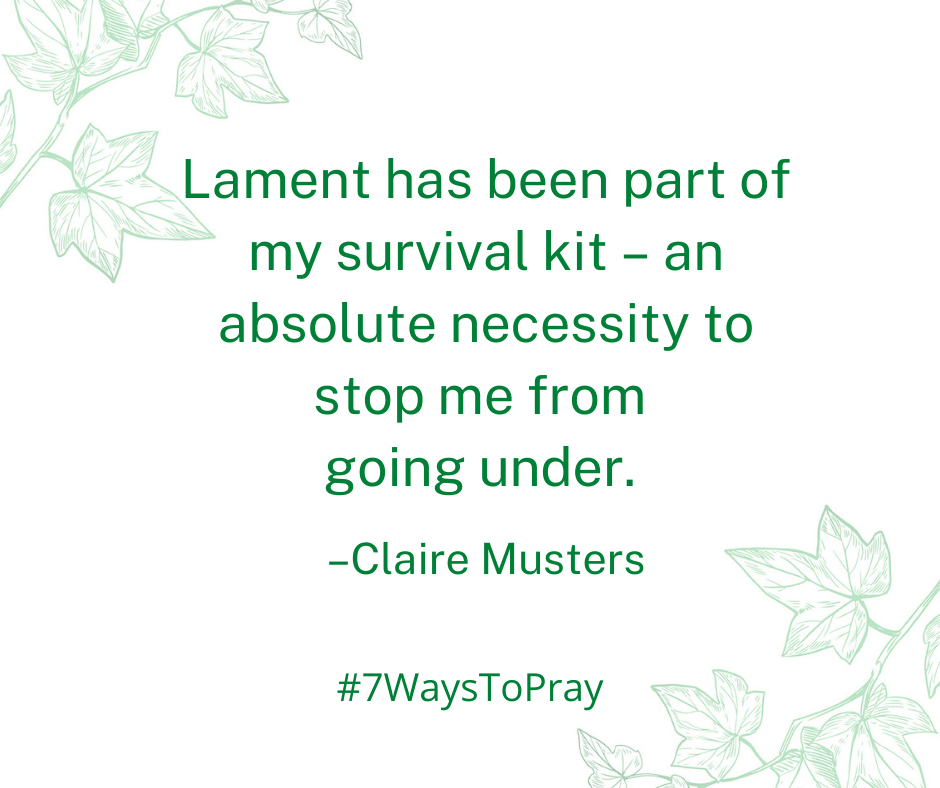
When my mum died, God spoke to me so clearly through John 11 – revealing an image of Jesus weeping alongside me. That has been a real comfort at times, but in other moments the sense of loss and pain has been overwhelming. In those times, I have come to view lament as part of my survival kit – an absolutely necessity to stop me from going under.
Lamenting with the Psalms
The pandemic has brought suffering to so many families, and this life is full of troubles (as well as joys). If you don’t regularly practise lament, I encourage you gently to try finding a psalm that seems to echo the cry of your heart and turn it into a prayer.
Here is an example of the way in which I use particular psalms as launchpads for my own prayers – I hope it is helpful to you, but of course do feel free to find your own individual way of lamenting before God.
1 How long, Lord? Will you forget me for ever? How long will you hide your face from me?
God I can’t see you at work in this situation. It feels like I am having to cope on my own. I know you are there – please reveal yourself to me. Show me you haven’t forgotten us.
2 How long must I wrestle with my thoughts and day after day have sorrow in my heart? How long will my enemy triumph over me?
This all feels relentless, and it does feel like the devil is having a field day. I am finding it hard to keep batting away the discouragement, and my own depression. How long is this going to go on for Lord?
3 Look on me and answer, Lord my God. Give light to my eyes, or I will sleep in death, 4 and my enemy will say, ‘I have overcome him,’ and my foes will rejoice when I fall.
We need you to move – we need release! Come and act, move so that those around will know that you are God. And bring me your discernment and wisdom to know what to do – and your energy. I am so tired Lord…
5 But I trust in your unfailing love; my heart rejoices in your salvation. 6 I will sing the Lord’s praise, for he has been good to me.
I do trust you Lord, however hard that is to say at times – and I do know that you are good and that your character cannot change. I also choose to worship you, singing songs of thanks, because I know they stir my heart and do me good. Thank you for the salvation you have brought me, thank you for the way you have led me in the past – and thank you for the way you have upheld my family. I know that you love them more than I do – and trust that you have a hope and a future for each one of us.
Claire Musters is a writer, speaker, editor and author of several books. You can follow her at @CMusters on Twitter and on Facebook or visit her website. Her most recent book, Grace-Filled Marriage (Authentic Media), was written with her husband and is available to buy from clairemusters.com – it is also part of the Big Church Read initiative (see thebigchurchread.co.uk/grace-filled-marriage/ for videos, reading plan and discussion questions). The devotional she wrote while her mum was dying, Every Day Insights: Disappointment and loss (30 readings and reflections to help bring comfort and hope), can also be bought direct from Claire, as can all her books – contact Claire on cmusters@Icloud.com for more details (including special Christmas offers).
Order 7 Ways to Prayhere, including in the US, UK, and Australia. You’ll also find lots of resources for small groups – videos and a leader’s guide – here.