Tag: Jesus

  • Praying with a Painting: Good Friday

    A watercolor rendition of Jesus carrying his cross with 2 soldiers helping him, with splotches of red and blue surrounding the three figures.]
    By Leo Boucher. Used with permission; all rights reserved.

    Many Christians view today as the most wonderful and most awful day—the day we remember the Man who was God who died on the cross that we might live free.

    I invite you to spend a few moments pondering and praying, sharing with God your feelings about how his Son came to earth as a baby, lived and healed and loved, and then carried his cross and there was nailed where he breathed his last. Where he welcomed one next to him to life eternal. Where he uttered his last words in a life-giving prayer.

    He grew up before him like a tender shoot,
        and like a root out of dry ground.
    He had no beauty or majesty to attract us to him,
        nothing in his appearance that we should desire him.
    He was despised and rejected by mankind,
        a man of suffering, and familiar with pain.
    Like one from whom people hide their faces
        he was despised, and we held him in low esteem.

    Surely he took up our pain
        and bore our suffering,
    yet we considered him punished by God,
        stricken by him, and afflicted.
    But he was pierced for our transgressions,
        he was crushed for our iniquities;
    the punishment that brought us peace was on him,
        and by his wounds we are healed.
    Isaiah 53:2–5 (NIV)

  • Celebrating the tenth day of Christmas: The name of Jesus

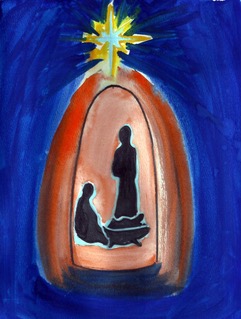
    A nativity scene with May, Joseph and the baby Jesus.
    By Leo Boucher. Used with permission; all rights reserved.

    On the tenth day of Christmas, some Christian traditions celebrate the naming of Jesus in the temple (other traditions celebrate this on January 1). When the angel appeared to Joseph, he learned what to name the boy, who was conceived by the Holy Spirit:

    But after he had considered this, an angel of the Lord appeared to him in a dream and said, “Joseph son of David, do not be afraid to take Mary home as your wife, because what is conceived in her is from the Holy Spirit. She will give birth to a son, and you are to give him the name Jesus, because he will save his people from their sins” (Matthew 1:20-21, NIV).

    The very name of Jesus shows his calling – to save us from our sins.

    What names come to mind when you think of Jesus? Here are a few you might want to ponder today, as you celebrate during this season of Christmas:

    • Emmanuel (God with us)
    • Son of God
    • Son of man
    • Son of David
    • New Adam
    • The Word
    • Morning star
    • Light of the world
    • King of Kings
    • Lord of Lords
    • Lamb of God
    • Teacher
    • Bread of life
    • Advocate
    • Messiah
    • Redeemer
    • Risen Lord
    • Savior
    • Rock
    • True Vine
    • Lord

    Which names of Jesus speak to you most powerfully?

  • Watercolor Wednesday: Scenes from the life of Jesus

    By Leo Boucher. Used with permission; all rights reserved.

    Today I thought we could spend a few moments taking in some words of Jesus as depicted my dad in these sketches. Why not spend some time considering one or more of the scenes, asking God through his Spirit to speak to you. What strikes you? Do you see something in a new way?

  • Weekly Devotional: Amazing Authority (10 in Sabbath and Rest series)

    Museo del Prado, Veronese, Jesus among the Doctors, public domain

    The people were all so amazed that they asked each other, “What is this? A new teaching – and with authority! He even gives orders to impure spirits and they obey him.” Mark 1:21–31 (NIV)

    The gospels recount seven instances of Jesus performing miracles on the Sabbath – seven being a special number in the Bible to signify perfection and completeness. Over the next weeks we’ll explore several of these stories, which show how Jesus is Lord over the Sabbath.

    Our first story comes in Mark, after Jesus calls his disciples to follow him. Jesus teaches in the synagogue, and the people are amazed at the authority of his words. When a demon-possessed man interrupts Jesus’ teaching, Jesus commands the demons to leave by the same authority with which he teaches. The Pharisees hadn’t yet realized that their power would be called into question, and that they should therefore oppose Jesus, so at this first instance of healing on the Sabbath none of his later opponents appear.

    Then we see Jesus showing compassion on the mother-in-law of Simon and Andrew, healing her fever. The disciples sense that this man is special, taking him to her for release. She becomes so well that she can serve them.

    These first stories of Jesus breaking the Sabbath rules – as interpreted by the teachers of the law – appear without fanfare. Jesus sees the needs of two hurting people and does what is necessary to bring them release and healing. He reveals his authority by who he is.

    Our culture has moved away from a pharisaic temptation to be hidebound by a strict adherence to the Sabbath which could entail us overlooking the needs of others. Instead we might need to consider how we could strengthen our observance of the Sabbath, so that through our joyful celebrations we can be a witness to a hurting world. For although we don’t have the same power as Jesus, we can speak in his name and share his love.

    For reflection: “He was pierced for our transgressions, he was crushed for our iniquities; the punishment that brought us peace was upon him, and by his wounds we are healed” (Isaiah 53:5).

  • Watercolor Wednesday: Jesus in the desert

    By Leo Boucher

    During Lent we are invited to ponder the life of Jesus. How God became man and dwelled among us. How he suffered and was abused. How, indeed, he experienced his own desert experience.

    Do you feel like you’re banished to the desert? I pray you’ll feel the comfort of One who has experienced all this and more.

  • Review and Discussion Questions – Adrian Plass’s Jesus: Safe, Tender, Extreme

    A flash-back review from the early days of the Woman Alive book club. I love Adrian Plass’s writings; they don’t lose their humor or punch.
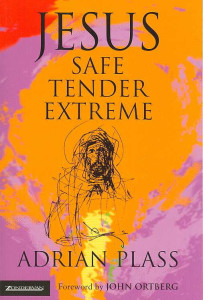
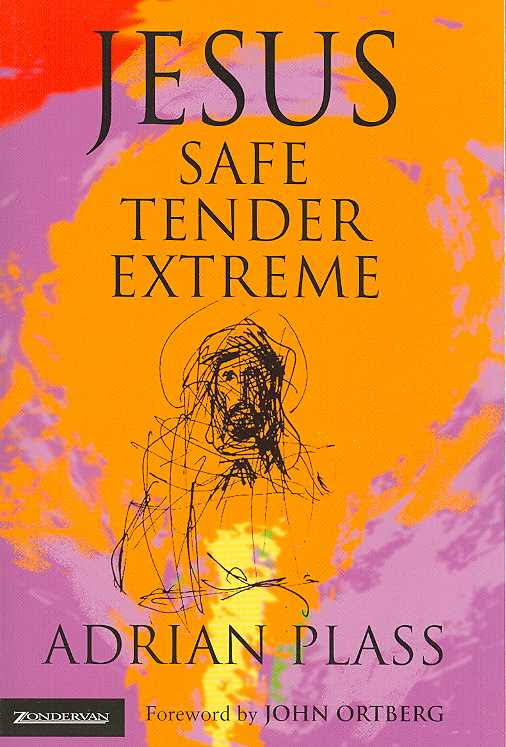
    imagesAdrian Plass is a Christian speaker and writer who has been loved over the years for his humor and honesty. Telling stories of personal vulnerability seems to be his job. As he says in the introduction to Jesus – Safe, Tender, Extreme, “I am not a teacher in any orthodox sense. I am not a theologian. I am not a preacher; I cannot preach to save my life. I am simply allowed to be a man with a broom, sweeping away the rubbish that prevents others from passing further in and further up, and I tend to do this by talking about what Jesus does and doesn’t do in my life. He is safe, he is tender and he is extreme. This book is soaked with those things.”

    Some who have read this book have commented that it reveals a more mature and wise writer. In it he is profound and deep, but also laugh-out-loud funny. You may not agree with him about everything – like his views on healing or the Bible – but you won’t lack things to consider and discuss if you read it.

    • Adrian wrote this book in the light of eternity, as his mother-in-law lay dying in the next room. How did this affect you? And how did you react to his description of cancer as a ‘ravening fungoid monster’ (p. 21)?
    • Do you feel so safe in the love of Jesus that you are free from any of the agoraphobia that Adrian speaks of on page 28? Are you able to pop out “to explore what’s going on down the road”? How does Adrian and Bridget’s encounter with the couple at the coffee shop illustrate this concept (pp. 93ff)? And how does this safety allow and even compel us to embrace truth?
    • Adrian says on page 69 that “there is not a single incident in the lives of his followers that [Jesus] does not inhabit and monitor and have ultimate control over, even at those times when darkness and distress are all that we are able to see and feel.” Do you believe this? In your times of darkness, have you found this to be true?
    • In several places in the book, and especially throughout chapter 5, Adrian speaks of God “defaulting to compassion” and us “defaulting to praise” (also p. 44 and 73). Do you really believe that at the heart of God lies compassion and tenderness? If not, why? Could you move in that direction? How would your life be different if you did?
    • 6bca9efe0a8dab8c932273b9cf47b7fdIn the story “Closed Wounds,” Adrian in his dialogue with God hears that “the scar is a sign of health” (p. 178). Do you agree with what seems to be a contradiction in terms? Why or why not?
    • On page 194 Adrian says that “safety and extreme obedience overlap, and the place where they come together is in the concept of ultimate trust in Jesus, even in the midst of apparent failure.” He goes on to talk about how Western Christians fall apart when “God lets them down.” What did you think of the questions Adrian wanted to ask Janet on pp. 197-98? Do you agree or disagree with his conclusions? How have you reacted to God in the tough times of your life?
    • Some of the extreme encounters Adrian recounts are filled with the everyday stuff of life, like waiting at the supermarket queue (pp. 239ff). Did this surprise you? When have you experienced the thrill of extreme obedience amid your daily life?


    My View

    Okay, I have a confession to make. I was Adrian’s editor for many years, and indeed was his editor for this book. So I can’t confess to any objectivity. Quite simply, I think the book is wonderful and profound and funny and moving.

    When the manuscript first crossed my desk I wasn’t sure about the inclusion of the stories. They weren’t what we were expecting, and I didn’t know how they would fit with the prose. But as I reread the book for this column, I was most profoundly touched by the stories. I hooted at the thought of Adrian collapsing the piece of non-furniture at Blands Warehouse, and was so glad that he stayed and confessed. When he told of his train ride with the tipsy blokes who wanted to talk about Jesus, I wondered what I would have done. And I felt sad about him not telling Dorothy about Jesus, but could relate to that strange part of ourselves that makes such a rash decision and later regrets it. And so on.

    One of Adrian’s points that has stuck with me is that God defaults to compassion; this is God’s nature and there is no other. Do we – do I – really live like I believe this? Or do I put a false veneer over God? And in my life, can I follow Jesus and too default to compassion – instead of pride, irritation or selfishness? Ask my husband. Some days yes, some days no!


    Views of Woman Alive Book Club readers

    cfcffa919dc808e91bbb463aaec20fd5I decided to read Jesus – Safe, Tender, Extreme by Adrian Plass as I had read short articles by him but had never read any of his books. The experience for me has been very profound. I felt from the moment that I bought the book that I should start reading it straight away. I had been going through a low time in my spiritual life to the point that I was questioning whether I actually had any real faith. I believe God has used this book to bring me back to Him and to confront me with His deep and enduring love as shown in His son Jesus. I found it difficult to put the book down and felt it was being used to bring me back to the assurance that Jesus truly cares about each one of us and loves us, warts and all. Sometimes I had tears of laughter rolling down my face and sometimes I had tears of joy and relief as the reality of Jesus’ love overwhelmed me. I felt I must write to say thank you for recommending this book as it has definitely been used by God to inspire me and give me confidence that Jesus will always be with me no matter what the situation may be. -Jo Richards, Enfield, Middlesex

    I found the book very interesting. One can agree with cancer as a ravenous fungoid monster, but cures are being found and lives extended. I think I feel safe in the love of Jesus, most of the time. Problems do test it. That’s what it’s all about. God’s word sets us free from sin and worry. The author deals with doubt and abandonment, something everyone feels at some time. -Muriel Moore, Turnditch, Derbyshire

    Jesus – Safe, Tender, Extreme by Adrian Plass (Zondervan, ISBN 0310268990)


  • Devotional of the week: Hunger Satisfied (2 in Luke 4 series)

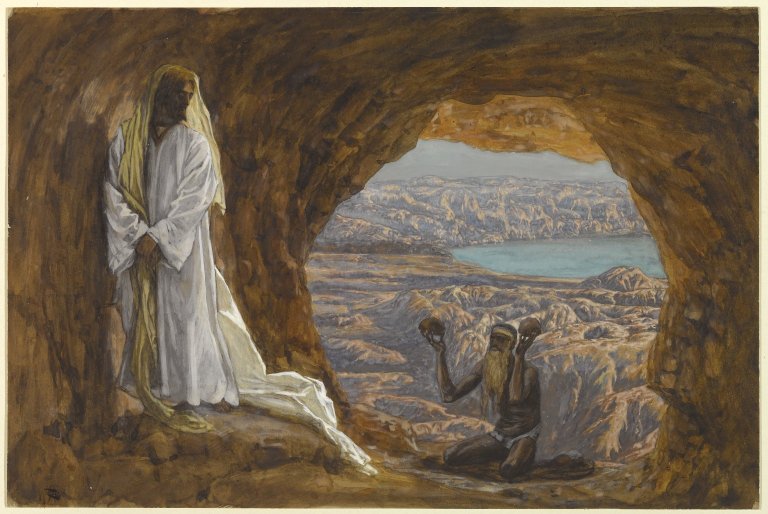
    Jesus Tempted in the Wilderness (Jésus tenté dans le désert) by James Tissot - Online Collection of Brooklyn Museum
    Jesus Tempted in the Wilderness (Jésus tenté dans le désert) by James Tissot – Online Collection of Brooklyn Museum

    Jesus ate nothing all that time and became very hungry. (Luke 4:2)

    When I refrain from eating, I can become snappy and irritable. A little hunger in my belly can turn my mood sour. Add some tiredness and I can morph into someone you’d best avoid.

    I like this little verse tucked in the story – that Jesus became very hungry. Though he must’ve been radiating love after spending time alone with his Father, he still felt the pangs of an empty stomach. And yet he doesn’t fall prey to the foul moods I can feel when I miss only a meal.

    Paying attention to the needs of our bodies and eating properly will help us control our physical hunger. But sometimes our spiritual or emotional pangs turn our eating into an act of seeking comfort. We stuff ourselves mindlessly with sweet or salty concoctions in the quest to quell the unmet needs inside. (Or some other kind of self-soothing behavior, whether it be drinking, shopping, workaholism…)

    And yet Jesus wants to meet all of those needs. He said later, when teaching the crowds who sought him out after he fed the thousands, that he is the bread of life, and that all who eat of him will never go hungry (John 6:35). This day, may we ask him to be our bread, satisfying our hunger that we might live for him.

    Prayer: Lord Jesus, thank you that you dwell in your followers. May your presence bring comfort, hope, and love, that we might reach out to a needy world. Amen.

  • Devotional of the week: Philippians 2:9

    Name Above All Names

    “Therefore God exalted him to the highest place and gave him the name that is above every name…” Philippians 2:9

    Jesus

    A year or so ago, CutiePyeGirl uttered “Jesus” as the world often does (or in this case, some of the pupils at her school). My shocked and strong reaction communicated unreservedly that we as Christians prize the name of Jesus. She had parroted another, not understanding what she was saying. Perhaps I responded too strongly, but when I heard her even unknowingly take the Lord’s name in vain, I felt like I had been punched in the stomach. After our discussion, she understood why Jesus is the name above every other name.

    Jesus humbled himself completely by following his Father’s will that he should die on a cross; he was then exalted to the highest place in heaven and earth. And this is why his name is so precious. We’re saved by it. There’s power in it. To the Christian, even its mention brings peace, succor, love, and release.

    Often when I can’t fall asleep, I’ll sing the name of Jesus in my head. This silent prayer stills my inner turmoil and gives me a sense of peace. Or I’ll pray the Jesus prayer: “Lord Jesus Christ, Son of the living God, have mercy on me, a sinner.”

    How will you use the name of Jesus today?


    Lord Jesus Christ, may our lips always bring you glory and praise. Forgive us when we malign you. Amen.

  • Devotional of the week: Psalm 18:46–50

    The Lord lives!

    The Lord lives! Praise be to my Rock! Exalted be God my Saviour! He is the God who avenges me, who subdues nations under me, who saves me from my enemies. You exalted me above my foes; from violent people you rescued me. Therefore I will praise you, Lord, among the nations; I will sing the praises of your name. He gives his king great victories; he shows unfailing love to his anointed, to David and to his descendants forever. (Psalm 18:46–50, NIV)


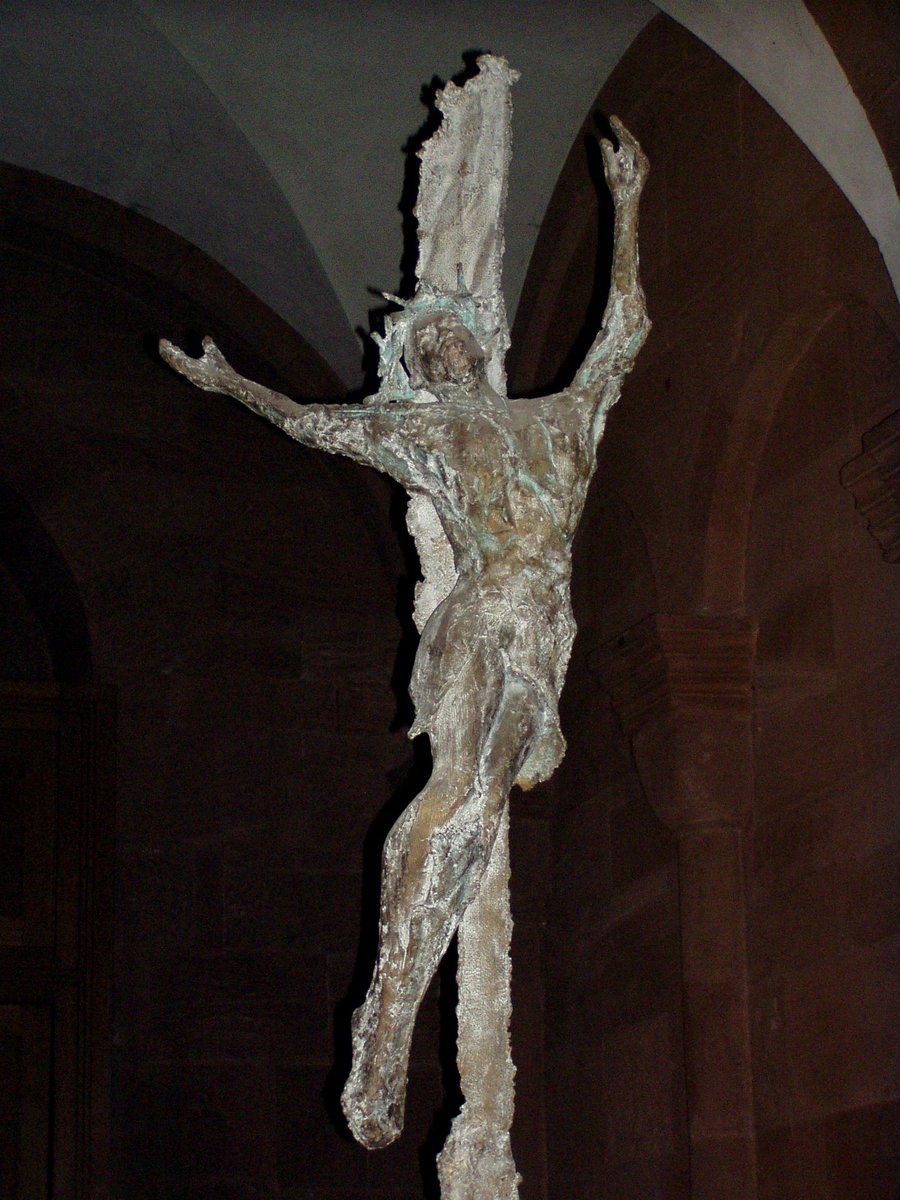
    "Christus" by Karlheinz Oswald, 1998 in Mainz Cathedral, Germany. I was unexpectedly moved by this sculpture when we visited in 2006.
    “Christus” by Karlheinz Oswald, 1998 in Mainz Cathedral, Germany. I was taken with this sculpture when we visited in 2006.

    As we come to the end of our journey through Psalm 18 (and thank you for joining me over the past Mondays), David sings forth praise to the God his Rock who has saved him. This psalm, like so many others, prefigures Christ our Lord, for he without sin can sing it like no other.

    Some Christians pray through this psalm as they remember Jesus’ trial before Pilate, his death and resurrection. They think about the cords of death entangling and confronting him (verses 4–5). They see God’s anger at the death of his beloved as he made the earth quake and shook the foundations of the earth (verses 7–15). They praise the Lord Jesus for his purity and lack of sin (verses 20–27). They lift their spirits in worship at the victory of Jesus over the gates of hell and death as he vanquished the enemy (verses 32–45). And they proclaim his kingdom as they join him in songs of praise to the living Lord who is their rock and savior (verses 46–50).

    As we conclude, let us join our voices in praise to the God who loves us. Let us thank him who created us, the Lord Jesus who died to save us, the Holy Spirit who fills us with his cleansing, purifying presence. He is our rock and foundation; he shields us from our enemies; he provides us a refuge of shade and protection. We know that though the rivers might wash over us, he reaches down from on high and takes hold of us, drawing us out of deep waters. He brings us to a spacious place where we can flourish and grow. Praise his holy and wonderful name!


    Prayer: You, Lord, are perfect, and you help us in all that we do. We will sing praises to your name, our rock and salvation. The Lord lives!