Tag: interview

  • A conversation with Elliott Frisby about prayer and friendship with God

    How can we be fully ourselves? How can we pray?

    Take a few minutes to hear about friendship with Jesus and the difference it makes (my book Transforming Love) and God-encountering, time-tested ways to pray (my book 7 Ways to Pray). Elliott and I chat at the Christian Resources Together gathering in September 2024, where I gave a keynote address and the closing devotional.

    I invite you to receive my monthly newsletter, with a prayer exercise, for ways to encounter God.

  • Interview with Holley Gerth

    I love interviewing authors for the Woman Alive Book Club. Here’s an interview with American writer Holley Gerth from last year. She says she “would love to have a cup of coffee or tea with you so she could listen to you share your heart and encourage you. She loves words, chocolate, and most of all, Jesus.”

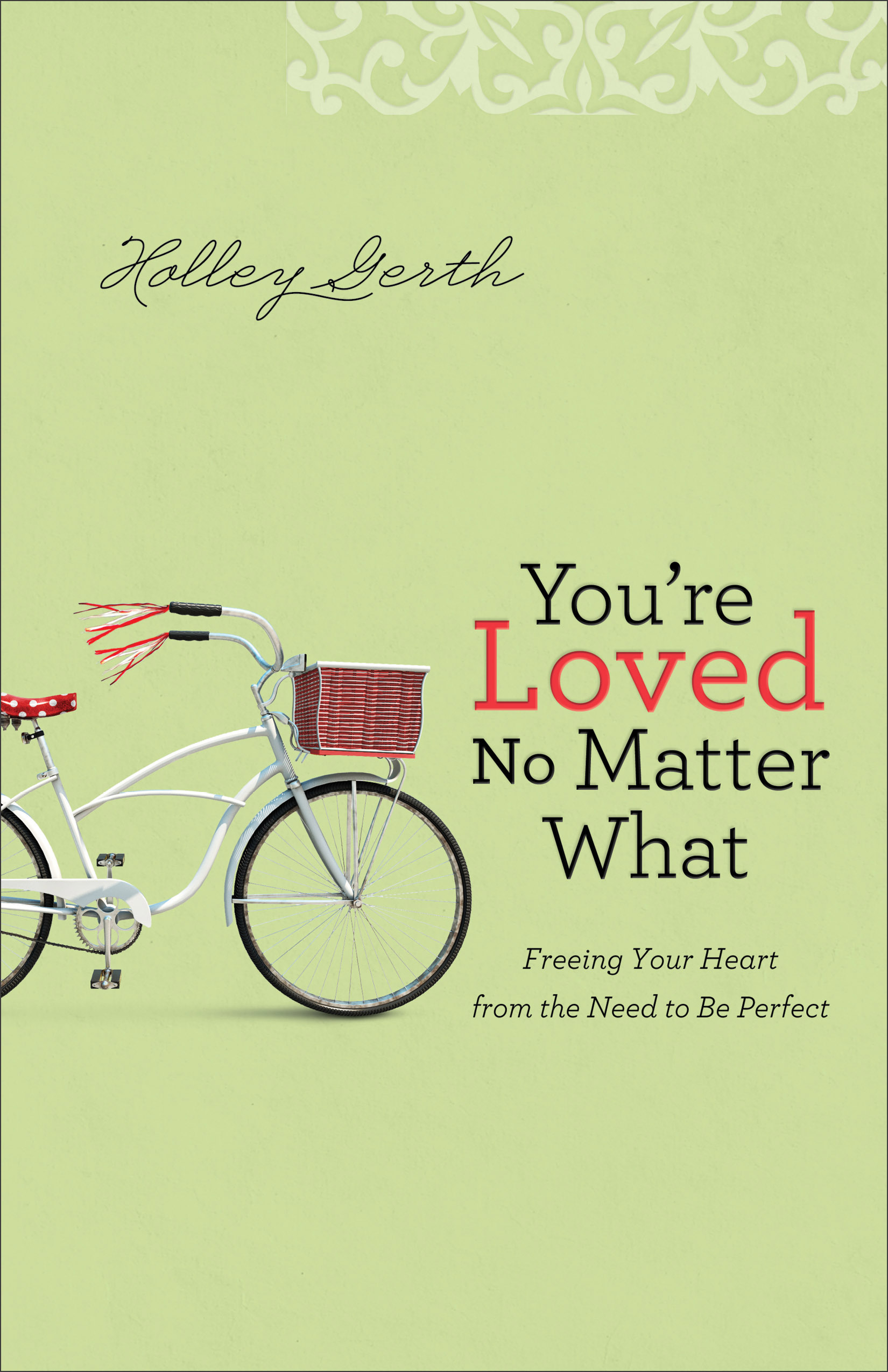
    9780800722906You’re Loved No Matter What: Freeing Your Heart from the Need to Be Perfect came out of connecting with thousands of women and hearing this over and over: “I’m so tired.” I could relate and began to look into why so many women are weary – even when they have a strong faith. What I discovered is that so many of us believe lies that tell us we have to try harder and do more or we won’t be loved. I wanted to share the truth our hearts need to hear so that we can be set free from striving and live in grace.

    My grandparents owned a Christian bookstore when I was growing up and I always dreamed of being a writer. God grew that desire within me as a I went on to work for DaySpring [a Christian gift and card company], become a counsellor and life coach and then set out on my own to write books. All along the way, I found myself encouraging women – whether it was one at a time or in front of a crowd of thousands. What makes me happier than anything else is to see a woman take hold of who she really is and how much she’s truly loved.

    The authors who have influenced me most are the women of incourage.me, a site I cofounded about six years ago. There are about thirty contributing writers and most have released wonderful books. They share in ways that are brave and real – which helps me do the same. Two of my other favorite books are If You Want to Walk on Water, You’ve Got to Get Out of the Boat by John Ortberg and In a Pit with a Lion on a Snowy Day by Mark Batterson. Both have given me courage and helped me move forward on God’s path for my life.

    Holley_GerthMy husband and I have been married over fifteen years and we try to read Scripture and pray together each morning. I’m not good at maintaining things or keeping a routine. For example, I’ve killed every plant I’ve ever owned! So it helps a lot to have someone keep me accountable. It also helps Mark and I stay on the same page as we do life, ministry and business together.

    I’ve tackled the new challenge of creating a workbook to go with my first book, You’re Already Amazing: Embracing Who You Are, Becoming All You’re Created to Be. I’m really excited about having material for groups to use. It is interactive and creative so it’s fun to think about all the things that can be included in it.

    I love hearing from readers. One woman told me she had walked away from God because she felt like he could never forgive her because of mistakes she’s made. She didn’t want to go to church or talk to “religious” people. But someone gave her my book and it helped her see that God really does love and accept her. She told me she had reconnected with God and wanted to grow in her relationship with him.


  • Interview by Tanya Marlow on Finding Myself in Britain

    Today Tanya Marlow, a wonderful person – writer, thinker, feeler, Bible-delver, and one who suffers from a severe form of ME – has interviewed me on her blog, “Thorns and Gold.” She asked probing questions that I answered while partly wondering if I was sharing too much! I so appreciate her on many levels. She’s also hosting a giveaway of Finding Myself in Britain via her blog – instructions at the end.


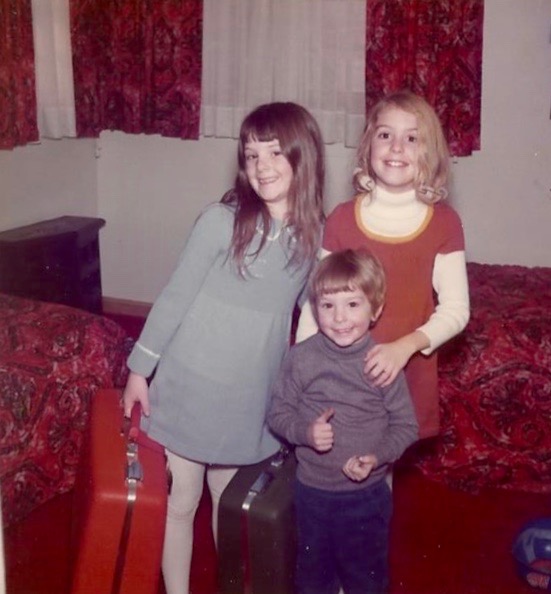
    Me with my sister and brother. The traveling bug seems to be planted early!
    Me with my sister and brother. The traveling bug seems to be planted early!

    Hi, Amy – tell us a bit about you!

    Hi! Well, I’m married to an English vicar and we live in a lovely but draughty vicarage with our two wonderful kids. I’m a writer and speaker with a long history in editing; I love writing devotional thoughts and running the Woman Alive book club.

    I grew up in Minnesota – the land of 10,000 lakes and hearty people who survive the shockingly cold winters. I’ve now lived longer outside than inside of Minnesota, however, for when I was at university I went to Washington, DC, for a studies program – and ended up staying 10 years! When there, working with a wonderful Englishman-in-America, Os Guinness, I met a visiting Englishman who was studying abroad as he trained to be a vicar. We fell in love and married and I moved to the UK nearly two decades ago – a mind-boggling amount of time.

    Something you might be surprised to know is that I’m a (lapsed) aerobics teacher. I love going to the gym and enjoying group exercise with my friends.

    Read the rest of the interview at Tanya’s blog here.

  • Interview with Os Guinness

    An interview with Os Guinness, whom I had the privilege of working for in Washington, DC, for ten formative years of my life (starting when I was an intern with the Williamsburg Charter Foundation, many a year ago). Os is simply brilliant, but he’s also funny, caring, and deeply passionate about the transformation of people and society. He’s one of the greats.

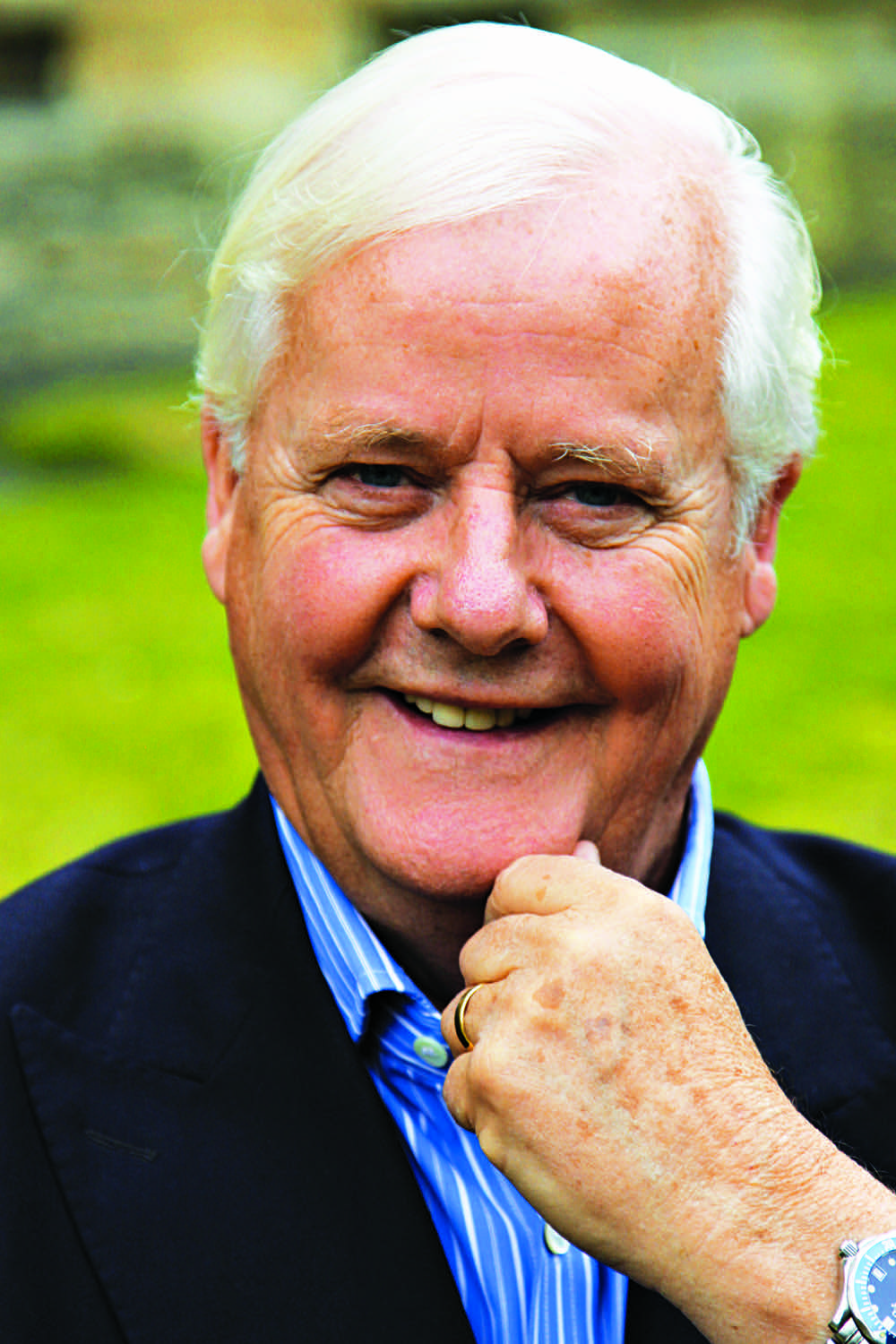
    Guinness, Os 01Os Guinness is a writer, speaker and social critic who is the author or editor of over 30 books. The great-great-great grandson of Arthur Guinness, the Dublin brewer, he’s an Englishman who has lived in America for over 30 years.

    In the last 50 years many countries in the West have grown more secular in public life and more diverse in the private world. Thus fewer people understand “Christian language,” and fewer are interested in what we are saying. So to reach them, we have to be persuasive, which is why I’ve written Fool’s Talk. Jesus never talked to two people in the same way, and nor must we. St Paul, for example, spoke differently when he addressed his fellow-Jews in the synagogue and when he spoke to Athenian philosophers at the Areopagus.

    Jesus spoke straightforwardly to his disciples because they were open to him – though they often misunderstood him. But when he spoke to the crowds, and especially to the scribes, Pharisees and Sadducees, they were closed to him and his teaching. So he switched to stories and parables that were far more subversive and challenged them to see his point – despite themselves! One of the deepest and most persuasive ways we can talk is to ask questions, and that is something we can all do – ask questions that make people think about what they believe and the problems in their faith if they thought more. Then they become more open to the gospel.

    The sociologist Peter Berger describes a “signal of transcendence” as an experience that is so deep and challenging that it punctures what people used to believe and points to something that needs to be true if their experience and longings will be satisfied. Perhaps the example most Christians know best is how CS Lewis, as an atheist, was “surprised by joy.” In setting out to follow the signal of joy, he abandoned his atheism as unsatisfactory and eventually came to know the Lord.

    Fools Talk #3699CS Lewis was brilliant in both reasoned argument and in highly imaginative story telling. Like many others, I came to faith through reading Mere Christianity, and I have always loved his imaginative works such as The Screwtape Letters and The Chronicles of Narnia. Some of his collected essays are remarkable too.

    The Call is my bestselling book, and the one that triggers the greatest response. People appreciate how it encourages Christians to see their place in the whole of life as God’s calling. Being a mother, a teacher, a lawyer or a taxi driver can be just as much part of God’s calling as being a minister or missionary.

    Being born in the brutal realities of World War II in China and witnessing the beginning of the Communist era, my story is quite dramatic up to the age of ten, and then not that different from many other Western lives after that – though my time at L’Abri with Francis and Edith Schaeffer in the late Sixties was dramatic! If I write a memoir, it will not be because I think my life is that important, but because we need to recover the sense of “handing on well” today. The craziness of modern views of generations makes a healthy view of tradition harder than ever, and we Christians should be passionate about both tradition and renewal.

  • Interview with Rob Parsons

    _JON5176The sub-title to The Wisdom House is “Because you don’t always have to learn the hard way.” In the book I imagine my five grandchildren coming into my study one at a time, not as the little ones they are now, but as the adults they will become. We get the chance to talk as we sit in the two armchairs in front of the fire.

    Perhaps these conversations take place when somebody had broken their hearts, or when they are going for their first job or buying their first home. Maybe they happen after they have been betrayed by friends or when they need help to piece back together a dream somebody had trodden over. Our talks are based on some lessons I have learned personally, but most are lessons I have heard from those far wiser than me.

    It is true that we live in a consumer society, but I believe that in our hearts we crave something more than quick-fix answers. What we really long for is wisdom that will help us not just to get through life, but to thrive in it. Wisdom is not based on IQ, wealth or apparent success. In fact, unusually in modern society, it is something that is truly available to everyone. All you need is some time to listen and a little humility.

    Out of the fifteen books I have written, The Wisdom House is the only book that I really enjoyed writing. I am so grateful for the privilege of writing, but I do find it hard work. With speaking there is still a lot of preparation involved, but it comes more easily to me. So if I had to choose between writing and speaking, it would be speaking.

    The original idea for the Sixty Minute… books was that they could be read in an hour. But I think the essence of that series is that the books are not only short, but down-to-earth, and although they contain elements of my faith they are accessible to everyone – those of all faiths or none. People sometimes say to me, “When I read your books you don’t teach me one thing I didn’t know already, but you turn lights on for me.” I know that critique wouldn’t be enough for Stephen Hawking, but I’ll settle for it.

    Rob Parsons - The Wisdom House High ResMany so-called ‘prodigals’ had never turned their back on God but on something else. This is what I found through talking to people at the Bringing Home The Prodigals events across the world. I began to think about what that something might be, and it led to my writing Getting Your Kids Through Church Without Them Ending Up Hating God. I believe in the local church – I attend my local church almost every Sunday – but I think there are lessons we can learn that will make it harder for our young people to walk away and, if they do, make it easier to return. The response to the book has been very positive and we also have a course for use in church homegroups.

    I can’t wait to write the next book in The Wisdom House series – in fact, I have already started!

  • “You Said What!?” Radio interview for Finding Myself in Britain

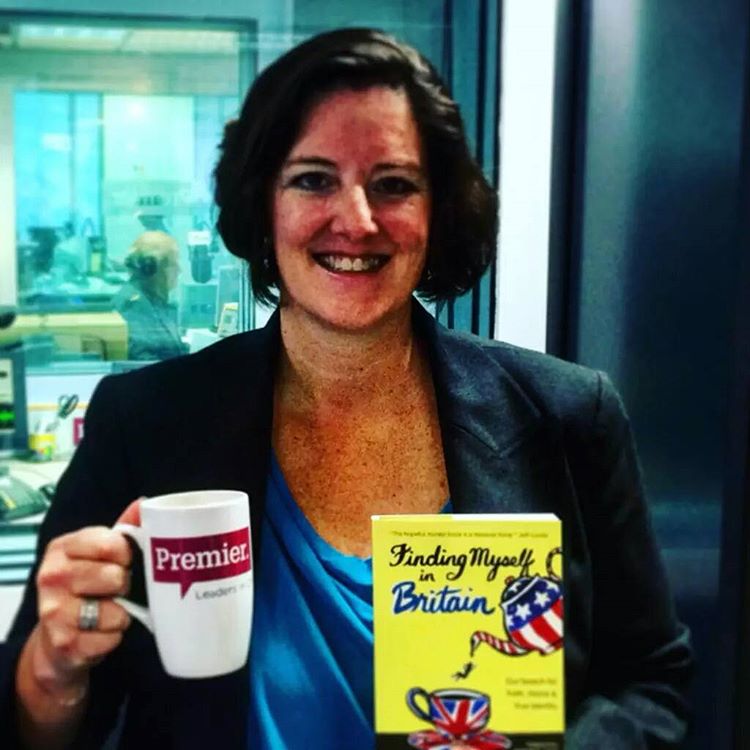
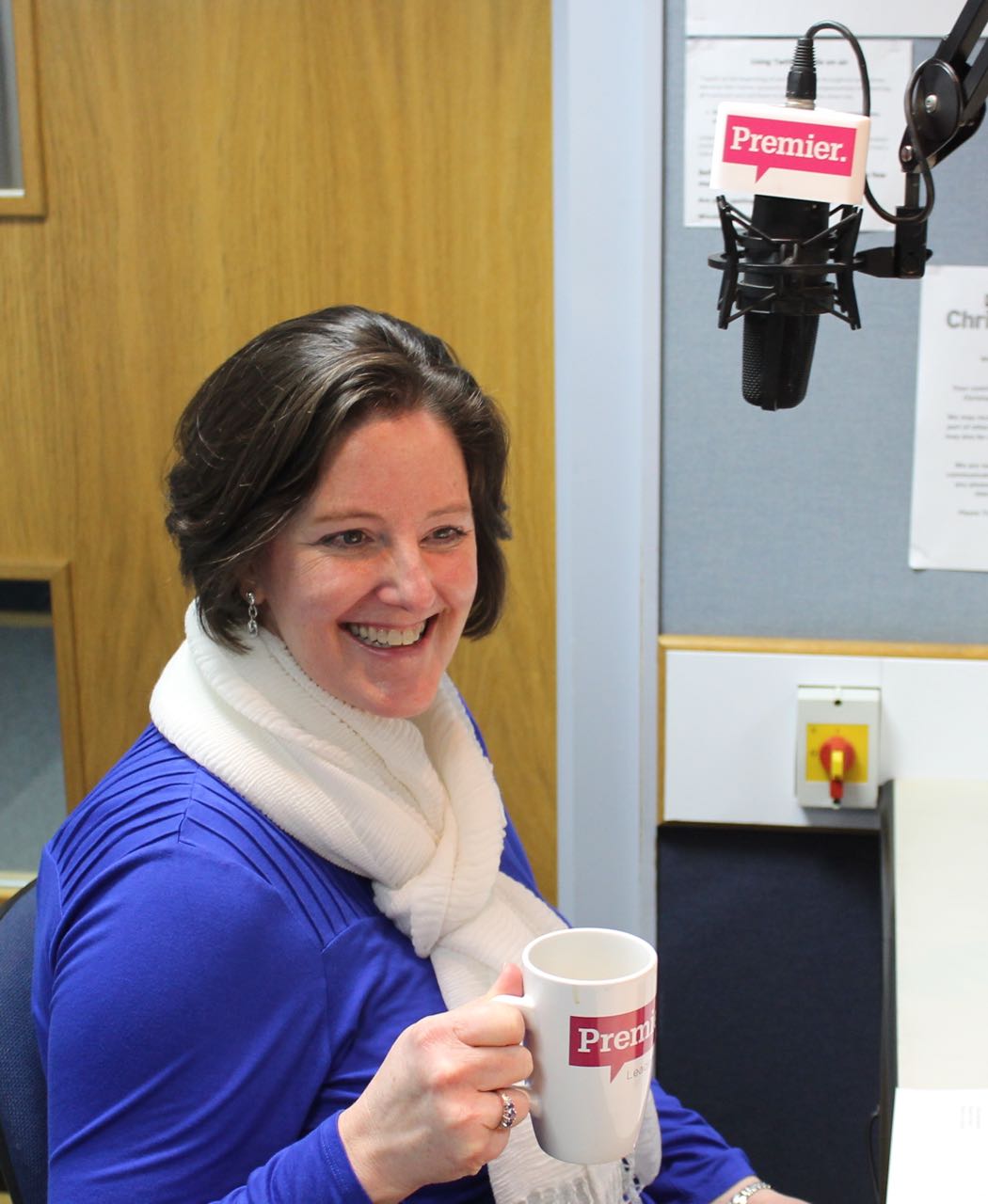
    Loved being at Premier Christian Radio this morning. Such fun.

    Yesterday I so enjoyed being interviewed on Premier Christian Radio. I was a guest on the Inspirational Breakfast show (you can hear my portion of the show here) with host John Pantry, who (amazingly) has been with Premier as long as I’ve been in the UK – 18 years! I loved hearing his stories in the break about living in California for a year when their children were young. He said how they were given so many provisions, such as a car. And one woman gave them all of her furniture, for she believed the Lord was returning soon and very soon and so she didn’t need it! (I wonder how long it took her to admit she’d got the timing of the Second Coming wrong before replacing the furniture she gave away?).

    One of our callers yesterday recounted being in the States and trying to buy some stationery products and his amazement at being laughed at by the young women salesclerks when he asked for a rubber! It made me think of the story I tell in the book in the chapter “By Their Accent Shall Ye Know Them,” excerpted here:

    On one of my yearly trips back to the States to visit family and friends, the kids and I made a pilgrimage to our favourite chic-but-cheap retailer, Target. The very first Target store was opened in 1962 in Roseville, Minnesota, and was “my” store growing up. When there I stock up on things I can’t get in Britain or buy items that are less expensive, to haul back to the UK. We were standing at the check-out line, placing the items on the conveyer belt as we waited for our turn. When I took out a Dr Seuss-related item, in a package of six, Jessica exclaimed, “You’re buying rubbers!”

    The man ahead of us in line flinched but I said, “Yes, they’re for your birthday party.” I added quickly, “But in America, we call these erasers.”

    She remained blissfully unaware of what must have been going through the mind of the man in front (for rubbers in the States are condoms). Differences in language can make for some interesting exchanges.

    In the interview, John Pantry asked what were the listeners’ favo(u)rite British quirks and customs. What are yours?

  • Interview with John Ortberg

    An interview that originally appeared in the Woman Alive book club, where I talk all things books with prominent Christian authors.

    john_ortbergSoul Keeping was very moving to me to write, particularly because it gave me a chance to reflect on Dallas Willard during the final days of his life. I hope that through reading it, people will realize the wonder and mystery of what it means to have a soul and learn how to care for it well.

    The book of Dallas Willard that impacted me most was The Spirit of the Disciplines, and I’d recommend that for folks to read. But my quick warning would always be that Dallas’ material is very dense. And, at least for me, I often have to read it through several times to be able to absorb it—kind of like osmosis.

    There’s no particular story behind the long titles of my books [If You Want to Walk on Water You’ve Got to Get Out of the Boat or Everyone’s Normal Till You Get to Know Them] other than I have a mind that tends to think in thoughts that can only be expressed in long titles. And, there’s something that I like about combining the thoughtfulness and substance of deep thinkers like Dallas Willard with a spirit of fun, joy and delight that can make it accessible to people. So I try to aim for that.

    Another Christian classic that is great for our soul in a hurried world is Richard Foster’s book, The Celebration of Discipline. If someone’s looking for a work that’s shorter and more easily applied, The Practice of the Presence of God by Brother Lawrence remains an absolute classic.

    Nancy and I read together separately. We actually tried reading together back when we were dating and first married, but both of us are teachers and we would tend to start teaching each other, and that’s not great for a marriage. But we do love to read the same books and then talk about them on our own, and we do that for spiritual books from folks like Henri Nouwen to fiction and biography, and Nancy’s favorite adventure sagas.

    I am always reading a book about Abraham Lincoln. Lincoln is one of my favorite characters. I like history and biography immensely. I also loved the most recent third volume about the life of Winston Churchill, which was begun by William Manchester before he died. I also read The Fault in our Stars, and even though I’m not a young teen, I thought it was quite well written.

    John Ortberg is the senior pastor at Menlo Park Presbyterian Church in California. He has written books on spiritual formation including The Life You’ve Always Wanted, Know Doubt, The Me I Want to Be and Who Is This Man?. He is married to Nancy, and they have three grown children.

  • Interview with Jeff Lucas

    Phew – my too-busy season is over, and I can be more attentive here on the blog. Here’s an interview with the amazing Jeff Lucas – the prolific author and not-to-be missed speaker and broadcaster. He spends his time with one toe on each side of the Atlantic (his official title is teaching pastor at Timberline Church in Fort Collins, Colorado).

    jeff_photo_4_2010-2011Through spoken or written word, I want to creatively communicate truth with vulnerability – I am weary of the image that some Christian leaders present which is about strength and arrival; I am about weakness and journey. I want to liberate, agitate, and bring relief. I love to hear people say, ‘It’s not just me – I thought that I was alone in my thoughts and fears.’

    I love Jesus, but am endlessly frustrated with the religious clutter that surrounds him. I want to help remove the rubbish, not as someone who loves to knock things down, but rather to build up. I love the church, even though she drives me crazy at times. Ultimately, I want people to discover what it means to be healthily human, rather than becoming more spiritual – and of course healthy humanity is only ultimately possible as people discover a life of love and friendship with God in Christ.

    Being a pastor who lives on both sides of the Atlantic means that I am able to write about the joys and challenges of church life while actually experiencing it, which was not the case when I was traveling full time. And interfacing between the church cultures in American and Britain gives me such a valuable opportunity to see the strengths and weaknesses of both Christian communities.

    514GVZgAu0L._SY344_BO1,204,203,200_When Adrian Plass and I work together, most of the time it’s both serious and funny. We write back and forth across the Atlantic, occasionally meet to collaborate on the manuscript, and then tour with the Seriously Funny evening. Kay and I love being with Adrian and Bridget. Our conversations together are fuel to my soul, filled with hope, angst, questions, half-answers, and laugh-out-loud stupidity.

    The Wisdom of Pelicans by Dr. Donald McCullough is my book of the decade. McCullough was a distinguished church leader and university academic who had two affairs and lost everything – his wife, his job, his car. He almost lost his faith. He spent a lot of time walking the beach, and watched the ungainly flights of pelicans each day, and wrote this book, describing life lessons that he discovered as he watched and walked. It is a beautiful, gut-wrenchingly honest book. I have been in personal contact with Donald and have sought to encourage and thank him. We have exchanged very warm emails, and he told me that my encouragement came at a very timely moment for him.

    My grandson Stanley likes it when I make up my own stories, which can be completely pointless and follow no logical plotline whatsoever. He laughs even when I’m not funny. I’m grateful.

  • Interview with Julie Klassen

    Lovely to feature this interview with Julie Klassen (originally published in Woman Alive), who just won the fiction award for the Minnesota Book Awards with her book The Secret of Pembrooke Park. This makes me happy on many levels, not least because Minnesota is where I grew up but also because I was a reader of her book when it was in manuscript form, reading it through quirky Anglican eyes!
    Julie Klassen_author photoWhen I look back, I see how God graciously led me to become an editor. I learned so much from working with other editors and talented authors – things that taught me not only about writing but about how to craft a full-length novel. I am thankful for my years with Bethany House Publishers. But, I am also thankful that I could hang up my editorial “red pen” and focus on my writing. Two benefits I’ve especially enjoyed are having time to read for pleasure and developing friendships with more authors.

    I think many of us, regardless of our place of birth, are swept away by the romance and chivalry of Jane Austen’s time. In fact, when I visited the Netherlands last year, I met with members of the Jane Austen society there. And last autumn I attended the annual meeting of the Jane Austen Society of North America with attendees from several countries. Miss Austen (and Mr Darcy) fans are everywhere!

    I have loved all-things-British ever since I read The Secret Garden and Jane Eyre as a young girl. But like so many women, it was seeing Colin Firth in Pride and Prejudice that inspired me to read all of Jane Austen’s novels and cemented my love of the Regency time period. I find it a romantic time – with gentlemen in tail coats and tall boots and women in those lovely gowns, the courtly balls, and the chivalry where the mere touch of gloved hands during a country dance sparked romance. Sigh. It was also a time when church attendance and family prayers were commonplace. (After all, Jane Austen herself was a clergyman’s daughter.) Whatever the reasons, I am thankful so many readers are drawn to the era as I am.

    When I am up for an award, I am always anxious when awaiting the big moment. Of course it’s a thrill to win, but that emotion is rapidly overshadowed by amazement and gratitude. I believe God has given me this gift, and I’m so thankful to be able to use it for His glory.

    When I first visited the UK, while other tourists were visiting the London Eye or Buckingham Palace, I dragged my long-suffering husband to places like the Worshipful Society of Apothecaries and the Museum of the Royal Pharmaceutical Society of Great Britain. After all, I was researching my second novel, The Apothecary’s Daughter. On our second trip, when researching The Maid of Fairbourne Hall, we focused on visiting houses with their servants’ areas intact, such as in Bath or Newport. We also visited Devonshire and Cornwall where I pinpointed the setting for The Tutor’s Daughter.

    I finally have “a room of her own,” as author Virginia Woolf described as necessary for fiction writers. For years, I simply wrote wherever I could find a quiet place – the dining room, while the kids watched TV in the living room, or tucked upstairs in our bedroom. Indeed, I wrote my first several novels without my own room, so I don’t know that I agree with Virginia Woolf, but it sure is nice having my own space.


    Julie Klassen is an award-winning author of historical fiction. She enjoys travel, research, BBC period dramas, long hikes, short naps and coffee with friends. She lives with her family in Minnesota.

  • A conversation about publishing on World Book Day

    IMG_2619 newI had a lovely time on Premier Christian Radio yesterday chatting about writing and publishing for World Book Day.

    In prepping for the interview, I found out that World Book Day is celebrated in over 100 countries. Many countries celebrate on April 23 (Shakespeare’s birth and death day!); that’s when the UK marks World Book Night (with the stealth distribution of books among other things). They moved the celebration of World Book Day to March 5 to accommodate schools, as the latter date is often during the school holidays. Many schools participate in the schemes where children receive a voucher toward money off books.

    Here is the interview, in which we talk about whole host of writing tips and things to consider about finding an agent and publisher.

    You can see some of my other writing posts here, including how to write a devotional and advice to a newbie writer.