When people take the time to write to me about one of my Bible devotions, I read their letter with interest. More than once I’ve been called up over a suspect claim or a disputed point of theology. In fact, at one time I started to dread the letters coming through the door.
But then I wrote a set of notes on the theme of pilgrimage, which seemed to strike a chord, especially with people who were transplanted from their homes. I still receive a lovely card at Thanksgiving from one of the readers, which I find moving.
One letter in particular blows me away. This woman was writing about some notes I wrote for New Daylight on the miracles of Jesus, and the text was Matthew 8:23-27, where Jesus calms the storm.
As I wrote in the notes:
The storm was no ordinary storm. This is hinted at by the Greek word seismos, which usually means an earthquake, or literally, a “shaking” (RT France, Matthew, IVP, 1985, p. 161). A force from outside brought chaos; that is, a squall came upon the lake violently and suddenly. Jesus demonstrates his authority by calming it with a rebuke…. Jesus wants us to believe in his power to still the storms in our lives, whether created from outside or from within. Sometimes they appear suddenly, taking us by surprise and perhaps flattening our faith. As we turn to him in fear or faith, asking him to save us, he brings calm and peace, creating order from disorder.
Here’s her letter (spellings intact):
I am a Brit living in Christchurch, New Zealand. For many years I have used and appreciated the BRF New Daylight series & at the memorial service for the victims of the earthquake today [18 March 2011] we were urged by our bishop to tell our stories. I don’t expect you realise what you wrote on the day of the earthquake, I had been at a small prayer group in the morning & read out the passage for Tuesday 22nd Feb & we talked about it, & related it back to September 4th the day of the first quake.
Fifty minutes after leaving the group we were once again hit by a terrible earthquake & as I took refuge under a rack of clothes in the shop I was passing through, I cried out to the Lord, in fear, to protect & save me & my family. I remembered what I had just read to the group & tried to trust Jesus. The past three weeks have been difficult, & nothing is the same, but all our family are well & this has brought us closer to the Lord.
I was bowled over, to think that the words of the devotional, written probably a year previously, would be so used by God in a place far away.
The power of words and the Word. What words will you speak or write this day, that might bring hope, comfort, or peace?
When the Counselor comes, whom I will send to you from the Father, the Spirit of truth who goes out from the Father, he will testify about me. John 15:26
Photo: Creative Commons, James Burke
Inspired by dramatized courtroom dramas, I decided when at university that I wanted to be a lawyer. (I’m embarrassed to admit that one of them was the film Jagged Edge.) I got a job during the summers in a law office, and soon learned that the work was not all verbal sparring and dramatic closing statements. Nor, I realized, would I want one of the attorneys to represent me had I ever the need.
Here the Holy Spirit is called a Counselor, which we can translate as “Advocate,” or in our modern-day parlance, Attorney or Barrister. For as Gary M. Burge says in The NIV Application Commentary, “It is a judicial title describing someone aiding a legal argument” (p. 421). The Holy Spirit will live and dwell in the disciples; through them he will bear witness as an advocate of Jesus.
It’s mind-boggling to think that we have the world’s best attorney on our case. And to know that although we may be living through a terrible trial, where there seems no righting of wrongs, we can be confident that God as Judge will eventually bring complete justice. As the Apostle Paul wrote to the Romans: “Do not take revenge, my friends, but leave room for God’s wrath, for it is written: ‘It is mine to avenge; I will repay,’ says the Lord” (Romans 12:19). All of that – and no astronomical legal fees.
Prayer: Triune God, you are Judge and yet Counselor. Bring forth your truth in and through me this day.
Here’s one from the archives, inspired by a reader review in the Woman Alive Facebook group. It’s my review in Woman Alive (from 2006!) of a book by a then relatively unknown author. I used to feature a book one month – complete with discussion questions – and then follow it up a few months later with my review and those of some readers. (Thanks to Woman Alive editor Jackie Harris for suggesting changes to the format… what we have now is superior!)
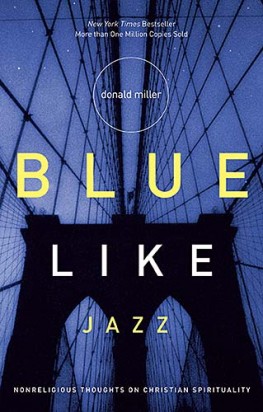
I’ve always liked Don Miller’s writing; back in 2000 I acquired the UK/Commonwealth rights to one of his first, Prayer and the Art of Volkswagen Maintenance, for HarperCollins UK.
In many ways Donald Miller is a typical American bloke. He’s a guy who is looking for love and God in the strains of everyday life. But he’s nontypical in that he shares his thoughts and experiences in his Blue Like Jazz: Nonreligious Thoughts on Christian Spirituality. He’s been called “Anne Lamott with testosterone.”
The book is a series of linked essays on a variety of topics – from faith, redemption, and grace through to television, romance, money, and worship – that are sometimes quirky, sometimes humorous, sometimes introspective but often insightful. Of the title Miller says, “I never liked jazz music because jazz music doesn’t resolve. But sometimes you have to watch somebody love something before you can love it yourself … I used to not like God because God didn’t resolve. But that was before any of this happened.”
Join me in exploring life through the lens of Don Miller. Here are some discussion questions for you to ponder or share with your group.
What did you think of the book overall? Did it appeal to you? Why or why not?
What stood out as you read? Were there images or ideas that lingered with you?
What do you think about Don’s view that “the greatest trick of the devil is not to get us into some sort of evil but rather to have us wasting time” (p. 13)?
Chapter 2 is all about problems, and basically about original sin – “that we are flawed, that there is something in us that is broken” (p. 17). Do you agree that the problems of the world boil down to “the needy beast of a thing that lives in my chest” (p. 20)?
More on the devil: “I think the devil has tricked us into thinking so much of biblical theology is story fit for kids’ (p. 30). Have you ever thought about Noah’s ark not being appropriate for children because of its themes of judgment?
Chapter 7 focuses on grace and “the beggar’s kingdom.” Don says how he “could not understand why some people have no trouble accepting the grace of God while others experience immense difficulty” (p. 83). He was one who had trouble. Do you? If so, why? Or why not?
Discuss Don’s description of the Grand Canyon at night: “There is something beautiful about a billion stars held steady by a God who knows what He is doing. (They hang there, the stars, like notes on a page of music, free-form verse, silent mysteries swirling in the blue like jazz.)” p. 100.
Don realized that “believing in God is as much like falling in love as it is like making a decision. Love is both something that happens to you and something you decide upon” p. 104. Do you agree or disagree?
Discuss a simple truth about relationships: “Nobody will listen to you unless they sense that you like them” (p. 220).
My View
I loved one of Don Miller’s books in the past, and when I started reading Blue Like Jazz I couldn’t put it down. Several weeks later I read the book in full, but by the time I was done my interest had waned. While there are instances of brilliance – I loved the thought of seeing the lines on Jesus’ face, for instance – there seems to be a lot of navel gazing too. I started to get a bit annoyed with what seems like Don’s preoccupation with himself. An editor could have cut a third of these meanderings and made a fabulous book.
Still, there were memorable flashes of light. My heart warmed to hear of Penny’s conversion, as she was loved into the kingdom of God by Nadine. And I could certainly relate to Don’s experience of community life. As I read of his experiences in Graceland, my ten years of living with roommates in Washington, DC, came back with stark clarity. As with Don, living with others was a way for God to highlight my issues of selfishness and pride. It wasn’t always fun, but it was fruitful.
Blue Like Jazz, Donald Miller, Nelson, ISBN 0785263705, 242 pages
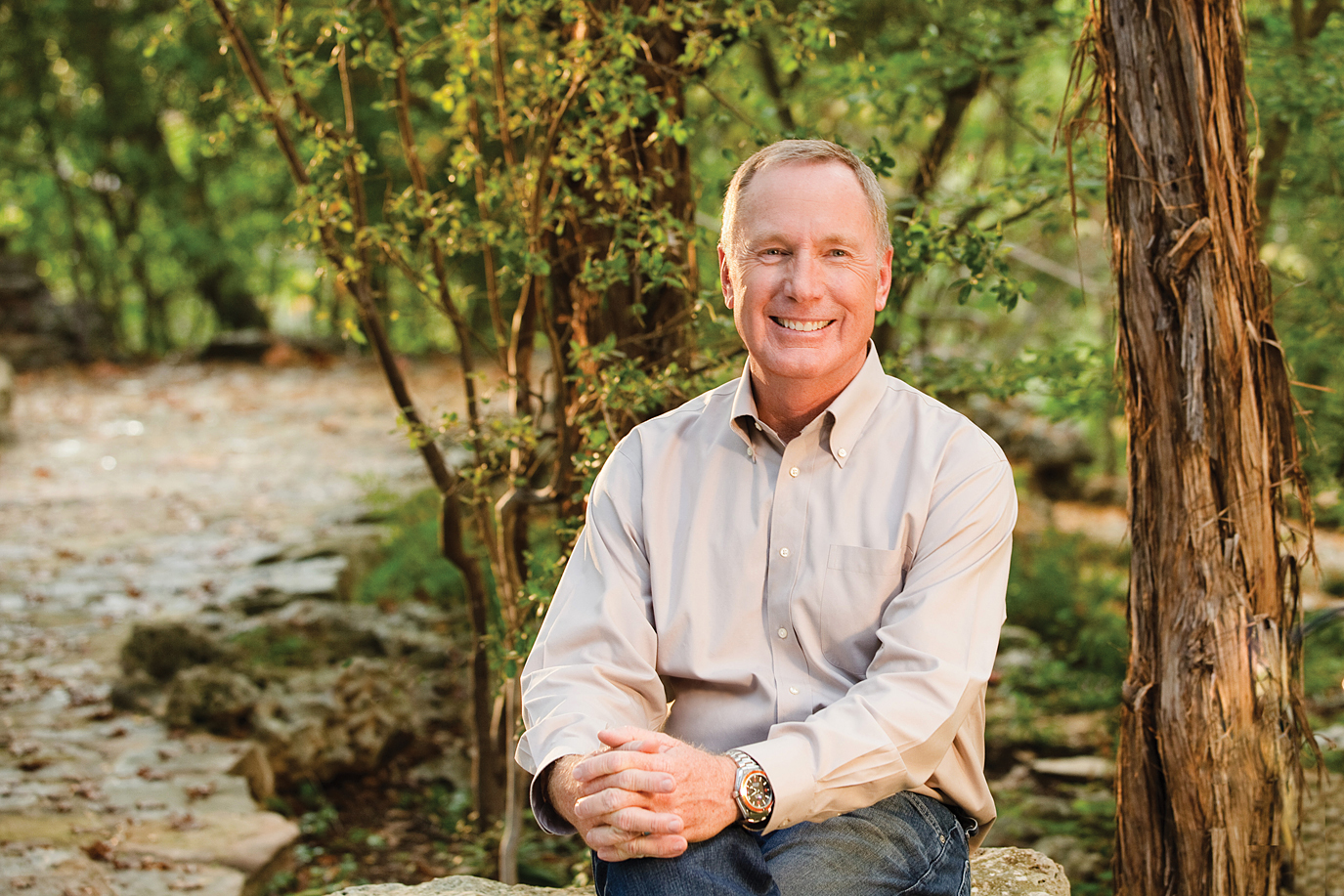
I love books and reading, and in running the Woman Alive Book Club I get to interview some great authors. Here’s an uncut interview with the legendary writer Max Lucado.
ABP: Writing seems to just flow out of you. Is that true? Or do you ever hit a writer’s block?
ML: It’s as not as true as people might assume, but on the other hand, I’ve never hit a writer’s block and so the bad news is that I find writing to be very difficult. It takes a lot work; it’s agonizing and challenging. Some days I hate it! But the good news is that all these years God has provided and I’ll just put forth the least amount of effort he seems to bless it with a rewarding thought.
ABP: How do you stay humble, being dubbed America’s Pastor and with over 100 million products sold?
ML: I don’t know if I always do! I wrestle with humility or lack thereof. I can tend to put myself first. Even though I’ve written a book called, It’s Not About Me, there are many times I think it is! And so I don’t think I deserve a high grade for humility, and I’m not sure how you measure someone’s humility anyway. You know that story about the boy who got the badge for being most humble and then he got it taken away because he wore it!
ABP: Can you share any stories of how your children’s books have changed lives?
ML: The book You Are Special has in my life provided the most rewarding story. Specifically the distribution of this book in China. There is a ministry called “You Are Special China” and it exists just to distribute that story among orphanages and schools in all the provinces in China. And they send back some wonderful stories. One in particular regards a school for the deaf. As they were being read this story, the story tells them that they were made by God and that God has a special place for them. The person who shared the story said that he heard the children start to wail. Start to cry. Because they’d never been told that before. And it touched such a deep, deep longing in their hearts. I wish I could have been there to see those kids with this particular response to that book.
ABP: When you’re in glory, how would you like to be remembered?
ML: Hmm. I think what brings me the most joy is that my three daughters all walk with God. When I first got into ministry, a good friend said, “Don’t sacrifice your family on the altar of Christian service.” And through the years I have seen how that could happen because ministry has its unique demand and stresses and many children and marriages suffer because of ministry. But I’m over 30 years into this ministry stuff (started in 1979) and my marriage has never been stronger and my children are all walking with the Lord. And for that I am most grateful.
ABP: Besides the Bible, what books have influenced you most? Are there specific books you turn to in a crisis?
ML: I’ve always got a lot of encouragement from the writings of John Stott. I feel like he had such a grip on Scripture. His is not the writing that I necessarily turn to for inspiration but more for careful dissection of Scripture. Of all the writers, I’ve really enjoyed him. There’s another commentary, another writer by the name of Dale Bruner. And he’s written commentaries on Matthew and John, and there’s just something about the way he studies that I find inspiring. Again they aren’t inspirational books. You won’t find them on the lower level of a bookstore, but for people who are serious about getting into a Bible study, I’ve often recommended those two writers.
Max Lucado is an author, pastor, minister and dad. With more than 100 million products in print, he is one of America’s most widely read authors. He and his wife, Denalyn, live in San Antonio, Texas, where he serves the Oak Hills Church.
“There’s a new company that’s selling books on the Internet. It’s one to watch,” said the man who would become the Motley Fool.
The year was 1993, and I was sitting in his living room, having enjoyed a bountiful feast made by his wife, with whom I was working on a project on the Classics. Being in my twenties and not thinking I should actually invest any of the disposable income that I had (which was more than I realized, of course), I let the advice roll by. Yep, you can guess the name of that company.
What would you tell your 20-year-old self, if you’re in your forties or higher? I posed the question on my Facebook wall yesterday, and got a mixture of funny and poignant responses.
Stripes on top and on the bottom?
Chose your life partner carefully
One of my friends wrote, “Don’t marry that guy. God gave you good instincts for a reason” and my heart went out to her. In my twenties I was saved from such a union, which surely would have ended in divorce – as much as I would strive to avoid divorce. I knew deep down that things weren’t right with us, but it took strong advice from my parents and my work colleagues for me to end the engagement. It seems once a couple is engaged, they are swept along in a current of planning and living, perhaps, on a realm of unreality. Well-meaning acquaintances ask, “When’s the wedding?” The woman in particular looks into tulle, beads, canapés, and flowers. That’s why my husband and I, when we help couples who are preparing to marry, counsel them to do the hard work of marriage preparation before the engagement. Then ending the relationship, if it isn’t right, isn’t such a public announcement. And the couple isn’t distracted by wedding planning.
I remember so clearly the advice given to me by one of my colleagues when I was engaged to the wrong man. He held his hands out, palms facing each other and about six inches apart. “Two people are like this,” he said. “When they marry, just by the sheer force of becoming married, they become like this,” he said, moving his hands about 12 inches apart. I was beginning to see that marriage wasn’t going to solve the core issues that my fiancé and I had, but would only exacerbate them. It took me several more months, but finally I ended the engagement. And several years later (thank you God) met the right guy.
God will redeem your brokenness
Another friend wrote, “Sometimes the hardest adjustments you will have to make will be the ones that end up giving you the most compassion for others – so try not to resent them so much. ” Again, wonderful advice. I’ve seen this so often in my life, how the things that feel so hard and excruciating and painful can be used by God in surprising ways.
Kara’s cabin. Epic.
Not to say that I welcomed, for instance, my close friend dying in a car crash when we were 19. But now I can see how all these years later, that core group of high-school friends has remained much closer than we probably would have had Sue not died. We go on trips together and those who live in the Twin Cities in Minnesota see each other regularly. Of course we’re not perfect and sometimes we have hurts to forgive and feelings to mend. But I would be a much poorer person without them in my life.
My parents just recounted how the day after their 50th wedding anniversary, they were called to comfort a grieving mother who had just lost her 20-year-old son to suicide. She said, “I wish I would have had parents like you growing up!” Their compassion has blossomed and multiplied over the years of challenges they faced (as I wrote in my blog). God redeems.
You are not fat!
One of my Facebook friends said this, and I totally agree. Ah, to have been able to love my body in my twenties and earlier, when I may not have been stick thin like some of my friends but wasn’t nearly the size I thought in my head. And to have that wonderful skin – now I would tell my 20-year-old self for sure to slather on the sunscreen and ban baby oil while tanning. Or better yet, stay out of the sun all together!
Yes, it’s Pac-Man, and yes, it was the 80s. See advice, “Don’t take yourself so seriously.”
The deeper issue is accepting how we’ve been made – our body shape, size, and features. I’m not sure if my positive reinforcement of my daughter’s beautiful body can speak over the din of society and her peers as she grows up (she’s six), but I’m going to try. We are beautifully and wonderfully made, something I think about when I read Melanie Reid’s moving Spinal Column, in which she tells about her life following breaking her neck and back when she fell from a horse. My thighs might be bigger than I would like, but they are strong and I can run and jump and walk. As Liz Curtis Higgs said when I heard her speak last week, we should wake up each morning and to the mirror say, “Ta-da!” For we are created in God’s image and are therefore gorgeous.
You can do it!
What else would I tell my younger self? A few random remarks:
Don’t take yourself so seriously.
Your worth is not allied to what you accomplish.
Write! You can do it!
Your sister will become one of your closest friends.
Would you please stop fretting over guys?
Lose the shoulder pads. It’s really not a good look for you.
Adventures await.
So what would you tell your 20-year-old self? Here’s a selection from my friends:
What are you so afraid of? Don’t be. What are you so proud of? Don’t be.
God wants you to rest, shrug off your mistakes, forgive yourself, and laugh a lot.
Don’t worry so much about the future or about what others think of you. Listen to God. The only thing certain is that things will not turn out how you expect!
You are not really busy until you have kids. So enjoy your adulthood pre-kids and do lots of late-night activities and fun travel.
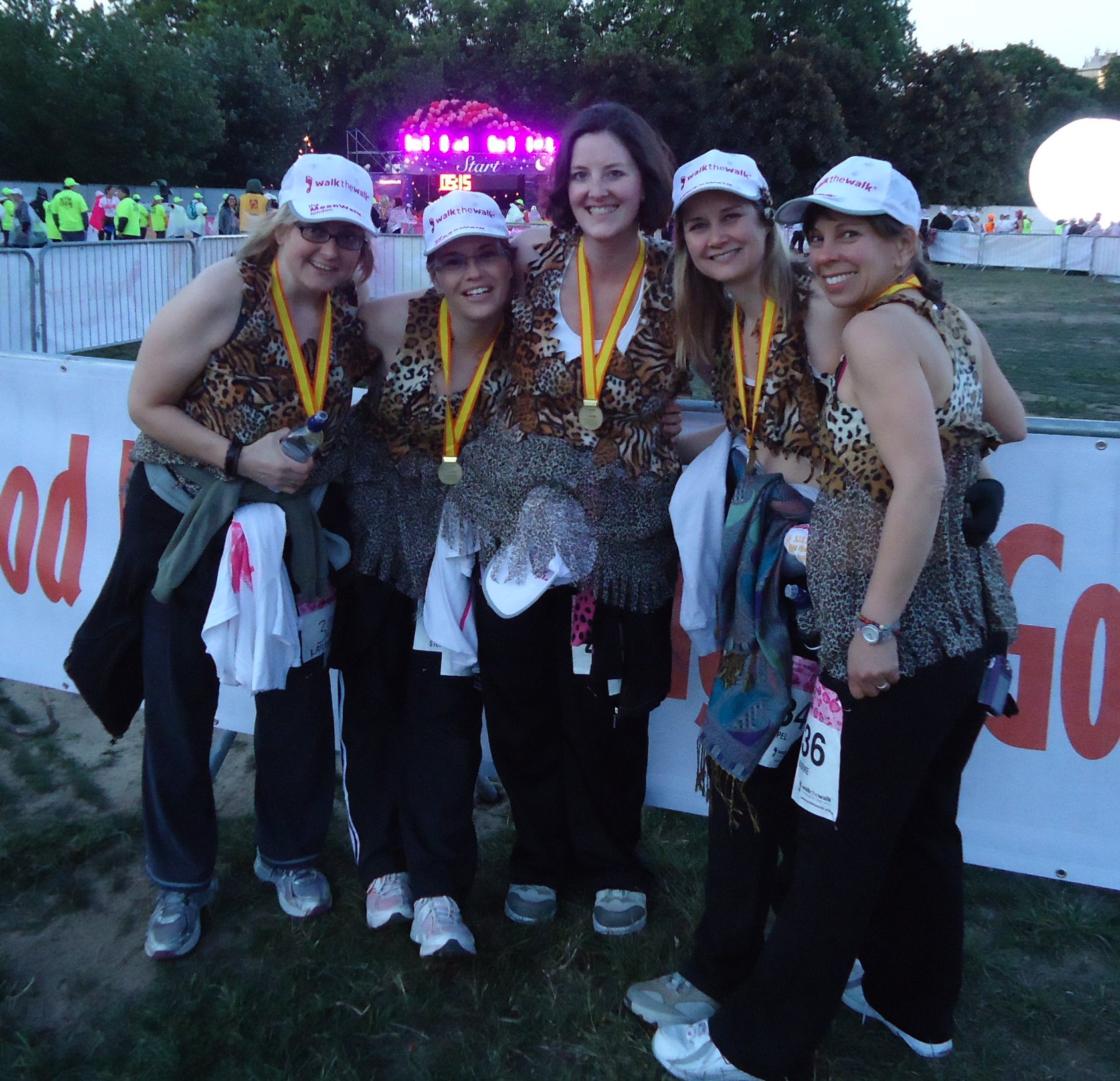
Some of the high-school friends after finishing the London MoonWalk in May 2011.
Some of my closest friendships were forged in the fire of grief. When I was nineteen, I arrived home late from a classical concert. Wondering why the light was on downstairs, I went down and was surprised to see my mom. Her eyes were red from crying and I immediately said, “Did Grandpa die?”
“No,” she said, “It’s Sue. She was killed in a car accident.”
In a flash, my world was changed forever. I started screaming out, “Why? Why? Why?” My mom tried to comfort me, but I was in shock. Coming to terms with why God would allow one of my closest high-school friends die so young, with so much life in front of her, would consume me in the days and years to come.
Why does God allow suffering? I haven’t found easy answers, and no doubt never will know fully this side of heaven. But as I queried theologians and wise friends in the faith, I saw that I had to go back to Genesis 3 and the Fall, when Adam and Eve followed the crafty serpent and disobeyed God. With this act, the world was altered and sin entered in. Now bad things would happen to good people. People would die in car accidents and from disease. Unjust rulers would steal from their subjects. Hurricanes and earthquakes would wipe out thousands. Our world is fractured.
But God hasn’t given us up for lost. In his most gracious act, he gave us his son to pay the price for that first act of sin and disobedience. He is ushering in a new kingdom and a new earth. He is redeeming what was lost.
The tragedy of the death of Sue Weavers that night in October 1986 was huge for me and my circle of high-school friends. In our grief we turned to each other, trying to make sense of the gaping hole in our lives. We met up, sometimes laughing and sometimes crying. Over the years the friendships have lasted. Indeed, one of us commented recently that her friend noticed a deep graciousness between us. Borne out of suffering and pain, no doubt.
Two summers ago our friendship witnessed a new level of grief – the pain of a mother whose son, at twenty, was killed in a car accident. It seems surreal that one of us can now say to her son’s friends that she knows what they are feeling. That she has endured the early loss of a friend and mate. That she prays they will find hope in God the Father, Son, and Holy Spirit. And that their friendships will last and deepen and bear the fruit that ours have in the years after Sue’s untimely death.
In this life we will have trouble – so said Jesus to his disciples (John 16:33). But as he says, in him we will have peace as well. I so wish Sue hadn’t died in Duluth, Minnesota, all those years ago. But I’m forever grateful for my circle of friends who would jump off Tower Bridge if I asked.
How about you? Can you think of some of your favorite friends? How have they made an impact in your life? Comment below – I’d love to hear.
 But then I wrote a set of notes on the theme of pilgrimage, which seemed to strike a chord, especially with people who were transplanted from their homes. I still receive a lovely card at Thanksgiving from one of the readers, which I find moving.