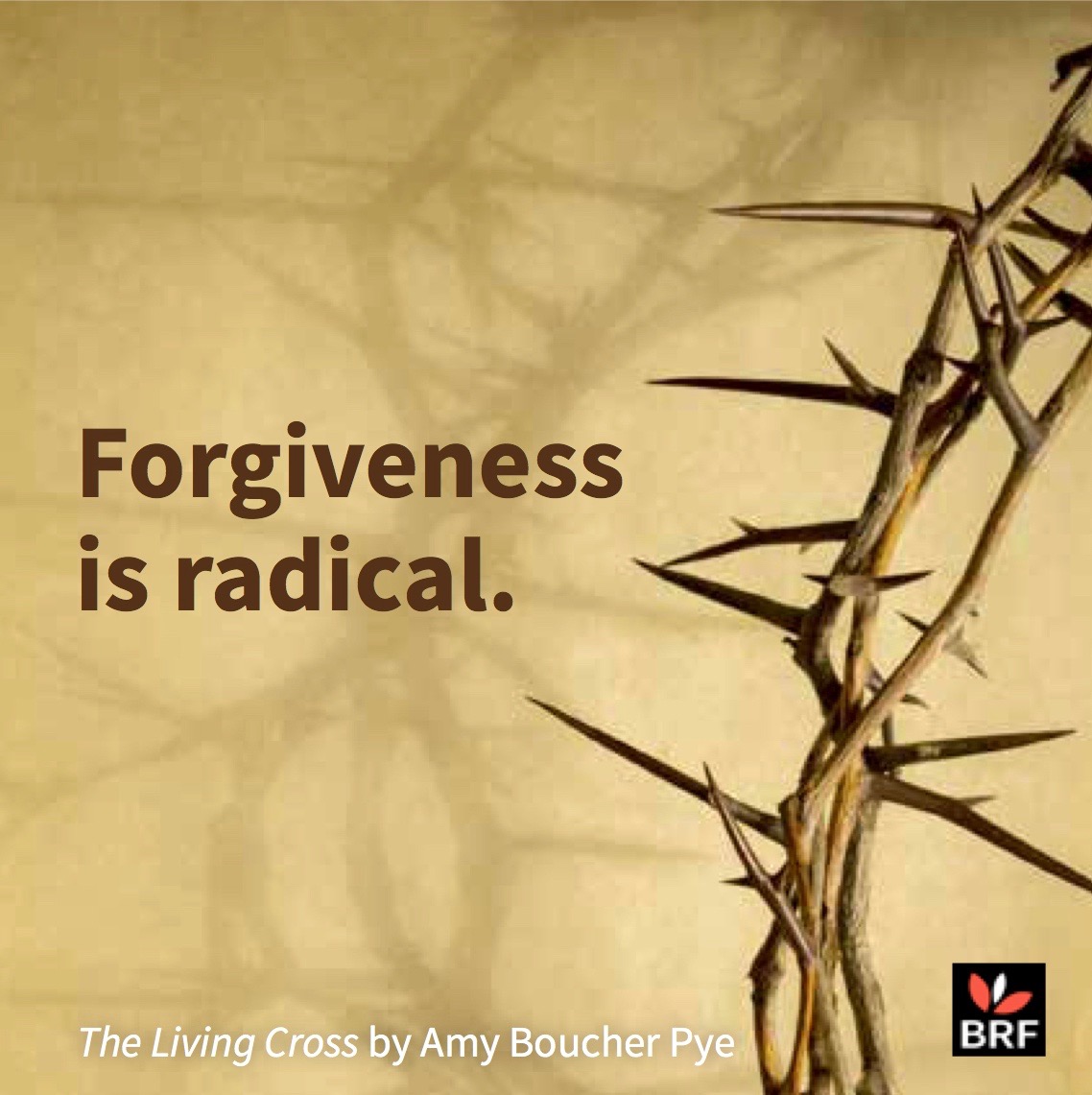
Feel free to download and share this image on the radical nature of forgiveness. #TheLivingCross
Feel free to download and share this image on the radical nature of forgiveness. #TheLivingCross
I read my first guest author’s contribution through tears, humbled at her courage and bravery. How she kept going, and how she was able to forgive, is the mystery we will explore in this series. I can’t thank her enough for being so open in sharing her story. For reasons of protecting her children, she asked not to be named. Trigger warning – abuse.
I knew I had to act the day I came home and found my thirteen-year-old screwed up in a ball on the floor screaming out of fear of her father.
It was the culmination of a long saga of abuse, control and unfaithfulness and I was the proverbial frog in the kettle. By the time it began to dawn on me that I didn’t have to be treated like this and that I was not a failure but was being wronged by the man I loved, I felt it was too late to get out.
I had made my marriage vows before God, I’d had every reason to believe my husband was a godly man – he was a deacon and the church youth leader – and as far as I could see from the story of God making a covenant with Abraham, a covenant is unilateral. Just because my husband didn’t keep to what he had promised before God, that didn’t entitle me to disregard my own vows. I believed that in the great scheme of things my faithfulness was more important than my happiness, and to a large extent I still stand by that. But I can now see, as I couldn’t then, that there comes a time when you should and must get out.
By the time of finding my daughter in a heap on the floor, I had been married to my husband for 27 years. I sent her to a safe friend’s for the weekend and went away to a retreat centre to pray about what to do. My church pastors urged me to get him out of the house for everyone’s safety but I had to hear it from God for myself. While I was away, an incident happened with my eldest daughter, then in her twenties, and I knew that for everyone’s safety he had to leave. He refused. But when our pastor pointed out that we had evidence we could take to the police unless he went, he left.
During our separation I cried out to God to show me how to forgive. I knew I must – if I didn’t it would eat away at me and, more importantly, would hinder my relationship with Jesus. But I didn’t know how to forgive. It was one thing to forgive what my husband had done to me, but our children had also been harmed, and that was so much harder to forgive. And so I began to read everything Jesus had to say on the topic of forgiveness.
And I noticed something – Jesus talked about forgiveness a number of times. But there was only one place where He defined what he meant by it, and that was in Matthew chapter 18, where He defined it as cancelling a debt. Once I realised that, I knew what I had to do. So I took a blank piece of paper and on it I wrote down everything my husband owed me, from the marriage vows he had made, and from what the Bible instructs Christian husbands to do:
And so on, until I had listed everything that came to mind. And then, at the bottom of the page, I wrote, “Lord Jesus, with your help I am cancelling this debt and regarding it henceforth as paid in full.” And I signed and dated it, just as if it were a legal document.
At once I felt as if a huge weight had been lifted from me. I told no one what I had done, but folded the paper and secreted it in my prayer journal. The next day, I met up with my husband, who up to that point had shown no remorse or repentance for his conduct. He handed me a large bouquet of flowers and said, “I owe you an apology. I’ve been completely out of order.” I was staggered beyond words. It was as if my forgiveness, given in the secret of my own heart and witnessed only by God, had unblocked a spiritual channel and set him free to begin to repent.
I wish that was the end of the story. After six months he moved back home, and gradually the pattern of unfaithfulness, lying and deceit crept back in. Eventually the abuse became so damaging I knew I had to get myself and my youngest child, who was still living at home, out and into a place of safety. This time there was no going back and we were divorced after 31 years of marriage.
Two years later he was taken ill and died quite suddenly, but I was able to sit at his bedside just before he died and assure him that the past was all forgiven and he had nothing more to reproach himself with. In the final hours of his life I witnessed him reach a place of peace with God. I know that if God had not shown me how to go about forgiving, my subsequent life would have been blighted by bitterness. Instead I am enjoying a freedom I never knew when I was married.
Amy’s book The Living Cross explores forgiveness through a series of daily Bible readings for Lent. You can find out more about it, and how to purchase, here.
 Will you – can you – forgive?
That is the question we explore in our new series, Forgiveness Fridays. And it’s fitting to kick off the series honoring the person who first sparked my interest in writing about forgiveness, Jill Saward. Dubbed for years as the “Ealing vicarage rape victim,” she was a tireless campaigner for those affected by sexual violence. She died yesterday following a stroke, only 51 years old.

What caught my eye back in 2006 was an article online about Jill and forgiveness, for she forgave her attackers. When one of them, who hadn’t had any part of the rape, but hadn’t tried to stop it either, was released from jail, he wanted to meet her. He sought forgiveness. And she forgave him, to the disbelief of many. As she said,
“It’s not a question of whether you can or can’t forgive. It’s a question of whether you will or won’t.
“Of course, sometimes I thought it might be quite nice to be full of hatred and revenge. But I think it creates a barrier and you’re the one who gets damaged in the end. So, although it makes you vulnerable, forgiving is actually a release. I don’t think I’d be here today without my Christian faith. That’s what got me through.”
We may not – I hope not – have to forgive someone for such a life-changing crime, but we all have to forgive people who have wronged us. Will we hold onto, and even nurse our bitterness? Or will we let it go, with the help of God, and embrace the freedom and joy God gives upon its release?
My new book for Lent, The Living Cross, looks at this question in a series of daily Bible readings. You can buy a copy through me, at good Christian bookshops in the UK, or online at Eden, or of course through Amazon. In the States it is only available through Amazon.
 The day has come – today is the official launch day for The Living Cross: Exploring God’s Gift of Forgiveness and New Life, published by the Bible Reading Fellowship (BRF). In the times of old in publishing, the launch date may have been met with a bubbly-infused luncheon or a glitzy party at night. Times have changed, however, and those publisher-sponsored events are largely a thing of the past – at least at my level of authorship!

But we have marked the birth of this second book-baby by hosting two events, one on each side of the Atlantic. Babies come at all sorts of odd times in life – I have a friend, for instance, who gave birth on her birthday, and I am glad that a family member has a September 13 birthday and not a September 11 one. This book-baby arrived at a time of sadness in our family. Days after my husband and kids arrived in Minnesota, laden with copies of The Living Cross that had arrived while I was in Michigan, Nicholas’s mother died unexpectedly. He was able to cut short our visit and fly back home to England to be at her bedside when she died, for which we were grateful. We decided to go ahead with the already-planned book celebration a couple of days later, feeling the loss of her but sensing she’d want us not to cancel the celebration. For Olwen always so encouraged me in my writing, and one of our last conversations was about how happy she was that Finding Myself in Britain had won an award. I honour her memory with this book on the gift of forgiveness – a gift to be unwrapped in the close proximity of family life.
I think too on this launch day about the advice from another who has moved onto glory, Marion Stroud. In her last post for the ACW blog, just weeks before she died, she spoke of author Cynthia Ruchti’s practice of praying on a launch day. Praying for all those who would read the book; praying for those going through the struggles that her characters experienced. I too am embracing this practice today.
 Starting next week, I’ll be hosting another guest blog series, Forgiveness Fridays. I’m so excited to share with you some fantastic posts on the freeing gift of forgiveness, written by an interesting range of people.
Lent is a long ways away – we haven’t even entered Advent yet! But if you’d like to buy copies of The Living Cross (maybe as a Christmas present?), I’d be happy to sign copies and send them out to you. They retail at £8.99 but I’m selling them for £8 each or two for £15, plus postage. Email me at amy@amyboucherpye.com. You can also buy it from:
I leave you with photographs from the two book parties, the US one was hosted in Minnesota by our lovely friends Tim and Heather Peterson. The UK one was held at our church, St Paul’s Finchley, on Remembrance Sunday. I started off my sermon with the opening of my book, exploring the question posed by a Jewish prisoner of a concentration camp – Should I forgive?
Photos from St Paul’s Finchley:


Photos from the Minnesota book party:


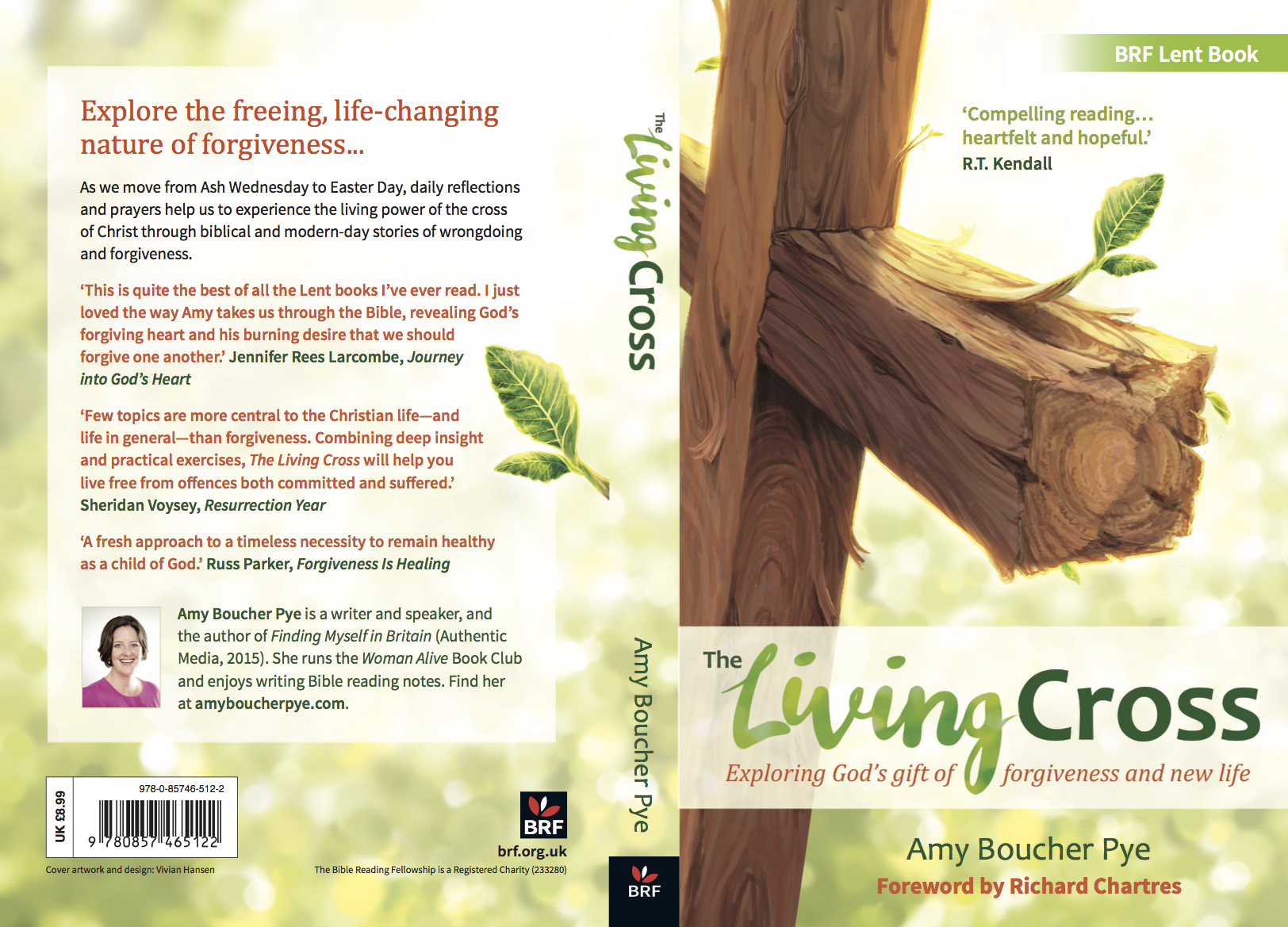 I brim with excitement to share with you the birth of book baby #2. Yes, I know, I’m still reeling from my lovely firstborn, dashing around the country sharing it from Hove to Glasgow, so how this second-born has gestated is a bit of a mystery! I don’t think there will be any sibling rivalry – at least I hope not. As with real children, these are different babies.
The Living Cross: Exploring God’s Gift of Forgiveness and New Life looks at this life-giving theme of forgiveness in the Old Testament and the New. I interweave modern-day stories alongside the biblical, and when I was writing I never failed to be inspired by the freedom this gift imparts – to the giver and the receiver.
To celebrate the birth, we’re having a book launch at our church, St Paul’s Finchley, at 10am on 13 November. As it’s Remembrance Day, I’ll be starting my sermon with the opening illustration in the book, taken from the thought-provoking book The Sunflower, which asks the question posed by a Jewish survivor of World War 2: Would you forgive? We’ll follow by a book signing and lunch.
You’re welcome to come, especially if an ocean doesn’t separate us! Do let me know if you plan to attend so we can sort the catering: amy@amyboucherpye.com.
Ya hoo and hooray and thank you, Lord!
To preorder The Living Cross, click here, as well as to read some amazing endorsements.
 “I should have written that Lent book.” That was my offhand comment to the wonderful Karen Laister of BRF (Bible Reading Fellowship) at the Woman Alive/BRF women’s day in Woking over the summer. Imagine my surprise when a month or so later I received an invitation to write the 2017 BRF Lent book! I had developed a proposal back in 2011 for a devotional exploration of the theme of forgiveness as rooted in Bible for the season of Lent, but for a bunch of reasons, mainly my misunderstanding of the realities of the Christian publishing scene (read stubbornness), the book was never written or published.
After hearing from BRF, I dusted off the proposal I had previously developed and thought, “Wow, there’s some good stuff to delve into here!” The good stuff being the biblical stories of redemption, healing, and freedom through forgiveness – from Jacob and Esau (Genesis 27 and 32) to Abigail begging King David’s forgiveness on her brute of a husband’s behalf (1 Samuel 25) to the prophets and then to the New Testament, such as Jesus, Jesus, Jesus and the early church and the Spirit coming and the hope of the Resurrection and the Life to come and to live in the here and now.
So this time the peeps at BRF and I came to an agreement, which I signed today. <Woo hoo!> Thank you, Lord! And yes, I’m excited! Although we do need a good title – my provisional one was “Father, Forgive Them.” Open to suggestions!
You may know that I run the Woman Alive Book Club. This month’s interview (reproduced here, uncut, with thanks to Woman Alive) is with the prolific writer, RT Kendall (author of over 50 books). He was the senior minister of Westminster Chapel in London for 25 years. He lives with his wife in Tennessee, and continues to preach, teach, and write.
 I pray a lot about writing books and seek the leadership of the Holy Spirit in the entire process. I refuse to write until I am gripped. Some of my books were sermons. My book God Meant it for Good was a series of Sunday-night sermons on the life of Joseph from Genesis 37-50. They were originally typed from a tape recorder, then edited to make them more readable. The same is true of All’s Well that Ends Well (life of Jacob) and A Man After God’s Own Heart (life of David). But other books I type at my computer. Sometimes a publisher will ask for a particular subject, sometimes I will get inspired to write on a subject. I like to think that at the bottom of all this is the anointing of the Holy Spirit. But at the end of the day no matter how inspired I may feel if people don’t purchase the books they won’t get read!
Total Forgiveness has sold the most copies (also in 20 languages) of my books and I have received the most letters from people who read it. That book has apparently healed marriages, got family members speaking to each other. I could almost have a book made up of testimonies of readers.
There is not a pastor who does not have people say, “I know God forgives me but I cannot forgive myself.” Totally Forgiving Ourselves has set people free in a wonderful way, but I give God all the glory for this. It’s not me. I have had to do what I tell people to do – I had to forgive myself for not being the good parent I should have been when the children were growing up. I put my church and sermon preparation first thinking I was putting God first. I now believe if I had put my family first I would have preached just as well but I can’t get those years back. I have forgiven myself – I really have! And this has helped others to do the same.
I have been criticized for the title of my latest book – Totally Forgiving God – and I understand this. It sounds like God is guilty of something. But he is absolutely pure, just, and righteous. That said, he allows things to happen which he could have stopped (since he is omnipotent). We have to forgive him – set him free, let him off the hook – for the things he allowed to happen. The book is largely an exposition of the Book of Habakkuk and demonstrates how we must wait until the Last Day for God to clear his Name. I have received testimonies of people who said that book set them free.
We love Britain and would live there tomorrow if we could. It is too expensive. My best friends are in Britain; my happiest memories are in Britain. It was at Oxford I received my research degree; it was in London I was given an international platform. I would never have written a book had I been pastor elsewhere. So I am grateful to God for the privilege of having lived in England. Louise and I take every opportunity to visit when we can. The nostalgia is deep in us.
When I was young I identified with Joseph. Now that I am old I identify with Jacob. When I read about Jonah I say “I am Jonah” – the Jonah who went the opposite direction from what he was told to do; I am also the carnal Jonah who pouted from not being vindicated. My latest book to be published in the USA is on Elijah. I identify with him – a very self-centered man who took himself too seriously.
My book on David is called A Man After God’s Own Heart. I identify with him in many ways, especially in his days of preparation before he became King. But what I admire most about David was how he handled himself when in exile and let God do the vindicating.
Although I have not written a book on Paul – only preached from his letters – he is the one I look forward to talking with in heaven. I want to see what marks he will give me for how well I interpreted Romans, Galatians and all his Epistles. I will also ask him, “Did you write Hebrews?” (I think he did, but nobody agrees with me).
I returned home from our wonderful week in Northumberland, feeling spent from a summer and autumn filled with good things: Our family’s five weeks in the States. Leading a meaningful and sun-filled retreat in Spain. A trip to the States to play with my high-school friends at the lake where they filmed Dirty Dancing and to celebrate family birthdays. And most recently our jaunt up to the wilds of the Northeast of England, venturing into the rugged coast and atmospheric castles.

Although I knew I was facing a first-world problem of exhaustion from too much fun and travel, I was wiped out. And so I wasted more time than I like to admit early this week watching episode after episode of Scandal, a drama based in my former home of Washington, DC. The storylines gripped me and I loved seeing the beautiful buildings of my former stomping grounds. But watching so many episodes when I should have been spending my time with more fruitful pursuits – gardening or decluttering would have been more fulfilling – left me with another shame hangover.
Shame hangover – such a descriptive term, which Brené Brown employs in her acclaimed TED talks and book Daring Greatly. I spoke last week of my shame hangover related to my flapping mouth and unholy moments while at Holy Island, which many of you responded to with forgiving love and sometimes a knowing, “I’ve been there.”
Shame can stick to us like a new set of clothes, ones we don that can become sealed into our skin. So familiar they can become that we don’t know how to operate without them. And so like Eustace Scrubb in CS Lewis’ The Voyage of the Dawn Treader, we need to remove them with God’s help, in a sometimes painful manner. Eustace, you may recall, had been turned into a dragon through his dragony greed and selfishness. He meets a lion (Aslan), who asks him to undress. Eustace peels off a few layers of dragon – of selfishness and pride – but remains a dragon. The only way to undragon is for Aslan to bring about a deeper cure – one that sinks deep to his heart and hurts greatly, but brings about a new person.
I’ve been thinking lately about the old self and the new, for not only at our conversion do we shed our old self with its sinful practices and take on the new self. This process of putting on the new self is continual, as the apostle Paul writes to the church at Ephesus: “You were taught, with regard to your former way of life, to put off your old self, which is being corrupted by its deceitful desires; to be made new in the attitude of your minds; and to put on the new self, created to be like God in the true righteousness and holiness.” (4:22-24)
His verbs are active in the Greek – we put off our old self and put on the new. Our new clothes are no longer the rags of shame, but the royal robes of daughters and sons. Indeed, we are clothed with Jesus himself. But we don’t always wear our new robes. We slink back to the rags, perhaps through exhaustion or weariness. When we tire of the shame hangover, we can release it over to God, asking for forgiveness and for him to fill us with his Holy Spirit, that we might be empowered to live the forgiven life.
So as I get back to a structured routine, one not filled with countless episodes of spin-doctors, I come before God and ask him to help me wear his richly colored robes as I shed the ragged shame-inducing garments. Here’s to being forgiven!
The New Name I will give you a new name Known only to you Contented will you be At peace; in rest; whole. I will give you a new name Complete; without needs Fulfilled; affirmed; fully clothed Named by my love. I have given you a new name Walk into it; accept it Wear it as a royal robe Adorned you are by my love. I have given you a new name Beloved you are Most precious to me Cherished; adored; redeemed. I have given you a new name My daughter in whom I delight With my presence, filled A vase reflecting my beauty. With your new name, go forth Embodying peace, joy and love For with you I walk, in front and behind Never to leave you, I promise; always here. © 2012 Amy Boucher PyeI woke with a shame hangover. As thoughts of the previous day came rushing back to me, my face flushed with heat.
We were traveling on a budget – not uncommon for clergy and those doing so-called Christian work.* We were sharing lunch in a small coffee shop on Holy Island (Lindisfarne), having purchased some hot soup and drinks to supplement our sandwiches, which we (well, I) consumed with a tinge of shame. The quarters were crowded and we were verily on top of a couple who were enjoying their cream tea next to us.
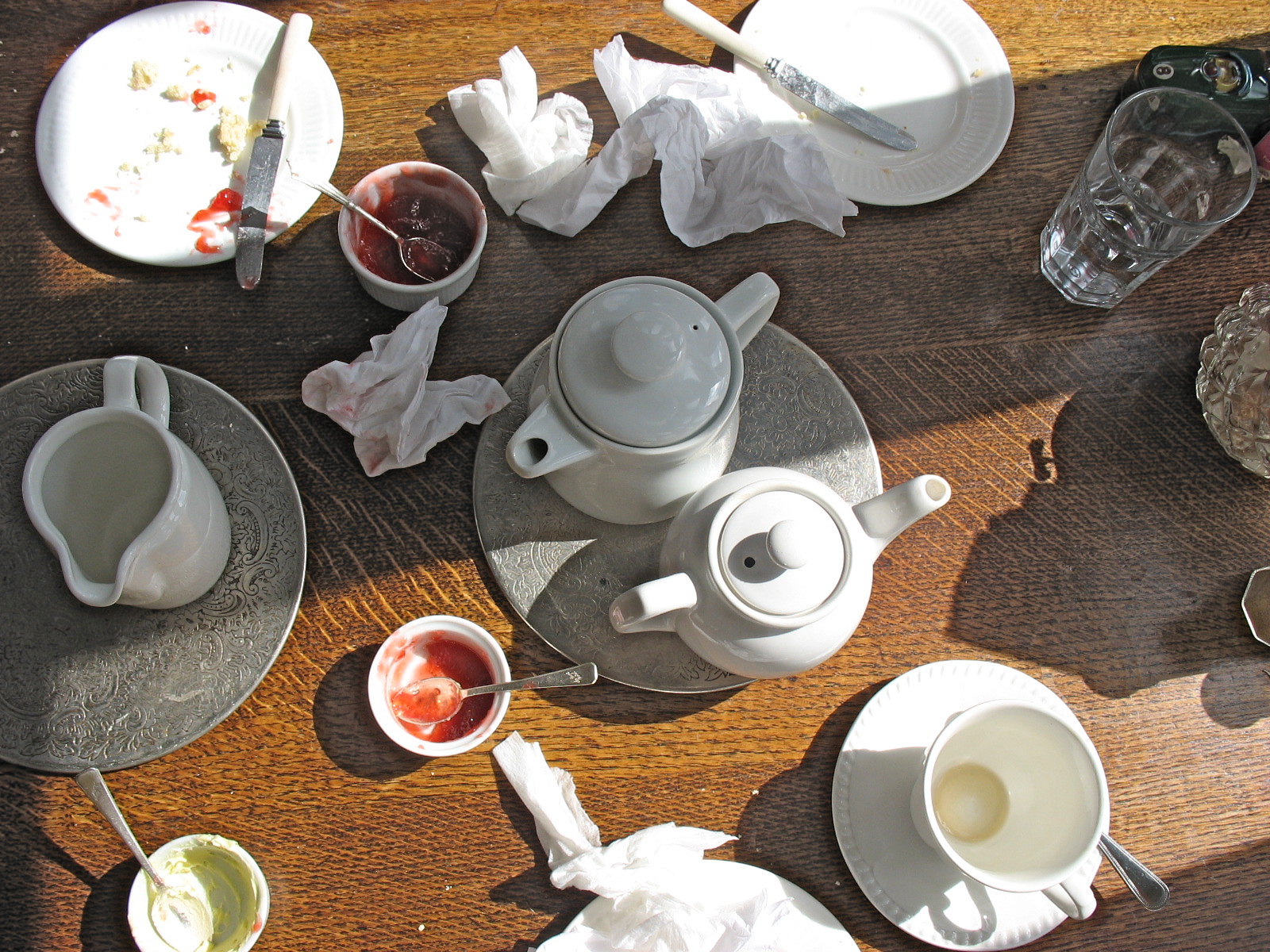 They were decked out with the requisite waterproofs to protect against the fierce North Sea winds, which they now had mostly shed as they nursed their hot drinks. The woman delivered a string of comments and observations to her unsuspecting or long-suffering companion: “So do you think the gentleman at the hotel was in his seventies? Oh, look, they’re sitting out there in the cold. Oh, they have a dog. That must be why. It’s so windy out there. How’s your scone? I meant to tell you a story about Roger and Elspeth…”
Snatches of conversation drifted over, and I caught them unwillingly, wanting instead to focus on my family and my own lunch while feeling conspicuous, guessing that later over tea, we would be the subject of her conversation: “Oh, did you see that family at lunch? They brought their own sandwiches and ate them at the restaurant. I wonder if they don’t have much money. The little girl spilled her hot chocolate all over, didn’t she. Shame. They were British, but not the mother. She was American, I think. The boy refused to eat the roll they had brought. How old do you think the children were? I suppose primary school…”
Something about her continual chatting drained me, and I was eager to leave and experience the space of the island. Finally lunch consumed, spilled hot chocolate cleaned, we left to explore the Priory and the Scriptorium. We enjoyed the majestic ruins of the centuries-old Priory, trying to imagine the early Christians and their life in these fierce conditions. A few hours later, my husband’s drinks routine made a 4pm stop for tea essential. “I don’t want to go back to that same place,” I said. “We were all on top of each other.” And I felt some guilt for having brought our own food into their establishment earlier.
We found a coffee shop bulging with paraphernalia. Old newspaper articles covered the walls, along with fishing traps and cricket bats. The place was empty save for one woman in the corner, turned away from us.
Cakes and tea bought, we settled in the other corner. I had tucked away the exasperation at lunchtime, and now presented my family with my self-important observations: “Oh, I’m so glad we have space here. I felt so hemmed in at lunch. And that woman next to us. Goodness, she just kept going on and on, talking about so many people. Two hands, PyelotBoy; you’ll spill your tea. Her husband didn’t seem to get a word in edgewise. She just kept talking and talking…”
Rant off my chest, I turned to my tea. But I had missed a crucial piece of information that PyelotBoy had keenly observed as we entered the café: that our lone shared café dweller, now silent, was actually… that woman. Of all of the people on the island, we were together again.
He tried to tell me over our tea, and slowly the realization dawned. I had loudly disparaged of “that woman,” and with only us in the café, she couldn’t have helped but hear my cutting comments. The minutes ticked away slowly, shame creeping into my pores. PyelotBoy, in contrast, could hardly contain his glee at my gaffe – very funny from a ten-year-old’s point of view.
I suffered in silence, and eventually the woman got up, thanked the proprietor for a lovely cup of tea, and excused herself to the loo. I thought she’d never leave. I grabbed as a cover the English Heritage children’s activity sheet from the Priory, searching for anything to distract the attention off of me and my shameful act. Reading aloud from it, I used it to shield me from any accusing glance of the woman as she left the café.
 I kept checking the reflection in the glass to see if she was leaving. Finally relief washed over me when she walked out, accompanied by PyelotBoy’s peal of laughter, “Mom, you said all of that in front of her! She heard you talk about her!”
“I know. I’m mortified. That was so terrible. I feel so bad! Guys, let me tell you what that was. That’s called gossiping. I gossiped about someone and she actually heard me. Please learn from my mistakes, for that was sooo wrong.”
“I love to gossip!” PyelotBoy said, in that preteen state of silliness, wanting to oppose his parents and wind them up but not fully ensconced yet in teen rebellion.
“But look at what gossip can do,” I said. “That woman must have heard me, and think of how I must’ve hurt her, with me saying how she talked and talked about everyone. Well, she’ll certainly have something to tell her husband now. Not good. I never should have said that.”
“We know what your sorry prayer is going to be tonight!” said my husband with a laugh.
“Yep, no question. I feel horrible.”
And that shame stayed wrapped around me, like a coat I couldn’t cast off, for the rest of the day and evening. I had modeled bad behavior to the kids. Here on Holy Island I was distinctly not holy. I could only hope that my kids would see the effect of shame. And sin. And the forgiveness God gives.
That constricting and leaden cloak remained until I took it off with God’s help. I poured out my heart before him, asking for forgiveness and expressing my sorrow over my caustic words. By Jesus dying on the cross, I could be free of the weight of the shame; it would now not seep into the very fabric of who I was. I no longer would be called Gossip, but Beloved.
Have your words caused you to stumble? How have you found relief?
*I don’t like to describe it as such for all work, whether in the general marketplace or that of ministry, can be done for the glory of God and therefore be termed Christian. And yes, although on a budget, I acknowledge that we spend a significant portion of our finances on travel as we love experiencing the world and opening up our children’s eyes.
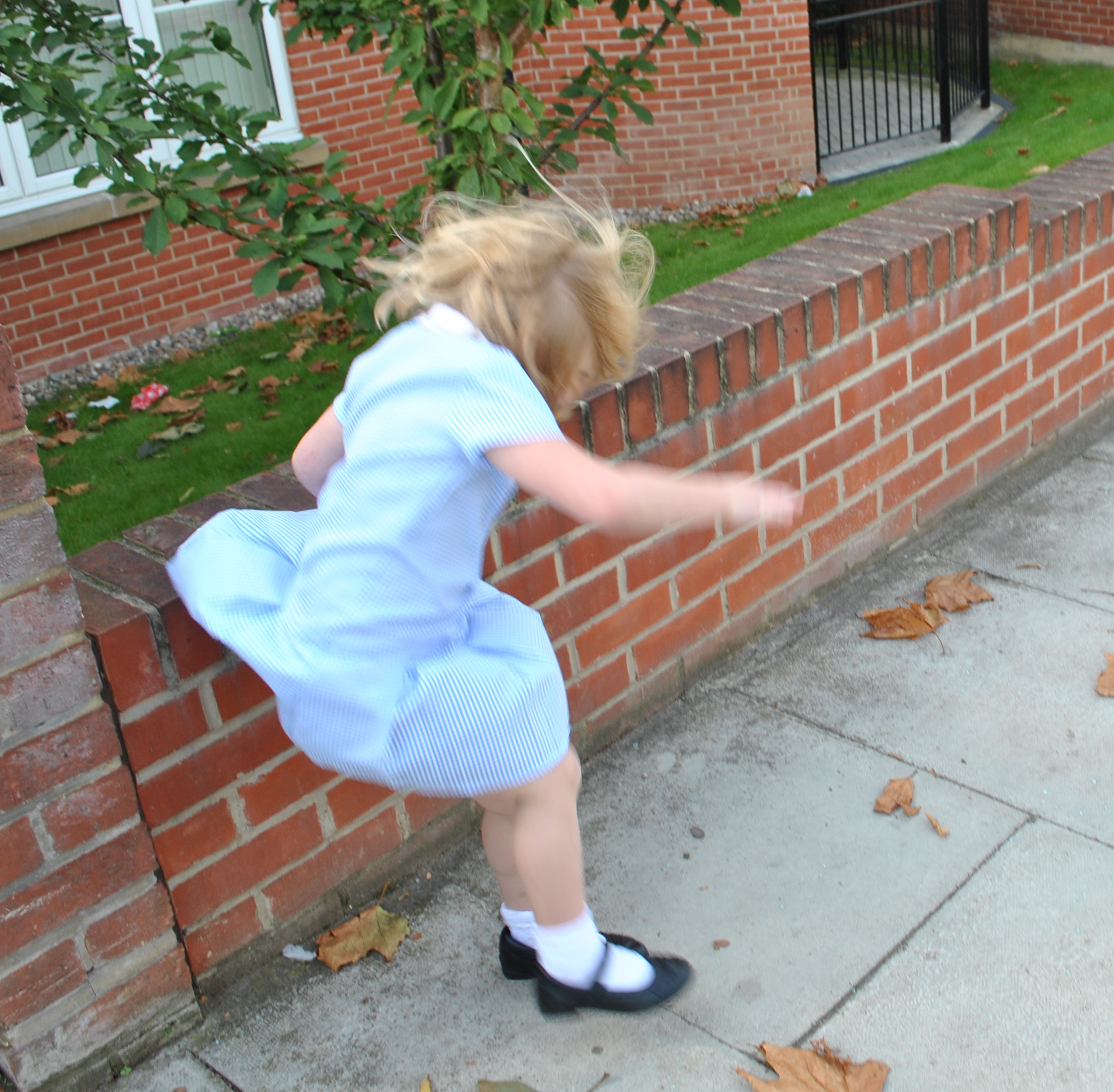
The morning school run can be a most dreaded experience. It’s certainly not something I anticipated would be such a big part of my life. In America, people generally don’t walk to school, the ubiquitous yellow school bus doing away with parents needing to deposit their children at school each day. Not so in Britain, where the School Run is an institution. A daily time of sweet engagement with one’s offspring. Right? Or, as the case this week, meltdowns. And that’s not even the behavior of the kids.
Yep, I lost my patience yesterday and today. Yesterday with PyelotBoy, and today with CutiePyeGirl. Autonomy is important to PyelotBoy; he doesn’t like to be told what to do, and being instructed to wear a coat on a rainy morning can make life spiral downwards. Today CutiePyeGirl decided that she’s outgrown her Princess scooter and now will be laughed at by her friends, so using said scooter for the mile walk to school was a tear-filled experience, amplified by her stepping in poo and scooting through a massive puddle, with ramifications on both counts.
My daughter isn’t too old yet to reject the idea of me giving her a huge hug and whispering a prayer in her ear once we got through the school gates (phew, on time even with the challenges). I hope she’ll shake off the trials of the morning, as my son did yesterday (he seemed fine mid-morning when I dropped off the forgotten piano books – another sign of us not being on the ball). I know she’s tired; we’re nearing the half-term break, which we all seem to need during this busy autumn.
But as I think about this week and the school run, I sigh and ask God to forgive me for losing my cool with the kids. What do I need to do differently? How can I reign in my tongue? How can I impart fun and creative memories of this time I have with my kids? A season I know will soon pass. As I consider this season before God, I think of how he’s the perfect parent, never losing his cool with me. I’m grateful for that, and pray that I can pass along some of his divine love to my family.
So how about you? Do you do the school run, and if so, what tips do you have for making it a creative, happy experience? How do you keep your cool when you’re tired, not wanting to be late, and knowing your hair is going crazy in the mist?