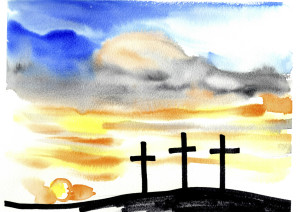
Tag: Forgiveness Fridays

  • Forgiveness Fridays: Forgiveness is Freeing by Lynne Cole

    When it comes to forgiveness, everyone is different. I love Lynne’s story for her honesty and how she tells the gradual nature of her becoming free from carrying someone else’s sins, as she puts it so aptly. I continue to be humbled and grateful for the bravery displayed by the contributors to this series, such as Lynne.

    There I was, standing in a spot where his grave might have been, and I’m griping tightly onto an A4 piece of paper. A piece of paper that held the truth of what actually happened to me during four years when I grew up too quickly.

    Looking around, all I see is green grass with very few markings of where graves could be. I expected to see at least a head stone with his name etched into it… something that would make it real. But there was nothing. Only little numbered markers dotted around declaring where each person is buried. With there being no grave stone or a recognisable grave, I concluded that he had no meaning to his life.

    Standing there, I remember clearly when my mother told me, 21 years earlier, that he had passed away. It was four months after he was arrested. He hadn’t even reached the first hearing of his trial.

    My memories of that day are vivid. I was so angry that he had “escaped” his prison sentence, and I felt betrayed because he was now “free”. I also remember feeling relieved. He was dead… and I was glad. I hoped that he had met God at the pearly gates of heaven and that he was sent straight to rot in hell.

    I know, I know and I know. This sounds very unchristian. I am fully aware of that. However, this was how I felt towards the man who had sexually abused me for four years. After all, he took away my childhood.
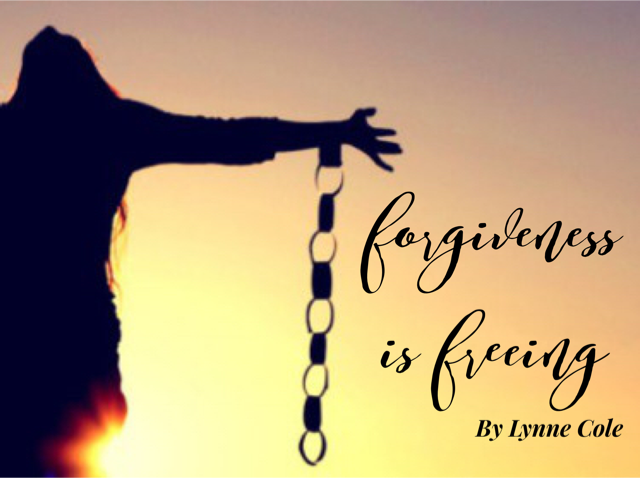
    I wanted him to suffer so much for the pain and hurt that he caused me. I wanted him to feel the pain that I felt…Not just in those four years, but the years afterwards that I had to endure I as tried to come to terms with what I went through.

    When I stood at the graveside with my mum on one side and my husband on the other, I held on to that piece of paper as though it was part of me. This piece of paper held all the truth of every single detail that he did to me.

    Every. Single. Detail.

    You see, when I was 11 I was too scared and too ashamed to voice what truly happened to me. No-one EVER got the full truth, and that truth had been inside me for 21 years. At the graveside, I finally let it all out… And then I burnt it. In that moment, the spirit of condemnation left my body and I was free.

    Four years later, I look back and I question myself if I have still forgiven my abuser – just in case my time at the grave was a passing moment. The honest answer is yes! I wouldn’t wish what I went through on anyone, but I wouldn’t change what I went through either. I no longer feel shame over what I had endured and I can honestly say, with my hand on my heart, that I have no regrets about my past.

    I am proud of who I am today.

    Forgiving my abuser did not mean what he did to me was right. It also does not mean that I would get my childhood back. Instead, forgiving him meant that I could move forward with my life. I have learnt that unforgiveness keeps us locked in to anger, resentment, bitterness and hurt. It keeps us apart from Jesus.

    I didn’t get to the point of forgiveness lightly and reaching it wasn’t one of these “aha” moments when something clicked into place. Rather it took me 21 years that lead to the moment at his grave, of sorting through a mountain of emotional mess, through counselling and reading various books, to reach the point where I wanted to be free from the chains of unforgiveness. I no longer wanted to carry the burden of someone else’s sin.

    Be kind and compassionate to one another, forgiving each other, just as in Christ God forgave you. (Ephesians 4:32)

    I believe that forgiveness is necessary in order to move forward, but it can only be done when you are ready to do so. No-one should be forced to forgive someone else if they are not ready. It doesn’t matter how long it takes either… 2 years or 21 years… but when it happens? Forgiveness is freeing.

    Lynne Cole is a full-time working, married mother to 3 gorgeous children…two girls (aged 8 and 7) and a little man (aged 5). She blogs in the free time that she has, which is very little! She believes that a broken past does not mean a broken future and that we are all beautiful despite what we have been through. Her desire is that she is able to give people a little encouragement and hope through what she writes. She writes from the heart, honestly, about anything… things that have happened in the past, what she is going through right now and what she hopes for the future.

    Come visit her at:
    Blog: www.beautifullybroke.org
    Facebook page: https://www.facebook.com/beautifullybroke.org/
    Instagram: lynne.cole


  • Forgiveness Fridays: The Sacrifice and Rewards of Forgiveness by Maureen Chapman

    Childhood wounds can be devastating, as we see in Maureen Chapman’s story. But we don’t have to be defined by them, as she shows.

    I have spent most of my 7 decades of life learning about forgiveness. I was born on the morning of the first day of World War 2 in North London, England. My mother, who was pregnant with me and had to get married to my father, was terrified and angry. She wanted to have me adopted but changed her mind.

    When, at the late age of 37, I was pregnant for the first time, I broke a long silence, maintained by her, to inform her by phone that she was to become a grandmother. She was cold, told me I was too old and that anyway, lots of women had babies every day, so what? A few weeks later I miscarried.

    Photo: Ross Griff, flickr

    I hated her. I am a Christian, and knew the Lord’s Prayer about forgiving and receiving forgiveness from God, but I was bitter, angry and hated her. It didn’t take me too long to discover that my relationships were being soured by these negative reactions.

    Bear with each other and forgive whatever grievances you may have against one another. Forgive as the Lord forgave you. And over all these virtues put on love. (Colossians 3 v13)

    I knew I had to forgive, but I did not want to be exposed to any more malice. Reluctantly, I handed my hate and unforgiving attitude to God.

    Get rid of all bitterness, rage and anger…… Be kind and compassionate to one another, forgiving each other just as in Christ, God forgave us. (Ephesians 4 v 31)

    There is always a price to pay for forgiveness. Jesus paid the price for us on the cross.

    The relationship with my mother never improved, but I learnt to understand something of her nature. Her own mother died when she was 9 months old. Her father had been gassed in World War 1, suffering poor health and widowed with eight young children to care for. She was brought up by her eldest sister and a succession of housekeepers.

    Having never received love, she was neither able to give love nor receive it. Moreover, after my birth she had suffered a severe postnatal depression, complicated by shingles. She struggled to care for a young baby, not least through the London Blitz and the later bombing raids. She had no emotional support from anyone except my father. He was very deaf, not accepted by any of the armed forces, so worked in a bomb factory by day, and fire watching in the City of London by night.

    My own bitterness and unforgiving attitude had blinded me to her needs. I was demanding love when she had none to give. In turn, she tried to make me her scapegoat to atone for her sins.

    God found a way to forgive us all by sacrificing His own son Jesus to take away our sins. He took this enormous step because He loves us.

    This is how God showed His love among us: He sent his one and only Son into the world that we might live through him. This is love: not that we loved God, but that He loved us and sent His Son as an atoning sacrifice. (1 John 4 v 9)

    We obey Him by extending that loving forgiveness to those who hurt us. The rewards are joy and peace. We live in harmony.

    When I visited my mother just before her death, although she refused to speak to me, except for three short sentences, I was able to pray that God would show her mercy, for He had made her and knew her better I did.

    Since my mother’s death, my husband and I are at last reunited with members of my family. It’s not been easy, unravelling the many lies, misconceptions and misunderstandings that divided us. It is happening and brings joy to all.

    Forgiveness is the very heart of the gospel and love the very heart of God.

    Maureen Chapman, born into a deaf family, is a retired nurse/midwife, missionary to Nepal, hotelier and mini-market owner. She is owned by a bossy Border collie called Honey and loves gardening, walking, meeting people as well as writing, especially for children. She is learning to blog at maureenmusing.wordpress.com

  • Forgiveness Fridays: If we had just one day… by Debbie Duncan

    Debbie Duncan asks some searching questions, all brought to her mind when her daughter spotted a dragonfly over the water. What would you do if you had just one day to live?

    Recently on one of our recent hot, summery days we decided to escape the heat of the house and head to a place by water.[1] As we walked by the river we stopped and saw a colourful shimmering dragonfly. My daughter said, “Adult dragonflies only live one day. What would you do if you just had one day”?

    Her question got me thinking. What would you do if you had just one day? Most of us would you want to tell our nearest and dearest that we love them. What else would you do? I think we would want to know we are forgiven and we’d want to forgive others.

    The famous French sceptic and key thinker of the enlightenment age, Francois-Marie Arouet (aka Voltaire) was a deist. He did not believe in the Bible or that we have a God who intervened in the world. In contrast, his view of God was one of a distant figure.

    Voltaire died a terrible death. His nurse is said to have said of him: “For all the money in Europe I wouldn’t want to see another unbeliever die! All night long he cried for forgiveness.”

    Thankfully I know the forgiveness that God can bring. I asked Jesus to be at the centre of my life quite a few years ago now – 34 years recently! I know however that I am not as loving and forgiving as I should be. When Peter asked Jesus how many times should he forgive his brother or sister Jesus answered, “seventy times seven” (Matthew 6:21-35). Perhaps he was reminding the Jewish people of the 490 years they spent in captivity, in slavery. We are reminded that even during the most difficult of times we need to forgive. He wasn’t tell us to forgive 490 times but reminding us there is no end to forgiveness after all; He gave His life so we can know God’s forgiveness. It is really a challenge to forgive and not allow bitterness take hold.

    Edith Louisa Cavell was a Christian and a nurse who is celebrated for saving the lives of soldiers on both sides during the First World War. She is also known for helping 200 soldiers escape German-occupied Belgian. She was arrested for helping soldiers escape and charged with treason and sentenced to death. Despite international pressure she was brought before a German firing squad in 1915 as a spy. Her last words are said to be, “Patriotism is not enough. I must have no hatred or bitterness towards anyone.” Her Christian beliefs led her to help those who needed it – German or British and even her firing squad.

    I don’t want you to think I have a fascination with death! The challenge is to live each day as if it is your last, living as Jesus would live. Loving and forgiving others – even facing a firing squad or a painful death, even forgiving the thief beside you on a cross.

    Debbie Duncan is a senior lecturer in nursing, a church leader and minister’s wife. She is married to Malcolm and is mother to their four grown-up children. She is author of over 40 professional articles, is writing her second textbook and is co-author to Life Lines with Cathy Le Feuvre. Her first solo book The art of daily resilience was published by Lion Monarch in February and she is currently writing her next book. Connect with her at twitter: @dduncan42; her website: debbielduncan.wordpress.com and via email: debbielduncan@yahoo.co.uk.

    [1] We ended up walking along the Thames river at Runnymede which is a beautiful and historical site where the Magna Carta was sealed in 1215.

  • Forgiveness Fridays: Choosing Forgiveness

    What role can pride take in keeping us in a prison of unforgiveness? A friend who wished to remain unnamed shares vulnerably of how God encouraged her to escape this prison by choosing to forgive one close to her.

    When I was in my mid-teens, my dad left my mum for another woman. I was devastated for my mum and myself.

    The timing of my dad’s departure felt callous and calculating. He chose a time over the Christmas holidays when I was away at a friend’s house, and also after the recent death of my grandad (my mum’s dad) whom my mum was very close to, being an only child. I was angry with the lies my dad had told us about working late at work when really he was out with his girlfriend. As this happened when I was 14; this was already a time of huge emotional turmoil for me.

    Over the years, my anger towards my dad over these painful events has exploded with huge vitriol at times, but, over the past two decades or so, God has brought powerful forgiveness and healing to our relationship. After about 5 years after my dad left, I started to hear God challenge me about my hatred and negative attitude towards Dad’s girlfriend. In my pain I had refused to have any contact with her. I think God spoke to me through a sermon about Holy Communion and making peace with those we have fallen out with. God asked me to love this woman with His love and not allow the pain of past hurts to block any chance of relationship with her.

    I had to choose to lay down my angry and judgmental opinions of this lady I had avoided meeting and choose the more humble way. Being able to forgive her for stealing my dad from our family and causing us immense pain and loss started a new chapter in my relationship with her. I was being treated for depression at the time, which the professionals believed to be triggered partly by the separation of my parents.

    Choosing to forgive didn’t mean I was instantly healed, nor that my relationship with my dad was repaired miraculously right then. Somehow God enabled me to move through my place of pain and show grace to C* where I’d previously only known hatred and resentment. Maybe I didn’t realise it straight away, but I had started on the path to freedom from my dark past which was negatively impacting my health in the present. In 1 Corinthians 4:3-5, Paul makes the point that he’s not in a position to judge others or himself; only God is able to judge our actions and he also says that he is the greatest of all sinners (1 Timothy 1:15), despite being considered one of the world’s most influential leaders in history.

    The mistake I had made was to sit as judge over my dad and C’s choice to break off his marriage to my mum, despite the immense damage and upset my family and I had endured as a consequence. I let pride get in the way of humility until I was able to admit my own sins and allow God to forgive me for my pride, anger, bitterness and resentment towards Dad and his girlfriend. Rather than finding my identity in those negative feelings and hurts and letting the depression and pain define me, I had to surrender to God’s love and mercy for Dad and C, and in that be better able to receive God’s unconditional love, acceptance and new identity as His beloved.

    In choosing forgiveness I’ve had to be courageous enough to revisit my feelings and thoughts about my dad’s leaving has affected me; I’ve had to tell him of the impact of his actions and release these to God to at the foot of the cross, firmly believing that “He has removed our sins as far from us as the east is from the west” (Psalm 103:12, NLT). Rather than beating myself up further about my mistakes, which I make from time to time, I have to choose to trust that “there is no condemnation for those in Christ Jesus” (Romans 8:1, NIV) and remember that “He does not punish us for all our sins; He does not deal harshly with us, as we deserve. For His unfailing love toward those who fear him is as great as the height of the heavens above the earth” (Psalm 103:10-11).

    High cross at Ffald-y-Brenin, Pembrokeshire, Wales.
    Photo: the High Cross, Ffald-y-Brenin, Wales. Source: high-cross.jpg/Clickasnap

    I find comfort in this photo of the High Cross at Ffald-y-Brenin, for it’s a visual reminder to us all of what Jesus did for us at the cross, taking our sins and wounds on his shoulders, and casting them as far as possible away from us.

    Even as I write this blog, I am wrestling with these issues of forgiveness for others who have deeply hurt me. God continues to show me where my anger is getting in the way of forgiveness, healing and a deeper sense of His love for those who have grieved me and myself. Thankfully, God’s grace is a constant source of comfort, despite my personal weaknesses and I know I’ll work through it with God’s help.

    Is there someone in your life you need to forgive? Take a moment to quieten your heart before God and listen to what He says.

    *C Dad’s girlfriend, named to maintain her anonymity.

  • Forgiveness Fridays: The miracle of forgiveness

    Stories about forgiveness in the media draw my interest. I can’t help reading them, and finding encouragement in the ways people manage to forgive others. The stories that hit the news garner attention because they so often surprise us – how could someone forgive a murderer, for instance? Read on…

    I learned when writing The Living Cross: Exploring God’s Gift of Forgiveness and New Life that those offering forgiveness in extreme situations were often exercising a familiar muscle. They extended forgiveness in daily life over the seemingly small things we have to forgive daily – when a driver cuts us off in traffic, or when someone close to us betrays us, or when a family member puts their needs before ours. In forgiving someone who had done a great wrong to them, they were continuing to live in the manner in which they’d been accustomed. Many also cited a supernatural infusion of grace that they attributed to God.

    Below are two news stories of forgiveness for your encouragement. I pray you’ll never need to forgive on the scale that would attract this kind of attention. But we can take encouragement to forgive in the more mundane situations of life. And of course, to ask forgiveness when we do wrong – I sent out an email along those lines this very morning!

    Adam Miller was caught up in a shooting at a lawnmover plant in Kansas in February 2016. He was shot four times at close range, but amazingly, the bullets only hit soft flesh. He said, “I had an obvious hand of protection when it was going toward my chest. I don’t know how to describe it other than that.”

    When lying in his hospital bed, recovering, he thought about what had happened, and the perpetrator.

    “I can’t say that I immediately forgave him. Maybe it came a couple of days later,” he said. “There was no hatred toward him. There was sorrow, and he must have been in so much pain.

    “I just come to the conclusion that for all the things I’ve done in my life, God has forgiven me. So why can’t I forgive someone else?”

    You can read the full story here.

    Cliff and Wilma Derksen’s daughter was killed on a cold night in Winnipeg. Thirty-two years passed before the man accused of her murder would be brought to trial again – had they waited for justice to forgive, they would have lost years of their lives to waiting and perhaps the prison of bitterness.

    One night after their daughter had been missing for several months, a man came to visit them. He introduced himself, saying, “I’m the parent of a murdered child, too. I’ve come to tell you what to expect.”

    He shared with them all of the things he’d lost to his daughter’s murder – not only her but his relationships, work, and even his daughter’s memory. He told the Derksens, “It will destroy you.”

    They saw how a darkness could swallow them, taking away all that they loved and treasured. After the man left, “We kind of looked at each other and said, ‘We have to stop this,’” Cliff said. “We have to forgive.”

    They both made a decision that night to forgive, with Cliff saying, “I don’t believe the person who did this had loving parents or a circle of friends who thought the world of him or he wouldn’t have done a deed like this.” Wilma added, “I can’t say at this point I forgive the person But we have all done something dreadful in our lives or we have the urge to.”

    When people in the public heard what they said, many were angry. Some thought they didn’t care for their daughter, and others questioned what it meant to forgive.

    Cliff said, “We said we were going to forgive and we didn’t know how to talk about it, and we really didn’t know what it meant ourselves. Our big thing was just we were going to forgive whoever it was. We just were going to forgive. We didn’t know how or where or when this was going to happen, it was sort of a north star we put out there.”

    “There was an article three or four months later saying 80 per cent of Canadians didn’t agree with us and would be upset with us because forgiveness meant letting the murderer go free and condoning murder,” Wilma said 32 years later. “That wasn’t what this was about at all. It really was about escaping the aftermath of murder.”

    Read more at the extensive article here.

    Did these stories resonate with you? Could you extend forgiveness today?

  • Forgiveness Fridays: When forgiveness might be easy to overlook by Amy Young

    What a thought-provoking post from Amy Young. When is a wrong not a wrong? What cultural trappings inform us as we answer that question? Just when do we need to forgive?

    China could be called the “Knock-Off Capital” of the world. Knock-offs aren’t just for handbags, though in the classroom they go by another name: plagiarism. What I might call cheating is often classified as helping or good writing. I used to see this issue in black and white, saying that either helping or good writing (aka copying) were clearly cheating. But the longer I was in China, the more I understood the line wasn’t as clear as I thought.

    Amy in China, next to vats of vinegar!

    In a society where relationships are incredibly important, if your friend asks for help and you refuse them, you have no idea what future door you have closed. Maybe that friend’s father’s sister’s husband could have helped you move your mom to Beijing. Maybe not. But without helping, that person is not indebted to you.

    In terms of copying being good writing, this used to be where I, as an American, would roll my eyes and say, “Whatever! A good writer is one who can use their own words.” But in China, a good writer is one who has read extensively and is able to incorporate others’ words into their own writing. Chinese writing is laden with proverbs and set phrases. Everyone knows that a good writer uses others’ words; it is not considered cheating, but a sign of being educated.

    Because I’ve grown in my understanding of both reasons, I am able to be a better teacher and explain that when writing in Chinese, using other people’s words is exactly what the students should do. But when writing in English, they need to operate under different cultural norms. My students are consistently surprised when I can tell they haven’t written something themselves and want to know how I know. Several years ago I had two students hand in the exact same paper on the topic of forgiveness. I couldn’t tell who had copied whom so I gave them both a zero.

    To make the point that copying wasn’t going to get by me and that I do read and remember what students write, I had a student stand at the front of the class and begin to read from one of the homework papers. As she was reading, I joined in reading the other paper. Of course, the class noticed they were . . . exactly the same. Point made. Since it was the first time plagiarism had occurred, I told the class the two students could rewrite their papers, but they had now all been warned and any future copying would receive a zero. The last laugh was on me because neither student copied off of the other; instead they both chose the same paper from the Internet to copy! Ha.

    Zeng Fei, who did an undergraduate degree in Russian, wrote the following letter to me in response.

    When I rewrite the article entitled “Forgiveness,” I can’t calm my heart. Because I clear-headed realized that my dishonest behavior has hurt not only my content but also your trust in every student. I’m very sorry for what I have done. Though I know my request for begging your forgiveness is maybe excessive, I want to ask, ”Can you forgive me?” Your answer for me is very important because it means that whether or not I can recover my self-confidence in my English studying.

    In the Oxford Advanced Learners Dictionary of English, the meaning of the word ”forgive” is “no longer has the wish to punish somebody for an offense, a sin; pardon or show mercy to somebody; no longer have hard feelings towards somebody.” Though it looks illogical, I want to explain the benefit of ”forgiveness” by this unpleasant accident as follows. Firstly, your forgiveness can help one student recover his confidence in life and future. It will raise your significance of teaching profession. As the Chinese parlance puts it “A teacher is an engineer of the human soul.” I hope that you can become a leader in my way of studying English. Secondly, unpleasant feeling and disappointment resulted from this accident maybe would harm your beautiful looks. So if you can’t forgive me I would feel uneasy.

    In this article, as a homework and letter of apology, I hope that you can forgive me. Dear teacher, give me a chance to correct my mistakes, okay? I swear I’ll never make same mistakes. Please believe me again! Yours Zeng Fei.

    Some people make it easy to forgive them, don’t they? I forgave him. By making it easy, I can miss that forgiveness is just as powerful whether is it so-called easy or hard. The guest posts in this series have tackled some deep wounds and shown the balm of forgiveness. For their words and the Lord’s forgiveness I am grateful. It’s been years since I taught Zeng Fei, I don’t know what became of him after he left my classroom. But I do know this, forgiveness changes people. How do I know this? I am one who is forgiven on the big, but equally important, the small.

    Where has a “small” act of forgiveness made a big difference in your life?

    Amy Young is an avid Denver Broncos fan and knows what it’s like to learn lessons of forgiveness on foreign soil. You can read more of her work at The Messy Middle and receive a 14 tips to live well in a messy world. She is the author of Looming Transitions and Love, Amy: An Accidental Memoir Told in Newsletters from China.

  • Forgiveness Fridays: When nations repent by Sheila Johnson

    What happens when nations repent? How does God honor the prayers of his people seeking forgiveness for those atrocities committed by governments? I don’t claim to know the answer to that mystery, but I also don’t want to discount how he might hear our cries. What do you think?

    Although I was born in the UK, my mother was a New Zealander, so I feel a certain attachment to the land and my many relations. To date I have visited there three times. Therefore, at a recent Lydia prayer conference, my ears pricked up when the speaker, a David Tidy of Prayer Warriors International, began talking about his recent visits to New Zealand and the need for the British to repent over their actions towards the indigenous people, the Maoris.

    When Captain James Cook arrived in the islands in 1770, a spirit of division, colonialism, legalism and land-grabbing entered the islands. Indeed, the New Zealand Company, which was in charge of encouraging the British settlers to emigrate, took land, often forcibly from the indigenous Maori population. This resulted in bitter land wars, violence and death, with Freemasonary being a very strong influence behind the British Colonialism.

    Early on in their three years of visits between 2012–15, David Tidy and the British team visited Waitangi where the treaty establishing British rule was signed in 1840. Here they instigated a new spiritual declaration, which was signed by local Maori believers on the backs of both the British and Maoris at the same spot. Repentance was declared for bringing in immorality, alcohol, broken promises and war, and forgiveness was declared. The vision of a ‘land octopus’ was seen by a number of intercessors, its head based in Westminster and its tentacles spreading out of the Bay of Islands in the north of the north island right over the whole of the two New Zealand islands. This repentance went into the very parliament building of the Beehive in Wellington where a meeting took place in the Maori room of the Beehive and the team knelt before two Maori MPs.

    The Beehive
    Detail of wall carvings from Maori Committee meeting room

    Then the octopus of Landlordism and Pride which the Maoris had seen sitting over the parliament building and thrashing its tentacles was prayed against as the team confessed the iniquity of colonialism and Westminster legalism over the Maori people. The team prayed for the severing of the head of this destructive image. In its place, an image of a jug pouring milk, representing a healing balm, was seen as a vision poured over the entire map of New Zealand.

    Tears flowed as the rawness and genuineness of the repentance was accepted by the Maori people and a new spirit was established allowing liberty and creating an environment where the Holy Spirit would be free to let people make their own choices whether or not to follow Jesus.

    This has been followed up by the New Zealand government who have issued a public apology for their unlawful actions allowed during the nineteenth-century land wars, followed by a final land settlement agreement between the various tribes and the Crown.

    Tarureka Estate (now a popular wedding venue)

    All this national history and repentance means a lot to me, not just because of my family background but also because I am currently writing a book based on my Scottish ancestors who went out to New Zealand in the nineteenth century. Interestingly enough, these were my Father’s ancestors and not my Mother’s. Yes, he too had connections with New Zealand, although in the farming community. My book is about a James Douglas who goes out to New Zealand on the encouragement of the New Zealand Company because, like many, he is told of all this cheap available land for farming and so he eventually sets up a dairy farm there. Now, I have discovered that it wasn’t cheap, available land at all but stolen land, land often flowing with bitterness and blood. I’m not sure that I can use all this information in my book, Tarureka, but it certainly puts a different complexion on the story and helps the twenty-first-century reader to see the character’s experiences in the new land in a slightly different light.

    Sheila Johnson, a UK-based writer, has over ten years’ experience as a successful freelance journalist. She writes fiction under the name of Sheila Donald, and in 2016, self-published a Christian romance based around an Alpha Course, called Alpha Male. Tarureka is her second book fictionalising the story of her Scottish ancestors’ life in New Zealand in the nineteenth century.

    When not writing, Sheila enjoys singing, history, films, the theatre, cooking and Formula One racing.

  • Forgiveness Fridays: “The one person I don’t forgive” by Penelope Swithinbank

    We say we forgive. We ask God to help us forgive. We think we’d done it – phew, we’ve forgiven. But why the niggle? Why, actually, the unforgiveness that rears its ugly head? What are we holding onto?

    Oh, how I love this post from Penelope Swithinbank. Please, don’t miss it.

    I wish I could tell you that I have learnt how to forgive. That over these past few years there have been lessons learnt from each of the hard places. I thought I had forgiven – the Christians in the church who sent the vitriolic hate mail; the woman driver of an out-of-control car that, as I watched, ran over my mother and ended her life; the man who bullied my husband so much that it made him ill; the Conservation officer who even now is causing us so much stress and headache with our house.

    And all that is only the tip of the iceberg. It’s been a long tough ride for several years.

    I know I need to forgive. To forgive and go on forgiving. Isn’t that what Jesus said we were to do?

    A lack of forgiveness can be one of the main blockages in our lives – holding grudges, not letting go of our rights, allowing distances to grow between us and those who have offended us. It happens in churches, it happens in relationships, it happens in marriages. And it causes a distance not just between the individuals concerned but between us and God. Because if we do not forgive others, the Father does not forgive us. Matthew 6:14–15 says very clearly, “If you forgive those who sin against you, your heavenly Father will forgive you. But if you refuse to forgive others, your Father will not forgive your sins.” (NLT)

    But I have forgiven them, God, I argue with Him as I walk across the field, dodging the puddles and stomping through the mud. I do forgive!

    I saw that driver across the courtroom and I forgave her – she hadn’t planned to go out and run over someone that day, and her life is in ruins – so I asked the judge to grant her mercy. And the local planning officer – I sat in that meeting and prayed, prayed, prayed for blessings on her even though she seems so unreasonable.

    Isn’t all that proof of my forgiveness, Lord? So why are you allowing all this mess and hurt and pain in my life right now? Why are my prayers not being answered? After all we’ve done for You, God – nearly 40 years in Christian ministry with all its ups and downs and joys and sorrows; following your calling on our lives, giving up so much for the privilege and blessing of full-time Christian service; how could you let all this happen to us now?

    It rains and the sun comes out and there is a rainbow in front of me as I’m nearing home. It pierces me, the realization that it’s not all those people and situations that I have to forgive again.

    Yes, there is still unforgiveness in me. But it’s GOD I can’t forgive.

    I’m blaming Him for allowing all this suffering. For not answering my prayers the way I want him to. I can’t forgive him for the traumas and the deaths and the ongoing unpleasantness.

    And Matthew 6:15 runs through my mind again. Forgive. Literally, let go, or give up your right. The word translated as forgive is one that means: Yes, you may have complete justification in demanding recompense; yes you do have the right. But let it go; give it up. You are owed something – but let it go. Regard it as having been paid in full.

    And I hear Him say, “Come to me – I know you’re weary and tearstained and blaming me. But you have my undying love, always, all the time. I’ll take everything you’re carrying, all your brokenness and pain, all your sorrow and heartache. And in return, my Grace is pouring over you, in and through it all. You are my beloved daughter and I love you more than you can imagine. This all will pass but my love for you is for ever and ever.”

    Lord, I need your help to be a forgiving person. Help me see the great love and forgiveness you daily bless me with and from that may I love and forgive others – and you.

    Penelope is an Anglican priest who writes, blogs, mentors others (mostly through Spiritual Direction), contributes to Daily Bread Bible reading notes, and speaks on conferences and retreats. She has just retired from running a small retreat house and now is able to spend more time hiking, reading and daydreaming. With grandchildren on both sides of the Atlantic there is also quite a lot of travelling to be done. She can be found at  http://www.ministriesbydesign.org


  • Forgiveness Fridays: Poetry and art for reflection on Good Friday

    Today, Good Friday, defines Forgiveness Fridays. On this holy day, we remember the death of our Savior, Jesus Christ. By his death he imparted to us forgiveness. We receive and give forgiveness because of this saving act.

    Some poems and watercolors to consider on this day. My prayer for you is that God’s love poured out through his Son on the cross will envelop you through the Holy Spirit.

    My dad’s rendition of the scourging at the pillar. By Leo Boucher.

    “By his wounds we are healed.” By Leo Boucher.
    Watercolor by Leo Boucher.