Tag: Finding Myself in Britain

  • Should We Celebrate Harvest?

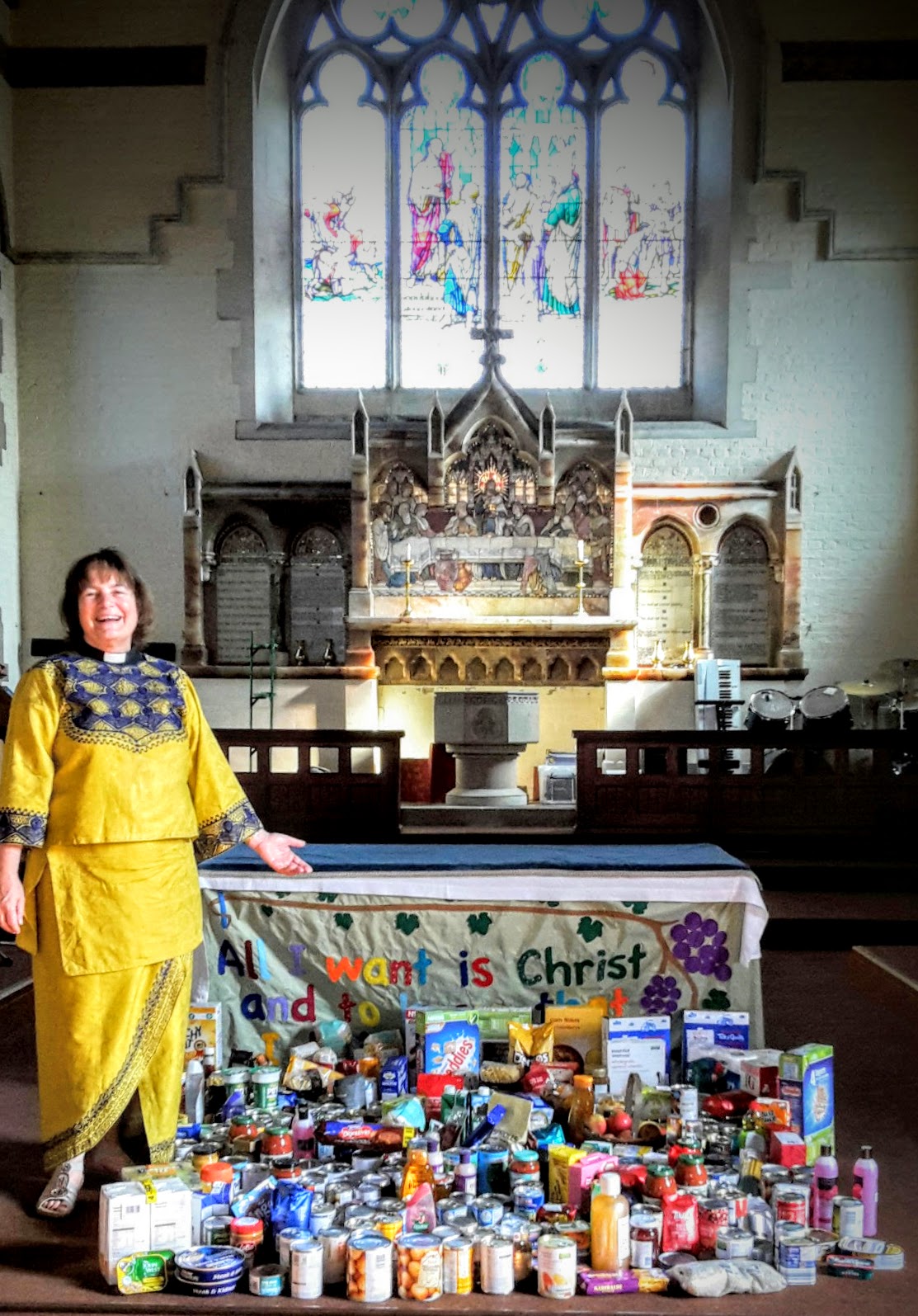
    Revd Mavis Crispin, our associate rector, with the Harvest gifts.
    Revd Mavis Crispin, our associate rector, with the Harvest gifts.

    “Tell her about the flower wars,” she said to her fiancé.

    He paused, looking thoughtful, and shared the antics related to flowers and the church.

    A big wedding took place in a church in Jersey, and a local group – which had won awards at the Chelsea Flower Show – arranged the flowers. They created gorgeous displays of white lilies and roses; flowers eminently suitable for a wedding. When the former head of the Women’s Institute (WI) entered the church, she determined that the lilies and roses should stay for the following week – even though fourteen different individuals and groups were already planning their arrangements, because the following week was none other than Harvest, one of the big festivals in the church calendar.

    But the former head of the WI was not actually in charge of the flowers, and in handing down this edict, was stepping on toes. Feelings were hurt as the words flew between various parties, with the rector getting roped into sorting through the mess. He ended up spending an hour every day that week before Harvest with pastoral visits and phone calls as he tried to mop up the pieces and satisfy the warring factions.

    A compromise was reached, but it was less than satisfactory. The lilies and roses stayed, but wilted after a week of war. The amateur flower-arrangers added bits and bobs to the wedding scene, trying to make it more harvesty. It was, admitted one, “A mess.”


    Harvest wasn’t a festival I was familiar with before coming to the UK, and it took me many years to realize the obvious – in the States, we celebrate Thanksgiving as the adapted Harvest celebration (after all, the Pilgrims were stopping to feast and give thanks for the harvest).

    We celebrated our Harvest festival a few weeks ago in church, and as you can see in the photograph, we received a bounty of food to pass along to our local food bank, whose stores had been depleted.

    But writer Tanya Marlow wonders if we’ve got it wrong when it comes to celebrating Harvest. Have we started off with good intentions – such as the former WI leader in Jersey – but what results is less than satisfactory, or worse? In a wonderfully provocative piece for the Christianity magazine blog, she says:

    I wonder if in our Western schools and churches, Harvest Festival should be a festival of repentance, not thanksgiving. We should be weeping for the gluttonous plenty we have while workers around the world die in unsafe factories making our bargain clothes, and children are deprived of schooling because they are growing crops for our under-priced food.

    Read her piece; what do you think? Or what about the idea of author Marion Stroud, who recently died and must be enjoying the biggest Harvest ever:

    Why don’t we, though, think in spiritual terms about the church and the harvest, in terms of what we’ve seen God bring to fruition and what seeds we want to plant in the coming year?


    Finding Myself in Britain contains a chapter that looks at Harvest and Thanksgiving, as well as some of my favorite recipes for the Thanksgiving feast. 
  • Finding Myself in Britain (The Kingdom Life Now)

    Finding Myself in Britain cover copy (1)I didn’t know that the fairy tale would be so hard. After all, my dreams had come true – I had finally found my prince, a man who loved the Lord and loved me. The courtship and engagement whirled past in a rush of plans and excitement. I knew I’d have to quit my job and leave America to join him in his native Britain, where he was studying to become a minister, but I figured, how hard would that be?

    Turns out, harder than I could have guessed. After the flight and drive from Heathrow, with me recovering from the flattening case of flu I caught while on honeymoon, we made it to our tiny student accommodation in Cambridge (called “The White House,” no less). I excitedly unpacked my bulky desktop computer, wanting to connect with people back in the States (this was before the ubiquity of smartphones or even wireless internet). But after I pressed the power button, I heard a whoosh. In an instant, my Macintosh died, the victim of different power supplies and me not switching a button at the back between 110 and 220 voltage. I collapsed into floods of tears.

    Losing my computer started off me on a tough transition into my life in the UK. I was with the man I loved, living in a charming part of England with the boats floating down the River Cam, evensong at King’s College under the famous fan-vaulting ceiling, and a daily market with the fruit-and-veg sellers calling me “love.” But I felt rocked at the center of my being.

    Read the rest over at The Kingdom Life Now magazine

  • Longing for Home

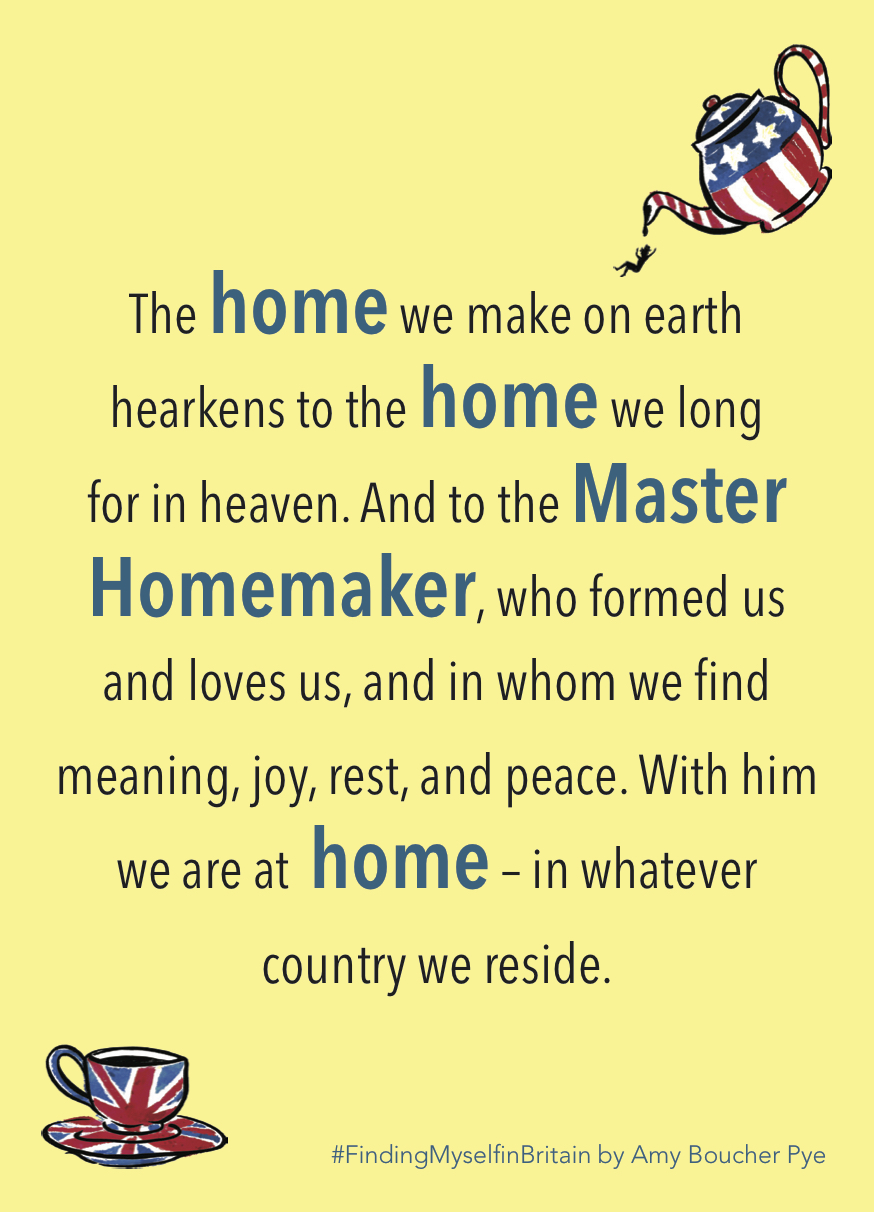
    FMIB Quotes 1 & 2_Proof 2 jpegA recurring theme in Finding Myself in Britain is the longing for home. What is home? How do we find or create it? What do we define as home?

    When Nicholas and I first married, we agreed to call the place where we were living “home.” Not only did this help us in the biblical injunction of “leaving and cleaving,” (leaving one’s family of origin as a new family is created) but it aided us emotionally. If someone asked me, a newcomer to the UK, when I was “going home,” I’d say, “I am home! But I have a trip to the States planned in…” The words we use can help us define our emotions – we sometimes have to educate our feelings.

    Home is a lovely concept – I think of my parents’ home in Minnesota, which although isn’t my home any longer does feel like home, with its lack of clutter and ultra clean space to feel comfortable in while chatting to my family, or the screened-in porch in which to sit and watch the passing deer and wild turkeys (yes in the suburbs of St. Paul!). Or I think of the top floor of a house in Philadelphia where dear friends lived while studying at Westminster Theological Seminary, where I spent many a Thanksgiving. It was only two rooms – and the dishes were washed in the bathtub – but the rafters reverberated with refrains of songs and laughter. Or I remember the historic (for America) house I worked out of for many years and the lovely family who dwelled there, complete with my favorite black lab/golden retriever. On this side of the Atlantic, I picture the homes of dear friends and the meals shared around their tables.

    I could continue in my list, but these places are personal and won’t evoke the feelings of home in you that they do in me. But a common theme of these places where I’ve felt at home lies in the people who make them homey – their welcome, love, grace, and open hearts. They who follow the Master Homemaker bring his kingdom to earth in the homes they create here.

    Where do you find home?

  • The Day They Buried Diana – Finding Myself in Britain

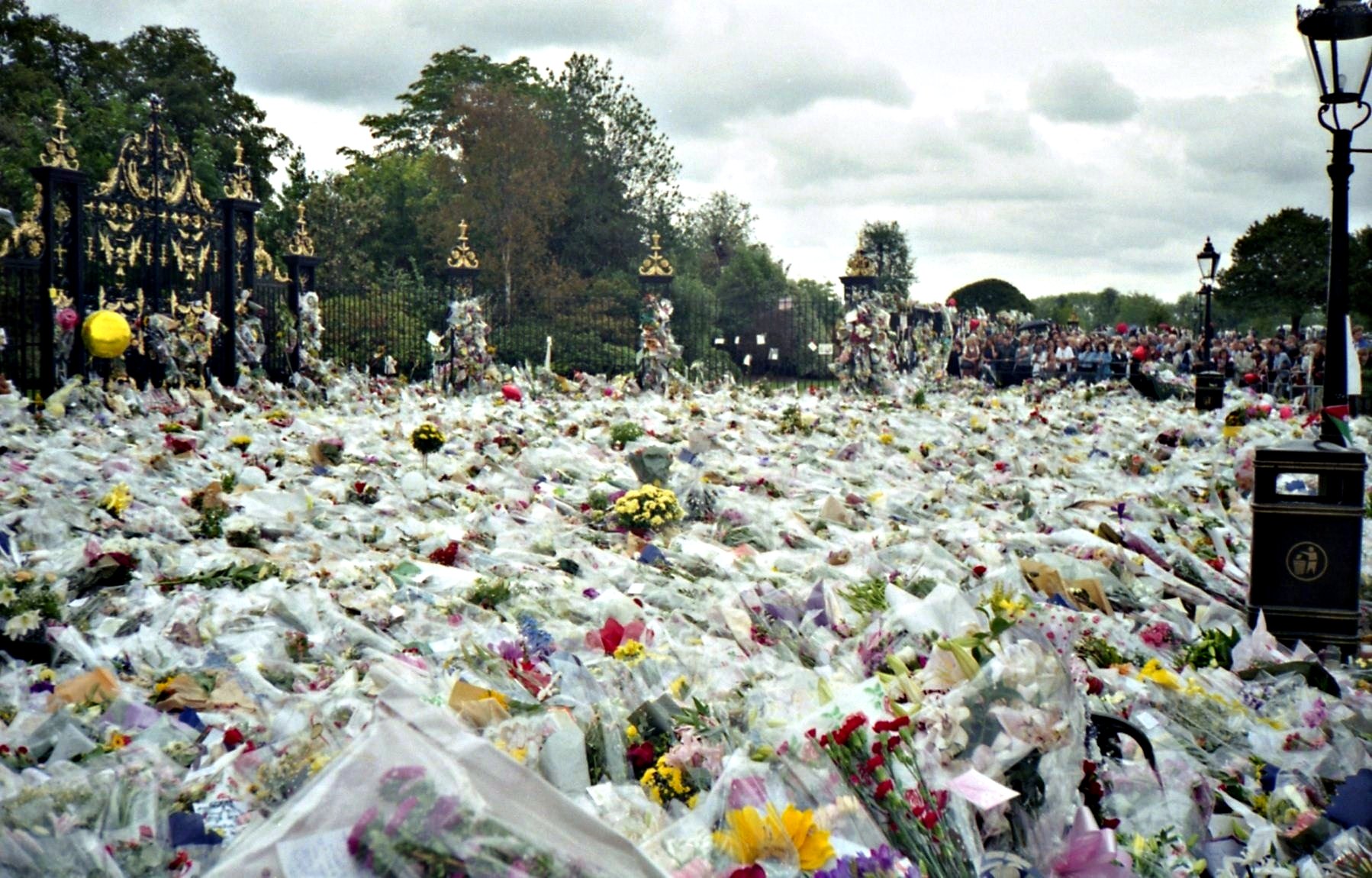
    "Flowers for Princess Diana's Funeral" by Maxwell Hamilton from Greater London, England United Kingdom - Flowers for Princess Diana's Funeral. Licensed under CC BY 2.0 via Commons
    “Flowers for Princess Diana’s Funeral” by Maxwell Hamilton from Greater London, England United Kingdom – Flowers for Princess Diana’s Funeral. Licensed under CC BY 2.0 via Commons

    The day Princess Diana was buried was massively important in my life. I wasn’t that much of an Anglophile, but having met and fell in love with a visiting Englishman to Washington, DC, I became a committed Anglophile, so to speak. But then – shock, horror – this vicar-in-training gave Diana the dozen roses I was sure were intended for me!

    Click here to read the chapter of my book detailing the events of that fateful day.

    Finding Myself in Britain is available at Christian bookshops and online. In the States, it’s only available via Amazon. I’m also selling it at a discounted price – £8 for one and £15 for two, plus postage. Email me at amy@amyboucherpye.com if you’re interested.

  • “You Said What!?” Radio interview for Finding Myself in Britain

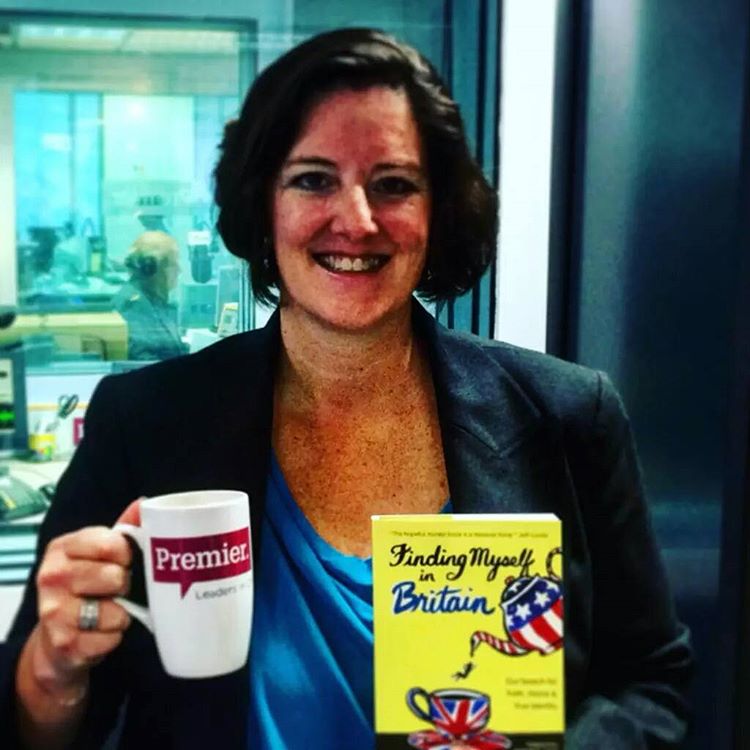
    Loved being at Premier Christian Radio this morning. Such fun.

    Yesterday I so enjoyed being interviewed on Premier Christian Radio. I was a guest on the Inspirational Breakfast show (you can hear my portion of the show here) with host John Pantry, who (amazingly) has been with Premier as long as I’ve been in the UK – 18 years! I loved hearing his stories in the break about living in California for a year when their children were young. He said how they were given so many provisions, such as a car. And one woman gave them all of her furniture, for she believed the Lord was returning soon and very soon and so she didn’t need it! (I wonder how long it took her to admit she’d got the timing of the Second Coming wrong before replacing the furniture she gave away?).

    One of our callers yesterday recounted being in the States and trying to buy some stationery products and his amazement at being laughed at by the young women salesclerks when he asked for a rubber! It made me think of the story I tell in the book in the chapter “By Their Accent Shall Ye Know Them,” excerpted here:

    On one of my yearly trips back to the States to visit family and friends, the kids and I made a pilgrimage to our favourite chic-but-cheap retailer, Target. The very first Target store was opened in 1962 in Roseville, Minnesota, and was “my” store growing up. When there I stock up on things I can’t get in Britain or buy items that are less expensive, to haul back to the UK. We were standing at the check-out line, placing the items on the conveyer belt as we waited for our turn. When I took out a Dr Seuss-related item, in a package of six, Jessica exclaimed, “You’re buying rubbers!”

    The man ahead of us in line flinched but I said, “Yes, they’re for your birthday party.” I added quickly, “But in America, we call these erasers.”

    She remained blissfully unaware of what must have been going through the mind of the man in front (for rubbers in the States are condoms). Differences in language can make for some interesting exchanges.

    In the interview, John Pantry asked what were the listeners’ favo(u)rite British quirks and customs. What are yours?

  • Gathering the community: My first bookshop launch of Finding Myself in Britain

    Living the dream! With Authentic Media's fantastic sales wonder, Lawrie Stenhouse.
    Living the dream! With Authentic Media’s fantastic sales wonder, Lawrie Stenhouse.

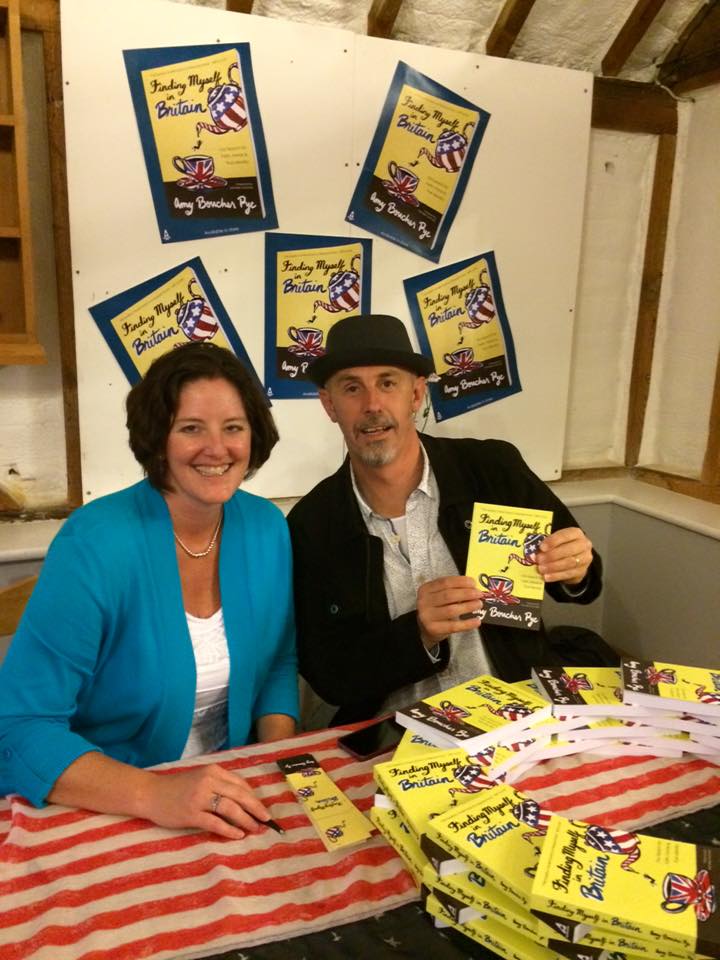
    Last night was my first bookshop event for Finding Myself in Britain – sometimes I have to pinch myself that yes indeed, I have written a book-baby and yes, I get to go to some lovely places to speak to some lovely people about it!

    The rain poured down as I chugged along in the train to Wokingham, the setting of the evening. My publisher’s super-salesguy Lawrie Stenhouse was there to greet me at the station, complete with brolley and Diet Coke. We arrived at the picturesque venue, the Holme Grange Craft Village, a setting of cute shops and a converted milking barn which is the café, where the event took place. There’s a Christian bookshop in the craft village called Quench, whose manager, Ali Ceaser, had the vision and passion to host the evening. She got the Quench owners, Tony and Claire Bronnimann, on board and worked with my publisher, Authentic Media, and the staff at the café to make it all run so smoothly.

    I especially loved the quizzes Ali had for people to complete as they arrived on different meanings of words according to which side of the Atlantic one is on. Each of the guests, as part of the evening’s price of admission (only £5), received a sumptuous piece of cake and a cup of tea or coffee.

    20151005_172046
    Ali Ceaser, who manages Quench in Wokingham, and does mighty fine job of it too.

    Bookshops have been decimated up and down the country over the past five years – we’ve probably lost 150 Christian bookshops with the demise of the Wesley Owen and SPCK chains, along with many independents. Thus I find the vision and passion of these committed people who host events such as mine last night so encouraging. The Quench chain seems to be bucking the trend of decline, from what I gather – keeping a firm grip on stock (not buying too much or the wrong products for their area), employing passionate and hardworking people, and having the faith to host an evening like last night’s.

    After all, any event is a gamble – will people come out? A week ago we thought we’d be cancelling it, for not enough people had bought tickets. But the evening ended up being sold out, and people came even in the rain. Do support your local bookshop if you have one.

    And following, some photos from the evening.

    The quaint setting for the evening. I should have done some shopping!
    The quaint setting for the evening. I should have done some shopping!
    Lawrie always has a smile - love that about him!
    Lawrie always has a smile – love that about him!
    Hmm... what to choose from? I went for red velvet, and was not sorry.
    Hmm… what to choose from? I went for red velvet, and was not sorry.
    Yep, I supplied the Stars and Stripes scarf!
    Yep, I supplied the Stars and Stripes scarf!
    Lots of preparation to get the old milking barn ready.
    Lots of preparation to get the old milking barn ready.
    I love singing books for people! Such a privilege and a joy.
    I love singing books for people! Such a privilege and a joy.
    Ali, interviewing me - asking me to share a most embarrassing moment!
    Ali, interviewing me – asking me to share a most embarrassing moment!
    My non-selfie from the front.
    My non-selfie from the front.
    Lawrie is a fan of halfies.
    Lawrie is a fan of halfies.
    And to cap off the evening, I treated myself to a fairly traded Christmas ornament to remember my first bookshop event by.
    And to cap off the evening, I treated myself to a fairly traded Christmas ornament to remember my first bookshop event by.

    Thank you Ali, Lawrie, and the team! It was an evening to remember.

  • Losing our lives to find them – Sermon on Matthew 10

    FMIB Quotes 1

    How we find our lives when we lose them… the subject of the sermon I gave at our church at the book launch on Sunday, 27 September. Have a listen; I’d love to hear what you think.

  • Behind the Scenes: Cover Design for Finding Myself in Britain (Part 1)

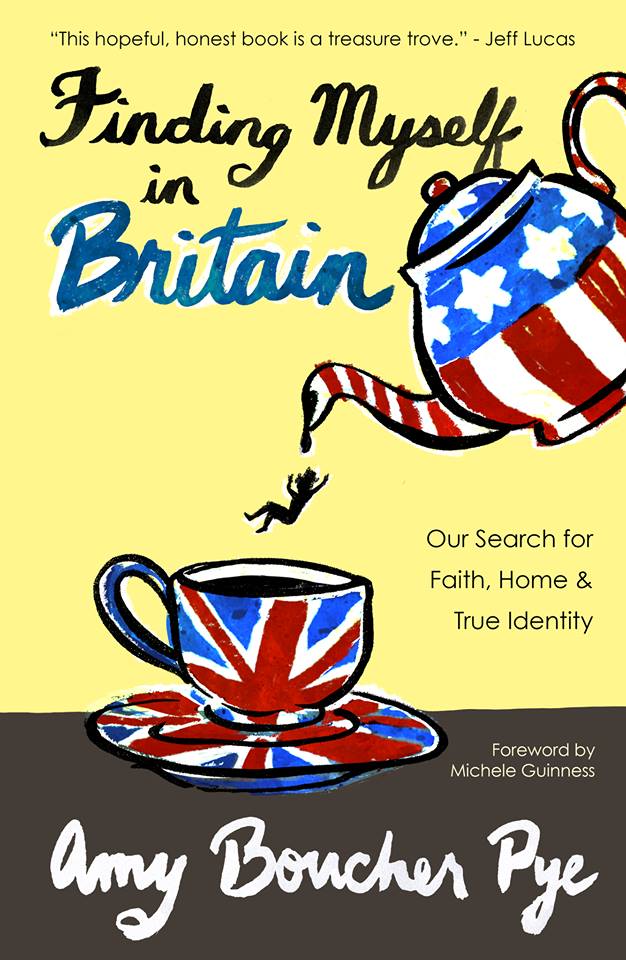
    The winner! Illustrated and designed by Vivian Hansen.
    The winner! Illustrated and designed by Vivian Hansen.

    “Don’t judge a book by its cover.”

    “A picture tells a thousand words.”

    In the case of my first book, I’m happy if you judge it by its cover, because it’s just so darn good. When I first received the design, I loved pulling it up on my phone and watching the person’s face as they saw at it for the first time. Again and again, they would flash a smile and often they’d exclaim in delight. Here’s part one in how the cover came to be.

    When I was a commissioning/acquisitions editor at two big corporate publishing houses, we had whole teams of designers working on the covers, designing them and/or hiring out artists or photographers to provide the original artwork and photographs. How many cover designs we’d receive per project would vary – sometimes we’d have three or four variations on a particular cover, but one Stateside designer was known for his huge creativity, giving us ten to fifteen completely different designs.

    Times have changed, although I suspect the massive publishers continue in this fashion. But Authentic Media, the publisher of Finding Myself in Britain, didn’t have its own design department in-house, so was able to explore other options. The MD, Steve Mitchell, is innovative and creative, and follows the publishing trends and has a sense of what’s new and what’s possible in this strange new world. I’m so glad I followed his lead throughout the process.

    The cover needs to be available about six months before publication, so the design process needs to start at least nine months before. I had previously shown Steve an amazing painting of our church that Steve Bjorkman had carefully crafted in a mind-blowingly rapid manner when he and his wife were visiting the UK one year, and Authentic-Steve wondered if a cover might emerge from it. Here’s one of the covers Authentic-Steve had designed with the painting by Artist-Steve, which although we thought was fun, we knew wasn’t exactly right.

    Artwork by Steve Bjorkman. One of his paintings does appear in my book, which delights me.
    Artwork by Steve Bjorkman. One of his paintings does appear in my book, which delights me.

    So Authentic-Steve committed instead to have the design created through 99 Designs. I had heard him speak of the good experience he’d had in the design of other books, such as Chris Juby’s @BibleIntro, so knew a little of how the website works. The publisher signs up for a package – bronze, silver, gold, or platinum. The higher the package, the more expensive (but still reasonable), and the more designs you have to choose from. After the contest starts, any interested designer who is signed up with 99 Designs can submit a design within the 7-day window. When the contest is closed, the publisher/author chooses a design and can ask for tweaks. The winning designer then receives the fee.

    I see a lot of benefits of this system, but admittedly they favor the publisher. One is having access to designers from all of the world. Another is the huge number and variety of designs that are submitted with only having to pay for a flat fee. But from the designers’ point of view, it’s a lot of work that you might not get paid for – I did feel bad for the stellar designs created that we didn’t use. Yet it gives designers the access to potential work that they’d otherwise not be considered for. For instance, we’d have never found the winning designer without this website.

    My publisher put together the cover brief (you can see it here), which was a short summary of the book (a couple of paragraphs and an outline of the contents) and then for the design elements, he said:

    We aren’t looking anything too twee or formulaic e.g. flags.

    I wanted to put down more suggestions about what ways to take the cover visually, but Steve rightly pushed back, saying, “You’ve got to trust the process.” This is where authors need good and wise publishers – we think we know what’s best for our book-baby, but we don’t. I’m so glad we weren’t directive, and trusted the designers to do what they’re good at – designing. (And yes, the winning design does employ flags!)

    We received 96 designs from 42 designers for the contest. Some of the covers made me cringe – one in particular made me think of 50 Shades of Britain – but many were excellent and a couple were outstanding. Of course, anything to do with art and creation is subjective, so what I thought was fabulous wasn’t always the same as what others thought. But we all agreed on the winning design.

    I don’t think I should cut and paste over some of the designs that didn’t get selected because of copyright issues, but you can see examples here and here. Most of the designs have been taken down, but you get a feel for the diversity of options we had. I liked the feel of #92 and #90, but they are more typical of what one would expect for my book; the winner simply outshone them. Several of the people at my publisher liked the cover by LilaM, but I thought it looked twee (US: cringey), and like a woman during the thirties or forties.

    In part two on behind the scenes of the cover design, I’ll interview the winner of the contest, Vivian Hansen.

  • Ready, steady, launch! (Or, Life as Normal) Finding Myself in Britain

    It’s 1 October, or October 1, depending on your vantage point, and thus the official launch date of Finding Myself in Britain. It feels a bit odd, however, as for me it’s just a normal day – I’ve taken CutiePyeGirl to school, am now writing in my study, and later will go into town for my second class for the master’s in Christian spirituality at Heythrop College. A normal day. We launched the book at church on Sunday – which was amazing – and I have three speaking gigs next week – which is also amazing. But this week isn’t so action packed, and today is just another normal day.

    Photo: Alan Light, flickr
    Photo: Alan Light, flickr

    I keep repeating that refrain because normal is good. Normal is normal. Normal is rooted and grounded and has lots of room for humility. Normal is tidying up the house and working in the garden and doing the school run and washing the dishes and sitting in the sunshine while writing.

    As I think about normal, I’m grateful for my years of working with important people. When I was in my twenties I worked for the Trinity Forum, an outreach to business executives. Think the 11275767_10152882526577129_1947982773_nmovers and shakers of top companies – Really Important People. Yet as I got to know them and their spouses, I realized that they were just people too. Okay, so they were unique and motivated and smart and amazing, but at the end of the day they had to take their trousers off one leg at a time just like the rest of us.
    And then as a commissioning/acquisitions editor with HarperCollins UK and Zondervan I also got to meet some Really Important People. Movers and shakers within the Christian world – those with their fingers on the pulse, writing books like the Archbishop’s Lent book or the one-off Word on the Street (Rob Lacey). And as I dreamed with them about their next project and coached them editorially, I saw that they too were just people. Creative, visionary, motivated, and fantastic. But people.

    And so I’m glad that today, when my book-baby launches officially, that it’s just another day in the vicarage. I don’t ever want to forget that I’m just another person; just another writer. And that’s not to downgrade who I am – I know I’m made in the image of God and therefore am amazing. But I want to be rooted and grounded and never too haughty to be the one to take out the trash or clean up after a sick child.

    Bye, bye, book-baby! Hope you’re adopted into some wonderful families!

  • As American as Apple Pie – Finding Myself in Britain

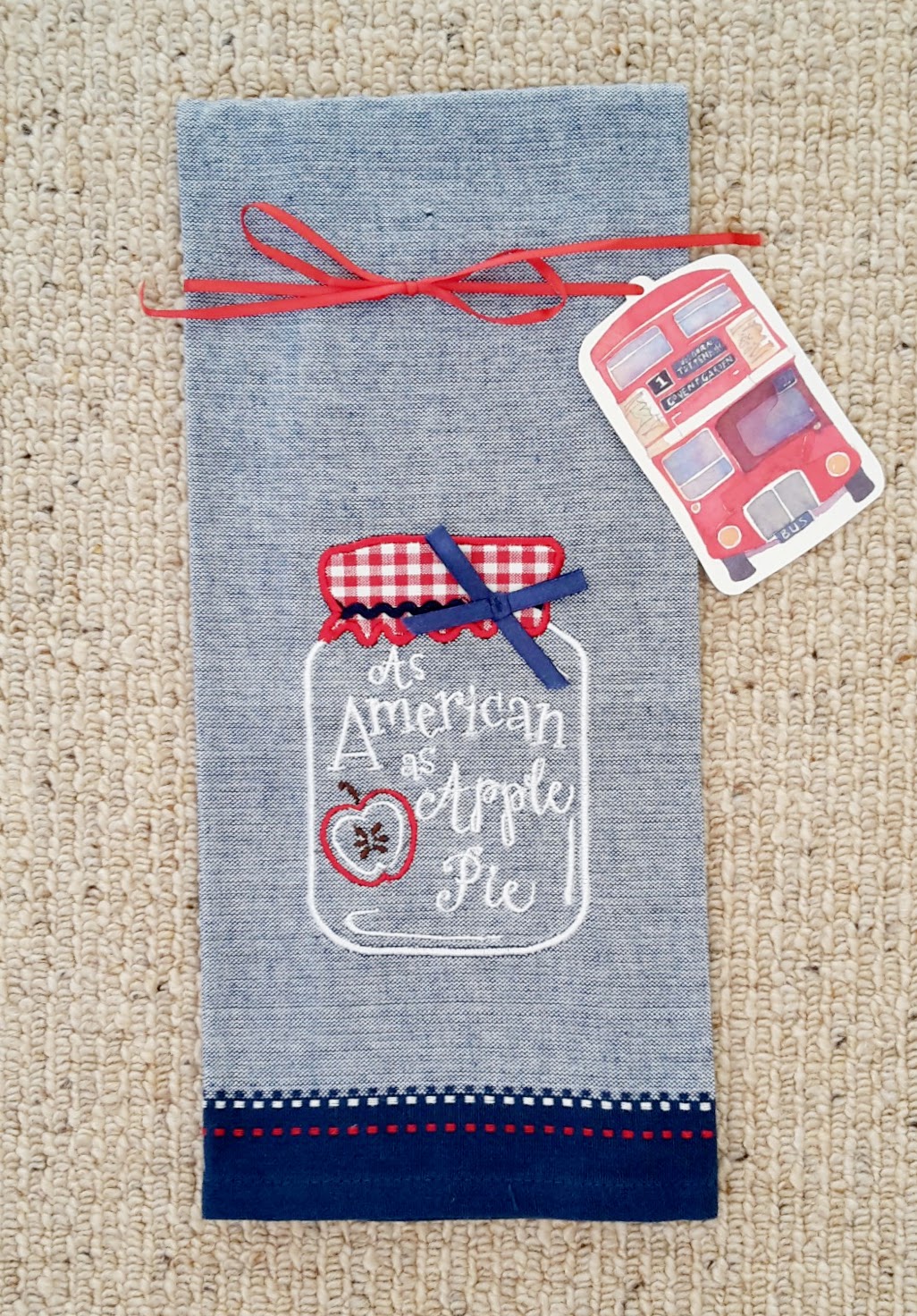
    20150930_101034As American as apple pie. Really?

    “I had no idea apple pie was considered ‘quintessentially’ American until I lived there and heard this phrase! I was thought it was very English!” So said Jennie Pollock, my editor of Finding Myself in Britain, who gave me the pictured fabulous tea towel as a “baby shower” gift for my book-baby at the book launch. Americans claim apple pie as one of their core symbols, along with Mom and Uncle Sam and blue jeans. I suppose this grew out of the nation being formed by immigrants – apple seeds were brought over to the colonies by the English settlers in the 1600s. But Jennie is right – actually the first recipe for apple pie, according to this interesting post, was published in an English cookbook in 1381 and called for raisins, pears, and figs in addition to apples.

    Americans are happy to be associated with symbols such as the American flag, the freedom-loving eagle, and apple pie. But what about the people on this small island? That becomes much more complicated – as British as…? What comes to mind? I can think of traits for individual countries: As Scottish as kilts and thistles and William Wallace. As Welsh as daffodils and amazing singers and St David. As Irish as a craic and shamrocks and potatoes. As English as – what? From a tourist approach people would say Big Ben and the Houses of Parliament and a stiff upper lip.

    What do you say? What are Americans like? Britons? If you’re Scottish/Welsh/Irish/English, do you agree or disagree with those I listed for your country? And if you hail from another country, what are your country’s symbols?