Tag: Finding Myself in Britain

  • And now it’s Advent – Finding Myself in Britain

    In Finding Myself in Britain, I take a through-the-year approach at life in the UK. Originally I wanted to start the book with Advent, for after all, it’s when the church calendar commences. But I took my publisher’s good advice and instead began with the start of the academic year, which marks a time of fresh starts. Here’s a snippet of the chapter on Advent: “Waiting for the Coming King.”

    16680236843_ee72945b30_k
    Photo: grassrootsgroundswell, Flickr

    For those who follow a church calendar, the start of the church year begins with the season of Advent. Traditionally the four Sundays before Christmas have been a period of fasting during which we prepare ourselves for the birth of Jesus. Some Christians are returning to this lost practice, making sure they have done all of their Christmas shopping, for instance, before Advent starts. They take the time and energy to prepare for Advent so that they can be ready for Christmas.

    I laud them. I would love to be like them. But I haven’t ever managed a complete fast from decorations or baking or even Christmas carols during Advent, for the cultural trappings of the season speak deeply to me of the spiritual meaning of Christmas. Growing up, I’d help decorate the Christmas tree much earlier than what Nicholas experienced – his family would purchase theirs on Christmas Eve, whereas my parents use the late November days just before or after Thanksgiving to put up theirs. As a child, I never knew of Christmas carols banned during Advent, for I understood that the practical preparation of this season was part of the spiritual looking ahead.

    I would love to spend Advent in quiet reflection, praying and preparing for Jesus to be born in my heart and home, but instead I mix the reflective with the practical as I get ready for the feasts of Christmas. Because the British traditions differ from the American, over the years I’ve worked hard to ensure that Christmas feels like Christmas in this foreign land. What could feel like a situation of scarcity – the pain of being away from loved ones during the holidays – has evolved into a season of abundance as our traditions have developed and solidified. Finding myself in Britain means creatively enacting the American approach to Advent and Christmas, while learning the British one too. And more importantly, making sure the Christian elements, which transcend any culture, receive the star treatment.

    How about you? How do you approach the season of Advent? Are there practices you ban, saving them for the twelve days of Christmas, or do you enter into the spirit of the season as soon as you can?

  • Behind the Scenes: Interview with Vivian Hansen, Cover Designer for Finding Myself in Britain (Part 2)

    teapot JPEG

    The gifts I’ve received in the publishing process for Finding Myself in Britain have been breathtaking. Such as how the cover came about – I share the story of finding our designer, Vivian Hansen, in part one of this series. Only when I received Vivian’s email as she responded to my questions did I learn that she and I share our Christian faith – and a love of travel. How amazing to connect with this talented young artist! Read to the bottom of the post to see how to get in contact with her (especially if you’re involved in publishing) and to see more of her varied art – she works with oils, watercolors, sketching with pencil and others. In her words:

    I have been drawing as long as I can remember. When I was a child, I wrote and illustrated many stories, always loving how people would react and engage with the little worlds I created. I later enjoyed it as a kind of escape, much like reading a book. But to be honest, it wasn’t until I was about 17 that I realized I had a particular talent in art. I had a deep wanderlust throughout my youth (fueled by the mountains of books I lived inside of), which eventually led me to leave my tiny country town in southern Mississippi and go to live with a family in Ireland. It didn’t take long for the art professor there to find me drawing, and he invited me into his art class – the first I’d ever been in. He taught me the basics, and I delved into a whole universe that had been waiting for me. By the time I graduated, my mind was set on pursuing a creative career. It has been a long and winding road, but I am very thankful to have had the opportunity to study illustration.

    I was finishing up my last bit of art school when I found the contest for your book cover design. A friend of mine told me about the site, so I took a look around. Contest sites typically have a shady reputation in the professional art community for taking advantage of artists, and even reputable sites like 99Designs should be approached with caution. But as soon as I read the brief for Finding Myself in Britain, I had a rush of ideas. I picked up a pencil and started sketching. It’s a big risk to spend a great deal of time and effort on work that may not be fruitful, so I approached it with the idea of using it as a creative exercise. The brief was inspiring for me as a traveler, a bibliophile, a Christian, and a designer who likes a good challenge. It was clear that you were looking for something different, so I was happy to oblige!

    I was really surprised and delighted to learn that I’d won the contest! I called my mom right away and told some of my classmates, including the one who had introduced me to the site. I’ve had my work published in small things before, but this was going to be the most widely published work of mine to date. Most of all, I was so grateful for the opportunity to use my God-given talents on a faith based project. What a joy it is to use the talent and opportunity I’ve been blessed with to do the Lord’s work! I hope to contribute again to Christian publishing and continue to be a vessel for His work.

    vivian_hansen_findingmyselfinbritain_sketches1My first thoughts when I started sketching were about focusing on a more conceptual design than a decorative one. Book covers featuring original artwork in a clever way stand out in a sea of stock images, so I knew I wanted a strong image with meaning. At first I considered what it feels like to be “different” while in another country and how I might represent that in a unique way. I ended up with a drawing of a sunflower growing from a rose bush; the flower clearly isn’t native to that plot, but it stands out in a bright, bold, happy way. Other ideas centered around place. One that I was fond of featured lots of different shapes and styles of windows you might see around the world, with a little cartoon Amy perched happily in a window resembling a stone church.

    In the end, I was most drawn to a very simple but iconic image of a teapot with an American flag motif pouring Amy into a teacup decorated with the British flag. I think it presents the idea of instant immersion, maybe even culture shock, but in a funny, positive way (especially with help of the bright, playful colors). I hope it will draw readers in enough for them to read the back and discover what it’s all about – and from there, I’m sure they’ll be hooked!

    teacupLiterature and travel are still a big part of my life. I’m a big dreamer and adventurer, and it directly affects and inspires my work. I graduated at the end of summer and started making plans for my next journey, which has brought me to Spain. I travel cheaply by flying stand-by and finding unique accommodation; this time, I’m working part-time at the front desk of a hostel in Madrid in exchange for room and partial board. It’s an amazing way to get to know a place in a real way. After two months of travel, I’ll return to the U.S. for Thanksgiving and then pack my bags again for Costa Rica, where I’ll be visiting my boyfriend’s family for the first time. Each place I visit is full of treasures for the eye as well as stories to take with me. I have lived in Ireland, Japan, France, and now for a while in Spain, and each place leaves a huge mark on me. I change and grow a bit each time and share my own stories, culture, and experiences with the people I meet.

    By the start of 2016 I hope to start campaigning for greater amounts of freelance work. Where will I be? I have no idea. That’s the beauty of it. I’m at a peculiar time in my life that allows for these opportunities and, while I look forward to someday building my own family and having a place I call home, for now I am thankful for the chance to see the world and share it with others through my stories and art works.

    How can people connect with me? When I am based in the U.S., I open up my Etsy shop to sell prints of my work and occasionally original art work and other handmade things, and in early 2016 I will launch a Kickstarter campaign to get my children’s book published. I also have my website, a Facebook page and an Instagram account where I post things I’m working on currently, including my travel drawings. The best thing about being an artist is simply sharing my work with others, so I am glad for any platform I can use to connect with people!

    A Christmas card designed by Vivian. Check out her process on her website - fascinating.
    A Christmas card created by Vivian. Check out her process on her website – fascinating.
    I love the variety in her art.
    I love the variety in her art.
    Art in motion - watercolors at Lower Yellowstone Falls.
    Art in motion – watercolors at Lower Yellowstone Falls.
    Wonderfully fabulous Valentine's Day card.
    Wonderfully fabulous Valentine’s Day card.
  • Review: How to Be an Alien by George Mikes

    imagesAt the end of an introduction to spirituality class at Heythrop College, one of my new friends slid me this little volume – a book published in 1946 which immediately captured my imagination, not least for the story that she recounted as she gave it to me. She said:

    My German grandfather was a career German naval engineering officer, sunk by the British in the First World War, fished out of the Med and bunged in a rather uncomfortable camp in the desert outside Alexandria for the rest of the war. At the end of the Second World War he ended up in the bag again but by this time he was an admiral so was despatched to a stately home in Cumbria which was the destination for high ranking officers. If they gave their word that they would not escape that was accepted, so they were free to roam around the fells all day and return to a good supper in congenial surroundings in the evening. I think only one broke their word, featured, I believe, in the film “The One that Got Away”.

    Meanwhile in Germany, British soldiers had commandeered the family home and Mum and her sisters had to move in with family elsewhere. The soldiers were always charming and friendly to the girls though. The upshot was that my grandfather believed that the British were an honourable people so at the end of the war when Germany was destroyed, most men were dead and my grandmother was going shopping with a wheelbarrow to carry all the inflated money, my mother set off to England to work as an au pair. Only one person was ever unkind to her as a German – a nurse whose fiancé was killed – and someone gave her How to Be an Alien to help her understand life over here. It obviously worked – she trained as a nurse at St Thomas’, then became a district midwife on a bike delivering babies in Surrey, then married my father and has lived here ever since.

    I sat on the Tube home while galloping through How to Be an Alien and thinking of this young woman, new to the UK and living in a completely changed world while knowing she’d need to make this country her home. It made for poignant reading.

    Of course, it being a humorous book, I wasn’t sure how much of the preface to the 24th impression was irony (not something I am known to grasp) and how serious the author was being as he rued the success of this book. He says:

    This was to be a book of defiance… [I was] going to tell the English where to get off… I thought I was brave and outspoken and expected either to go unnoticed or to face a storm. But no storm came… all they said, was: ‘quite amusing’ (p.8).

    So much of How to Be an Alien I could relate to. His chapter, “Introduction,” is not an introduction to the book but includes this observation: “The aim of introduction is to conceal a person’s identity.” Ah yes, the art of not giving one’s name, as I observe in my chapter “What’s in a Name” in Finding Myself in Britain. We both each devote a chapter to the weather – how can you not, this being Britain – and I should observe his instruction: “You must never contradict anybody when discussing the weather” (p. 22). Indeed.

    teacupI unwittingly followed his lead in writing a chapter about tea, but I wasn’t so rude in my opening as he is: “The trouble with tea is that originally it was quite a good drink” (p. 26). He has many instructions for how to receive tea magnanimously, even at 5am.

    In sum, a lovely little volume, some of which seems quaint after all of these years, but much of which still rings true. And how wonderful to have been given it by a daughter of a foreigner-turned-friend.

    How to Be an Alien, George Mikes, Penguin, ISBN 9780140025149

  • The Hunger for Home by Os Guinness

    “There’s No Place Like Home”

    The first guest-blogger in our Friday series, “There’s No Place Like Home,” is a giant of this generation who has profoundly influenced not only my thinking but who I am. In my twenties I had the great privilege of working for the renowned social critic Os Guinness in Washington, DC, on several projects, including the Trinity Forum, an outreach to business leaders.

    The nation’s capital was a new home for both of us, respectively, for he and his wife and son had arrived from England a couple of years before I went to DC to study for a semester during university. I interned with him at the Williamsburg Charter Foundation, a bicentennial celebration of the US Constitution, and ended up staying there for ten years! I never would have dreamed those years in DC that eventually I would make my home in his country – but even England wasn’t his first home, as he was born in China, the son of medical missionaries.
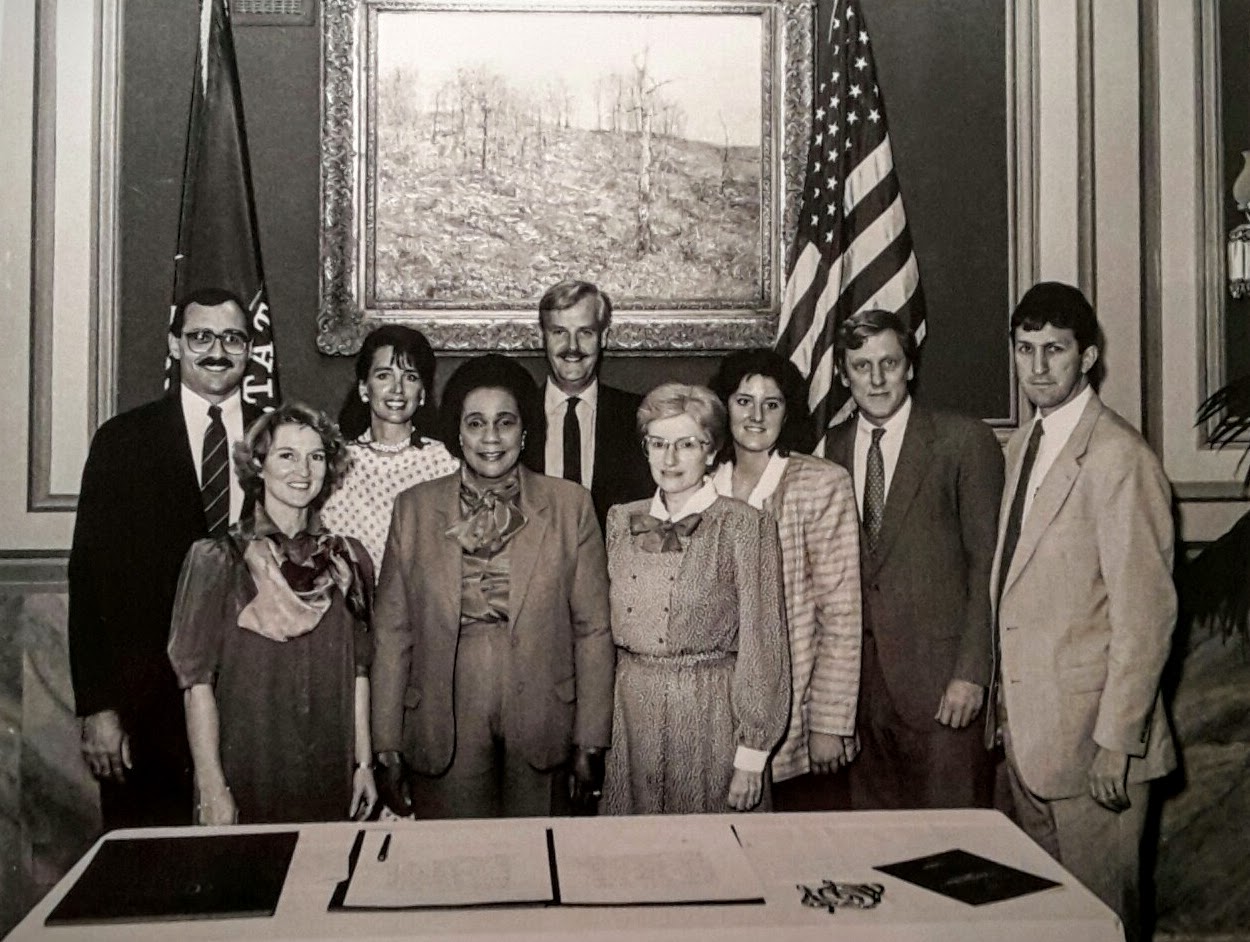
    The Williamsburg Charter Foundation team, with Coretta Scott King. In the front row, left to right, Sharon Brown, CSK, Lila Williamson; in the back row, John Seel, Jenny Guinness, Os Guinness, me (where was I looking?), Bob Kramer, and Tom McWhertor.

    He’s kindly granted me permission to post the excerpt below, which addresses our longing for home and comes from his seminal look at America and its crisis of cultural authority at the end of the “American Century,” The American Hour: A Time of Reckoning and the Once and Future Role of Faith (New York: Free Press, 1993). I worked with Os when he wrote the book, and I cut my copyediting teeth on this amazing 450-page analysis of the crisis of moral authority and his vision for the role of religion in public life. Though his book is more than twenty years old, his writing zings with truth and prescience. It’s available online, here for the US and here for the UK.

    His chapter on homelessness, “The Hunger for Home,” reveals one of the cancers that slowly destroys the certainties of meaning and belonging in modern life (and is aimed specifically at America, although it translates to other Western countries as well). Through the weeks of this series on longing for home, we’ll examine the ways that people have found their home – and Homemaker. But first, to lay the groundwork for what we’re up against through the problem of homelessness, is Os:

    Homelessness results from the gradual eating away of the certainties of meaning and belonging in the lives of countless Americans. Nothing is more naturally human than the drive toward meaning and belonging, and thus toward order. Sense of some kind, stability of some sort—these are the prerequisites for a tolerable human life. Without some underlying order, philosophically as well as socially, the dark demons of absurdity and anomie come menacingly close and threaten to destroy the fragile defenses of individual character and of human civilization itself. Cruel religious theodicies and totalitarian political terror bear witness to the same point: Human beings have such a need to feel at home with themselves and their universe that they even prefer tyranny to chaos, paternal authoritarianism to fratricidal factionalism.

    In one sense, homelessness is a defining feature of all humanness east of Eden and is certainly not new in the United States. But a special sense of homelessness has always been present in a nation shaped by immigration, mobility, and westward expansion. One German visitor called it the “strange unrest” of Americans, and H. G. Wells commented on the “headlong hurry” of Americans.[1] George Santayana commented in the 1920s on the “moral emptiness of a settlement where men and women and even houses are moved about, and no one, almost, lives where he was born and believes what he was taught.” Denis Brogan spoke in the 1940s of “American nomadism” as the expression of American civilization. John Steinbeck, in his Travels with Charley, wrote that he saw something in the eyes of his neighbor that he was to find everywhere in the nation—“A burning desire to go, to move, to get underway, any place from here. They spoke quietly of how they wanted to go someday, to move about, free and unanchored, not toward something, but away from something.”[2]

    No Place Like HomeSuch restless mobility, combined with a will to technique, has left Americans with what George Grant described as “a conquering attitude to place.” Even our cities, he said, have become “encampments on the road to economic mastery.”[3] At the more everyday level, IBM was popularly known as “I’ve been moved” and advertisers routinely teed off the pervasive sense of lost home. In the 1980s, Mazda sold automobiles under the doubly contradictory byline: “Who says there’s no place like home? We built the MPV based on a very strong foundation. The home… It’s engineering based on human feelings.”

    But while the problem of homelessness is not new in America, the present moment represents a serious exacerbation because the traditional American counterbalances have disintegrated with the crisis of cultural authority. Both faith and the family, the two deepest structures of meaning and belonging an the strongest counterweights to threatened anomie, have been sucked into the whirlpool.

    In normal times, the search for meaning and belonging is a hidden process that is natural and unconscious. That such a search has become conscious, deliberate, and a point of open anxiety is itself a symptom of anomie and homelessness. Nothing demonstrates the problem more clearly than the place and profitability of psychologism in America. As Peter Berger wrote in 1967, “If Freud had not existed, he would have had to be invented.”[4] But the predicament also shows up clearly in very different areas. For example, the recurring vogue for nostalgia (literally “homesickness”) in societies losing touch with their past, the potent hunger for “roots” in nations rooted in rootlessness, and the insatiable appetite for myths in cultures parched by reductionism. “Loss of the past,” wrote Simone Weil about France, “is the supreme human tragedy, and we have thrown ours away just like a child picking off the petals of a rose.”[5]

    With heaven evacuated, history severed, families strung out if not disintegrating, and faith unreal, homelessness has become an ever-present menace to modern Americans. Can there fail to be consequences? Being deprived of justice and freedom is bad enough for humans, but being disinherited from the certainties and assurances of home may prove even more so.

    [1] See Allan Nevins, ed., America Through British Eyes (Oxford: Oxford University Press, 1948), p. 496.

    [2] John Steinbeck, Travels with Charley, (New York: Viking Press, 1962), p. 93.

    [3] George M. Grant, Technology and Empire (Toronto: House of Anasi, 1969), p. 17.

    [4] Peter L. Berger, Facing Up to Modernity (New York: Basic Books, 1977), p. 32.

    [5] Simone Weil, The Need for Roots (London: Routledge and Kegan Paul, 1952), p 114.
  • Interview by Tanya Marlow on Finding Myself in Britain

    Today Tanya Marlow, a wonderful person – writer, thinker, feeler, Bible-delver, and one who suffers from a severe form of ME – has interviewed me on her blog, “Thorns and Gold.” She asked probing questions that I answered while partly wondering if I was sharing too much! I so appreciate her on many levels. She’s also hosting a giveaway of Finding Myself in Britain via her blog – instructions at the end.


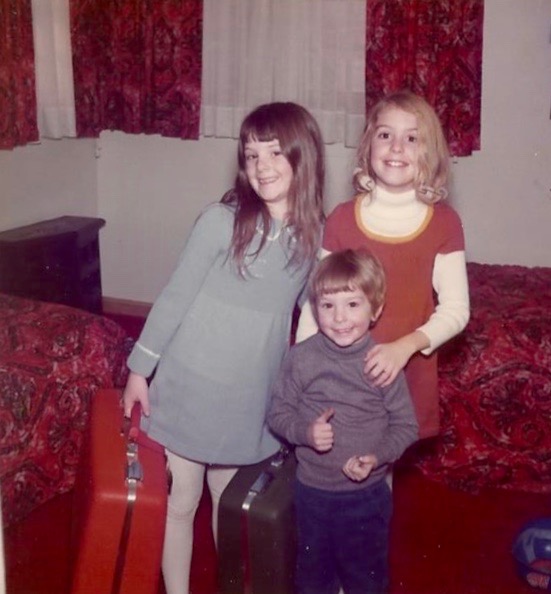
    Me with my sister and brother. The traveling bug seems to be planted early!
    Me with my sister and brother. The traveling bug seems to be planted early!

    Hi, Amy – tell us a bit about you!

    Hi! Well, I’m married to an English vicar and we live in a lovely but draughty vicarage with our two wonderful kids. I’m a writer and speaker with a long history in editing; I love writing devotional thoughts and running the Woman Alive book club.

    I grew up in Minnesota – the land of 10,000 lakes and hearty people who survive the shockingly cold winters. I’ve now lived longer outside than inside of Minnesota, however, for when I was at university I went to Washington, DC, for a studies program – and ended up staying 10 years! When there, working with a wonderful Englishman-in-America, Os Guinness, I met a visiting Englishman who was studying abroad as he trained to be a vicar. We fell in love and married and I moved to the UK nearly two decades ago – a mind-boggling amount of time.

    Something you might be surprised to know is that I’m a (lapsed) aerobics teacher. I love going to the gym and enjoying group exercise with my friends.

    Read the rest of the interview at Tanya’s blog here.

  • We Will Remember

    DSCN3987Last year we remembered the 100th anniversary of the start to World War 1 – the war that was to end all wars. London became a focal point as the art installation at the Tower of London slowly caught the public attention and eventually their heart as poppy by poppy was planted, turning into a sea of red. One for each life lost, eventually the last of the 888,246 ceramic flowers was planted a year ago today on Remembrance Day (Armistice Day, or in the States, Veteran’s Day).

    As I tell in Finding Myself in Britain, we visited the Tower on that Remembrance Sunday – we and a few thousand others. Though we only gazed at the sea of red for a short time, jostled by the crowds, the sight moved us. Not least because 152 of those poppies stood for men whose names appear on the two war memorials in our church.

    DSCN3988Nicholas and PyelotBoy, lovers of history both, dug up information about these men on the memorials, scouring websites about ancestry and that of the Commonwealth War Graves Commission for clues. What were the backgrounds and interests of these men? How did they die? Our intrepid researchers even took a field trip to the London Metropolitan Archives to search out the original church documents and revel in such items as the 1920 invoice for our church’s north transept stained-glass window, entitled “Saints in Glory,” installed to commemorate the fallen soldiers, sailors, and airmen.

    On Remembrance Sunday, both last year and this year, at our church a group of people young and old read out the 152 names, while members of the congregation placed a poppy for each person at the foot of the cross. Direct descendants of the men on the memorial were invited to the service – some came from Sussex, Kent, and even Australia – as well as the occupants of the homes where the men lived before going to war.

    All this research brought home the personal nature of the sacrifice of these men. No longer were they just statistics of those who died, but fathers, brothers, sons, husbands; writers and bricklayers, police constables and trainee architects, dentists and regulars in the military; two men who died in the same German prison camp; at least three sets of brothers. The youngest man was aged 17, the eldest 48.
    DSCN4015I told the story last year of one of the men, who captured my imagination. Frederick Goodyear, who was born locally in North Finchley and who died at the age of 30 in France. I had included his story in my book in an early draft, but alas, it got chopped at the cutting table as it changed the flow and tone too much. Still, a fascinating thing to enter into his life – a dreamer who would have been better suited to the academy than as life as a soldier.

    We will remember.

  • “There’s No Place Like Home” – A New Series

    No Place Like HomeWhen Nicholas and I first married, and I moved to the UK, we decided to call wherever we were living “home.” We knew that words bind up reality, so we wanted to embrace with our lingo the new truth in our lives. This would prove harder for me, of course, being the one to leave family, friends, wide highways, and good plumbing, and if we were having a spat we wanted to curtail any reckless words such as, “I want to go home!” For I was at home.

    But though we were intentional, early on in our life in the UK I often felt homeless, partly because we knew we’d only live for a few months at Ridley Hall in Cambridge where Nicholas was training for ordained ministry. Then his first curacy descended into upheaval not long after we arrived when the vicar was signed off sick, so the question of whether we’d stay or go seemed to cling to us, keeping us from settling. We moved after only two years, to another curacy, which again felt transient as we stayed there another two years for Nicholas to finish his apprenticeship period. Home was where we lived, but rooted we were not. Only when we landed in our first vicarage, having our first child a month later, were we able to settle in and breathe.

    Embracing a concept of home – though we took a few years to reach this place physically – helped us to create a space for loving, thriving, and resting. A place to be; a place to relax; a place to create; a place to welcome others. For Nicholas this sense of home was redemptive, for he had moved around so much in his life, such as going to boarding school at the age of eight, and later, when he went to theological college (US: seminary) in his thirties, selling his flat and therefore in a sense being homeless during that three-year period (and finding being booted out of college during the summer holidays particularly hard).

    So home is something we’ve tried to foster, and the addition of children has been a wonderful blessing and joy to vicarage life. This drafty Victorian spacious place with its high ceilings, sinks with their single faucets (UK: basins with taps) in several of the bedrooms, and condensation-forming sash windows has provided the backdrop to their lives. But of course home means so much more than the physical structure; it’s the people and the customs and rituals that we practice throughout the seasons that bring meaning and fulfillment.

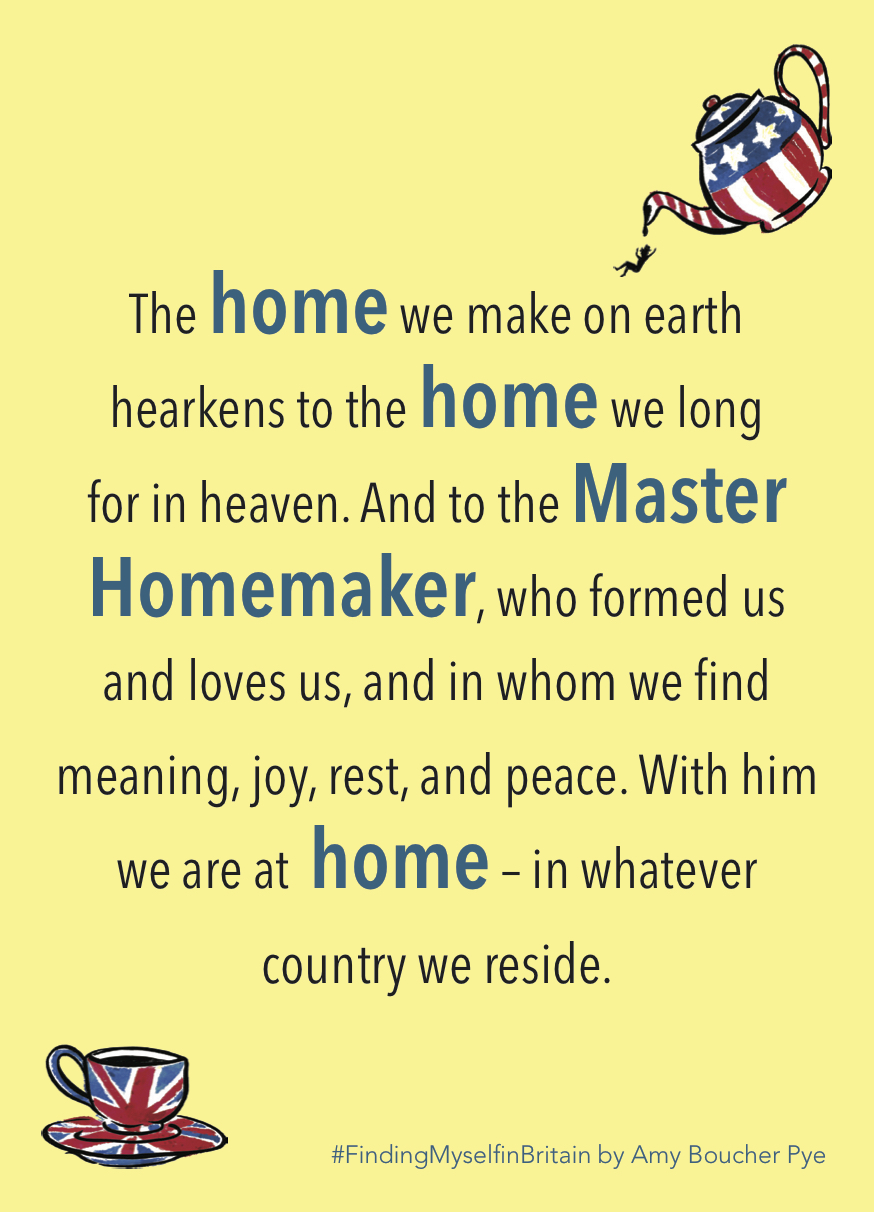
    FMIB Quotes 1 & 2_Proof 2 jpeg

    I’m delighted to kick off this series, “There’s No Place Like Home,” which will run at least through the Spring of next year, as I’ve had a humbling and wonderful response from fellow writers and makers-of-home. The blog posts will appear on Fridays, all exploring different aspects of home. Next week we look at the crisis of homelessness from the renowned thinker Os Guinness, and in the weeks following we will experience so many riches including novelists Rachel Hauck, Sharon Brown, and Katharine Swartz; bloggers Ben Irwin, Tanya Marlow, Amy Young, and Tania Vaughan; and authors addressing issues in the Christian life such as Cathy Madavan, Bev Murrill, Sheridan Voysey, Penelope Swithinbank, and Catherine Campbell. As a VW (vicar’s wife), I don’t think of myself only with that label, but no doubt being married to pastors and ministers will inform the thoughts of Amy Robinson, Debbie Duncan, and Claire Musters. And this is only a taste of the glories to come! Yes, I’m excited!

    To launch the series, I’m delighted to give away two copies of Finding Myself in Britain, including recipe cards – and I won’t limit the giveaway to the UK either, so wherever you live, please enter. To do so, share in the comments what home means to you. You can wax lyrical or jot down a word or two. I’ll choose the winners on 27 November – yes, otherwise known as Black Friday. It will be lovely to give away my book-baby on that day of consuming.

    Is it true for you that “There’s No Place Like Home”?

  • Online relationships and Finding Myself in Britain selfies

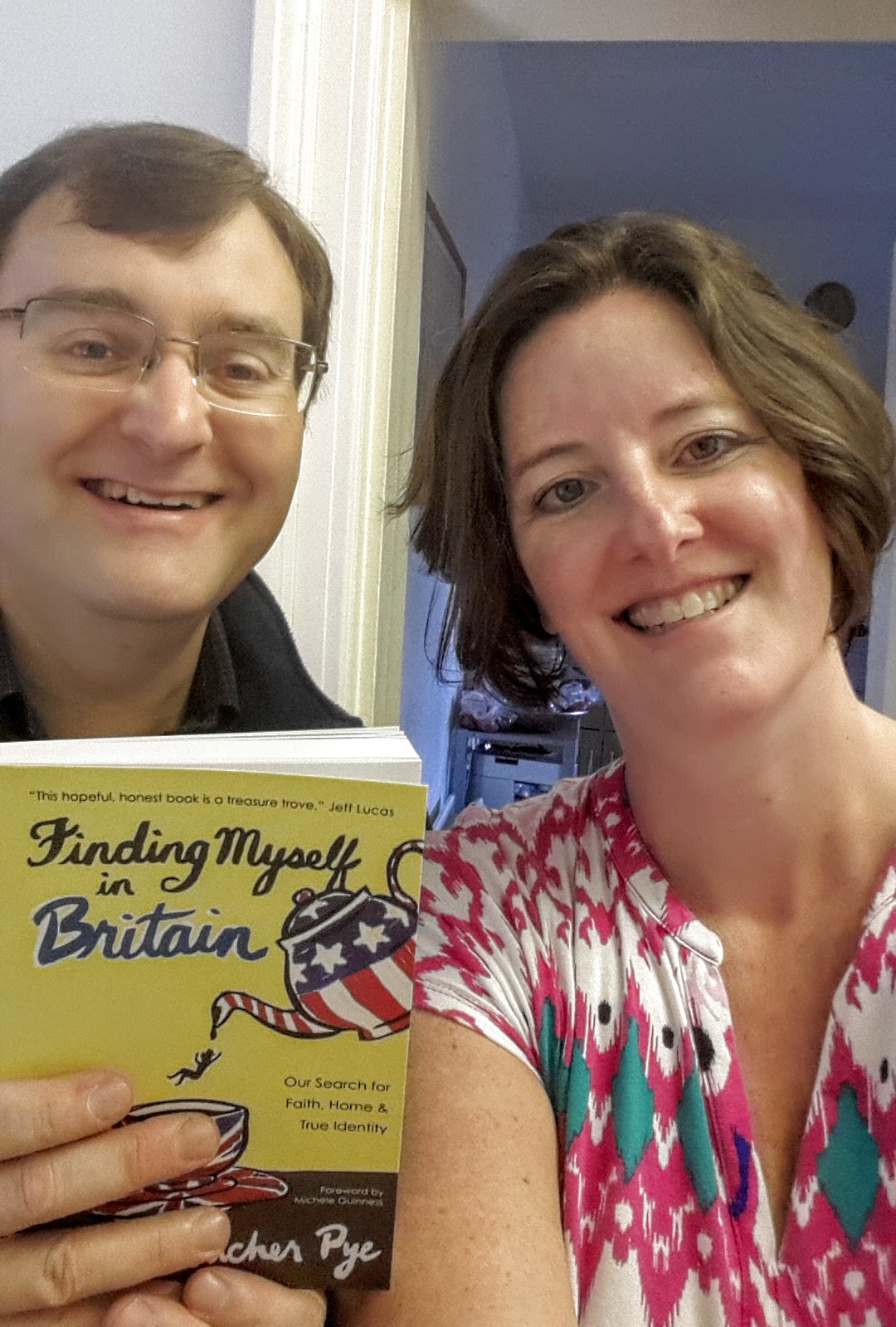
    Me and NicTheVic on the day my book-baby arrived. Without him there would have been no story to tell!
    Me and NicTheVic on the day my book-baby arrived. Without him there would have been no story to tell!

    One thing I love about our socially connected online world is the proliferation of photographs from my friends. So I was delighted when I started to see selfies with my book-baby pop up online – unbidden. These make me happy on so many levels – not only seeing Finding Myself in Britain out there in the world, but mainly seeing the faces of people I’ve known either in person or those I’ve met online.

    So many people talk about “real” relationships in contrast to those online. I find that frustrating, for I have real relationships with people I’ve never met in person. For instance, I’m part of an online writer’s group where we interact with each other daily in a structured but free way, and the support and love I’ve felt and witnessed there takes my breath away. Another group I love is the Woman Alive book club Facebook group – a place where we discuss books and characters and what we’re reading. I love to see friendships develop over a shared love of reading. And I love seeing people interact with my Facebook posts and the connections and conversations that occur.

    Yes, we need to exercise caution and discretion when meeting people online, and yes, we can become so obsessed with our social-media likes and retweets and Instagram hearts that we ignore the family and friends who surround us in person (we, for instance, have a no-phone rule at our dinner table). But if we exercise discernment as we engage in the online conversations, we can gain friendship, camaraderie, wisdom, and some lovely selfies with our book-baby.

    Do you have Finding Myself in Britain? I’d love to see your selfie – please include your face, and not just the book!

    Jo Saxton, who lives a parallel life in my hometown. Our chapter in Finding Myself in Britain is one of my favorites.
    Jo Saxton, who lives a parallel life in my hometown. Our chapter in Finding Myself in Britain is one of my favorites.
    Cathy Madavan's blurb on my book rocked my world - I didn't realize just how developed were my practices of celebrations until she pointed it out.
    Cathy Madavan’s blurb on my book rocked my world – I didn’t realize just how developed were my practices of celebrations until she pointed it out.
    Steve and Diane Bjorkman are lovely friends who live in California. Steve's amazing "A Slice of Pye" artwork appears at the back of FMIB.
    Steve and Diane Bjorkman are lovely friends who live in California. Steve’s amazing “A Slice of Pye” artwork appears at the back of FMIB.
    Liz Cook and I love books and have lived in each other's countries at various times.
    Liz Cook and I love books and have lived in each other’s countries at various times.
    Amy Young - another Amy, another oversees lover of life! I'll forgive her the Denver Broncos passion.
    Amy Young – another Amy, another oversees lover of life! I’ll forgive her the Denver Broncos passion.
    Michael Gibson from Northern Ireland also loves books and American football - sadly, he supports the Miami Dolphins but maybe one day he'll see the light and move allegiance to the Minnesota Vikings.
    Michael Gibson from Northern Ireland also loves books and American football – sadly, he supports the Miami Dolphins but maybe one day he’ll see the light and move allegiance to the Minnesota Vikings.
    A Skype call of Alex Ward's mum and son. I love this on so many levels. Alex was one of my answers to prayer in Epsom when I was longing for friends. She's moved around a lot since then, from the Netherlands to Budapest and now to Texas.
    A Skype call photo of Alex Ward’s mum and son. I love this on so many levels. Alex was one of my answers to prayer in Epsom when I was longing for friends. She’s moved around a lot since then, from the Netherlands to Budapest and now to Texas.
  • Behind the Scenes: The First Draft of Finding Myself in Britain

    889210463_0ddd88ae57_o
    Photo: Boris Anthony, flickr

    Authors, editors, and the *&^$ first draft.

    Having worked in Christian publishing for over two decades as an editor, I’ve had contact with many an author. In my early days I worked with some highly strung first-time ones – those who define the stereotype of oversensitive, defensive, and not wanting to kill their darlings. I’m remembering one whose book I edited in the early days of the internet, when I would plug in the cord into the phone socket and dial in my clunky Mac laptop to download my emails. Each time I opened my emails I’d find another range of missives from him, written with passion and angst as he argued every little change.

    I found the experience draining.

    When I moved across the pond and started as an editor in the religious books division at one of the huge conglomerates, I was stunned to hear my boss, the publishing director, say, “I only commission authors I enjoy.” Really, I thought? Well that must leave out a lot of people. But as time passed and as I inherited many projects from covering a maternity leave, I could see his wisdom. Those projects where the author and I clicked, where I could see their passion and integrity, were those I loved working on, and which seemed to go swimmingly – even if we had a lot of rewriting and editing to do. Because we trusted each other, the editing process was a conversation – and the book benefited.

    Those projects where the author and I didn’t gel so well, however, could suck the life out of me. For instance, I endured many a long, exhausting conversation with one agent, who claimed her author was receiving rotten treatment, that we were failing him, yadda yadda yadda – and this before the book even hit the bookshops! I wonder if she ever realized that she was thwarting her author’s project with the publishers.

    And now, after those years as an editor, I finally got to be an author with my first book-baby, Finding Myself in Britain. The process was long and hard, but full of trust and feedback and uncovering my voice. My commissioning editor was Steve Mitchell, the MD of Authentic Media, who came up with the idea for the book. He knew my passions – for prayer and issues of identity in Christ. He also has two decades of retail experience. All of which led him to say, “Write your unique angle as an American in the UK. Make it a through-the-year look at us.”

    10460850_10152372674802129_1515780501205436786_oSo I had my marching orders and launched in exactly a year ago, going to Spain to El Palmeral for a week of intense writing, enjoying the sunshine and the hosts and guests – and hearing their stories of Harvest and clergy life and the difference between Yorkshire and, say, Lancaster. When I got back, I sent Steve a bunch of chapters for his feedback, and we continued to work in this back and forth manner, me writing and him assessing, as I created my first draft.

    I was stunned by some of his early comments, for he was able to see what I couldn’t – namely how much I missed my family and friends in Minnesota. “I feel like you’re transplanting Minnesota to England,” he said of my early chapters in what was then called View from the Vicarage. “We want to hear what you think of us,” he continued, “not so much what you’ve left behind.”

    Ouch. But he was right, and I rewrote, and rewrote some more. Once we were happy with my first draft, I sent it off to 10 reviewers, a mix of friends from the Woman Alive book club and three editor/writer friends. I sent off my manuscript to them on the Friday night and had a 13-page response from one speedy reviewer by Saturday afternoon. I was stunned at her insights and fast response – so stunned I had to take myself to bed, lest I become one of those defensive, irritating first-time authors I mention above.

    And next time, dear reader friends, I’ll share how I handled that feedback and what I learned – and how I managed not to alienate my editor-friends!

  • Recipes for Feasting – Finding Myself in Britain

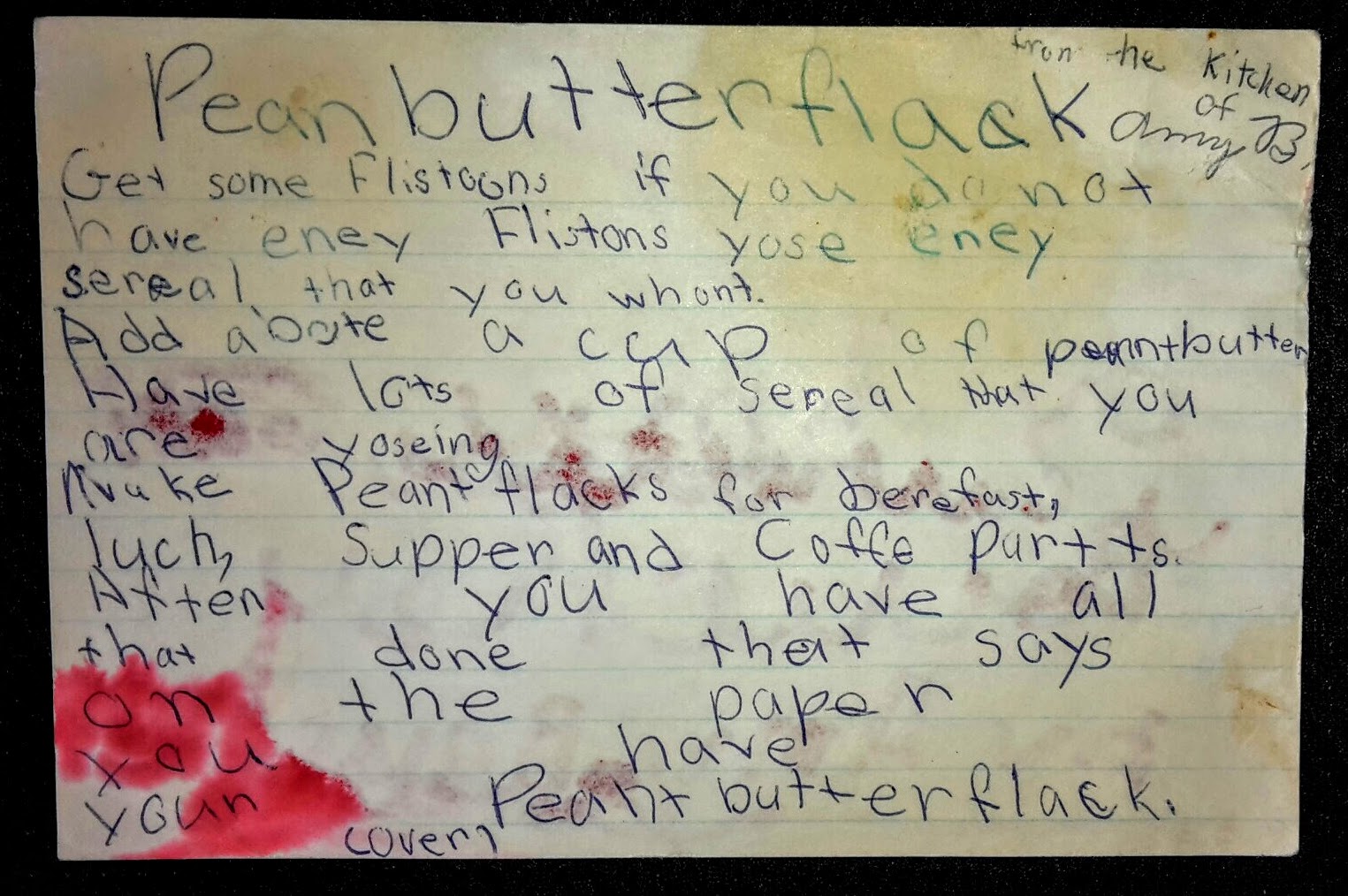
    My first recipe! Yep, suitable for coffee parties...
    My first recipe! Yep, suitable for coffee parties…

    Writing Finding Myself in Britain held many surprises for me. That may sound odd, for you may think, you’re the writer! But that’s the joy of the creative process – things bubble up out of seemingly nowhere, and those helping to birth the book-baby can see hidden things that should be brought into the open. Such as lovely Michele Guinness.

    I wept when I first read her foreword to the book; it felt like Christmas and my birthday all wrapped into one as her words washed over me and touched me deep within. In the email she wrote when she sent me the foreword, she included one little line that I could have skimmed over:

    Really wanted you to put all your recipes at the end!

    Yes, I thought, what a good idea. And so began what turned out to be hours of assembling the family recipes for the various feasts and festivals, along with many phone calls to my mom to make sure I had the instructions down clearly. My editor Jennie Pollock was a Briton who had lived in America, so she was helpful in clarifying things further, as was a friend who was becoming a chef, who helped me realize even more Americanisms that I needed to clarify. And then Becky Fawcett, who did the final copyedit/proofread, went the extra mile and tested out many of the recipes and brought my sometimes erratic measuring system into line. I’m so grateful.

    Here’s what you can look forward to with the recipes in Finding Myself in Britain:

    • Thanksgiving Feast
    • A VW (vicar’s wife) After-Church Buffet
    • Christmas Eve Feast (with Christmas cookies)
    • A Festive Easter Brunch
    • A Fourth of July (or Father’s Day) Barbecue
    • An Extra Helping (bonus recipes)

    To whet your appetite, below is a recipe excerpted from Finding Myself in Britain for next month’s American Thanksgiving feast, which yes, I will certainly be making.

    Minnesota Wild Rice

    To me, Thanksgiving wouldn’t be Thanksgiving without Minnesota wild rice. It’s not actually a rice, but a cereal grain that grows in the many fresh, cool lakes in northern Minnesota. For centuries, the native peoples in Minnesota have harvested this grain by hand, travelling throughout the lakes by canoe. Look for it in large supermarkets in the UK, but for this recipe avoid buying the packets combined with white rice.

    Serves 10

    • 2 1/2 cups (450 g) wild rice
    • 4 cups (1 litre) stock, either beef, poultry, or vegetarian stock
    • 3 sticks celery, sliced
    • 1 onion, chopped
    • 
2 cups (225 g) chestnut mushrooms, thickly sliced
    • Olive oil

    Soak the rice for an hour in cold water, then rinse and drain. Sauté the celery and onion in a large pan with the olive oil until soft, then add the rice and stock. Bring to the boil and simmer for 45 minutes to an hour, until the rice is tender and most of the liquid is absorbed. Add the mushrooms and cook at a higher heat for the last 5 minutes, until all of the liquid has evaporated.

    20151020_114337