Tag: devotional

  • Weekly devotional: Finishing the race (14 in Paul’s letters to Timothy series)

    A start and finish line.

    I should have posted this final devotional in the 1 and 2 Timothy series long ago! Odd to be doing so at the beginning of January, when it’s time for a fresh start, but life can be like that, can’t it. Sometimes we have to finish off the old things before we can embrace the new. Happy new year!

    For I am already being poured out like a drink offering, and the time for my departure is near. I have fought the good fight, I have finished the race, I have kept the faith. Now there is in store for me the crown of righteousness, which the Lord, the righteous Judge, will award to me on that day – and not only to me, but also to all who have longed for his appearing (2 Timothy 4:6–8).

    When one of my mentors died, I saw it as a severe mercy. Never filled with glowing good health, and longing for heaven, she felt she had come to the end of her earthly life. She had completed her mission – having passed over her Christian organization to other gifted people – and was ready to die. I imagine she could have echoed with Paul about having been “poured out like a drink offering” as the time for her departure grew near.

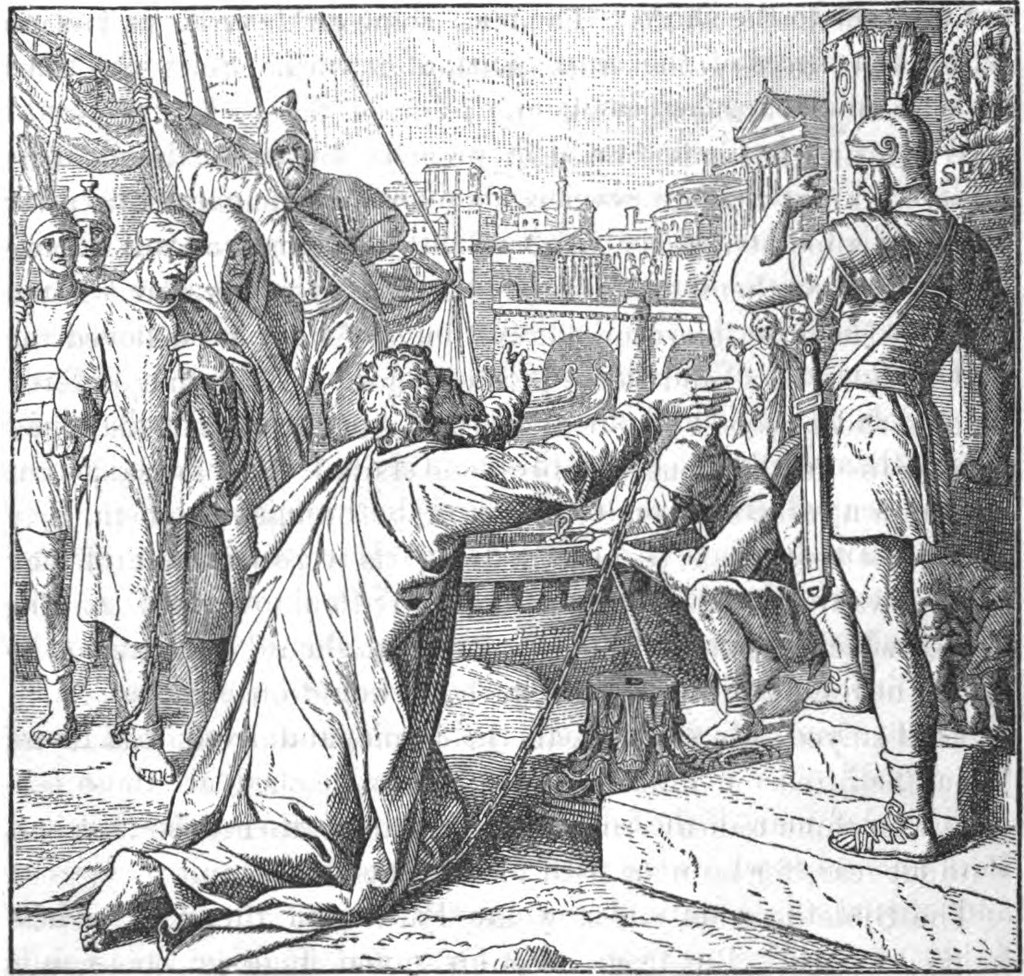
    When he was writing this letter, Paul must have known that he wouldn’t escape imprisonment and that he would soon be executed. He again employs the language of an athlete as he says he’s finished the race and fought the good fight, and that soon he will receive the crown of righteousness. He seems content even though his earthly life is drawing to a close.

    As we conclude our fortnight with Paul, with him writing right before his death, consider how in our culture we often do all that we can to avoid thinking about dying – including employing such terms as someone has “passed away” or “gone to be with Jesus.” We may feel ambivalent about dying, or would be sad to not fulfil our dreams if we were to die soon. But we can ask the Lord for peace and reassurance, and that like Paul, we’ll one day be able to echo that we’ve run the good race and finished our mission. May it be so.

    For reflection: “The Spirit and the bride say, ‘Come!’ And let the one who hears say, ‘Come!’ Let the one who is thirsty come; and let the one who wishes take the free gift of the water of life” (Revelation 22:17).

    You can find the rest of this series on 1 and 2 Timothy here.

  • Weekly devotional: Preach the word (13 in Paul’s letters to Timothy series)

    Raphael Study for St Paul Preaching in Athens

    In the presence of God and of Christ Jesus, who will judge the living and the dead, and in view of his appearing and his kingdom, I give you this charge: Preach the word; be prepared in season and out of season; correct, rebuke and encourage – with great patience and careful instruction. For the time will come when people will not put up with sound doctrine. Instead, to suit their own desires, they will gather round them a great number of teachers to say what their itching ears want to hear. They will turn their ears away from the truth and turn aside to myths. But you, keep your head in all situations, endure hardship, do the work of an evangelist, discharge all the duties of your ministry (2 Timothy 4:1–5).

    As we come to the end of Paul’s letter, he lays out his final commands to Timothy, underlining their importance as he calls upon the Father and Son as his witnesses. His exhortations reflect his understanding that Timothy in his ministry will again encounter false teaching – he is to preach, be prepared, correct, rebuke, encourage. As we saw earlier, Timothy should do this with love – with great patience.

    “Keep your head,” Paul says. A simple charge, but one we all should heed, for when we lose our cool, we can descend into words we shouldn’t speak and actions we should avoid. Anger can turn into bitterness and rage as we lose our self-control, which can quickly negate our good work of sharing the gospel. I think with shame of the times when I have lost my cool.

    Instead, taking Paul’s advice, we can be prepared “in season and out,” training ourselves with the help of the Holy Spirit to exercise self-control in times of ease and abundance, so that later in moments or seasons of stress and hardship, our character reflects Christ.

    My prayer is that we would be given great patience, and great love.

    Lord God, may our teachers bring you glory with sound teaching, winsome words and a deep reservoir of patience, and may we love to learn.


  • Weekly devotional: Holy writ (12 in Paul’s letters to Timothy series)

    Photo: George Bannister, flickr

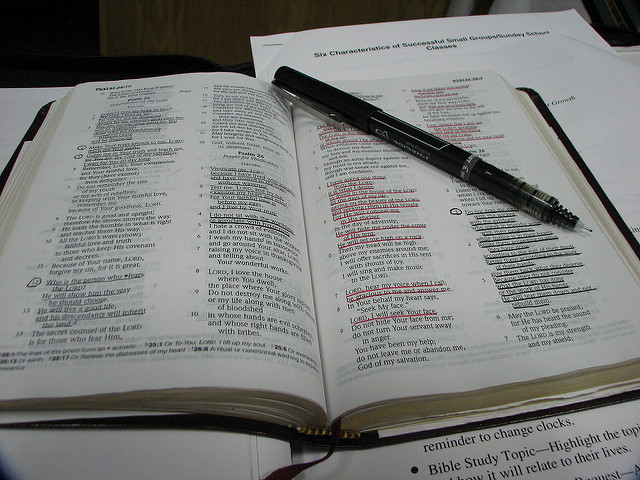
    But as for you, continue in what you have learned and have become convinced of, because you know those from whom you learned it, and how from infancy you have known the Holy Scriptures, which are able to make you wise for salvation through faith in Christ Jesus. All Scripture is God-breathed and is useful for teaching, rebuking, correcting and training in righteousness, so that the servant of God may be thoroughly equipped for every good work (2 Timothy 3:14–17).

    Many Christians memorize 2 Timothy 3:17, and I can understand why, for it’s the strongest statement about the Bible made in the Bible. But reading this statement on its own, out of the context of Paul’s letters to Timothy, dilutes its impact. As we’ve spent many a week considering these missives, we can gain a sense of the power of Paul’s view of the Bible – this crescendo at the end of the two letters reveals how he knows its worth and necessity in church life, especially when dealing with false teaching.

    We can take comfort and courage knowing that Scripture is “God-breathed” and, as Hebrews 4:12 says, “alive and active. Sharper than any double-edged sword, it penetrates even to dividing soul and spirit, joints and marrow…” With the inspiration of the Holy Spirit, when we read the Bible we can hear God speaking to us: words of love and affirmation; words of conviction and direction. As Paul says, we will find teaching there, and sometimes the sense of being rebuked and corrected; through it we will be prepared and given the tools to do the works of God.

    Dallas Willard, a renowned writer on the spiritual disciples, prized the practice of memorizing Scripture, and would regularly commit large passages to memory. He even said if one had to choose between a “quiet time” and memorizing, he’d choose the latter. When we do so, we find God’s word more readily available in our hearts and minds.

    May we become wise for salvation through faith in Jesus Christ.

    Prayer: Lord Jesus Christ, you are the Word made flesh. May you bring us wisdom as we read the Scriptures that we may serve you and reach out to those in need.


  • Weekly devotional: Godless chatter (11 in Paul’s letters to Timothy series)

    Keep reminding God’s people of these things. Warn them before God against quarreling about words; it is of no value, and only ruins those who listen. Do your best to present yourself to God as one approved, a worker who does not need to be ashamed and who correctly handles the word of truth. Avoid godless chatter, because those who indulge in it will become more and more ungodly. Their teaching will spread like gangrene. Among them are Hymenaeus and Philetus, who have departed from the truth. They say that the resurrection has already taken place, and they destroy the faith of some. Nevertheless, God’s solid foundation stands firm (2 Timothy 2:14–19).

    Seemingly without taking a breath, Paul’s tone changes and he’s back to the brisk warnings against false teaching that he made in 1 Timothy and Titus. He may be making his final remarks in this letter, but he reserves the right to warn Timothy against the distractions which idol talk and endless controversies can “spread like gangrene,” in his memorable image. And although God’s truth is the solid foundation never to be worn down by rust or mold – or eaten away by gangrene – those in church leadership can become infected, with their focus diverted from the teaching, preaching and serving that should occupy them. Paul yearns that Timothy, and those who follow after him, would be saved from those trials.

    I’ve heard stories about, and have witnessed, church conflict, including “godless chatter” and quarrels over words. Soon the arguments seem to descend into character assassinations, with those on opposite sides leaving behind the language of love as they slaughter each other with words. How the Holy Spirit must grieve at the splits and division.

    Consider taking a few moments to review in your mind and heart, and before God, any conflicts at church you’ve been involved in. May we echo King David, who said how good and pleasant it is when people dwell together in unity (Psalm 133:1).

    Prayer: Lord Jesus, you became man and died that we might find you and friendship with our neighbors. May your grace oil the wheels of communication in our homes, schools, places of work, churches and community meeting places.

  • Weekly devotional: Faithful in the task (10 in Paul’s letters to Timothy series)

    Valentin de Boulogne – Blaffer Foundation Collection, Houston, TX

    You then, my son, be strong in the grace that is in Christ Jesus. And the things you have heard me say in the presence of many witnesses entrust to reliable people who will also be qualified to teach others. Join with me in suffering, like a good soldier of Christ Jesus. No one serving as a soldier gets entangled in civilian affairs, but rather tries to please his commanding officer. Similarly, anyone who competes as an athlete does not receive the victor’s crown except by competing according to the rules. The hardworking farmer should be the first to receive a share of the crops. Reflect on what I am saying, for the Lord will give you insight into all this (2 Timothy 2:1–7).

    Paul fills his letters with vivid images that stick in the mind and imagination. As he passes along to Timothy his final words of wisdom, and his longings for the fulfillment of the gospel, he uses examples from ancient times that Timothy would have been familiar with – a soldier, athlete, and farmer. Those working tirelessly for the gospel may not appear to reap the same concrete results as those yielding crops or winning races, but Paul trusts that Timothy will understand his examples as the Lord gives him insight.

    The three examples have in common their hard work and faithfulness to produce a result: soldiers follow in obedience; athletes submit their bodies to training; farmers cultivate and care for the land. Each of the three shows their commitment through their training, devotion, and consistency. So too, infers Paul, should the Christian commit to their life of godliness and right living.

    Note too that neither a soldier, athlete, nor farmer knows in advance what the end result of their efforts will be, whether a battle or competition will be won or lost, or whether they will be harvesting a large or small crop. Their faithfulness and dedication to the task is what matters.

    Prayer: Lord God, we may be at the beginning of our journey in life with you, at the end, or somewhere in the middle. Wherever we are on this road, we ask you to help us to be faithful, for your glory.

  • Weekly devotional: Last testament (9 in Paul’s letters to Timothy series)

    I thank God, whom I serve, as my ancestors did, with a clear conscience, as night and day I constantly remember you in my prayers.Recalling your tears, I long to see you, so that I may be filled with joy. I am reminded of your sincere faith… For this reason I remind you to fan into flame the gift of God, which is in you through the laying on of my hands. For the Spirit God gave us does not make us timid, but gives us power, love and self-discipline. So do not be ashamed of the testimony about our Lord or of me his prisoner. Rather, join with me in suffering for the gospel, by the power of God. He has saved us and called us to a holy life… (2 Timothy 1:3–9, abridged)

    Paul opens his second letter to Timothy in a more gentle manner than he uses in his first. Many biblical commentators think that by the time he wrote this letter, the crisis with the false teachers had passed, which Paul addressed not only in 1 Timothy but in Titus. He probably wrote this letter four years after he wrote 1 Timothy, dictating his words while in chains during his second imprisonment in Rome, soon before his execution. These are therefore his last words to his beloved friend and one whom he mentored in the faith; one for whom he prays for “night and day” (v.3) and longs to see one last time.

    In 1 Timothy Paul emphasizes our part in working out our faith in practice, and in this letter he also highlights the role of God’s transforming power. For instance, Timothy should “fan into flame” the gifts that God has given him. Although Timothy may take the initial action, a power other than he brings about the result (as wind will stoke a fire, so the Lord will blow his Spirit into Timothy). The Spirit’s working will yield the gifts of power, love, and self-discipline as Timothy pursues a holy life.

    May the triune God fan into flame our faith.

    For Reflection: “Is not my word like fire,” declares the Lord, “and like a hammer that breaks a rock in pieces?” (Jeremiah 23:29)

  • Weekly devotional: Habits of the heart (8 in Paul’s letters to Timothy series)

    Rembrandt, public domain

    But you, man of God, flee from all this, and pursue righteousness, godliness, faith, love, endurance and gentleness.Fight the good fight of the faith. Take hold of the eternal life to which you were called when you made your good confession in the presence of many witnesses. In the sight of God, who gives life to everything, and of Christ Jesus, who while testifying before Pontius Pilate made the good confession, I charge you to keep this command without spot or blame until the appearing of our Lord Jesus Christ, which God will bring about in his own time – God, the blessed and only Ruler, the King of kings and Lord of lords, who alone is immortal and who lives in unapproachable light, whom no one has seen or can see. To him be honor and might forever. Amen (1 Timothy 6:11–16).

    As Paul brings his letter to conclusion, he warns Timothy not to act as the false teachers, but to “fight the good fight of the faith” (v12). Note his list of spiritual practices for Timothy to embrace – to flee ungodliness, pursue righteousness, take hold of eternal life, keep these commands. We are to live out the gift of life in the kingdom of God every day, employing our wills, minds, and bodies.

    Paul in his other letters often speaks of putting off the old self and embracing the new (see Ephesians 4:22–24, for example), again emphasizing this practice as an active one. Living in the fallen world as we do, and being subject to our sinful nature, we need to put on the new self daily. We may do so through such actions as confession and receiving forgiveness, asking for God’s help in making wise and godly choices, and filling our mind with his words.

    For we know, as Paul says, that our God is the only Ruler, King and Lord, he who is immortal and unapproachable, but he who makes the way clear for us to rest in his love.

    Prayer: Father God, help me shed any of my habits that are unhealthy, that I might live out of my redeemed self.

  • Weekly devotional: Enough (7 in Paul’s letters to Timothy series)

    But godliness with contentment is great gain. For we brought nothing into the world, and we can take nothing out of it. But if we have food and clothing, we will be content with that. Those who want to get rich fall into temptation and a trap and into many foolish and harmful desires that plunge people into ruin and destruction. For the love of money is a root of all kinds of evil. Some people, eager for money, have wandered from the faith and pierced themselves with many griefs (1 Timothy 6:6–10).

    Some ask, “How much is enough?” And another will answer, “Just the next deal/conquest/thing to buy.” For the human heart wants and yearns for fulfillment, and when we aren’t seeking God to fill those empty spaces, we’ll look to all sorts of other things to fill the void. Such as money to buy us stuff – for social status, ease of convenience, gratification.

    Note in the text that Paul says that the love of money can lead to evil – not that all money leads to evil, nor that money itself is evil. Rather he’s speaking about the state of people’s hearts, namely what are they desiring. As they plot and plan about acquiring the next best thing, they can find it increasingly difficult to resist temptation, which can lead to ruin. Paul, in contrast, counsels contentment with what we have. After all, we can’t take any of our stuff with us into the next life, and the Lord would have us seek his love, peace, and joy as true riches to share.

    I’ve met people who don’t have many material possessions and yet foster a stingy attitude, and I’ve met people with a lot of money who not only are generous, but don’t seem defined by their worldly wealth. As Paul says, it’s all down to the state of our hearts.

    Over to you. How much is enough?

    Prayer: Father God, we yearn for contentment; we yearn for you. By your Holy Spirit, fill the places in our souls that feel empty and void, that we might desire aright.

  • Weekly devotional: The work of elders (6 in Paul’s letters to Timothy series)

    Phogo: Alpha Stock Images – http://alphastockimages.com/

    The elders who direct the affairs of the church well are worthy of double honor, especially those whose work is preaching and teaching. For Scripture says, “Do not muzzle an ox while it is treading out the grain,” and “The worker deserves his wages.” Do not entertain an accusation against an elder unless it is brought by two or three witnesses. But those elders who are sinning you are to reprove before everyone, so that the others may take warning. I charge you, in the sight of God and Christ Jesus and the elect angels, to keep these instructions without partiality, and to do nothing out of favoritism (1 Timothy 5:17–21).

    The Church of England may have its faults, but as a vested party (as one married to an Anglican vicar), I think their system of paying their clergy works well in principle (notwithstanding the families where the spouse doesn’t work, and who can struggle financially). For all clergy are paid roughly the same stipend, whether theirs is a large church or a tiny one, and the more wealthy churches pay into a central fund that finances churches in poorer areas. With a standard stipend, clergy aren’t tempted to move from post to post to seek a larger salary.

    Paul touched on this issue of not playing favorites in his letter to Timothy – although he emphasizes Timothy’s actions regarding the elders, namely how he should act wisely, impartially, and with justice. They are to be remunerated for their work, Paul says, but they are also to be held to account. I wonder if Paul was picturing the elders as he wrote his letter, for he had spent three years at the church in Ephesus previously.

    It’s beneficial to consider the work of the elders, not least so that we can pray for and support those in positions of church leadership. Friends say how much they value the prayers of the people in their congregation, even, and perhaps especially, when there are areas of division.

    For reflection: What do you think is behind Paul’s command not to “entertain an accusation against an elder unless it is brought by two or three witnesses”?

  • Weekly devotional: Training in godliness (5 in Paul’s letters to Timothy series)

    If you point these things out to the brothers and sisters, you will be a good minister of Christ Jesus, nourished on the truths of the faith and of the good teaching that you have followed. Have nothing to do with godless myths and old wives’ tales; rather, train yourself to be godly. For physical training is of some value, but godliness has value for all things, holding promise for both the present life and the life to come. This is a trustworthy saying that deserves full acceptance. That is why we labor and strive, because we have put our hope in the living God, who is the Savior of all people, and especially of those who believe (1 Timothy 4:6–10).

    The trend of the yearned-for perfectly shaped and sculpted body continues in our culture as we run, train, jump, pump iron, dance, and eat foods from the latest diet, whether low or high GI, protein, or other. But do we focus enough on the training of our soul? Do we have fit bodies but fat minds, in the memorable title by Os Guinness (Fit Bodies, Fat Minds, Baker, 1994)?

    Paul speaks of Timothy being nourished by the food that lasts – that is, the truths of the faith and the good teaching he’s received, whether through his mother and grandmother, other church leaders, or Paul himself. Why, Paul says, should we neglect the state of our souls in favor of the state of our bodies, when our souls will be those which live on into eternity?

    Many Christians seek to practice the spiritual disciplines regularly, such as Bible reading and study, being thankful, taking time for silence and solitude, and doing acts of mercy in secret. They find doing so in community to be mutually beneficial. May we continue to spur each other on towards love and good deeds (Hebrews 10:24).

    Prayer: Father God, through the power of your Holy Spirit, help us to train ourselves in righteousness, that we might reflect your grace and your glory to a hurting world.