Tag: Agnes Sanford

  • Praying about the weather – yes or no?

    Rain. More rain. Here in the UK we’ve just had the wettest January since records started in 1910, and as I sit, I watch it rain even more. Communities are sodden in Somerset; in Devon, the tide has washed away the rail track.

    Our water stores are full. The drought of two years ago, with its hosepipe bans (hosepipe – as an American I find that word delightful and quirky) and fears of wildfires, seems a long time ago. As I took the train from London to Oxford last week I saw swollen rivers and sitting water. We’ve been drenched.

    After the rain - Holy Island  Causeway
    After the rain – Holy Island Causeway

    Even the tabloid newspaper, The Sun, has called for a prayer campaign to stop the rain, saying: “Lord, we’ve had enough.” They published a prayer to the patron saint of weather, St Medard, by Revd Sue Evans, Vicar of St Medard, Little Bytham, Linconshire:

    Heavenly Father, we are grateful for the gift of water, and in many parts of the world we know people suffer and die for lack of rain.

    But dear Lord – we’ve had enough. We ask you please that the rain may stop soon. We pray for all those people and animals suffering from floods.

    As St Medard needed protection from the rain, so now do many people from our land.

    For Jesus’ sake, Amen.

    Do you pray about the weather? Inspired by Agnes Sanford, a pioneer of the healing-prayer ministry, I do. When I edited Leanne Payne’s wonderful spiritual autobiography, Heaven’s Calling, I learned more about Agnes, for Leanne knew her well.

    Stirred to pray for the healing of the earth, Agnes moved from New England to California, to live on the San Andreas Fault and pray for its healing. She reveled in nature, marveling at a the genetic makeup of a seashell or speaking lovingly to a rattlesnake that lived in her back garden, but respected her boundaries. When once Leanne visited Agnes and they were praying in the garden, she remembered the rattlesnake story and said, “I am definitely not where you are in regards to your snake.” But Agnes put her at her ease, and they weren’t troubled by the rattlesnake – or the forest fire that was below them (about which Agnes prayed for rain, like Elijah, and it came!). These stories are all in Heaven’s Calling, page 252–57, which I highly recommend.

    I’m aware this might be outside your comfort zone! But if God is the Creator, and he made us to communicate with him, why wouldn’t he want us to pray for the healing of his earth?

    What do you think?
  • Becoming ourselves – Agnes Sanford

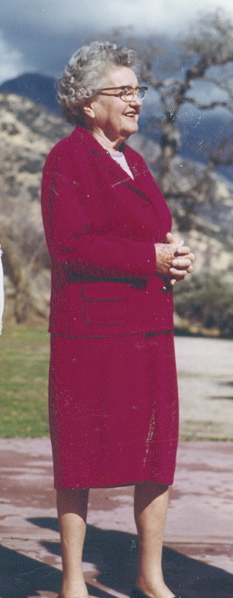
    I love hearing about heroes of the faith, especially those who might be overlooked today. One is Agnes Sanford, a pioneer in the healing-prayer movement in the twentieth century. Before she died at the age of eighty-four in 1982, Newsweek magazine hailed her as one of six people who shaped religious thought in the twentieth century. But before God used her so powerfully, she had to work through a painful journey of self-discovery and acceptance.

    Agnes Sanford photoAgnes grew up in China, the daughter of missionaries. Her struggle to release her true self came when she was living in the States, married to a pastor. Her husband Ted had been raised in a clergy household, and Agnes loved his parents, especially his mother. At first, Agnes modeled the role of minister’s wife on her mother-in-law, but doing so brought forth a crisis of identity:

    I had determined to make myself exactly like Ted’s mother, whom I adored. I would then be, I felt, the kind of wife that he liked. Therefore, I completely denied my original nature and devoted every moment to fruitless endeavor. And so I reached the depths because I was doing violence to my own soul. (Sealed Orders, p. 106).

    She thought she should be the perfect host and companion to Ted in his ministry. But in doing so, she was denying the deeply creative part of herself that wanted to give birth to new life, whether through writing, prayer, painting, or other artistic ventures. The false self was keeping her true self from thriving:

    My wounds were too deep to be healed so easily. And what were those wounds? If anyone had asked me at the time, I would have said, first of all, that the real part of me was simply not living, the creative one who longed, not only for children, but also for the children of the mind to be brought forth.

    The basic trouble was that I had forgotten whence I came, and I did not know the sealed orders with which I had been sent to this earth. I sensed my thwarted creativity. I wanted to be a writer, and I could not, for all of my time and thought and attention was upon being a wife and mother.

    … At this time I came very near to the deepest depths and could easily have drowned in them…. I could no longer see beauty. And when one can no longer see beauty, one can no longer see God. (pp. 101-102)

    After a long struggle, Agnes sought counsel with a neighboring minister, knowing she needed to find a way out of the strangling depression. He brought clarity where she had been covered by a suffocating cloud:

    “Don’t you see you have been trying to be a square peg in a round hole? To make yourself into something you are not?”

    … “But nobody will like me if I am myself!” I cried. “Not Ted nor his family nor the parish nor anybody!”

    “They won’t have you, unless you let yourself be yourself,” said Hollis. (p. 111)

    With this, Agnes began to throw off the cloak of the ill-fitting clothes. Ted’s mother may have been created to fulfill the role of the “perfect minister’s wife,” but that garment didn’t fit Agnes. She would only be the best wife for Ted – and his parish – when she was living out of her redeemed self, that creative person whom God had called her to be.

    God sent his healing, but he wanted her to be involved as well: “I find that God will heal us up to the point of our being able to think and to pray and to reason, and from then on, while He still helps us, we must nevertheless fight the battles of life ourselves. I was becoming a new person: the original person whom I was born to be. And this was the exact opposite of the person whom I had tried for some six years to make myself – a perfect minister’s wife.” (p. 118)

    As Agnes stepped into her new clothes, she became that person. A writer, a painter, a woman devoted to prayer for people and the earth. And the world will never be the same because she flung off her rags and put on her royal robe, tailored just for her.

    Do you have a new set of clothes just waiting for you to don?