It’s the last week for you at home before you go off to university – and your life changes forever! I know that sounds daunting and exciting and nerve-wracking and scary but wonderful too.
We have loved watching you (admittedly from afar) develop into such a wonderful young woman – one who knows and loves God, who seeks to deepen in her faith. That in particular gladdens my heart as your godmother. To me, I seek to keep my faith the most important factor in my life. With the triune God as your friend, you’ll be able to face the challenges and to rejoice in the joys in the days and years to come. He’ll never leave you. He’s always there, gently sending his nudges of grace and whispers of love. I hope you continue to learn to sense the ways he communicates with you.
You going to university has made me think back to my leavings and beginnings, as I took the big step to leave high school and go to a Christian university, just a few miles from my parents’ home in Minnesota. I thought it was important to live on campus that first year, and so I did with two very close friends. Two blondes, in fact! We had hard times and good times, and it was important for me to live away from home to establish my identity apart from my parents. To start thinking through issues of faith and belief – especially as I attended a Baptist university and grew up in the Roman Catholic church. And to learn how to live with roommates!
My faith took an almighty hit my sophomore year, on October 15th to be precise, when one of my closest friends from high school was killed in a car accident. It was a shattering time, and I wondered how a good God could have allowed such a horrible thing to happen. To be honest, all these years later I can’t totally answer that question. Who can? But as I probed and sobbed and searched, I found hints to answers to that question – the mystery of evil and a broken world and yet a loving God who works to redeem and shower grace.
My friend’s untimely death makes me think of one of the biggest pieces of advice that I can give you as you go off to university: Expect the unexpected. Now I pray so much that this will not mean not the death of a loved one – I definitely don’t wish that for you. But things probably won’t turn out the way you anticipate as you set off to your new home away from home, heart pounding, stomach a bit growly, your nerves a flutter.
Things may not turn out the way you hope they will, but they can turn out in a better way! I for one would have never believed that I’d be living in the UK these almost 19 years later, nor that I would have lived in the amazing city of Washington, DC, for ten years, which started with a semester my junior year. God has mysterious ways of working and moving, and helping us to learn and love and change. Sometimes we feel the changes are welcome; sometimes unwelcome. But he’s always with us, and life with him is an adventure.
So lovely goddaughter, know that we love you and will be praying for you. Your heart will be tugged in more directions now as you meet new friends and learn to love a new city. Come to visit us in London some weekend – you’re always welcome!
An oft-repeated piece of advice for writers is short and sweet: “Read.” As writers we need to immerse ourselves in words, and usually this has been our bent from birth. We are those who as children got told off for reading with our friends on a playdate (yes that was me), or for not engaging with the family on car journeys because we had our nose in a book (me again, before I starting suffering from travel sickness). We read the back of a cereal box as we eat or scan the junk mail when we’re waiting for the microwave to finish. Reading often comes to writers as second nature.
Why read? As we lose ourselves in a book, we chew and swallow and digest the writing, which imparts richness to our writing. Although all of this reading might mean that our early attempts to put pen to paper or fingers to keyboard sound like we’re parroting our favorite authors, for we haven’t yet developed our voice. But as the words get inside us, and as we continue to hone our writing, the writings of others help us to find our voice. Read the rest at the ACW blog…
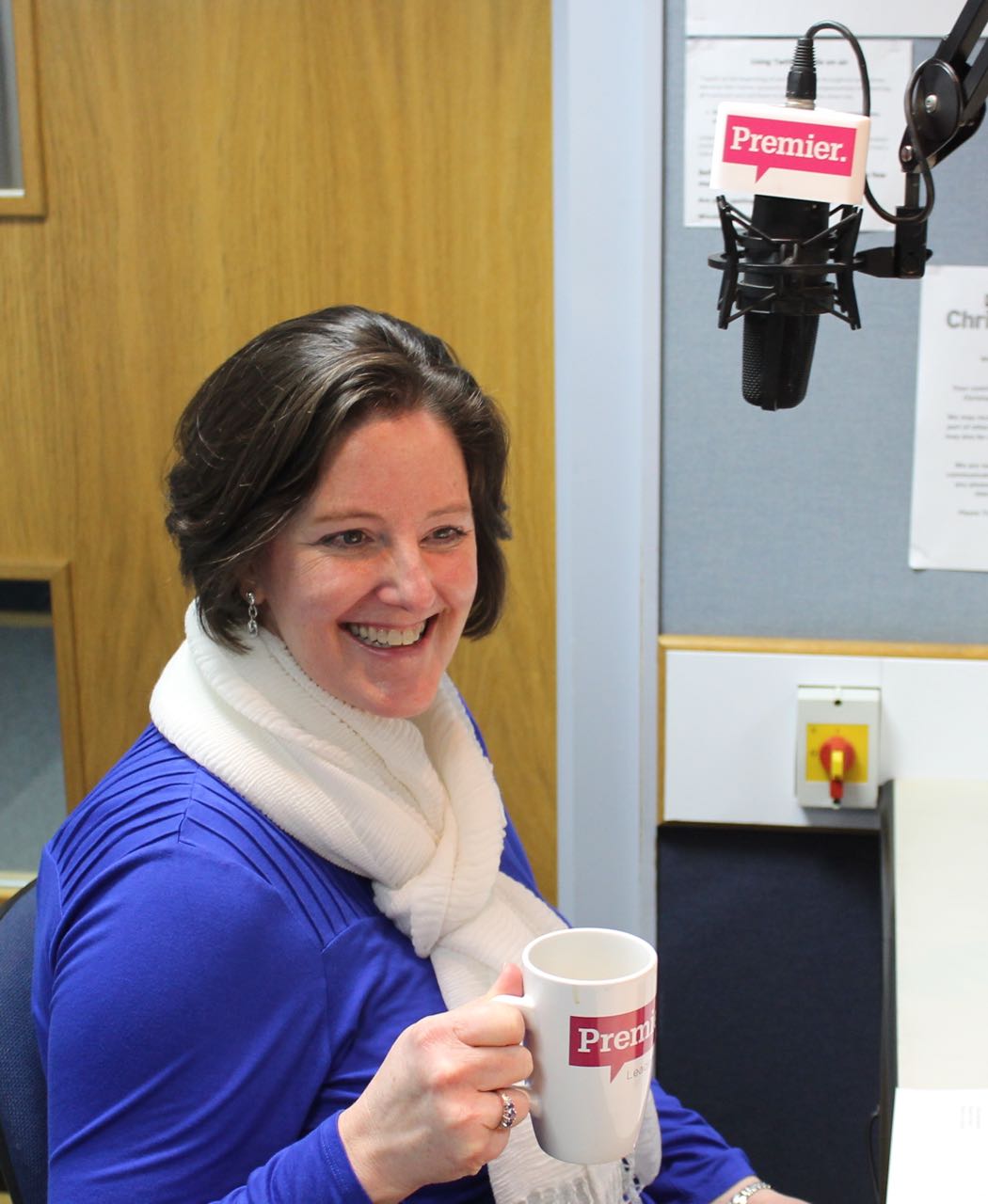
I had a lovely time on Premier Christian Radio yesterday chatting about writing and publishing for World Book Day.
In prepping for the interview, I found out that World Book Day is celebrated in over 100 countries. Many countries celebrate on April 23 (Shakespeare’s birth and death day!); that’s when the UK marks World Book Night (with the stealth distribution of books among other things). They moved the celebration of World Book Day to March 5 to accommodate schools, as the latter date is often during the school holidays. Many schools participate in the schemes where children receive a voucher toward money off books.
Here is the interview, in which we talk about whole host of writing tips and things to consider about finding an agent and publisher.
You can see some of my other writing posts here, including how to write a devotional and advice to a newbie writer.
As I think about appearing on Premier Christian Radio tomorrow to celebrate World Book Day, I thought I’d share a few tips on how to give a great radio interview. I’m not a pro, but I’m much more comfortable behind the microphone than I was when I went the first time, shaking in my boots and nearly peeing my pants, to review the newspapers back a decade ago. That experience was a bit like baptism by fire, as I sat across from a tough interviewer who in Jeremy-Paxman style grilled me over opinions on issues I didn’t even know I had. Five days of that helped me overcome a lot of fear, and each day as I left the studios I breathed a sigh of relief, verily skipping my way back to the Tube station.
When my next interviews weren’t live but taped, I could hardly believe how fun and light the experience felt. Jeff Lucas and Ruth Dearnley invited me to their fab chat show “In Good Company,” which felt a dream in comparison to the live firing line. They talked; I listened; I chimed in… and we even could stop and go back and have bits edited out!
Imagine you’re talking with one person
This was my Best. Advice. Ever. I told a work colleague about my upcoming News Review interviews and he, an old hand at presenting on radio and television, imparted this wisdom. If we think of the potentially thousands of people who might be listening, we’ll clam up and sound stilted. Instead, imagine you’re having a conversation not only with your interviewer, but that one person from the audience is there in the studio with you. You’ll come across as much more personable.
Shut up!
Oh my goodness; I’ve learned this one the hard way. When I listen back to some of my early interviews, I cringe at how I would go on, and on, and on, and on. How boring for the listeners; how insensitive of me not to let the interviewer (or if you’re in a group, the others) to get a word in edgewise. I can see now that nerves were driving this drivel. Don’t be afraid to say your answer and then stop speaking; the interviewer, after all, is probably a seasoned professional and will carry the conversation. Your silence will also give her the opportunity to follow up on what you say or steer the conversation in another fashion.
Prepare – then let it go
You may be tempted to bring a load of detailed notes with you into the studio; don’t. Do prepare in advance, writing down your main points and even practicing some snappy lines or phrases that you’d like the listener to engage with. (Having a family member or friend conduct a mock interview is a good way to see if you need to practice more.) But if you are slavishly poring over your notes in the interview, you’ll probably sound scattered and disjointed.
Exude confidence – even if you don’t feel it
This is a tough one, for if our nerves are screaming at us and we’re live on air, we may feel anything but confident. Yet confidence breeds confidence, and as we slow down, take a deep breath, and focus on the interviewer and his questions, we’ll become more articulate and calm, maybe even exuding a sense of assurance. The interviewer too will gain in trust, knowing that he won’t be having to carry us in the interview.
Photo: Andréia Bohner, flickr
Smile
It may be radio (or television!), and you think the smile will be unseen, but what’s unseen matters (bigger spiritual principle alert). The smile in your voice will come through, and the listener will hear it.
After the fact, listen up
We can all learn from our experiences, especially with interviews. They get easier the more we do them, and we can learn from our triumphs and our missteps. Get a podcast of the interview and listen back in the privacy of your own home, cringing or smiling. What did you do well? What do you wish you would have said? When did you speak too much, or too little? Which ideas or words did you stumble over? Do you have any pet phrases that you seem to say all the time, or words such as “um,” that you utter too much? Don’t be too hard on yourself though – you’ll probably be a much harsher critic than those listening to you.
At the end of the day, give thanks. Any opportunity to share with others seems to me a gift from God, well worth returning thanks for.
I believe writing devotionals may be part of my soon-to-be-seriously-begun writing ministry. Have you any helpful tips as I start? I’m retiring at the end of March and although I will be a lay pastor, I will finally be able to give serious time to writing. I’ve read your CWR notes and love them!
Photo: “Bible time,” Brett Jordan, flickr
Hello and thanks for asking! I love, love, love writing Bible reading notes. As I prepare, I read and dream and research and wonder and pray, and then I get down to the writing. Often time seems suspended and I exclaim, “Wow, I love this, Lord!” But I say this acknowledging that not everyone has this experience when crafting devotionals. This kind of writing is my sweet spot; it’s part of how I’ve been made and who I am. And I’ve been writing devotionals since 2008. I haven’t counted up how many I’ve written for some time, but I’m guessing 400 or 500. So please don’t feel bad if you don’t experience the sense of sheer joy in your writing. It may come.
You asked for some tips as you dive in; here you go.
Make your words (characters) count.
“If I had more time, I’d make this shorter.” Writers of devotionals – Bible reading notes – don’t have the luxury of space. Usually the text is limited to around 300 words, so the content needs to matter. A publisher I’m currently writing for designates character (with spaces) counts, so there’s no fudging. You know, like those hyphenated words that only count as one word in a word count (The writer-who-likes-to-cheat Amy? Nope.) Write your first draft and then prune, prune, prune. Employ strong verbs – the passive voice eats up your word count. Delete adjectives and adverbs. And so on. (A read through of the classic Strunk & White can be enlightening before you dive in.)
Gather your thoughts.
In the weeks before your deadline, read through the text you’ve been assigned (or that you’ve chosen) prayerfully, asking God to reveal what he wants you to write. Start a “thoughts” file on your computer/device where you can jot down notes and illustrations that occur to you. Writers train themselves to notice details – it’s as if while we’re experiencing a near car accident, we’re also taking notes on what we were thinking when the car in front of us stopped, the hue of the sky and how the light hit our eyes, the pounding feeling in our chest when our foot reflexively hit the brakes and the car stopped just in time, and the “Thank you, Lord” prayer we exhaled. (Do stop the car before you note these down.)
Photo: Savio Sebastian, flickr
Submit yourself to the text.
I love writing notes that are assigned to me – such as the series I’m going through on my blog on Hosea, or the series on verse by verse of Psalm 18 (start from the bottom of the links). We so often skip over the hard bits in the Bible, and so writing on a chunk of Scripture in a series can be an effective way to avoid this.
But I also mean in submitting ourselves to the text that we seek not to read what we want to read in the Bible, but what God has put there. Do some research and find out the context. Don’t just jump to handy conclusions. Ask God’s Holy Spirit to reveal the meaning. Leading to…
Research.
When I first started writing Bible reading notes, I spent a week or more reading and taking notes on various Bible commentaries. In one sense I needed the help because I hadn’t engaged with the Bible at that level before. (Those of you who preach regularly will have the benefit of this close engagement.) But in another sense I found myself crippled to form my own opinion. In doing so much background reading, I was in danger of merely parroting back the ideas in the commentaries. I had to put my notes aside for several days so that I wasn’t stealing the content of others in what I wrote. (Of course, there’s nothing new under the sun, and we unconsciously share the wisdom of others all the time – along with the inspiration of the Holy Spirit.)
A lovely letter from a reader who sent me a Thanksgiving card for many years.
Journey with the reader.
This probably doesn’t need stating, but you as the writer are a fellow pilgrim, and in the writing of Bible reading notes, you’re often sharing what you’re learning even as you write. So put on the cloak of humility, because wow it’s so amazing to get paid to submerge ourselves in the Bible and to share what we’re gleaning with others!
Yes, you can use the classic formula.
Devotionals often start with an arresting anecdote, which links to the biblical text that the writer delves into, which leads to the application. So that would be
Illustration
Text
Application
Being one who likes to buck the rules, I like to vary things up, sometimes diving straight into the text, for instance. But I do seek to add an application for each reading – after all, we do want to be living under the wisdom of God’s word.
Weave in biblical text.
I love to fold into my reflections various verses from Scripture. I don’t seek to do this slavishly, for that would make it feel forced, but often in the prayer section at the end of the devotional, a verse will stand out to me as suitable for prayer and reflection. (I don’t have the mind of NicTheVic who can name chapter and verse when it comes to Scripture. I have fragments and pieces stored in various levels of my brain, so I find the search facility at BibleGateway a fantastic resource for bringing them to the fore.) Reminding the readers of the great sweep of Scripture can be helpful too, depending on what you’re addressing.
Pray.
This is the most important element of writing devotionals. Pray before you start; pray while you’re writing; pray while you’re rewriting; pray when you send off your work to your editor. We trust that God will inspire us with his word; we yearn for him to bring just the right encouragement for the broken-hearted, the lonely widower, the overwhelmed parent. We oftentimes write a year in advance, so we can’t control the outcome or the effect of what we write. Which makes the sometimes miraculous meetings between devotionals and the reader’s experience so humbling (as I wrote in a blog about some notes that God used during an earthquake in New Zealand).
I can’t explain how sometimes an illustration will pop into my head when I’m writing. Oftentimes I approach the text without seemingly a clue of where I’ll go with it in terms of the illustration and application. But as with so many creative pursuits of collaborating with God, we take the first step and he helps us to continue. As with the Israelites wandering through the desert who had enough food for the day, he provides just enough inspiration for the devotional we’re writing.
A “wow this is humbling” letter.
Try to develop a thick skin.
The first publication I wrote for had an exacting readership. Any theological matter I addressed could be questioned; any uninformed opinion taken to task. I came to dread the letters from readers, for they pointed out where I was lacking. But the readers’ letters made me welcome my editor’s comments all the more, for she knew her readership and was careful to massage my text into a more acceptable format (without asking me to budge on key theological matters). I always took the time to reply to these readers (asking God to let a humble response come through), for they had taken the time to write to me.
Then I wrote a series on being a pilgrim in a foreign land. Bulky packages from the publisher started to pop through my letterbox, and amazingly, this time the readers wrote with their stories of feeling in exile! The publisher said they had never had such a big response in terms of feedback. I heard from other Americans living in the UK or those with connections to other countries. I felt overwhelmed with gratitude at this response, made all the sweeter by my long history of not-so-easy reader letters.
I hope this is helpful; do let me know how you get on. And thanks for your kind words about the CWR notes. I’m humbled when people find my writing helpful or inspiring. Praise God!
My niece is turning 20 soon, that wonderful decade of exploring identity, building relationships, entering into the world of independence and adulthood. It can be a time of searching and experimentation; a time of solidifying who we are. My smart and hard-working niece has known since she was 10 that she wanted to pursue a career in medicine, but when I was in college, I was a bit lost about what I wanted to do with my life. I knew I like words and writing. And I had enjoyed my dad’s computing, when as kids he would bring home a console and plug it into the phone for it to speak to the mainframe at Pillsbury, where he worked.
Which way to turn? The way ahead, or that little cobbled trail to the right?
So when I was wondering what to pursue at college, he encouraged me to be a technical writer. I signed up for some computer courses – Basic, Pascal, Fortran, and Cobol. I did okay at first, but when I got to Fortran I started to struggle. I went to see my professor when I was flailing around with the latest assignment. His words brought instant clarity: “You know Amy, I don’t think that writing code is something you really want to be doing in your free time.”
He was right, and I felt relief in dropping the computer-science minor. But I don’t regret the classes in Cobol or even my political-science major that I later embraced. I find it funny that I studied poli sci, for I’m not a news junky or a politico (as my husband, who has these proclivities, will fully attest). But God used and redeemed my choices of studies at college – my political-science major meant that I went to Washington, DC, for a semester, which turned into ten years of amazing, challenging, eye-opening experiences. My internship including working for a fabulous British Christian writer. Who knew I would later live in Britain, writing and working in Christian publishing?
So to those such as my niece who are moving into the next stage of life, I offer you blessings from a fellow pilgrim. Whether you have your path charted out or whether you aren’t sure which way to turn, may you feel freedom in taking the next step. May you feel the Father’s hand in yours, never constricting but always encouraging. May you experience joy in the journey.
If you’re well past your twenties, let me ask you this: How did your experiences of that decade shape your life?