What happens when God is suddenly silent? Rachael shares movingly of her experiences as a teenager and beyond. She eventually found hope in the Psalms and learning how to lament. That someone before her could voice her feelings gave her a language with which to communicate with God. She learned to lament. I believe you’ll find her post so encouraging:
It was a running joke when I was small girl that if I were saying grace, we’d better get the microwave on standby as the food would be cold by the time I’d finished praying. As a young child, prayer felt as natural to me as breathing, a near-constant conversation between my God and I.
As I grew older however, the easy connection became strained, even more so when I first developed mental illness at fourteen. Prayer no longer felt like a two-way conversation, but talking into the ether. I was bombarded by questions about who I was and what I believed about the God I felt had abandoned me to myself. I can’t remember ever doubting God’s existence, but the distance grew into what felt like an unreachable chasm. I got stuck on the idea that I couldn’t pray for myself, that God couldn’t possibly care for a messed up teenager living a comfortable life when there was so much struggle and poverty going on in the world. My vision of God shrunk with my ability to pray and I began to believe that the miraculous encounters I heard about from friends attending summer festivals were totally outside of my reach.
I’d been writing in a diary since the earliest days of my illness; and when someone wrote Psalm 40 in a card to me during a particularly dark period, I began to address my writings to God. Suddenly I was no longer venting my pain into the void, but into the presence of the Father I’d given my life to aged five.
The words of Psalm 40 became my own prayer;
“I waited patiently for the LORD; he turned to me and heard my cry. He lifted me out of the slimy put, out of the mud and mire; he set my feet on a rock and gave me a firm place to stand. He put a new song in my mouth, a hymn of praise to our God.”
There was something astounding to me that someone had expressed my despair before God all those years ago and yet was able to declare that God had met them in the midst of the pit. It was not the flash of light miracle I so craved, but something began to change for me. As my writing became my prayer, I started to rediscover the closeness with God that I had been missing.
I would later learn to call the prayers I was writing lament – that as I learned to express my despair before the God of hope, He was opening up the possibility that perhaps the gospel truth of our belovedness was not lost to me, that I was not lost to Him.
I began to almost crave the more reflective times in church life of Advent and Lent, the ancient liturgy and story of the God moving into the neighbourhood and experiencing the breadth of our humanity, the darkness of Good Friday and the silence of Holy Saturday met me where I was and I didn’t feel as if I had to fake jubilation in the same way that I felt was expected at Christmas and Easter.
Over the past few years however, I have begun to appreciate the call of Romans to “weep with those who weep and rejoice with those who rejoice”, the recognition from Ecclesiastes that “There is a time for everything, and a season for every activity under the heavens.“ The seasons of life; of happiness and sorrow are experienced as the family of God and our times of corporate prayer and worship should have space for the joy and the pain to be expressed together in community.
Our God has given us the gift of prayer and community through every season of life so that through it all we may listen for the heartbeat of God whose love remains steadfast.
Rachael Newham is the Mental Health Friendly Church Project Manager at Kintsugi Hope and the author of two books. Her most recent And Yet was chosen as a part of The Big Church Read. Rachael founded the Christian mental health charity ThinkTwice and led it for a decade. She writes and speaks widely on issues of theology and mental health. You can keep in touch with her on Facebook, Twitter or Instagram.
Order 7 Ways to Prayhere for more ways to encounter God, including resources for small groups.
I first met Jeff Crosby in Singapore at LittWorld, a wonderful gathering for writers, publishers, and graphic designers from around the world. As we shared a jetlagged breakfast together, I soon realized here was a thoughtful and articulate person – a quiet leader with gravitas. I love how he shares how what he once saw as a stumbling block in his life has become a pathway to God. Please take a few moments to read and ponder his words:
I have always marveled at people for whom eloquent and impassioned prayer rolls off the tip of the tongue and out of their hearts with great ease and authenticity. Spontaneous. Joyful. Heart-felt. Genuine.
I’ve long wanted to be among those people.
Though I believe deeply in the importance and the efficacy of prayer, I have never been among that crowd. Instead, I am more often than not tongue-tied, like a singer on the stage who forgets the first lines of a song he’s known all his life and has to start all over again, cheeks blushing, heart chagrined.
But as I have grown older, I’ve accepted my tongue-tied prayer life, like my introverted temperament, as something of a gift and I’ve found life-giving pathways around it that have fostered intimacy with God, and helpful self-reflection.
In her book 7 Ways to Pray, the author Amy Boucher Pye writes instructively to people like me when she introduces the concept of the prayer of examen, originally formulated by St. Ignatius of Loyola (1491-1556), the founder of the Jesuit order. She has carried a specific practice of examen in her family (in her case, on vacations) , in which she, her husband and teenage children daily reflect on the joys and the irritations of their days away from home. “I realized recently that these highlights and lowlights can morph into prayer that helps me understand how I’m relating to God,” she writes. “As I pay attention in my life and look back, with his help, to name the things that brought me joy or frustrated me, I can understand how I’m moving toward or away from him.”
The practice of examen at the end of my days has been a gateway to prayer. In quiet on a walk through the natural world or sitting at my writer’s desk, I reflect on the consolations (what was life-giving) and the desolations (what was life-depleting) in the day I am drawing to a close, and out of that reflection I form a prayer of thanks for the presence of God in the midst of it all. I often carry prompting questions written by friends at the Fall Creek Abbey, Beth and David Booram, such as:
Where am I experiencing an emerging desire?
Where might I be carrying a misplaced expectation of God, others, life, or myself?
What in my life is giving me joy? What is giving me sorrow?
As I consider those prompting questions, I am invited to recognize, reflect, and respond in prayer to the God who loves me unconditionally.
The prayer of examen has been, for me, one of the life-giving avenues for a tongue-tied pray-er. And there are others.
Throughout the global health pandemic, I have prayed the Book of Psalms daily, guided by the devotional reflections of Dane Ortlund, a pastor and writer, through the book In the Lord I Take Refuge. If the examen helps me pay attention to what is stirring in my own soul and my sense of God’s presence (or absence), praying the Psalms helps me realize that there is nothing I am facing that has not been faced by those people of faith who have gone before me. Praying the Psalms “foster[s] communion with God amid all the ups and downs of daily life in this fallen world,” Ortlund writes.
I have found that to be true.
The prayer of examen and daily praying the Psalms have given this tongue-tied, praying believer sacred pathways to communion with God. And I am thankful.
Jeff Crosby is the president and CEO of ECPA, the trade association of Christian publishing in North America. He is the author of The Language of the Soul: Meeting God in the Longings of Our Hearts, to be published by Broadleaf Books in May of 2023.
Order 7 Ways to Prayhere for more ways to encounter God, including lots of resources for small groups.
How can we continue to trust God when the worst has happened? Georgie takes us through some of the tough questions she faced after her sister died. I love how she didn’t shy away from bringing all of her questions to God, even when she felt bitterly disappointed in him. If you haven’t read the first installment, you might want to do so now.
Last week, I wrote about prayer during my sister’s six-month journey with terminal cancer. In the early hours of the morning of 24th September 2017, I sat with her and my brother-in-law, each of us holding one of her hands, as she finally slipped from this life. It was the hardest thing I have ever done.
In the early flurry of practical arrangements, I hardly had time to stop and think. I remember, though, a late-night conversation with my husband, where I poured out my fear that I would never be the same again – that I would never be able to trust God with anything, ever, because it felt so much that He hadn’t come through for us when He had been our only hope.
This has been a long journey of prayer and counselling to get back on my feet, emotionally and spiritually. Mine was the kind of story I didn’t want to read, when I was walking the path with my sister, hoping and praying for a healing that didn’t come.
Yet here I was. I know my story has helped others around me cling to faith when all feels dark, so I hope, by sharing some of my revelations on the path to rebuilding my faith and prayer life, it will help those reading this blog too, in similar situations.
Three key things that I learned:
1. Acknowledge hard emotions and crushing disappointments
If we leave our disappointments and frustrations about unanswered prayer simmering and bubbling without facing them, they can eat away at us, causing hurt and bitterness and eventually explosions in our faith, which can cause us to walk away from God.
God is big enough to hear our ragings and our disappointments and it is far better to take them to Him and allow Him to breathe fresh hope into our souls than try to carry on, pretending everything is fine.
The book of Psalms is like a manual for honestly expressing our emotions. David cried out to God over and over again when he was feeling bitter, confused, angry, in despair, abandoned. In doing so, he was able to focus himself afresh on God and allow God to bring him to a place where he put himself back in God’s hands again.
2. Try to accept that there is a bigger picture and a different perspective that we cannot even begin to imagine – both now and in eternity
This is really, really hard. We look at our circumstances and often can’t see an inkling of sense as to why God wouldn’t change them, heal us, rescue us, deliver us. We may never find an answer this side of heaven as to why some people’s prayers are dramatically answered and others are not.
It helped me to look at the response of Jesus himself to his own suffering, in the Garden of Gethsemane, and understand that even he prayed for deliverance from his circumstances. Even he suffered and grieved that things couldn’t be different and even he could not have his immediate prayer answered, if his mission on earth was to be fulfilled.
Jesus’ prayer at that time helped me, as I wrestled with unanswered prayer and disappointment: “Abba, Father,” he cried out, “everything is possible for you. Please take this cup of suffering away from me. Yet I want your will to be done, not mine.” (Mark 14v36). What a hard, hard thing to pray. And, for us, what a lot of soul-wrenching wrestling to get to that point. But it was reassuring to know that Jesus felt what I was feeling, that he is a suffering saviour and that he understood me and could carry me through this.
3. Believe that our prayers not being answered as we long for doesn’t indicate the level of God’s love for us.
If the devil can undermine our trust in the absolute truths that God is good and He loves us, he’s got us on the run. If we can hold on to them, even by our fingernails, we’re on much more solid ground. God has already proven His love for us by everything he has already done for us. Whether our prayers appear to be answered or not doesn’t change that fundamental truth.
Here are a few things that have helped me to get back on the prayer ‘horse’ after disappointment:
1. Praise and worship and get back into God’s presence – even if you’re crying through most of it – which I did in the very early days. God’s presence alone is healing and faith-building.
2. Thankfulness – be grateful for the small things. It really helps to re-gain balance and re-connect with God, recognising all the good gifts you still have, despite particular prayers going unanswered.
3. Ask the hard questions. Find as many theories and ‘answers’ as you can. Discuss, read others’ writing about it, watch video clips – anything that will help you to process your disappointment and come to terms with your loss. But accept that you can never have a water-tight theology of unanswered prayer.
4. Keep believing in the power of prayer. Pray for your prayer life to grow and be healed. Just start praying for things again. “Lord, I believe, help me in my unbelief.”
5. Just do it and ask for God’s help with what to pray and how. Have a go, even with all sorts of fears and doubts rising up.
The Rend Collective Song “Weep with Me,” says, “What’s true in the light is still true in the dark; you’re good and you’re kind and you care for this heart.” I think this sums up perfectly the experience of prayer after disappointment.
If you are struggling with disappointment from prayers unanswered, I pray today that you will know the courage to face and wrestle the difficult, painful questions, and, in doing so, find His goodness, His kindness and His peace.
Georgie Tennant is a secondary school English teacher in a Norfolk Comprehensive. She is married, with two sons, aged 13 and 11, who keep her exceptionally busy. She writes for the ACW Christian Writer magazine occasionally, and is a contributor to the ACW-Published New Life: Reflections for Lent, and Merry Christmas, Everyone, and, more recently, has written 8 books in a phonics series, published by BookLife. She writes the ‘Thought for the Week’ for the local newspaper from time to time and also muses about life and loss on her blog. The full sermon that inspired these blog posts can be found here, starting at around the 12-minute mark.
Order 7 Ways to Prayhere for more ways to encounter God, including lots of resources for small groups.
When Georgie faced desperately sad news about her sister, she didn’t give up on prayer. I’m honoured to host her deep and poignant thoughts this week and next. You won’t want to miss her hard-won wisdom.
It is March 2017. I am away on a church ladies’ weekend, due to speak in a session the next day. My sister has recently had a baby and has been feeling unwell. Earlier that day she had been on her way to hospital to get checked over. Now it is the evening and neither she nor my parents are answering my texts requesting updates. Phone signal at the retreat centre is poor.
At last, my phone pings. It is my Mum. My sister’s cancer is back and it has spread.
It is impossible to convey in so few words the direction our lives took from that night, for the next six months, whilst my sister underwent immunotherapy, designed only to “prolong her life and make her comfortable,” according to her medical notes. There was so much practical, medical need – hospital appointments, relapses, emergencies, and so much helping her to hold on to the life she was trying to live, as a mother to a tiny, baby boy and a five-year old girl. In her last month, there were hospital visits and, later, hospice ones.
How does one pray at such a time? I had prayed before for practical needs, emotional healing, guidance, direction, peace – but never for something with so desperate, so crucial, an outcome. In this week’s blog post and next, I hope to give some insight into how I prayed in the face of needing so daunting, so enormous a miracle. And then how I recovered my prayer life afterwards, when the longed-for miracle didn’t arrive.
1. I prayed despite my fears that the prayers would go unanswered
I had never asked God for anything so big and so crucial in my whole life. I had to rise to it, I had to feel the full fear of all the possible outcomes and let it drive me to pray like never before for the miracle that seemed so desperately out of reach. Mark 9 v 24 became my frequent cry: “Lord I believe, help me in my unbelief.”
2. I prayed because what other options were there?
I came to the simple conclusion that, if you don’t pray for a miracle and don’t get a miracle, you avoid disappointment. But what if… just what if?! I took the stance of believing for a miracle but having the courage to face hard questions and harsh realities at the same time.
3. I prayed simple, desperate prayers when I couldn’t find the words
Many days I could only squeeze out a “God please heal her. I don’t know what else to pray.” God hears every tiny breath we utter in prayer to him. John Bunyan says “the best prayers often have more groans than words,” so I knew it was okay when those were all I could utter.
4. I prayed specifically, on waves of faith on the days that they came
Some days, I was inspired to pray into specific aspects of the situation. Those moments gave me hope and, more importantly, gave her hope as I shared with her the things I was praying. I still believe hope was a powerful currency for her and helped her to keep going when all seemed lost.
5. I prayed for smaller elements in the situation
The right words, strength, peace, the right appointments – things that weren’t so big and scary and overwhelming as praying for the big miracle.
6. I prayed using the words of others
I declared promises from the Bible over her, using songs and psalms – ones that stirred hope and faith in me when it was wavering or ones I could cry out to God with, as prayers. I used prayers other people had written and found those able to express things I couldn’t.
7. I was carried by the prayers of others
It was a tangible comfort to know that so many people were praying the same thing as me all over the country. I know those prayers made a difference, just like in Exodus 17v12, “Aaron and Hur held [Moses] hands up—one on one side, one on the other—so that his hands remained steady till sunset.”
Ultimately, there was no miracle of healing. Within six months my sister’s death happened, leaving a very small girl and an even smaller boy behind, not to mention big issues of faith and theology, trailing in her wake.
Next week, I will be back to explain how I walked through those and came out with my faith and prayer life still intact.
Georgie Tennant is a secondary school English teacher in a Norfolk Comprehensive. She is married, with two sons, aged 13 and 11, who keep her exceptionally busy. She writes for the ACW Christian Writer magazine occasionally, and is a contributor to the ACW-Published New Life: Reflections for Lent, and Merry Christmas, Everyone, and, more recently, has written 8 books in a phonics series, published by BookLife. She writes the ‘Thought for the Week’ for the local newspaper from time to time and also muses about life and loss on her blog. The full sermon that inspired these blog posts can be found here, starting at around the 12-minute mark.
Order 7 Ways to Prayhere, including in the US, UK, and Australia. You’ll also find lots of resources for small groups – videos and a leader’s guide – here.
Have a read of Fiona’s gentle post about stopping and revelling in the wonder of God and creation. Her compelling invitation makes me want to step outside!
What is this life if, full of care, We have no time to stand and stare.
Poet William Henry Davies wrote these words more than a century ago, when cars were still a rarity and television had yet to be invented. Today, when – despite the proliferation of “time-saving” inventions – we seem busier than ever, these words hold even more resonance.
Even within Christian circles, we tend to see being busy as a good thing, measuring our spiritual progress in terms of how many church meetings we attend, or whether we’re the first to sign up for the Sunday school rota. How quickly we forget Jesus’ promise: “…I will give you rest” (Matthew 11:29).
But – surprise, surprise – I’ve found that standing and staring does far more for my spiritual well-being than volunteering myself into a state of exhaustion. In particular, meditating on creation calms my over-anxious heart by settling me into a place of prayer. Taking a walk in the countryside or sitting on a park bench (without immediately pulling out my phone) is helping me to communicate with God in a more meaningful way.
Firstly, contemplating creation stirs up praise for the Creator. The shimmering beauty of the sea on a summer’s day, the intricate detail of a spider’s web, the joyous song of a thrush; all these inspire a feeling of awe and wonder at the God who spoke each of these into being. Engaging all my senses in appreciation of the world around me helps me join the psalmist in declaring “… how majestic is your name in all the earth”.
However, pondering on the glories of creation does not just lead to a one-way conversation. I also find that as I slow down and drink in the colours of spring blossom or inhale the heady perfume of summer roses that I become more aware of God speaking to me. Sometimes He shows me an aspect of His character or provides a fresh image of His care for me. Looking at apparently lifeless trees in the depths of winter reminds me that the Holy Spirit is working in my life even when nothing appears to be happening, and I remember that I need to ask God for patience as well as a readiness to recognise new growth.
Often, looking at nature will bring a particular passage of scripture to mind, providing further opportunities for prayer. Most days, when I look out of my window, I can see sheep grazing on the far side of the valley, and my thoughts instinctively turn to Psalm 23. I watch a blackbird bustling to and fro with bits of twig for a nest, and I am thankful that Psalm 91 tells me that I can find refuge under the wings of El Shaddai.
So, I’d like to encourage you to consider spending time contemplating creation. Set some time aside to go for a walk, or just to sit outside. What can you see, hear or smell?
Allow yourself to respond to God in praise – tell Him what delights you about His creation.
Invite the Holy Spirit to speak to you through creation – does a particular verse come to mind, or an aspect of God’s character?
Use these promptings to direct your prayers. For example, the scent of lilac trees always reminds me to give thanks for my elder daughter and pray for her because she was born when the lilacs were in full bloom.
Let me know how you get on!
Fiona Lloyd is Chair of the Association of Christian Writers and is the author of The Diary of a (trying to be holy) Mum (Instant Apostle). Fiona writes regularly for Together magazine, and also works for Christians Against Poverty. Twitter: @FionaJLloyd & @FionaLloyd16
Order 7 Ways to Prayhere, including in the US, UK, and Australia. You’ll also find lots of resources for small groups – videos and a leader’s guide – here.
What an inviting, guilt-reducing post by Clare about how God yearns for us to come to him with our prayers, as messy as they are. I’m sure you’ll be encouraged as you read.
“Cupboard love!” cried my mum, smiling despite herselfas we told her how wonderful she was. “You’re only saying that because you want another slice of cake.”
At first, I didn’t quite understand the idea of cupboard love – that gush of praise heavily laden with the hope of personal gain. My eyes would always be drawn to the old pantry door in the corner of our Edwardian kitchen, its shelves stashed with baking ingredients and not-so-secret supplies of cheap cooking chocolate.
She was right. Of course we loved her, but this particular declaration was loaded with ulterior motive. And although we were joking, there really can be an expectation in life that you have to butter people up before they give you what you want.
And so, with a similar dose of childhood misunderstanding, it sometimes felt like this was how I was taught to pray. Praise before petition! Make sure you proclaim how wonderful God is before you ask for that second slice of cake.
While I always agreed with the concept – recognising God’s greatness before rushing in with requests – I found myself struggling with the practice. I struggled, still do struggle, to do things in the right order. While my soul spontaneously responded with thanks when good things happened and my heart regularly burst into praise at the beauty of creation, I met with inner resistance when I tried to follow ‘how to pray’ instructions. ‘Praise before petition’ sometimes felt a bit too much like cupboard love, like I had to butter God up before I stood a fighting chance of getting any attention. It became less about a genuine loving conversation and more about the formula, and I longed for deeper authenticity.
The thing is, I’m a messy pray-er. I’m inconsistent. I forget to pray when I’ve planned to. I stumble over my words in spontaneous spoken prayer. I can’t always keep my mind on theme, finding myself planning my next meal when I thought, was absolutely sure, I was earnestly praying for some serious world issue.
But thankfully, my haphazard praying seems to make little difference to God’s omnipotence. It makes little difference to how God hears and responds. I am really not great at this, and yet, God hears me. God knows me – the messy inconsistent me – and wants that me, coming as I am. In real prayer, like in real relationship, we have to be who we are before God. When we are, we can find ourselves full to overflowing with breath-catching peace.
And when I stopped feeling guilty about how messy and inconsistent I was, I realised something else. Something crucial. The structure was not there to catch me out or send me on a guilt trip. It was there to free me and open the path to God. It was there to make my prayer life more authentic, not less.
God asks nothing of us but ourselves, our true selves, our honest presence. We can come to our Creator at any time, and pray in any order. But what I am learning, gradually and perhaps a little reluctantly, is that when we do take the time to thank and praise him, even if it’s not our immediate gut reaction, it opens something up, releases something deep within us.
In Amy’s book, her simple explanation of the Ignatian Examen, which begins with thankfulness, sparked in me a fresh reminder to be grateful. Rather than a duty to tick off, praise and gratitude clear a way within us. When I do it, not from dull routine but out of genuine love, those moments of thankfulness lead me into a wide open space where there is room to be free and talk openly and honestly with my God.
As messily and inconsistently as I like!
Clare O’Driscoll is a language tutor and freelance writer who lives in West Sussex with her family. She loves the sea and whizzes down there at every opportunity, currently feeding this love by embarking on a new writing and art project based on beach cafés.
Order 7 Ways to Prayhere, including in the US, UK, and Australia. You’ll also find lots of resources for small groups – videos and a leader’s guide – here.
I’m grateful to offer this powerful and vulnerable reflection by Sam Richardson, who heads up SPCK, my publisher. You won’t want to miss this, his follow-up from his blog in the autumn.
In my last blog from September, I confessed that my prayer life was at a low ebb, and hoped that Amy would invite me back to report on whether the ideas from 7 Ways To Pray had helped.
I can report that my prayer life is indeed much improved, but not for reasons that I would have liked. I am writing this blog from a hospital room while my wife Sarah has chemotherapy. She first went for tests in October, and that month and the next were a real roller coaster as we feared the worst. We’ve learnt, however, that the prognosis is very positive and Sarah is now going through the long haul of treatment.
Obviously this is not the catalyst for my prayer life that I was hoping for, but it has kickstarted me into praying passionately again (and not just for Sarah and our own family). The fact that a crisis turned me back to prayer got me noticing that the times I’ve prayed the most, and felt the presence of God the most, have been times of difficulty or crisis.
Sometimes these crises can seem relatively mundane, such as one particular example when I was heading to Peru on a mission trip and our team had just missed our flight. At the exact moment as we, gathered in a circle, said ‘amen’, there was an announcement that the flight we thought we had missed was delayed. And sometimes the crises can seem existential, such as Sarah’s illness or the dreadful situation in Ukraine.
From the conversations I’ve had with others, I believe I’m not alone. There’s a significant group out there of crisis pray-ers. Prayer is the first place we turn to when the going gets tough, but it isn’t necessarily as big a part of our lives as when things seem to be going smoothly.
At the same time there also seems to be a second group, that of fair weather pray-ers. People from this group say they are pretty good at getting a consistent rhythm of prayer in their life, but that in crises and difficult times this rhythm can get lost and their confidence can get knocked when they don’t feel their prayers are answered.
Obviously we all want to be constant pray-ers. I am very fortunate to have many of these in my life and to regularly feel very prayed for, which is a wonderful thing. For those who are already constant pray-ers, congratulations and thank you.
For those of us who aren’t, I wonder which of the ideas in 7 Ways To Pray might help us to develop into constant pray-ers?
For us crisis pray-ers, I think the Bible-based prayer is a really good fit. Amy writes in chapter two on lectio divina, and I have been finding the new(ish) Lectio 365 app from 24-7 Prayer a really good way in. While it has a slightly different four-step structure to that outlined by Amy, the ready-made nature and constant availability of it have been very helpful for me.
For those who are fair-weather pray-ers, I think the prayers of lament (described by Amy in chapter five) could be particularly powerful. Claire Musters has blogged movingly about her experience of lament. Tom Wright has written powerfully about it in the context of the pandemic, but the power of lament is equally applicable to the Ukraine situation when it can feel overwhelming to work out how to pray.
So, which kind of pray-er are you?
Sam Richardson is Chief Executive of SPCK, the Christian mission agency working through publishing. He studied Social and Political Sciences at Cambridge and then pursued a career in publishing at HarperCollins and Hodder & Stoughton. Sam is married to Sarah and they have three boys, two cats and a golden retriever. In his spare time he coaches and plays football and he may or may not be retired from running quite fast marathons.
Order 7 Ways to Prayhere, including in the US, UK, and Australia. You’ll also find lots of resources for small groups – videos and a leader’s guide – here.
I’ve long appreciated the Jesus Prayer, although I tend to pray a slightly longer version (“Lord Jesus Christ, Son of the Living God, have mercy on me, a sinner”). I’ve found this prayer especially helpful if my mind is whirring around and I want to focus on God – perhaps if I’ve woken in the night. If it’s new to you or an old favorite, I hope you’ll pray it soon.
A person’s name is closely bound up with the person whose name it is. That is why the New Testament uses the name of Jesus to mean Jesus himself. It was in Jesus’ name that the disciples performed miracles and exorcisms – they did so, that is, by means of his power. In his name also they baptised – through their actions done in his name Jesus brought people into relationship with himself.
The great Orthodox Churches of the East have a wonderful prayer centred on Jesus’ name: they call it the “Jesus prayer”. No special training or gift is needed before we can use that prayer. Simply settle yourself into a comfortable position. Don’t hunch yourself forward but set your shoulders well back so that the air can get into your lungs. Then close your eyes: breathe in slowly several times so as to relax yourself and then begin saying Jesus’ name; say it in adoration and love, say his name over and over again, breathing slowly, deeply, and regularly all the time.
The full form of the Jesus prayer is as follows:
Lord Jesus Christ, Son of God, have mercy on me.
We can, of course, shorten that prayer, to “Lord Jesus Christ”; even just “Lord Jesus”. Countless people down the ages have found the Jesus prayer a wonderful prayer – use it regularly and often, and you will find it a marvellous way of deepening your faith and improving your relationship with Jesus.
“Lord Jesus Christ, Lord Jesus, Lord Jesus”. Set aside time for Jesus every day. Repeat his name slowly, again and again and again, in love and adoration; and more and more will you come to love him without whom our lives are poor and mean but with whom and in whom we find fulfilment.
Edited extract from Don’t fuss, love God, don’t fuss, which Ruth A Bamforth compiled and edited from a selection of the sermons which her late father, Rev’d Stuart Bamforth, left at his death after 52 years as an Anglican priest.
Order 7 Ways to Prayhere, including in the US, UK, and Australia. You’ll also find lots of resources for small groups – videos and a leader’s guide – here.
Michelle and I may be many miles apart, from California to London, but her warmth and encouraging words make her feel close. She shares movingly about the power of prayer in an unlikely place as she and her son experienced it. Her post is a bit longer than some, but I think you’ll want to brew a cuppa or grab an iced tea as she shares her story…
In the last several years, God has helped me to know His presence with me and within me in ways I wouldn’t have imagined as a young girl. I don’t doubt He’s with me – listening, communicating, doing all that He has planned in my life. He’s with me even in the middle of my waiting, in my anger and sorrow, as He takes my hand and tells me He loves me.
Amy Boucher Pye’s 7 Ways to Pray: Time-Tested Practices for Encountering God has taught me new prayer practices and made some practices I didn’t even realize I was doing more intentional and meaningful. For instance, in John 15, through the story of the vine and its branches, Jesus tells us of our connection to Him and the Father. Amy shares it like this:
Consider how the vine needs the branches, and the branches need the vine: without branches, the vine won’t produce fruit, and without the vine, the branches won’t receive the necessary nutrients to live. This image points to one of the amazing truths of the Christian faith: that God through Christ condescends to make His home in us. That is, although He is all-powerful and all-knowing, He restricts Himself to working in and through us with all of our limitations and failings” (p. 48).
This truth has helped me to see that God is with me – in me and in others – encouraging us to yield to His Spirit so we can produce the sweetest of His fruit.
Being the mother of my son, my gift from God (neurodiverse, now 24 years old, and the most awesome person I could ever hope to know), has nurtured practicing the presence of God and the practice of examen in my life. As happened one day at the DMV (Department of Motor Vehicles)…
I took in the dingy, crowded space filled with many. Standing. Sitting. Waiting. We were grateful the sun was shining, shedding a little bit of sparkle and warmth on this otherwise somewhat chilly government building. My then 19-year-old son, Jared, was taking his driver’s permit test. And life being the mixed bag of joy and sorrow that it is, this event was an occasion for both. As a parent of child with learning and developmental differences, I’ve experienced a brand of the joy/sorrow blend that is all its own. Joy and sorrow are inextricably linked. They are not only each other’s ally, they are life-long pals. And you just never know when they will show up to the party, even when the party is at the local DMV.
We were both a little twitchy – a frighteningly lovely mix of excitement, trepidation, hope, and fear that accompanies adventures and new endeavors. Having forgotten the umpteenth piece of documentation the DMV requires to verify we really are who we say we are required us to run home. “I’ll save your spot,” the employee said. We thanked him and hoped our doubtful facial expressions didn’t belie our optimistic gratitude. We reentered the building and the stern-faced, kind employee who said he would save our scheduled appointment time was true to his word. With an almost imperceptible, expectant smile he waved us forward as if he had been looking for us to walk through the front door. We thanked him from the bottom of our hearts but didn’t want to make a fuss.
On to the next gentleman employee, proudly clad in a USC t-shirt with the low hum of Earth, Wind and Fire playing in the background. “My cousin went to USC,” Jared offered. “Oh yeah? My son goes there.” My son’s simple words opened the door to a conversation that linked us beyond the impersonal to connection. The employee could see we enjoyed his choice of music and took us under his wing.
Now you may be thinking this is all a bunch of hooey. After all, who gets taken care of so lovingly at the DMV? Well, you don’t know my son. In him resides THE SON, Whose Love covers all and bridges any gap. Even between joy and sorrow. Even between the minutiae and most important. Even at the DMV. And Jared’s heart – a willing and reliable vessel for the Love of Jesus – spilled all over the DMV that day.
With a pointing finger, our friend shuttled us to the unforgiving folding chairs that would be our perch for the better part of the day. Here we sat nervously waiting for Jared’s number to come up. Finally, it was his turn. “Good luck, my love. You’re gonna do great!” I said with a touch of confidence and hesitant hope. “Thank you, Mom,” he delivered with a look of both “Duh” and “Do you really think so?” Life. Mixed bag, indeed.
As he settled in front of the computer, Jared asked questions and sought assurance from the employees who offered answers and comfort without reservation. Being neurodiverse, Jared processes information in his own timing, which can sometimes be perceived by others as slow. But this just gave him time to make more friends with the employees. They had already formed an informal rooting section and he hadn’t even started the test. By the end of several hours, complete with a malfunctioning computer, he had a cheering section who sent him smiles, prayers, and good vibes. The patience, kindness, gentleness, and encouragement of these employees was palpable.
As I waited for my son to complete the test, our USC t-shirt-wearing friend left his post to see if Jared was doing okay. He asked me “if he could comprehend, because he seems like he can comprehend.” I was taken aback because we’d established a connection with him, and his words left me feeling oddly betrayed. Comments like that still sting – and I’ve been fielding them now for 24 years. I viewed this gentleman from my lens of frustration, impatience, sorrow, and yes, my own bias. But he was genuinely interested and cared. It wasn’t him. It was lifelong pals, Joy and Sorrow being themselves; doing their thing; working in my corner of the world.
After I blinked back the tears and refocused, I could see it for what it was – an opportunity for the fruit of the Spirit to enter in. Aah yes, so nice to see you, Joy. Thank you for rejoining your friend, Sorrow. Who just blindsided me, by the way. Maybe it’s just me, but it seems like she’s always doing that, though she means no harm. These two gave me yet another chance to share the truth humbly and gently about neurodiversity and cognitive processing skills. Slower processing doesn’t mean nonexistent. And an individual’s seemingly halting verbal skills often don’t match his limitless capacity for understanding and expression. Jared is the poster boy for these truths.
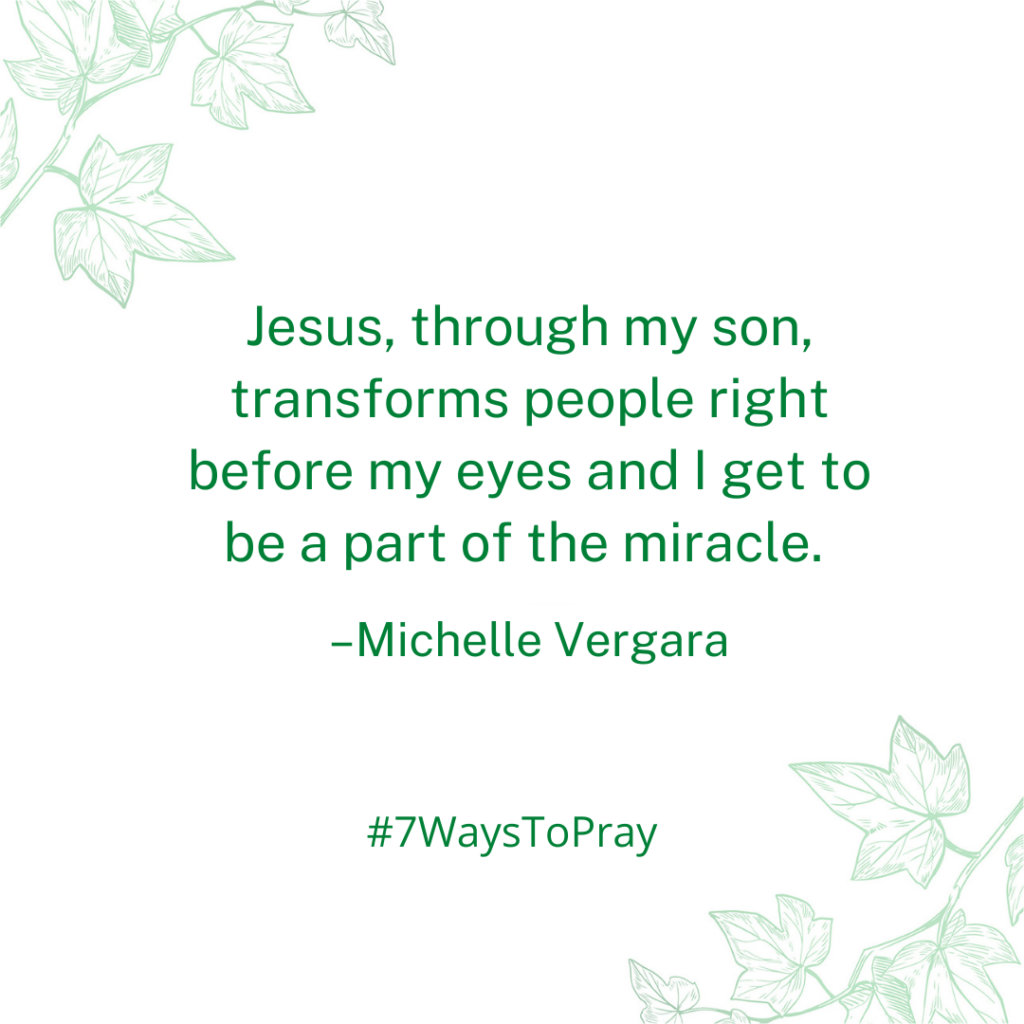
As joy and sorrow work together, they always manage to give way to the ultimate – the joy of Jesus through His Holy Spirit that shines through my son. The Holy Spirit and my son conspire regularly and manage to bring out the best in darn near everyone. My son invites each person he encounters to be a better version of themselves. He engages with others expecting the best and I’ve witnessed over and over how people rise to this loving expectation. Jesus, through my son, transforms people right before my eyes and I get to be a part of the miracle – God’s lifesaving, limitless, all-inclusive Love that produces in each of us the fruit of His Spirit – “love, joy, peace, patience, kindness, goodness, faithfulness, gentleness, and self-control” (Galatians 5:22–23). Our DMV experience was no exception.
After a long day, Jared and I walked back into the sunlight, a mom with her permit-wielding son, proud and relieved. On this day, in the DMV, God created for me yet another opportunity to know joy and sadness a little more intimately. Yes, I mourn at how my son (and others with special needs) is seen and not fully understood and appreciated by much of the world. But I delight in the way, without fail, he, through the love of Jesus, brings a smile to the people with whom he interacts. I lament at how much harder he works than his neurotypical peers, but I rejoice in how his efforts gather a cheering section and unite people in encouragement, kindness, patience, gentleness, and support. And most of all, I weep with joy in the great undeserved blessing our Holy Father has given me at being able to share this side of heaven with my Spirit filled, joy-generating Jared!
Michelle Vergara gratefully shares life with Derek, her husband of 30 years, and Jared, her son of 24 years, both of whom make her laugh and help her daily to be who God intends her to be. She also enjoys the fun and sometimes loud company of her 6 Italian brothers and sisters, nieces, and nephews. Michelle has worked for 35 years in education with children ages birth through college who are neurodiverse with developmental and learning differences. She currently works at Stowell Learning Center, a private cognitive educational program in Southern California. The children and families she has the privilege of working with always inspire her. Michelle enjoys her time with Jesus; spending time with her husband, son, and extended family; singing; reading (especially about health, wellness, nutrition, and the brain); writing; and spending as much time as possible at the beach.
Order 7 Ways to Prayhere, including in the US, UK, and Australia. You’ll also find lots of resources for small groups – videos and a leader’s guide – here.
I’m currently praying so much for a friend going through a devastating time. You may be too. I’ve found such help in Ros’ gentle description of a way of praying for others that helps us release them fully to Jesus and his love. I hope you too will try out this way to pray.
I was brought up to pray wordy prayers. There was a lot of repetition, stock phrases that everyone used. “If it be Thy will” was one, along with “In Jesus’ name, Amen.” When I joined a Brethren assembly at the age of sixteen, they added another: “If our Lord tarry.” I got quite excited the first time I heard that one. Were they really expecting Jesus to come back before the event that we were praying for? I remember feeling a thrill of excitement that these people really thought Jesus might return in the course of the next week. Sadly, I came to realise it was just a formula of words, not something that anyone really expected or was preparing for.
This pattern of prayer continued into my adulthood, but over time I found myself facing situations that no amount of words, still less formulaic ones, could adequately express. How to pray for the young friend whose wife of two years was dying of cancer? Or my own severely disabled child as she faced yet another operation? Or the childless friend who would have given her eye teeth to parent a severely disabled child, or indeed any child?
Reading Proverbs one day I had a moment of revelation. Proverbs 18.10 says, “The name of the Lord is a strong tower. The righteous run into it and are safe.” It was a verse I already knew – we sang a song based on it at church. But reading it that day, it suddenly dawned on me that the name of Jesus is not something we append to our prayers. It is a place, a strong tower, a place of safety from inside which we can pray effective prayers. Did Jesus not tell us to ask “in my name”? “Whatever you ask in my name, I will do.” (John 14.13)
I began to pray differently, using my imagination under the Holy Spirit’s direction. I would visualise a strong, impregnable tower, to which I was granted admission. I would enter the tower, close the door and sit in silence. As I pictured this, I would focus on Jesus whose name this tower was. I would stay in silence and stillness, occasionally interrupted by an expression of praise or love to Him.
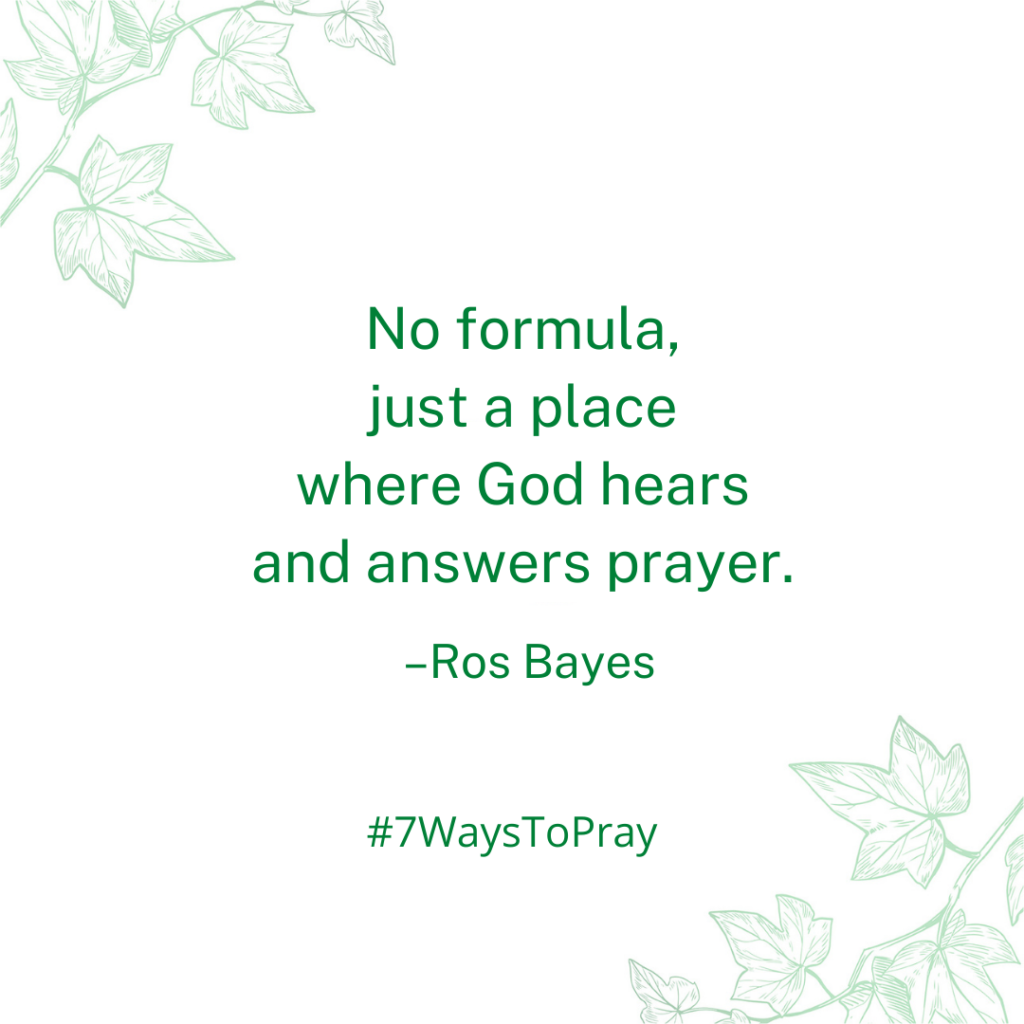
When I had a complete sense of being in that place of safety, of His presence there with me, I would picture whoever I wanted to pray for. I would see myself leading them into the strong tower and holding them there with me inside it. It was as if, in that place of safety, I was silently presenting them to the One who knew far better than I did what they needed. No words were necessary. I was asking on behalf of that person within the name of Jesus, and I knew I was heard and answered. No formula, just a place where God hears and answers prayer. It has been my preferred way of praying for people ever since.
Ros Bayes is a writer, a former teacher and mother of three daughters. In June of last year, 9 months after her marriage to Keith Dakin, she retired from her work as Training Resources Developer at Christian disability charity Through the Roof. Ros has written A level textbooks on Philosophy and Ethics, publications for churches on disability, devotional books and a novel, The Well is Deep, based on the story in John 4 of Jesus’ encounter with the Samaritan woman at Jacob’s well.
Order 7 Ways to Prayhere, including in the US, UK, and Australia. You’ll also find lots of resources for small groups – videos and a leader’s guide – here.