Tag: 7 Ways to Pray

  • “Anytime Is Prayer Time” by Joy A. Mead: 7 Ways to Pray blog series

    So encouraging to read Joy’s reflections on her early-parenting years and how God met her through them. She shares how she turned the mundane moments of sweeping up the breakfast crumbs into a time of communion with God. Whatever your season of life, I think you’ll be inspired.
    Reflecting back to my time as a stay-at-home mother of two young children under the age of five, I recall hardly having a moment to myself. Those equally beautiful and challenging years of day-in, day-out, around-the-clock childcare made it difficult to have an uninterrupted cup of tea, let alone a proper quiet time with God! And it was in that stretching season of my life, where realistically there was no way of keeping to a consistent moment with God, that I encountered Him in a very tangible and practical way. 

    I remember feeling looked after and guided by the Holy Spirit while I swept crumbs from underneath the table before the next mealtime and prepared endless dinners and snacks. Comforting my three-year-old daughter after a bad dream and nursing my baby son in the middle of the night, I could sense that God’s presence was right there with me. Or when I was up early sorting the dishes and preparing breakfast, it’s as if God was opening my eyes to see that there wasn’t a legalistic right or wrong time to pray. Any moment, great or small could be used as an opportunity to speak with God, invite Him into my days, seek His wisdom, and share my heart.

    I started inviting Him more and more into my everyday happenings—finding that at the core of prayer is a person’s heart and willingness to share freely with God Almighty. We, by our very design, are created to be in relationship with God the Father, made possible through Jesus the Son, and connected through the Holy Spirit. 

    For me, anytime is now prayer time—every moment I can be in communion with God is time well spent. From praying as I drive the children to school to singing worship songs as I put on a load of laundry, from appreciating nature in the garden to going grocery shopping, there are so many little moments that we can share with God throughout our days. Nothing is too insignificant for Him, and because of Jesus, we should confidently approach His throne (Heb 4:16) just like children run straight to their parents when something is needed. 

    My prayers can sometimes be lengthy, but often, they are an accumulation of short sentences dispersed throughout my day’s activities. Whether you are able to have a regular morning quiet time or perhaps your prayers are “on the go,” let us creatively welcome any and every moment as an opportunity to grow in our relationship with God, seek His will in our lives, and embrace His answers with open eyes, minds, and hearts. 

    “Let us then approach God’s throne of grace with confidence, so that we may receive mercy and find grace to help us in our time of need.” Hebrews 4:16 NIV

    Joy A. Mead is a Jesus-loving, American mother living in the United Kingdom with her British husband and their two wonderful children, a daughter and a son. She passionately encourages mothers to persevere and be intentional in their role, grow closer to God through their journeys of motherhood, and to seek Jesus in their everyday living through writing on her blog. Her first book, Taking Care of Mama will be released in Spring 2023 at Wipf and Stock Publishers. Connect with her on her website.

    Order 7 Ways to Pray here for more ways to encounter God. Sign up for Amy’s monthly newsletter, including a prayer practice.
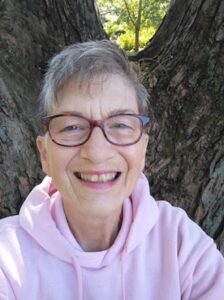
  • “Enjoying the Waiting Room” by Ruthann Yeaton: 7 Ways to Pray blog series

    I’ve appreciated getting to know Ruthann recently and have been moved and inspired by how she is negotiating life after the death of her husband. Her prayer life is blossoming and she’s feeling God’s nearness. I think you’ll be inspired too!

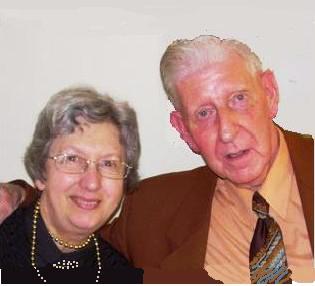
    I have been journaling my journey as a widow since the passing of my husband, Norman. Our marriage was nearly 40 years. We were good friends, and our ongoing conversations were about anything that needed words: family, his illness and all the details that go into years of the stressors of care, finances, travel to doctors and more. As Norman’s illness intensified, our conversations were of things one considers as life races toward physical death. Of course, we talked of our relationship and of our relationship to God, both as individuals and as a couple. And how I would get along without Norman.

    When he passed, I began to frequently read Our Daily Bread as a midday pick-me-up and an affirmation of God’s love and presence. The two questions following the daily text reading most often needed more than a quick response. So I began writing down my thoughts and responses to these questions, sometimes enjoying a smile as I knew how Norman would have added to my own thoughts, or argued for one of his to be included!

    What began as an Our Daily Bread “go-along” became more complex. My little sticky notes and backs of envelopes became a real, daily journal. Each day, I write down things I am thankful for, maybe some random thoughts or feelings of grief, a verse that speaks to something I am working through, or a reminder that I am God’s work in progress. And of course, my answers to the Our Daily Bread questions.

    And there is a prayer list. I like this written reminder of those who need prayer (including me!) and it is joyful to write down God’s responses and answers to the prayers. The waiting room can be crowded sometimes, but as I’m waiting for God’s response or plan, I’m amazed at the others I meet who are sharing that room. And what’s more amazing is when someone asks me to pray for them—what an honor! And onto the list they go! There are so many resolutions: a baby born premature, yet surprising doctors who expected him to be in the hospital far longer; a life-long friend whose husband deals with much physical pain, yet perseveres and remains joyful and hopeful, knowing the love his friends hold as they pray for this pain—knowing that God is listening; or my prayer for help with my own loneliness that brought a new friend into my life. It is so humbling, yet powerful, to thank God for his answers to an item on this list.

    All of this started with my need to bring sustenance to my life following the loss of my husband and best friend. But as I write in this journal, it is so much more. There are times when I can “hear” my husband’s response to the questions, and that memory becomes a journaled reminder of our marriage and the discussions—agree or not—that filled our days and years. Perhaps, at first, this journal was a way to continue the conversations with Norman? I can’t answer that, but I have my suspicions! I do know these Our Daily Bread readings and journaling have helped me grow as a widow with purpose and determination to thankfully receive God’s blessings—and share them—as I learn how to live this new life.

    Ruthann Yeaton is a retired widow reinventing her life after years as an insurance-providing breadwinner and then caretaker. Her life is simpler now, yet busy with friends she missed, new friends, my adult children and a new grandchild. She lives in a huge old house, and spends some of her time working on the “downsize,” although that is not always the best way to enjoy one’s hours! Her daily walks are perfect times to pray, sing (really, you don’t want to hear that, but the cornfields don’t seem to mind), and admire the beautiful colors of midwestern farm country. Way back in the day, she studied Art; now she studies the Art of God’s masterpiece, and it is remarkable in the visual changes, the music of nature, the smells of a field of clover, the play of light on snow.

    Order 7 Ways to Pray here for more ways to encounter God. Sign up for Amy’s monthly newsletter, including a prayer practice.
  • “The Change Gratitude Brings” by Teresa O’Driscoll: 7 Ways to Pray blog series

    How gratitude can lead to change and intimacy with God… I love Teresa’s account of this simple but profound practice, which has led to transformation in her life. How might you incorporate giving thanks into your morning routine?

    Many years ago, after reading yet another of those news reports where, after a near-death experience, someone found a new appreciation of life, I decided to follow their example of appreciation – thankfully without the trauma! That began by expressing gratitude to God, first of all, for waking up; for the gift of a new day. I have shared the following short routine in my workshops, articles, and in my new prayer guide, Pray Then Listen, A heart-to heart with God.

    Hands and Thanks

    As soon as you wake up speak to God, saying, “Thank You, dear Lord, for the gift of this new day.”

    Open your eyes, brush one hand over the other. Then say something like this: “Thank You, dear heavenly Father, that I can still see, feel, and move, and for all the other workings of my body.” 

    This simple routine brought a huge benefit to my life as in doing this I had begun to make Christ the foundation of my day. Following on from that, the natural progression was to invite Him to share my day. Every part of it. That meant that, on top of my formal prayers, I began to speak to God informally too. If I had a challenge to face – I asked for His help. A task to carry out, as it twisted and turned – I asked His advice. Saw something beautiful in nature – I praised Him. Working as a journalist – I specifically asked His help with my writing. And so on so on.

    All of this had also moved me into the two-way street of prayer. Instead of using God as a sort of sounding board, I was talking to Him from my heart and then expectantly listening and watching for His answers. My life has been enriched beyond measure.

    When I began to read Amy’s 7 Ways to Pray, Time-tested practices for encountering God I recognized a fellow practitioner of this way to live. I could identify with much of her walk with Christ. The specifics of her life were very different to mine but her life’s journey led to the same place: that wondrous close relationship with our Living Lord. For this reason, I love Amy’s book! With the Bible as the hub I enjoy being refreshed by authentic, well-written, books such as hers which show us how to draw ever-closer to our Maker.

    On my own path I realized some time ago that, in the way I now lived, I was actually edging towards that high goal of continuous prayer highlighted by St Paul: “Rejoice always, pray constantly, give thanks in all circumstances; for this is the will of God in Christ Jesus for you.” 1 Thessalonians 5:16-17.

    All this began by simple gratitude for each new day.

    Teresa O’Driscoll, born and raised in Cardiff, Wales, spent many years working as a journalist in Athens, Greece. Now back in her native city she writes books, articles and blogs, and runs writing and spiritual / self-development workshops. Her latest book, Pray Then Listen, A heart-to-heart with God is published by Circle Books. Visit her at her website.

    Order 7 Ways to Pray here for more ways to encounter God. Sign up for Amy’s monthly newsletter, including a prayer practice.

  • “Walking with God” by Jean Gibson: 7 Ways to Pray blog series

    I’ve had the absolute delight of walking by the sea near to where Jean lives; I can only imagine what that must feel like as one’s daily walk. We can’t all live close to the sound of crashing waves or the gentle lapping of water, but we can all walk with God. As you take a few moments to read and ponder, why not set aside some time to enjoy God’s presence?

    As a child, I grew up by the seaside, on the beautiful north coast of Ireland. Some of my early memories include long walks on the beach, frequently with my favourite aunt, as we talked together and she pointed me to Jesus. As a young teenager I remember lying in the sandhills above the beach reading a book, feeling God’s presence as he spoke to me through it.

    Having lived in various situations around the world, these days I live by the seaside once more. And it’s there that I still experience my closest moments to God.

    In 7 Ways to Pray Amy talks about ‘practising the presence of God’ as Brother Lawrence described it. This lay monk has always struck a chord in my heart. Brother Lawrence practised God’s presence while working in the kitchen, and I do a bit of that too, but for me walking along the coast has always brought me close to God. I think of the reference to Enoch in Genesis 5: 24, ’Enoch walked with God.’ In Luke 24:15 we read of the two walking to Emmaus when ‘Jesus himself came up and walked along with them.’ I love that idea of walking with God as I physically take my daily walk.

    2 minutes of pondering God our Rock on the South Coast of England with Amy

    Walking along the coast, in awe at the changing colours of the sky and its reflection in the sea, my heart lifts in praise to the Creator of such beauty. On a windy day when I am struggling to keep upright, the rigging on the yachts rattling in the harbour, the waves crashing against the rocks and the gulls calling out in joy, I am reminded of his almighty power. And on a quieter day I sit on a rock, bathed in the warmth of God’s love, soothed by the gentle lapping of water on the shore, feeling God’s peace settling on my heart, hearing his ‘still small voice.’ It is in these moments above all that I feel God’s nearness, as my thoughts are stilled and focused on him and a sense of calm displaces my anxieties and concerns.

    At such times, words are not always necessary. Amy quotes Brother Lawrence, ‘My prayers are nothing other than a sense of the presence of God.’ Sometimes being aware of God’s presence takes us beyond words. For me, these occasions often happen when I’m outside in nature, aware of God’s creation around me. For you it may be different.

    Not all of us live by the seaside. Not all of us can easily walk, or be, in a beautiful place. Perhaps like Brother Lawrence most of your day is taken up in mundane tasks, in a repetitive job, in caring for others. But wherever we are, God is there. Can I encourage you today to be intentional about ‘practising God’s presence’? Find your special place where God feels near and make yourself available to him there.

    The two on the road to Emmaus urged him strongly, ‘Stay with us.’ Then their eyes were opened and they recognised him.

    (Luke 24)

    Having worked in theological education in Kenya and the Christian charity Care for the Family in Ireland, Jean Gibson enjoys sharing the stories of people who inspire her. Her books include Seasons of Womanhood, Journey of Hope and An Open Door. Details can be found on her website.

    Order 7 Ways to Pray here for more ways to encounter God. Sign up for Amy’s monthly newsletter, including a prayer practice.
  • “Talking to God as a Friend” by Tasher Adaarewa: 7 Ways to Pray blog series

    What an insightful post by Tasher about our need to listen at least as much as we talk when we pray, as inspired by his observations of his wife’s friendships. I hope you’ll read, enjoy, and put his advice into practice!

    So the Lord spoke to Moses face to face, as a man speaks to his friend. (Exodus 33:11)

    I never really understood prayer to be talking with God as if He is a friend—the kind you tell everything—until I observed my wife and her friends.

    My wife, Jennifer, is on the phone every two or three weeks with Lindsay, her friend of almost three decades. She and Lindsay met on a serendipitous camping trip when she was nine. They wrote to each other every year from then on through college. They shared in each other’s lives through weddings, miscarriages, and the births of all six children. They talk about each child’s idiosyncrasies, eating preferences, the cute things that three-year-olds say and even the goals of their entrepreneurial husbands. Each call is a feast of excitement and ends because mothers must return to their children.

    In my estimation, the hallmark of friendships like these is listening. I have yet to meet someone whose complaint was that their best friend listens too much. Many people, however, are known for their talking.

    In fact, most of us talk at God.

    We have been taught what to say and how to say things to God in prayer. We’ve even received formulae about how to order things, whether to quote scripture or not and the real meaning of praying in Jesus’ name. While these ways to pray have varying degrees of merit, they’ve often produced extravagant, eloquent talkers and deplorably poor listeners.

    We turn up to prayer with our cries and complaints, scriptures and supplications, with our fears, needs, pleas, praise and thanksgiving. God is pleased because He wants to hear all of it. I’m guessing He’s also disappointed because as soon as we are done presenting that list, we move on to the next thing. God thus becomes that friend who never gets an opportunity to participate in the conversation. Imagine how the story would have gone if Moses had said, “Please, show me Your glory,” then went back to hearing the people’s complaints and judging between them.

    Do we not do the same? Do we ask God for help or direction and then get back to whatever task is before us? After we empty ourselves of our cares, worries and burdens and then move on to the next thing, what will fill that space? Won’t it be more of the same? More overwhelm. More feelings of inadequacy. More pressure and increasingly feeling rushed. In Philippians, the Holy Spirit promises a peace that will have others, and you, wondering how you can be so calm and content given your circumstances. We are guaranteed to miss that blessing if we don’t take the time to let Him fill us up.

    Jesus assured us that the Father knows that we need all “these things” (Matthew 6:32). Our approach to prayer, then, shouldn’t be as if we are talking to someone who doesn’t know what is going on in our lives. It should be more about creating space to hear what God has to say. God has an answer for whatever question and provisions for whatever the need.

    While God always acts to provide for our needs, He desires that as the deer pants for the water, we thirst and long for Him. As He fills us with Himself, we come to know His presence. Then we feel His peace, strength, comfort and healing. 

    Stillness is a prerequisite to knowing God and hearing from Him. (Psalm 46:10) Make time, after you finish talking, to be still. Cultivate the ability to discern God’s voice from the rest of the noise. (Amy addresses this in her book 7 Ways to Pray.) Enter into your prayer time intent on doing more listening than talking. Grab a journal and in that stillness, write down what you hear.

    If we listen twice as much as we talk, we’ll find that God is always speaking and that He answers every prayer.

    Tasher Adaarewa is an author (Decision Design) and entrepreneur. He provides coaching and consulting for Christian businesses to help them realize the vision God gave them. More of his work can be found at tactgroupinc.com

    Order 7 Ways to Pray here for more ways to encounter God.

  • “The Gift of Forgiveness” by Sheila Holwell: 7 Ways to Pray blog series

    I so appreciate hearing from readers when they share their stories of God working in their lives, and when a bit of my writing plays a part, I’m humbled and grateful! I loved reading Sheila’s story of forgiveness, spurred on by the Spirit. As you read, may you open your heart to that same Spirit, who might bring to mind someone you could forgive?

    A meditation in Our Daily Journey, written by Amy Boucher Pye on the subject of forgiveness, got me thinking. At the conclusion we were led into considering whether there were any experiences in our lives where there was a need to forgive.

    While I have been very conscious over the years of the need to forgive, and have experienced  the wonderful freedom it brings, as I read the meditation there suddenly flooded into my mind the memory of an incident more than thirty years ago in the church. I knew immediately that I had not really forgiven.

    A new Curate came when I was involved with the Pathfinder Group of young teens. The mother of one of our members came to see us, concerned that, while she encouraged her children to be faithful to their commitments, she felt this was being challenged as the Curate had told her daughter to be trained as a Server, which meant leaving Pathfinders. As leaders of Pathfinders we weren’t told of this decision.

    Several other incidents that happened without communication, so I went to the Curate and asked him to tell me what was going on. He looked me straight in the eye and said, 

    “You are not a mainline Anglican and you don’t fit.”

    I was so shocked that I did not respond, so I went to the Vicar and told him what had been said and his response was, 

    “Well, it’s true.” 

    Having made a point of being committed to the church over the years in every way possible, including broadening my churchmanship, I found their statements very hurtful.

    These thirty years later, as I read the article in Our Daily Journey and realised that I had not forgiven the Curate, I laid the whole situation at the foot of the Cross. I knew that Jesus had been there with me at the time, and so I was finally able to forgive him, and pray for him, leaving it all with the Risen Christ.

    Finally, to bring the seal of God’s redeeming love on it all I placed the whole situation (albeit thirty plus years later!) via a little written note, on the Altar, at a recent Eucharist.

    Subsequent circumstances have made me realise, and has caused me to thank God, that it was that stage on my pilgrimage that was a contributory factor to where I am today. And soon after, there was a lovely reconciliation with the Vicar.

    I am forgiven and able to forgive!

    Sheila Holwell says: I grew up in North London where from the age of six I went to Crusaders where Evangelical Bible Teaching was tops and on which she I stand eighty years later!

    After school I went to RAF Hendon doing office work, where I met the family of a Sergeant whose wife was dying. She requested that I witnessed her Baptism (in the Hospital bed), which was such a privilege. She died soon after. Eventually, but not without much heart searching and doubts, I responded to George’s (the widower) request to marry him. One day I took him and his son, Peter out in the car. Eight-year-old Peter from the back seat said “Well, when are you two going to get married then?” I nearly crashed the car!! Then I said “Oh, at least not until next year.” His immediate answer was, “Oh! I’ll die if I have to wait that long.” We didn’t let him die, and there followed wonderful experiences in Singapore and Libya as well as the UK.

    Then followed a period in Oxfordshire where both George and I became Readers (LLMs) with a final move to S. Devon where George went to Glory. George did have very bad fits of depression which marred the first 25 years of our marriage, but the Lord was there and George had a wonderful healing, which is another story.

    Order 7 Ways to Pray here for more ways to encounter God. And have a look for The Living Cross, which is a through-the-Bible engagement with the topic of forgiveness.

  • Praying with the Bible: From prose to poetry

    Recently when on retreat I led some times of engaging with the Bible prayerfully, including turning some of the prose into a poem. I love this rendition that I’ve been given permission to share.

    You could read through it slowly, asking God to help your love overflow. Then perhaps spend some time with a passage of your choosing, having a go yourself?

    And this is my prayer, that your love may overflow more and more with knowledge and full insight to help you to determine what is best, so that on the day of Christ you may be pure and blameless…

    Philippians 1:9–10, NRSV

    Eyes to see, 
    Ears to hear, 
    Heart to love, 
    being and becoming

    Knowing to knowledge; 
    Helpless to helped; 
    Better to best,
    Mercy and forgiveness

    Graceless to graceful
    Thankless to thankful
    God’s love abounds to all around
    God’s love, God’s love, you have been found
    –Ann Ruby

    Order 7 Ways to Pray here for more ways to encounter God, including a chapter on praying with the Bible.

  • “Five Meaningful Four-Word Prayers to Release, Refocus, and Reset” by Andrea Stunz: 7 Ways to Pray blog series

    Do you have time to pray just four words? I love how Andrea gives us this practical way to incorporate more prayer into our days as we dialogue with God. Just four words, but what a difference they can make!

    For several years now I have worked my way through A Clearing Season, by Sarah Parsons, during the Lenten season. In one particular reading, in one particularly tough season of my life, I read this:

    “Thy will be done. In relation to our ordinary, workaday lives, these may be the most revolutionary words we will ever say. Saying them can change our orientation to life: we put our little boats into a great stream and drop our oars. We lose a bit of our old control over things; we clear the space and allow God to fill it, agreeing to tend whatever growth God engenders.”

    –Sarah Parsons, A Clearing Season

    Parsons’s recommendation for a four-word prayer became precisely what my heart needed to refocus my constant and invasive triggers. With this prayer, I could release, refocus and reset; taking the mental and emotional turmoil I thought I could control and open-palming it back to God’s control.

    The four-word prayer, “Thy will be done,” burrowed deep into my daily walk with God. I carry it with me like my well-worn childhood security blanket I affectionately called my “thing.”

    Allow me to share five meaningful four-word prayers I’ve found helpful to release, refocus and reset our hearts and minds on things above.

    1: THY WILL BE DONE

    “This, then, is how you should pray:

    Our Father in heaven,
    hallowed be your name,

    your kingdom come,
    your will be done,
    on earth as it is in heaven.
    Give us today our daily bread.
    And forgive us our debts,
    as we also have forgiven our debtors.
    And lead us not into temptation,
    but deliver us from the evil one.
    Matthew 6:9-13 NIV

    2: LORD, YOU ARE BIGGER

    I find immeasurable comfort in remembering how small I am in relation to God’s bigness. I often think back to the song I sang so often in my childhood, “He’s got the whole world in His hands.” If He’s got the whole world in His hands, He has me in them as well.

    3: REDUCE ME TO LOVE

    Hannah Brencher shared that she calls her small prayers “breath prayers.” I love this!

    Breath prayers help me bridge the gap between praying sometimes and praying without ceasing. My breath prayer for when fear tries to take back the lead role is simple: Reduce me to love.”

    –Hannah Brencher

    I’ve loved this prayer since the moment I read Hannah’s words. It’s a prayer that helps me quickly get out of my own way and centers my focus on loving others well. “Reduce me to love” is a prayer that Jesus lived and calls His followers to.

    4: HELP ME; THANK YOU

    Sometimes I don’t know what to ask for, but I know I’m in need. As I ask the Holy Spirit to cover me, I always want to make sure I’m asking from a foundation of gratitude.

    With eyes wide open at the wonder of it all
    Or with broken wings when I’m spinning in free fall
    Hallelujah, deliver me
    They’re rising up inside of me
    Rolling off my tongue
    Before I thought to bid them come

    Help me, help me, thank you, thank you
    Whether you’re riding high or feeling low
    These are the two best prayers I know
    Help me and thank you

    (Help Me, Thank You, Jason Gray)

    5: CAN YOU HELP ME?

    I, myself, find it challenging at times to ask for help. William Paul Young, author of The Shack and whose powerful story is featured in The Heart of Man documentary, said these four words, “Can you help me?” for the first time in his life to another human after his lifetime of secrets were exposed. I voice this prayer to my God, the helper and healer. I know it pleases Him when I do.

    I want to mention that I do not believe our prayers to be quick fixes. Unfortunately, there is no shortcut to healing our broken places. Healing takes time, and it is not linear. However, these four-word prayers can serve the purpose of releasing control, replacing our focus on Christ’s power, and resetting our hearts.

    A four-word prayer can become a small yet meaningful practice leading to deeper conversations with our Creator, Comforter, and Healer.

    What short prayers are meaningful to you? How do you re-center when anxiety threatens to consume you? What do you turn to for a quick reset?

    Additional Resources:

    Andrea Stunz enjoys life’s adventures; best when they require a passport and are shared with her family and friends. She longs for another sunrise, a good cup of coffee or tea, and the grace of Jesus. She is a writer, editor, and sharer of stories. She desires to encourage others with the hope she has found in Colossians 1:17. AndreaStunz.com

    Order 7 Ways to Pray here for more ways to encounter God, including a chapter on using our imagination to place ourselves into a gospel story.

  • “Bored with Prayer? Use your Imagination!” by Joy Margetts: 7 Ways to Pray blog series

    What a wonderful post from Joy with some simple but profound ways to pray with your imagination. I love her idea of the prayer walk in one’s local community even from one’s own home, and think of how meaningful that could be not only for us as we pray but for our neighbours.

    Bored with prayer? None of us would actually admit to it, but I think we have all been there. We sit down to pray, we have our lists, our prompts, our determination. And yet five minutes in our mind is wandering, and we are planning what to cook for dinner. There are lots of ways of helping us to stay focussed when we pray. I regularly use prayer lists, mnemonics, and indeed the words of scripture to pray. But I have found that when my prayer life is beginning to feel stale and routine I need something else. So I use my imagination.

    That may sound a bit dodgy – can we trust where our minds take us?

    We are creative beings, made in the image of a creative God. And I believe He has gifted us with our imagination. As a Christian Fiction writer I understand that now more than ever. My stories are inspired by Holy Spirit, using the vehicle of my imagination. And Jesus Himself taught some of His most profound truths by engaging the imagination through parables and stories. So I can trust my imagination if it is surrendered to God, and the things I use it for grounded in scripture (Phil 4:8).

    So how do I use my Imagination to pep up my prayer life?

    First of all, I invite Holy Spirit to be in it. I use worship music to welcome Him into my prayer space, but a simple prayer of welcome and a moment of surrender is enough. These are just some of the ways I use my imagination to enhance my prayer life.

    Praying for myself:

    This is perhaps the easiest. I picture myself walking with Jesus, holding His hand. I don’t have a problem with this act of intimacy as I believe it is how we were designed to be – before the fall, Adam walked in the garden with God (Gen 3:8). Jesus and I walk together through a beautiful landscape of grass, trees and mountains, alongside a sparkling river and I just tell Him about my concerns. And I listen, because He often speaks back to me. Sometimes I even feel the squeeze of His hand on mine.

    Praying for my friends:

    I picture myself before the throne of grace. I know that I am welcomed there because of Jesus (Hebrews 4:16). As I stand before the Father I imagine the person I am praying for is standing beside me. I have in effect taken their hand and led them to the throne of grace. I thank God for my friend and what they mean to me, and then wait for a moment to sense what God might say about them too. Sometimes He tells me to tell them something to encourage them. Other times I just pour out my heart for them to Him. Invariably I end up in tears, sensing the love He has for them.

    Praying for my community:

    Many of us know the power of prayer walking. I can’t do that so much today, so I use my imagination instead. I walk the streets of my town in my mind and pray for the businesses to be blessed. For the people I know, stopping in my mind at their front doors. For the schools and the care homes. For the areas of deprivation and need. I find it a really helpful way to focus and often a deeply moving experience.

    Using my imagination doesn’t necessarily replace other forms of praying, but it does help to add variety and colour to my prayer life. If you are finding prayer hard, for whatever reason, why not engage your imagination and see what happens?

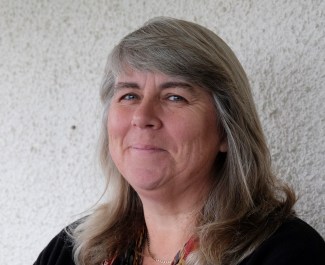
    Joy Margetts is a blogger and a published author. She is also a retired nurse, mother and grandmother, with a lifelong interest in history.

    Her debut novel The Healing was published by Instant Apostle in 2021. A work of historic fiction, set in medieval Wales against the backdrop of Cistercian abbey life, it is also a story of faith, hope and God’s redemptive power.

    The Pilgrim, her second full length novel, will be published by Instant Apostle next month.

    For more information on Joy and her writing, and links to purchase her books, go to her website.

    Order 7 Ways to Pray here for more ways to encounter God, including a chapter on using our imagination to place ourselves into a gospel story.

  • “The Blessing of Stillness and Silence” by Philippa Linton: 7 Ways to Pray blog series

    How can we find stillness in a busy, chaotic world? And why should we seek to be countercultural in this quest? Philippa shares from her own journey of embracing silence as a way of encountering God. I hope you can find some time to quiet yourself today and enter into God’s loving presence:

    As I drove into the car park, surrounded by dark trees on a chilly autumn evening, I felt peace wash over me. It was October, 1989, and I had booked a weekend at a picturesque retreat house in West Sussex called St Julian’s, run by an Anglican lay community. I have been on many retreats since then but that first taste of stillness and silence at St Julian’s remains a special memory.

    Years later, I am still very much a novice at practicing stillness and silence. My prayer life is often fickle and inconsistent. Yet I hold before me the promise of stillness and silence as beautiful gateways to God’s presence.

    In the morning, while it was still very dark, he got up and went out to a deserted place, and there he prayed.   Mark 1:35 (NRSV)

    Jesus launches his ministry in a blaze of power – proclaiming the kingdom of God, calling four fishermen to follow him, delivering a man from an evil spirit in a local synagogue, and healing Peter’s mother-in-law. By nightfall there are crowds outside the door, bringing the sick to be healed by this amazing young rabbi. With all this desperate human need surrounding him, what does Jesus do the next day?  Very early in the morning, before dawn, he gets up, leaves the house where he and his companions are staying, and heads to a solitary, deserted place, where he prays.

    Perhaps he chose somewhere quiet in the hills above the sea of Galilee. Wherever this lonely place was, it was just him alone with his Father. His first priority is to be alone with the Father and spend precious time with him, before resuming his ministry.  If the Son of God himself needed to do this, while he was here on earth, how much more do I.

    For God alone my soul waits in silence;
        from him comes my salvation.
       Psalm 62:1 (NRSV)

    This verse awakens in me a deep yearning to wait for God in stillness and silence, to receive his love and his perfect peace. It’s so simple to come humbly before God in stillness and silence, to quieten my dark thoughts and troubled impulses, so that he can meet with me and I with him. Yet it can be so hard, because there’s so much within me and without me that distracts me from following God.

    I have learned that I don’t have to be in a house of prayer, or a beautiful garden, or even alone in the hills, surrounded by the beauty of creation, in order to find God’s presence. He is always there. I can enter stillness and silence even in the musty, noisy, claustrophobic chaos of the London Underground. Just by focusing my breathing and praying the name of Jesus either silently or under my breath, I can centre my being and become aware that God is here with me all the time and can pour his peace into my heart any time. It doesn’t matter where I am. It doesn’t matter what’s going on. Just as Jesus met with his Father in intimacy and solitude, so I too can enter that intimacy and solitude with the Father and the Son.

    Entering prayer through stillness and silence leads me more deeply into a loving awareness of God. It’s so simple … and God never stops inviting me to come ever closer and deeper.

    Philippa Linton is the administrator for the education and learning office of the United Reformed Church. She is also an Anglican lay minister. She wrote a devotional for the anthology ‘Light for the Writer’s Soul’, published by Media Associates International, and her short story ‘Magnificat’ appears in the ACW Christmas Anthology.

    Order 7 Ways to Pray here for more ways to encounter God, including resources for small groups.