I’ve been waiting for this moment for years. This week, my first book – Finding Myself in Britain, my wee baby – will start its launch into the world. It will first appear at the Christian Resources Together retreat (a gathering for publishers, authors, retailers and distributors), when all of the participants will receive a copy. Then 27 September I’ll be preaching at our church and we’ll share lunch together afterwards, celebrating and giving thanks. Then 1 October is the official launch date, when bookshops and online retailers should have their stock – woo hoo! – and hopefully my social-media and blogging campaign hits its full gear. The following week I get to speak at the Grange Coffee House in Wokingham (5 October) and at St James’ Church in Shirley, Southampton, on 9 October. I’m so grateful.
[Read the rest at my monthly slot at the Association of Christian Writers, on how much interaction should writers have on their books/articles before they annoy their friends completely…]
That’s how I started off a recent blog, in which I announced the demise of my freelance editorial commissioning job with Authentic Media, which also happens to be the publisher of my first book. So this will most likely be my first and last book with them, which is a shame, for they have invested much into launching my book – and me as an author. I’ve loved the journey thus far.
I wasn’t too surprised when I heard the news that Authentic was focusing in on the products that produced the greatest revenue – Bibles, children’s books, and DVDs – for I know that adult Christian books are expensive to develop, and that the market continues to shrink. Great Christian books that used to sell into bookshops in the thousands now may only sell in the hundreds. It’s just not financially feasible.
Traditional Christian publishing keeps shrinking in the UK, and Stateside they are fighting their own battles. Family Christian Bookstores are in administration, fighting to put forward a plan that would keep them open. Currently it looks like they might be sold off to a company that would dismantle them – which would be bad news for publishers, authors, and readers. (You can read more about this on US literary agent’s Chip MacGregor’s blog.)
We in the UK went through a similar upheaval… Read the rest at the Association of Christian Writers’ blog.
The only constant is change, and nowhere is that more true than in Christian publishing. My newsflash: In a couple of weeks, my freelance contract with Authentic Media for commissioning/acquiring great Christian titles is coming to an end as they narrow their focus primarily to children’s books, Bibles, and DVDs.
When Rob Bootes from Koorong, Authentic’s Australian parent company, came to me four years ago asking if I wanted to join the team, I said no – being an editor was in the past, I thought, for I wanted to be a writer. A few months later he got in touch with a different proposal, and on a whim I said yes to one day a week consulting as a commissioning editor/publisher – for three months! Crazy me; I so got the timing wrong. It’s been a fab four years as I’ve worked on such amazing books as, in the early days, How to Like Paul Again by Conrad Gempf and Am I Beautiful?by Chine Mbubaegbu, and more recentlyDigging for Diamonds by Cathy Madavan and the forthcoming The Only Way is Ethics series by Sean Doherty.
I’ve seen in these four years that I don’t have to approach my life-with-words in a black-and-while either/or way; it can be a both/and prospect of being a writer and an editor – the two roles feed each other creatively. Although I’m sad to say goodbye from an editorial point of view, I’m thrilled that my association with Authentic will continue with me as an author.
For as many of you know, Authentic are publishing my first book this autumn – woo hoo! Here with my Big Reveal (well, some of you have seen this already), is my fabulous wonderful cover. I hope you love it as much as I do. Writing for Authentic has been a dream process, as it’s been a team effort with Steve Mitchell, Kate Beaton, Lawrie Stenhouse, Liz Williams, and Becky Fawcett on the Authentic side, and Jennie Pollock as my freelance editor. (Liz and Malcolm Down are no longer with Authentic either, as the narrowing of the focus included the elimination of their jobs too.)
Steve Mitchell, managing director, believed in me as an author, and last autumn took a punt in signing me up for my first book. (I recount my Tangled Writing Journey [yes, it deserves capital letters] here if you’d like to read the background.) With his over twenty years in Christian retail, and with my over two decades’ experience as an editor, we worked together to come up with what we hope will be a cracking good read. I wanted to write a devotional or a memoir; he suggested instead that I focus on my unique angle. Write, he said, about being an American in the UK, and while doing so I should incorporate my story and the spiritual insights I’ve gleaned with my cultural observations about this small island. There’s even a chapter about plumbing.
My publisher likes to say that Finding Myself in Britain: Our Search for Faith, Home & True Identity is a bit like Michele Guinness meets Bill Bryson. I love that characterization, not least because Michele is one of my heroes, a magnificent writer and speaker who humbled me with her foreword. Here’s a bit of what she says:
There were moments when Amy’s honesty and pain choked me, others when she made me laugh out loud. From toilets to tea and tennis, drizzle to driving, reserve to religious observance, sarcasm to self-deprecation, queuing to cricket, not to mention language, class, and vicarage oddities, it’s all there – the British foibles that make other nations think us bizarre… Yet in Amy’s gentle hands it’s a revelation – funny, challenging, surprising, chastening, and cheering.
Yes, I’m excited about finally being a Proper Author who has written a book. Look for the finished product in October, from bookshops or from here at my website (or at the big online retailer for pre-pub orders). I owe so much not only to the Authentic team but to my editorial friends and encouragers.
So although I’ll no longer be commissioning for Authentic, I’ll work with them on the launch and marketing of Finding Myself in Britain. I think back to a decade ago, when I went through what felt like a massive redundancy when Zondervan eliminated my editorial job. At the time my world was rocked, for so much of my identity was intertwined with my role. I’ve now seen how the Lord has worked through the years, honing me as he’s helped me pursue my deep desires such as writing. And how he’s even “enlarged my territories” (if I can use the Jabez language without anyone cringing too much). I trust that he’ll use this present change for my growth and flourishing – but I am making sure I take the time to grieve the passing of the season, as is right and proper to do.
Yet I also know that losing my contractual freelance work might just be the boot-to-bum that I need to pursue some other dreams – such as a master’s in Christian spirituality. Watch this space!
An oft-repeated piece of advice for writers is short and sweet: “Read.” As writers we need to immerse ourselves in words, and usually this has been our bent from birth. We are those who as children got told off for reading with our friends on a playdate (yes that was me), or for not engaging with the family on car journeys because we had our nose in a book (me again, before I starting suffering from travel sickness). We read the back of a cereal box as we eat or scan the junk mail when we’re waiting for the microwave to finish. Reading often comes to writers as second nature.
Why read? As we lose ourselves in a book, we chew and swallow and digest the writing, which imparts richness to our writing. Although all of this reading might mean that our early attempts to put pen to paper or fingers to keyboard sound like we’re parroting our favorite authors, for we haven’t yet developed our voice. But as the words get inside us, and as we continue to hone our writing, the writings of others help us to find our voice. Read the rest at the ACW blog…
If you’re a writer, how do you handle criticism? I’m guest posting today at the Association of Christian Writers’ website, sharing the story of how I felt when I received feedback on my book, Finding Myself in Britain. Not a pretty sight.
At Friday, 5pm, I met my deadline. Having pressed “send” to my dozen reader reviewers with my manuscript, I was pleased to finish the first draft. I’d done a fair bit of rewriting on the manuscript already, passing my chapters, one by one, to my publisher for comment and critique. He unearthed hidden agendas that needed axing and quirky ways of stating things that needed rephrasing. Surely, I thought, the worst of the rewriting was over.
On Saturday at 3pm, I spotted an email from one of the reviewers. As I opened it I glimpsed her warning for me to “buckle up,” for she said she didn’t take a measured, British approach in her critiques but would be straight with me – yet she thought my baby was beautiful and wanted it to fly. I skim-read her thirteen pages of comments, the anxiety building in my gut, and took myself to bed.
On the 13th of every month I’m blogging over at the Association of Christian Writers’ blog. Here’s a taster of today’s entry. For last month’s, on riffing to Psalm 23, click here.
Photo: le vent le cri, Flickr
“Many have undertaken to draw up an account of the things that have been fulfilled among us… With this in mind, since I myself have carefully investigated everything from the beginning, I too decided to write an orderly account for you … so that you may know the certainty of the things you have been taught” (Luke 1:1-4, NIV, abridged).
My heart felt ripped open when my job as a commissioning editor at a large Christian publisher was eliminated. I loved my work in coaxing writers to pen their creations – books that only they could write – to God’s glory. But the international market couldn’t support my job and so I had to bid it – and my authors – farewell. As I was leaving, the head of publishing said, “You’ll never know how many people’s lives are touched through the books you worked on. They’re God’s ambassadors.”
I’ll never forgot his encouragement, for he gave me perspective during a painful time. And indeed, as writers we’ll never fully grasp the impact of our words. Sometimes a reader will share encouragement, but often we write and press “send,” not knowing if and how God will use our labors. Read the rest.
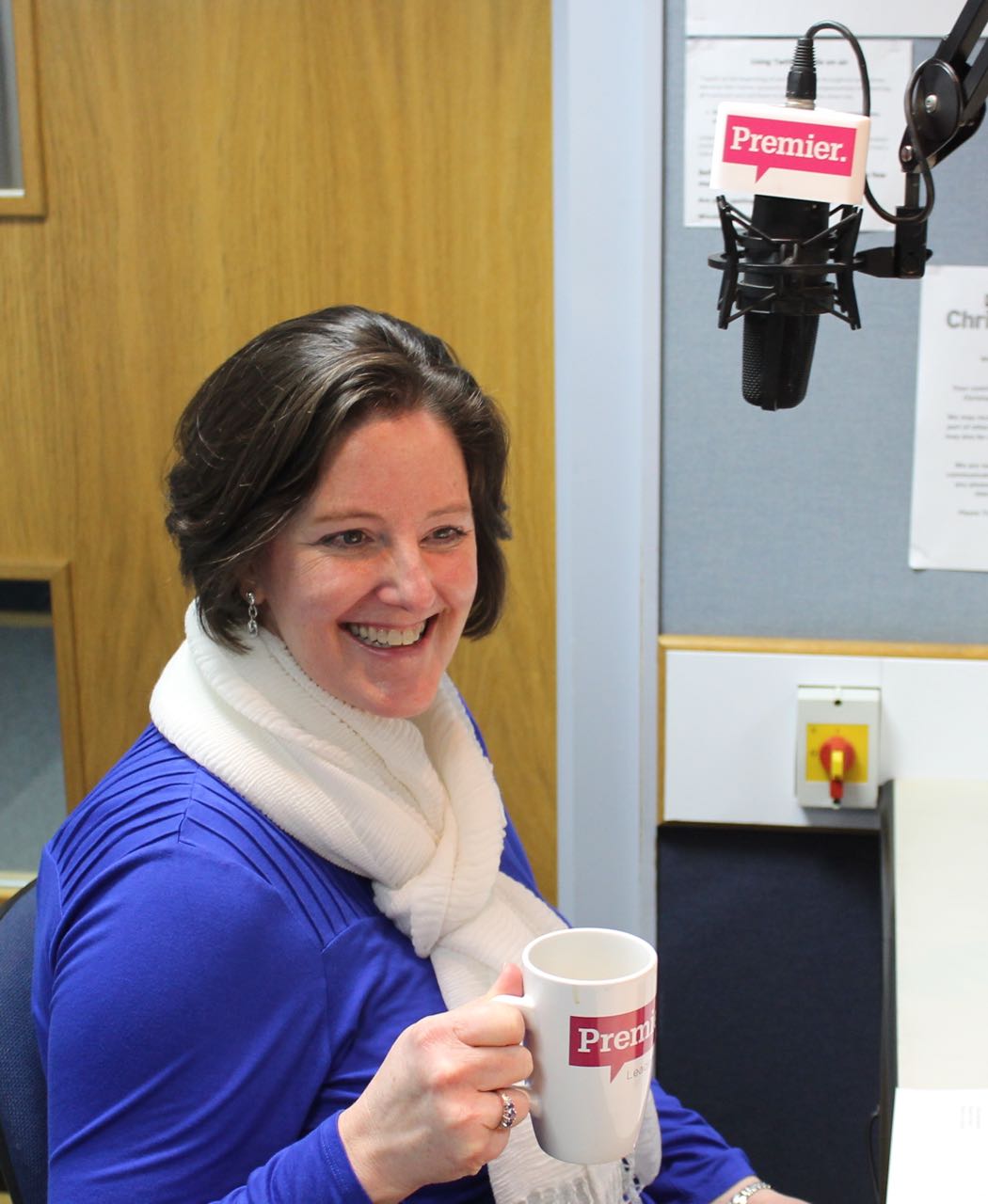
I had a lovely time on Premier Christian Radio yesterday chatting about writing and publishing for World Book Day.
In prepping for the interview, I found out that World Book Day is celebrated in over 100 countries. Many countries celebrate on April 23 (Shakespeare’s birth and death day!); that’s when the UK marks World Book Night (with the stealth distribution of books among other things). They moved the celebration of World Book Day to March 5 to accommodate schools, as the latter date is often during the school holidays. Many schools participate in the schemes where children receive a voucher toward money off books.
Here is the interview, in which we talk about whole host of writing tips and things to consider about finding an agent and publisher.
You can see some of my other writing posts here, including how to write a devotional and advice to a newbie writer.
I believe writing devotionals may be part of my soon-to-be-seriously-begun writing ministry. Have you any helpful tips as I start? I’m retiring at the end of March and although I will be a lay pastor, I will finally be able to give serious time to writing. I’ve read your CWR notes and love them!
Photo: “Bible time,” Brett Jordan, flickr
Hello and thanks for asking! I love, love, love writing Bible reading notes. As I prepare, I read and dream and research and wonder and pray, and then I get down to the writing. Often time seems suspended and I exclaim, “Wow, I love this, Lord!” But I say this acknowledging that not everyone has this experience when crafting devotionals. This kind of writing is my sweet spot; it’s part of how I’ve been made and who I am. And I’ve been writing devotionals since 2008. I haven’t counted up how many I’ve written for some time, but I’m guessing 400 or 500. So please don’t feel bad if you don’t experience the sense of sheer joy in your writing. It may come.
You asked for some tips as you dive in; here you go.
Make your words (characters) count.
“If I had more time, I’d make this shorter.” Writers of devotionals – Bible reading notes – don’t have the luxury of space. Usually the text is limited to around 300 words, so the content needs to matter. A publisher I’m currently writing for designates character (with spaces) counts, so there’s no fudging. You know, like those hyphenated words that only count as one word in a word count (The writer-who-likes-to-cheat Amy? Nope.) Write your first draft and then prune, prune, prune. Employ strong verbs – the passive voice eats up your word count. Delete adjectives and adverbs. And so on. (A read through of the classic Strunk & White can be enlightening before you dive in.)
Gather your thoughts.
In the weeks before your deadline, read through the text you’ve been assigned (or that you’ve chosen) prayerfully, asking God to reveal what he wants you to write. Start a “thoughts” file on your computer/device where you can jot down notes and illustrations that occur to you. Writers train themselves to notice details – it’s as if while we’re experiencing a near car accident, we’re also taking notes on what we were thinking when the car in front of us stopped, the hue of the sky and how the light hit our eyes, the pounding feeling in our chest when our foot reflexively hit the brakes and the car stopped just in time, and the “Thank you, Lord” prayer we exhaled. (Do stop the car before you note these down.)
Photo: Savio Sebastian, flickr
Submit yourself to the text.
I love writing notes that are assigned to me – such as the series I’m going through on my blog on Hosea, or the series on verse by verse of Psalm 18 (start from the bottom of the links). We so often skip over the hard bits in the Bible, and so writing on a chunk of Scripture in a series can be an effective way to avoid this.
But I also mean in submitting ourselves to the text that we seek not to read what we want to read in the Bible, but what God has put there. Do some research and find out the context. Don’t just jump to handy conclusions. Ask God’s Holy Spirit to reveal the meaning. Leading to…
Research.
When I first started writing Bible reading notes, I spent a week or more reading and taking notes on various Bible commentaries. In one sense I needed the help because I hadn’t engaged with the Bible at that level before. (Those of you who preach regularly will have the benefit of this close engagement.) But in another sense I found myself crippled to form my own opinion. In doing so much background reading, I was in danger of merely parroting back the ideas in the commentaries. I had to put my notes aside for several days so that I wasn’t stealing the content of others in what I wrote. (Of course, there’s nothing new under the sun, and we unconsciously share the wisdom of others all the time – along with the inspiration of the Holy Spirit.)
A lovely letter from a reader who sent me a Thanksgiving card for many years.
Journey with the reader.
This probably doesn’t need stating, but you as the writer are a fellow pilgrim, and in the writing of Bible reading notes, you’re often sharing what you’re learning even as you write. So put on the cloak of humility, because wow it’s so amazing to get paid to submerge ourselves in the Bible and to share what we’re gleaning with others!
Yes, you can use the classic formula.
Devotionals often start with an arresting anecdote, which links to the biblical text that the writer delves into, which leads to the application. So that would be
Illustration
Text
Application
Being one who likes to buck the rules, I like to vary things up, sometimes diving straight into the text, for instance. But I do seek to add an application for each reading – after all, we do want to be living under the wisdom of God’s word.
Weave in biblical text.
I love to fold into my reflections various verses from Scripture. I don’t seek to do this slavishly, for that would make it feel forced, but often in the prayer section at the end of the devotional, a verse will stand out to me as suitable for prayer and reflection. (I don’t have the mind of NicTheVic who can name chapter and verse when it comes to Scripture. I have fragments and pieces stored in various levels of my brain, so I find the search facility at BibleGateway a fantastic resource for bringing them to the fore.) Reminding the readers of the great sweep of Scripture can be helpful too, depending on what you’re addressing.
Pray.
This is the most important element of writing devotionals. Pray before you start; pray while you’re writing; pray while you’re rewriting; pray when you send off your work to your editor. We trust that God will inspire us with his word; we yearn for him to bring just the right encouragement for the broken-hearted, the lonely widower, the overwhelmed parent. We oftentimes write a year in advance, so we can’t control the outcome or the effect of what we write. Which makes the sometimes miraculous meetings between devotionals and the reader’s experience so humbling (as I wrote in a blog about some notes that God used during an earthquake in New Zealand).
I can’t explain how sometimes an illustration will pop into my head when I’m writing. Oftentimes I approach the text without seemingly a clue of where I’ll go with it in terms of the illustration and application. But as with so many creative pursuits of collaborating with God, we take the first step and he helps us to continue. As with the Israelites wandering through the desert who had enough food for the day, he provides just enough inspiration for the devotional we’re writing.
A “wow this is humbling” letter.
Try to develop a thick skin.
The first publication I wrote for had an exacting readership. Any theological matter I addressed could be questioned; any uninformed opinion taken to task. I came to dread the letters from readers, for they pointed out where I was lacking. But the readers’ letters made me welcome my editor’s comments all the more, for she knew her readership and was careful to massage my text into a more acceptable format (without asking me to budge on key theological matters). I always took the time to reply to these readers (asking God to let a humble response come through), for they had taken the time to write to me.
Then I wrote a series on being a pilgrim in a foreign land. Bulky packages from the publisher started to pop through my letterbox, and amazingly, this time the readers wrote with their stories of feeling in exile! The publisher said they had never had such a big response in terms of feedback. I heard from other Americans living in the UK or those with connections to other countries. I felt overwhelmed with gratitude at this response, made all the sweeter by my long history of not-so-easy reader letters.
I hope this is helpful; do let me know how you get on. And thanks for your kind words about the CWR notes. I’m humbled when people find my writing helpful or inspiring. Praise God!
This article originally appeared in Woman Alive in January 2014, and I presented its contents at All That We Are, the Woman Alive/BRF retreat at the Christian Resources Exhibition in May 2013. The next Woman Alive/BRF day will be 6 June 2015 in Woking. Join us!
“I hate my life.”
“Why am I so stupid?”
“Will I ever have a boyfriend?”
Sentiments like that – and a lot worse – used to fill my journals in my teens and early twenties. Angst, fear, bitterness – I would let rip in my personal diary, not realizing the damage I inflicted as I wallowed in my pain.
Then in my mid-twenties I edited Leanne Payne’s Listening Prayer: Learning to Hear God’s Voice and Keep a Prayer Journal. She gave me the tools to turn my former depository of self-hatred into a spiritual treasure trove of love and affirmation. I threw away my old journals and dedicated my new, floral ring-binder to be a place for conversation with God. At the time I was also learning to receive God’s love and forgiveness; I would take my angst and pain to Jesus on the cross, confess any sins, then wait to receive God’s love and release. My new spiritual journal echoed these practices of sloughing off the old self and embracing the new. I was a new creation!
Twenty years later, I can’t imagine not keeping a spiritual journal. It’s the place where I am most open and free with God, telling him my deepest dreams, longings and fears. Here I praise and adore him; here I confess my wrongs and how sorry I am; here I intercede for those known to me; here I ask him to lead and guide and help me. And, importantly, here I stop the chatter and silence myself, poised to hear his still, small voice. Here he calls me his beloved.
Previous incarnations of spiritual journals – I used to love the girly flowery books.
Although I can’t imagine life without a spiritual journal, I know this practice isn’t for everyone – my husband, for instance. I don’t want to inflict guilt on those for whom it’s a chore or a shame-inducing exercise. Not everyone likes to write; we need to find what fits our personalities best. But if you like words and want to dedicate yourself to this practice in the new year, here are some tips for keeping a spiritual journal.
Practicalities
A pretty pattern used to adorn my journal, but now I type into a special file on my laptop. I open a new file each day, organized in monthly folders, categorized by year. You might prefer the tactile feeling of ink on paper, especially in a wonderful leather-jacketed journal. Experiment with different formats until you find what suits you.
Privacy
One of my most important pieces of advice is guard your privacy. Find someone who will agree to destroy – without reading them – your journals when you die or are incapacitated. We hold ourselves back from being unvarnished with God when we think someone might stumble on our secrets. If we’re constantly looking over our shoulders, wondering what our audience thinks of us, we curtail the freedom God wants us to enjoy. We will share the treasures mined from our journals through our personal ministries, whatever those may be, but we’ll be handing out the jewels as gifts rather than letting thieves steal and destroy. Keep your treasure chest closed and locked.
Content
What shall we put into our journals? You will find your own best practice. Leanne Payne outlines six areas, including God’s word, praise and thanksgiving, intercession, petition, forgiveness. Or a simple format is ACTS: adoration, confession, thanksgiving, supplication. Let’s explore these four areas.
Adoration
Taking the time to praise God lifts us out of ourselves and our concerns. Praising God can change our outlook – we can become infused with joy and peace as we echo King David’s psalms or think about a special hymn or song. When we feel dry spiritually, praising God might be more of an act of the will than of our feelings.
Confession
I was raised Roman Catholic, so I don’t find confession foreign. But we don’t need to confess to a priest (although some find that helpful); we can tell the Lord what we’ve done or those things we’ve left undone. As I said above, we can take them to the cross and there receive forgiveness. I find that writing out my sins forces me to be specific.
Thanksgiving
Having a special thanksgiving section gives us a rich record of God’s goodness. Naming what we’re thankful for can change our whole outlook and demeanor, as Ann Voskamp details in One Thousand Gifts. She started a gratitude journal, writing down 1000 things she appreciated. It opened her eyes to the mercies she might have otherwise missed: a bumblebee perched on a lavender flower; the sound of the breeze in the trees; the smile of a child.
Supplication
God our heavenly Father wants us to ask of him. He invites us to bring to him our supplications – our requests – whether for ourselves or for others. Just as a good parent longs to hear what’s on their child’s heart, so the Lord invites us to approach him with our needs – whether big or small. We can set goals with him. We can share our dreams and see him cup them safely in his hand.
I don’t write my journals by hand anymore…
My practice
I try to incorporate ACTS into my devotions. Most often I will read through a book of the Bible, focusing on a chapter each day. As I chew it over, a verse or two usually pops out and I sense the Holy Spirit leading. Those verses I write out so that they can sink into my being. I turn them into a prayer, speaking them back to the Lord with different words. That leads to me express what’s on my heart, whether praise of God’s goodness and faithfulness; a buried longing; hurts and irritations I need release from; prayers of thanks.
And then I stop and wait for God’s still, small voice. I wait for any words of love and affirmation; of direction and leading. Some days, all I seem to need to hear is, “I love you.”
Benefits
So why keep a prayer journal? Three reasons in closing:
It’s a safe outlet for our feelings.
Here we can be totally honest and give to God any bitterness, shame, fear or pain. We can receive God’s love with feeling awkward or self-conscious.
It becomes a spiritual treasure trove.
Once a year, usually around New Year’s, I reread my year of journals and note down the “spiritual highlights.” This exercise reveals what I’ve been most struggling with or rejoicing over throughout the year. I see where God has answered prayer and which requests I’m still holding before him. I see his direction, love and leading.
It’s a tactile record of daily life.
Our journals provide an amazing snapshot of what’s going on, not only our inner life but the daily stuff of life – which friend is hurting or parent ailing or child succeeding. When we reread journals from years ago, we can smell the frying bacon or hear the sand washing up on shore. Long-hidden memories come flooding back.
Might you consider keeping a spiritual journal? If so, let me close with a prayer:
Father God, thank you that you’ve created us and spoken life into us. That you long to converse with us. Help us to find just the right mode of communication, that we might implement a spiritual practice to aid our growth in maturity and love for you. May we put aside the rags of the old self and embrace the royal robes you have created just for us as children of the King. Amen.
So said the wise man in Ecclesiastes. And never has that been more true with the explosion of self-publishing, when people can crank out a book in an afternoon, converting to a digital format their academic thesis or that novel buried in a drawer. But who will read all this stuff?
I’ve been asking myself that very question as I bury myself in words as I write my first book. Will anyone care? Do I have anything to say? I’m trying desperately to reserve judgment, or I’ll remain paralyzed.
My journey to book publication has been long and arduous. Sure, I compiled a couple of gift books for Lion Hudson a few years ago, but somehow those don’t seem to count like the First Real Book. You know, the one that deserves capital letters.
About four years ago (or was it even longer?) I set about writing my first book. I wanted to write about learning to see ourselves as God’s beloved, and how that understanding changes everything. I read and researched, went away for some power writing trips to a friend’s house in Eastbourne (thanks Kev), and had no clue how the book would come together. I had a chapter on self-hatred and a chapter on self-acceptance, and bits and pieces of my story. It was a mess.
I was meeting up with the amazing Michele Guinness, she a writing and speaking queen, and I ventured to send her two contrasting chapters to read before our breakfast together. (She in turn sent me early chapters of her marvelous novel Archbishop, which I loved.) As we enjoyed our granola and yogurt, she said, “Amy, why don’t you just tell your story.”
I felt like a light had been switched on. “Wow – just telling my story. Here I am writing about accepting who we are in Christ – who he has made us to be – and I don’t even feel I have the permission to be a writer! To tell my own story!”
I ditched the more prosaic of the chapters and set about ordering my narrative. Wrote and wrote and wrote some more, poring over my journals and reliving some ghastly and funny experiences from my twenties. I dreamed of writing for not only a British audience, but an American one too.
Months later, I knew I was stuck. I enlisted (yes, hired!) the expertise of an editor friend, who helped me to shape and form and put together a proposal. She could see how to phrase things, what the marketing hooks might be, and helped me with a title: Beloved of God.
Research books for Beloved of God.
Finally I was ready to send off my proposal and sample chapters to the literary agent of my choice. Because I’ve worked in Christian publishing for a couple of decades, I’ve had the opportunity to meet more than one of these sometimes hunted-down gatekeepers. I approached the amazing Steve Laube, whom I had connected with some years previously when he was the nonfiction editor at Bethany House and I was an editor at HarperCollins UK. I sent off my stuff to him and was blown away when later he actually said yes, he would represent me.
After a few months of revision and shaping, we sent off my proposal to sixteen publishers, both US and UK. Some of the “no’s” came thick and fast. Others took months to arrive, and some publishers didn’t respond either way (I’m told that’s common these days, but find that hard to stomach). One of the rejections was particularly painful, and I don’t think the writer of the review ever intended for me to see it. Others, however, were constructive. Still hard, of course.
One publisher believed in me, and said yes. When I sat down with their MD (yes, for whom I do freelance publishing work), Steve Mitchell, I said, “Well, I was so aiming for the US market with this book. I don’t have to write it if you want me to write something else.”
I don’t think he’d be a brilliant poker player, for his face revealed all as his eyes shone relief.
Having agreed to ditch my years of efforts, we then had the hard task of finding what book I should write. I wasn’t short of ideas – I’d love to write a book on prayer and a devotional, for instance – but I kept being stymied. I sought the help of an amazing editor friend in the States for direction. She had some wonderful insights, but cultural differences reared their ugly head: What she thought was snarky writing, my British publishing friends thought wasn’t snarky enough. (Snarky? Me, snarky?)
Finally I told my MD that he’d have to be my commissioning editor. I knew I needed the objective outside view of someone like him, who had years of retail experience and now was immersed in the UK publishing scene. We crossed the country to meet in Birmingham, him traveling south and me north, and he set forth the idea that I should pursue: the observations of an American transplanted into the UK.
Research books for View from the Vicarage (much more fun).
As I accepted the writing commission, I realized that I was relinquishing the American market. Okay, we may sell a few copies between those huge shores, but my voice is here in the UK, not there. So I approached my US-dwelling agent, and he graciously agreed to release me. Maybe some years hence we can partner together; who knows?
But for now, I’m relieved not to be reading those angst-ridden journals from my twenties. Instead I’m thinking with love and affection of my adopted people, trying to put into words their quirks and treasures. Why will a cup of tea solve all our problems? Which goes first on a scone, cream or jam? What is the art of queuing? And how can one’s family be kept from gaseous explosions over the Christmas period from all the Christmas cake and pudding?
Lord willing and the creek don’t rise, View from the Vicarage will release October 2015. An unexpected first book. But that reflects our unexpected God. After all, who’d-a-thunk I’d still be living on this small island nearly 17 years after leaving the States?