Category: Writing

  • Tina Brown on writing and editing: The Vanity Fair Diaries 1983-1992

    As I wrote in a previous post, I read Tina Brown’s Vanity Fair Diaries with some fascination and yet a sense of repellence. Two areas in particular gripped me: the first, her take on editing and what makes good writing, and the second, her thoughts as a Brit living in America on finding home (which I wrote about here). My thoughts are in italic, interspersed with extracts from her book. As I read an advance copy in ebook format, I don’t have page numbers to share.

    One part of the diaries that I didn’t enjoy was the name-dropping, but mainly I wondered about the diaries’ veracity. Not that she was lying, but how she wrote them. For instance, how did she fit in the writing of these diaries into her Very Important Life? I felt like she was keeping the diaries for future publication, crafting her experiences even as she was living them with the rearview mirror in her sightline so as to shape the final product into something saleable. As she says below, her retirement pension.

    Ed Victor walked into my office in a burst of good cheer and told me that at the ABA the editor in chief of Crown had told him he would pay in the region of 250K for a novel by me! The catch is, I have no time to write it. Ed said, “I hope you’re still keeping a diary. I see it as my retirement pension.” Wish I did have time to write a book. I’ve always thought my “outer life” was research for the day when I’d just withdraw and write about it. The only reason I go out is observation greed. Churning through the cast of New York society, I see it as the ever-moving slipstream of a novel. At Billy and Jane Hitchcock’s dinner in Gracie Square the careless beauty of the rich was never clearer. Amanda Burden’s slim, fragile shoulders in a red chiffon spaghetti-strapped dress and biscuit-colored legs. Bill Hitchcock’s big jaw and opinionated mustache…

    At times she’d throw in a line like the one below that would jar me, waking me up out of my stance as a reader as I’d feel it lacked authenticity. I wrote a note in the margin: “So cheesy.”

    I want our child to be conceived here, I want this to be our special place where I can be with Harry always.
    As one with a long background in publishing, I appreciated her thoughts on writing and its business. Such as:

    Deadlines are a great antidote to insecurity.

    I suggested what I always do to encourage first-timers: Just write as if in a letter to me, pour it out and we’ll help knit it together; not to worry about structure.

    How does one become a writer? You can learn the tricks of the trade, but you have to have an innate quality, I think, of being aware and curious:

    He seems to me such a natural writer. You can teach people structure and how to write a lead. But you can’t teach them how to notice the right things.

    And as she says, many editors and writers are introverts, but need boot-to-bum to get out of the chair and go experience and observe life:

    Ed Epstein told me that when Clay Felker was editing he would walk by each desk at lunchtime and say, “Why aren’t you out?” It’s essential if you are an editor to do so, and being an introvert by nature, I remind myself of this each time.

    Photo: Nic McPhee, flickr

    She describes one of the hardest decisions I faced as a commissioning editor:

    The real agony of editing is not the bad piece versus the good piece. That’s easy-kill one and publish the other. It’s the borderline piece that is the source of woe. The piece that’s perfectly good, inoffensively unexceptional, just okay, usually written by someone who’s an almost friend or an iconic name or a writer who just didn’t give their best this time but might well in the future. I have no fear of rejecting the bad and prefer to do it fast. But borderline pieces bring out the worst in me. Out of weakness I sometimes first assent, then think better of it, then am tormented by something I truly want to put in its place, then, as more of the really good surges in, ultimately eject it, making an enemy forever and wishing I’d had the discipline to just let it hide there among the good stuff as an investment in the future.

    What makes a good editor? I agree with her thoughts below, which is why I found that meeting a potential author in person and spending time with them, say, over lunch, was so very important and necessary. I loved collaborating with authors, helping them uncover buried passions or give voice to what they wanted to say.

    An editor’s job is to make people say yes to something they hadn’t thought they could do. I love getting to know writers and listening to what turns them on, which is often the direct opposite of what we had originally started to talk about. So often what they are actually known for doing doesn’t reflect what they should be doing.

    And I agree with the sheer joy of editing, of making prose sing, of reducing the unnecessary words:

    I’ve always loved the routine aspects of editing, the poised pencil, the swift identification of the lines that have to go, the insert that will make it sing, the rewarding moment when you see that the whole thing should start on page nine and flip the penultimate paragraph to the top of the piece, and all you want to do is call the writer immediately and tell him or her why.

    Yes – writers need editors:

    Surely what The New Yorker needs to be is not just a “writer’s magazine” but a reader’s magazine, because writers, unless guided and edited and lured out of their comfort zones, can go off-piste into dreary cul-de-sacs of introversion and excess and entirely forget about questions of content and pace.

    But editors are often undervalued:

    Writing brilliant sentences (and editing them) does not have the market value of writing brilliant code, even though, as we learn every day, critical thinking is the DNA of democracy.

    If you’d like to read some of my other posts on writing, you can find them in my FAQs page, toward the bottom.

    What strikes you from Tina Brown’s memoirs, on the topic of writing and editing?

  • Five Minute Friday: Inclusion and embrace

    The royal wedding is just over a week away, when an American will again enter the royal family – this time, I trust, with a strong welcome. Prince Harry and Meghan Markle seem to be representing both cultures in their celebration. For instance, the invitations were printed on English card with American ink. Their wedding cake is being made by a Californian who lives in London. A gospel choir will be singing at the wedding. I wonder how many more American influences we’ll see?
    I see the blending of the cultures giving a richness and depth, as Nicholas and I have experienced in our own lives. At times it’s difficult – such as when Thanksgiving is just another day here – but with some intentionality, both cultures can be honored and embraced.

    Have you included a cultural practice from another land into your life?

    This post is part of the weekly Five Minute Friday link-up. You can find today’s prompt here.

    If you’d like to read more of my adventures in the UK, I’ve written Finding Myself in Britain. It even won two awards!

  • Five Minute Friday: Which Way to Turn?

    Whether you turn to the right or to the left, your ears will hear a voice behind you, saying, ‘This is the way; walk in it.’ (Isaiah 30:21)

    For years I’ve loved this verse out of Isaiah. I should put some more time into studying its background and historical context, for I fear that in the years I’ve clung to it, I may have taken it out of context. Easily done. With that proviso, here’s the freedom I see in it.

    So often Christians think of “God’s will for our life” in a strict sense of one way forward. One right choice. One person to marry or one career to choose or one best friend to make. But living like that is so constricting, and eliminates our freedom and creativity. Does a good parent make all of the choices for their child? No! They delight in seeing the child find their own way (with their loving guidance, of course) and express their own passions and interests as they step forward in life.

    Which brings us to this verse. When I learned it, the NIV said, if I’m remembering right, “When you turn to the right or to the left,” which I took to mean, when you make the considered and informed decision to go this way or that, the Lord will continue to direct your path. The entails us walking and moving forward and making decisions – not waiting for him to tell us what to do or which way to go. The key is to turn to the Lord for wisdom, for we see in the preceding verses that the Lord will be gracious when we cry for help: “As soon as he hears, he will answer you” (v. 19)  And although we face hard times, we will gain understanding and wisdom (v. 20).

    I hope I’m not slaughtering the interpretation and application of this passage from Scripture – do chime in with your wisdom and let me know what you think.

    Over to you – how you sense God’s freedom in how you live your life, whether you turn to the left or to the right?

    This post is part of the weekly Five Minute Friday link-up. You can find today’s prompt here.

  • Five Minute Friday: Not settling for less

    Today’s Five-minute Friday prompt is settle. As in, “She really settled,” said the snide friend about another. Or, “Settle down!” said the mom to her rambunctious child.
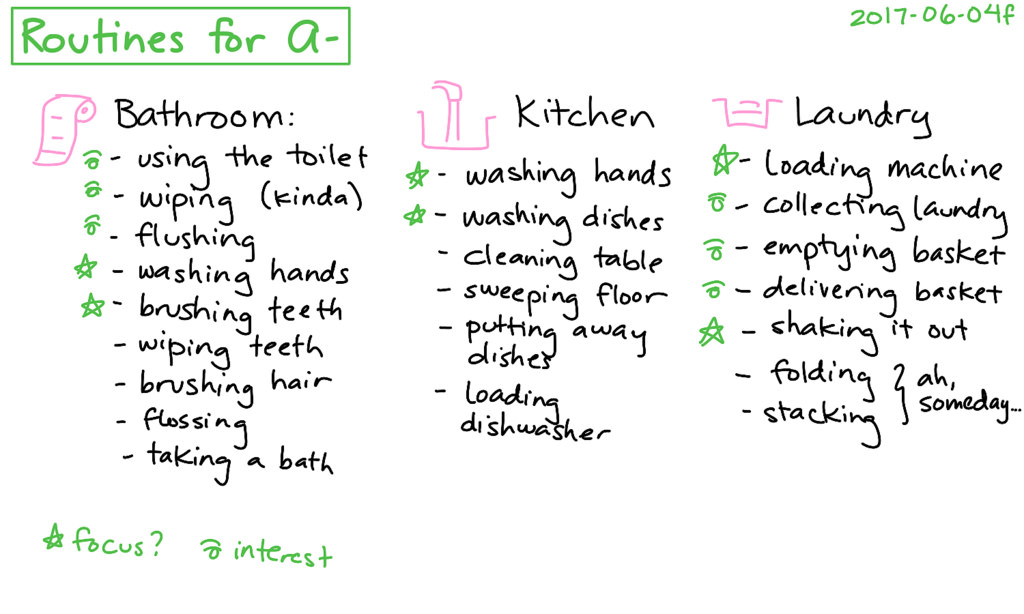

    A bit of an odd prompt for this Good Friday, I thought, but then I did a quick internet search and came up with the second definition:

    To pay in full.

    To settle the debt.

    It’s all settled.

    And that’s a good way to look at Good Friday. Jesus died to settle our debt with the Father, that we might enjoy life in the kingdom, from the moment we ask him into our lives.

    We certainly don’t settle for less. Rather, we embrace life in all of its fullness.

    May you know the loving glance of the Father, who sent his only Son to die that we might live.

    May you know the refreshing embrace of the Savior, who loves us so much that he bled for us.

    May you experience the comforting refreshment of the Spirit, whose gentle breeze brings peace.

    And may you remember that you’re not settling for less when Jesus settled your debt.

    This post is part of the weekly Five Minute Friday link-up. You can find today’s prompt here.

  • Five Minute Friday: Anything but Routine

    Photo: Sacha Chua, flickr

    Routines make up the stuff of life.

    Whether from brushing our teeth to making the bed (or not) to checking our social-media feeds, we fill our lives with actions that we do again and again. Some of the routines can be life-giving, and some can suck the energy from us.

    Some of my best routines? One is going to the gym regularly. I’m off to body combat soon, which makes me happy and feel alive. I have some lovely friends at the gym, and when I don’t feel like going, I know that I will be letting them down if I don’t. Sometimes we let each other off the hook, but so many times after our sweat sessions, we’ve remarked how glad we are that we went, and how we wouldn’t have if we hadn’t texted our friend beforehand.

    Another is my weekly writing video call with two writer friends. Some weeks I can’t attend, but I try to make it a priority (even missing out on other gym classes – see above) because of the life that it brings to me and my friends. We cry together, get real, encourage each other, and share our writing. As we remarked yesterday, we are each other’s people. The way our writing calls are structured, we actually get some writing done too – I got a devotional drafted yesterday that I certainly would not have done had I been left to my own devices.

    Those two routines involve other people, but one I do on my own definitely feeds my soul – my Bible reading and prayer times. I can’t claim to have a “proper” time every day, but when I do, I feel more centered in God and ready to face the day. Lately I’ve been taking a chunk of the gospels and putting it into poetic verse. This is a way for me to slow down and digest the words of Jesus, to get them rolling through my head and my heart.

    What routines do you embrace? Why, or why not?

    This post is part of the weekly Five Minute Friday link-up. You can find today’s prompt here.

  • Five-Minute Friday: Moving Beyond Sloth

    By ConleyHistorical (Own work), Creative Commons

    In the past couple of months, when people would ask me how I am, I’d often reply, “Tired.”

    I have been weary to the bone; tired in body and spirit. Writing two books in quick succession, powering through my MA in Christian spirituality all in a too-compressed time period, and some personal issues have left me spent. Mind you, most of this is of my own doing. I could have spaced things out a bit more.

    So lately I’ve been trying to recover, resting with a purpose, as I’ve seen my friends with chronic illnesses practice. I’m not so sure I’m very successful at that type of resting, however, for once I slowed down, I seemed to collapse into a state of acedia – that malaise and lack of interest in much of life that the church fathers named as a deadly sin (often called sloth). Binge-watching medical dramas seemed about the level of what I was capable of, and my to-read pile of books started to pile up even higher. I neglected my weekly blog posts and have a long list of people to whom I owe an email.

    But this week, after the #BeastfromtheEast had thawed, part of my soul started to wake up too from its winter hibernation. I attended a seminar by one of my favorite lecturers at Heythrop College, Eddie Howells, on St John of the Cross on human and divine desire. The experience of thinking deeply again about things of the spirit and soul, along with spending time in the college library doing some research, felt like the start of a gentle awakening.

    May it continue.

    This post is part of the weekly Five Minute Friday link-up. You can find today’s prompt here. Did you join the linkup? Please share your blog in the comments, and tell me if you feel tired.

  • Five Minute Friday: Replenish the empty stores

    “How long did it take for you to write the books and complete the MA?”
    “Three years,” I said.

    “And how long do you think you’d give someone else to do that?”

    “Hmmm…. Probably five years.”

    “So you’re two years ahead! You can take some time off.”


    As I think about a conversation with a wise friend yesterday, I know I enter 2018 with far fewer deadlines than in the recent past. That’s the plan, for I’m tired and worn out. Yes, I want to write some more books and ponder what I’ve learned about Christian spirituality, but not right away. But how do we just turn off the drive to do, do, do? To accomplish something? To make a difference? And how do we do that in a world of social media, where I see authors signing contracts for their next books while wondering if I’m missing out?

    We – that is, I – need to be intentional in my plan to rest. Yesterday in my conversation I talked about adding another word-of-the-year, this one replenish, one that a friend from high school had uttered a week ago and stuck with me. As I mentioned this word to my wise friend, she shared its Latin root and assured me that it’s an apt word to describe the filling up that I need to do this year.

    Being intentional about resting seems counterintuitive to me, however. I am used to deadlines, goals, projects. I will need to adjust my approach. This week, the first week after fulfilling major deadlines, I’ve allowed myself to flop and watch some shows and not accomplish much at all. Next week I’ll make some gentle goals – such as taking down the Christmas decorations (!), playing around with some craft things, and going for walks in the brook.

    How do you replenish your empty stores?

    This post is part of the weekly Five Minute Friday link-up. You can find today’s prompt here. If you are thinking about using a Lent book here, I wrote one during that busy time on the theme of forgiveness, The Living Cross.

  • Five-Minute Friday: No Motivation Required

    Someone once said about me that I eat work. There’s a bit of truth to that statement, for I love to pursue a project until it’s done. But the downside to loving work is that I can take too much on. Do too much. Write too much. Speak too much. Have too many things taking my attention away from my family, friends, and own needs.

    I’ve certainly lived the too-much life the last couple of years while doing my MA degree as well as writing a book and articles, speaking, and various other things. I’m not proud of the too-much state of life. It’s not healthy, and not one to emulate.

    And so I know that in certain areas, I don’t need much motivation. Give me a project, and I will work hard to complete it. Where I find motivation harder can be for the open-ended sorts of things. A healthy lifestyle, with enough sleep, exercise, and good foods. Time to be and pray and rest. Fun “wasting” time with loved ones without an agenda.

    Soon I will be done with big deadlines, at least until March. I hope I can stay motivated to pursue the less definable but important goals.

    How about you? How do you motivate yourself?

    This post is part of the weekly Five Minute Friday link-up. You can find today’s prompt here.

  • Five Minute Friday: The Ache of Feeling Different

    “I like your trainers,” said one of my new husband’s fellow theological college (US: seminary) students.
    “My trainers?” I asked, not knowing what he was talking about.

    He pointed down to my feet, and I realized he must be talking about my tennis shoes. “Oh, thank you!” I said. “I didn’t realize you all had so many different words for things here.”

    I was in my first days in Cambridge, having moved to England from Washington, DC, and I was feeling very much a foreigner in a strange land. I delighted in my new marriage and in my quaint surroundings, but I felt so very different. I’d hold off, when in the town centre, from speaking, lest I’d be marked as an out-of-place American. I had knew that adapting to a new culture might be challenging when I married Nicholas, but I hadn’t reckoned that I would feel so rocked in myself.

    My journey of finally losing a self-conscious walking alongside myself, as C.S. Lewis put it in Perelandra, took more years than I care to admit as I embraced life in the UK. Living in London helps a lot, as this fantastic city is so multicultural that I rarely feel like I stand out as a foreigner. But I had to look more deeply, too, and ask God to help me to be myself, not editing my actions or responses unnecessarily in the quest merely to fit in (but of course modifying where appropriate).

    I’ve learned that it’s more than okay to be different, not least when I meet people from many different countries and hear their stories of life, love, and God.

    How are you different?

    This post is part of the weekly Five Minute Friday link-up. You can find today’s prompt here.

    I share many more stories and observations in my book Finding Myself in Britain, which to my delight won two awards. Find out more here.

  • Five Minute Friday: The God who is Near

    I love teaching about prayer, and a favorite session is practicing the presence of God. You may be familiar with Brother Lawrence, he the seventeenth-century French monk who intentionally kept God near throughout the day as he prayed, worked in the kitchen, and so on.

    To emphasize how God is near to his people, I start off the session with a series of Bible verses, from the Old Testament and the New:

    Solomon said in 1 Kings 8:27, “But will God really dwell on earth? The heavens, even the highest heaven, cannot contain you. How much less the temple I have built!”

    Isaiah 57:15: For this is what the high and exalted One says—he who lives forever, whose name is holy: “I live in a high and holy place, but also with the one who is contrite and lowly in spirit, to revive the spirit of the lowly and to revive the heart of the contrite.

    Jeremiah 23:23-24: “Am I only a God nearby,” declares the Lord, “and not a God far away? Who can hide in secret places so that I cannot see them?” declares the Lord. “Do not I fill heaven and earth?” declares the Lord.

    Psalm 23 says “Yea, though I walk through the valley of the shadow of death, I will fear no evil, for Thou art with me.”

    Isaiah 43:2 “When you pass through the waters, I will be with you; And through the rivers, they will not overflow you. When you walk through the fire, you will not be scorched, Nor will the flame burn you.”

    Jesus to his disciples, last words in Matthew: “And surely I am with you always, to the very end of the age” (Matthew 28:20).

    In Acts 17:27-28, Paul, speaking to the Greeks on Mars Hill in Athens, said, “God did this so that they would seek him and perhaps reach out for him and find him, though he is not far from any one of us. ‘For in him we live and move and have our being.’”

    All of these passages reverberate with the same truth: God loves to be near to his people. We only need to call to mind his presence within to be assured of this truth.

    As we enter the Advent season, a time to celebrate the God who became Man, we can remember that he did so not only to save us, but to be near to us.

    Do you sense God’s presence near to – and within you – today?

    This post is part of the weekly Five Minute Friday link-up. You can find today’s prompt here.

    Want to join me when I speak sometime? Check out upcoming events here. (I have a break until March!)