Category: Writing advice

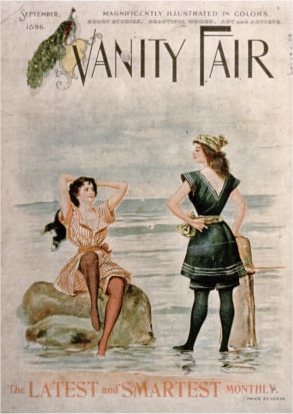
  • Tina Brown on writing and editing: The Vanity Fair Diaries 1983-1992

    As I wrote in a previous post, I read Tina Brown’s Vanity Fair Diaries with some fascination and yet a sense of repellence. Two areas in particular gripped me: the first, her take on editing and what makes good writing, and the second, her thoughts as a Brit living in America on finding home (which I wrote about here). My thoughts are in italic, interspersed with extracts from her book. As I read an advance copy in ebook format, I don’t have page numbers to share.

    One part of the diaries that I didn’t enjoy was the name-dropping, but mainly I wondered about the diaries’ veracity. Not that she was lying, but how she wrote them. For instance, how did she fit in the writing of these diaries into her Very Important Life? I felt like she was keeping the diaries for future publication, crafting her experiences even as she was living them with the rearview mirror in her sightline so as to shape the final product into something saleable. As she says below, her retirement pension.

    Ed Victor walked into my office in a burst of good cheer and told me that at the ABA the editor in chief of Crown had told him he would pay in the region of 250K for a novel by me! The catch is, I have no time to write it. Ed said, “I hope you’re still keeping a diary. I see it as my retirement pension.” Wish I did have time to write a book. I’ve always thought my “outer life” was research for the day when I’d just withdraw and write about it. The only reason I go out is observation greed. Churning through the cast of New York society, I see it as the ever-moving slipstream of a novel. At Billy and Jane Hitchcock’s dinner in Gracie Square the careless beauty of the rich was never clearer. Amanda Burden’s slim, fragile shoulders in a red chiffon spaghetti-strapped dress and biscuit-colored legs. Bill Hitchcock’s big jaw and opinionated mustache…

    At times she’d throw in a line like the one below that would jar me, waking me up out of my stance as a reader as I’d feel it lacked authenticity. I wrote a note in the margin: “So cheesy.”

    I want our child to be conceived here, I want this to be our special place where I can be with Harry always.
    As one with a long background in publishing, I appreciated her thoughts on writing and its business. Such as:

    Deadlines are a great antidote to insecurity.

    I suggested what I always do to encourage first-timers: Just write as if in a letter to me, pour it out and we’ll help knit it together; not to worry about structure.

    How does one become a writer? You can learn the tricks of the trade, but you have to have an innate quality, I think, of being aware and curious:

    He seems to me such a natural writer. You can teach people structure and how to write a lead. But you can’t teach them how to notice the right things.

    And as she says, many editors and writers are introverts, but need boot-to-bum to get out of the chair and go experience and observe life:

    Ed Epstein told me that when Clay Felker was editing he would walk by each desk at lunchtime and say, “Why aren’t you out?” It’s essential if you are an editor to do so, and being an introvert by nature, I remind myself of this each time.

    Photo: Nic McPhee, flickr

    She describes one of the hardest decisions I faced as a commissioning editor:

    The real agony of editing is not the bad piece versus the good piece. That’s easy-kill one and publish the other. It’s the borderline piece that is the source of woe. The piece that’s perfectly good, inoffensively unexceptional, just okay, usually written by someone who’s an almost friend or an iconic name or a writer who just didn’t give their best this time but might well in the future. I have no fear of rejecting the bad and prefer to do it fast. But borderline pieces bring out the worst in me. Out of weakness I sometimes first assent, then think better of it, then am tormented by something I truly want to put in its place, then, as more of the really good surges in, ultimately eject it, making an enemy forever and wishing I’d had the discipline to just let it hide there among the good stuff as an investment in the future.

    What makes a good editor? I agree with her thoughts below, which is why I found that meeting a potential author in person and spending time with them, say, over lunch, was so very important and necessary. I loved collaborating with authors, helping them uncover buried passions or give voice to what they wanted to say.

    An editor’s job is to make people say yes to something they hadn’t thought they could do. I love getting to know writers and listening to what turns them on, which is often the direct opposite of what we had originally started to talk about. So often what they are actually known for doing doesn’t reflect what they should be doing.

    And I agree with the sheer joy of editing, of making prose sing, of reducing the unnecessary words:

    I’ve always loved the routine aspects of editing, the poised pencil, the swift identification of the lines that have to go, the insert that will make it sing, the rewarding moment when you see that the whole thing should start on page nine and flip the penultimate paragraph to the top of the piece, and all you want to do is call the writer immediately and tell him or her why.

    Yes – writers need editors:

    Surely what The New Yorker needs to be is not just a “writer’s magazine” but a reader’s magazine, because writers, unless guided and edited and lured out of their comfort zones, can go off-piste into dreary cul-de-sacs of introversion and excess and entirely forget about questions of content and pace.

    But editors are often undervalued:

    Writing brilliant sentences (and editing them) does not have the market value of writing brilliant code, even though, as we learn every day, critical thinking is the DNA of democracy.

    If you’d like to read some of my other posts on writing, you can find them in my FAQs page, toward the bottom.

    What strikes you from Tina Brown’s memoirs, on the topic of writing and editing?

  • How to Get Published

    20160719_121957

    I’ve written a book [for a Christian audience], and know that although you’re probably busy with a zillion things, any guidance or advice with how to begin the publishing process would be very appreciated. Feeling unsure of where to begin…

    Dear new author

    Well done for taking the plunge into the writing life. Well, I’m guessing that you’ve probably been writing for many years, but now you’ve penned your first book, which is wonderful. Getting the words on the page is a huge accomplishment. Where to begin with the publishing process? Here are a few tips, gleaned from my many years in the business of creating books.

    1. Make your manuscript as best as it can be

    Whether you land a publisher or choose to go indie, the more you can hone and shape your manuscript, the better. Yours is fiction, which I don’t have as much direct experience with as an editor (although I read voraciously), so I’m not the best person to advise in terms of creating and refining a novel. But aspects of good fiction strike me to focus on, such as strong characters, believable plots, an appropriate amount of tension, and so on. For non-fiction writers, how’s the argument in your book – does it flow? Is it engaging? Life-changing? Are you meeting a felt need in the market (marketing speak, I know)? Are you perceived as an expert in this field?

    Whether fiction or nonfiction, your book will benefit from an outside perspective, preferably an editor. With my first book, I spent a chunk of change in engaging an editor to help me craft my proposal and sample chapters. She helped me see what I was blind to and brought clarity and polish. That book never got published, and never will, I think (thankfully!), but that’s another story and not at all related to her role in the acquisitions/commissioning process. I recommend you spend money on an editor.

    Maybe not the best way of increasing your platform?
    Maybe not the best way of increasing your platform?

    2. Develop your platform

    These days getting commissioned feels like it’s all about platform. How many Twitter/Facebook/Instagram/etc followers do you have? How often do you blog? Who are your peeps? Publishers receive proposals for wonderful books all the time, and although the publisher may love your concept and execution, you don’t have a following, they may have to turn down your project. “Have to” you ask? Well, of course they could spend a lot of money launching new authors, but resources are limited and with margins becoming more and more squeezed in the industry, investing in this way simply isn’t as possible as it used to be. I should add, however, that nonfiction can demand a more defined platform than fiction.

    How to develop your platform? It’s not something that appears overnight, so taking a long view is the best approach. Try to arrange for speaking gigs or magazine articles or blog posts in your chosen field. Blog regularly, if you don’t, and set up a mailing list (advice I need to implement!). Build your community.

    20160719_1220473. Determine which publisher you’d love to work with

    If you going for a traditional publisher, do some research. Go to a bookstore and look online for other books that are similar to yours. What’s the competition (you’ll need this for your book proposal anyway)? Who is publishing those books? Research and research some more, finding out as much as you can about who the publisher is and what they like to publish, and who their audience is. With so much information online, this is so much easier than it used to be.

    If you’d rather go indie, find out who is who. Or maybe you’d like to keep control and set up your own house. Again, there is a lot of information online about how to self-publish (just please, please, please pay for an editor, proofreader, and designer!). In the UK, many of the members of the Association of Christian Writers have experience with indie publishing – if you check out their daily blog, you’ll get a sense of who to approach for advice.

    4. Put together your book proposal

    You’ll need a book proposal for your work. Novels are different than nonfiction – for fiction, you can write a synopsis, outline, and sample chapters (I believe – as I said earlier, not my specialty!). For nonfiction you’ll need much more. For my first book proposal I included:

    • Paragraph summary of the book
    • Author bio
    • Competition
    • Target audience
    • Marketing (what I would be willing to do and what would be natural for me with my platform)
    • Annotated chapter outline
    • Sample chapters

    I recommend you research this topic more fully, for your book proposal is probably the most important thing to getting published (unless, say, you’re a relative of a publisher!). I used as a guide Michael Hyatt’s how-to create a book proposal (before he created the ebooks he now has available). I’d also recommend perusing Jane Friedman’s website, for she has a lot of resources available, including where to get started on a book proposal.

    20160719_1220315. Pray

    Yes, we need to work hard to try to land a publisher. But I believe we need to pray hard too, trying to discern God’s nudges and leading. After all, he’s our Author, Publisher – and our Commissioning Editor! May we collaborate with him on works that will spread his kingdom of love and light.

    Let me know how you do in your publishing journey!

  • How to write a great book review

    Do you have any hints on giving a fair and honest review?

    I have received books that were not of my choosing written by those of a very different experience and background to me. The genre may not be what I usually would read. I have a few where I haven’t finished. Much work has gone into the writing of these books which may have a message that I was unable to connect with. Without doubt if they reached a person who liked the style they would be enthusiastically received.

    Great question, and as someone who has reviewed books for a decade with the Woman Alive Book Club and in places like Christianity magazine, I have given it much thought. It’s easy to write a negative review – just fire off a list of all the things you don’t like about the book or author. It’s also pretty straightforward to write a review about a book you love, because you can share your passion and say what moved you. What’s harder, though, is to write a nuanced review that shares the high points and low points in a fair way.

    Photo: Christopher, flickr
    Photo: Christopher, flickr

    When I choose which book to select for the Woman Alive Book Club, some months I flail around, for I want to pass along something that I loved, a work that I think will connect with my readers. So I consciously don’t write hugely negative reviews there. Why waste everyone’s time? But when I’m assigned a book to read and review, such as for Christianity magazine, then I give the negatives and the positives. If you’re blogging and you’ve received the book on condition that you’ll give a review, you’re in the same situation, and so these tips are for you.

    1. Say what the book is

    I often start off a review with a summary-sentence that describes the book. Here are a few from those published in Christianity magazine a couple of years ago:

    A gentle exploration of ageing from one of the giants of our generation, and not only for those in their “golden years” – a phrase which Graham dispels. (Nearing Home by Billy Graham)

    HopefulGirl (a pseudonym) reentered the Christian singles market after her fiancé unceremoniously jilted her, and kept a diary of the good, the bad and the ugly from four years of dating (as published in Woman Alive). (Would Like to Meet by HopefulGirl)

    As a self-professed “Eeyore,” Kay Warren has penned a book that has emerged out of her struggle to choose joy in the midst of challenge, heartbreak and sadness. (Choose Joy by Kay Warren)

    As you describe the book, tell us if the book is a novel or a biography or a self-help book. Is it fantasy or a rom-com or historical fiction or a thriller? Is it a book on how to live the Christian life better? A memoir? A work exploring pastoral theology?

    My own first book, Finding Myself in Britain, can be placed in several categories – it’s my story but it’s also cultural commentary and an exploration of spiritual insights. Some reviewers have criticized this multi-category approach, but others see it as a benefit. In contrast, my second book (forthcoming this autumn), The Living Cross, falls neatly into one category, for it’s the BRF Lent book for next year so it’s classified as a devotional.

    Photo: Moyan Brenn, flickr
    Photo: Moyan Brenn, flickr

    2. Say what you liked—and what you didn’t

    This is where the nuance comes in. If you’re sharing something negative about the book, put it in context. For example, you may not be the target market, or you disagree with the author’s views because of x, y, or z, and so on. Here is an example of a review for Christianity in which I said what was good about the book (Lead Me, Holy Spirit by Stormie Omartian), but also what was lacking:

    I savour books on hearing God. And I’ve enjoyed The Power of a Praying… books by this author. I wanted to love this book, but it didn’t grip me.

    It’s a solid and sound look at the Holy Spirit as found in the Bible, and would be a good resource if you wanted to study this sometimes overlooked member of the Trinity. But I had hoped for more stories interwoven amid the biblical explorations. The few she recounted stuck with me, and made me want to hear more. I also would have appreciated her views on the gifts of the Holy Spirit, which she said were better addressed elsewhere.

    Her Prayer Power sections, however, are worth the price of the book, especially if you struggle to find the words to seek God’s leading or empowering in your life.

    As you can see, I highlighted what was good about the book – it’s a solid look at the Holy Spirit as rooted in the Bible. But also where I found it wanting.

    In describing what you liked and what you didn’t, try to be specific. For instance, if the book is fiction, which characters appealed to you? Did they feel real? How about the plot – were you carried along, your belief suspended? For nonfiction books, did the argument move seamlessly throughout the book? Did it capture your attention? Did reading it change you? How was the writing style?

    3. Say who the audience is

    Flagging up the intended audience will help the reader understand why you liked (or not) a book. For instance, with Kay Warren’s book that I mentioned above, I said:

    I agreed with her and was moved by some of her vulnerable stories. But as I read I wondered why her writing wasn’t really connecting with me. Perhaps because she is, on her Winnie-the-Pooh personality scale, an Eeyore, this serious, melancholy tone seeped through. Which, of course, could make this the perfect book for some other woman.

    Although in one sense I should have been the target market for her book (a woman concerned with the Christian life), our personality differences meant I didn’t resonate so much with it. And now, in hindsight years later, I wonder how much of me not clicking with her had to do with her not being able to write openly, for this book came out before the tragedy of her son dying by suicide.

    Photo: Alan Levine, flickr
    Photo: Alan Levine, flickr

    4. Let your personality shine through

    What I love most in reading reviews is finding out more about the book reviewer. I try especially in the Woman Alive Book Club to be myself and share from my life, as openness and vulnerability can help build community.

    Don’t be afraid to share who you are, and how this book influenced/moved/changed you. When we connect with a reviewer, we allow ourselves to be more persuaded by whether they liked a book or not. The individual quirks and personality traits that shine through in a review make them more likable and compelling.

    “Of making many books there is no end” (Ecclesiastes 12:12) – thanks be to God. And I pray too that “of reviewing many books there is no end,” for authors need readers and readers need reviewers. A community coming together to share their love for books. What will you review next?

  • Warning: Change Ahead – Encouragement for Writers

    Photo: R/DV/RS, Flickr
    Photo: R/DV/RS, Flickr

    The only constant is change. 

    That’s how I started off a recent blog, in which I announced the demise of my freelance editorial commissioning job with Authentic Media, which also happens to be the publisher of my first book. So this will most likely be my first and last book with them, which is a shame, for they have invested much into launching my book – and me as an author. I’ve loved the journey thus far.

    I wasn’t too surprised when I heard the news that Authentic was focusing in on the products that produced the greatest revenue – Bibles, children’s books, and DVDs – for I know that adult Christian books are expensive to develop, and that the market continues to shrink. Great Christian books that used to sell into bookshops in the thousands now may only sell in the hundreds. It’s just not financially feasible.

    Traditional Christian publishing keeps shrinking in the UK, and Stateside they are fighting their own battles. Family Christian Bookstores are in administration, fighting to put forward a plan that would keep them open. Currently it looks like they might be sold off to a company that would dismantle them – which would be bad news for publishers, authors, and readers. (You can read more about this on US literary agent’s Chip MacGregor’s blog.)

    We in the UK went through a similar upheaval… Read the rest at the Association of Christian Writers’ blog.

  • “Writers, Read!” Encouragement for writers

    20150612_102312 (1)

    An oft-repeated piece of advice for writers is short and sweet: “Read.” As writers we need to immerse ourselves in words, and usually this has been our bent from birth. We are those who as children got told off for reading with our friends on a playdate (yes that was me), or for not engaging with the family on car journeys because we had our nose in a book (me again, before I starting suffering from travel sickness). We read the back of a cereal box as we eat or scan the junk mail when we’re waiting for the microwave to finish. Reading often comes to writers as second nature.

    Why read? As we lose ourselves in a book, we chew and swallow and digest the writing, which imparts richness to our writing. Although all of this reading might mean that our early attempts to put pen to paper or fingers to keyboard sound like we’re parroting our favorite authors, for we haven’t yet developed our voice. But as the words get inside us, and as we continue to hone our writing, the writings of others help us to find our voice. Read the rest at the ACW blog

  • A conversation about publishing on World Book Day

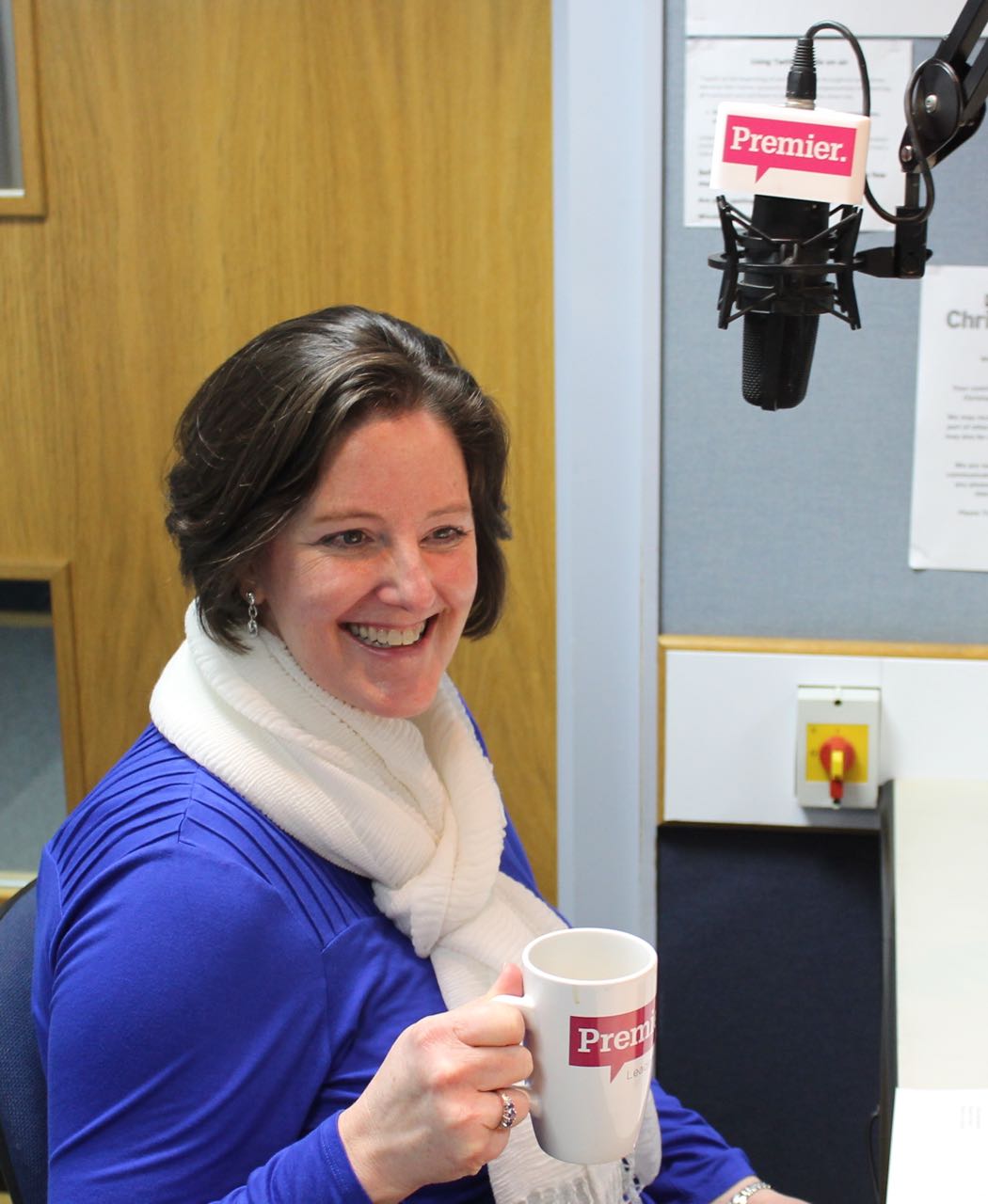
    IMG_2619 newI had a lovely time on Premier Christian Radio yesterday chatting about writing and publishing for World Book Day.

    In prepping for the interview, I found out that World Book Day is celebrated in over 100 countries. Many countries celebrate on April 23 (Shakespeare’s birth and death day!); that’s when the UK marks World Book Night (with the stealth distribution of books among other things). They moved the celebration of World Book Day to March 5 to accommodate schools, as the latter date is often during the school holidays. Many schools participate in the schemes where children receive a voucher toward money off books.

    Here is the interview, in which we talk about whole host of writing tips and things to consider about finding an agent and publisher.

    You can see some of my other writing posts here, including how to write a devotional and advice to a newbie writer.

  • Advice to a new writer of devotionals

    I believe writing devotionals may be part of my soon-to-be-seriously-begun writing ministry. Have you any helpful tips as I start? I’m retiring at the end of March and although I will be a lay pastor, I will finally be able to give serious time to writing. I’ve read your CWR notes and love them!

    Photo: "Bible time," Brett Jordan, flickr
    Photo: “Bible time,” Brett Jordan, flickr

    Hello and thanks for asking! I love, love, love writing Bible reading notes. As I prepare, I read and dream and research and wonder and pray, and then I get down to the writing. Often time seems suspended and I exclaim, “Wow, I love this, Lord!” But I say this acknowledging that not everyone has this experience when crafting devotionals. This kind of writing is my sweet spot; it’s part of how I’ve been made and who I am. And I’ve been writing devotionals since 2008. I haven’t counted up how many I’ve written for some time, but I’m guessing 400 or 500. So please don’t feel bad if you don’t experience the sense of sheer joy in your writing. It may come.

    You asked for some tips as you dive in; here you go.

    Make your words (characters) count.

    “If I had more time, I’d make this shorter.” Writers of devotionals – Bible reading notes – don’t have the luxury of space. Usually the text is limited to around 300 words, so the content needs to matter. A publisher I’m currently writing for designates character (with spaces) counts, so there’s no fudging. You know, like those hyphenated words that only count as one word in a word count (The writer-who-likes-to-cheat Amy? Nope.) Write your first draft and then prune, prune, prune. Employ strong verbs – the passive voice eats up your word count. Delete adjectives and adverbs. And so on. (A read through of the classic Strunk & White can be enlightening before you dive in.)


    Gather your thoughts.

    In the weeks before your deadline, read through the text you’ve been assigned (or that you’ve chosen) prayerfully, asking God to reveal what he wants you to write. Start a “thoughts” file on your computer/device where you can jot down notes and illustrations that occur to you. Writers train themselves to notice details – it’s as if while we’re experiencing a near car accident, we’re also taking notes on what we were thinking when the car in front of us stopped, the hue of the sky and how the light hit our eyes, the pounding feeling in our chest when our foot reflexively hit the brakes and the car stopped just in time, and the “Thank you, Lord” prayer we exhaled. (Do stop the car before you note these down.)


    Photo: Savio Sebastian, flickr
    Photo: Savio Sebastian, flickr

    Submit yourself to the text.

    I love writing notes that are assigned to me – such as the series I’m going through on my blog on Hosea, or the series on verse by verse of Psalm 18 (start from the bottom of the links). We so often skip over the hard bits in the Bible, and so writing on a chunk of Scripture in a series can be an effective way to avoid this.

    But I also mean in submitting ourselves to the text that we seek not to read what we want to read in the Bible, but what God has put there. Do some research and find out the context. Don’t just jump to handy conclusions. Ask God’s Holy Spirit to reveal the meaning. Leading to…


    Research.

    When I first started writing Bible reading notes, I spent a week or more reading and taking notes on various Bible commentaries. In one sense I needed the help because I hadn’t engaged with the Bible at that level before. (Those of you who preach regularly will have the benefit of this close engagement.) But in another sense I found myself crippled to form my own opinion. In doing so much background reading, I was in danger of merely parroting back the ideas in the commentaries. I had to put my notes aside for several days so that I wasn’t stealing the content of others in what I wrote. (Of course, there’s nothing new under the sun, and we unconsciously share the wisdom of others all the time – along with the inspiration of the Holy Spirit.)


    A lovely letter from a reader who sent me a Thanksgiving card for many years.
    A lovely letter from a reader who sent me a Thanksgiving card for many years.

    Journey with the reader.

    This probably doesn’t need stating, but you as the writer are a fellow pilgrim, and in the writing of Bible reading notes, you’re often sharing what you’re learning even as you write. So put on the cloak of humility, because wow it’s so amazing to get paid to submerge ourselves in the Bible and to share what we’re gleaning with others!


    Yes, you can use the classic formula.

    Devotionals often start with an arresting anecdote, which links to the biblical text that the writer delves into, which leads to the application. So that would be

    Illustration
    Text
    Application

    Being one who likes to buck the rules, I like to vary things up, sometimes diving straight into the text, for instance. But I do seek to add an application for each reading – after all, we do want to be living under the wisdom of God’s word.


    Weave in biblical text.

    I love to fold into my reflections various verses from Scripture. I don’t seek to do this slavishly, for that would make it feel forced, but often in the prayer section at the end of the devotional, a verse will stand out to me as suitable for prayer and reflection. (I don’t have the mind of NicTheVic who can name chapter and verse when it comes to Scripture. I have fragments and pieces stored in various levels of my brain, so I find the search facility at BibleGateway a fantastic resource for bringing them to the fore.) Reminding the readers of the great sweep of Scripture can be helpful too, depending on what you’re addressing.


    Pray.

    This is the most important element of writing devotionals. Pray before you start; pray while you’re writing; pray while you’re rewriting; pray when you send off your work to your editor. We trust that God will inspire us with his word; we yearn for him to bring just the right encouragement for the broken-hearted, the lonely widower, the overwhelmed parent. We oftentimes write a year in advance, so we can’t control the outcome or the effect of what we write. Which makes the sometimes miraculous meetings between devotionals and the reader’s experience so humbling (as I wrote in a blog about some notes that God used during an earthquake in New Zealand).

    I can’t explain how sometimes an illustration will pop into my head when I’m writing. Oftentimes I approach the text without seemingly a clue of where I’ll go with it in terms of the illustration and application. But as with so many creative pursuits of collaborating with God, we take the first step and he helps us to continue. As with the Israelites wandering through the desert who had enough food for the day, he provides just enough inspiration for the devotional we’re writing.


    A "wow this is humbling" letter for me.
    A “wow this is humbling” letter.

    Try to develop a thick skin.

    The first publication I wrote for had an exacting readership. Any theological matter I addressed could be questioned; any uninformed opinion taken to task. I came to dread the letters from readers, for they pointed out where I was lacking. But the readers’ letters made me welcome my editor’s comments all the more, for she knew her readership and was careful to massage my text into a more acceptable format (without asking me to budge on key theological matters). I always took the time to reply to these readers (asking God to let a humble response come through), for they had taken the time to write to me.

    Then I wrote a series on being a pilgrim in a foreign land. Bulky packages from the publisher started to pop through my letterbox, and amazingly, this time the readers wrote with their stories of feeling in exile! The publisher said they had never had such a big response in terms of feedback. I heard from other Americans living in the UK or those with connections to other countries. I felt overwhelmed with gratitude at this response, made all the sweeter by my long history of not-so-easy reader letters.


    I hope this is helpful; do let me know how you get on. And thanks for your kind words about the CWR notes. I’m humbled when people find my writing helpful or inspiring. Praise God!

  • How to Keep a Spiritual Journal: A Treasure Trove of God’s Love

    DSCN6607This article originally appeared in Woman Alive in January 2014, and I presented its contents at All That We Are, the Woman Alive/BRF retreat at the Christian Resources Exhibition in May 2013. The next Woman Alive/BRF day will be 6 June 2015 in Woking. Join us!

    “I hate my life.”

    “Why am I so stupid?”

    “Will I ever have a boyfriend?”

    Sentiments like that – and a lot worse – used to fill my journals in my teens and early twenties. Angst, fear, bitterness – I would let rip in my personal diary, not realizing the damage I inflicted as I wallowed in my pain.

    Then in my mid-twenties I edited Leanne Payne’s Listening Prayer: Learning to Hear God’s Voice and Keep a Prayer Journal. She gave me the tools to turn my former depository of self-hatred into a spiritual treasure trove of love and affirmation. I threw away my old journals and dedicated my new, floral ring-binder to be a place for conversation with God. At the time I was also learning to receive God’s love and forgiveness; I would take my angst and pain to Jesus on the cross, confess any sins, then wait to receive God’s love and release. My new spiritual journal echoed these practices of sloughing off the old self and embracing the new. I was a new creation!

    Twenty years later, I can’t imagine not keeping a spiritual journal. It’s the place where I am most open and free with God, telling him my deepest dreams, longings and fears. Here I praise and adore him; here I confess my wrongs and how sorry I am; here I intercede for those known to me; here I ask him to lead and guide and help me. And, importantly, here I stop the chatter and silence myself, poised to hear his still, small voice. Here he calls me his beloved.

    Previous incarnations of spiritual journals - I used to love the girly flowery books.
    Previous incarnations of spiritual journals – I used to love the girly flowery books.

    Although I can’t imagine life without a spiritual journal, I know this practice isn’t for everyone – my husband, for instance. I don’t want to inflict guilt on those for whom it’s a chore or a shame-inducing exercise. Not everyone likes to write; we need to find what fits our personalities best. But if you like words and want to dedicate yourself to this practice in the new year, here are some tips for keeping a spiritual journal.

    Practicalities

    A pretty pattern used to adorn my journal, but now I type into a special file on my laptop. I open a new file each day, organized in monthly folders, categorized by year. You might prefer the tactile feeling of ink on paper, especially in a wonderful leather-jacketed journal. Experiment with different formats until you find what suits you.

    Privacy

    One of my most important pieces of advice is guard your privacy. Find someone who will agree to destroy – without reading them – your journals when you die or are incapacitated. We hold ourselves back from being unvarnished with God when we think someone might stumble on our secrets. If we’re constantly looking over our shoulders, wondering what our audience thinks of us, we curtail the freedom God wants us to enjoy. We will share the treasures mined from our journals through our personal ministries, whatever those may be, but we’ll be handing out the jewels as gifts rather than letting thieves steal and destroy. Keep your treasure chest closed and locked.

    Content

    What shall we put into our journals? You will find your own best practice. Leanne Payne outlines six areas, including God’s word, praise and thanksgiving, intercession, petition, forgiveness. Or a simple format is ACTS: adoration, confession, thanksgiving, supplication. Let’s explore these four areas.

    Adoration

    Taking the time to praise God lifts us out of ourselves and our concerns. Praising God can change our outlook – we can become infused with joy and peace as we echo King David’s psalms or think about a special hymn or song. When we feel dry spiritually, praising God might be more of an act of the will than of our feelings.

    Confession

    I was raised Roman Catholic, so I don’t find confession foreign. But we don’t need to confess to a priest (although some find that helpful); we can tell the Lord what we’ve done or those things we’ve left undone. As I said above, we can take them to the cross and there receive forgiveness. I find that writing out my sins forces me to be specific.

    Thanksgiving

    Having a special thanksgiving section gives us a rich record of God’s goodness. Naming what we’re thankful for can change our whole outlook and demeanor, as Ann Voskamp details in One Thousand Gifts. She started a gratitude journal, writing down 1000 things she appreciated. It opened her eyes to the mercies she might have otherwise missed: a bumblebee perched on a lavender flower; the sound of the breeze in the trees; the smile of a child.

    Supplication

    God our heavenly Father wants us to ask of him. He invites us to bring to him our supplications – our requests – whether for ourselves or for others. Just as a good parent longs to hear what’s on their child’s heart, so the Lord invites us to approach him with our needs – whether big or small. We can set goals with him. We can share our dreams and see him cup them safely in his hand.

    I don't write my journals by hand anymore...
    I don’t write my journals by hand anymore…

    My practice

    I try to incorporate ACTS into my devotions. Most often I will read through a book of the Bible, focusing on a chapter each day. As I chew it over, a verse or two usually pops out and I sense the Holy Spirit leading. Those verses I write out so that they can sink into my being. I turn them into a prayer, speaking them back to the Lord with different words. That leads to me express what’s on my heart, whether praise of God’s goodness and faithfulness; a buried longing; hurts and irritations I need release from; prayers of thanks.

    And then I stop and wait for God’s still, small voice. I wait for any words of love and affirmation; of direction and leading. Some days, all I seem to need to hear is, “I love you.”

    Benefits

    So why keep a prayer journal? Three reasons in closing:

    It’s a safe outlet for our feelings.

    Here we can be totally honest and give to God any bitterness, shame, fear or pain. We can receive God’s love with feeling awkward or self-conscious.

    It becomes a spiritual treasure trove.

    Once a year, usually around New Year’s, I reread my year of journals and note down the “spiritual highlights.” This exercise reveals what I’ve been most struggling with or rejoicing over throughout the year. I see where God has answered prayer and which requests I’m still holding before him. I see his direction, love and leading.

    It’s a tactile record of daily life.

    Our journals provide an amazing snapshot of what’s going on, not only our inner life but the daily stuff of life – which friend is hurting or parent ailing or child succeeding. When we reread journals from years ago, we can smell the frying bacon or hear the sand washing up on shore. Long-hidden memories come flooding back.

    Might you consider keeping a spiritual journal? If so, let me close with a prayer:

    Father God, thank you that you’ve created us and spoken life into us. That you long to converse with us. Help us to find just the right mode of communication, that we might implement a spiritual practice to aid our growth in maturity and love for you. May we put aside the rags of the old self and embrace the royal robes you have created just for us as children of the King. Amen.

  • Advice to a newbie writer

    How did you first get in to writing professionally? I’m a newbie to the craft, though I have been journaling for years… I have several ideas floating around in my head, but am unsure how to get them from mere ideas to something other people would want to read.

    2014-09-04 09.36.01
    My first story, published in the Minneapolis Star. There’s more to this story than I’m telling here though…

    Hello newbie writer friend! Thanks for asking how I got into this writing world. My first story was published in the Minneapolis paper when I was in fourth grade, but my writing journey has been long and filled with some heartbreak but lots of encouragement too. For decades I was afraid to write, instead surrounding myself with writers as I acted as their editor. I don’t regret my editing career, and indeed love my one-day-a-week freelance work with Authentic Media. I learned what great writing is; what is happening in the industry; how to write to meet a felt need (argh; do you dislike that language as much as I do?); and so on and so on and so on.

    But how did I move from editor to writer? Through heartbreak, initially. I was the UK editor for one of the largest Christian publishers out there. It was my dream job; I was working with amazing authors – the late Rob Lacey, Adrian Plass, Michele Guinness, Conrad Gempf, to name a few. Then the big conglomerate pulled the plug on UK commissioning and they eliminated my job. I thought my world was ending.

    But it was the kick on the rear I needed to pursue my writing dream. God provided freelance editorial work, which paid the bills while I explored writing. I was chuffed to get a monthly column with Christian Marketplace for six years, a now-defunct trade journal for Christian publishing, and to start up the Woman Alive book club, which I’ve run for eight years now and love to bits. I got my first commission for devotional writing with New Daylight (Bible Reading notes – I write for BRF, CWR, Living Light and Scripture Union), which is one of my great passions. And much later on, I branched out into writing on the Christian life in Woman Alive and Liberti magazine. More on my first book when I sign the contract, hopefully in this month!

    Some of the Bible reading notes I've written in. These are aimed just at women, but I write for both sexes too.
    Some of the Bible reading notes I’ve written in. These are aimed just at women, but I write for both sexes too.

    Everyone’s writing journey is different, but here are some tips as you start your journey.

    Write, write, write. Writing is hard work, and the best writing is rewriting, rewriting, rewriting. Ernest Hemingway said in an 1958 interview with the Paris Review that he rewrote the ending of Farewell to Arms thirty-nine times before he was satisfied. The interviewer asked if there was a technical problem; “What was it that stumped you?” He replied, “Getting the words right.”

    Write wherever you can, as I say in Christian Writer, the print arm of the Association of Christian Writers (more on that below).

    November is coming up soon, which for writers means Nanowrimo. Do it! I’ve “won” twice and failed once (and no, I didn’t write novels – I wrote whatever came into my head). For me the experience of committing to write 1667 words a day, even if they are crap, was transformative. I found the process (finally) banished my inner editor to the basement. She might knock and scream at the door, but I can more easily ignore her when I’m writing, writing, writing. (She comes in handy later at the all-important rewriting stage, of course.)

    Write what only you can. Your unique voice is what will set you apart. Read/watch Neil Gaiman’s “Make Good Art” speech for this point especially. (You can find it free online, but why not splash out for a gorgeous print book, in which the typography itself is a work of art and adds to the engagement with the content.) As he says, “The urge, starting out, is to copy. And that’s not a bad thing. Most of us only find our own voices after we’ve sounded like a lot of other people. But the one thing that you have that nobody else has is you. Your voice, your mind, your story, your vision.”

    As a Christian, I find the way God created us all so uniquely, and yet in his image, exciting and mind-blowing. Christ-in-me will result in art that’s different from Christ-in-you, but the universals come through.

    Don’t fear failure. Well, you will fear failure, at least I do, but write anyway. Try to develop a thick skin. Not everyone is going to like your type of writing, but hopefully you’ll find your tribe, your clan, who will love to hear what you have to say. Whole websites are devoted to the rejections writers have faced – famous ones included.

    Early on when I started to move from editor to writer, I pitched a series of columns for a well-known magazine. Because I was in the industry, I knew the editor and they responded to my initial pitch enthusiastically. I duly cranked out three sample columns and waited with baited breath. The response that came back was crushing, not least because the editor said no; they also said my pieces would fit better in an American magazine that I felt was twee! I nursed my wounds for a bit and then moved on to the writing assignments I did have, which at first were book related (such as book reviews, which I still love writing).

    I’ll write about my rejections on the book front later, but know that editors and publishers don’t have super powers to let them know that this piece of writing or that is going to be a big hit. Yes, okay, some things are key, such as great writing, great content, and a huge platform. But books can come out of nowhere and surprise us.

    Build your platform. Lots of people address this vital issue in their blogs, so I won’t spend much time here. (Agent blogs are great resources – try Steve Laube, Books & Such, Chip MacGregor.) Discoverability is today’s challenge – how can your readers find you in a crowded marketplace? As an author you need to get out there with social media and in real life, speaking and connecting. In terms of social media, my biggest advice is make it real – people soon tire of authors only selling their wares, who aren’t interested in having a meaningful and two-sided conversation.

    Love, love, love running this book club. I get review books for free, get to share my opinions about them, engage with authors and readers, spread the word about great writing... What could be better?
    Love, love, love running this book club. I get review books for free, get to share my opinions about them, engage with authors and readers, spread the word about great writing… What could be better?

    Engage with the pros. Take your craft seriously. You can find a lot of free resources online, but nothing beats one-to-one engagement with an industry pro or a writers’ conference. In the UK, I recommend you join ACW, as mentioned above, which holds regular writers’ days, has an active Facebook group, and a regular magazine. Writers’ Essentials is another resource for courses and a place to hire a wise editor.

    Hire an editor, you say? Yes, indeed. I hired a fabulous friend to help me with my failed book project. She helped me see what I couldn’t see, especially in terms of structure and voice. Her help was invaluable, and even though that book won’t see the light of day, I don’t regret the investment for a minute. (And yes, I write that as a professional editor myself with some twenty-five years experience!)


    So newbie writer, my friend, I hope this helps. Write, write, and write some more. I trust you will find your voice; I trust you will make the world a better place for having crafted your words into prose, poetry, fiction or other format. Let me know how it goes!

  • Thoughts for writers – writing to sow seeds

    Recently a vicar (no, not that vicar) asked me to contribute a sermon on proclaiming the gospel message through writing. Happy to be asked, I said yes. Then I wondered whichever passage I would preach on. “Of the making of books there is no end”? Jeremiah’s “Eat this scroll”? My husband suggested looking at Colossians, for Paul never visited that church but ministered through the written word.

    Photo: Written in Gold, Flickr
    Photo: Written in Gold, Flickr

    I remained stuck, asking God for direction. That leading came through Facebook, for when I posed the question on my wall and in a Christian writer’s group, I received enough responses to write a book: Habakkuk 2:2: “Write the vision.” Or John 1, “In the beginning was the Word…” Or Psalm 45:1: “My tongue is the pen of a ready writer.” All rich with possibility, but the passage I settled on was Luke 1:1-4 as suggested by a writer who said it makes “clear that the words are written to communicate Christ to the reader.”

    Do you remember that bit at the beginning of the gospel? Luke uses it to tell Theophilus why he’s writing, but he’s also employing a literary convention that historians such as Josephus used to prove their authenticity and merit. So too Luke says that although “many have undertaken to draw up an account,” yet he “too decided to write an orderly account.” Why? Because “I myself have carefully investigated everything from the beginning.” He’s not implying that the earlier accounts were hopeless and thus he needs to pen his own. Rather he wants to build on and enlarge their work through his careful research and eyewitness interviews.  Primarily, he wants to reassure Theophilus: “So that you may know the certainty of the things you have been taught.”

    Encouragement for us to write too, don’t you think? Of course we won’t be creating Holy Writ. But if we are writing an historical account, for instance, we can follow Luke’s example of careful documentation to produce a trustworthy account. We can share his passion to tell the stories of God transforming lives. We can encourage our readers in the foundations of their faith.

    As I looked out on the congregation, clustered at the back in a cavernous and chilly Anglican church, I prayed that my words might spark some interest in the gift and discipline of writing. Conscious that many might not see themselves as writers, I emphasized the numerous ways we can write today, such through letters, emails, texts, social-networking sites, blogs. As we communicate, we can be a transformative presence. For instance, deciding never to act out a conflict over email. Or posting a handwritten letter as a surprise. Or texting a Scripture to encourage.

    I spoke about other places to write without seeking publication, such as keeping a prayer journal, which could become a treasured record of God’s working in our lives. Or documenting our family history. Or creating poems as a meaningful gift. And I spoke about writing for publication, such as letters to the editor, features in the local newspaper, writing for a charitable organization. And columns, articles, stories, Bible reading notes, books… the places where we can write are many.

    Did my words accomplish what I hoped as I unpacked one short passage in Scripture? Only God knows. I felt slightly disheartened as I glimpsed some frozen faces in the congregation. But God’s breath can bring life and warmth into even a cold church on a rainy day. And just as I don’t know the true effect of that sermon, neither do we of our written words. We ask God for the seeds to sow, and with his strength we fling them as far and wide as we’re able. Then we ask him to provide rain, sunshine, and protection from hungry birds or constricting weeds.

    May the Lord refill our stock of seed, that we may help to produce a harvest of righteousness.