Category: Book Reviews

  • Review – An Advent book and Christmas novella

    Reviews of two books for this season, as published last year in the Woman Alive book club.

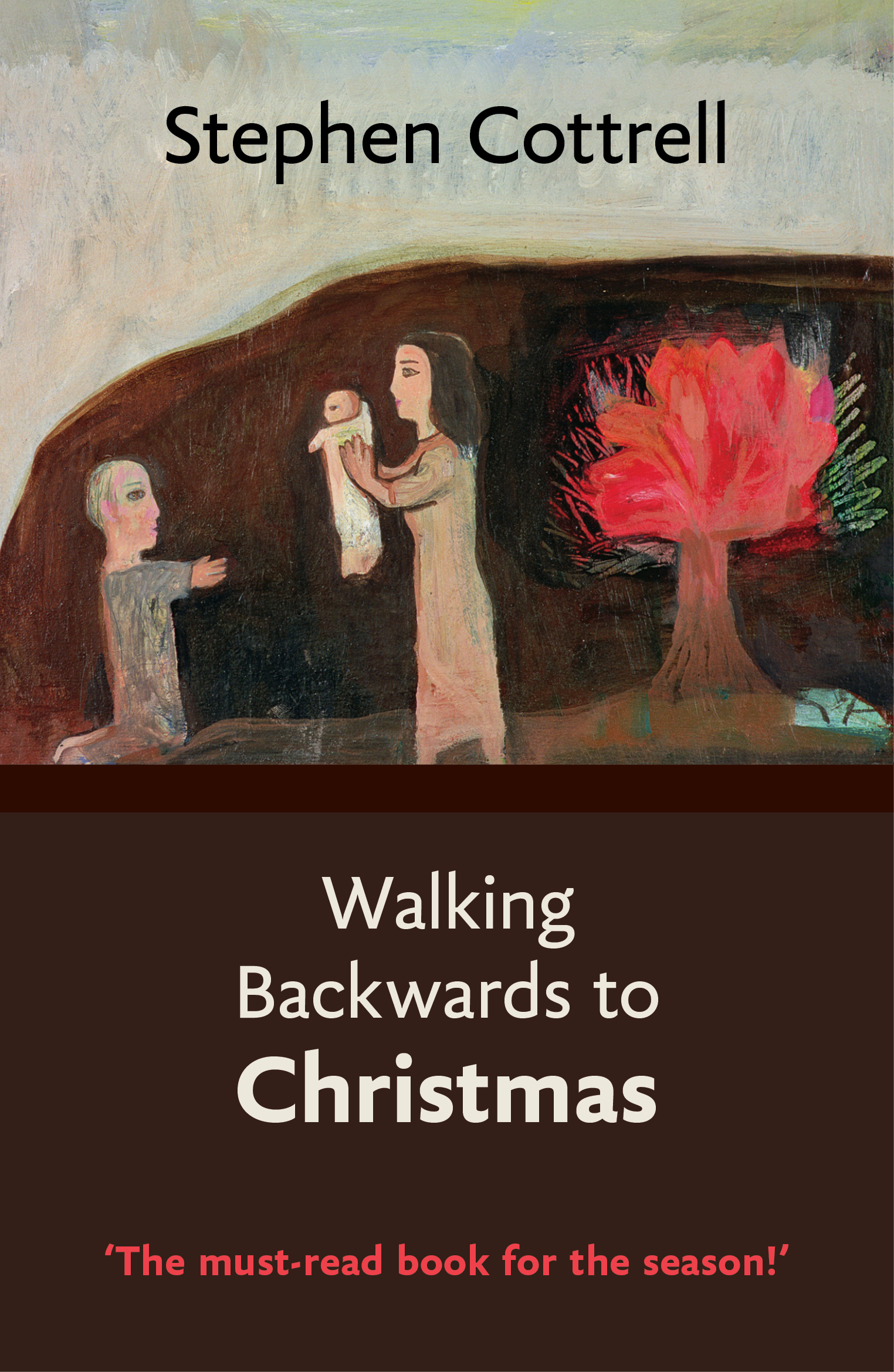
    walking backwards to christmas FCI wasn’t sure I’d like Walking Backwards to Christmas when I picked it up. I’ve read a fair number of first-person narratives from biblical characters over the past few years as this genre has gained in popularity. Sometimes the books work; sometimes, not so much. But in the hands of Bishop Stephen Cottrell, these narratives sing. I highly recommend reading this during Advent or the Christmas season.

    He moves through the Christmas story backwards, as it were, starting with Anna in the temple, moving to Rachel, a mother of one of the slaughtered first-born sons, then to (among others) Herod, the innkeeper’s wife, Joseph, Elizabeth, and Mary, and finally to two prominent Old Testament figures, Isaiah and Moses. I found their stories moving and thought-provoking, impressed that the author imagined such different characters and voices in each chapter.

    What’s refreshing is that he addresses the dark components of the story; for instance, the chapter by Rachel is piercing in her mother’s grief. Or Anna’s decades-long loneliness as a widow, which slowly is eclipsed by her love of God. Or the power-mongering of Herod; or the strife between Joseph and Mary over the questionable pregnancy. All stories worth considering, but not often addressed in seeker-friendly carol or candelight services.

    higgs wreathPerhaps this season you’d like to escape with a Christmas novella, cozied up with some mulled hot liquid, snuggled by the fire. If so, I’d recommend Liz Curtis Higgs’ A Wreath of Snow. She’s one of the few Americans who can pull off writing novels set in the UK; this one showcases Scotland in Victorian times. (Her secret? Research like crazy. When I interviewed her here in 2011, she said she had 800 books just about Scotland!)

    Margaret Campbell is a young woman with a painful history. She flees the family home on Christmas Eve, determined to go back to her flat in Edinburgh. But her train journey is unexpectedly halted, including a surprising meeting with the gentleman seated across the aisle. The story has romance, but it doesn’t shy away from hard topics such as bitterness, grudges, and the need for forgiveness. I especially enjoyed how the prompts of the Holy Spirit were portrayed – not too “out there,” and clearly as something that the person could heed or ignore.

    Two to make time for in the busyness of Advent and Christmas, lest we lose the true meaning of the season.

    Walking Backwards to Christmas, Stephen Cottrell (SPCK, ISBN 978-0281071470)

    A Wreath of Snow, Liz Curtis Higgs (WaterBrook Multnomah, ISBN 978-1400072170)

  • Review: How to Be an Alien by George Mikes

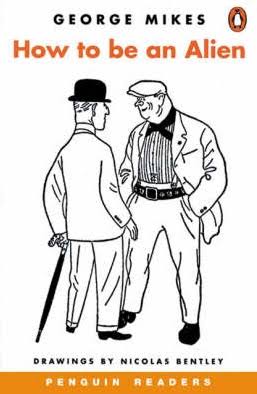
    imagesAt the end of an introduction to spirituality class at Heythrop College, one of my new friends slid me this little volume – a book published in 1946 which immediately captured my imagination, not least for the story that she recounted as she gave it to me. She said:

    My German grandfather was a career German naval engineering officer, sunk by the British in the First World War, fished out of the Med and bunged in a rather uncomfortable camp in the desert outside Alexandria for the rest of the war. At the end of the Second World War he ended up in the bag again but by this time he was an admiral so was despatched to a stately home in Cumbria which was the destination for high ranking officers. If they gave their word that they would not escape that was accepted, so they were free to roam around the fells all day and return to a good supper in congenial surroundings in the evening. I think only one broke their word, featured, I believe, in the film “The One that Got Away”.

    Meanwhile in Germany, British soldiers had commandeered the family home and Mum and her sisters had to move in with family elsewhere. The soldiers were always charming and friendly to the girls though. The upshot was that my grandfather believed that the British were an honourable people so at the end of the war when Germany was destroyed, most men were dead and my grandmother was going shopping with a wheelbarrow to carry all the inflated money, my mother set off to England to work as an au pair. Only one person was ever unkind to her as a German – a nurse whose fiancé was killed – and someone gave her How to Be an Alien to help her understand life over here. It obviously worked – she trained as a nurse at St Thomas’, then became a district midwife on a bike delivering babies in Surrey, then married my father and has lived here ever since.

    I sat on the Tube home while galloping through How to Be an Alien and thinking of this young woman, new to the UK and living in a completely changed world while knowing she’d need to make this country her home. It made for poignant reading.

    Of course, it being a humorous book, I wasn’t sure how much of the preface to the 24th impression was irony (not something I am known to grasp) and how serious the author was being as he rued the success of this book. He says:

    This was to be a book of defiance… [I was] going to tell the English where to get off… I thought I was brave and outspoken and expected either to go unnoticed or to face a storm. But no storm came… all they said, was: ‘quite amusing’ (p.8).

    So much of How to Be an Alien I could relate to. His chapter, “Introduction,” is not an introduction to the book but includes this observation: “The aim of introduction is to conceal a person’s identity.” Ah yes, the art of not giving one’s name, as I observe in my chapter “What’s in a Name” in Finding Myself in Britain. We both each devote a chapter to the weather – how can you not, this being Britain – and I should observe his instruction: “You must never contradict anybody when discussing the weather” (p. 22). Indeed.

    teacupI unwittingly followed his lead in writing a chapter about tea, but I wasn’t so rude in my opening as he is: “The trouble with tea is that originally it was quite a good drink” (p. 26). He has many instructions for how to receive tea magnanimously, even at 5am.

    In sum, a lovely little volume, some of which seems quaint after all of these years, but much of which still rings true. And how wonderful to have been given it by a daughter of a foreigner-turned-friend.

    How to Be an Alien, George Mikes, Penguin, ISBN 9780140025149

  • The Wailing Wall (including The Secret Life of Bees)

    After the horrible news of terrorism in Paris and Beirut, I thought it fitting to put a link to an article I wrote on the Wailing Wall. Lord, have mercy.

    The wall we used as our wailing wall in Spain.
    The wall we used as our wailing wall in Spain.

    Do you feel the need to weep and mourn at times? That you need a safe place to let out your heartbreak, angst, and disappointment? The Western Wall – known commonly as the Wailing Wall – in Jerusalem has served as such a space over the centuries. It’s a surviving remnant of God’s Temple and was the spot closest to the Holy of Holies – that place where God’s presence dwelled. Jewish pilgrims who journey there pour out their hearts and prayers to the Lord.

    I thought about the Wailing Wall recently as I led a book club retreat in sunny Spain. With palm trees, cacti, and citrus trees in the background, we met around the pool, chatting through the books I had selected for the week and engaging with related spiritual exercises. The setting was idyllic, fostering deep conversation about the books we’d read, one of them being The Secret Life of Bees by Sue Monk Kidd.

    Perhaps you’ve read it or seen the film adaptation. Set in the American South during the sixties, it features the protagonist, Lily, a white girl on the cusp of growing up. With her nanny Rosaleen, she escapes her abusive father in the quest to find out more about her mother, who died when she was four years old. They end up in a house the color of Pepto-Bismol where a group of black sisters keep bees and observe religious practices based on a black Madonna.

    Parenthetically, I should mention that I’m not recommending the theology as expressed in the novel – it’s not Trinitarian and deifies a folk legend based on Mary. But as Christians we can and should engage with what we read critically, weighing up what we agree with and what we don’t – a bit like my book club did as we discussed the novel by the pool.

    Read the rest at The Kingdom Life Now magazine.

  • Review and Discussion Questions – Adrian Plass’s Jesus: Safe, Tender, Extreme

    A flash-back review from the early days of the Woman Alive book club. I love Adrian Plass’s writings; they don’t lose their humor or punch.
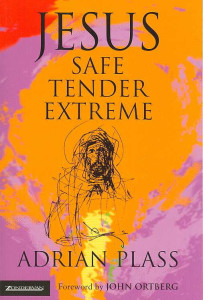
    imagesAdrian Plass is a Christian speaker and writer who has been loved over the years for his humor and honesty. Telling stories of personal vulnerability seems to be his job. As he says in the introduction to Jesus – Safe, Tender, Extreme, “I am not a teacher in any orthodox sense. I am not a theologian. I am not a preacher; I cannot preach to save my life. I am simply allowed to be a man with a broom, sweeping away the rubbish that prevents others from passing further in and further up, and I tend to do this by talking about what Jesus does and doesn’t do in my life. He is safe, he is tender and he is extreme. This book is soaked with those things.”

    Some who have read this book have commented that it reveals a more mature and wise writer. In it he is profound and deep, but also laugh-out-loud funny. You may not agree with him about everything – like his views on healing or the Bible – but you won’t lack things to consider and discuss if you read it.

    • Adrian wrote this book in the light of eternity, as his mother-in-law lay dying in the next room. How did this affect you? And how did you react to his description of cancer as a ‘ravening fungoid monster’ (p. 21)?
    • Do you feel so safe in the love of Jesus that you are free from any of the agoraphobia that Adrian speaks of on page 28? Are you able to pop out “to explore what’s going on down the road”? How does Adrian and Bridget’s encounter with the couple at the coffee shop illustrate this concept (pp. 93ff)? And how does this safety allow and even compel us to embrace truth?
    • Adrian says on page 69 that “there is not a single incident in the lives of his followers that [Jesus] does not inhabit and monitor and have ultimate control over, even at those times when darkness and distress are all that we are able to see and feel.” Do you believe this? In your times of darkness, have you found this to be true?
    • In several places in the book, and especially throughout chapter 5, Adrian speaks of God “defaulting to compassion” and us “defaulting to praise” (also p. 44 and 73). Do you really believe that at the heart of God lies compassion and tenderness? If not, why? Could you move in that direction? How would your life be different if you did?
    • 6bca9efe0a8dab8c932273b9cf47b7fdIn the story “Closed Wounds,” Adrian in his dialogue with God hears that “the scar is a sign of health” (p. 178). Do you agree with what seems to be a contradiction in terms? Why or why not?
    • On page 194 Adrian says that “safety and extreme obedience overlap, and the place where they come together is in the concept of ultimate trust in Jesus, even in the midst of apparent failure.” He goes on to talk about how Western Christians fall apart when “God lets them down.” What did you think of the questions Adrian wanted to ask Janet on pp. 197-98? Do you agree or disagree with his conclusions? How have you reacted to God in the tough times of your life?
    • Some of the extreme encounters Adrian recounts are filled with the everyday stuff of life, like waiting at the supermarket queue (pp. 239ff). Did this surprise you? When have you experienced the thrill of extreme obedience amid your daily life?


    My View

    Okay, I have a confession to make. I was Adrian’s editor for many years, and indeed was his editor for this book. So I can’t confess to any objectivity. Quite simply, I think the book is wonderful and profound and funny and moving.

    When the manuscript first crossed my desk I wasn’t sure about the inclusion of the stories. They weren’t what we were expecting, and I didn’t know how they would fit with the prose. But as I reread the book for this column, I was most profoundly touched by the stories. I hooted at the thought of Adrian collapsing the piece of non-furniture at Blands Warehouse, and was so glad that he stayed and confessed. When he told of his train ride with the tipsy blokes who wanted to talk about Jesus, I wondered what I would have done. And I felt sad about him not telling Dorothy about Jesus, but could relate to that strange part of ourselves that makes such a rash decision and later regrets it. And so on.

    One of Adrian’s points that has stuck with me is that God defaults to compassion; this is God’s nature and there is no other. Do we – do I – really live like I believe this? Or do I put a false veneer over God? And in my life, can I follow Jesus and too default to compassion – instead of pride, irritation or selfishness? Ask my husband. Some days yes, some days no!


    Views of Woman Alive Book Club readers

    cfcffa919dc808e91bbb463aaec20fd5I decided to read Jesus – Safe, Tender, Extreme by Adrian Plass as I had read short articles by him but had never read any of his books. The experience for me has been very profound. I felt from the moment that I bought the book that I should start reading it straight away. I had been going through a low time in my spiritual life to the point that I was questioning whether I actually had any real faith. I believe God has used this book to bring me back to Him and to confront me with His deep and enduring love as shown in His son Jesus. I found it difficult to put the book down and felt it was being used to bring me back to the assurance that Jesus truly cares about each one of us and loves us, warts and all. Sometimes I had tears of laughter rolling down my face and sometimes I had tears of joy and relief as the reality of Jesus’ love overwhelmed me. I felt I must write to say thank you for recommending this book as it has definitely been used by God to inspire me and give me confidence that Jesus will always be with me no matter what the situation may be. -Jo Richards, Enfield, Middlesex

    I found the book very interesting. One can agree with cancer as a ravenous fungoid monster, but cures are being found and lives extended. I think I feel safe in the love of Jesus, most of the time. Problems do test it. That’s what it’s all about. God’s word sets us free from sin and worry. The author deals with doubt and abandonment, something everyone feels at some time. -Muriel Moore, Turnditch, Derbyshire

    Jesus – Safe, Tender, Extreme by Adrian Plass (Zondervan, ISBN 0310268990)
     

  • The Best Yes book review

    A review published a year ago in the Woman Alive book club. Still so relevant, and only today I was listening to a Michael Hyatt podcast on achieving more by doing less…

    1400205859Living a so-called portfolio lifestyle affords me variety. One day I might search out the next read for our book club while the next I’ll craft some Bible reading notes. But with these competing deadlines, for many years I didn’t tackle the One Big Thing I wanted to do for years – write my first book (but thank you, Lord, that book-baby #1, Finding Myself in Britain, is now out!). When I bemoaned this unpublished state to a mentor, he recommended that I read Essentialism: The Disciplined Pursuit of Less by Greg McKeown. I duly ordered it, but in the meantime came across The Best Yes, on the same topic but written by a woman for women.

    Lysa Terkeurst knows that women are busy, with many competing demands for their time: paid employment, volunteer work, care for children, studies, church work, and so on. We have a myriad of opportunities to make a difference, but at times we don’t feel qualified and so shrink back. Other times we say “yes” to please others, not wanting to let them down or seeking their approval. Or we take on so many projects and activities because we just don’t know how to say “no.”

    Why do we say yes, and why not? How can we evaluate between two good opportunities – which one is our so-called “best yes”? How can we say no without disappointing someone? She deals with these questions and more, rooting her writing in a Christian worldview and peppering her points with stories from her life and the Bible.

    In one of her stories she recounts how a close friend – a young woman in her early twenties – asked if she could live with Lysa’s family for a year. Lysa and her husband deliberated for some time, evaluating the pros and cons and seeking God’s wisdom. She shares how they discerned using four categories – how would adding another person to their family would affect them physically, financially, spiritually and emotionally. In the end, having prayerfully considered these categories, they realized they had to turn down their friend’s request. Their no was hard, but opened up the best yes when the friend received an invitation to a far better living arrangement – on the very day Lysa said no.

    Perhaps Lysa’s example about the houseguest spoke to me powerfully because one summer we opened our home to guests every weekend for three months. We got worn out, even though we loved seeing so many friends from far-flung places. We should be a hospitable people, but we also don’t have to accept every request.

    What are you saying yes to, and why? What can you say no to, to free you up for your best yes?

    The Best Yes, Lysa Terkeurst (Nelson, ISBN 978-1400205859)

  • Review: Scary Close by Don Miller

    I’ve been remiss in posting reviews. Here is one originally published in the March 2015 Woman Alive book club.

    078521318XReading the latest offering from a familiar writer can feel a bit like catching up with an old friend. In the Woman Alive book club in late 2006 we discussed Blue Like Jazz (review posted here), Don Miller’s breakout hit that was turned into a movie. In Scary Close Don continues to share his emotions and thoughts openly, as if inviting the reader over to dinner and a long chat.

    He recounts his move to marriage, a long journey as he used to be a serial dater; one who would obsess over winning a girlfriend and then, once he caught her, he’d lose interest, break her heart, and move on to the next. He’s been open about his “father wounds,” stemming from his dad leaving his family when Don was a young boy; surely some of this fear of commitment had roots in those early traumas.

    Scary Close shows flashes of insight and brilliance; I love his strong images, such as how he describes his new-girlfriend-later-wife, “She’d no sooner end a relationship than she’d cut down an old-growth tree. In the heat of that argument I realized I was only a sapling in the forest of this woman’s life… If I was going to win her heart, I’d have to plant myself in the forest and slowly grow the rings that earn loyalty…” (pp. 4-5).

    But I tried to ascertain what unsettled me, and after a while I realized that it feels as if Don’s Christian faith has been shoved to a corner. He speaks of working through deep issues such as identity, the need to perform and impress, trust and intimacy, by looking to psychology for the answers. Now I’m not wanting to discredit psychology; of course the Lord works through the social sciences to aid and bring healing. But it feels like these manmade systems have taken precedence in shaping who he is. Even Don saying that he’s not been to church in five years made me take pause; has his journey of questioning moved him away from the God of answers, the God who wants his all?

    Of course we as readers aren’t really invited to dinner with a writer; we don’t know what’s going on in their heart and mind, so my conjectures are just that – unproven propositions. I’d be happy to be wrong.

    Read it for the evocative language and probing questions about intimacy and relationships, but read it asking for what’s not said as much as what is.

    Scary Close: Dropping the Act and Finding True Intimacy by Don Miller (Thomas Nelson, ISBN 978-0785213185)


  • Review: The Fight by Luke Wordley

    A review I wrote last year for the Woman Alive book club. An unlikely book that grabbed my attention…

    978-1-4143-8949-3As a book reviewer, I receive loads of books to consider. Some books catch my eye – title, subject or author – and I request them from the publisher. Some are sent to me, unbidden; those self-published, I have to admit, I can usually spot in the first couple of seconds. And yes, I tend to be biased against self-published books, for they usually lack that added extra that a publisher gives in terms of editing, design, publication quality and so on.

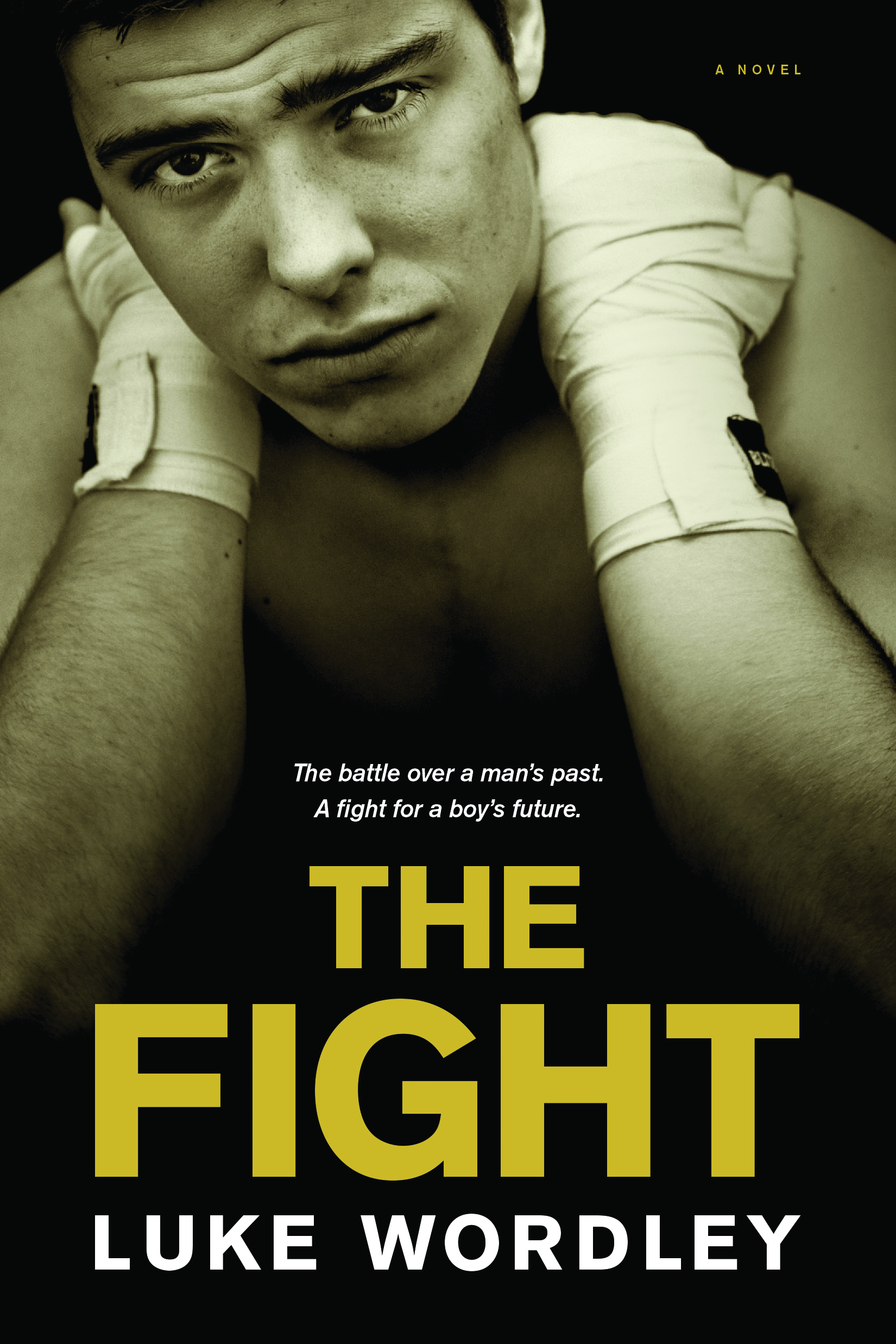
    Luke Wordley is reversing the image of self-published books. When some time ago he sent me a copy of The Fight, I glanced at it, liking the arresting cover and the quality feel of the book. But I wasn’t grabbed by the subject – it’s about boxing, after all – so I left it to languish in my stacks of review books. In the months that followed, I heard some buzz about it through publishing contacts, and was happy to publish Catherine Campbell’s review that she posted in our Facebook group.

    Then I heard that Tyndale, one of the big US Christian publishers, had taken it on. More requests came for me to review the book, and I nearly didn’t, but on a whim I started to read. And captured I was; this book certainly carves out a new model for self-published books to aspire to.

    So yes, it’s about boxing, and yes, you might think only men would be interested. But give it a try if you want some stretching British fiction. A disaffected young man – mourning the loss of his father and witnessing his mother’s descent into alcoholism – increasingly gets himself into trouble with fighting anyone he comes across. But a Christian social worker doesn’t give up on him, persuading a Christian boxing coach to manage him. The story follows Sam, the young lad, and Jerry, the manager, through their ups and downs and journeys of faith. One to read.

    The Fight, Luke Wordley (Tyndale, ISBN 978-1414389493)

  • Review and discussion questions: Redeeming Love

    I’m recently back from leading a book club retreat at the lovely El Palmeral in Spain. We sat by the pool, the bubbling water and chirping birds as our background soundtrack, and discussed four books, along with engaging in related spiritual exercises. You may not enjoy such a tremendous setting to engage with Francine Rivers’ story, but here are my thoughts on it along with some questions for reflection and discussion.

    Redeeming LoveA novel that Liz Curtis Higgs calls “the most powerful work of fiction you’ll ever read.”

    What’s it about? Sarah is a young girl whose innocence was fully shattered when her mother dies. At just eight, she was renamed Angel and sold into prostitution. It was the 1850s in California during the Gold Rush, and the craze for gold warped many morals.

    Angel closes off her emotions and learns to expect nothing. Then an honest, God-fearing man enters her life; Michael, a farmer who follows God’s leading and marries her. Her heart remains cold but he loves her day by day. Finally she begins to thaw, and unexpectedly confronts a whole host of emotions she never knew she had. And so she does the only thing she knows to do, which is to run from him.

    My view: What a novel. I’ve read it three times; twice in 2008 when I featured it in the Woman Alive book club and then again recently. Each time I found more to ponder, although the first times I read it, I found myself so gripped that raced through it in one sitting.

    Francine Rivers does a wonderful job at weaving the Christian faith into the story. It’s integral and doesn’t feel forced or false. She raises vital issues for, including self-identity, forgiveness of others and forgiveness of self, community, sacrificial love, and hearing God’s voice. And she does so in a way that is emotionally compelling and gripping.

    My heart broke many times for Angel as she was used and abused, starting with the rejection by her father, continued by her mother’s dependence on him and then her death, and then all the atrocious and despicable acts committed against her as she was sold into prostitution. It made me grateful for the charities engaged in putting an end to this modern form of slavery. Are we standing by while such horrors are still occurring?

    Redeeminglove-webbannerRedeeming Love shows a journey of character development, and doesn’t just recount a bunch of hurdles the characters have to overcome for them to come together. After the marriage, Angel has to change and become transformed. She needs to open herself up to love and life; she needs to learn how to trust; then she needs to give herself to God. And we see how Michael fights for her and loves her sacrificially, giving of himself that she might find herself.

    One to reread every couple of years!

    Discussion Questions

    Spoiler alert: don’t read these questions until after you’ve finished the book.

    • What did you think of the novel? Did you find it gripping? Too long? Not long enough?
    • Child prostitution, violence, drunkenness, sexual tension, unvarnished greed… not the usual subjects of a Christian novel. Were you comfortable with how the author handled these topics?
    • Why do you think Sarah’s mother stayed in the relationship with Alex Stafford?
    • Michael was a man who followed God’s leading. What did you think about him as a character? Was he too good to be true, or believable? What were his strengths and weaknesses?
    • Sarah lost her identity when she was sold into prostitution as a child. She then had many names – Angel, Mara, Amanda, Tirzah. What does a person’s name say about them? What did you think of her deepest gift to Michael when she revealed her true name?
    • What about Michael Hosea’s name? Consider this internet definition of the Archangel Michael, and discuss how it applies to the character in the story: “The spirit creature called Michael is not mentioned often in the Bible. However, when he is referred to, he is in action. In the book of Daniel, Michael is battling wicked angels; in the letter of Jude, he is disputing with Satan; and in Revelation, he is waging war with the Devil and his demons.”
    • Were you surprised that God called Michael to marry a “soiled dove,” a woman who had sold her body to many men? Do you think the Lord would call someone to such a calling today?

    06bd6cf3fd8a299ed3c76949bfc40e05

    • Michael sparks feelings in Angel that she doesn’t even know exist as he opens her up to beauty, such as when he takes her to view the sunrise (p. 129). She had been exposed to worldly beauty in her previous life – with the finest foods and silks, and yet her world was actually the color of brown, surrounded she was by mud in many forms. Discuss how she begins to open up to life and light and color.
    • Michael says to Angel, “A woman is either a wall or a door, beloved” (p. 153). Agree or disagree? Why?
    • What did you think of the character of Paul? Did you dislike him? Why do you think Miriam fell for him? Why was he the only one who could have called Angel home? Discuss the Altman family. How did God use them to reveal his love to Angel? To Michael?
    • Freedom is an important topic running throughout the novel (see, for instance, pages 187 and following). How did Angel finally come to true freedom? Who helped her along this journey?
    • “But the past kept catching up with her, no matter how fast she ran” (p. 254). Have you seen this to be true in your life? Why or why not?
    • Discuss the meaning of truth (pp. 257–58). Angel’s understanding is so different from Michael’s, for he knows the truth will set her free but she thinks it will bind her. How have they come to their different understandings, and what does it take for Angel to understand the real meaning of truth?
    • 50cd6e9bf88fd473c796bfc9c50a3581Michael says to Angel, “Love cleanses, beloved. It doesn’t beat you down. It doesn’t cast blame… My love isn’t a weapon. It’s a lifeline. Reach out and take hold, and don’t let go” (pages 291–92). Discuss.
    • Has reading Redeeming Love changed you? Moved you? Helped you to see grace and redemption in a new way? If so, how?
    • Do you think the epilogue is necessary? Helpful?
    • What did you think of the author’s journey in writing this book? Why do you think she had to give up writing all together for a time?

    Redeeming Love: A Novel, Francine Rivers (Monarch, ISBN 9781854246592)

  • Review: Books for Lent

    Need an idea for a book for Lent? Here’s a review from last year, as published in the Woman Alive book club. Features one of last year’s crop of devotional books, and the Best Lent Book Ever.

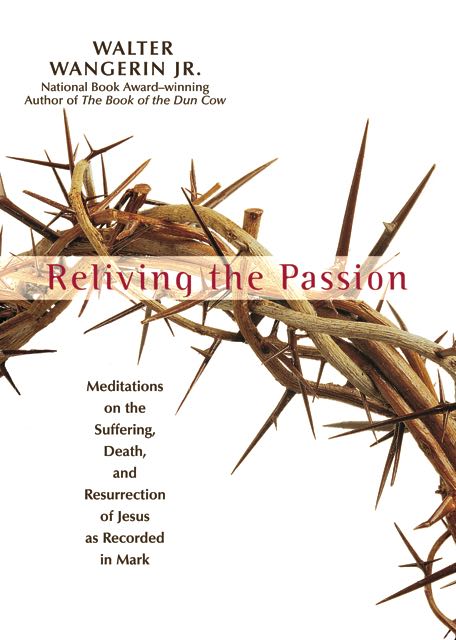
    Wangerin Reliving the PassionReliving the Passion by Walter Wangerin. A master storyteller, the author writes as a participant – sometimes a close bystander, sometimes a character – of the narrative of Jesus’ last days. He transports us to a vivid world of sights and smells that bring alive the story. In so doing he engages not only our heads but our hearts. We’re there at Bethany, seeing the woman pour out her extravagant love for Jesus. We feel Peter’s desolation after his betrayal of Jesus. We experience the blackness and despair of Good Friday. We rejoice at the wonder of the resurrection, the empty tomb.

    If you’ve never tried a Lent book, give this one a go. If you read one every year, prepare to be refreshed and engaged. The publisher could even promise a reader-be-satisfied-or-have-your-money-back guarantee on it – it’s that good and profound and engaging and faith-building.

    9781408188477One that is thought-provoking is this year’s Lent book as commissioned by the Archbishop of Canterbury. Graham Tomlin takes the notion of looking through the cross, similar to how Eastern Orthodox Christians gaze through icons as a window to the real Christ. As we use the cross as our lens, we see how God turns the world’s approach on its head. For instance, thinking about power, the cross “offers us a picture of powerlessness. It is hard to imagine a less powerful figure than someone nailed to a cross” (p. 65). True power, it turns out, is that of self-sacrificial love and service. Of Jesus dying for us.

    The author takes one concept per chapter and explores it in relation to the cross, whether wisdom, suffering, identity, evil, ambition, failure or reconciliation. I thought his chapters on suffering and identity were the strongest, with plenty to chew over. For example in the chapter on suffering: “Once you start to try to love people, then it will hurt” (p. 121). I did wonder if this book was published at speed, however, for I got distracted by errors such as missing punctuation. Still, one to read slowly.

    Looking Through the Cross, Graham Tomlin (Bloomsbury, ISBN 978-1408188477) and Reliving the Passion, Walter Wangerin (Zondervan, ISBN 978- 0310755302)

  • Review: Feeling Empty, Being Filled, The Book of Ruth

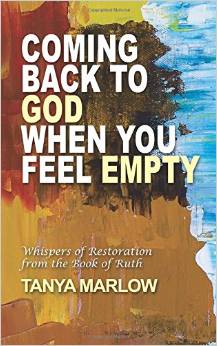
    Unknown“In 2010, I gained a baby, and lost the ability to walk more than twenty metres.” So begins Tanya Marlow in this thought-provoking look at the book of Ruth. She interweaves her story of life with myalgic encephalomyelitis (ME – or chronic fatigue syndrome, as it’s commonly known Stateside) with that of two women from centuries past – Naomi and Ruth.

    When we look at this biblical account, usually we focus on Ruth – the young widow who commits to her mother-in-law, making her home in a foreign land, such the depth of her love. We skip over the bitter old woman, Naomi, who is reeling from loss and is definitely disappointed with God. But Tanya explores – gently – how we mirror Naomi, and yet how God showers us with his love. (And she doesn’t miss out on gleaning encouragements from Ruth’s story either.)

    Coming Back to God When You Feel Empty is a short but satisfying read, currently free when you sign up to Tanya’s website. Read it for the poetic language; read it for the insights this story from old can shine into our lives today; read it for the emphasis on prayer and a God who loves us.

    Coming Back to God When You Feel Empty: Whispers of Restoration from the Book of Ruth by Tanya Marlow (CreateSpace, 2015).