Category: Nonfiction book reviews

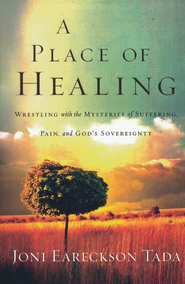
  • Review – A Place of Healing by Joni Eareckson Tada

    765320_w185When Joni was seventeen, she became paralyzed after a diving accident. The story of her accident and recovery became a bestselling book and film in the eighties, and she has been a disability advocate for decades. She has also written over thirty-five books, the latest of which concerns healing.

    Why does God heal? Why not? Will he heal if we have enough faith? This latter question is one that has been put to Joni by well-intentioned but misguided people, who have told her that she simply needs more faith to be healed. Her response is gracious but unwavering: “God reserves the right to heal or not … as He sees fit” (p. 41).

    Healing is something that Joni desperately longs for – although the healing that she has sought in recent years is freedom from chronic pain, and not so much a miraculous return to able-bodied movement. The pain can be unrelenting; for example, it can take over two hours each morning to get her stiffened body ready for the day. Here is one who writes with authority; healing is not an academic subject to her.

    She always points us back to God and his deep love for us. We don’t understand why he heals some and doesn’t heal others, but it’s up to him. I agree with her that God allowed and permitted her accident, but I struggle to affirm that “it was all planned long ago, and God brought it about in His perfect faithfulness” (p. 197). God allowed the accident, but is she here saying that he caused it (because he planned it)? On this side of heaven I don’t think any of us will decipher the mystery between what God allows and what he wills, so here I am content to take a slightly different position than Joni.

    Having endured forty years in a wheelchair, and now chronic pain and breast cancer, Joni is a trustworthy guide into the hard questions about healing. As she says, “Sharing about suffering is like giving a blood transfusion … infusing powerful, life-transforming truths into the spiritual veins of another.” Joni does this through her hard-fought words, penned during a battle with pain and weariness that not many of us will have to suffer. Through it all, she points to God’s sufficient love and grace, showing how God can redeem our pain. “But the beauty of being stripped down to the basics, sandblasted until we reach a place where we feel empty and helpless, is that God can fill us up with Himself. When pride and pettiness have been removed, God can fill us with ‘Christ in you, the hope of glory’” (p. 87).

    One to read and re-read, and to recommend to those dealing with suffering and pain.

    A Place of Healing: Wrestling with the Mysteries of Suffering, Pain, and God’s Sovereignty b;y Joni Eareckson Tada (David C Cook, ISBN978-1434702067)


  • Review – sensitive memoir on mothering

    In my years of running the Woman Alive book club, I’ve shied away from books on mothers, knowing that it can be a painful subject. But (writing to women here) whether or not we are mothers, we are all daughters (and yes, I know that too can be wrought with pain); not least, we’re daughters of the King. And this Father loves us mind-blowingly and unendingly.

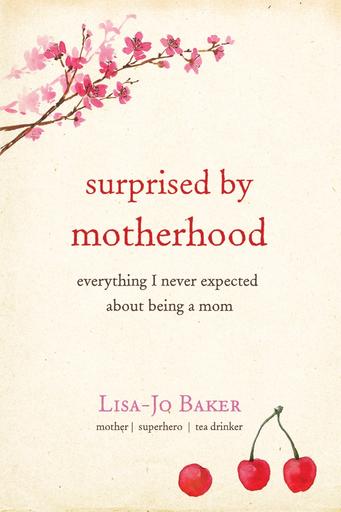
    Motherhood CoverSo this spring in the book club I highlighted a sensitively written memoir that doesn’t fit the usual book on mothering – those “how to be the perfect mother in five easy steps” kind of books. Rather this story traces the author’s healing from the negative vows she made as a young woman when members of her fundamentalist church told her that the only reason for being a woman was to procreate. To be a mother. She, bereft of a mother, vowed never to become one.

    But she married and slowly, slowly, the love of her man and her God softened her heart and opened her up to life. Three children later, she shares the journey from her childhood home in South Africa to their posting in Ukraine and finally to the Midwest and East Coast of America, where they landed as a family.

    Lisa-Jo weaves her memories of growing up in the stark beauty of South Africa with the experiences of raising feisty boys and then a girl who helped her reconcile her feelings about being a daughter, and a mother. She writes as a citizen of the world; this is not an insular or American-centred book. So much of it is thought-provoking and moving. For instance, I loved learning about her prayer project with her mother-in-law about how to parent a child with a strong temper. She writes of her mother-in-law: “She reminded me that children are born of the Spirit as much as their parents’ DNA, and perhaps that’s where we should focus” (p.124).

    Does mothering make you want to celebrate? Leave you with unresolved feelings? Whatever your reaction, we can ask the Lord to set us in a place of life and fruitfulness while praying for those mothers close to us, whether by geography or heartstrings.

  • Interview with Anne Graham Lotz – Wounded by the Church

    God gives me strength and stamina every day. Over the recent months, my husband has had two bouts of pneumonia by aspiration; it’s exactly what my daddy has had. Danny is out of the hospital now, but has home healthcare and a team of friends to help. I don’t feel rested or refreshed, but I’m in good health. And God gives me droplets of blessings; words from his Word.

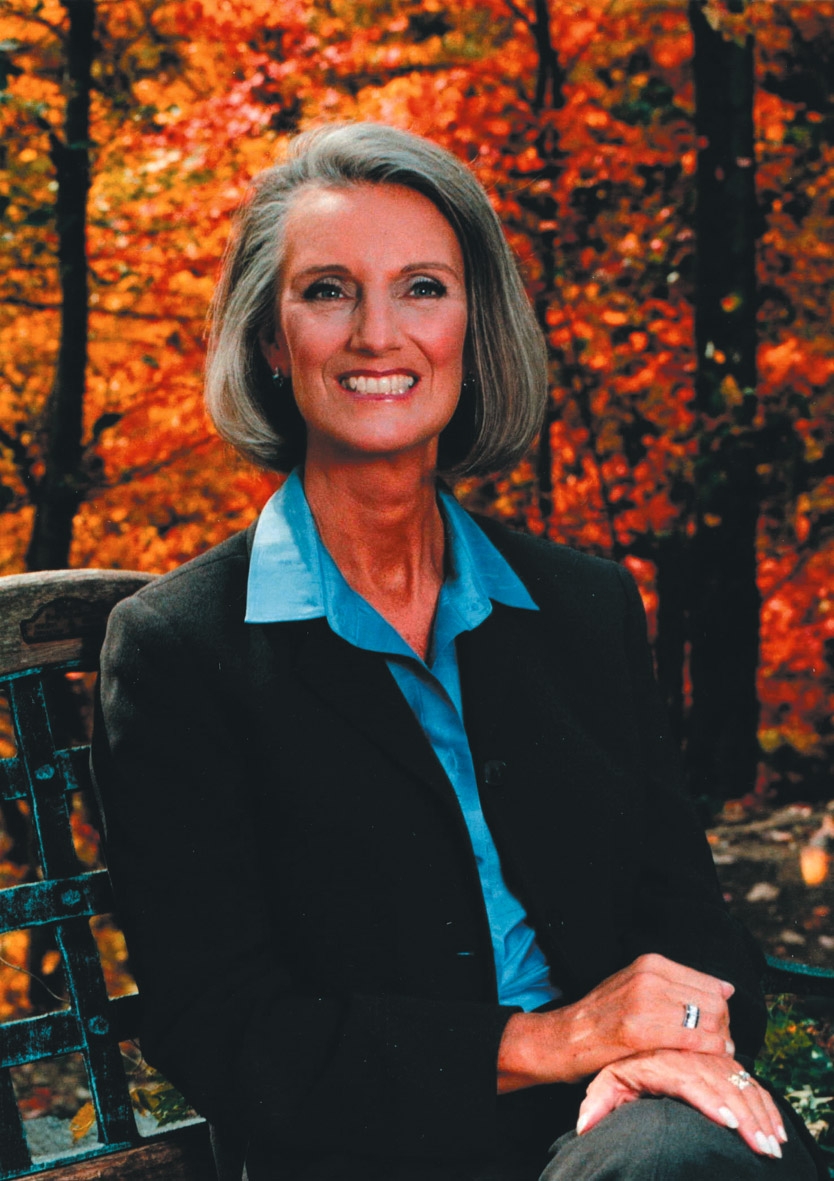
    Anne Graham Lotz High ResThis has made me think of Moses asking to see God’s glory (in Exodus 33). God puts him in the crest of the rock and has his hand on him. And then God removes his hand. So in a very hard place, Moses feels abandoned. And then God passes by, but Moses only sees the backside of it.

    God has put me in a hard place, and at times I don’t feel his presence at all, but I can look back on yesterday, or last week, or the hospitalization – the two months Danny was in hospital and rehabilitation – and I can see how God has brought us the right doctors and nurses, and how he’s taught me so much. Like Moses I see God’s character and his faithfulness; his goodness and strength. Faith doesn’t go on feelings; faith is rooted in the word of God.

    I didn’t intend to write Wounded by God’s People so personally. When I finished The Magnificent Obsession, which is my book on Abraham, the story of Hagar stayed with me. And so I went back and did a Bible study on it, and felt impressed that God wanted me to write on Hagar. I ended up taking four years to write it, going deeper and deeper in my understanding not only of being wounded but being a wounder.

    While I was writing, I was deeply wounded. I waited for about two months to do an act of kindness, because I was so stunned by the wounding. But God clearly popped something very precious into my mind that I could do for her. About a month later I received a perfunctory note on her business letterhead, in which she barely thanked me. But I knew that my act had set me free – I can still be surprised at what she did, but the pain is gone and I live in my forgiveness.

    If you don’t deal with your sin, then you cover it up; you keep blaming; you build a wall. And that’s something I’ve seen since I’ve written Wounded: very few people have the courage to look at themselves and see when it’s their fault. We’re so self-deceived and have such a positive image of ourselves! Some might pray for the Lord to show them their spiritual blindspots, but they do so with one eye squeezed shut while rationalizing their actions.

    I want to learn from people backpedalling and defending themselves, for I want to be wide open and honest before the Lord, so that when I’ve hurt someone I can see it and know it and do my best to set it right.

    If you told me during my year of exile, when I wasn’t attending church, that I had to go back to church, I would have bucked. I wasn’t ready. But when the time was right, my husband and I went back, and it’s been a blessing. There’s a time we need to get out and catch our breath and get a good perspective, but when God sends us back, then we say, “Yes Sir.” Maybe not to the same congregation, but we can be obstinate in our exile if we ignore God’s prompts.

    Pastors and people on staff at church have been devastated by those in their congregations. It’s not just people in the pew. I don’t know what in the world we’re thinking when we treat each other like this – it’s heart-breaking to hear the stories. But I know God can use it. And I know what he’s taught me in the story of Hagar. We can get free of the bitterness, and from being bogged down in the mire of resentment and anger and all those imaginary conversations.

    Wounded UK Cover High ResOne of my friends read Wounded after she caught her husband having an affair. They were working things through in counselling when she asked me whether she had to offer the woman forgiveness. I said no, there are boundaries. You can forgive him – and living with a man who betrayed her, her days are filled with acts of kindness – but not to approach the woman, for she hadn’t acknowledged her wickedness and was still trying to seduce the husband.

    Jesus offers us forgiveness of every and any sin, but we have to confess our sins, saying the same thing about them that he does – we have to be brutally honest. Then we’re forgiven of all that sin and unrighteousness. But there’s only so much he can do when we’re rationalizing and defending. You’re not going to have an intimate relationship with a holy God as long as you’re excusing your sin. The same thing is true with another person.

    Women speaking and praying in church? I make an application from John 20, John and Peter at the empty tomb. You can hear their sandals running out of the garden when Mary Magdalene comes along. She’s weeping and the angel says that Jesus isn’t here, and then she sees a gardener who calls her by name. And it’s Jesus. But Jesus was there all along; he withheld himself from Simon and John, revealing himself first to Mary and then the other women. He instructs Mary to tell the disciples what she’s seen and heard. He wants the women to share their testimony, their encounter with the risen Christ, giving his disciples the instructions to meet him in Galilee. His disciples are a group of men behind locked doors in Jerusalem. Mary goes right back to tell them, but they think she’s a hysterical woman. So they postpone God’s blessing in their lives.

    Jesus makes a poignant lesson that the church seems to have missed – that women can be disciples; that he reveals himself to them in fresh and significant ways; that he himself commissions them to share not only their testimony but also his word. But we have to be careful to let God give us a ministry and not try to make one for ourselves because we want the position or prestige.

    Books I love? Joel Rosenberg’s novels. He’s a converted Jew who writes biblical prophecy in novel form and then it comes true! One of his latest is The Damascus Countdown. He teaches us about the Shiites and Sunnis and the Muslim culture. Another is Tom Doyle, Dreams and Visions. Every chapter tells a different story of a Muslim to whom Jesus just shows up. It seems to be the untold story of tremendous revival in the Middle East. Another is The Forgotten Blessing by a Jewish rabbi who is now a believer, Aaron Fruh, about the blessing that fathers give their children and wives. I know people who put it into practice and what a difference it makes in the home. And I love Davis Bunn’s novels. One of the best was Lion of Babylon. I wrote him to thank him for it, and he wrote back and said, “Anne, did you see it was dedicated to you?” I said no! I had seen an early manuscript, so I bought a copy and there it was! I was very moved by that.

    My interview with the well-known Bible teacher appeared first in Woman Alive in April. With thanks to my friends there for permission to include on my blog.
  • Review – memoirs that chronicle the passions of life

    A good book transports us to another land. Although I love fiction, I’m increasingly moved by the power of narrative nonfiction, especially biography. Through the eyes of another, we experience lands far away, without ever leaving our homes. In so doing, we learn about political and social events that may have passed us by. For instance, Chai Ling’s Heart for Freedom opened to me China around the time of Tiananmen Square.

    0849947561So I offer you a review of two real-life accounts that will enlarge your borders. One that moved me profoundly is Where the Wind Leads, a gripping narrative of a Chinese family living in Vietnam who were forced to leave their business and their home to escape communist oppression. They commissioned an old boat and sought refuge with nearly 300 others, but neighboring countries squawked under the weight of so-called compassion fatigue. The refugees ended up imprisoned on a beach in Malaysia, forced to march from one part of the beach to another, until they were deposited into derelict fishing boats, taken to the middle of the ocean, and left to die.

    The author is Vinh Chung, one of the family’s sons, who recounts the many miracles that eventually brought the family to safety and a new home in Arkansas. He’s a sensitive narrator who explains Asian customs and traditions while detailing his family’s coming to faith in the Creator God, as revealed through Jesus. Through his story he shows the value of family, community, elders, education, perseverance, hope and faith. He also reveals the ugly side of discrimination and racism. One to read, ponder and pass to friends and family.

    9780745956039The other book is Greg Valerio’s Making Trouble, how he fought out of poverty and meaninglessness while creating the first line of fairly traded jewellery in the UK. His story of exposing corruption reveals the dark side of capitalism, when profits are prized more than people or the environment. It’s a David-and-Goliath story of one who couldn’t close his mouth against the wrongs he witnessed – not only the oppression of the workers, but the rape of the land. His model of creating a pure line of jewellery – with completely traceable gold and diamonds – shows how one man with perseverance and vision can effect change.

    The book recounts an important movement for social change, but the narrative slowly lost my attention through the discussions of the unions, trade shows and politics.

    Are you reading memoir? If so, which one, and why?

    Where the Wind Leads: A Refugee Family’s Miraculous Story of Loss, Rescue, and Redemption, Vinh Chung (Thomas Nelson, ISBN 978-0849947561)

    Making Trouble: Fighting for Fair Trade Jewellery, Greg Valerio (Lion, ISBN 978-0745956033)


  • Review – memoir of life in Afghanistan

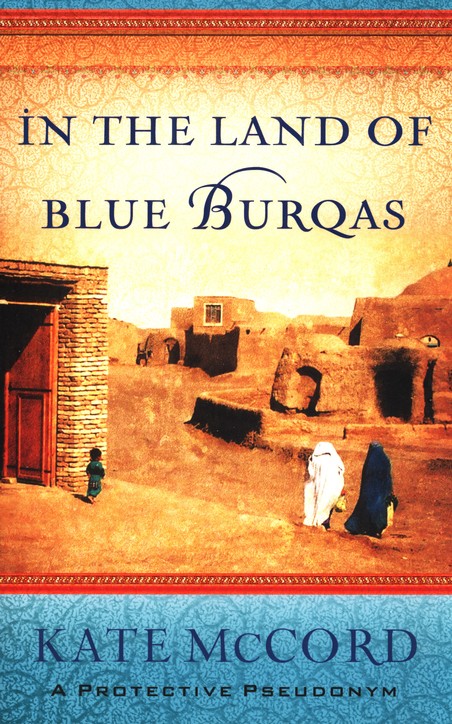
    408143_1_ftcI came across this gripping memoir through a review in the Woman Alive Book Club, and was grateful for the recommendation. In the Land of the Blue Burqas tells the stories of an American woman who spent five years in Afghanistan, working for an NGO with the goal of helping Afghan women. She recounts her experiences in a winsome manner; when reading I felt like she was sharing the stories over a cup of tea – even though she used a pseudonym to protect herself and her friends. I could sense her love and respect for the Afghan people she met.

    What struck me most was the hidden world of Afghanistan, namely the world of women. They live behind walls, closed in. In public they walk silently, not making eye contact with men. Nor would any man enter another family’s aouli (family compound) unannounced. If he visited, he would be served in an outer courtyard by a young girl or boy; the woman would have been given time to hide inside. But women move freely from one aouli to another, joining in with the lives of their women neighbours and forming a deep sense of community. The author experienced this strong friendship as she sipped their tea and ate the nuts and treats offered.

    Kate McCord found out that for women, the worst day of their life was when they married. Brides would be young – twelve or thirteen – and the marriages arranged. As one woman said, “My husband is a good man; he only hit me a little at first when we married.” But men said their best day was when they marred their first wife (many have more than one). The author learned more about women in Afghanistan than many men knew.

    I also appreciated how strongly she held to her Christian beliefs, sharing them graciously without forcing them on anyone. She learned the local language and sought to find out about Islam. When issues of faith came up, which was nearly every encounter, she sought a creative way of putting things, often by telling a Bible story that would lead to an unexpected ending. It would blow away the hearer’s preconceptions – if they allowed.

    When the security in her town disintegrated, she was forced to leave. She left her home, fruit trees, dog and the friends she had grown to love. But the stories of these beautiful people she will have as a gift forever.

    Jump into the rickshaw and enter this fascinating world.

    In the Land of the Blue Burqas, Kate McCord (Moody, ISBN 978-0802408143)

  • Review of a quirky memoir

    A year or so ago I read nearly twenty books for a feature article in the Christian publishing trade magazine. That’s a lot of reading, even for a self-confessed bibliophile such as me. In the midst of all those words, the ones that stood out to me were those in Dallas and the Spitfire, the story of an unlikely friendship. Why? Because the author’s unique voice came through so clearly. His writing style is easy and engaging, and his footnotes are a fun place where he lets rip with wisecracks and asides. More importantly, the content is encouraging and thought provoking. For me the only negative was the shameless copying of the typeface/artwork of the similar hit book of a few years ago, Same Kind of Different as Me (although I tried to read that book and didn’t get very far, whereas I lapped up this one).

    dallasSFThe main author here is Ted Kluck, a freelance writer in his mid-thirties who lives in Michigan in the States and inhabits a Christian Reformed subculture. He meets Dallas, a young guy in his early twenties who has experienced more of life than many have who are twice his age. But not all of what he’s lived through has brought life. His father introduced him to drinking at the tender age of eight, and he lost his virginity at ten. He became a hardened drug addict, living a precarious life on the edge, fuelled by the desire and need to fund his habit. His actions led him to jail, and then eventually into a Bible-based rehab program. It was here when he first met Dallas.

    Their friendship is that of father to son, mentor to mentoree, friend to friend. Men seem to communicate best shoulder to shoulder, so their shared project of restoring an old European car gives them the excuse to hang out and do life together. Ted helps Dallas in his first year as a Christian as he navigates the strange waters of a fundamentalist Bible college, survives heartbreak over a romantic relationship, and manages to stay clean and off of drugs. Dallas in turn helps Ted, a neophyte when it comes to car restoration, to bring life to the old British Spitfire. And more than just car repair, he brings joy, hope, and the reminder through his changed life that our God is really able to do more than we could ask or imagine.

    A great read. My eyes admittedly glazed over at all the car descriptions and a few of Ted’s sideabout ramblings, but overall the story of the two’s friendship made for compelling and even compulsive reading.

    Dallas and the Spitfire: An Old Car, An Ex-Con and an Unlikely Friendship, Ted Kluck and Dallas Jahncke (Bethany, ISBN 978-0764209611)

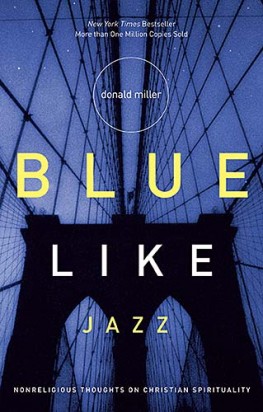
  • Review – Blue Like Jazz

    Here’s one from the archives, inspired by a reader review in the Woman Alive Facebook group. It’s my review in Woman Alive (from 2006!) of a book by a then relatively unknown author. I used to feature a book one month – complete with discussion questions – and then follow it up a few months later with my review and those of some readers. (Thanks to Woman Alive editor Jackie Harris for suggesting changes to the format… what we have now is superior!)

    I’ve always liked Don Miller’s writing; back in 2000 I acquired the UK/Commonwealth rights to one of his first, Prayer and the Art of Volkswagen Maintenance, for HarperCollins UK.

    0785263705In many ways Donald Miller is a typical American bloke. He’s a guy who is looking for love and God in the strains of everyday life. But he’s nontypical in that he shares his thoughts and experiences in his Blue Like Jazz: Nonreligious Thoughts on Christian Spirituality. He’s been called “Anne Lamott with testosterone.”

    The book is a series of linked essays on a variety of topics – from faith, redemption, and grace through to television, romance, money, and worship – that are sometimes quirky, sometimes humorous, sometimes introspective but often insightful. Of the title Miller says, “I never liked jazz music because jazz music doesn’t resolve. But sometimes you have to watch somebody love something before you can love it yourself … I used to not like God because God didn’t resolve. But that was before any of this happened.”

    Join me in exploring life through the lens of Don Miller. Here are some discussion questions for you to ponder or share with your group.

    • What did you think of the book overall? Did it appeal to you? Why or why not?
    • What stood out as you read? Were there images or ideas that lingered with you?
    • What do you think about Don’s view that “the greatest trick of the devil is not to get us into some sort of evil but rather to have us wasting time” (p. 13)?
    • Chapter 2 is all about problems, and basically about original sin – “that we are flawed, that there is something in us that is broken” (p. 17). Do you agree that the problems of the world boil down to “the needy beast of a thing that lives in my chest” (p. 20)?
    • More on the devil: “I think the devil has tricked us into thinking so much of biblical theology is story fit for kids’ (p. 30). Have you ever thought about Noah’s ark not being appropriate for children because of its themes of judgment?
    • Chapter 7 focuses on grace and “the beggar’s kingdom.” Don says how he “could not understand why some people have no trouble accepting the grace of God while others experience immense difficulty” (p. 83). He was one who had trouble. Do you? If so, why? Or why not?
    • Discuss Don’s description of the Grand Canyon at night: “There is something beautiful about a billion stars held steady by a God who knows what He is doing. (They hang there, the stars, like notes on a page of music, free-form verse, silent mysteries swirling in the blue like jazz.)” p. 100.
    • Don realized that “believing in God is as much like falling in love as it is like making a decision. Love is both something that happens to you and something you decide upon” p. 104. Do you agree or disagree?
    • Discuss a simple truth about relationships: “Nobody will listen to you unless they sense that you like them” (p. 220).

    My View

    I loved one of Don Miller’s books in the past, and when I started reading Blue Like Jazz I couldn’t put it down. Several weeks later I read the book in full, but by the time I was done my interest had waned. While there are instances of brilliance – I loved the thought of seeing the lines on Jesus’ face, for instance – there seems to be a lot of navel gazing too. I started to get a bit annoyed with what seems like Don’s preoccupation with himself. An editor could have cut a third of these meanderings and made a fabulous book.

    Still, there were memorable flashes of light. My heart warmed to hear of Penny’s conversion, as she was loved into the kingdom of God by Nadine. And I could certainly relate to Don’s experience of community life. As I read of his experiences in Graceland, my ten years of living with roommates in Washington, DC, came back with stark clarity. As with Don, living with others was a way for God to highlight my issues of selfishness and pride. It wasn’t always fun, but it was fruitful.

    Blue Like Jazz, Donald Miller, Nelson, ISBN 0785263705, 242 pages


  • Review: Alister McGrath’s biography of CS Lewis

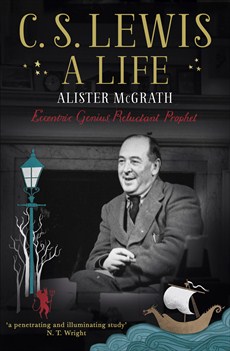
    isbn9781444745528-detailLike many American Christians, I’ve long been fascinated by the writings of CS Lewis. I’ve visited the Wade Collection at Wheaton College in Chicago to see the famous wardrobe and Lewis’s writing desk. I’ve enjoyed his haunts in Oxford such as the Trout and the “Bird and Baby” (the Eagle and Child pub). I even worked for his publisher for a time (Fount, part of HarperCollins). But only after reading Alister McGrath’s magisterial biography do I now feel I know the man behind the books. McGrath has produced a highly readable, engaging account of Lewis’s life as focused on his writings and what shaped them. I recommend it highly.

    In writing the biography, published for the fiftieth anniversary of Lewis’s death, McGrath read everything he could find penned by Lewis. McGrath then situates the various pieces of Lewis’s writing in the overall historical context as well as the goings-on in Lewis’s life. I found this grand sweep fascinating; it helped me understand why, for instance, Lewis wrote the Space Trilogy. Or why he first engaged in apologetics during the war, but afterward turned to more imaginative writings (including the Chronicles of Narnia and Till We Have Faces).

    McGrath uncovered some new revelations, one of which might be shocking, namely the affair between Lewis and the mother of his mate who died in the trenches in France. He wasn’t yet a Christian when he moved in with her, yet he stayed living in her family home (she was estranged with her husband) after his conversion. It seems an odd domestic arrangement, and one that he kept secret from his father.

    I was intrigued to learn how throughout his life Lewis portioned off parts of his emotions and memories. He never called up memories of World War I, saying that concerning the war he had a clear line of demarcation that he didn’t cross – maybe following a partitioning of his emotions when his mother died when he was a boy? Or how he never identified as an Irish writer. Although the scenery and beauty of his native land informed his writing, it wasn’t marked by nationalism.

    DSCN7519
    Bust of Lewis and his writing desk at the Marion E. Wade Center at Wheaton College

    And I found the whole story of Joy Davidman fascinating. An American, she moved to the UK with her sons to be near him. When her visa expired, she persuaded Lewis to marry her in a civil ceremony. He did, not thinking that the marriage was anything more than procedural. But she moved into the Kilns and then when they found out that she had terminal cancer, Lewis fell in love with her.

    I could go on and on! If you only read one or two books this year, choose this one. From it I’m inspired to go back and read and reread Lewis’s books.

    C.S. Lewis: A Life by Alister McGrath (Hodder, ISBN 978-1444745528)

  • Review of a stunning memoir

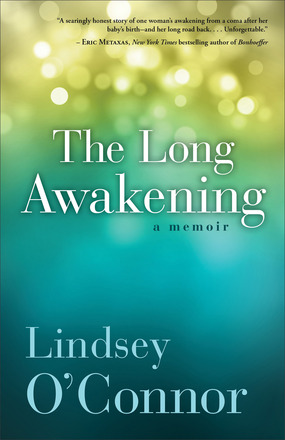
    The Long Awakening

    9781441243041

    Imagine waking up after 47 days in a coma, not realizing that the summer had passed or that you’d had a baby. This is what happened to Lindsey O’Connor, a mother of four who gave birth to her fifth baby – a planned later-in-life pregnancy – then suddenly crashed and nearly bled out, her brain deprived of life-giving oxygen. Her doctors induced a coma to allow her brain time and space to heal, but the extent of damage she suffered had no one knew. The Long Awakening is the gripping and moving story of her slow emergence out of the space between life and death as she hovered just below the surface, longing to connect but unable to do so.

    But a miracle occurred, and though her family thought one tortuous night that she would die, she slowly came back to life. But she, asleep, missed the miracle. The thousands who prayed; the hundreds who brought around meals and cared for children and lent support: they witnessed it. But she, its focus, felt outside. Yet she knew her awakening was inexplicable and miraculous, so how could she even voice these feelings?

    And who was she now, having been so deconditioned that she couldn’t even stand up on her tip toes or breathe on her own? How could she care for her children? Love her husband? Bond with her baby, whose first bath and first feeds she missed? Who was she in terms of her career? As she mused, “I used to be a writer… Now I cannot even read. Those days are over, I thought, and lay thinking of who’d I been, wondering who I was now.”

    The road to recovery has been slow and long, but Lindsey has determined to “play the hand we’re dealt.” She writes lyrically, raising profound issues of identity, family and community, faith, mother/child bonding, and end-of-life medical ethics. Using her training in crafting journalistic narrative, she weaves together the pieces of those 47 days in the coma and the 107 days in hospital. I only wish she would have been more forthcoming with her faith; strikingly absent is the present of Jesus (but not God), although she calls herself “one who loves God fiercely.” Perhaps being a mainstream journalist in America made her reticent to enter the fray of faith-related discussions, which Stateside can turn tribal.

    One to read and ponder, especially in a book-club setting, for the issues the book raises are manifold. A reminder to us all to treasure the moments we’re given.

    (published by Revell, ISBN 978-0800723170)

  • Cause for wonder – review of two books by David Adam

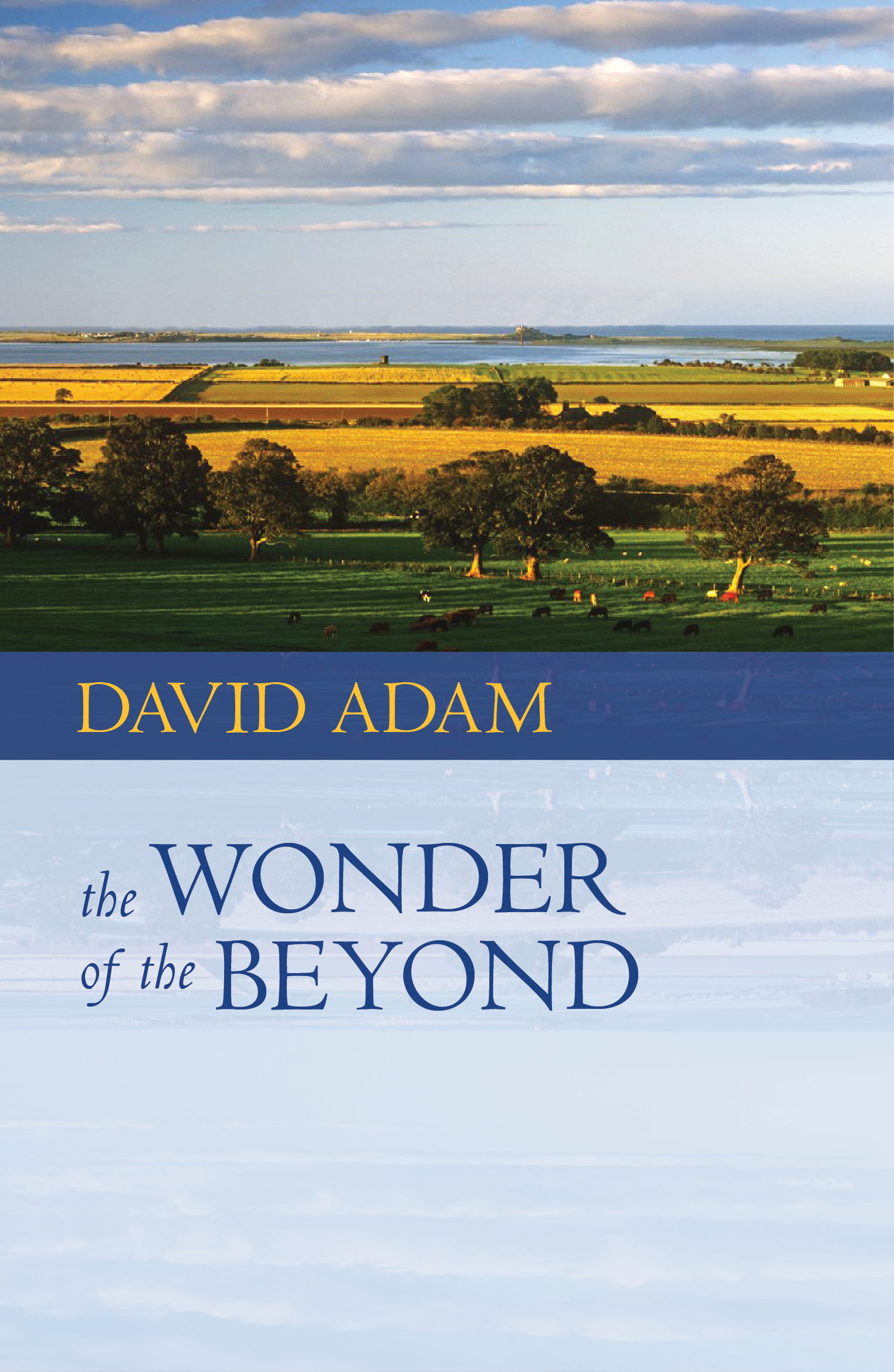
    wonder of the beyond FCRecently I became submerged in the writings of David Adam. A Church of England clergyman, he was for many years vicar on the Holy Island of Lindisfarne. Inspired by the Celtic people of Britain and Ireland, he writes poems, prayers, and reflections on the triune God who is with us.

    One of the things that struck me most about his writing is his emphasis on wonder. As we open our eyes to creation and those around us, we live in the moment and learn to experience God’s presence. For as he says in The Wonder of the Beyond, “God is here, God is with us, and above all, God is.” And yet, so often we find ourselves preoccupied, caught up in this or that as we flit from one thing to another – to our detriment. The result, as he says in The Path of Life, affects the whole of our lives: “A short attention span makes for shallow relationships, for poor perception and reception. This is as true with God as it is with each other.”

    Path of LightThe two books I’ve chosen are a good place to start with his writings. In The Wonder of the Beyond he tells stories from his life, from working in a coal mine at the age of fifteen, to his decision to become a vicar, to his whirlwind romance with this wife (they met and married within a week). But he recounts his stories for the purpose of waking up the reader to “a wonder-full world” – to the world that hosts the glory of God in our midst. He challenges us to really see the people and objects of creation in front of us – to give them our undivided attention. Then through creation and others we will see God.

    The Path of Life is a series of meditations on prayers from the Celtic tradition, and is thus helpful in personal and corporate prayer. Recently I used his meditations on Rune Before Prayer (rune meaning poem) during a retreat as a focusing prayer. I love how he meditates on each member of the Trinity and their unique attributes, bringing them alive to us.

    In closing, a quotation from The Path of Life to ponder: “If you are insensitive to the things that are around you, how can you hope to be sensitive to the unseen God?”

    The Wonder of the Beyond (SPCK, ISBN 978-0281063307)
    The Path of Life (SPCK, ISBN 978-0281060702)