Category: Nonfiction book reviews

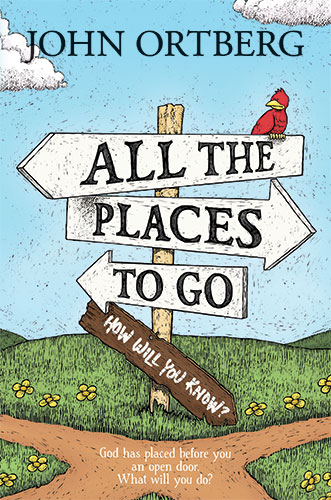
  • Review: All the Places to Go by John Ortberg

    I haven’t posted a book review for a long time. Here’s one about a book by a popular author, John Ortberg, exploring doors. Yes, doors!

    God’s wisdom never ends. We proclaim this to be true, but I realized it afresh when reading a book by a Christian who has submerged himself in the Bible for decades. I understood again how much I don’t know – and how much I have yet to learn and understand.

    Here John Ortberg explores doors. Now I knew that doors appeared in Scripture, such as that which Holman Hunt pictured in his famous painting on Revelation 3:20, “I stand at the door and knock.” Or Jesus being the door for the sheep in John 10:7. But I loved learning the layers of meaning the author uncovers in such a simple symbol – doors that open for us, doors that close, how we approach doors, do we fear that doors will remain slammed shut, do we run from doors.

    But Orberg isn’t concerned so much about the particular doors, rather the people we become as we approach them, and our relationship with the Master Door Opener/Closer. He sees life as a series of choices that impact our characters – will we yell at our (grand)kids/spouse/friends or humble ourselves and put their needs first? What happens to our hearts when God opens a door but we follow in Jonah’s footsteps and run a mile? What about when we, like Abraham, venture into the unknown? Do we pretend our husband is our brother, as he did with Sarah? Or do we grow in our character and follow God in obedience with faith, even when the Lord asks us to make our biggest sacrifice ever (as he did with Abraham and Isaac)?

    I found All the Places to Go engaging and thought-provoking, and appreciated understanding doors in a new way. It’s a book that sparks ideas – it makes me want to delve into the Bible with new questions. But although John Ortberg’s books can be funny or provocative, his humour can jar people at times, and his style might not be yours. Some of his stories and asides I would have cut with my editor’s red pen – but you might resonate with just those passages and diversions.

    Though mentors weren’t a main emphasis of his book, I found their impact in his life to be moving and encouraging (for instance, he learned about the levels of meaning of the door from his Greek professor). As modern people, we can let our goals or dreams of success waylay us from our relationships, but life is about people and friendships and doing the journey together. Whether the door is open or shut.

    All the Places to Go … How Will You Know?: God Has Placed before You an Open Door. What Will You Do? John Ortberg (Tyndale, ISBN 978-1414379005)

  • Review of Embracing the Body by Tara Owens

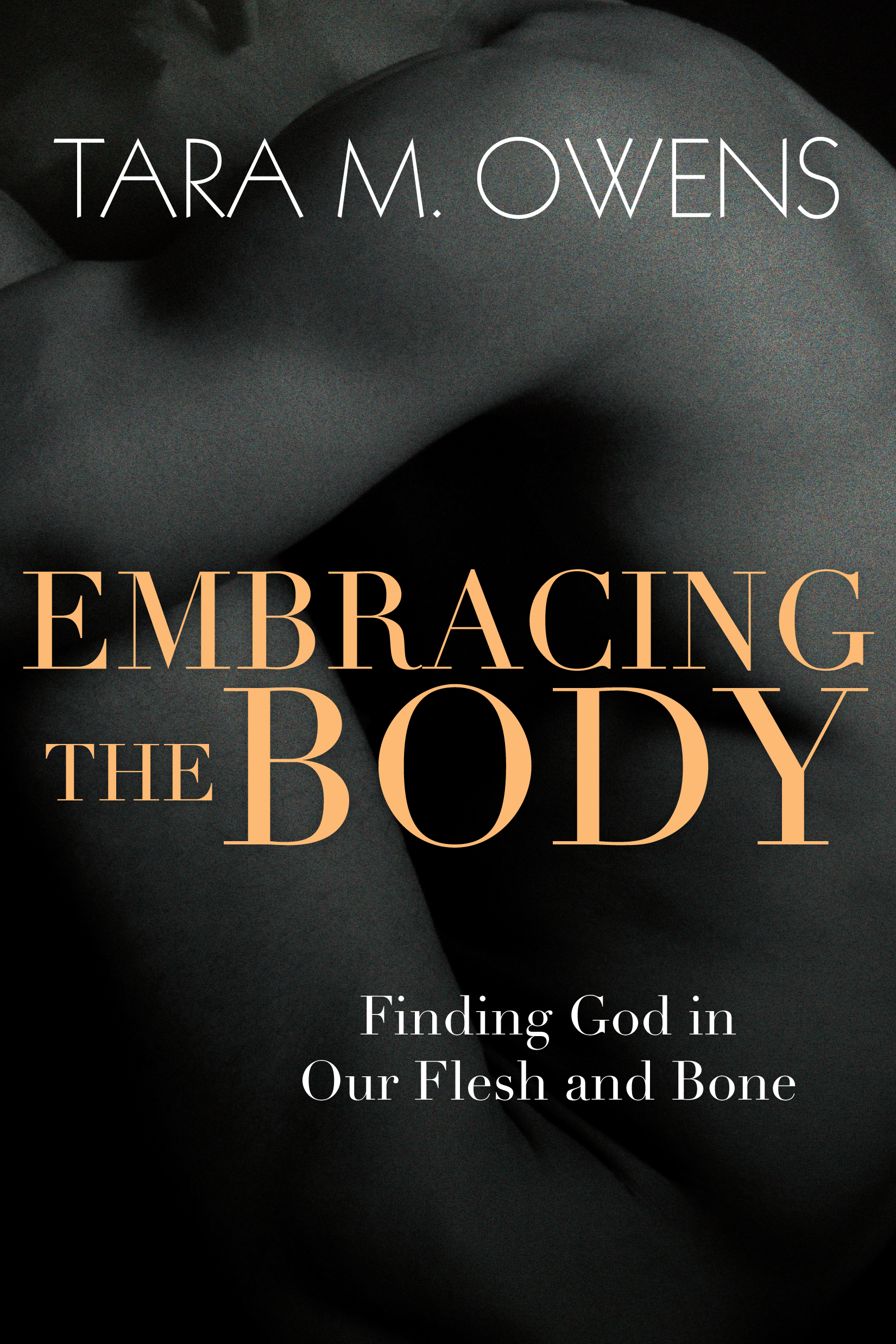
    9780830835935The clock read 3.15 am. I swallowed, tasting the tinny residue left from the antibiotics I was taking for a lingering chest infection. My stomach rumbled. My mind refused to switch off as I mulled over future events. After a half-hour of tossing, I moved to the guest room, not wanting to disturb my husband. As I picked up Embracing the Body with its exploration of God in our bodies, I thought: “This is an enacted parable. Here I am trying to sleep, knowing tomorrow will be hard as I’ll be tired and cranky, and yet I haven’t tuned into what my wakeful body is telling me. I’m reading about embracing our bodies and yet my body is keeping me awake.”

    Tara Owens has given us a lasting gift through her book, which was many years in the percolating and making. Indeed, hers is a book I didn’t know we needed, and yet it should be required reading for the Body of Christ. For we are all blood and sinew; fat and muscle; synapses and fluid and flesh. But in the church, we so often gloss over our bodies, out of fear or complacency. We elevate the spiritual to our detriment, believing that because of the fall of humanity, now our bodies are irrevocably fallen too.

    Tara in Embracing the Body gently says no, pointing to a healthier way. A spiritual director, she calls us to discern “which bodily experiences lead us toward God and which lead us away” (p.89). Making a list of do’s and dont’s might seem easier in the face of the power of our appetites and desires, but such rules can cut us off from grace and healing. Such as the exercise Tara led in which the participants communicated about their day only through their hands, and through touching the hands of the one with whom they were paired. One woman grew more and more angry and uncomfortable, memories of the sexual abuse she’d suffered popping to the surface. She completed the exercise but burst with rage against Tara. Only after a week of wrestling with God and praying with her husband did she understand that she had closed herself off to any and all touch outside of marriage, whether hugs of greeting or a friend’s hand on her shoulder. Though the exercise had been painful, she realized afterward that God allowed it to break her rigid categories and to move into another stage of healing.

    Do read Embracing the Body, but take your time to read it slowly; even better would be to read it with a group of friends, engaging with the fine body/spirit exercises at the end of each chapter. One to savor; one to be changed by.

    Embracing the Body: Finding God in our Flesh and Bone, Tara M Owens (IVP, ISBN 978-0830835935). This review originally appeared in the Woman Alive Book Club. 

  • Review – An Advent book and Christmas novella

    Reviews of two books for this season, as published last year in the Woman Alive book club.

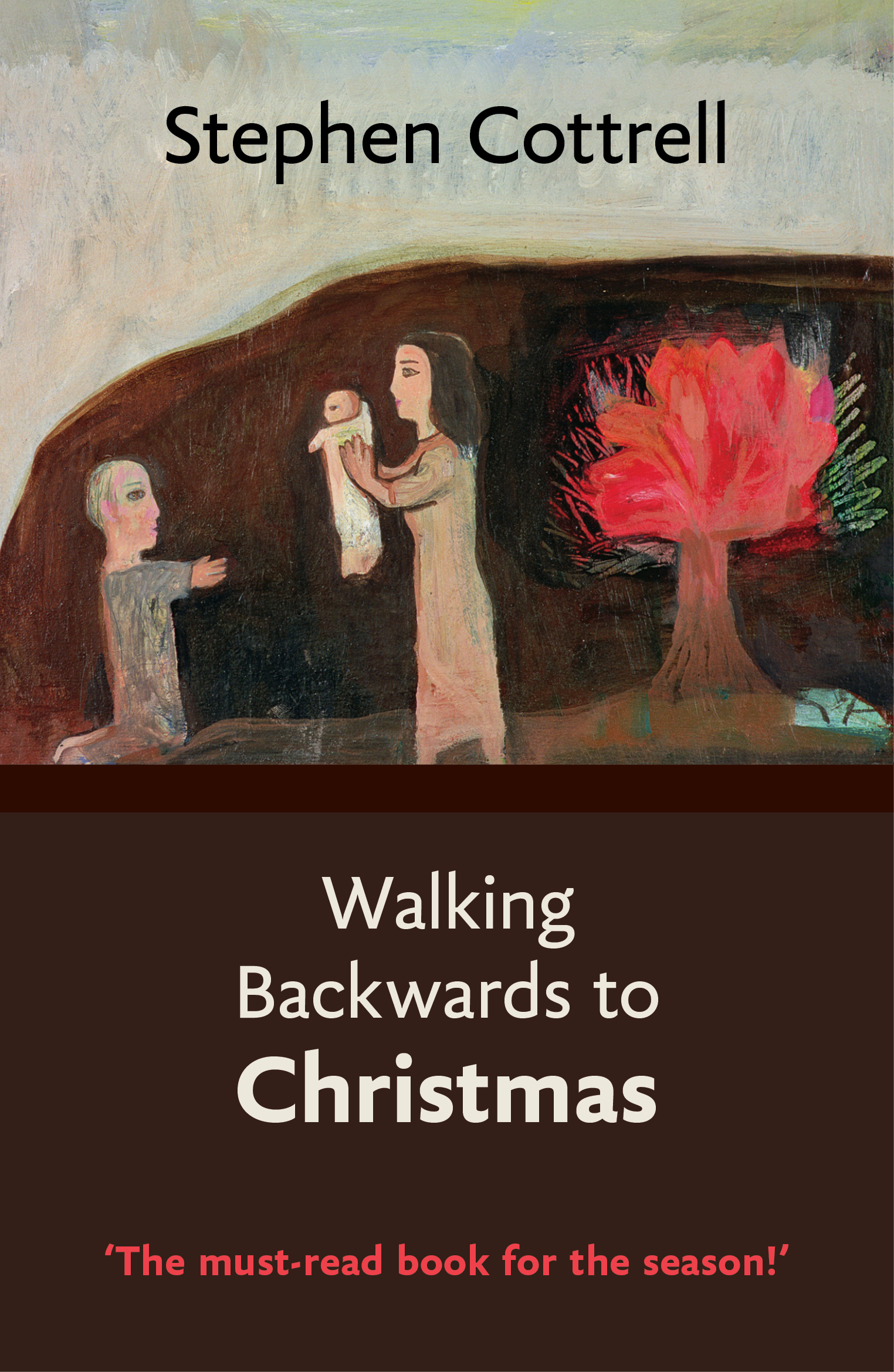
    walking backwards to christmas FCI wasn’t sure I’d like Walking Backwards to Christmas when I picked it up. I’ve read a fair number of first-person narratives from biblical characters over the past few years as this genre has gained in popularity. Sometimes the books work; sometimes, not so much. But in the hands of Bishop Stephen Cottrell, these narratives sing. I highly recommend reading this during Advent or the Christmas season.

    He moves through the Christmas story backwards, as it were, starting with Anna in the temple, moving to Rachel, a mother of one of the slaughtered first-born sons, then to (among others) Herod, the innkeeper’s wife, Joseph, Elizabeth, and Mary, and finally to two prominent Old Testament figures, Isaiah and Moses. I found their stories moving and thought-provoking, impressed that the author imagined such different characters and voices in each chapter.

    What’s refreshing is that he addresses the dark components of the story; for instance, the chapter by Rachel is piercing in her mother’s grief. Or Anna’s decades-long loneliness as a widow, which slowly is eclipsed by her love of God. Or the power-mongering of Herod; or the strife between Joseph and Mary over the questionable pregnancy. All stories worth considering, but not often addressed in seeker-friendly carol or candelight services.

    higgs wreathPerhaps this season you’d like to escape with a Christmas novella, cozied up with some mulled hot liquid, snuggled by the fire. If so, I’d recommend Liz Curtis Higgs’ A Wreath of Snow. She’s one of the few Americans who can pull off writing novels set in the UK; this one showcases Scotland in Victorian times. (Her secret? Research like crazy. When I interviewed her here in 2011, she said she had 800 books just about Scotland!)

    Margaret Campbell is a young woman with a painful history. She flees the family home on Christmas Eve, determined to go back to her flat in Edinburgh. But her train journey is unexpectedly halted, including a surprising meeting with the gentleman seated across the aisle. The story has romance, but it doesn’t shy away from hard topics such as bitterness, grudges, and the need for forgiveness. I especially enjoyed how the prompts of the Holy Spirit were portrayed – not too “out there,” and clearly as something that the person could heed or ignore.

    Two to make time for in the busyness of Advent and Christmas, lest we lose the true meaning of the season.

    Walking Backwards to Christmas, Stephen Cottrell (SPCK, ISBN 978-0281071470)

    A Wreath of Snow, Liz Curtis Higgs (WaterBrook Multnomah, ISBN 978-1400072170)

  • Review: How to Be an Alien by George Mikes

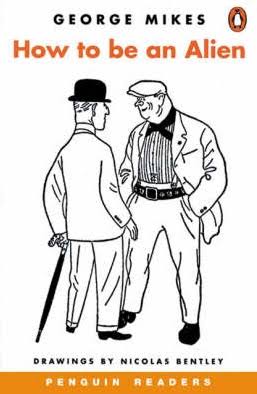
    imagesAt the end of an introduction to spirituality class at Heythrop College, one of my new friends slid me this little volume – a book published in 1946 which immediately captured my imagination, not least for the story that she recounted as she gave it to me. She said:

    My German grandfather was a career German naval engineering officer, sunk by the British in the First World War, fished out of the Med and bunged in a rather uncomfortable camp in the desert outside Alexandria for the rest of the war. At the end of the Second World War he ended up in the bag again but by this time he was an admiral so was despatched to a stately home in Cumbria which was the destination for high ranking officers. If they gave their word that they would not escape that was accepted, so they were free to roam around the fells all day and return to a good supper in congenial surroundings in the evening. I think only one broke their word, featured, I believe, in the film “The One that Got Away”.

    Meanwhile in Germany, British soldiers had commandeered the family home and Mum and her sisters had to move in with family elsewhere. The soldiers were always charming and friendly to the girls though. The upshot was that my grandfather believed that the British were an honourable people so at the end of the war when Germany was destroyed, most men were dead and my grandmother was going shopping with a wheelbarrow to carry all the inflated money, my mother set off to England to work as an au pair. Only one person was ever unkind to her as a German – a nurse whose fiancé was killed – and someone gave her How to Be an Alien to help her understand life over here. It obviously worked – she trained as a nurse at St Thomas’, then became a district midwife on a bike delivering babies in Surrey, then married my father and has lived here ever since.

    I sat on the Tube home while galloping through How to Be an Alien and thinking of this young woman, new to the UK and living in a completely changed world while knowing she’d need to make this country her home. It made for poignant reading.

    Of course, it being a humorous book, I wasn’t sure how much of the preface to the 24th impression was irony (not something I am known to grasp) and how serious the author was being as he rued the success of this book. He says:

    This was to be a book of defiance… [I was] going to tell the English where to get off… I thought I was brave and outspoken and expected either to go unnoticed or to face a storm. But no storm came… all they said, was: ‘quite amusing’ (p.8).

    So much of How to Be an Alien I could relate to. His chapter, “Introduction,” is not an introduction to the book but includes this observation: “The aim of introduction is to conceal a person’s identity.” Ah yes, the art of not giving one’s name, as I observe in my chapter “What’s in a Name” in Finding Myself in Britain. We both each devote a chapter to the weather – how can you not, this being Britain – and I should observe his instruction: “You must never contradict anybody when discussing the weather” (p. 22). Indeed.

    teacupI unwittingly followed his lead in writing a chapter about tea, but I wasn’t so rude in my opening as he is: “The trouble with tea is that originally it was quite a good drink” (p. 26). He has many instructions for how to receive tea magnanimously, even at 5am.

    In sum, a lovely little volume, some of which seems quaint after all of these years, but much of which still rings true. And how wonderful to have been given it by a daughter of a foreigner-turned-friend.

    How to Be an Alien, George Mikes, Penguin, ISBN 9780140025149

  • Review and Discussion Questions – Adrian Plass’s Jesus: Safe, Tender, Extreme

    A flash-back review from the early days of the Woman Alive book club. I love Adrian Plass’s writings; they don’t lose their humor or punch.
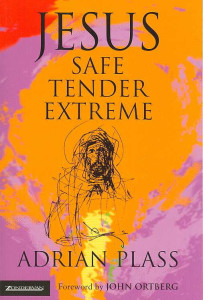
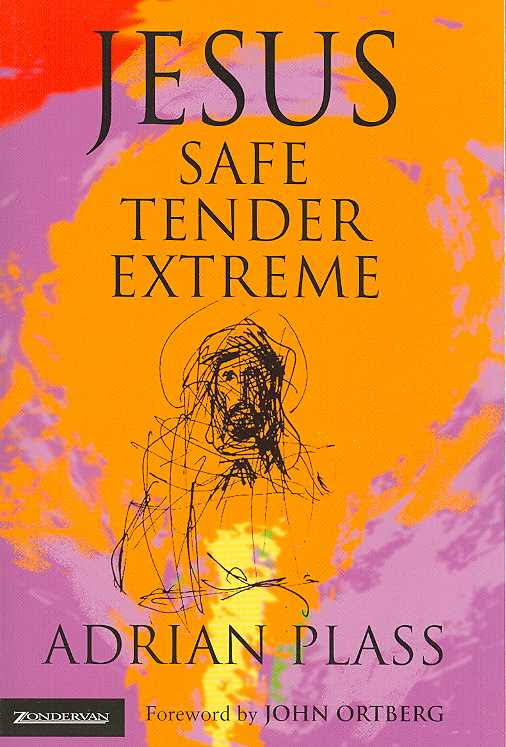
    imagesAdrian Plass is a Christian speaker and writer who has been loved over the years for his humor and honesty. Telling stories of personal vulnerability seems to be his job. As he says in the introduction to Jesus – Safe, Tender, Extreme, “I am not a teacher in any orthodox sense. I am not a theologian. I am not a preacher; I cannot preach to save my life. I am simply allowed to be a man with a broom, sweeping away the rubbish that prevents others from passing further in and further up, and I tend to do this by talking about what Jesus does and doesn’t do in my life. He is safe, he is tender and he is extreme. This book is soaked with those things.”

    Some who have read this book have commented that it reveals a more mature and wise writer. In it he is profound and deep, but also laugh-out-loud funny. You may not agree with him about everything – like his views on healing or the Bible – but you won’t lack things to consider and discuss if you read it.

    • Adrian wrote this book in the light of eternity, as his mother-in-law lay dying in the next room. How did this affect you? And how did you react to his description of cancer as a ‘ravening fungoid monster’ (p. 21)?
    • Do you feel so safe in the love of Jesus that you are free from any of the agoraphobia that Adrian speaks of on page 28? Are you able to pop out “to explore what’s going on down the road”? How does Adrian and Bridget’s encounter with the couple at the coffee shop illustrate this concept (pp. 93ff)? And how does this safety allow and even compel us to embrace truth?
    • Adrian says on page 69 that “there is not a single incident in the lives of his followers that [Jesus] does not inhabit and monitor and have ultimate control over, even at those times when darkness and distress are all that we are able to see and feel.” Do you believe this? In your times of darkness, have you found this to be true?
    • In several places in the book, and especially throughout chapter 5, Adrian speaks of God “defaulting to compassion” and us “defaulting to praise” (also p. 44 and 73). Do you really believe that at the heart of God lies compassion and tenderness? If not, why? Could you move in that direction? How would your life be different if you did?
    • 6bca9efe0a8dab8c932273b9cf47b7fdIn the story “Closed Wounds,” Adrian in his dialogue with God hears that “the scar is a sign of health” (p. 178). Do you agree with what seems to be a contradiction in terms? Why or why not?
    • On page 194 Adrian says that “safety and extreme obedience overlap, and the place where they come together is in the concept of ultimate trust in Jesus, even in the midst of apparent failure.” He goes on to talk about how Western Christians fall apart when “God lets them down.” What did you think of the questions Adrian wanted to ask Janet on pp. 197-98? Do you agree or disagree with his conclusions? How have you reacted to God in the tough times of your life?
    • Some of the extreme encounters Adrian recounts are filled with the everyday stuff of life, like waiting at the supermarket queue (pp. 239ff). Did this surprise you? When have you experienced the thrill of extreme obedience amid your daily life?


    My View

    Okay, I have a confession to make. I was Adrian’s editor for many years, and indeed was his editor for this book. So I can’t confess to any objectivity. Quite simply, I think the book is wonderful and profound and funny and moving.

    When the manuscript first crossed my desk I wasn’t sure about the inclusion of the stories. They weren’t what we were expecting, and I didn’t know how they would fit with the prose. But as I reread the book for this column, I was most profoundly touched by the stories. I hooted at the thought of Adrian collapsing the piece of non-furniture at Blands Warehouse, and was so glad that he stayed and confessed. When he told of his train ride with the tipsy blokes who wanted to talk about Jesus, I wondered what I would have done. And I felt sad about him not telling Dorothy about Jesus, but could relate to that strange part of ourselves that makes such a rash decision and later regrets it. And so on.

    One of Adrian’s points that has stuck with me is that God defaults to compassion; this is God’s nature and there is no other. Do we – do I – really live like I believe this? Or do I put a false veneer over God? And in my life, can I follow Jesus and too default to compassion – instead of pride, irritation or selfishness? Ask my husband. Some days yes, some days no!


    Views of Woman Alive Book Club readers

    cfcffa919dc808e91bbb463aaec20fd5I decided to read Jesus – Safe, Tender, Extreme by Adrian Plass as I had read short articles by him but had never read any of his books. The experience for me has been very profound. I felt from the moment that I bought the book that I should start reading it straight away. I had been going through a low time in my spiritual life to the point that I was questioning whether I actually had any real faith. I believe God has used this book to bring me back to Him and to confront me with His deep and enduring love as shown in His son Jesus. I found it difficult to put the book down and felt it was being used to bring me back to the assurance that Jesus truly cares about each one of us and loves us, warts and all. Sometimes I had tears of laughter rolling down my face and sometimes I had tears of joy and relief as the reality of Jesus’ love overwhelmed me. I felt I must write to say thank you for recommending this book as it has definitely been used by God to inspire me and give me confidence that Jesus will always be with me no matter what the situation may be. -Jo Richards, Enfield, Middlesex

    I found the book very interesting. One can agree with cancer as a ravenous fungoid monster, but cures are being found and lives extended. I think I feel safe in the love of Jesus, most of the time. Problems do test it. That’s what it’s all about. God’s word sets us free from sin and worry. The author deals with doubt and abandonment, something everyone feels at some time. -Muriel Moore, Turnditch, Derbyshire

    Jesus – Safe, Tender, Extreme by Adrian Plass (Zondervan, ISBN 0310268990)
     

  • The Best Yes book review

    A review published a year ago in the Woman Alive book club. Still so relevant, and only today I was listening to a Michael Hyatt podcast on achieving more by doing less…

    1400205859Living a so-called portfolio lifestyle affords me variety. One day I might search out the next read for our book club while the next I’ll craft some Bible reading notes. But with these competing deadlines, for many years I didn’t tackle the One Big Thing I wanted to do for years – write my first book (but thank you, Lord, that book-baby #1, Finding Myself in Britain, is now out!). When I bemoaned this unpublished state to a mentor, he recommended that I read Essentialism: The Disciplined Pursuit of Less by Greg McKeown. I duly ordered it, but in the meantime came across The Best Yes, on the same topic but written by a woman for women.

    Lysa Terkeurst knows that women are busy, with many competing demands for their time: paid employment, volunteer work, care for children, studies, church work, and so on. We have a myriad of opportunities to make a difference, but at times we don’t feel qualified and so shrink back. Other times we say “yes” to please others, not wanting to let them down or seeking their approval. Or we take on so many projects and activities because we just don’t know how to say “no.”

    Why do we say yes, and why not? How can we evaluate between two good opportunities – which one is our so-called “best yes”? How can we say no without disappointing someone? She deals with these questions and more, rooting her writing in a Christian worldview and peppering her points with stories from her life and the Bible.

    In one of her stories she recounts how a close friend – a young woman in her early twenties – asked if she could live with Lysa’s family for a year. Lysa and her husband deliberated for some time, evaluating the pros and cons and seeking God’s wisdom. She shares how they discerned using four categories – how would adding another person to their family would affect them physically, financially, spiritually and emotionally. In the end, having prayerfully considered these categories, they realized they had to turn down their friend’s request. Their no was hard, but opened up the best yes when the friend received an invitation to a far better living arrangement – on the very day Lysa said no.

    Perhaps Lysa’s example about the houseguest spoke to me powerfully because one summer we opened our home to guests every weekend for three months. We got worn out, even though we loved seeing so many friends from far-flung places. We should be a hospitable people, but we also don’t have to accept every request.

    What are you saying yes to, and why? What can you say no to, to free you up for your best yes?

    The Best Yes, Lysa Terkeurst (Nelson, ISBN 978-1400205859)

  • Review: Books for Lent

    Need an idea for a book for Lent? Here’s a review from last year, as published in the Woman Alive book club. Features one of last year’s crop of devotional books, and the Best Lent Book Ever.

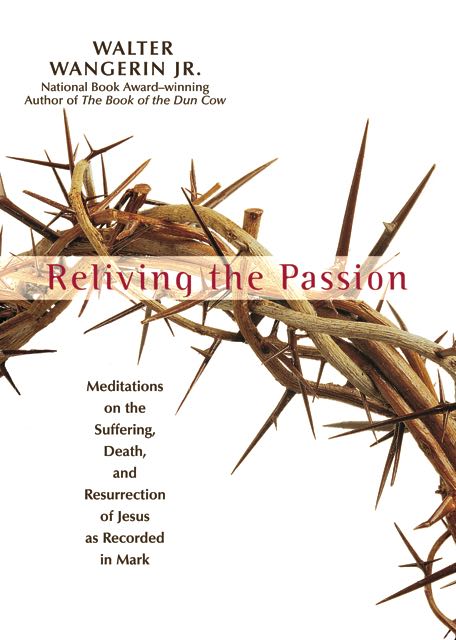
    Wangerin Reliving the PassionReliving the Passion by Walter Wangerin. A master storyteller, the author writes as a participant – sometimes a close bystander, sometimes a character – of the narrative of Jesus’ last days. He transports us to a vivid world of sights and smells that bring alive the story. In so doing he engages not only our heads but our hearts. We’re there at Bethany, seeing the woman pour out her extravagant love for Jesus. We feel Peter’s desolation after his betrayal of Jesus. We experience the blackness and despair of Good Friday. We rejoice at the wonder of the resurrection, the empty tomb.

    If you’ve never tried a Lent book, give this one a go. If you read one every year, prepare to be refreshed and engaged. The publisher could even promise a reader-be-satisfied-or-have-your-money-back guarantee on it – it’s that good and profound and engaging and faith-building.

    9781408188477One that is thought-provoking is this year’s Lent book as commissioned by the Archbishop of Canterbury. Graham Tomlin takes the notion of looking through the cross, similar to how Eastern Orthodox Christians gaze through icons as a window to the real Christ. As we use the cross as our lens, we see how God turns the world’s approach on its head. For instance, thinking about power, the cross “offers us a picture of powerlessness. It is hard to imagine a less powerful figure than someone nailed to a cross” (p. 65). True power, it turns out, is that of self-sacrificial love and service. Of Jesus dying for us.

    The author takes one concept per chapter and explores it in relation to the cross, whether wisdom, suffering, identity, evil, ambition, failure or reconciliation. I thought his chapters on suffering and identity were the strongest, with plenty to chew over. For example in the chapter on suffering: “Once you start to try to love people, then it will hurt” (p. 121). I did wonder if this book was published at speed, however, for I got distracted by errors such as missing punctuation. Still, one to read slowly.

    Looking Through the Cross, Graham Tomlin (Bloomsbury, ISBN 978-1408188477) and Reliving the Passion, Walter Wangerin (Zondervan, ISBN 978- 0310755302)

  • Review: Feeling Empty, Being Filled, The Book of Ruth

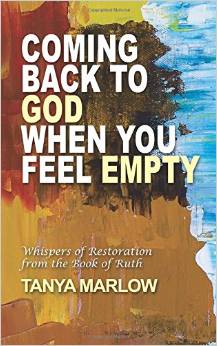
    Unknown“In 2010, I gained a baby, and lost the ability to walk more than twenty metres.” So begins Tanya Marlow in this thought-provoking look at the book of Ruth. She interweaves her story of life with myalgic encephalomyelitis (ME – or chronic fatigue syndrome, as it’s commonly known Stateside) with that of two women from centuries past – Naomi and Ruth.

    When we look at this biblical account, usually we focus on Ruth – the young widow who commits to her mother-in-law, making her home in a foreign land, such the depth of her love. We skip over the bitter old woman, Naomi, who is reeling from loss and is definitely disappointed with God. But Tanya explores – gently – how we mirror Naomi, and yet how God showers us with his love. (And she doesn’t miss out on gleaning encouragements from Ruth’s story either.)

    Coming Back to God When You Feel Empty is a short but satisfying read, currently free when you sign up to Tanya’s website. Read it for the poetic language; read it for the insights this story from old can shine into our lives today; read it for the emphasis on prayer and a God who loves us.

    Coming Back to God When You Feel Empty: Whispers of Restoration from the Book of Ruth by Tanya Marlow (CreateSpace, 2015).

  • Review: One Thousand Gifts

    I reviewed One Thousand Gifts at the end of 2011 in the Woman Alive Book Club that I run. But with it being US Thanksgiving tomorrow, it seems an appropriate time to post my review here. Enjoy – and be thankful.

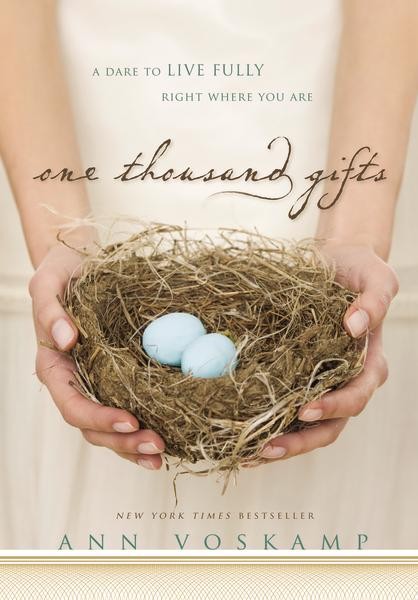
    null.jpg_11684Ann Voskamp seemed to have it all – a loving husband, six strapping children to raise and educate, a farm in which to live the rural dream. But her discontent ran deep: “I look in the mirror, and if I’m fearlessly blunt – what I have, who I am, where I am, how I am, what I’ve got – this simply isn’t enough.” However, she started stepping into a nourishing new way of living through a simple dare emailed to her by a friend: “Can you name a thousand things you love?” And this list-making mother/writer/homeschooler started a new list: “1. Morning shadows across the old floors; 2. Jam piled high on the toast; 3. Cry of blue jay from high in the spruce.” Her life has never been the same.

    Through the act of naming things for which she is thankful, Ann started to see God’s handiwork where before it was hidden. As she says, “This writing it down – it is sort of like … unwrapping love.” Where as previously she felt anxious, weary and tired, now she was feeling joy: “I can hardly believe how it [makes me happy], that running stream of consciousness, river I drink from and I’m quenched in, a surging stream of grace and it’s wild how it sweeps me away.” A new habit is born through the glimpses of graces throughout the day. A new habit that shapes her soul, reorienting it back to God. Moving from clenched hands to open, cupped hands, ready to receive.

    Many friends had recommended Ann’s book before I got a copy. The day it arrived I read the first chapter through a veil of tears, being moved by her account of the death of her toddler sister when she herself was just four. But other books got in the way and several months passed before I read it on holiday in Ireland. The amazing rugged beauty of my surroundings provided a stunning backdrop for the beauty of Ann’s prose. Her writing calls forward striking images from the earthy setting of farm life. Spiritual truths are grounded in the stuff of life – making them all the more compelling.

    As an editor I couldn’t help notice the times she flouts some of the rules of grammar – and gets away with it. Such as with adverbs: “…feel my pulse quicken fierce” or “…the sun rolls across wheat warm.” Her unusual usage made me slow down and ponder her word pictures.

    One to read and reread slowly, for the spiritual truths she unpacks are deep and potent – namely, that to live fully in God’s kingdom, we must give thanks. And so on holiday I too started a list of thanks: “1. Sound of waves lapping on the lakeshore; 2. Fluffy clouds kissing the tops of mountains; 3. Irish soda bread…”

    One Thousand Gifts: A Dare to Live Fully Right Where You Are, Ann Voskamp (Zondervan, ISBN978-0310321910, £10.99)

  • Review – Journey Into God’s Heart

    My version of Throwback Thursday is the very first book I featured in the Woman Alive book club, in July 2006! Back then I even wrote out discussion questions for each book – a labor of love. 

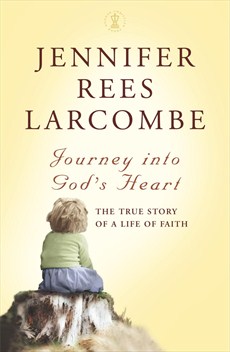
    Jennifer Rees Larcombe is a beloved figure in the Christian world. The daughter of well-known evangelists, she came to fame in the 1980s when she was dramatically healed following eight years confined to a wheelchair. She has told her story previously in several volumes, but this book brings the pieces together over her sixty years and is a deeper exploration of her journey into God’s heart.

    isbn9780340861578-detailJennifer’s life has not been easy, but it has been rich and glorifying to God. In just her early years, for example, she struggled with dyslexia, self-image problems and an eating disorder. After bearing her six children she had her years in a wheelchair and then the dramatic healing. And in her later years she has experienced tragedy and betrayal. But through it all she has never given up on God, nor lost her sense of humour. She may have cried out to him in gut-wrenching pain and endured periods of silence, but he has been her lifeline. In witnessing this real and gritty relationship, my faith was built up.

    Her book has so many topics to discuss – forgiveness, healing, the charismatic movement, intimacy with God, the power of prayer, being versus doing, spiritual warfare, self-hatred and self-acceptance, living in God’s presence and so on.

    Discussion Questions

    Here are some questions to get you thinking, responding and engaging:

    • What were your favourite parts of the book? Which episodes stand out most in your memory? How did you relate to Jennifer as you were reading? What have you taken away from her life story?
    • Early in her life, Jennifer made several vows. Positively, she vowed to know God intimately and journey deep into his heart (p. 10), but negatively, she vowed never to get angry (p. 33) and always to be ‘very very good’ (p. 47). How did these vows shape her life? How and when did she become conscious of them? What did she do to break the negative vows?
    • The journey into God’s heart for Jennifer has been filled not only with moments of joy and peace but also with times of pain, hurt and loneliness. In fact, she says in the first chapter (p. 12) that if she had known how hard the journey would be, she’s not sure she would have dared to make the vow. But she realizes that when our hearts are open by grief and loss we are most able to receive God’s love. Have you found this to be true? When have you felt closest to God?
    • Jen’s journey has also involved a lot of forgiveness – from Miss Mitchell to her parents to Tony. Some of her most painful memories were buried but were still affecting her daily life. Were you surprised that Jen needed to ask Miss Mitchell for forgiveness? And what do you think about her ‘stages of forgiveness’ (see pp. 58ff)? Does it make you think of old grudges you’re bearing or people you need to forgive?
    • After Jen’s amazing healing she faced many changes (see p. 204). Which ones were unexpected? Which ones were good, but hard? What losses did she face in becoming able-bodied?
    • A recurring theme in Jennifer’s book is the battle between her ‘Mary’ and ‘Martha’ sides – keeping a balance between being and doing (see for example pp. 116, 177 and 228). Discuss how she has coped with this tension over the years, and when and why one side dominated over the other. Is this a struggle you share?
    • At key turning points in Jennifer’s life she has sensed that the Lord has set before her some kind of choice (see pp. 140, 185 and 244). In each instance how did she react? What does the offering of these choices say about the character of God?
    • In chapter 10 Jennifer describes the heartbreaking collapse of her thirty-year marriage. Instead of making conjectures about what happened, recount how the Lord has become her husband and how her intimacy with him has deepened.

    jen_largeMy View

    I loved this book, and was deeply moved at so many points while reading it. Jen was brave to chronicle the hard bits in her life story as well as the glorious ones, for so often we can relate more closely to the times in the valleys than the mountaintop experiences. As with the other readers, I too struggled with the breakup of her marriage and wished it could have turned out differently. To be honest, I was angry on her behalf. But it was wonderful to see how God has used this painful experience in her life, drawing her closer to his heart.

    So good is this book that I’ll keep my underlined copy and in a few years read it again – not something I can say for all of the books I come across in my publishing work. Jen, we send our love and say thank you for your honesty!

    Journey Into God’s Heart by Jennifer Rees Larcombe (Hodder & Stoughton, ISBN 0340861576)