Category: Fiction book reviews

  • Review of two unmissable novels by Lisa Samson

    True confessions. I didn’t always like Christian fiction. But several years ago I agreed to write a feature article for the then UK-Christian-trade-publishing magazine, and found my prejudices were proven wrong. Mostly.

    When I wasn’t looking, Christian fiction grew up. Gone (again, mostly) were the formulaic last-minute conversions and marriages. Instead I found strong characters and insightful themes, with Christian truths appearing in a graceful manner.

    Some Christian publishers promote their titles as “fiction with a U-certificate” (or Stateside, rated G). This resonates with the post from a lively discussion about Christian fiction (too American? too twee? too easy of endings?) on the Woman Alive Book Club Facebook group: “I generally tend towards Christian novels as I dislike reading sensual scenes and about the championing of worldly values. I get enough of the later every day just out and about town!” I agree, but wouldn’t want to have to choose between Christian and general fiction.

    When reading twenty novels for the writing of the feature, my love of Lisa Samson’s novels was reaffirmed. She weaves themes, characters, time periods, and places together into stories out of the ordinary. Here’s my review of two of hers.
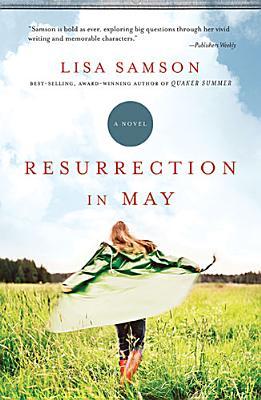
    7101534Resurrection in May follows a spoiled young woman to Rwanda where she helps out a Christian mission. She refuses to leave during the genocide and witnesses her whole village being slaughtered, only just managing to escape alive.

    This is a thought-provoking and gripping novel. The characters were believable and authentic, and the sweet truths of the gospel emerge not only through the pain and heartache but through the healing that eventually comes. The ending is good and not trite, with some interesting twists.

    Embrace Me is another unusual story. The publisher’s promotional copy says, “When a ‘lizard woman,’ a self-mutilating preacher, a tattooed monk, and a sleazy lobbyist find themselves in the same North   Carolina town one winter, their lives are edging precariously close to disaster . . . and improbably close to grace.” Make you want to rush out and buy it? No, me neither. But I had an advance copy that didn’t name this lizard woman, and I’ve enjoyed Lisa Samson’s works in the past. So I dived in. And I read and pondered and mused and was moved. I didn’t want it to end.

    2690801She weaves the stories of several individuals throughout this novel, jumping back and forth in time in a way that doesn’t jar. She is a poster girl of the writing adage, “Show, don’t tell,” as she leads the reader into a gentle exploration of the lives and emotions of the characters. Nor does Lisa give cookie-cutter solutions or resolutions; her writing doesn’t come across as in-your-face-black-and-white, but as orthodox shades of grey. She explores issues of Protestant versus Catholic beliefs (in a gracious way), community, social justice, lies and falsehood and confession, forgiveness and freedom. All without the reader really realizing that she’s delving so deeply into these subjects.

    The book opens from the point of view of Drew in 2002, a megachurch preacher who has holed himself away in a rundown motel in Ocean City, Maryland. He has run from the lies of his life, and is so numb that he can only feel when he burns himself with cigarettes. In this state, he turns to a Catholic priest, making his confession through letters (yes, unusual for a Protestant preacher, but as I said this is no ordinary novel). Then in the next chapter we jump forward to 2008 and the point of view of Valentine, a deeply scarred woman who appears as a lizard creature in a circus freak show. She is wounded on the outside and on the in; she holds her bitterness tightly, only showing her true self to a special few, including Lella, the sweet-spirited woman with no arms or legs.

    How the author manages to move across the years as she tells the stories of Drew, Valentine and several others is gripping and profound. It’s a novel that made me think about what it means to extend and receive grace and forgiveness; how it would be to live in a Christian community; how we measure success versus how God does; and how we ultimately find joy.

    I didn’t anticipate the ending, but that made the book it all the more intriguing and thought-provoking. Definitely one not to miss.


    Resurrection in May, Thomas Nelson, 2010, 978-1595545442

    Embrace Me, Thomas Nelson, 2008, 978-1595542106
  • Review of a fab novel about spiritual formation

    Sensible Shoes: A Story about the Spiritual Journey

    by Sharon Garlough Brown (IVP, 978-0830843053)

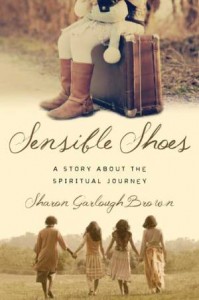
    Some books come with a buzz. I don’t mean that reading them will cause an altered reality, but that people become so gripped and changed by these books that they want to share them with others – resulting in a buzz. Sensible Shoes is such a novel. I first heard of it on social networks, for Kathy Lee Gifford recommended it on one of the influential US talk shows. Intrigued that a book about the spiritual journey would receive such a big mention, I got myself a copy. From the promotional material I thought it was a how-to book about the spiritual disciplines, so I was pleasantly surprised when I found it was a novel.

    9780830843053The story charts the journey of four unlikely friends who bond through a spiritual formation course. Each woman is running from wounds of the past. Through their friendship and their engagement with spiritual practices such as lectio divina, praying with the labyrinth and imaginative prayer (Ignatian practices), they find peace. They also move into the adventures of a life partnering with God.

    I could relate to each of the women’s struggles as those I’ve addressed in my own journey of faith. Such as Hannah, who tries to prove her worth to God by serving others unswervingly, to the point of exhaustion and ignoring her own needs. Or Mara, who, feeling rejected, turns to food for comfort. Or Meg, who battles a critical voice in her head. Or Charissa, who seeks perfection and loves a controlled environment.

    One point that the author makes is that God often uses the irritants in our lives to wake us up to the issues we should face. As one of the spiritual directors says: “Remember, Charissa – the things that annoy, irritate, and disappoint us have just as much power to reveal the truth about ourselves as anything else. Learn to linger with what provokes you. You may just find the Spirit of God moving there” (p. 80). The prayer of examen, in which we look back at our day in the presence of God, can help us as we bring to mind those things or people that made our blood pressure rise. We can ask God to show us why we lost our temper – was it something physical like we were tired or hungry? Or something deeper, such as one of the deadly sins – pride, envy, anger and so on. When we’re transparent before God, he can bring his healing touch, filling the places that are yearning for love and affirmation. And he can lead us to repent, or spur us on to love our neighbor.

    And Sensible Shoes? Although they could have called it something with a bit more zing, it’s a book I’ll keep recommending.

  • Review of a non-typical novel from the Christian-fiction genre

    Babe’s Bible: Gorgeous Grace

    Karen Jones (Darton, Longman, Todd, ISBN 978-0232529203)

    234267_780232529203

    A couple of years ago I examined Christian fiction for Christian Marketplace, the then magazine of the trade. Before this article, I would read Christian novels here and there, forcing myself to pick them up with a hint of disdain. But reading twenty or so books in one go opened my eyes and rid me of any condescension. These books known as Christian fiction (those published expressly by Christian publishers, mostly coming out of the States) had matured. Characters felt real and authentic. Plot-lines no longer seemed false, such as last-chapter conversions. I found myself reading these books not only when I had to – for reviews – but now because I wanted to.

    Gorgeous Grace, the first installment of Babe’s Bible, not only doesn’t fit my previous view about Christian fiction but in the first couple of pages explodes any stereotypes. In fact, I’m not sure if would have continued reading if I hadn’t seen a review by Jennifer Rees Larcombe, a Christian author I trust. For the book opens with a group of women enjoying an evening out, fueled with wine and flirting, and continues with scenes of, shall we say, a sexual nature.

    Should so-called Christian books include sex, drinking, smoking, and the like? It’s an interesting question to consider. In the States, for instance, a debate has raged over what has been called censorship as a major conservative evangelical bookstore chain has refused to stock a book which refers to the author’s vagina. Those against claim they want their books “clean,” while those for say that it’s an anatomically correct way to refer to a woman’s private parts.

    At first I wondered if the sex and stuff in this book was gratuitous – a way to draw in an unsuspecting reader. But having read further along, I saw that the author’s treatment is helpful, for it shows the consequences of sin, such as how adultery can rip apart families and communities and yet how God can bring healing.

    You’re probably wondering what the novel is about! A modern-day woman is ordained in the Church of England and in her curacy finds herself amid a pastoral breakdown. Her outlet is to write fictional accounts of some of the women in the New Testament, including the woman caught in the act of adultery. As she writes, she finds the biblical story speaking into the real-life crisis – including the hurts from her own life that she had buried years ago.

    Not everyone will agree with the author’s biblical treatment, but I enjoyed how she brought the days of Jesus alive and fleshed out some minor characters. I felt her writing was strongest, however, in the story of the curate and her friends.

    What do you think – should fiction published by a Christian publisher pass a so-called clean test? Why or why not? Have you read Gorgeous Grace, or the second in the trilogy, Sister Acts? If so, what did you think?

    (Note to my friends outside of the UK: I’m afraid these books aren’t readily available outside these isles… Sorry.)

  • Two novels with a difference

    With summer coming, it seems time to delve into a good read. Here are two novels, but with a difference.

     The Sky Beneath My Feet, Lisa Samson (Nelson, ISBN 978-1595545459)

    A few years ago, I featured Embrace Me by Lisa Samson in the Woman Alive book club. I rave about her writing when given the chance; she’s one of my favourite Christian novelists. She fills her stories with real characters who could be living next door to you – such as the protagonist of The Sky Beneath My Feet: Beth, the wife of a pastor at a huge church. She’s a mother with teenaged sons and a wife whose husband experiences a sort of midlife crisis, where he retreats to the shed in the back garden to get in touch with God. How Beth deals with this absent husband/father/pastor makes up the novel’s storyline.

    The author manages to weave searching themes into the story: community, intimacy, envy, identity, love and commitment. For instance, in terms of identity, who are we, and who are we made to be? When we marry, do we morph into a different person – one our younger self might not recognise? What is intimacy in marriage, and how can we stop killing our marriages with “the death of a thousand cuts”(nagging)?

    One to read slowly and to ponder. And to enjoy for the author’s evocative use of language: “Like whisky in a sauce, Jed’s wrath will burn away quick enough” (page 53).


    Wings of Glass, Gina Holmes (Tyndale, ISBN 978-1414366418)

    Wings of Glass is another novel dealing with real-life issues. This one exposes the lies, fear and pain of an abusive marriage. As I read it, I thought back a few years to the pain of witnessing a friend who endured a long, protracted divorce from an abusive husband. And I thought about how that could have been me too; one of my relationships in my twenties, in particular, could have turned out nasty.

    Every couple’s story is different, but similar themes often emerge. Wings of Glass recounts how Penny fell prey to the charms of Trent when she was just 18. She marries him, delighted to leave her parents’ home, but doesn’t reckon on his verbal and physical abuse. Only the impending birth of their child after 10 years of marriage, and the help of some newfound friends, can make her face the reality of her husband’s brutality.

    It’s a gritty novel, but is marked with the hope of change as rooted in the Gospel. I agree with Liz Curtis Higgs, who says on the cover: “… so real that it reads like a memoir”. One to read prayerfully, asking God if there’s a woman near you who might be suffering in silence, and who might need a friend.

    Have you read either book or books by these authors? If so, what do you think?


    Join the Woman Alive Book Club, including our Facebook group. Giveaways, great discussion, interesting viewpoints. (This review originally appeared in the May 2013 print issue of Woman Alive.)