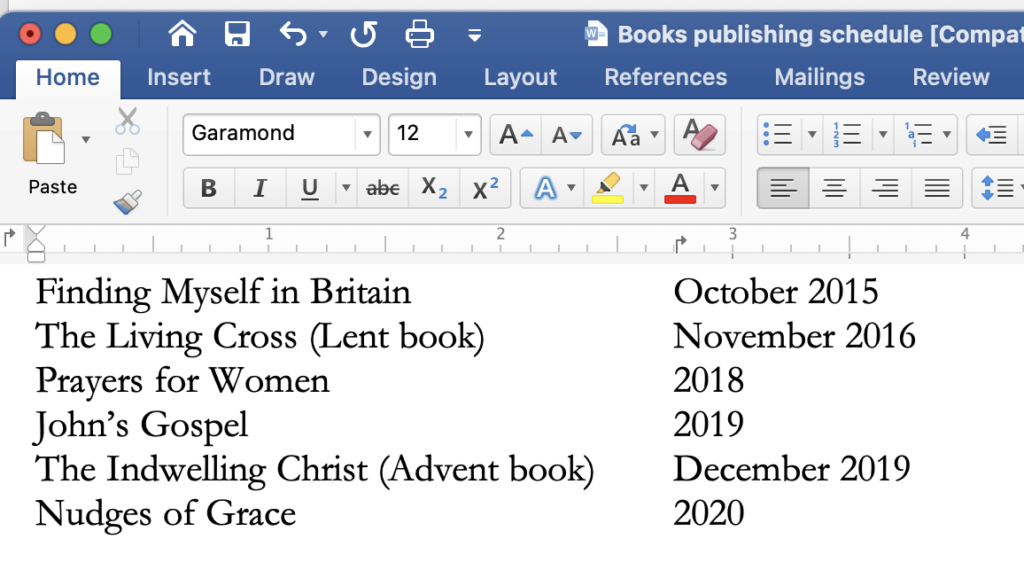
I recently came across a document filed away in Evernote entitled, “Dream schedule for book writing and publishing,” which I penned initially in late 2016. I had set myself a course of the books I wanted to write—along with the MA in Christian spirituality I was in the thick of then in 2016.
My dreams haven’t been realized according to that schedule. Although I released a small-group guide last year, I haven’t published a “proper” book for all these five years. I also thought that I wasn’t ready to write my “big” book—that’s the “Nudges of Grace” at the end of the list. I thought I needed to turn to the other books, on what I saw as more niche topics, before I could handle the book on prayer.
I’ve not kept to my schedule, but I see the grace in those years—the time to think and develop through my master’s degree, the opportunity to recover after spending myself in that academic pursuit along with the other stuff going on in our lives at that time, the other speaking and writing I was able to do. We aren’t machines and we can trust in God’s grace when things don’t go to (our) plan.
I like to say that God is my Publishing Director, in the phraseology of Psalm 23 (as I write in this blog). I can understand now how I’ve needed that time to develop and grow as a person and as a writer. Now I am ready to release the “Nudges of Grace” book, which will be published as the far better title of 7 Ways to Pray this autumn by NavPress in the States and SPCK/Form in the UK. It incorporates so much of what I learned in the MA, along with my years of leading retreats and prayer exercises.
I also get to partner with my dad in what I’m seeing as a bonus book, Celebrating Christmas, which is a combo of his fantastic art and my reflections in a beautiful four-color book (also coming this autumn, published here in the UK by BRF). The book was an idea of the lovely people at BRF, and that we can publish a four-colour in the tough times of retail I see as a gift.*
You might feel anxious, if you’re a writer, to be making progress on your dream publishing schedule. Substitute writer for lots of other situations—for when you can see your far-flung friends and family, when you get that promotion, when you recover from the latest health concern, when you can reopen, and so on. The challenge for us all is to stay present in the moment. For Christians, to abide with Christ right here and right now, practicing his presence and trusting him for the hard stuff while rejoicing with him over the good stuff.
May you know God’s love and care—wherever you find yourself on your schedule.
* I’d better use the British spelling to honour my publisher!
I’m back from two wonderful but intense days at Christian Resources Together, a gathering for people in the Christian publishing, supplying, and retailing industry – and yes, that includes content creators such as writers. I’ve been in the Christian resources biz for over twenty years, nearly 18 of those in the UK. So for me it’s a rare time to see, greet, and hug familiar faces from the past (a few mates were playing STL Bingo during the award ceremony, which hints at their affection and humor, and will only mean anything for those in my industry).
This year was special because I moved officially from “publisher” to “author.” I’ve loved being an editor, launching all of those wonderful Christian books out into the world to be ambassadors for God’s good news. And I grateful now to be one of those authors too, with her baby arriving in the world. For Finding Myself in Britain was shipped directly from the printer to the conference centre, as the official launch doesn’t arrive until the first of October. In fact, my publisher, Steve Mitchell, saw it first there. For me, the feeling was surreal to walk into my room in Swanwick and to see my book there on the bed, complete with chocolate for the participants to savor and enjoy.
Fuzzy photo of The Book greeting me. Surreal! Wonderful! Yes, a ghastly bedspread!
I was captivated by Bishop John Pritchard’s talk in particular. Here are some of his quotes, worth pondering:
“God doesn’t know how to be absent.”
I agree, but many people feel the absence of God when they go through tough times. Do you find this a challenging or encouraging statement, or somewhere in between?
“In the Bible, water is always dangerous to the Jewish mind.”
I never knew this, and want to do some biblical investigation. What about Proverbs 25:25, “Like cold water to a weary soul is good news from a distant land”?
“Pray, but not as though God is an outsider. He’s here.”
Yes, I love this, and sense the influence of Tom Wright.
I also learned that Thomas Hardy became disgusted at the reaction to his novels so he gave up writing them and turned to writing a poem a day. Many are pedestrian, but some are brilliant. Hmm; maybe I should try to write a poem every day. I did that during Advent last year, and loved it. I learned other things too, but those nuggets seem worth sharing.
Lawrie Stenhouse, Authentic Media’s fab sales guy.
I came away exhausted but encouraged. What heartened me the most was the family-like atmosphere, with the organizers Mandy and Steve Briars called the “grandparents” of the group. How wonderful that we can laugh together and enjoy one another’s company, especially when times in the Christian resources business have been so tough.
I’m just back from two days at a Christian publishing industry retreat. Two days of meeting up with people I’ve known a long time, and also seeing in real life many friends whom I enjoy chatting with online. The gathering is unique, bringing together booksellers, book, music and video publishers, suppliers of gifts/cards/T-shirts/churchy things/etc/etc, authors and others from the Christian industry in the UK.
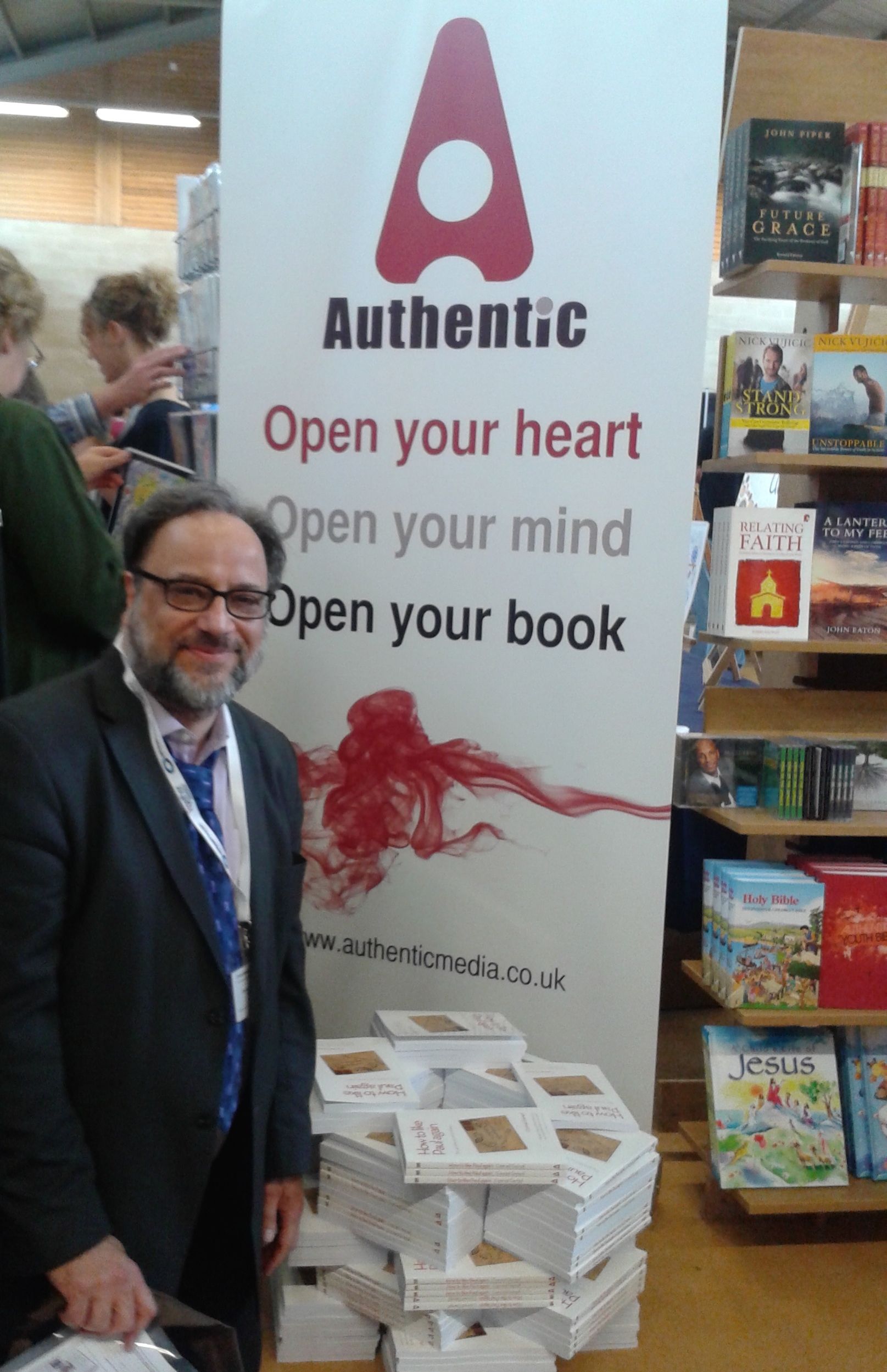
Conrad Gempf, ready to give out the 200 copies of his book.
The talks were inspirational. The three were all given, interestingly, by men from the former colonies – two from America and one from Australia. Conrad Gempf and Bob Hartman could hardly believe the parallels between their talks – they mentioned how they both are from roughly the same part of the world (New Jersey and Pennsylvania), they both had German fathers who raised them with delicacies such as liverwurst and mustard sandwiches, both their German fathers loved Studebakers, and both Conrad and Bob chose the same passage to speak on – Philippians 2! Amazing synergy, divinely inspired, I reckon. (Family commitments meant I missed the last talk by Sheridan Voysey, but I did get to hear him step in for Adrian Plass with his excellent seminar sharing pointers on how authors can spread the word about their books.)
What did I learn? What was affirmed?
The Christian publishing industry isn’t dead.
It may feel battered, and changes abound, especially with Trust Media folding last month, but booksellers are selling, publishers are publishing, authors are writing, musicians are making music, and other distributors are distributing.
Booksellers are passionate.
The couple who won the longserving award – 38 years – seemed to ooze humility. The dedication and creativity of people like them is what keeps bookshops alive. (And of course, us using bookstores!)
Books change lives.
Several times throughout the retreat I heard stories of people’s lives changing when they were given a book. New life in Christ; new hope. One moving story of just the right book purchased before a diagnosis of terminal illness (it’s not my story to share, but my word, what a story).
Creators need to keep creating.
We need great stories, fresh worship songs, moving memoir, thoughtful biblical helps. No longer are we in a world where creators cannot be involved with the marketing of their books. One way to spread the word is through this retreat, and indeed, authors were represented there through the Association of Christian Writers, of which I’m a member. I only wish more ACW members and other authors were able to attend – where else can authors have such unfettered access to industry professionals?
I learned some other things too… Such as how to engage the audience by master speakers Conrad and Bob (not, of course, that I can replicate!).
That we need to keep encouraging female speakers, even if that means positive discrimination, following the good example of Youthwork, who turn down some great blokes so that they can have women and men equally represented on the platform.
That I never will like a full English breakfast.
Do you attend industry events? If so, what do you gain from them? If not, why?
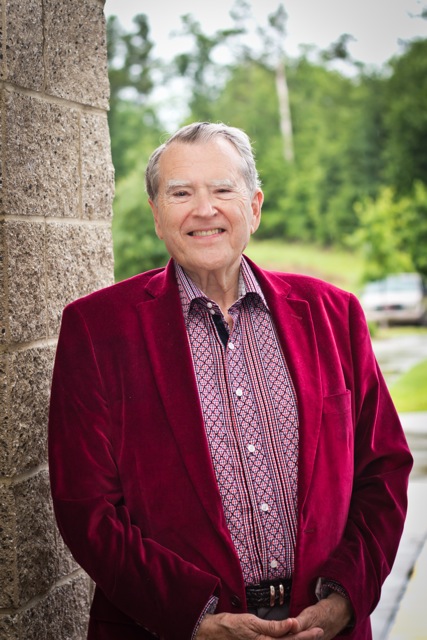
You may know that I run the Woman Alive Book Club. This month’s interview (reproduced here, uncut, with thanks to Woman Alive) is with the prolific writer, RT Kendall (author of over 50 books). He was the senior minister of Westminster Chapel in London for 25 years. He lives with his wife in Tennessee, and continues to preach, teach, and write.
I pray a lot about writing books and seek the leadership of the Holy Spirit in the entire process. I refuse to write until I am gripped. Some of my books were sermons. My book God Meant it for Good was a series of Sunday-night sermons on the life of Joseph from Genesis 37-50. They were originally typed from a tape recorder, then edited to make them more readable. The same is true of All’s Well that Ends Well (life of Jacob) and A Man After God’s Own Heart (life of David). But other books I type at my computer. Sometimes a publisher will ask for a particular subject, sometimes I will get inspired to write on a subject. I like to think that at the bottom of all this is the anointing of the Holy Spirit. But at the end of the day no matter how inspired I may feel if people don’t purchase the books they won’t get read!
Total Forgiveness has sold the most copies (also in 20 languages) of my books and I have received the most letters from people who read it. That book has apparently healed marriages, got family members speaking to each other. I could almost have a book made up of testimonies of readers.
There is not a pastor who does not have people say, “I know God forgives me but I cannot forgive myself.”Totally Forgiving Ourselves has set people free in a wonderful way, but I give God all the glory for this. It’s not me. I have had to do what I tell people to do – I had to forgive myself for not being the good parent I should have been when the children were growing up. I put my church and sermon preparation first thinking I was putting God first. I now believe if I had put my family first I would have preached just as well but I can’t get those years back. I have forgiven myself – I really have! And this has helped others to do the same.
I have been criticized for the title of my latest book – Totally Forgiving God – and I understand this. It sounds like God is guilty of something. But he is absolutely pure, just, and righteous. That said, he allows things to happen which he could have stopped (since he is omnipotent). We have to forgive him – set him free, let him off the hook – for the things he allowed to happen. The book is largely an exposition of the Book of Habakkuk and demonstrates how we must wait until the Last Day for God to clear his Name. I have received testimonies of people who said that book set them free.
We love Britain and would live there tomorrow if we could. It is too expensive. My best friends are in Britain; my happiest memories are in Britain. It was at Oxford I received my research degree; it was in London I was given an international platform. I would never have written a book had I been pastor elsewhere. So I am grateful to God for the privilege of having lived in England. Louise and I take every opportunity to visit when we can. The nostalgia is deep in us.
When I was young I identified with Joseph. Now that I am old I identify with Jacob. When I read about Jonah I say “I am Jonah” – the Jonah who went the opposite direction from what he was told to do; I am also the carnal Jonah who pouted from not being vindicated. My latest book to be published in the USA is on Elijah. I identify with him – a very self-centered man who took himself too seriously.
My book on David is called A Man After God’s Own Heart. I identify with him in many ways, especially in his days of preparation before he became King. But what I admire most about David was how he handled himself when in exile and let God do the vindicating.
Although I have not written a book on Paul – only preached from his letters – he is the one I look forward to talking with in heaven. I want to see what marks he will give me for how well I interpreted Romans, Galatians and all his Epistles. I will also ask him, “Did you write Hebrews?” (I think he did, but nobody agrees with me).
As I walked into the converted railway station, I caught my breath. Was this paradise?
People nestled around a crackling fire, gathering their hot drinks and cookies to settle in with a good book. I looked at the shelves, hardly knowing where to stay my gaze, titles vying for my attention. My fleeting glance took in a new biography about Anne Frank. A Second World War book my husband would like. The Kazuo Ishiguro novel I had lent out before reading and never got back.
I ventured past the first room, my senses on overload. Above me was a massive mural of famous authors, commissioned by the owners. On the top of the stacks ran a miniature train, chugging along. Snippets of poetry sang from the walls and on signs between the stacks. I could hardly breathe, trying to take it all in.
Philosophy, religion, biography, fiction. I moved into the main room not knowing where to start. All these volumes, so much love and care poured into their creation, then cast off by their first (or second, or third) owners. Now here to be discovered and loved again. Those from centuries gone by, locked in cabinets, their prices dear. Books from recent years, carefully arranged by category and alphabet.
I wandered throughout the stacks, fingering books, overwhelmed. After jumping from section to section, unable to form a systematic plan of browsing, I came upon an article from the Newcastle Journal featuring the owners of this amazing secondhand bookshop in Alnwick, Northumberland. Reading it filled my craving for setting and character related to this magnificent place, and my heartbeat started to slow.
Barter Books was the brainchild of an American woman and an Englishman – a strikingly good combination, I’d say. Mary and Stuart Manley met on a trans-Atlantic flight when Stuart, captured by the intriguing woman across the way, tried to figure out a way to meet her. He pondered through the first in-flight film and then hatched a plan. He dropped a note in her lap, saying, “If you want to talk to me, raise your hand.” Although she had requested a seat on her own, wanting to spend the time reading, she thought, “This is too good – so I raised my hand.” They talked the whole flight and married three years later.
Stuart’s passion had been for model trains, and he ran a small shop in the old Alnwick rail station for ten years, struggling to stay afloat with issues of cash-flow and never reaching comfortable success. Mary loved books, and on a trip to Lindisfarne to do some voluntary work she came up with the idea of starting a secondhand bookshop. “I thought maybe I could start a secondhand bookshop and call it Barter Books, have a little barter system.”
Spot the train?
They started it in a tiny part of the building, and it soon became apparent that second-hand books were the way to go. They sold off the rail models, which cleared off their overdraft and enabled them to invest in remodeling the railway station – a strategy they have employed since they started the bookshop in 1991. As Mary says, “We’d make a bit of money and then throw it back into the shop. We still do – it’s our pleasure really and it’s good business too.”
The rail station was built in the 1880s and closed in 1968. It’s a massive structure for a small town, brought about by the influence of the Percy family, who have held the title of Duke or Earl of Northumberland since the Middle Ages. Stuart says, “They built this station because of the Duke of Northumberland and to impress visiting royalty and that kind of thing, so that it would be a showpiece for the North East Railway. It was only a 7,000 population town – it hardly merits a wooden hut never mind a twin-barrelled 32,000 square feet railway station.”
The poster, which found fame through word-of-mouth excitement by visitors to Barter Books.
Barter Books not only breathes new life into a disused railway station and feeds booklovers’ obsession, it birthed a modern phenomenon. Early in the millennium, Stuart bought a lot of books at auction. Although the books weren’t worth much, a folded poster in one of them was: the now ubiquitous poster from the Second World War, “Keep Calm and Carry On.” They thought it was wonderful so hung it on the wall, and people started asking where they could buy it. They made copies and it became hugely famous. As Stuart says, “We had no idea when we found it that it was going to grow into such a monster.”
Mary adds, “We haven’t got rich on it because it’s out of copyright. In fact, we’ve learned what sharks there are out there. One man tried to sue us for selling any of it, because he wanted to establish a copyright for himself. You really learn.”
The amazing author mural, which took two years to paint.
Pulse regulated, I was ready to browse the books, on the lookout for gems. I worked from one room to the other, spending the most time in the religion and biography sections. I was bemused to see a compilation book from my division when I was an editor at HarperCollins in the religion stacks, but was disappointed that the books on writing were on the paltry side. (Later, after I had made my purchase and was nearly ready to go, I discovered in a separate room the volumes on bookbinding and typesetting – an area to explore during my next visit.) I toyed with buying an early copy of Cranford by “Mrs Gaskell,” but decided I shouldn’t spend the money and bought the £2 film-tie-in paperback instead.
Your local bookshop might not live in a former railway station, but it too will house gems that only need uncovering. If we don’t support these vital repositories of stories, learning, and enrichment, they will become relics of an age gone by.
Thanks to Mary Manley for permission to include her and Stuart’s quotes from the interview with the Newcastle Journal. I happened upon her in the First Waiting Room during my second visit and enjoyed our conversation, two Midwesterners now living in the UK.
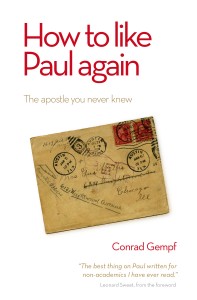
I didn’t think we at Authentic Media would get to buy this book. Although I had been Conrad Gempf’s commissioning (US: acquisitions) editor when I was working at the other end of the alphabet, time had elapsed and I had been out of the publishing game for a few years. Then Authentic approached me to work with them parttime, and I found myself agreeing, yet kicking and screaming inwardly, thinking that commissioning would distract me from my writing. I committed to a three-month gig and here I am, over a year and a half later and humbled by how much I love the marriage of writing and editing.
I was especially chuffed (US: thrilled) when the first book I acquired was Conrad’s. He’s a brilliant writer; witty yet deep. One of the unusual academics who writes for a popular audience, seamlessly weaving in references to Clark “Superman” Kent or Nieuport 27s (a World War I plane) or John Deere tractors. All while persuading us to like the apostle Paul better, or to understand why Jesus asked so many questions. One of his defining passions is to open up the Bible to his students at London School of Theology and to his readers. He’s quirky and not everyone will love his humor. But those who do often become diehard fans.
I was sad when I learned that Conrad was in advanced talks with another publisher about his book on Paul. For when I was at the Publisher-at-the-End-of-the-Alphabet, he and I had talked about this being our next book. Then my job was eliminated… and the book got put on hold. After a couple of years, Conrad restarted discussions with other publishers, and when we met up was nearly signing a contract. Out of integrity, but secretly crestfallen, I stayed out of the picture. Until surprisingly How To Like Paul Again came back to me after all. Another example of change being the only constant in publishing.
Why did we buy? Because today so many people don’t like the apostle Paul. They think he’s legalistic and cranky and anti-women. They pre-judge him, assuming they aren’t going to like his letters or what he has to say. But Conrad, in his inimitable style, gives us the tools to read Paul’s letters. We start to look at the greater context, such as the letter’s recipient, and begin to tease out why Paul was, say, pushing for freedom in the case of the Galatians or for tightening up the rules for the Corinthians.
As an author, Conrad is wry and he’s playful, but he wants us to engage in serious work as students of the Bible. You might literally laugh out loud, but you’ll also pick up the Bible to see if what Conrad says is there, actually is there. (Like Galatians 5:12. Seriously? Did you realize Paul actually said that?)
What I love especially about Conrad’s writing is that when I read his stuff, I feel like he’s with us in the flesh, sharing a meal in our dining room and helping us lose our misconceptions about Paul. His prose shouts with his unique, funny, profound, make-me-laugh voice. No one else will have that voice, of course. But as we’re all made in God’s image, the voice we exercise will be beautiful in its own right.
And that’s why I bought this book. But what about you? Think you’ll buy it?
(Want to know more? Click here for some two-minute trailers.)