Category: Interviews

  • Interview with Celtic writer Ray Simpson

    Here′s an interview that appeared originally in Woman Alive with Ray Simpson, the founding guardian of the international Community of Aidan and Hilda. He lives in Lindisfarne and has written over 30 books.

    Ray for DenmarkThe Community of Aidan and Hilda is a dispersed new monastic community which includes Anglicans, Catholics, Orthodox and Evangelicals in four continents. These follow a holistic Way of Life which includes a rhythm of prayer, work and re-creation, simplicity, purity, and creation-care, healing, unity and service. We seek to reconnect with the Spirit and the Scriptures, the saints and the streets, the seasons and the soil.

    I wrote Hilda of Witby because we can unearth from her life a much-needed spirituality for now – a spirituality of warmth in hard places and exile, of wholeness, unity in diversity and ‘releasing the song in every human heart’. Hilda may be the greatest first-millennium Christian woman in the English-speaking world; she is becoming a contemporary icon of holistic leadership. As we come to the end of two thousand years of patriarchal Christendom, we need models of God’s wisdom and mothering dimensions from within our own submerged cultural memory.

    I have ‘lived’ with Aidan for twenty years. My historical novel Aidan of Lindisfarne: Irish Flame Warms a New World has just been published; it describes Aidan in what is now Ireland, Scotland and England.

    Here in Lindisfarne I walk in the steps of Aidan who kept a rhythm of retreat and outreach, love of God and people. Some decades ago I realized something was missing in my own and the church’s life. Prayer had been separated from work, mind from body, religion from science, Jesus from creation and the church from being real. So I immersed myself in the best of early Celtic and other expressions of Christianity in order to discover passion, presence, pilgrimage, roots, rhythms and relationships, the Body of Christ as Christ’s heart in me and in community.

    Hilda of WhitbyIn common with early Celtic Christians, we can see ourselves as life-long learners and pilgrims of the love of God, leaving behind addictive relationships and work patterns, being open to the Spirit, and travelling light. We can hone godly intuition and keep alive an imagination which ‘sees’ Jesus building God’s kingdom among us now. We can sustain a natural fellowship with all human beings in whom is something of the light of Christ (John 1:4). A passion for social care and evangelism can flow from the single heart of compassion in Christ.

    My first book, Exploring Celtic Spirituality, has been re-published many times and translated into two other languages. I continue to receive letters or emails that say it has changed the writer’s life. A pagan who had never read the Bible rang me after reading this book and said ‘I had a dream in which a white hand came from above into my heart, and I could not stop crying for three days; can I come to your retreat?’ He asked Jesus into his life.

    Etched in my heart is a letter from a family I have never met. As they encircled a dying loved one they had in their hands my book about dying well, Before We Say Goodbye. They used some of its suggested prayers, rituals and poems – and told me of a beautiful soul-encompassing at death.

  • Interview with Michele Guinness – She Wears Purple

    Today I received the paperback edition of Michele Guinness’ page-turning, magisterial novel, Archbishop, in which she explores the issues facing women in leadership. For your reading pleasure, here’s an interview with her, originally published in Woman Alive.
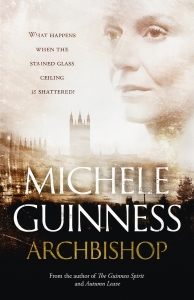
    Archbishop High ResWhen my husband and I were at theological college, we met so many strong women, many of whom have gone on to great things – they became deans and archdeacons. I suddenly thought, What would it be like to have a woman archbishop? Would it be different? What would be the pressures for a woman, especially a woman leader at a time where not everyone is reconciled to the idea?

    When at theological college, I was very agnostic about the role of women in the church – I hadn’t thought it through. And then I met these women who were just extraordinary and exceptional, and a part of me said, how can their calling be wrong? So I looked at all the biblical stuff on women, and particularly Romans 16, in Paul’s closing words to the Romans from prison. He mentions the women who have worked by his side, and he uses the same words for them in the Greek as for Timothy and Silas and the big guns. He entrusts the letter to Phoebe, who is his patron, and who runs the church in Cenchreae, and I thought at that point, yes, it’s okay, these women are not mistaken or misled. I became convinced that women have a very special role.

    We have to look very carefully at how women lead; it’s not easy for women in leadership to maintain their femininity, vulnerability or integrity. So I wanted to create somebody who had a go! I wanted to explore where would it take her, and what would it cost her. What difference can we women make in society today? Can we have a voice?

    Yet a lot of women who become powerful pull the ladder up: they don’t encourage younger women to look for their potential. So I wanted to create a woman who wasn’t like that; rather someone who was confident and secure in who she was; someone who would say, this is who I am and this is all I have to give and if I have to pay for it, so be it.


    I’m aware that people can see the weaknesses of Vicky, my archbishop; she has frailties, for she’s very human. She also has this wonderful spiritual director who helps her to keep on the straight and narrow. And I realized that those who might be against women in leadership could use her weaknesses as a weapon to say that women aren’t up to it. So I tried to create someone who had a lot of integrity, honesty and vulnerability. We need that in church leadership, whether it’s male or female.

    We haven’t seen many very public and powerful women leaders who can maintain that femininity. But I wanted to have someone who was out of the political scene, and yet could become a figurehead for women. She’d have to be tough and feisty enough to get where she got, but at the same time able to maintain her femininity. At one point in the book she says to herself, “Don’t cry. Be a man.” Nor does she use her tears manipulatively.


    When Vicky became archbishop she had to have a vision. We all have to have a vision; whether we live up to it is another matter. But if you don’t have a vision, you won’t even start. And so she had to have a sense of the objectives she wanted to achieve. I’ve left it a bit like-life, that with some of them she gets a long way down the road and some of them she doesn’t and has to leave them for the future. That’s true of all of our lives; there will be things that we had planned to do that we do, and a lot of things that we don’t, which we leave to the next generation.

    That’s coping with loss. As you get older, you realize that there are still a lot of things that you haven’t done and that you don’t have a lot of time left to do them. And that an awful lot of things you need to inspire the next generation to do. Vicky does that through her preaching. When she gets up and preaches, young people like to listen to her, as do old people and people who’ve got no faith.


    Josh7One person observed that there were a lot of very dark forces at play in the novel; surely this doesn’t happen in the church. I had to say that actually it does. We’ve experienced it. And I had insider information; someone very close to the centre. He wrote me huge notes about how emotion in Synod sounds: No, you couldn’t say that; no, she wouldn’t do that. It was brilliant; I was so grateful.


    I can envision a world where certainly here in the UK, being a Christian is less acceptable, where the secularists move into the ascendancy. It has started and continues, but my hope is that if something like an Anti-Proselytizing Law comes into effect, that actually will make people want to know what about Christianity is so offensive. I can foresee as well that in times of persecution, the church is at its best. My publisher was really hot on this, for he said that people in society just don’t know what Christians do, and how much voluntary work would grind to a halt without them.


    Peter and I were like ships that passed in the night when I worked as a senior manager in the NHS. And neither of us particularly enjoyed that, much as I loved my job and he loved his. We could only sustain it for a number of years; I think we did it for 5 years in the end. After that, although he encouraged me to continue, I felt that I needed to give up. It was a hard decision, but looking back, it was the right one.

    In the case of the novel, it’s Tom, Vicky’s husband, who gave up as an NHS consultant. It’s a very big question for couples. It’s very hard when you have children, and childcare is a real issue. And you think to yourself, once they’ve gone, now we can both really go for it. That’s what Peter and I did, and what you don’t realize you’re doing is compensating for the loss of the children – you’re grieving. Peter threw himself into his work, because the children make you stop. Children give you a reason to stop. And neither of us had that anymore.

    In the early days of your marriage when you’re both working and you have childcare to sort out, it’s very tricky, and then later in life, you think it’s going to get easier. But if you both have high-powered careers, or hugely demanding careers, you face different battles – but battles. I’m not saying that couples can’t do it, and I take my hat off to those who do, but marriage is about giving to each other. If you’re both going to have high-powered careers, at one moment, one will take priority and the other will have to give way, and at other times the other will take priority. If you don’t have that understanding, I don’t see how you can do it.


    The press, particularly the tabloid press, will pick on aspects of the physical side of women – how they look and come across – in a way that they’d never done with men. I think the first woman bishop will have quite a battle on her hands. Everything from the timbre of her voice to whether she wears makeup to the length of her skirt – everything will be up for grabs, especially in the tabloids, I have no doubt. And then it might then settle down. But women are treated differently than men. No one says of a bishop, “Oh, another middle-aged, balding bishop.” But they do look at whether or not a woman is attractive.

    The press have a celebrity issue. They get tired of the idols they create and give them feet of clay. For a woman who is vulnerable and honest and open, she’s a really easy target. You look back at the way Mrs Thatcher was treated; the discussion of pearls and her blouses… The analysis of her shoes and hair and even her sexuality, how power gives women a certain attractiveness. The press talked about all of that in a way that they never talk of a male politician. And they still do the same way today – you never hear them mention David Cameron’s shoes!

    This is hard on women. The first woman archbishop will need a good press manager who can handle this as well as possible. But even so, you can never manage the press completely; they really are a wild animal. I used to say that you can feed them, but you can’t tame them.

    The other thing a woman archbishop would have to face is if she spoke out on issues of justice, how newspapers and many politicians would be saying that it’s not the role of the church to get involved in political issues.


    MINOLTA DIGITAL CAMERAThe journalist in me uses a lot of fact. I found that the easiest bit, writing up something that was factual and fictionalizing it. It was very cathartic. There were some things in the novel that I could let go of once I’d written them, from churches we’ve been in, to situations we’ve experienced. The going out at night from the ordinand’s retreat looking for chocolate actually happened to Peter! You start with fact and then you let your imagination play.


    I loved writing about the Queen. I sat down and thought, “I can’t do this; I can’t do this!” And then I kind of heard her voice in my head! Apparently she has a lot of humour and she’s very personable and I just went on what I knew. Writing about the Queen was such a fun thing to do. I hope she reads it!


    Part of me as a writer that has always felt that other people are out there fighting for justice. My spiritual director said to me, “In the body of Christ there are many members, and you are a mouth.” And my daughter Abby said, “You’ve got it officially now, Mum; a mouth on legs!” It’s comforted me a little bit, but part of me would like to be the mouth that’s out there, fighting for justice and being the advocate that I haven’t been.


    Some people say, “Is Vicky you?” She’s not. But there might be a part of me that would like to be her.

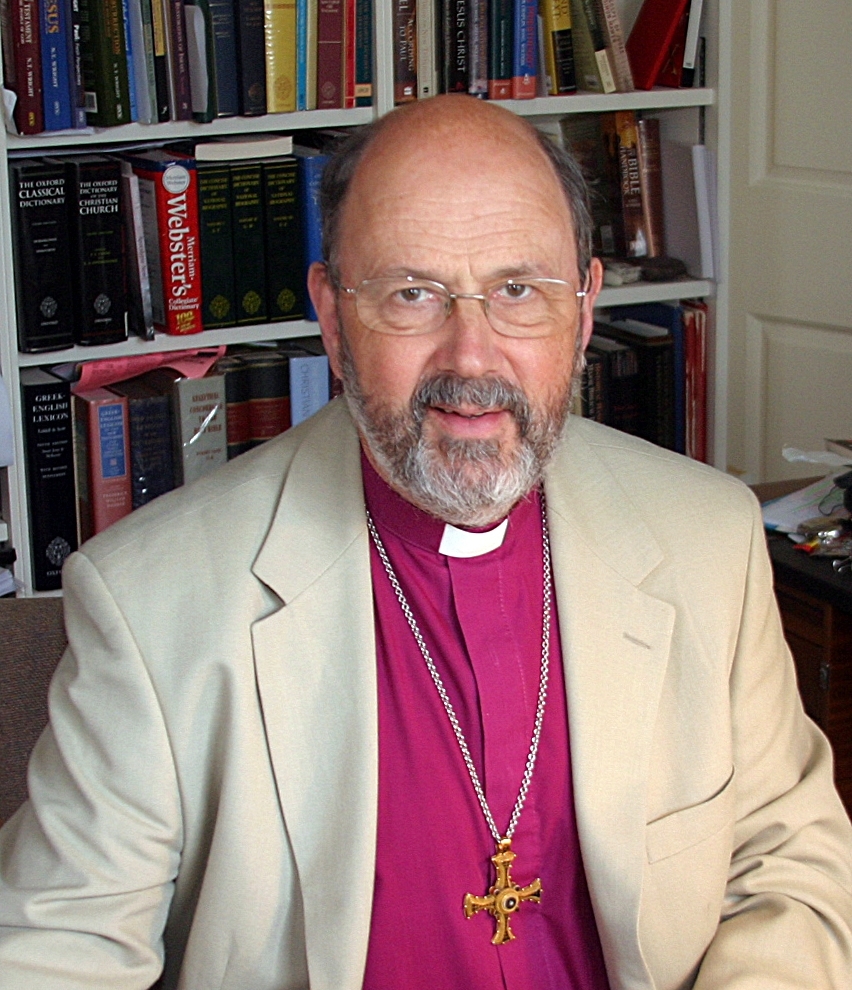
  • Interview with Tom (NT) Wright

    My interview with Bishop Tom Wright appeared in Woman Alive in early 2013, but hasn’t dated too much – but of course, in the meantime his magnum opus on Paul has been released. Writers may read the line about the writing part of his brain taking over with amazement. I do.

    STomWright3imply Christian was and is a favourite of my books; it took a long time to think it through and then I finally wrote it in a week. That was where I first properly expounded the biblical theme of heaven and earth not being a long way apart but overlapping and interlocking – which I and many others find helpful, indeed exciting. Of the Everyone commentaries, writing Acts for Everyone was an amazingly vivid week, with the whole of Acts in my head and heart; it was as though all I had to do was to turn on a tap and out came the commentary. And the book about which I get more (positive!) comments than all my others put together is Surprised by Hope. I think for many people, including many long-standing Christians, it is a genuine surprise…

    Dr Johnson was asked how he could write so quickly and he said it was because he’d trained himself to speak clearly. I’ve had to do a lot of speaking, often from rough notes or entirely off the cuff, and that, coupled with teaching in the Oxford tutorial system, taught me to think quickly and to formulate full sentences. Being musical helps, too; writing should be a form of composition, with a natural rhythm and flow. So though I may spend a long time preparing, making notes etc., once I sit down sentences and paragraphs just happen. Sometimes, especially when I’m tired, the writing part of the brain takes over and another part simply watches with interest to see what’s going to appear on the screen!

    The first book of mine to appear was Small Faith, Great God in 1978. I understood very little about the process and didn’t know what to expect. For me it was momentous and though I got some nice reviews it was basically just another Christian paperback. I guess I always feel a bit vulnerable with a new book – you never know which bits people will like, which bits they will simply misunderstand, etc. I am trying now to complete my enormous book on St Paul and some academic colleagues are NOT going to like it, so I will wait with my hard hat on for missiles to start flying.

    I hoped when I moved to St Andrews to play my guitar bit more (like I hoped to improve my golf handicap), but the big book on Paul (along with my teaching duties) was all-consuming and I hardly touched the guitar, or indeed the golf clubs…

    I read all sorts of things. I often go back to C S Lewis, especially his academic works (Studies in Words, Experiment in Criticism, etc.); he writes so brilliantly even when I disagree with him. Alan Bennett’s various collected works are a delight even though I take such a different view from him on many subjects. I love poetry of all sorts and am a great fan of Micheal O’Siadhail. I normally only read novels on holiday; this last summer I read Skios by the brilliant Michael Frayn, and that stimulated me to read his earlier book Towards the End of the Morning. I often go back and dip into the various collections by Bernard Levin – again, a great writer. Sometimes before I sit down for a writing session myself I read a few paragraphs of Levin and ask myself, Now, how would he go about saying what I want to say here?

    Bishop Tom Wright currently Research Professor of New Testament and Early Christianity at the University of St Andrews (having been bishop of Durham for seven years).

  • Interview with memoirist Carolyn Weber

    Carolyn WeberI’m like an addict when it comes to books. Compelled to read, understand, savor, wrangle with, be moved by, learn to live from these silent companions who speak so loudly.

    I read dead people. Death is a good barometer for determining true canon, I think, as is overcoming death. Jesus’ own example speaks to such. That doesn’t mean that works by the living aren’t worthy of our attention, but works which continue to speak to us long after the author is gone do so because of their humanity and transcendence. Their words hold power, wisdom and insight, regardless of time or circumstance.

    I studied the Romantics because they seemed to live this crazy, revolutionary life and so I thought that quiet ol’ me could taste that vicariously. It worked. But I didn’t expect that particular group of writers to whet my appetite for what CS Lewis coined from the German sensucht, or the longing we all have for our eternal home, for the holiness of God. The Romantic poet William Blake is particularly poignant. I love how he looks the fallen world straight in the eye, how he acknowledges evil and the complexity of human nature, but still threads everything through with the divine.

    I’ve been honored and deeply touched to receive many amazing stories of God’s grace from believing readers from all backgrounds and walks. I’ve also received questions and concerns from seekers and sceptics. They remind me how our God is not a fragile God. He graciously withstands our scrutiny; even welcomes it. The answering of some questions only begets more, and that’s the thrill and dignity of the mystery.

    4307My recent book, Holy is the Day: Living in the Gift of the Present, grew organically out of my “leap with faith” in attempting to enter an all more entrusting relationship with God.  The experience has given me an entirely deeper understanding and respect for the definition of the only work there truly is, to “believe in the One He has sent.” Sometimes the “work” is merely the default of doing all we can do in that moment. I wanted to explore seeking to trust in all sorts of life’s circumstances, and how that holds the power to challenge and renew our vision, to reshape our priorities and relationships.

    I love to read everything. I tend to gorge myself on authors, reading all their work at once. I’m reading Anne Rice’s Of Love and Evil because I’m interested in how she reconciles being a new creation in Christ with her longstanding relationship to the supernatural. I’ve been enjoying Marilynne Robinson’s novels, and I’m on a huge Annie Dillard kick now. She fearlessly yokes together the consumerist reality of the fallen world with the persistent presence of the glory of God. The kind of “terrible beauty” at work all around us, if I am to return to Blake (and Yeats).

    I recently reread Charlotte Bronte’s Jane Eyre, initially for a collaborative project but then I ended up slipping into savouring it all over again. I love how Jane cuts through hypocrisy in both faith and love with a sort of passionate composure. Now she’s a girl I could have a cuppa with!


    Carolyn Weber is a believer, wife, mother, author and professor. She detailed her leap of faith in Surprised by Oxford. She lives in London, Ontario, Canada with her husband and four children. You can connect with her online here.

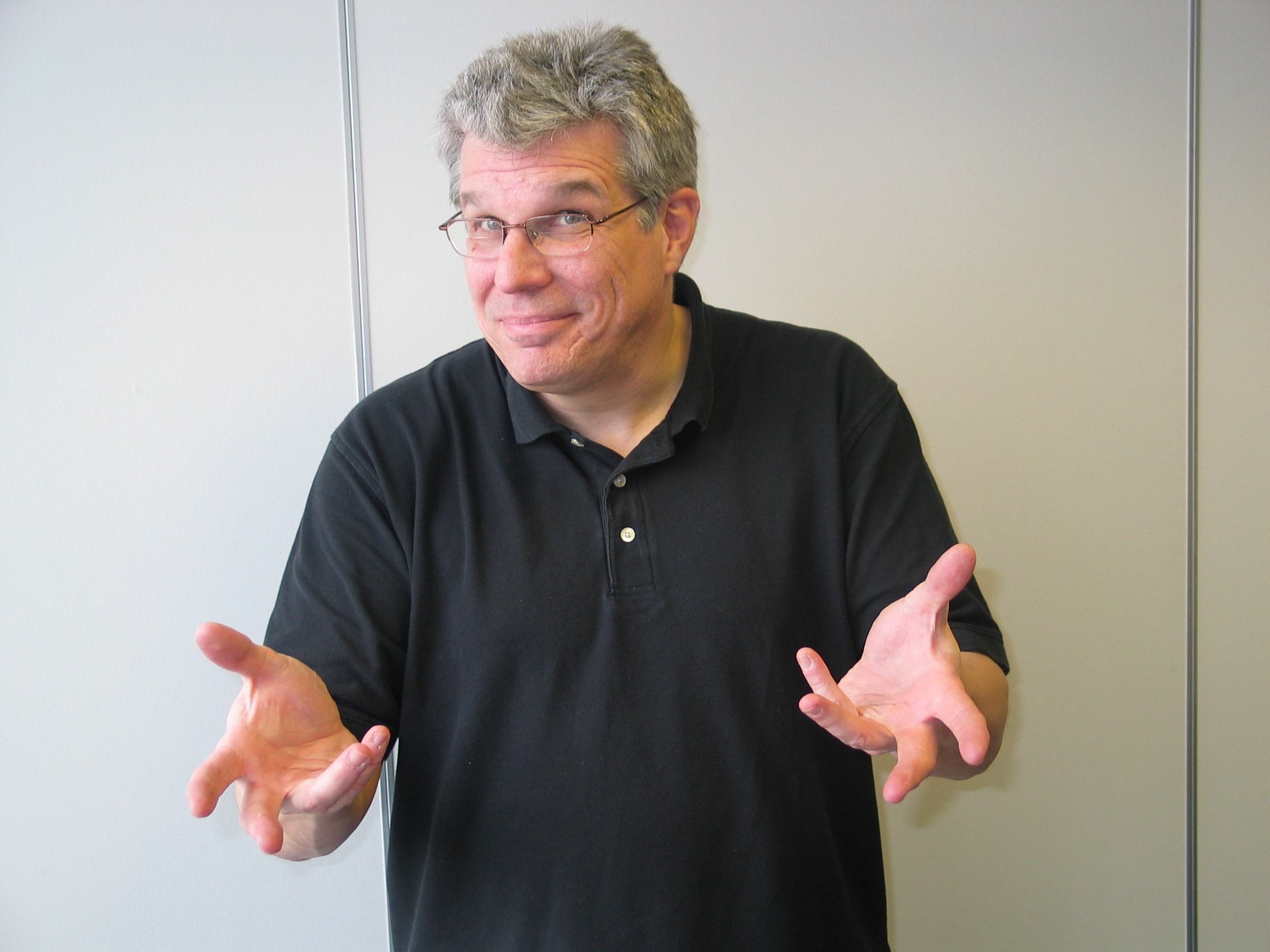
  • Interview with storyteller extraordinaire Bob Hartman

    Bob Hartman has been working for over twenty years as a performance storyteller for children, using his dynamic and interactive style to entertain audiences. He’s also the author of over sixty books. He and his wife have two grown children and three grandchildren, and they split their time between the UK and the USA.

    IMG_1917Part of the reason I’m a writer is CS Lewis’s Chronicles of Narnia. I know everyone says that! But when I was at elementary school, every Friday afternoon Mr McKee would lower the blinds in our hundred-year-old classroom and read to us. The gloomy schoolroom would be filled with his voice and a special kind of magic. And I thought, “Yes, this is amazing!” Those books have always been at the heart of things for me.

    My brother used to love puppets. When he was 9, he asked me to write him a script. I jumped at the chance and soon we were putting on shows regularly. I was usually the narrator and Tim did the puppets. I soon learned firsthand what it was that made an audience laugh.

    It’s so sad that very few in the UK know Madeleine L’Engle’s A Wrinkle in Time. It’s fantasy shot through with faith but not in an overt fashion. It was one of the first science-fiction books with a strong female lead. We enjoyed reading it to our kids.

    Angels, Angels All Around is my favorite of the books I’ve written, for it was the first time I felt I succeeded in bringing an original idea to life. It’s a series of stories; some are moving and some are funny. I worked really hard on that book, and I was allowed to play. My editor kept saying, “You can do it better; you can do it better.” So I kept rewriting, and in the end I felt like that book came out.

    Tapestry, one of my books for children, has flowed out of my reading of Tom Wright’s Surprised by Hope; I have a lot of admiration for his ability to make theology sensible. Tapestry seems to be meeting a need. I met a woman recently who works in a bookshop whose brother died, followed by a close friend. She said my book was honest but not sentimental, and for me that that made all the difference in the world.

    Frederick Buechner’s Telling the Truth: The Gospel as Tragedy, Comedy and Fairy Tale is amazing. When I first read it I was studying for the ministry. Previously I had an English major, and then began doing theology. Telling the Truth said you could do both – telling stories was telling the truth. This was before the whole narrative theology movement. I felt like he was saying, “Oh you can do it! Yeah; go for it!” So I did.

    I don’t go to the beach much but I enjoy reading literary fiction. Such as Gilead by Marilynne Robison. Or The Road by Cormac McCarthy. The Times called it the novel of the decade and I think that’s fair enough.

    People in my book club hate it when I pick the books because I always pick the heavy, sad, angsty, violent ones…. You know, those featuring post-apocalyptic cannibals. They hate me when we’re reading but eventually they love the books. But everyone nearly quit when we did Flannery O’Connor; they couldn’t make heads or tales of the story. She has a gift of pouring grace into the reality of life. Still, not everyone quite gets it. One guy just got up and left, saying, “I’ve had it.”

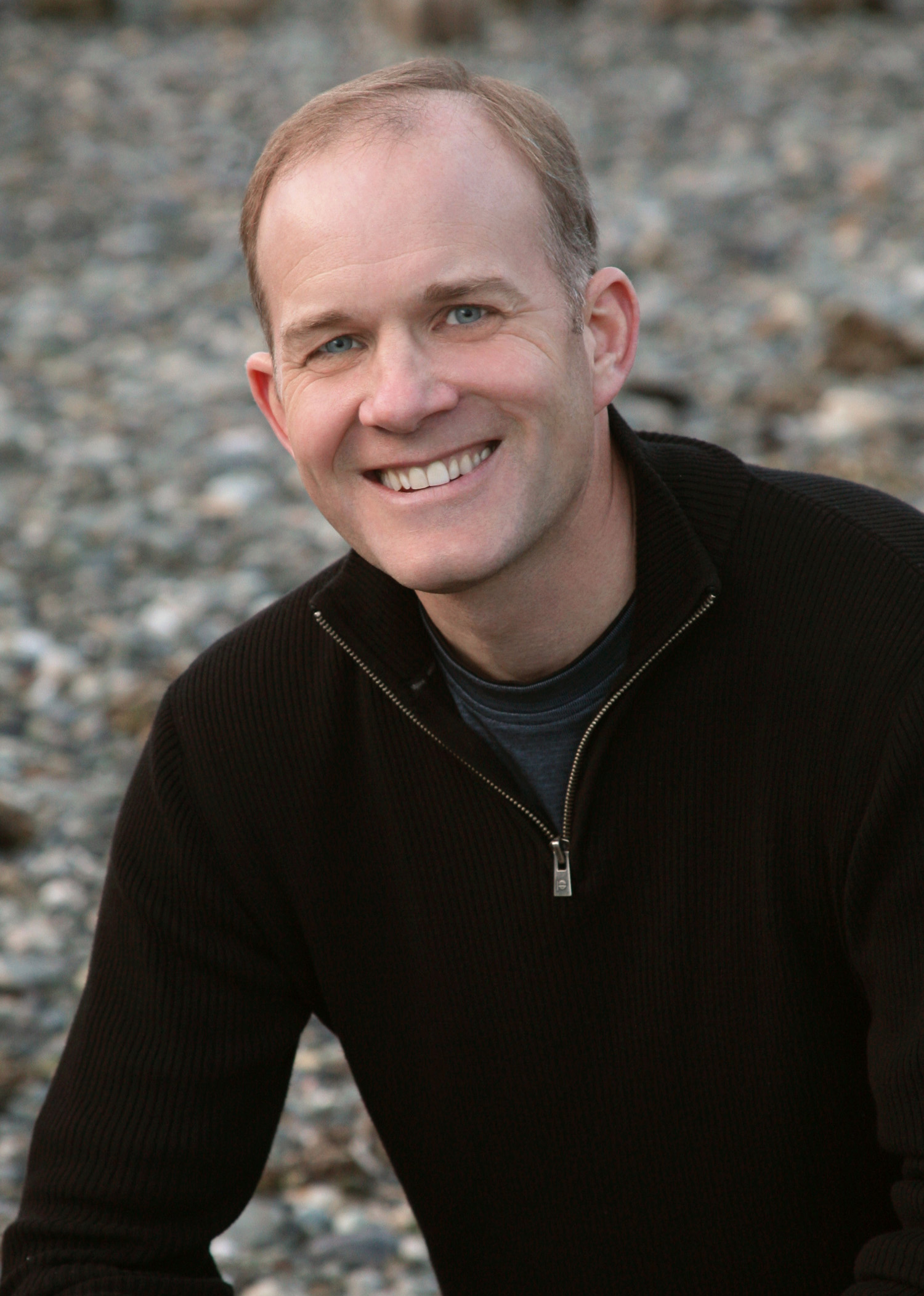
  • Interview with spirituality writer Gary Thomas

    Gary Thomas is a bestselling author in Houston, Texas, where he is a Writer in Residence at Second Baptist Church. An avid runner who has completed eleven marathons, he is married and has three children.

    gary-thomas photoI wrote Every Body Matters because I was struck by how often gluttony and sloth are addressed in the ancient devotional books, but rarely even mentioned from today’s pulpit. It’s also been a natural progression in my own walk with the Lord. As a young man, my metabolism and penchant for running hid a lot of food-based indulgence, but while it didn’t show physically, it was having spiritual consequences. The church should be in the forefront of addressing this issue, not struggling to catch up.

    A man once came up to me and explained how his wife had decided to leave him. As she was packing up to move out the next day, she knocked over his copy of Sacred Marriage and saw the subtitle (What If God Designed Marriage to Make Us Holy More Than to Make Us Happy?). It intrigued her, so she started reading, then woke up her husband in the middle of the night and said she wanted to give it another try. The man had an 18-month-old girl and a 4-year-old boy. I was moved by how God could use a book subtitle, and a few chapters, to change the course of a marriage and to provide a more stable home life for these two kids.

    I appreciate Francis De Sales for the way he makes spirituality so practical for laypeople; Brother Lawrence for renewing my desire to bask in God’s presence; Fenelon for his ability to communicate about the spiritual life; and Henry Drummond for applying his brilliant mind to unlock practical aspects of spiritual growth. Brother Lawrence’s Practicing the Presence of God is probably the easiest for people to read. I wrote Thirsting for God to introduce the writings of the Christian classics, so that’s another place to start.

    I read some of my book’s reviews, because there are always things to learn, and because the reviews are usually encouraging more than discouraging. But then there are the crazy ones that seem so unfair—not that long ago, a man gave one of my books a poor rating saying, “I haven’t actually read it yet, but I flipped through it and I’m suspicious.” What’s the point of that? Some reviews point out blind spots (many said I’m harder on men in Sacred Marriage than women, which is true); others tell me more about the reviewer than anything else.

    I love to read. I love to study. I love to write, and even re-write. And morning is my favorite time of the day. Put that together, and I can honestly say, though I’ve been actively writing/publishing for almost 20 years now, I have never suffered from significant “writer’s block.” Now, because of my duties as a teaching pastor, I don’t have all day to write like I used to; it’s compacted into a couple hours in the morning, but that’s enough if you’re faithful with it.

    Susan Howatch is among my favorite novelists, though she isn’t writing too much these days. I lean toward literary fiction more than commercial fiction, but I also read a good bit of history. Because I’m an avid runner, I usually read a few running-related books every year as well.

  • Interview – fabulous Francine Rivers

    Sometimes what we see as rejection is, in truth, sacrificial love.”

     An interview with bestselling author Francine Rivers, who shares her heart for God and love for her readers. (Appeared originally in the June 2014 issue of Woman Alive.)

    I thought being born into a Christian family and raised in the faith made me a Christian. It didn’t. Each person makes their own choice, and it took me years to surrender to Jesus – not until after I’d gone through college, married, had children and started a writing career. My husband Rick and I went to church, but came away dissatisfied and knowing there must be something more. We both had personal issues that brought us close to divorce several times. As a child, I’d asked Jesus to be my Savior. What I didn’t understand is I needed to surrender my life to Him and allow Him to be Lord of my life as well.

    Francine Rivers photo
    Elaina Burdo copyright © 2014. All rights reserved.

    Studying the Bible changed our lives. Our hearts and minds opened to Christ. Rick and I both accepted Jesus as Savior and Lord and were baptized in May 1986. Since then, God has been changing our lives from the inside out. The Lord also healed our marriage – we recently celebrated our forty-fourth wedding anniversary.

    From the time I was a child, I knew I would be a writer. On a dare from Rick, I decided to write a combination of my favourite genres and wrote a “western-gothic-romance.” Romance novels were booming in the general market, publishers were on the look-out for new writers. My first manuscript sold and was published. I was hooked! I followed with eight or nine more of what I call my B.C. (before Christ) books. They are all now out of print, are never to be reprinted, and are not recommended.

    When I turned my life over to Jesus, I couldn’t write for three years. I tried, but nothing worked. I struggled against God because writing was my “identity.” It took that period of suffering writer’s block to bring me to my senses. God was trying to open my eyes to how writing had become an idol in my life. It was the place I ran to escape, the one area of my life where I thought I was in complete control. My priorities were all wrong and needed to be put right. God first, husband and children second and third, work. My love for writing and reading novels waned and my passion for reading and studying God’s Word grew.

    Every year I go on a “pray, plot and play” retreat. There are eleven of us, all professional writers, one of whom is retired, in her nineties and no longer able to make the trip to Idaho. She is a mighty prayer warrior who served with her husband as a missionary in India. She remains an inspiration to us all. Our group always starts our daily session with a devotional presented by one of the members. We sing hymns. I can carry a tune, but three of our ladies have beautiful voices and could go on the road as professionals. I love to listen to the harmony; it’s a sweet taste of heaven. Our roundtable discussions and “twenty-question” plotting sessions have produced numerous published novels. We laugh a lot; cry together. We’re in constant contact through the year and support and encourage one another. All of us have faced or are facing major challenges: cancer, death of a spouse, children struggling with addictions, contracts and publishers, adopting children, moving from one state to another, caring for aging parents, writer’s block, loss of job, moving into a new publishing arena (online direct). We pray and pull together. We encourage and build up one another’s faith through whatever trials this life throws at us. And we keep writing stories to glorify our Lord and Savior, Jesus Christ.

    A few years back, while in a writing competition, I saw the effect of the awards on a dear friend. She was happy I had received the award, but she longed for affirmation for her work. This writer had published far more novels than I had and is a wonderful writer. Seeing how hurt she was crushed me. Hence, I decided not to compete again. Why do we do it? We are one in Christ, and I don’t want anything to come in the way of that. And I don’t believe there is any such thing as a “best book” (unless it’s the Bible). If a novel or nonfiction work changes someone, encourages them, or opens their hearts to Christ, that is their best book of the year whether it sold ten copies or a million.

    I don’t read reviews if I can avoid them. Good ones tend to stir pride and the bad ones crush the spirit, neither of which is good for my faith walk. Reviews are one person’s opinion. God is the one we want to please. I’m one of those people who would love to please everyone, so it’s better if I keep my audience to One. All I can do is put heart and soul into my work and leave what happens with it to Him.

    I hope the stories I write will increase readers’ hunger and thirst for Jesus, and the characters will inspire them to be more like Him. It’s so easy to follow the ways of the world, to get sucked into following the herd rather than be among the flock. I want to encourage readers to trust in the Lord always and to remember only His Word is truth.

    Bridge to HavenIn Bridge to Haven, I wanted to explore how people can be bridges. Jesus is the ultimate bridge that takes us across the chasm over hell and into heaven to be in the presence of God. Each character in the novel plays a part as a bridge builder or bridge destroyer. Sometimes the characters begin as one and become the other.

    The story started as an allegory about the character of God and Jesus, but how can anyone capture the immensity of God, His all-consuming love and passion for each of us? I certainly couldn’t. His love is so immense, cleansing, healing, restorative. It’s beyond human understanding. I dumped my first attempt and started over. In this rendition, two of the main characters, Zeke and Joshua, strive to be like Jesus, and often fail. The protagonist Abra represents those who turn away from the love offered, looking in all the wrong places for what they had from the beginning. It is a leap of faith to believe God’s grace is not earned, but freely given.

    The Golden Years of Hollywood seemed to fit the story better than other eras. Many of the stars people idolized had miserable lives and tragic ends. I think of Marilyn Monroe in particular, who spent her life searching for love. James Dean, another Hollywood icon, died at 24 in a fiery car crash. Hollywood reeked of scandal; affairs, broken marriages, suicide, fortunes made and lost. It was also a time when girls believed all they had to do was show up in Hollywood to have all their dreams come true. Abra’s dream is to be loved, to be someone of importance. The challenge for me was interweaving the characters through World War II, the Korean War into the Cold War as well as a time of prosperity and showing how what happens in the world also impacts how we think, act and live. Only He is unchanging. Truth love and peace can’t be found anywhere else but in Him – in any era.

    Children are deeply affected by early trauma. Abra focuses on the facts, believing she has been rejected by the only father she knew. She retaliates by rejecting him as well as the God he loves and serves. The seeds of bitterness and rebellion are planted at five, and Abra only sees through the eyes of a hurt child. This happens so often in life. What we see is only the surface. This was a theme in my two previous novels, Her Mother’s Hope and Her Daughter’s Dream. Sometimes what we see as rejection is, in truth, sacrificial love. It takes growing up and God’s intervention to bring truth, and for some that journey takes years and even deeper heartache before we fall to our knees and seek God’s perspective.

    I was like Abra for many years. Despite the truth I was taught as a child, I took hold of a wrong view of God as a constant critical eye, a Being just waiting to condemn me to everlasting hell. When I turned to God, I felt like Paul when the scales fell away from his eyes. In a sense, I awakened and knew God loved me despite everything I had done and mistakenly believed. My stubborn pride had to be broken. There were always people around me who loved me and pointed the way to Jesus. That is true of everyone. God makes ambassadors and scatters them everywhere. When we open our hearts, usually out of desperation, God pours in His Holy Spirit and opens our eyes and ears to who He is and to those He has called to help us cross that bridge of faith God uses.

    Before I started writing Redeeming Love, when I was still rather new at loving God with my whole heart, I got the idea to start using what I called a God Box – an inbox for God. I would write out prayers and put the papers into the God Box. This practice helped me to let go of the issues, to put them into God’s hands by physically putting them into the box. Every few months I would read the papers and marvel at how God had answered the prayers, often in unexpected ways.

    What amazing things are our five grandchildren doing? Growing up! We have one grandson learning to drive and talking about joining the Air Force, another playing secondary-school basketball and winning spelling bees, and the youngest getting ready to enter kindergarten. One fourteen-year-old granddaughter is becoming a poised young woman and our eight-year-old granddaughter is one of two girls on a Christian basketball team and excelling in school. They’re all busy and happy and making their parents and grandparents proud (in a good way). The whole family was together at our place for Christmas Eve and the house was rocking!

    “Trust in the Lord with all your heart; lean not on your own understanding. Acknowledge Him in all your ways, and He will make your path straight” (Proverbs 3:5-6). These are the Scriptures I go back to over and over again. The prince of the air has free run of this world, and he is the father of lies. Satan hates God and attacks Him by wounding and destroying His children. Even so, God reigns. Only God can take the worst we experience or bring on ourselves and use it to His good purpose in drawing us closer to Him as well as offering a light to others.

    For me, trust has always been difficult. I trust and then I worry (doubt) and then, by submission and prayer, trust again. Our work is to believe and walk in faith one day at a time. And that is hard work at times. Some of us have to learn the hard way that life in this world is too painful to live any other way. Only in Christ do we have peace and a love that fills us up so much that we have a wellspring to pour out to others.

  • Interview with Anne Graham Lotz – Wounded by the Church

    God gives me strength and stamina every day. Over the recent months, my husband has had two bouts of pneumonia by aspiration; it’s exactly what my daddy has had. Danny is out of the hospital now, but has home healthcare and a team of friends to help. I don’t feel rested or refreshed, but I’m in good health. And God gives me droplets of blessings; words from his Word.

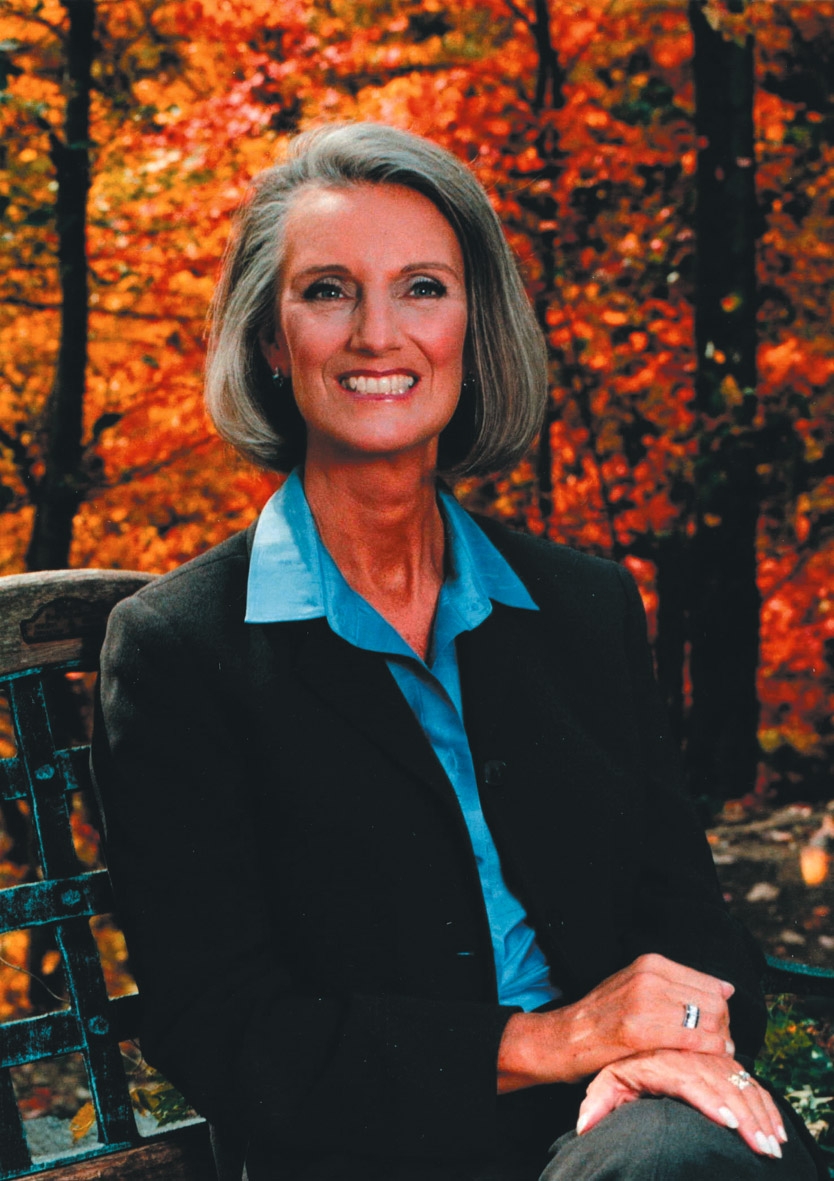
    Anne Graham Lotz High ResThis has made me think of Moses asking to see God’s glory (in Exodus 33). God puts him in the crest of the rock and has his hand on him. And then God removes his hand. So in a very hard place, Moses feels abandoned. And then God passes by, but Moses only sees the backside of it.

    God has put me in a hard place, and at times I don’t feel his presence at all, but I can look back on yesterday, or last week, or the hospitalization – the two months Danny was in hospital and rehabilitation – and I can see how God has brought us the right doctors and nurses, and how he’s taught me so much. Like Moses I see God’s character and his faithfulness; his goodness and strength. Faith doesn’t go on feelings; faith is rooted in the word of God.

    I didn’t intend to write Wounded by God’s People so personally. When I finished The Magnificent Obsession, which is my book on Abraham, the story of Hagar stayed with me. And so I went back and did a Bible study on it, and felt impressed that God wanted me to write on Hagar. I ended up taking four years to write it, going deeper and deeper in my understanding not only of being wounded but being a wounder.

    While I was writing, I was deeply wounded. I waited for about two months to do an act of kindness, because I was so stunned by the wounding. But God clearly popped something very precious into my mind that I could do for her. About a month later I received a perfunctory note on her business letterhead, in which she barely thanked me. But I knew that my act had set me free – I can still be surprised at what she did, but the pain is gone and I live in my forgiveness.

    If you don’t deal with your sin, then you cover it up; you keep blaming; you build a wall. And that’s something I’ve seen since I’ve written Wounded: very few people have the courage to look at themselves and see when it’s their fault. We’re so self-deceived and have such a positive image of ourselves! Some might pray for the Lord to show them their spiritual blindspots, but they do so with one eye squeezed shut while rationalizing their actions.

    I want to learn from people backpedalling and defending themselves, for I want to be wide open and honest before the Lord, so that when I’ve hurt someone I can see it and know it and do my best to set it right.

    If you told me during my year of exile, when I wasn’t attending church, that I had to go back to church, I would have bucked. I wasn’t ready. But when the time was right, my husband and I went back, and it’s been a blessing. There’s a time we need to get out and catch our breath and get a good perspective, but when God sends us back, then we say, “Yes Sir.” Maybe not to the same congregation, but we can be obstinate in our exile if we ignore God’s prompts.

    Pastors and people on staff at church have been devastated by those in their congregations. It’s not just people in the pew. I don’t know what in the world we’re thinking when we treat each other like this – it’s heart-breaking to hear the stories. But I know God can use it. And I know what he’s taught me in the story of Hagar. We can get free of the bitterness, and from being bogged down in the mire of resentment and anger and all those imaginary conversations.

    Wounded UK Cover High ResOne of my friends read Wounded after she caught her husband having an affair. They were working things through in counselling when she asked me whether she had to offer the woman forgiveness. I said no, there are boundaries. You can forgive him – and living with a man who betrayed her, her days are filled with acts of kindness – but not to approach the woman, for she hadn’t acknowledged her wickedness and was still trying to seduce the husband.

    Jesus offers us forgiveness of every and any sin, but we have to confess our sins, saying the same thing about them that he does – we have to be brutally honest. Then we’re forgiven of all that sin and unrighteousness. But there’s only so much he can do when we’re rationalizing and defending. You’re not going to have an intimate relationship with a holy God as long as you’re excusing your sin. The same thing is true with another person.

    Women speaking and praying in church? I make an application from John 20, John and Peter at the empty tomb. You can hear their sandals running out of the garden when Mary Magdalene comes along. She’s weeping and the angel says that Jesus isn’t here, and then she sees a gardener who calls her by name. And it’s Jesus. But Jesus was there all along; he withheld himself from Simon and John, revealing himself first to Mary and then the other women. He instructs Mary to tell the disciples what she’s seen and heard. He wants the women to share their testimony, their encounter with the risen Christ, giving his disciples the instructions to meet him in Galilee. His disciples are a group of men behind locked doors in Jerusalem. Mary goes right back to tell them, but they think she’s a hysterical woman. So they postpone God’s blessing in their lives.

    Jesus makes a poignant lesson that the church seems to have missed – that women can be disciples; that he reveals himself to them in fresh and significant ways; that he himself commissions them to share not only their testimony but also his word. But we have to be careful to let God give us a ministry and not try to make one for ourselves because we want the position or prestige.

    Books I love? Joel Rosenberg’s novels. He’s a converted Jew who writes biblical prophecy in novel form and then it comes true! One of his latest is The Damascus Countdown. He teaches us about the Shiites and Sunnis and the Muslim culture. Another is Tom Doyle, Dreams and Visions. Every chapter tells a different story of a Muslim to whom Jesus just shows up. It seems to be the untold story of tremendous revival in the Middle East. Another is The Forgotten Blessing by a Jewish rabbi who is now a believer, Aaron Fruh, about the blessing that fathers give their children and wives. I know people who put it into practice and what a difference it makes in the home. And I love Davis Bunn’s novels. One of the best was Lion of Babylon. I wrote him to thank him for it, and he wrote back and said, “Anne, did you see it was dedicated to you?” I said no! I had seen an early manuscript, so I bought a copy and there it was! I was very moved by that.

    My interview with the well-known Bible teacher appeared first in Woman Alive in April. With thanks to my friends there for permission to include on my blog.
  • Interview with Stormie Ormartian: The power of the written word

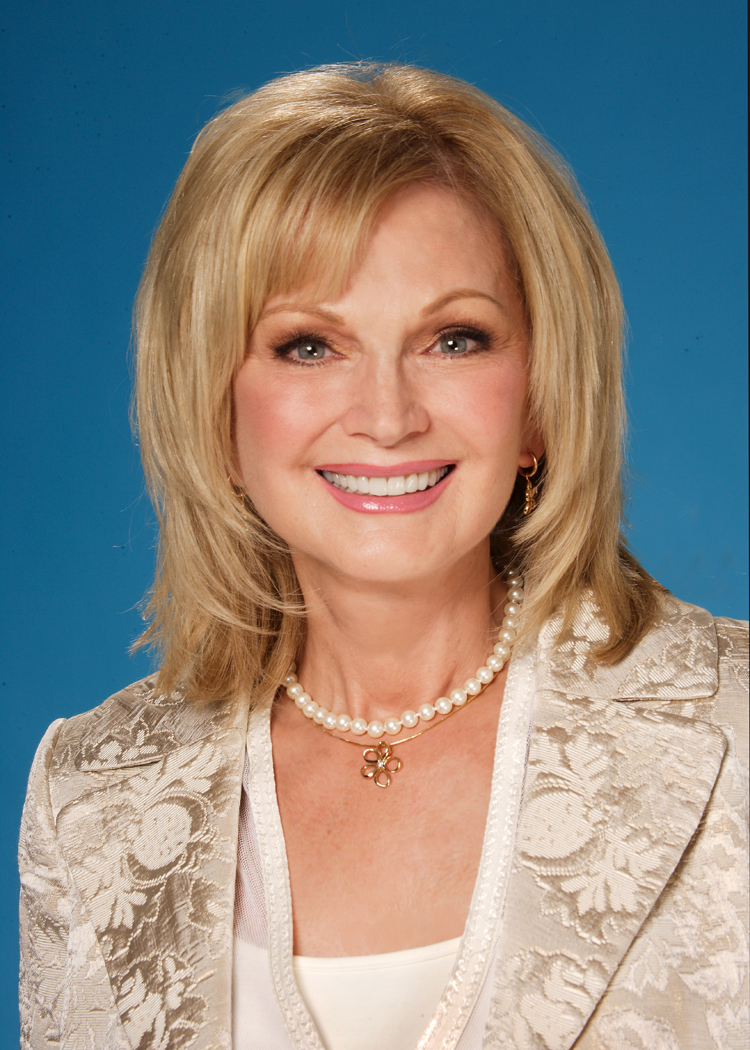
    A rerelease from Woman Alive, when I caught up with best-selling author Stormie Ormartian, who has impacted millions with her The Power of Praying books. Books have been profoundly important for her too… 

    Stormie 2Amy: I understand that three books were vital to your conversion, including the Gospel of John. What were they and how did they help set you free?

    Stormie Ormartian: The pastor who led me to the Lord knew which books I should read because they contained exactly what I needed to understand in order for my heart to be opened to the truth. He gave me the Gospel of John in a small book form which told me everything I needed to know as to who Jesus is and what He did for me and why I needed Him.

    The second book was The Screwtape Letters by C.S. Lewis, about the reality of evil and the enemy’s plan for our lives. It, too, was exactly what I need to read because I was involved with occult practices and new age religions that denied the reality of evil.

    The third book was on the Holy Spirit, and that book was discontinued around the same time that I received the Lord. I know this because I gave my copy to a friend when she couldn’t find it in the stores and they told her it was no longer available. I don’t recall the name of the book, but having no prior knowledge or understanding of the Holy Spirit, it was eye opening for me to know that when I received Jesus the Holy Spirit would come to dwell in me and change me from the inside out. I wrote my book Lead Me, Holy Spirit on that very subject because I could not find one that talked specifically about how the Holy Spirit leads and transforms us. When I read those three books I had never heard any of that before and I knew what I was reading was the truth.

    After I read the books, my pastor asked me if I wanted to receive Jesus and I told him yes. Right away, I noticed a difference in my life. I had a feeling of peace, of being accepted, of being cleansed from all my past failure, of starting over with a clean slate. And I felt love, joy, and hope for the first time. I also had a growing sense of purpose, and I began to see a future for my life. As I grew in God’s Word, I learned to walk in His way. I became better able to make right choices. And with the Holy Spirit’s leading and enablement, I could resist falling back into old habits of doing things that were not God’s will for my life. As I moved into the deliverance and freedom He had for me, I gradually became free from depression, anxiety, and fear.


    Amy: The Power of a Praying Wife has been a bestseller for ten amazing years. How was the experience of writing that book? Did you ever think it would make such an impact for God’s glory?

    Stormie: I never dreamed when I was writing The Power of a Praying Wife that it would have the impact, sales, longevity, and life-transforming effect that it has had. Talk about the Lord having more for us than we can even think or imagine. I never imagined all this. When the book went number one on the bestseller list I called the president of Harvest House Publishing to thank him for all the hard work the company had done to make that happen and he immediately said, “We didn’t make that happen. No one can. Only God can do that.”

    It was a hard book to write because I had to share details about my marriage that I didn’t know if my husband was going to agree to. When he read it he asked me if I had to include the part about his anger. I said yes because that was the biggest issue in our marriage. I couldn’t pretend that it wasn’t. I was not writing a book about how to make a perfect marriage more perfect. Where would my credibility be if I left out the greatest struggle we had. And to his credit he willingly gave the okay to leave everything in as I wrote it.

    What amazed me about the book was although I knew that this way of praying worked for me, I was concerned about whether it would work for other women. That’s because it is a sacrifice on the wife’s part and I wasn’t certain that many women would be willing to make that sacrifice. But I was thrilled to see how they took to it immediately and were so willing to do whatever it took to make their marriages better and lasting. I thank God for all those precious women.

    Stormie Small (2)


    Amy: I’m assuming your painful childhood wasn’t conducive to much reading; is that right? Do you have any childhood favorites in terms of books, or those you read to your children?

    Stormie: I don’t remember being read to much as a young child, except for the Cinderella story. But when I started school I was extremely eager to learn how to read. And once I could read books on my own I never stopped reading every book I could get my hands on. My favorites were fairy tales, which I read one after another. I loved them. I lived in them. In fact, fiction became my way of escape from the sadness of my life, even on into adult years. After I came to the Lord, all I wanted was the truth. So I read only non-fiction from then on and started writing non-fiction books as well.

    I read to my children from the time they could sit up on my lap and be interested in the pictures. I read them every book I thought was appropriate for their age. Two of their favorites were The Little Engine that Could and Winnie the Pooh as well as little Bible stories that were just right for their ages. I read to them nearly every day of their childhood and they would always pick the books they wanted to hear. After they were skilled enough to read on their own they would have a quiet time with their books, reading some of them over and over again.


    Amy: Have you ever considered writing fiction?

    Stormie: I have been asked to write fiction from different companies and I haven’t done it yet because I have had so many non-fiction books on my heart that I had to get them written first. And I do love writing dialogue and description and telling a story. But I also love true stories like I wrote in The Miracle of Christmas about the birth of Christ. I have been praying about writing fiction in the future, so I am curious to see how the Lord leads me on this.


    Amy: Imagine you’re going on an upcoming journey and your only activity can be reading. What books would you read?

    Stormie: I don’t have to do much imagining about that because I am leaving on a much needed vacation with my husband for a week. And my absolute favorite activity is reading. I love books. I love to read. So I am planning what books I am going to take. I like autobiographies and biographies of political figures or great men or women of history, and books that help me to better understand the Bible. I also enjoy books on healthy living, especially the newest discoveries about how to eat right and take care of our bodies. I am allowing myself one hardback, one paperback, and a couple of books on my Kindle. I love the feel of a book, but I can take more if I put one or two on the Kindle as well.

  • Interview with Sheila Walsh – Seeing the face of God through the window of our brokenness

    In honor of Sheila Walsh’s new book releasing this week, The Storm Inside, here’s an interview previously published in Woman Alive with this speaker and writer who powerfully communicates the truths of the Bible in a grace-filled way.

    Sheila WalshYou’re a Scot who has lived in the States for something like 25 years. Do you ever get homesick for Scotland? If so, do you reach for any favorite Scottish authors?

    I do miss Scotland. I miss Marks and Spencer’s Christmas cake and good chocolate but most of all I miss my family so I try and get home as often as I can. I also miss London as I spent so many years there. I love the poems of Robert Burns and the writings of Thomas Hardy.


    My young daughter adores Gigi [the main character in Sheila’s books and videos for young girls]. Recently she said that these were her favorite books, and as someone who works in publishing, I have stacks and stacks of books for her to choose from. I’m also slightly embarrassed to admit that CutiePyeGirl is a blonde who usually doesn’t go for brunettes – she prefers Cinderella to Snow White, and so on. But [brown-haired] Gigi speaks to her. How did you come up with the idea of Gigi – and Will? What’s behind the stories?

    One morning when my son, Christian was five and I was dropping him off at kindergarten I watched a dad with his daughter. She was not what we think of as the traditional Disney Princess. She had bruises on her knees and her hair looked a little wild but her daddy took her face in his hands and told her she was beautiful and she believed him. I lost my dad when I was five and never saw myself as anything but awkward and clumsy. After watching that dad with his daughter I drove straight to Starbucks and wrote the first Gigi story on napkins. I want every little girl to know that she is precious and treasured by God.


    What’s behind your book God Loves Broken People?

    I have spent so much of my life trying to “fix” myself, to make myself more acceptable to God. It seems to me now that it’s when we realize that we can’t fix ourselves, that we are broken and lost without Christ that we begin to understand the heart of the gospel. I passionately believe that it is through the window of our brokenness that we see the face of God.


    Tell us about how you engage with your favorite commentaries when you’re writing or teaching about the Bible.

    One of my favourite things in the world to do is to take a passage of scripture and dig deep. I use Logos software on my computer, which gives me access to a whole theological library. I can choose a passage and read what my 5 favourite commentaries say then do a word study to unpack a word in Hebrew or Greek. The more I dive into God’s Word the more there is to know. It’s as C. S. Lewis wrote, “It’s as if we are children splashing around in a puddle when God has said, come swim in the ocean.”


    Escape with any novels in the bath?

    That’s a funny thought to me! I love having a bath at night but that’s when I love to be quiet and reflect on the day with the Lord. Every morning when I get up I always say, “Good morning Lord, I don’t know where you are going today but wherever you’re going, I’m coming with you.” At the end of the day I love to reflect on that.


    As a dog-lover do you enjoy books about dogs? Prefer the real thing instead?

    I think I have read everything James Herriot has written! One of my favorite books is the story of “Greyfriars Bobby” a little dog who refused to leave his master’s grave. My dog Belle is just like that. Wherever I am, there she is.


    Have you ever thrown a book across the room in disgust?

    I never knew that was an option! I’m pretty careful about what I read but will now by looking for opportunities to do just that :).


    Sheila Walsh is a powerful Bible teacher and best-selling author from Scotland with over 4 million books sold. Currently completing her Masters in Theology, Sheila lives in Texas with her husband, Barry, her son, Christian, and her two little dogs, Belle and Tink.