Category: Finding Myself in Britain

  • Living in Tents by Peter L. Edman

    No Place Like HomeThe shock of uprooting and moving and the hidden graces – that’s what Peter Edman so eloquently addresses in his contribution to the “There’s No Place Like Home” series. I’m grateful to hear Peter’s thoughts, not least because they remind me of our many years of working together in the nation’s capital. We were like brother and sister at times, squabbling but with that fraternal love that meant I knew I could call on him when I was stranded at Baltimore airport at midnight and he’d come to rescue me. True friendship to me gives a taste of Home.

    One of my acquaintances used to introduce himself to an audience by giving his name and quipping, “I’m from Washington, DC, and I’m here to help you.” He usually got the wry laughter he was expecting. I too used the line over the two-plus decades I made my home in DC and Northern Virginia. Then I was transferred to Philadelphia, and I’ve been a bit wistful at leaving behind that comfortable joke—and a comfortable identity informed by that influential city.

    DC is not a homey place, but we found stability and community there. I stayed at the same church and eventually managed to have most of my family close to us. The relocation—four residences and three offices in three years, all three hours farther from grandparents, cousins, and friends—has meant making a new life for myself and my family. It’s meant finding a new home while negotiating pointers, hopes, and compromises. And in a sense, recentering my identity.

    The pointers, at least, have been pretty clear. A mandate to move if I was to keep a stable job doing interesting and meaningful work. The discovery of a new church that continues several relationships with our old church. The quick sale of our old house. Creative financing that secured a newly renovated historic house with room for our five children. A new family with kids unexpectedly moving in across the street.

    Our new home.
    Our new home.

    There have been other pointers, even up to this weekend. On Saturday I was preparing for this post and began to think about Hebrews 11. On Sunday it was my turn to read the New Testament lesson at church, and I discovered Hebrews 11 was the assigned passage. “By faith Abraham obeyed the call to leave his home”—in an influential city—“for a land which he was to receive as a possession; he went away without knowing where he was to go” (Hebrews 11:8 REB). I am glimpsing more of its meaning now.

    Our hopes have been met in part and redefined in part. We are compromising. After so many years in prosperous suburban settings, we’re still adjusting to the vigilance required in our new, mixed urban neighborhood. We don’t want to afford two cars in the city, but with public transit, my commute is the shortest it’s ever been. Our house renovations were extensive, and we have space for hospitality, but its “architect and builder” (11:10) was not God, and a series of leaks taxes our patience and our budget. We could not afford to live near our new church, but we can host a home group.

    The Edman brood.
    The Edman brood.

    For introverts it’s hard to reach out and build new friendships, let alone replace missing support structures, but both are happening slowly. Already we know more neighbors here and have more connection with community groups than we did over our years in Virginia. The lack of pretense and the friendly attitude toward our small children in public spaces are refreshing.

    The expectations on us are different too. No one asks me what I “do” anymore. I’m not expected to “help,” just to participate, to be a neighbor.

    I am reluctantly seeing value in the compromises. My nature is to treat my home as a safe space, a gated community. But Abraham settled as an alien, not as an insider—“living in tents” along with his children and grandchildren (Hebrews 11:9). You can’t depend on tent fabric to keep your possessions safe, and indeed the writer tells us that Abraham was “looking forward to a city with firm foundations” (11:10), “longing for a better country” (11:16). His identity was not dependent on walls, riches, social standing, or citizenship—and yet he is remembered not only for faith but for exploits of hospitality, generosity, even warfare. God took care of his children. But no one now remembers who was king or top socialite back in his hometown. It’s worth reflection.

    DSC_0483The joys and flaws of my new city and my new house, along with our increasing awareness of our need for help, offer regular reminders that my home, my citizenship, is not finally here. I can live with my family like resident aliens, offering and receiving hospitality, raising my children, serving those around me, and hopefully living as a pointer to the God who, in spite of all appearances, rewards those who seek him (11:6).

    My name is Peter. I’m not here to help you. But perhaps I can remind you to long for a better country.

    PLE 2016 whitePeter Edman, an editor, is a quality assurance manager with American Bible Society, where he also manages the product line for trauma healing programs now active for adults and children in more than 80 countries and 150 languages worldwide. He lives with his wife and five children in the Germantown neighborhood of Philadelphia. You can reach him at @pledman.


  • Home is another country by Veronica Zundel

    No Place Like Home“Where is home when your mother’s tongue is not your mother tongue?” Veronica Zundel’s opening line compels us to read on – and I hope you will, for her thoughts on finding home as the child of immigrants will move you. She speaks of loss and yet an undergirding hope.

    Where is home when your mother’s tongue is not your mother tongue? Let me explain. My Jewish mother and Gentile father left Vienna in 1939 for the UK. Their marriage in London was followed by 14 house moves (well, 14 single room moves) in a few years. Finally they settled in Coventry, where I, their second child, was born. When I was five and my doctor Dad had earned enough (Mum was unable to finish her medical studies), they bought land and had a modern house built, with a large garden including an apple orchard, where I would later pick and eat unripe cooking apples, to the detriment of my digestion!

    100_0152
    My mother.

    My mother never saw her own mother again – she perished, along with Mum’s aunt and uncle, in a concentration camp. Five of my potential six grandparents (my mother was adopted), died before I was born. The sixth, my father’s mother, along with his brother and sister, lived in Vienna, so I saw them at best annually. Neither of Dad’s siblings had children (though I later learned of my rakish uncle’s secret illegitimate daughter), so my brother and I were the only ‘next generation’. There were plenty of honorary aunts, uncles and even cousins of a sort, but no extended family. We had enough money, but this was a form of poverty not often recognized.

    Meanwhile the family home held a different culture from that of school or playmates; a little enclave of Austria where they spoke a strange hybrid language laughingly called ‘Emigranto’ or ‘Refugäsisch’, where they ate different foods and even held cutlery differently, where everyone spoke at once and I couldn’t get a word in. Better to retreat to my bedroom with a book and explore other worlds, as well as playing with my imaginary English family with five children (including, as in all the best fictional families, twins).

    When I was 13 and he 18, my brother became mentally ill, and was in and out of hospital until he killed himself in 1975 at 27. In the light of all this, it is unsurprising that I found ‘home’ in places rather than people. At 16 I found a new home in Jesus; and about a year later I discovered what would be my first ‘spiritual home’, at a Lutheran community/conference centre I visited regularly and later lived and worked at for six intense months. Yet a few years on, this ‘home’ would be lost, sold by the Lutherans and its community scattered. By then, I had my own flat in London, home of a sort but often lonely.

    Christmas in Vienna.
    Christmas in Vienna.
    Beautiful rural Austria.
    Beautiful rural Austria.

    100_0581

    Fast forward a dozen or so years to my marriage in 1989, and my parents’ decision to ‘retire to London’ to be nearer us. This was fine, except that I soon learned that the couple (a Jewish doctor and his convert wife) who bought their house, had demolished my bedroom to build an octagonal excrescence containing a new master bedroom and a kosher double kitchen. (All that observance didn’t do the wife much good, she later ran off with her personal trainer!) They also felled the silver birch tree outside my garden window, and losing the other window that allowed me to climb surreptitiously onto the garage roof. All my childhood, gone at a stroke.

    Happily Ed and I had found a new, wonderful spiritual home in the Mennonite church. After a lifetime of taking photographs only of places, I started to take photographs of people, and to find Christ in them, where I had previously found him only in solitude and natural beauty. Could home, once more, be a community? But now that home, after more than two decades, is lost too, with the closure of what was the only English-speaking, non-conservative Mennonite church in the UK.

    Mennonites eating together.
    Mennonites eating together.

    What is left? I have a caring, loyal husband and a delightful son who just turned 22, and we have lived in the same house for 27 years – so is this home? Coventry, which I still visit, still feels like home in a deeper way; and Vienna, which I have known since I was four, another kind of home, yet not home. Perhaps home is always elusive, a state to which we aspire. As Jesus followers we are ‘resident aliens’, citizens of another kingdom, longing for a city which is to come. Only there will we be truly at home.

    Veronica_Zundel_015-1Veronica Zundel is the author of nine books including three anthologies for Lion Publishing, and three books for BRF, of which the latest is Everything I Know about God, I’ve Learned From being a Parent (BRF 2013). She writes regularly for BRF’s New Daylight notes, and a column for Woman Alive magazine, which won a national award, beating columnists from the Mail on Sunday into second and third places. She is is a prize-winning poet who blogs at reversedstandard.com and on the ACW blog, More than Writers.

  • Home from Home

    No Place Like HomeAugust can be a time to be away from home. What measures do you put into place when you’re away from home to make it feel more homely? Here I contribute to the “There’s No Place Like Home” series.

    I watched her unpack her toiletries into the drawers in the bathroom, wondering why she wasn’t concerned about any nasties that might be hiding there. “Wow,” I remarked. “You go for it, don’t you!”

    My friend had moved around a lot as a child, and perhaps this mobility contributed to her rooting herself to where she was staying even if just a night. I was in my twenties and had only experienced one childhood home, where my parents still lived, before I had moved to the East Coast in America. Maybe that’s partly why I had never thought to unpack my toiletries or even my suitcases when I went somewhere. After all, I never was sure how clean the drawers would be.

    Photo by einalem on flickr
    Photo by einalem on flickr

    But in the intervening years I’ve adopted my friend’s ways, nasties be damned. Now when I unpack at the beginning of a stay somewhere, I’m telling myself that I will be fully engaged there. Not having to search in an increasingly rumpled suitcase for a shirt or bathing suit makes me feel more rooted. Just the physical act of unpacking informs my heart and my mind that I want to experience the joys and delights of the new place, preparing me for the adventures to come.

    And if I remember to pack some wet-wipes to do a quick clean of the surfaces, all the better.

    What helps you feel at home when you’re away from home?

  • An Embassy of Heaven by Catherine Butcher

    No Place Like HomeHome as a taste of heaven – I love this from Catherine Butcher. Heaven is a topic she loves to think about, speak about, and write about, and her blog on home radiates with a glimpse of its glory. Take a few moments to ponder and wonder, and join us in thinking about home and heaven and feasting together at the table.

    Not long after we were married, friends who stayed overnight wrote a kind note in our guest book. They described our home as ‘an embassy of heaven’. I’ve carried those words for more than a quarter of a century now. They are as challenging today as ever. What makes a home ‘an embassy of heaven’?

    IMG_2386A British embassy overseas gives visitors a tiny taste of Britain – everything is quintessentially British. Sometimes that means cocktails on a perfect lawn or tea and cucumber sandwiches. But in many parts of the world the embassy is a refuge; a place of peace and sanctuary for Britons stranded in foreign lands.

    And that’s what I want our home to be. A sanctuary and safe haven. More than just a place to shelter. A place to be totally relaxed. Always welcoming. Always nourishing.

    Our kitchen table is the heart of our home. As soon as we could afford it we extended the compact kitchen so we could eat meals there. Later, we made further changes so there’s room to extend the table fully and entertain guests. That table is the setting for my happiest memories. As a family we’ve laughed ‘til we’ve cried. We’ve prayed in good times and bad. We’ve debated and discussed everything from future dreams to family finances.

    IMG_2410But the table could be anywhere. What makes it home is the people seated round it. Home has been a caravan in a field; a picnic table in a forest. I could adapt that Marvin Gaye lyric (later recorded by Paul Young) – ‘Wherever I lay a table, that’s my home’.

    Reading The Sacred Romance by Brent Curtis and John Eldredge helped me to understand why I feel so happy sharing a meal with the people I love most around a table. They pointed to Ecclesiastes 3:11, and Eldredge’s subsequent volumes continue to explore the conclusion of that first book: ‘Our longing for heaven whispers to us …’

    christmas dinnerWhen Jesus said, ‘I go to prepare a place for you’ he was talking about our heavenly home, our safe haven, where we will be fully known and fully accepted just as we are. In heaven, with Jesus, we will never feel like the outsider or the unnecessary extra. Each of us will know he has included us on purpose, not by accident. When we take our place in heaven it won’t be like one of those parties where you wander into the crowded room and wonder who to talk to or where to sit. Jesus is waiting to welcome the citizens of his heavenly kingdom, not formally, but as family. There won’t be an embarrassed shuffling of seats to squeeze you in. He has already prepared a place just for you.

    Our longing for that heavenly welcome whispers to us. Jesus very deliberately chose a meal around a table as the setting to remember him. One day we will sit together at a heavenly wedding supper for Christ and his bride.

    Home is where we have a foretaste of that welcome – and I want every family member and guest to feel that ‘welcome home’ as they walk through the door.

    IMG_2387Catherine Butcher is HOPE’s Communications Director, author of several books and co-author with Mark Greene of The Servant King and the King She Serves, published by HOPE, Bible Society and LICC as a tribute to the Queen on her 90th birthday. Her book What you always wanted to know about heaven – but were afraid to ask (CWR, 2007) is now out of print but is still available from Catherine. Find her on Facebook or email cathbutcher@live.co.uk to buy a copy.

  • The Face of Home by Alex Ward

    No Place Like HomeI dare you to read today’s contribution to the “There’s No Place Like Home” series without tears streaming down your face. I can’t do it – every time I read Alex’s words, they strike the inside of me. Maybe because so much of our story is similar, and that I too have had to deal with resentment and bitterness over what is home – and especially what is the home of my children. I’m so glad to introduce Alex to you today, for she was part of an answer to prayer back when I first moved to the UK and was friendless. Grab a cup, or glass, of tea (hot or iced) as she shares her search for home.

    My husband and I are both from Fife but moved away from Scotland 18 years ago. The moving part was a conscious decision, but the away part wasn’t. Incrementally we have moved further and further, with addresses in England, The Netherlands, Hungary, and now Texas in the USA. The initial move was a result of my husband accepting a job in Surrey; subsequent moves were internal to the company he works with – a mark of a successful career, but with ripple effects for ourselves and our families.

    The view from home in Aberdour.
    The view from home in Aberdour.

    Oddly, despite having lived in five different countries in less than two decades, it was only a year ago that I started having a crisis about what I actually called “home”. At that point we had been living in America for more than a year, and had drawn the conclusion that it made sense to buy a house here in Texas. I was on board at a practical level, but was struggling emotionally and had at least one meltdown during a telephone conversation with my poor, bemused husband.

    On reflection, previous moves had never seemed particularly permanent. Even in The Netherlands, where we lived nearly nine years, our expectation had been to be there for two, and the staying was a gradual acceptance. Buying a house in Texas felt like a sudden and huge commitment, not helped by the fact it is so far away from Scotland, with family, a cooler climate and a beautiful landscape beckoning.

    It also felt like a betrayal to my parents who had endured a hard six months, during my step-dad being in hospital and the ensuing recovery of illness and being effectively institutionalised. Ironically, I had just completed a Master’s in Gerontology and yet I wasn’t available to support my own family. Failing health also meant they wouldn’t be able to make the journey to visit our new house – in my mind a key requisite of giving it a feeling of home.

    The final straw was having to come to an acceptance that this would likely be the last childhood home for our boys, in a place where everything except (and perhaps even) the language is surprisingly alien. As far as the boys were concerned, America, with football (sic), sunshine, swimming, Chick-fil-a, tennis and music every day at school, was exactly the place to spend their childhood days.

    The view from home in Flower Mound.
    The view from home in Flower Mound.

    At the time my emotions were running high, I was taking part in the first semester of the Life With God (LWG) study with a small group from my church. The study aims to encourage participants to deepen in relationship with God, through personal reflection and group discussion. Participants are challenged to apply biblical knowledge to the heart and soul, and we had reached a point in the study where we were considering Cain and his essential refusal of God’s intervention regarding anger and bitterness (Genesis 4:6,7).

    Working through my own personal resentments and disappointments in light of the study, I reached two very clear conclusions. As far as my immediate family were concerned, the only factor that would hold everyone back from settling with Texas as their home would be my reluctance, and even bitterness. As far as God was concerned, I was displaying a lack of faith that, having brought me thus far with many blessings and life lessons on the way, God would continue to work His purpose in my life.

    I gradually began to accept Texas would be home for at least the time being, and to take each day as it came. Very soon after all my soul-searching, we found a house that ticked much of our wishlist and, as the months have gone by and neighbours have become friends, it has met wishes and needs we weren’t even aware we had. Thanks to Skype and Facetime, family members unable to travel have become familiar with our surroundings, and my step-dad even presented us with a beautiful water colour of the house, based on photographs.

    New Texan home by Alexander Harper (aka Opa).
    New Texan home by Alexander Harper (aka Opa).

    The boys are incredibly adaptable, doubtless thanks to their international experience, and they have always settled quickly. However, my husband and I, a little more set in our ways perhaps, have been astonished at how settled we have felt in this particular house. The house and its environs are very different from anything we grew up in, but they have quickly become familiar. We both feel we can breathe a sense of relief every time we turn into the estate and approach the house. And it feels right to call it home.

    We try to return to Scotland every year and did so last month. Having pondered long and hard over what home means, my senses this visit were sharpened to the sheer beauty and preciousness of the place and the people associated with Aberdour. Despite my current address quickly establishing its place as home in my heart, the village of my childhood, Aberdour, also continues to lay its claim to the title.

    If you ask for tea in either of the places I call home, the presentation will be very different!
    If you ask for tea in either of the places I call home, the presentation will be very different!

    On our return to America, two opinions were aired about what we should call home. My son was gently admonished by my uncle for referring to Texas as “home”, rather than Scotland; at Dallas airport, I asked an official which line (queue!) we should take for customs now we have a green card, and his reply: “don’t worry, you’re home now”. Two claims to what we might consider home, at either end of a long journey – both valid. Until another corporate decision shakes us up again, my heart is at rest.

    “…if I settle on the far side of the sea, even there Your hand will guide me, Your right hand will hold me fast.” (Psalm 139:9,10)

    20141225-IMG_5305 AlexAlex Ward is a Scot currently living in Flower Mound, Texas, with her husband and two sons, both born in The Netherlands. She has recently completed a Masters in Gerontology (distance learning with Southampton University) and is contemplating how to make use of it now her boys’ days are filled with their own activities. She likes a good cup, or glass, of tea.

  • The Changing Face of Home by Fiona Lloyd

    INo Place Like Homef home means people, then what happens when children grow up and move out? This is a question Fiona Lloyd poses movingly – a question that hits me square between the eyes as I try to stay present in the moments of our lives, with our kids still at home. I read Fiona’s blog and jump ahead a few years in my mind, hopeful and determined to not miss the fleeting moments. Her post is not just for parents, of course. It’s for anyone who wants to consider what home is right here, right now.

    Someone pointed out yesterday that it’s just over five months to Christmas. I reckon that gives me a good four-and-a-half months until I need to start thinking about it…but it’s a good excuse to show a picture of one of my favourite presents, anyway.

    When our children were small, we had a delightful elderly lady in our church who used to come and spend Christmas Day with us. Her name was Dorothy, and she came every year for about 10 years. For Dorothy, the highlight of her Christmas was watching the children opening their presents: I suspect she was often even more giddy than they were. So every year, my husband would pick Dorothy up at eight in the morning and bring her back to our house in time for the grand opening ceremony.

    Candle holderTo prevent the children from exploding with excitement while they waited, we got into the habit of giving each of them a stocking full of small goodies to be opened in our bedroom at some unearthly hour on Christmas morning. (Eventually we trained them to bring us a cup of tea first.) Then one year, they bounced in not only with their own stockings, but with an extra one they’d made especially for us, complete with chocolates and the present shown on the left. It’s one of my most precious Christmas memories; not just because of the gift, but because of the love (and the plotting and planning) that went into it.

    When I think of home, my mind automatically drifts to incidents such as these: times when we celebrated being family together, with nothing else to distract us. These are my warm fuzzy moments, the ones that generate a sense of security and well-being, and make me feel I belong. In the idealised, rose-tinted world portrayed by the media, home consists of cosy family gatherings, preferably in a pristine house with perfectly coordinated soft furnishings.

    The difficulty with real life is that it moves on. My children have grown up, almost without my noticing. As I write, my youngest is travelling round Europe with her friends, while her sister is packing up ahead of a two-month trip to Australia. My son and his wife are happily settled in another city, a good hour’s drive from where we live. They’re all busy building their own lives – which is as it should be – but it’s left me wondering what home means. If I cling to distant memories and expectations that are now well past their sell-by-date, I’ll end up disappointed and isolated. I’m someone who prefers certainty and structure in my world, and yet I’m realising that my definition of home has to be flexible in order to survive.

    I’m fiercely proud of my Yorkshire roots. I’m also fortunate enough to live in a comfortable house which is conveniently situated on the edge of a large city, yet only 20 minutes away from idyllic scenery. For me, however, home is no longer simply a matter of geography. As I get older, I’m discovering that home is less and less about the externals and much more about how I am inside. The places where I’m most at home are those where I feel accepted for who I am, and where I don’t have to earn approval by pretending to be a different – and somewhat sanitised – version of myself.

    The drive at Scargill House.
    The drive at Scargill House.

    I find I am settled and at peace with those who take time to show an interest in how I really am, and who offer me words of affirmation and appreciation. I think of family friends in Whitby who are always willing to extend their dining table to seat an extra couple of visitors, or Scargill House, where there’s a seemingly infinite supply of coffee and friendly greetings.

    This realisation has also liberated my attempts to reach out to other people. Rather than worrying about the depth of the dust on my mantelpiece or panicking about whether my cooking skills are up to scratch, I can help others to feel at ease by offering words of encouragement and welcome. For me, home is not about a specific location, or even spending time with a particular group of people: it’s about being affirmed for who I am, and learning to extend that same sense of affirmation to those around me.

    Bio picFiona Lloyd lives in Leeds with her husband, where she pretends not to mind that her three children have grown up and are moving on. She spends her working days teaching violin in local schools, and her spare time doing as much writing as she can get away with. She worships at her local Baptist church, and is a member of the worship-leading team. Fiona blogs at fjlloyd.wordpress.com, and you can find her on Twitter at @FionaJLloyd. She is vice-chair of the Association of Christian Writers.

  • We Are Family by James Prescott

    No Place Like HomeWith such horrible things going on in the States this week—with Philando Castile being shot just 10 miles from where I grew up—I wondered about posting the next installment of my “There’s No Place Like Home” series. But James Prescott puts it so well, about how home should be a place where we feel love and accepted, and where we extend that love and acceptance to others. As we make our homes places of love, may we also extend that same love in the public square as we search for justice for the atrocities we see committed.

    Coming home. As I sat down to reflect on what ‘home’ means to me in writing this blog, I have to admit, I was staggered at my lack of any instinctive reaction. And then it came to me. Family.

    Home is probably more than physical, but also more than spiritual, more than emotional or intellectual. It’s wherever you feel you belong. It’s where you can be you, without fear, without judgement or condemnation. It’s more than a place, it’s a space. A space where you can be you, and that’s enough.

    imgresMuch like what healthy family should always be. And I’m fortunate to have experienced this in my life in so many beautiful ways.

    First of all, with my family of birth. Whenever I am with my sister, her partner and my Dad, I don’t feel afraid. I feel loved and above all completely understood. They’ve known me longer and better than anyone else in my life. I know, I’m very lucky in this respect. Not everyone’s families of birth are so close, so connected, and so non-judgemental.

    I say, families of birth, because, in truth, wherever our home is, whoever our home is, that’s our family. In my church we often describe ourselves as a ‘church family’, because that’s what we are, it’s how we act. As family.

    How often do you see big communities – church communities, online communities, even audiences at big events, all come together as one, helping each other, joking with each other, loving each other. When we find a major thing in common, a common love, a common purpose, and we begin to feel safe, even fearless… we are with family.

    We are home.

    Indeed, my second ‘family’ space, is with my church family – in particular my home group. We are small, but we know each other so well, we feel safe to be completely vulnerable, we care for each other. And we hang out beyond our ‘official’ spaces, going to the cinema, having film nights at each others homes, going out for drinks.

    We’re family. And whenever I’m with family, I’m home.

    A recent church picnic - we are home.
    A recent church picnic – we are home.

    My third space will surprise you, given all I’ve said. It’s when I’m at home, on my own, in my flat. Part of this, naturally, is because I’m an introvert – and we introverts often prefer being on our own, in our own space. We need it to gain energy, and it’s a safe space to disconnect.

    I also believe it’s home because I’m never really alone at home. Because somewhere in my soul, I know it’s a place I can be vulnerable, honest, and raw in a way I can’t anywhere else, because it’s just me… and God. And maybe, just maybe, because this flat is part of my late Mother’s legacy to me – and every so often, I remember her when I’m here.

    Family. Heavenly and earthly. Even physically by myself.

    I believe home is relational, more than anything. Even physical places we call home, usually, like my flat, feel that way because of a relational connection in some way.

    Think about all the places, people, spaces you call home. And try to see it in a relational way. Open your eyes to see, this is you family. This is your place. This is where you can be you. And then, let’s try to create that space for others. Make our little place of the world a place where others can call home.

    Imagine if all of us did this … what an amazing world that would be. That, for me is, God’s dream for us. That’s heaven, right here, right now.

    james gresJames Prescott is a writer, editor, blogger & author from Sutton, near London. He is author of two e-books, Dance Of The Writer and Unlocking Creativity and hosts a weekly podcast ‘James Talks’. His first print book Mosaic Of Grace: Gods’ Beautiful Reshaping Of Our Broken Lives releases later this year. Find his work at jamesprescott.co.uk & follow him on Facebook or on Twitter at @JamesPrescott77.
  • Finding Herself in Britain – A New Adventure at 70

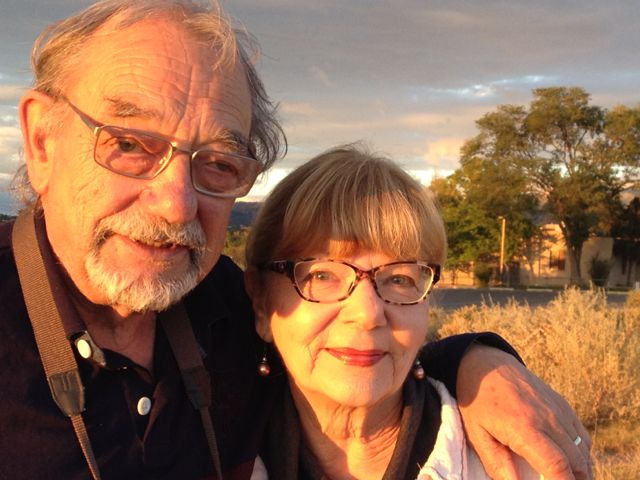
    I love hearing from readers of Finding Myself in Britain; it’s a privilege and a joy to hear the stories they share. Such as Karen Morton, who got in touch with me recently. She embraced a new adventure at 70, marrying an Englishman and moving to the Lake District! I loved hearing of her art project to engage with people in her village – just brilliant how she has used her creativity and artistic gifts to give back to the community, and make new friends. She opened her email to me saying, “I feel like I have a new friend!” I feel the same, as I introduce her to you. Don’t miss her amazing portraits, toward the bottom of the interview.

    This is me with my husband, fellow artist, Lou Morton.
    This is me with my husband, fellow artist, Lou Morton.

    I came to live in England three years ago – a new love and a new life – at the age of 70! It’s never too late to start over! I met my husband, a fellow artist, when I was here on a painting trip in 2011. I would never have imagined that I would have a whole new country just a few years later.

    I had the experience of saying good-bye to my house and property in the Colorado mountains and walking away from most of my “stuff”, chanting all the while, “It’s just stuff… it’s just stuff… it’s just stuff.” I already lived a distance from my two daughters and grandchildren so things are not that different. They love visiting me here. Now I feel like a four-year-old with my nose pressed against the window, delighting in every new thing I see.

    Playing my dulcimer at the local pub with other local musicians:
    Playing my dulcimer at the local pub with other local musicians:

    I’ve had so many surprises here, such as it stays green! Having grown up in Michigan and spent the last 30 years in the mountains of Colorado where there was snow on the ground 9 months of the year, I was delighted to find that it rarely snows here. Furthermore, the grass stays green even in winter, making the rolling hills of the Lake District where I live now very beautiful all year, even with grey skies. I’ve even learned to love the many colors of grey that contrast so nicely with the green. I’m also surprised at how long it stays light in the summertime, and how dark the winter is – never having realized how far north these islands are.

    Another surprise was how warmly I’m received as an American. As soon as I open my mouth it’s obvious, of course! For the first time in my life, I have an accent! But whether it’s someone I meet in a shop or people I meet in the village, their eyes seem to light up when they learn my nationality.

    I play the hammered dulcimer and was surprised to discover many opportunities to play it, joining in with local musicians. I’m learning lots of new songs – the English, Scottish and Irish folk songs sound particularly good on this instrument.

    Maybe it’s my age, but learning to drive on the left (as opposed to “wrong”) side of the road has been a challenge to me. I was dismayed to learn that I had to take both a written and a practical driving test to get a British driver’s license. (My American license was good for only one year after becoming a resident.) I took some lessons from a very brave driving instructor in the village. At first I had a hard time figuring out where the left side of the car was and kept running up on the curb or cutting corners! Learning to shift with my left hand was a challenge too. The roads are so narrow and instead of a nice shoulder, you have stone walls or hedges inches away from your left-hand mirror. But I’m quite at home behind the wheel now.

    Being interested in linguistics, I have kept an on-going lexicon of words and phrases that are different – 17 pages long so far. When I first arrived I told my husband I was going on a walk to explore the village. He said, “Fine, but make sure you stay on the pavement.” Why, I wondered, not knowing that is what they call sidewalks. I thought he wanted me to walk down the middle of the streets!

    People kept asking me if I was alright. Even people I didn’t know, like shop keepers. Did I look faint or ill? Then I figured out it was just their way of saying, “How ya doing?”

    There are some very funny expressions too, like “She’s all fur coat and no knickers!”

    I nearly drove off the road when at a construction area there was a large sign saying, “Cats’ eyes removed.” Why would anyone do that?! Found out that is what they call lane reflectors.

    People’s eyes widened in surprise when I said that the uniform of many old men where I came from was a cowboy hat, jeans and suspenders. “Suspenders” are what they call garter belts here! Quite a funny image, actually!

    Last year, in an effort to get to know people in my village here in the Lake District, I gave myself the goal of painting one hundred 12 X 12 inches oil paint portraits of neighbors. The response was delightful. I ended up with 123 such portraits. Each person agreed to sit for me for 2 hours. I was convinced to turn it into a book with a brief write-up about each person. I had an exhibition of all 123 paintings in the village hall the day after Boxing Day and people could then take their portraits home. Now I’m working on a sequel: “100 Dogs of Holme”. What fun! People love talking about their dogs.

    Here I am doing a portrait demo for the children at the local primary school as part of my "Faces of Holme" book. This is the head teacher, Angela Anderson.
    Here I am doing a portrait demo for the children at the local primary school as part of my “Faces of Holme” book. This is the head teacher, Angela Anderson.
     This is my portrait of our vicar, Graham Burrows.
    This is my portrait of our vicar, Graham Burrows.
    Some of the accumulated portraits on the wall of my studio.
    Some of the accumulated portraits on the wall of my studio.

    I’m interviewing each dog for the parallel book to the one I wrote of the people in the village, with a little write-up about the dog to go with each portrait. Their responses have been hilarious. Dogs seem to bring out humor in people as they view their lives from the point of view of their dogs. Some of my questions are: “What is your heritage and how did you come to live with this pack? What is your occupation? What is the worst trouble you have been in? Do you know any tricks? What do your people not know about you? What is your advice to young pups?”

    The question about the worst trouble they’ve been in has the funniest answers. A large golden retriever managed to get himself totally inside of a dead sheep while his elderly owners had him out on a beach walk far from home. Then there is the standard poodle who ate a £20 note! It was the daughter’s first pay from her first job so it was important to them. They waited 2 days and out it came! They put on rubber gloves, washed it off and sent it away and got a new note! The dogs’ occupations have included, among others, director of security for a garage, lady-in-waiting, children’s entertainer, interior decorator, therapist, building supervisor, personal trainer, ball player, gardener’s helper and psychiatric nurse!

    This is the guy who got inside the dead sheep!
    This is the guy who got inside the dead sheep!

    I have found that the church is the warm, beating heart of the village. Whenever I “put myself in God’s way” there I feel a peacefulness and serenity that helps me know I made the right decision in changing my life to live here. Unfamiliar hymns and slight differences in familiar prayers make me stop and pay attention and thoughtfully prepared sermons allow me to really reflect on the messages. The warmth of friendship I feel there is comforting as well.

    I would tell people making a major change like this to try to stop looking over their shoulders to think about what they left behind. Instead, live in the present and try to see the world with new eyes. And start writing your book right now!

  • Happy 4th of July! And a recipe for Fruit Pizza

    Happy Fourth of July everyone!
    Happy Fourth of July everyone!

    Happy Fourth of July!

    I love Independence Day, although I haven’t celebrated one in the States for many years now. And certainly my children (who are in school today) have never had that opportunity to experience the parades, sparklers, picnics, and amazing fireworks. It’s a wonderful community holiday that brings people together.

    We are celebrating today though! Having fruit pizza and a BBQ, and actually watching Andy Murray hopefully going through the next round at Wimbledon. I’ve also had the pleasure of writing a blog for Eden.co.uk, a wonderful online retailer who is selling my book at 25% off just now. You can read more about the significance of this holiday in the life of me and Nicholas. We both were led to the story of Abraham, with me sensing the call to be a foreigner in a strange land (as in Hebrews 11:8).

    The gorgeous Anna working magic with all the radio controls. Loved being on Premier Christian Radio this morning.
    The gorgeous Anna working magic with all the radio controls. Loved being on Premier Christian Radio this morning.

    I also got to be interviewed on Premier Christian Radio’s Woman to Woman show, which is a favorite show of mine. Maria Rodrigues was away today, so Anna Cookson interviewed me – you can here our fun and fabulous conversation here, with my segment starting at 40.35. And yes, we somehow managed to talk about tea, along with hamburgers and hot dogs and fireworks.On air I promised the recipe to fruit pizza! It’s very easy and tasty too. One from the Fourth of July summertime BBQ meal I included in Finding Myself in Britain.

    Fruit Pizza

    Serves 8

    1 sheet puff pastry

    1–2 280 g tubs cream (soft) cheese

    2 tablespoons runny honey

    Fruit to decorate

    Bake the puff pastry according to the directions (I always make the pizza in a rectangular shape). When it cools, stir together the cream cheese and honey, experimenting with how much you prefer of each. You can also add powdered (icing) sugar if you’d like it sweeter, but I never do. Top the puff pastry with the cheese/honey mixture, and add sliced fruits to decorate. You won’t be surprised to learn that on the Fourth of July I make an American flag using strawberries and blueberries. Add some kiwis, cherries, raspberries – use your imagination and get creative.

    20160704_191922 20160704_192158

  • Grounded by CF Dunn

    No Place Like HomeI love Claire Dunn’s post today, not least because she highlights the truth about home being about people more than places. A poignant reminder to ponder in days of uncertainty.

    Home. Now there’s a funny thing. It’s a word we use with abandon – ‘no place like home’, ‘home is where the heart is’, ‘home-from-home’ – and home is something we tend to take for granted without thinking about it too much.

    Finding balance.
    Finding balance.

    As the offspring of an RAF pilot, I had many homes when growing up. Until the age of eleven, we moved every two and a half years. No sooner had I settled in one house, than my mother would be up to her elbows in newspaper, wrapping up our world to move to the next. As a child, I had no say in the matter, of course, I just went with the flow. My family was my home and my world, and I moved with it.

    Shared memories.
    Shared memories.

    But as a young teen, I became more aware of myself in relation to the world around me – the people, the places, the things – and a growing realisation that I belonged… nowhere. History has always been important to me, perhaps because I felt I had none myself, and a knowledge of the past helped me feel rooted. I searched for meaning, for something to help me feel anchored. At first it was my grandparents’ house in Stamford, and the long history that tied our family to the area. I dreaded the time when we might no longer have any links there, spending hours fretting over the future. And then, one day, my grandmother died, the house was sold, and the last cord that gave me some semblance of stability – of identity – vanished. I felt bereft, displaced, lost.

    I turned next to a small and insignificant village in North Cornwall – somewhere generations of my extended family had visited for nearly a hundred years and where I went as often as school holidays allowed. There, I spent happy weeks with my family, my cousins, and cousins of cousins, knowing every tree bent by the sea wind, every rock and every pool. The people in the local town became friends, and I felt more rooted there than anywhere else in the country. Oh, how important it is to be able to identify with a culture, to be able to say you come from somewhere – to belong.

    We are family.
    We are family.

    But, as I attained adulthood and had my own family, I came to realise that vital though roots are, I needed more to grow. I had become a Christian at the age of eighteen, and felt free for the first time in my life knowing that I had a home in Christ. It wasn’t as simple as that, of course – life didn’t suddenly become easier, but He became my bedrock and helped me change my perspective on life.

    I still have a yearning to belong somewhere – to a place, a time, a thing – but it isn’t overwhelming. Instead I treasure the memories I have with my family and the new ones we forge. This is what matters – the history we create. We have a shared history that will continue long after I’m gone and as such, I will always belong.

    IMGP8602Writing as CF Dunn, Claire Dunn is a Christian novelist writing historical and contemporary suspense fiction for the general market. Her debut novel Mortal Fire – published by Lion Fiction – won the gold medal for adult romance in the Book Of The Year Awards, 2012, and was nominated for Best Novel by CRT in the same year.

    Alongside her first loves of family, history and writing, CF Dunn is passionate about the education and welfare of children with dyslexia, autism and communication difficulties, and runs a special needs school, which she founded in Kent with her husband.

    Book four – Realm of Darkness – was recently released in the UK, and The Secret Of The Journal series comes to a heart-stopping conclusion with the publication of book five, Fearful Symmetry, this September.

    Mortal Fire small 51SSa9J+ucL._SX328_BO1,204,203,200_