Category: Finding Myself in Britain

  • Life in the UK – The No-Name Rule

    “Oh, you’re never supposed to give your name in early conversations,” my fellow American-living-in-London friend said. “I was given a copy of Watching the English, which explains what’s behind it. Mainly a class thing, I think.”
    booksShe’d lived in the UK for fewer years than I, but she had stumbled onto an area where I’d been making cultural faux pas for ages. I never could understand why the English didn’t seem to tell me their names in polite conversation. The starkest memory I had was when I was newly off the boat and meeting a group of spouses of ordinands (US: those studying for ordination in the Church of England) at my husband’s theological college (US: seminary). Sitting in a circle, we formed a cheery bunch, but after they introduced me as the latest arrival, I expected the others to say their names so I might get to know them too. Nope.

    Watching the English has helped me understand what’s behind this to-me peculiar behavio(u)r. Kate Fox is an anthropologist who turns the lens on her own people. She explains the “No-Name Rule” of social situations “where conversation with strangers is permitted, such as a pub bar counter,” and how you’d never say, “‘Hello, I’m John Smith,’ or even ‘Hello, I’m John.’” She continues:

    In fact, the only correct way to introduce yourself in such settings is not to introduce yourself at all, but to find some other way of initiating a conversation – such as a remark about the weather.

    The ‘brash American’ approach: ‘Hi, I’m Bill from Iowa,’ particularly if accompanied by an outstretched hand and beaming smile, makes the English wince and cringe…. The American tourists and visitors I spoke to during my research had been both baffled and hurt by this reaction. ‘I just don’t get it,’ said one woman. ‘You say your name and they sort of wrinkle their noses, like you’ve told them something a bit too personal and embarrassing.’ ‘That’s right,’ her husband added. ‘And then they give you this tight little smile and say “hello” – kind of pointedly not giving their name, to let you know you’ve made this big social booboo…’

    I ended up explaining, as kindly as I could, that the English do not want to know your name, or tell you theirs, until a much greater degree of intimacy has been established – like maybe when you marry their daughter. (p. 39)

    When I read her explanation, I felt an immediate sense of relief. Yes, I had made many a gaffe over the years of being too forward and friendly, but I no longer needed to feel a sense of personal rebuff or rejection. I could still be friendly, and maybe even introduce myself (the shock! the horror!), but I could now try to gauge how my British conversational partner was feeling and whether I dared to break social convention.

    What has been your experience? Do you introduce yourself in an informal social setting, or does it make you feel terribly uncomfortable to do so?
  • Life in the UK: Learning a new language

    I was warned. Before I married my Englishman, my boss – who was, conveniently, an Englishman living in America – told me that the little differences between the two countries would jar me at first. He was right, and I found that no where more true than with language.

    Photo credit:  UK & USA Flags - Dot Matrix by gavjof on flickr
    Photo credit: UK & USA Flags – Dot Matrix by gavjof on flickr

    I knew that the Brits and Yanks employed different terms, especially for things like cars: bonnets were quaint headpieces adorning Jane Austen’s characters; a boot was just that, something to wear on your foot, especially when living out West; and that thing hanging off the back of the car? I had no clue. In my first year in the UK when I tried to explain that a woman’s muffler was falling off her Range Rover, I stuttered and stammered (but actually no, I didn’t stammer, because I didn’t know that word either), knowing I wasn’t saying the correct word (and being slightly uncomfortable anyway, thinking I was probably breaking social convention to speak to a stranger). Finally I took her back to her car and pointed, and she exclaimed, “Ah, the exhaust!”

    And I knew that pronunciation would be different, as I outlined last week. Although imagine my surprise when one of Nicholas’s theological college (US: seminary) students invited us to lunch, and they asked me to say the name of a certain spice. One that starts with an o and ends with an o. Got it? Yes, I naively said, “Oregano,” (oh REG ah no) to which the party erupted in laughter. My host explained that Brits tend to pronounce each syllable of a word, which is why they would say, “oh rey gahn no.”

    So I knew I’d struggle with dustbin carts and, back then, the name for a pay phone (call box? pay box?), trousers and pants, chips and crisps and biscuits and crackers, but what I didn’t know was the hidden meaning of language. Yes, what Brits really mean behind their polite words or ironic remarks. You may have seen the graph that has been widely circulated on social media sites, reportedly developed by a Dutch company trying to do business in the UK. The one that has a column for what the British say, “That’s not bad”; a column for what the British mean, “That’s good”; and a column for what foreigners understand the British to mean, “That’s poor.” No wonder we foreigners get our knickers in a twist (US: can you figure it out?).

    I didn’t have the luxury of such a graph when I first moved here, so learned by making mistakes. My husband and I soon differentiated between a British “nice” and an American one – how nice was that person or meal or gift really? (We don’t often use that term anymore, which is just as well when there are far superior descriptors.) But it took a bolshey (US: in-your-face) literary agent to inform me, when I was a commissioning (US: acquisitions) editor at HarperCollins, that Brits and Americans mean different things when I said that I thought her client’s proposal was “quite good.” (She dropped any social niceties when she educated me, and no, I didn’t progress that proposal.) At least my boss didn’t expect me to pronounce schedule in the British way, and he did helpfully point out that the handwritten PS at the bottom of the letter, which I would most likely disregard, was actually the most important thing to the author.

    So tell me, British friends and family, what is behind this lack of saying it like it is? Does it all come down to class – not offending those above or below? A natural reticence? Social custom based on…? I’d love to hear what you think, and any experiences you’ve had of saying something and being completely misunderstood. And what you think of those colonists who prefer to speak unvarnished (Just to mix things up, I now work for an Australian company!).

  • Life in the UK: By your accent ye shall know them

    Lately PyelotBoy has been critiquing my pronunciation – “correcting” it to the British equivalent. Now I know some Americans who have lived in the UK for a long time have no problem with acquiring a mid-Atlantic accent. Some simply can’t help it. Some aspire to it, seeing it as a step up in terms of class (Received Pronunciation, of course).

    Photo credit: by AndreaMBC on Flickr
    Photo credit: AndreaMBC on Flickr

    Not me. I was happy to lose some of my nasal Midwestern inflection when I moved to Washington, DC when in my twenties, but a decade later I had come to terms with my identity, so changing how I spoke felt like a step too far. And yet, when I first moved to the UK I was painfully conscious about opening my mouth. Any foray into a shop would label me as other – as foreign – as soon as I uttered a word. So I would keep shtum (US: stay silent) if I could, and would wait for the look of pity or surprise when I asked for my change or said thank you.

    But my many years of living in the UK, especially my years in multicultural London, have cured me, thankfully, of this self-conscious standing outside of myself. In London, I’m just one of many accents, and frankly, not terribly interesting at that. In my church of 170 people or so, we have 20 nationalities representing the continents of Africa, the Americas, Asia, and Europe. A taste of heaven!

    Sometimes when I’m outside of London, however, the reality of being a Yank in Britain comes back to me in a rush. I spent some time writing in Eastbourne a few years ago, reveling in the quiet of a friend’s house and generally speaking to no one but my family by phone. The sole person I talked to was in the grocery store (UK: supermarket), and sure enough, the bloke asked me where I was from and how long I was visiting. Or when I visited a friend in Carlisle and we ordered pizza, the delivery person queried me about my accent.

    In some parts, I guess, I’m still an anomaly. But in my own home I thought I would not face questions or ridicule. Think again.

    What about you? Has your accent morphed over the years? For an amusing question-and-answer column in the Guardian about a New Yorker seeking to acquire a Southern English accent, see here. My advice? Don’t even try.

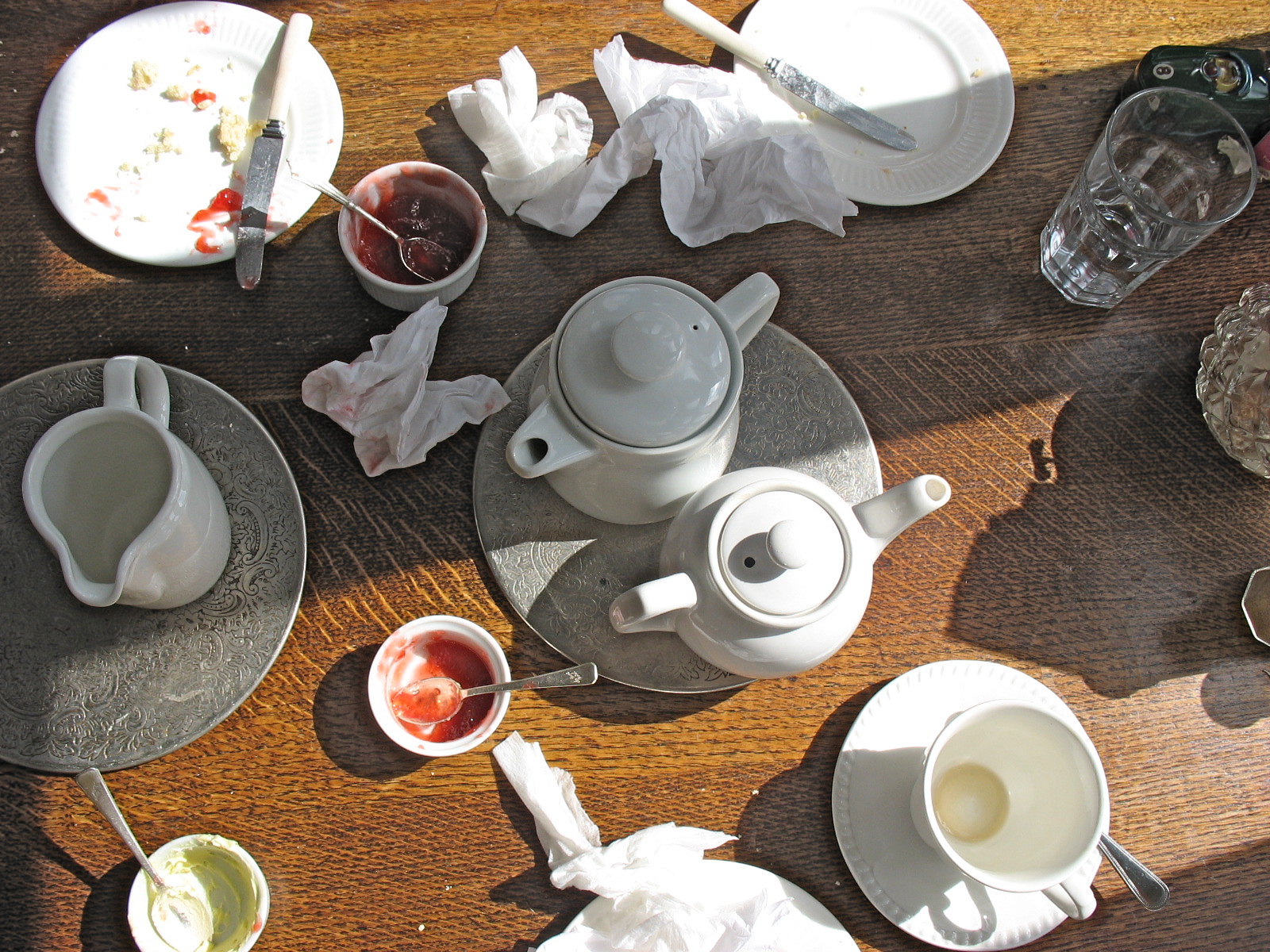
  • Life in the UK: A cup of tea

    My son started drinking tea when he was around three years old. Inconceivable to me that a son of mine would latch on to this drink when so young, but hey, we live in Britain. It remains his favo(u)rite drink; he must have a cuppa (decaf, natch) before going to bed, as well as when he comes home from school.

    IMG_3554The British obsession with tea remains, even if some of the younger, cool set aren’t addicted. “I’ll put the kettle on,” is a common declaration when one gets home, and I’ve heard of couples interrupting their fights for a cuppa. (I wonder if as they sipped, the conflict intensified, with each person stewing over what to say next, or whether the hot drink soothed them and calmed things down.) Tea is served after church, in homes, to the workers who install new floors or radiators, to friends and family.

    Americans drink tea too, but they are known for their love of coffee. Me? I’m not a huge hot-drinks person, although since moving here I drink one or two cups of tea a day. Chai, mind you, and a decaf after dinner. Coffee? Nope; haven’t learned to like it.

    Why is tea so rooted in the national consciousness in the UK? The weather is an obvious reason. When you’re living in a climate where the damp gets into your bones, and you can’t get warm no matter how many hot water bottles you strew across your body or how many layers you pile over you, a hot cup of tea spreads its warmth from within.

    Another reason is rooted in history. The mighty British Empire had tea at its disposal, having introduced it to India. This little island loves its independence, so it makes sense to consume a drink that differentiates it from the coffee-loving Continent. Of course, the rebel colony now called the USA loves coffee for similar reasons – we dumped over that tea in Boston and have never looked back.

    And another reason must be culture. Various upper class women are named as the creators of the practice of afternoon tea; the one I’ve heard most often is Queen Victoria herself, who felt peckish between the long hours of lunch and the evening meal, calling for a cup of tea around 4pm. But online searches say that  Anna Maria, the 7th Duchess of Bedford of Woburn Abbey in Bedfordshire, was the originator. It’s not surprising that the upper classes came up with this custom, for tea used to be wildly expensive. I’ve been through country houses where they proudly display the ornate wood boxes where the tea was stored, to which only the lady of the house had the key.

    I think I’ll go make a cup of tea.

    How about you? Whether Brit or American or other nationality, do you like tea? Why or why not? If so, how many cups a day do you drink? Do you have a drinks routine, from which life cannot go on if you aren’t able to adhere to it?

  • Life in the UK: Plumbing the depths

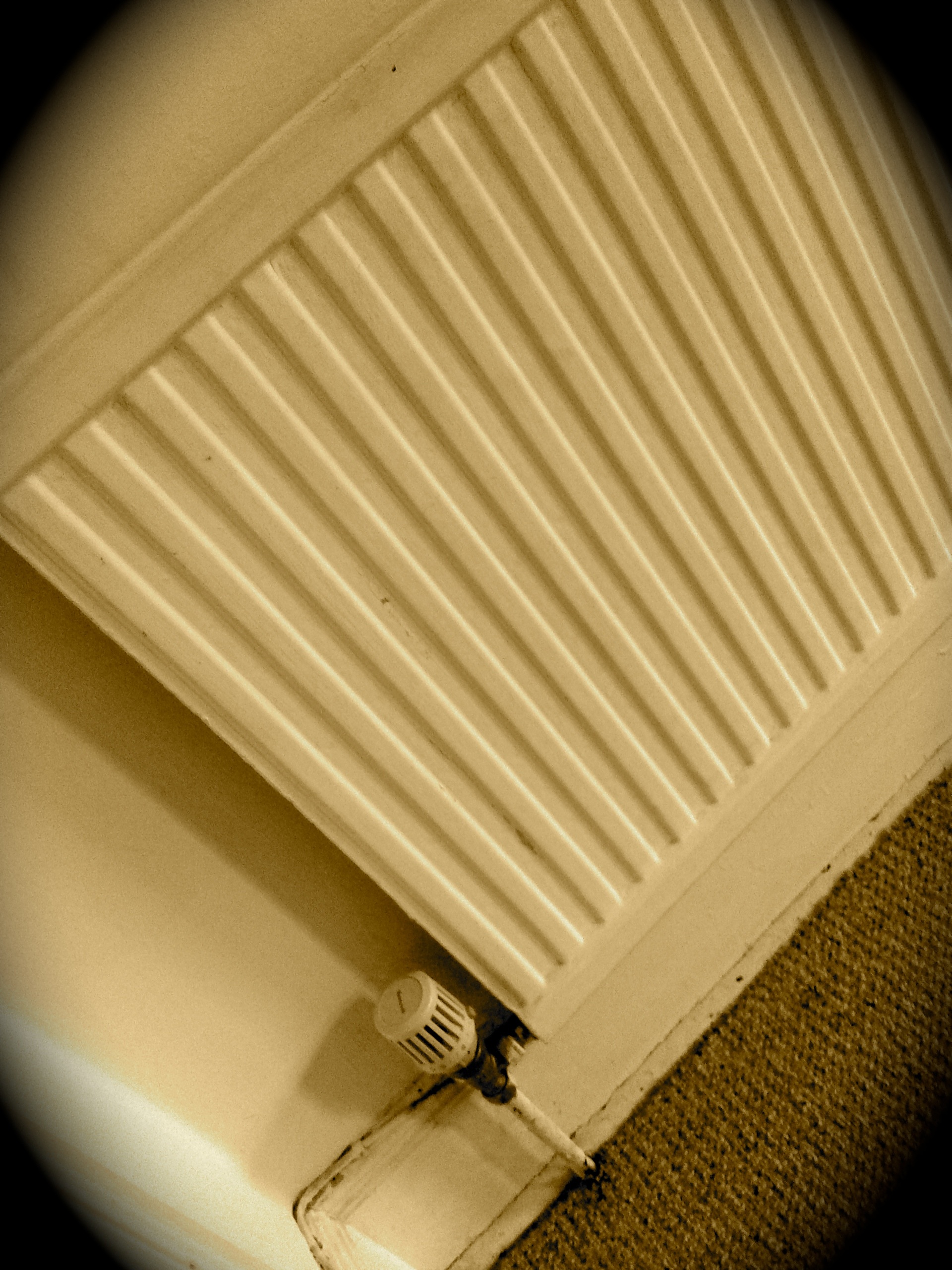
    A sentence I never thought I’d write: Yesterday my son got a new radiator.

    Growing up in Minnesota, I experienced a steady stream of heat in the winter. Hot air blown down the vents to my room in the basement. It was a few degrees cooler downstairs, but I didn’t mind. Bred in the North, heirs of northern Europeans, we were tough. And then I moved to Washington, DC, learned what the season Spring was with the delightful azaleas and dogwood blossoms, and lost some of my Midwestern steel. Yet the hot air kept blowing on me as I dwelled in another basement room, this time in a home with three other women.

    radiatorMy dreams for a Prince Charming came true but I didn’t realize that after the wedding, life in the UK would be so damp and cold. I had experienced cold, but never before the damp chill that sinks into your bones and refuses to leave. The kind that calls for endless cups of tea in the quest to get warm (not a consumer of hot drinks was I). But the honeymoon cushioned me, imparting to me a cozy flat in in Cambridge student accommodation, complete with a stunning power shower.

    And then to Surrey, and Nicholas’s first curacy. An American relative came to visit and squeaked, “Could you please put the heat on?” Nicholas wasn’t home and I didn’t know how to do it – heat came on twice a day, whether or not you needed it.

    Next to northwest London and single-glazed windows, with my vocabulary increasing even more (who knew to talk about glazings on windows!). One morning I asked the-Vicar-with-whom-I-sleep why the curtains in our bedroom were swaying back and forth. “Oh, that must be the draft.” But a shower had I, for Nicholas insisted that they install a power shower in the curate’s house. When the skilled church member showed me the fruits of his labors with pride, I swallowed my disappointment, burying the question bursting to come out: “That’s a power shower?”

    And onto north London, where we are now, with our lovely Victorian vicarage that slowly is becoming warmer each winter, thanks to Nicholas’s perseverance and the help of the diocese. Over the years, secondary glazing added to the windows. An extra layer of insulation in the loft (attic). Some new radiators downstairs. And yesterday, a new radiator for my son as we seek to get his room allergy-friendly. (I’m sorry to our eight former au pairs, who shivered in that room, that we didn’t get this done earlier.)

    Plumbing and heating. My gripes are first-world issues, I know. But how about you? Do you find joy in a shower that doesn’t qualify as an Irish mist, in which you need to jump around to get warm and wet? How cool is your house? How much tea do you consume?