In our culture it’s easy to think that Christmas is now over, but actually it’s just begun. We like to enjoy these days of Christmas relaxing by the tree, watching cheesy movies, and eating yummy leftovers. During Advent we eat in the kitchen, lights darkened and candles strewn around the table, waiting for the coming Christ. We move to the dining room in the Christmas season, the shining tree behind us and a lovely embroidered tablecloth (by my mom) gracing the table.
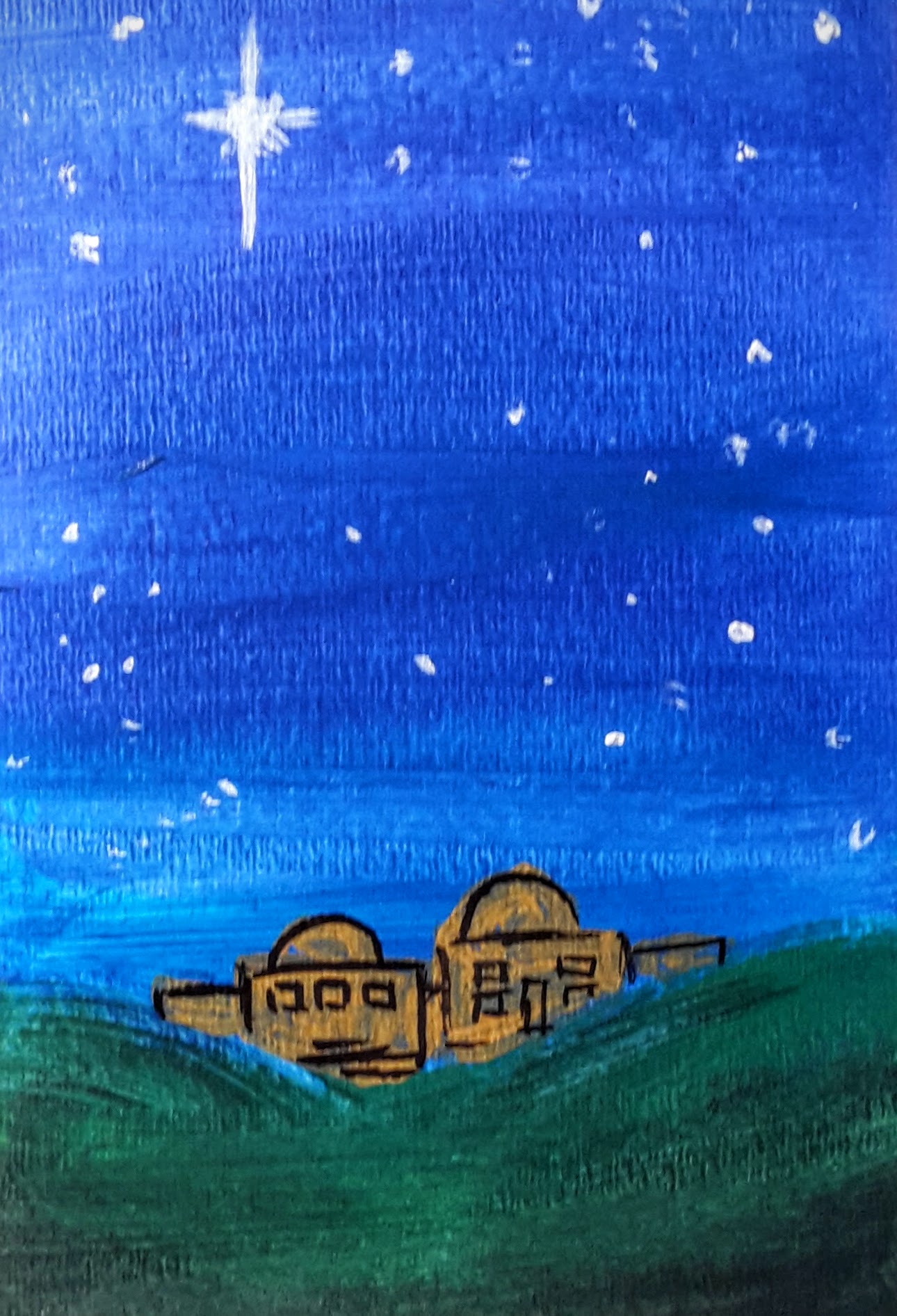
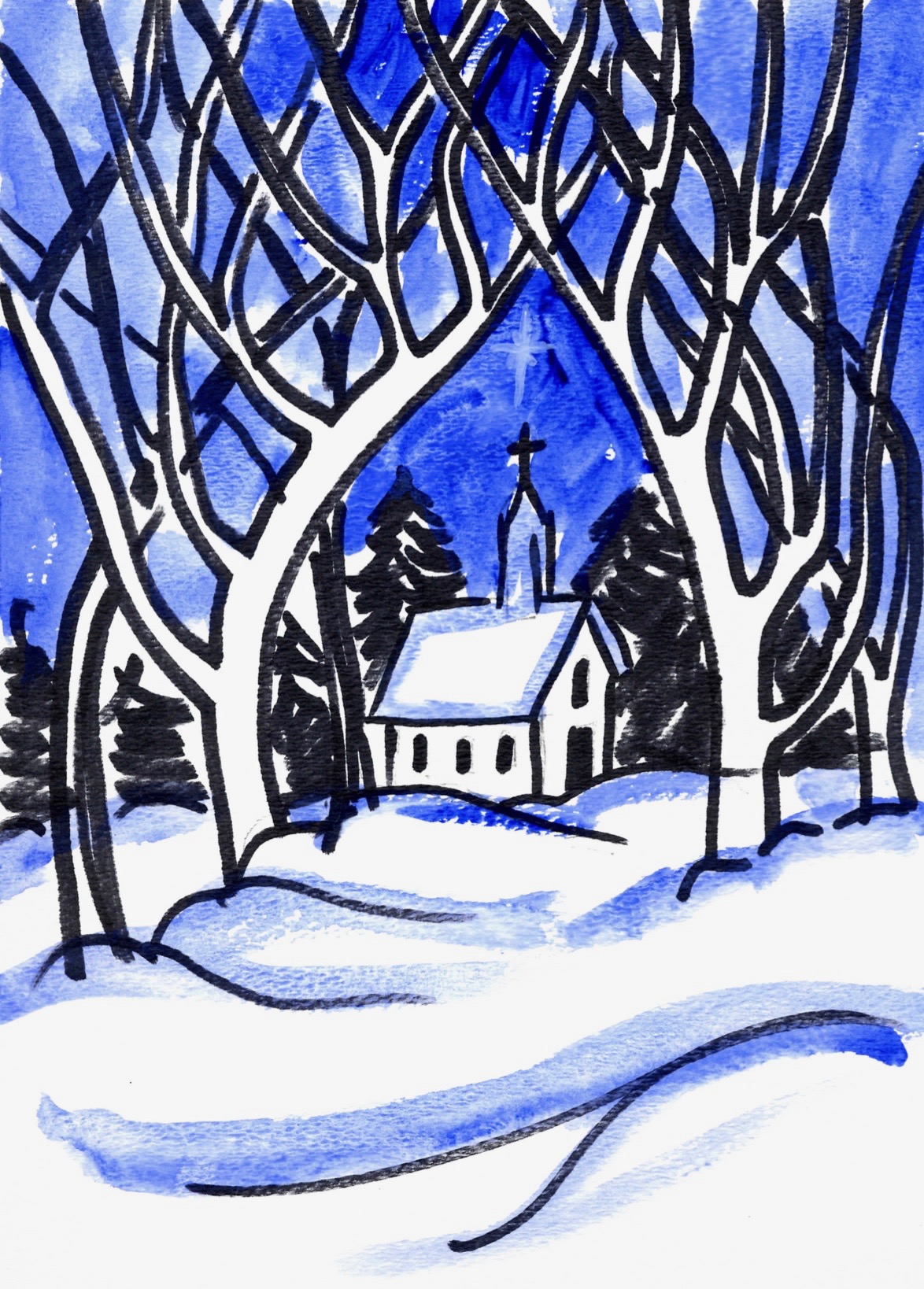
During the 12 days of Christmas on social media I’ve been posting artwork each day of Christmas by my dad, Leo Boucher, and I realized I should share it here too. Here are the first four days.
Happy Christmas!
A painting my dad created for the classes he teaches to older adults. Perfect for the second day of Christmas.A winter river scene that reminds me of my youth.The fourth day of Christmas is perfect for relaxing by the Christmas tree, spending time with family.
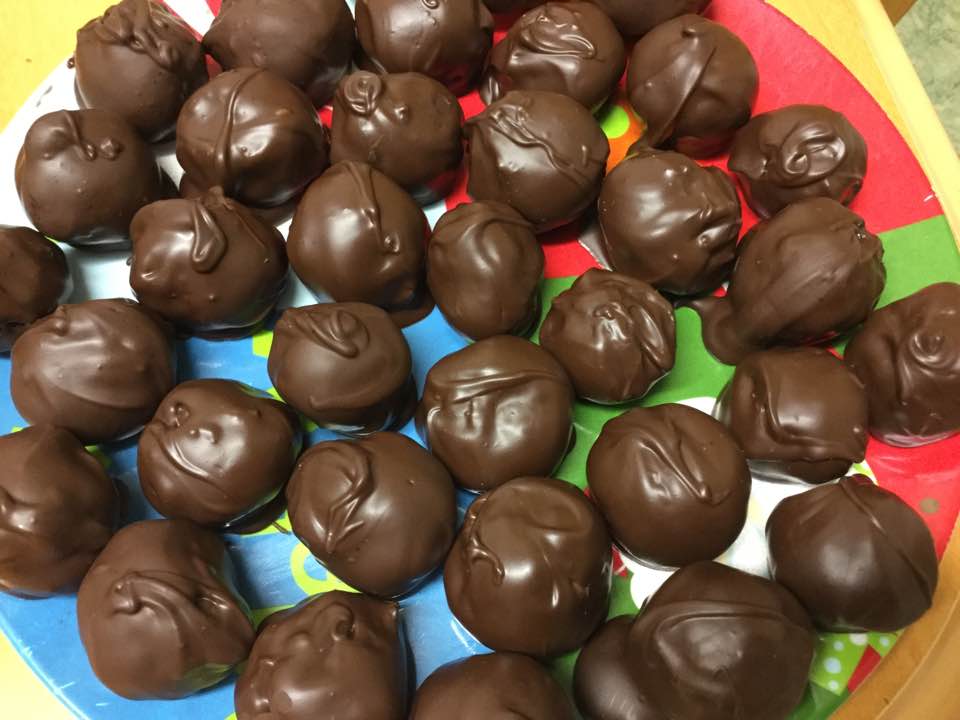
By popular request, here’s the recipe for Oreo truffles. Very simple and so wonderfully scrumptious. The key is using high-quality chocolate. When I made these this year, I used Green & Black fairly traded chocolate (70%), and then ran out towards the end so threw in some Costco chocolate chips (less than 50% chocolate I think). My goodness, that chocolate sure didn’t melt and became a sticky mess. Enjoy!
(See notes below for the British conversion.)
Makes 48 truffles
36 Oreo cookies
8 oz (250 g) cream (soft) cheese, softened
16 oz (450 g) semi-sweet baking chocolate, melted
Crush the Oreo cookies (or Bourbons if you can’t find Oreos) – crush finely if you prefer a soft interior, or leave big chunks if you prefer some crunch. Add to the cream (soft) cheese, and mix until blended. If you prefer a smooth, non-crunchy interior to your truffle (which I do), chill for an hour. Roll cookie mixture into 1 in (2.5 cm) balls. Dip in melted chocolate (using two forks) and place on wax paper/baking parchment to cool. Refrigerate until firm; about an hour.
My notes: The first time I made these, for the ingredients I included four 154 g packets of Oreos, half a packet of Bourbon biscuits I had in the house, and two 250 g tubs of soft cheese – one full fat and one half fat. For the melted chocolate, I used up some leftover plain and milk cake covering. But I thought the nicest of the truffles were those made with the fairly traded dark chocolate that I used when I ran out of the others.
Make sure you don’t scorch the chocolate when you’re melting it – I did, even though I thought I was being careful. (Melt in a bowl over gently boiling water.)
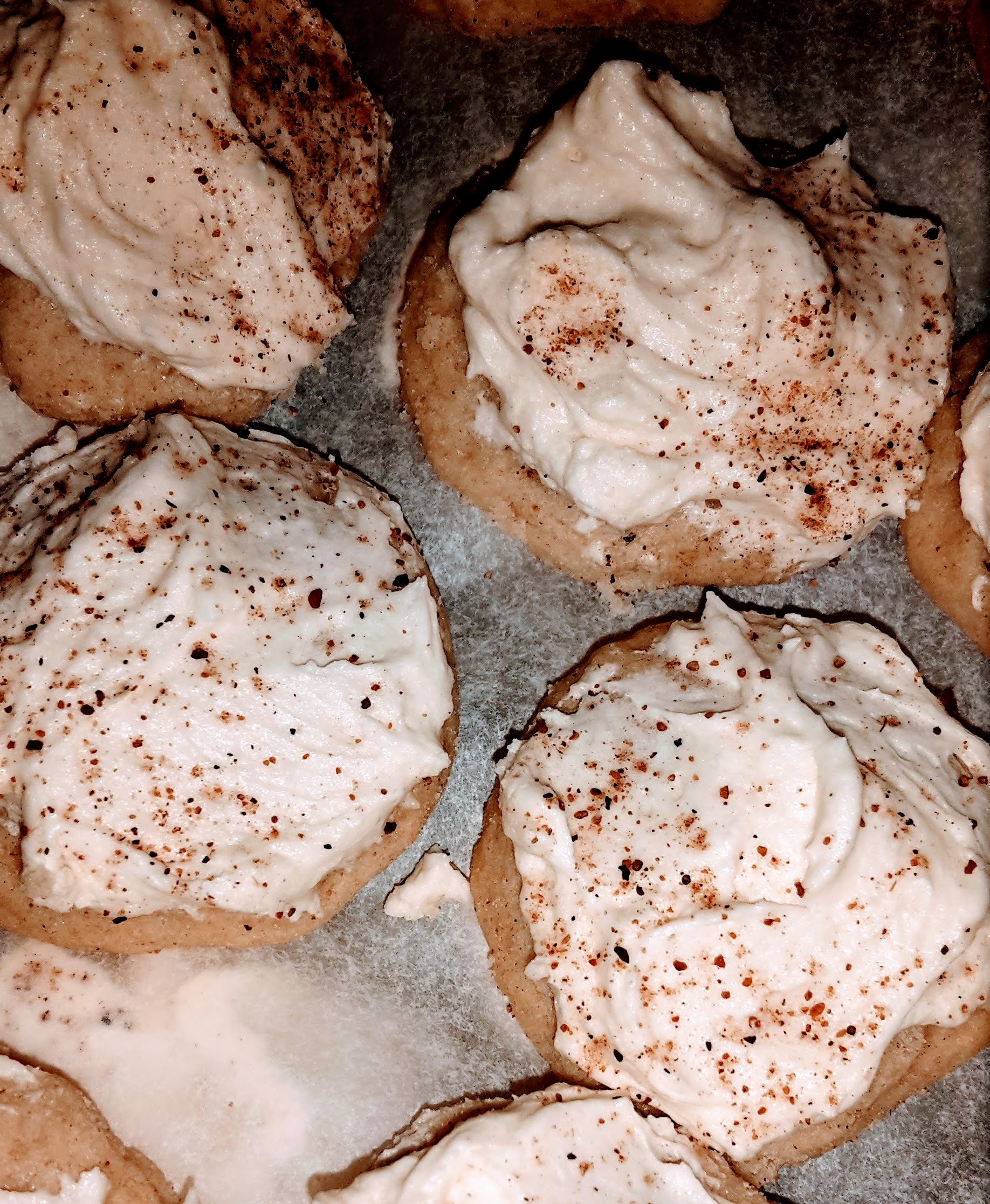
Today I’m pleased to take part in the Eden.co.uk Advent blog series. Click on over to find the recipe for these beauties – the Pye Family Favourite Christmas cookie, and hear how we balance preparing for the birth of Christ with practical preparations.
In honor of Thanksgiving, here is an excerpt from Finding Myself in Britain with a look at some of the history behind the holiday. For us in England today, it’s just another normal day as unusually we aren’t attending the service at St. Paul’s Cathedral today – the kids have missed too much school lately. Happy turkey day, everyone! I hope it’s a day of giving thanks, wherever you are.
For a long time I didn’t realize that the British celebration of Harvest underpins the American celebration of Thanksgiving. The Pilgrim fathers and mothers observed days of fasting and days of feasting, one of the latter at Harvest, through which the modern Thanksgiving holiday was born.
Devout in their faith, the Pilgrims left England in 1608 for Amsterdam in search of religious freedom. They lived there twelve years before the foreign culture wore them down and they decided to head for the New World. Their journey on the Mayflower, however, was desperate. The ship they travelled on was designed to carry cargo, not passengers. And the cabin where they slept was intended for thirty people, not eighty. Their food rotted and became infested with insects; they nearly drowned when the ship’s main beam cracked; they endured ridicule from the sailors. They pressed on through their five-month journey across the Atlantic – though admittedly they didn’t have much choice. New World or bust.
When they arrived in what is now Massachusetts, the Pilgrims faced a new set of challenges: a new land called for the planting of food and the building of places to live. But in all things they gave thanks, observing a full day of Sabbath each week. After surviving their first harsh winter, they hosted a three-day feast that we now name as the first Thanksgiving. During this celebration, they gave thanks for their food, for seven houses built, for a peace treaty with the Native Americans, and most importantly for the freedom to worship God. The women cooked, the men played games, and they all shared stories and returned thanks to the Lord. Sound familiar? The women cook and the men watch football. They invited the Native Americans who helped them acclimatize to this strange new world to join them at their table.
This is the account I’ve always heard, but lately some contest it. I’ve learned that we base this vaunted holiday on what might be a lot of lore, for we only have a 115-word account from that first Thanksgiving. The pilgrim Edward Winslow wrote a letter to England after the feast, including this brief description (and note the “u” in labours hadn’t got lost yet):
Our Harvest being gotten in, our Governor sent four men on fowling; that so we might, after a more special manner, rejoice together, after we had gathered the fruit of our labours. They four, in one day, killed as much fowl as, with a little help besides, served the Company almost a week. At which time, amongst other recreations, we exercised our Arms; many of the Indians coming amongst us. And amongst the rest, their greatest King, Massasoyt, with some ninety men; whom, for three days, we entertained and feasted. And they went out, and killed five deer: which they brought to the Plantation; and bestowed on our Governor, and upon the Captain, and others.
Slim historical evidence notwithstanding, the tradition grew, if not every year at first. And probably turkey wasn’t the centrepiece during that first celebration, but goose or duck. Later during the Revolutionary War, George Washington and his army stopped on their way to Valley Forge in bitter weather to mark the occasion. The practice then became solidified when in 1863 President Abraham Lincoln declared that the last Thursday in November would be a national day of Thanksgiving. Then in 1941 a joint resolution of both houses of Congress decreed, and President Franklin Delano Roosevelt signed into law, the bill establishing that the fourth Thursday of November shall now and always be Thanksgiving.
From Finding Myself in Britain (Authentic Media, 2015). Reprinted with permission. You can buy copies from good bookshops, Eden.co.uk (where it’s 25% off) and Amazon.co.uk and Amazon.com. (In the States it’s only available from Amazon.)
I love Independence Day, although I haven’t celebrated one in the States for many years now. And certainly my children (who are in school today) have never had that opportunity to experience the parades, sparklers, picnics, and amazing fireworks. It’s a wonderful community holiday that brings people together.
We are celebrating today though! Having fruit pizza and a BBQ, and actually watching Andy Murray hopefully going through the next round at Wimbledon. I’ve also had the pleasure of writing a blog for Eden.co.uk, a wonderful online retailer who is selling my book at 25% off just now. You can read more about the significance of this holiday in the life of me and Nicholas. We both were led to the story of Abraham, with me sensing the call to be a foreigner in a strange land (as in Hebrews 11:8).
The gorgeous Anna working magic with all the radio controls. Loved being on Premier Christian Radio this morning.
I also got to be interviewed on Premier Christian Radio’s Woman to Woman show, which is a favorite show of mine. Maria Rodrigues was away today, so Anna Cookson interviewed me – you can here our fun and fabulous conversation here, with my segment starting at 40.35. And yes, we somehow managed to talk about tea, along with hamburgers and hot dogs and fireworks.On air I promised the recipe to fruit pizza! It’s very easy and tasty too. One from the Fourth of July summertime BBQ meal I included in Finding Myself in Britain.
Fruit Pizza
Serves 8
1 sheet puff pastry
1–2 280 g tubs cream (soft) cheese
2 tablespoons runny honey
Fruit to decorate
Bake the puff pastry according to the directions (I always make the pizza in a rectangular shape). When it cools, stir together the cream cheese and honey, experimenting with how much you prefer of each. You can also add powdered (icing) sugar if you’d like it sweeter, but I never do. Top the puff pastry with the cheese/honey mixture, and add sliced fruits to decorate. You won’t be surprised to learn that on the Fourth of July I make an American flag using strawberries and blueberries. Add some kiwis, cherries, raspberries – use your imagination and get creative.
After forty days of no alleluias, we bring out the word in style today, speaking it with joy and gratitude. As I say in my book, Finding Myself in Britain:
We build up to Easter with a forty-day season of reflection, and yet we seem not to celebrate more than a day. Just like the twelve days of Christmas are lost on our culture. Tom Wright, the prolific and engaging theologian, rues this oversight. He says that Easter ought to be a long festival:
“with champagne served after morning prayer or even before, with lots of Alleluias and extra hymns and spectacular anthems. Is it any wonder people find it hard to believe in the resurrection of Jesus if we don’t throw our hats in the air? Is it any wonder we find it hard to live the resurrection if we don’t do it exuberantly in our liturgies? Is it any wonder the world doesn’t take much notice if Easter is celebrated as simply the one-day happy ending tacked on to forty days of fasting and gloom? It’s long overdue that we took a hard look at how we keep Easter in church, at home, in our personal lives, right through the system. And if it means rethinking some cherished habits, well maybe it’s time to wake up.” (Tom Wright, Surprised by Hope [London: SPCK, 2007], 268.)
I agree with him; as Christians we should be known for the joy that marks our faces and our characters as we exude hope and grace. As I’ve learned on my journey to finding myself in Britain, in this life we will face disappointment, disease, and hardship, but as God’s beloved, his promises and gifts should change our disposition. He helps us to forgive; he gives us hope and strength; he showers us with grace. As St Augustine of Hippo reminds us: “We are an Easter people and our song is ‘Alleluia!’” (“Being Easter People,” Finding Myself in Britain, 144–45)
As he ended the class, our lecturer said, “Well, that’s probably enough on Augustine’s On the Trinity.”
I piped up, “Yes, but we understand you have a birthday coming up, and we want to celebrate!” We broke into song, enjoying the stunned look on his face.
I enjoyed organizing the surprise party for our lecturer, who when he interviewed me for the course at Heythrop College, let on that we shared the same birthday, but a year apart. I filed that little detail away, for use later…
In organizing the get-together after our lecture, I was a bit cheeky as I didn’t let on to my fellow students that it was my birthday too. It was more fun to pull off the surprise for him – he’s a gracious, softly spoken man with a big intellect and an equally big heart. And I don’t know that we do enough celebrating, so give me a reason and I’m on it.
After all, as I say in Finding Myself in Britain, in the chapter, “Come to my Party,” celebration is a spiritual discipline:
As we see with King David, celebration is rooted in gratitude to God for the many gifts he gives us. I love how Dallas Willard puts it in his classic The Spirit of the Disciplines: “Holy delight and joy is the great antidote to despair and is a wellspring of genuine gratitude – the kind that starts at our toes and blasts off from our loins and diaphragm through the top of our head, flinging our arms and our eyes and our voice upward toward our good God.”[1]
How might you incorporate more celebrations into your life? Who could you surprise?
And for some tips on how to throw a birthday party for yourself, with some thought-provoking dinner-party questions you could pose, check out my celebrations chapter. No leftover Bounty or Dove Caramels, I promise. (That’s a UK quip – sorry if it doesn’t compute!)
[1] Dallas Willard, The Spirit of the Disciplines (San Francisco, CA: Harper & Row, 1988), 179.
As we ring in the new year, may you know God’s love, peace, and joy. May you be held and supported through the hard times and have friends and family to share the laughter and joy of the good times. May you look forward to new challenges and experiences in the year to come as you live in each moment.
“…and they will call him Immanuel” (which means “God with us”). When Joseph woke up, he did what the angel of the Lord had commanded him and took Mary home as his wife. But he had no union with her until she gave birth to a son. And he gave him the name Jesus (Matthew 1:23b–25).
What’s in a name? In biblical times, a name would often connote characteristics that the parents believed the child would embody. Along these lines, God through his angel told Joseph to name his son Jesus, which means “Yahweh saves,” and as we saw recently, what Jesus saves his people from is their sins. I don’t think Joseph had any idea of how Jesus would do this, but he welcomed it from a distance.
Matthew’s account gives Jesus two other names or titles – Messiah and Immanuel. Messiah is the Hebrew word for one anointed for a specific task (with Christ being the Greek rendering of this word). Matthew uses this term to signal to his Jewish audience that this is the coming Savior, for whom they have been waiting for generations to bring about God’s promised deliverance.
And Immanuel means God with us – God himself has taken human form in Jesus. God is with us because Jesus saves us from our sins, for sin is what separates us from God. Once Jesus rescues us from this fallen state, we enjoy Immanuel, God with us.
Jesus the anointed one. Jesus who saves. Jesus, God with us. What’s in a name? Simply, the whole gospel message.
Prayer: Lord Jesus, we welcome you this Christmas day! You are the anointed one, the God who lives with us, the one who saves. As we praise and worship you this day, fill us with your presence and your love. And help us to reach out to a world aching to hear your message of good news.
Christmas cookies to me are the language of love in the Advent and Christmas seasons. I’m behind this year – I’ve only made one measly batch so far, and Friday is the kids’ last day of school, so I need to get cracking in order to have the boxes of freshly baked goods ready for their teachers and staff at their schools.
I write about Christmas cookies in Finding Myself in Britain, for the lack of them here in the UK (where mince pies, Christmas pudding and Christmas cake are the choice seasonal foods) sent me baking as I tried to recreate America on these shores. Well, at least a bit of Yankee Doodle love…
Here is the Pye Family Favo(u)rite, an almond cookie bursting with taste and flavor. I make a triple batch because everyone loves it so much. If you have a go, post a photo of your delicacies and let me know if it rivals your best mince pie!
 Happy Christmas!


 Today I’m pleased to take part in the Eden.co.uk Advent blog series.
 From Finding Myself in Britain (Authentic Media, 2015). Reprinted with permission. You can buy copies from good bookshops,