Category: Old Self/New Self devotionals

  • Devotional of the week: A new name

    Whoever has ears, let them hear what the Spirit says to the churches. To the one who is victorious, I will give some of the hidden manna. I will also give that person a white stone with a new name written on it, known only to the one who receives it. (Revelation 2:17)

    Photo credit: "White Stone" by Anna, Flikr
    Photo credit: “White Stone” by Anna, Flickr

    A couple of women I know have changed their given names. One suffered sexual abuse, and by changing her name she was cutting painful ties. Another didn’t want to be defined by her name’s meaning, which was “bitter.” Instead she wanted to be known by a name that denotes “grace.”

    Our passage comes from the letters of Jesus, as revealed to the aging disciple John. Jesus says to the church at Pergamum that he will give them a white stone with a new name on it, known only to the recipient. Several meanings of this white stone have been put forward, as summarised by Craig Keener in the NIV Application Commentary (pp. 126–27). One is that in the ancient world, people used pebbles for admission to events; in this case, for a messianic banquet. Another is that in some ancient courtrooms, the jurors would cast a white stone for acquittal and black for conviction. (Thus Jesus would be the judge over what the Pergamum Christians were suffering.) Or the white stone could symbolize purity and eternal life, or a new name signifying a new identity.

    The symbolic possibilities are rich. Applying the promise to our own lives hearkens to the promises we examined in Isaiah 62. Our new name might be one that we publicize as we embrace our new, redeemed self. Or it might be one that we keep hidden, the name that we hear when we call to the Lord and listen for his affirming words of love.

    We are no longer bound to the old way of life. As we live out of our new selves, may we reflect the attributes of the One who created us, who made us for himself.

    For reflection: “Let us rejoice and be glad and give him glory! For the wedding of the Lamb has come, and his bride has made herself ready” (Revelation 9:17).

  • Devotional of the week: Christ in all

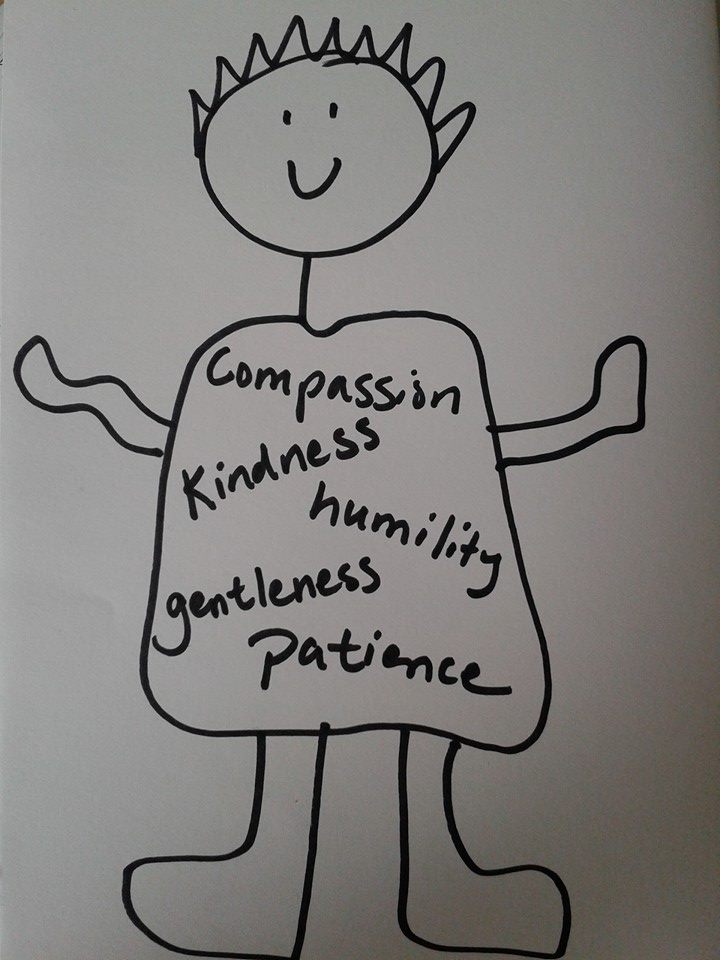
    Yep, clearly the artists in my family are my dad and daughter, not me... (This is my creation, not my daughter's!)
    Yep, clearly the artists in my family are my dad and daughter, not me… (This is my creation, not my daughter’s!)

    Do not lie to each other, since you have taken off your old self with its practices and have put on the new self, which is being renewed in knowledge in the image of its Creator. Here there is no Gentile or Jew, circumcised or uncircumcised, barbarian, Scythian, slave or free, but Christ is all, and is in all. Therefore, as God’s chosen people, holy and dearly loved, clothe yourselves with compassion, kindness, humility, gentleness and patience. Bear with each other and forgive one another if any of you has a grievance against someone. Forgive as the Lord forgave you. And over all these virtues put on love, which binds them all together in perfect unity. (Colossians 3:2–5; 9–11)

    Sadly, often in church life we fight battles with each other, sister against sister; brother against brother. Perhaps we think that we hold the whole truth and they fall short. Or a difference of opinion over a point of doctrine becomes the opening clash of a long and drawn-out war, which leaves lives bruised and relationships impaired. Or a matter of personality morphs into a heated battle that remains long in the memory of those involved.

    As the wife of a vicar, I’ve witnessed these spats between siblings, sometimes being wounded in the process. I don’t count myself as an authority on conflict resolution; nor do I claim to hold an infallible grasp on Truth. But we can see a way forward in our church family life through Paul’s letter to the Colossians. As we live out our redeemed lives, Christ is all and is in all. We can take off the old clothes, those old rags that hold the memory of conflict, and put on the clothes of Christ – compassion, kindness, humility, gentleness, patience, forgiveness, love.

    Wearing his garments, we are more able to live in harmony and peace with our sisters and brothers, especially if we remember that Christ sacrificed himself for them, as much as for us. As we live out of our new self, we can then move forward in unity, being freed from infighting and enabled to forgive as we seek to love and serve others and God.

    For reflection: “And let us consider how we may spur one another on toward love and good deeds, not giving up meeting together, as some are in the habit of doing, but encouraging one another – and all the more as you see the Day approaching” (Hebrews 10:24–25).

  • Devotional of the week: Give thanks

     We continually ask God to fill you with the knowledge of his will through all the wisdom and understanding that the Spirit gives, so that you may live a life worthy of the Lord and please him in every way: bearing fruit in every good work, growing in the knowledge of God, being strengthened with all power according to his glorious might so that you may have great endurance and patience, and giving joyful thanks to the Father, who has qualified you to share in the inheritance of his holy people in the kingdom of light. For he has rescued us from the dominion of darkness and brought us into the kingdom of the Son he loves, in whom we have redemption, the forgiveness of sins (Colossians 1:9–14)

    Photo credit: woodleywonderworks on flickr
    Photo credit: woodleywonderworks on flickr

    A primary characteristic of the new life is a spirit of thankfulness. Here Paul and Timothy are writing to the church at Colossae, and in these opening verses they pray that the believers will live out their new life. Not only that they might be strengthened so that they might endure and be patient, but all the while “giving joyful thanks to the Father.”

    In the West today we so easily see what we’re missing, especially when advertising slogans continually reassure that “you’re worth it.” We might pine after physical things such as the latest smartphone or tablet. Or in our relationships – such as longing for a baby, to be married, for our kids to find fulfillment and so on. And yet when we stop and ponder all that we have, our outlook changes. We begin to wonder at the treasures we’ve already received. Our senses become open to beauty in all its places, even if just hearing the birdsong in a concrete jungle.

    Poets and philosophers have seen thanksgiving as an overriding virtue throughout the ages. For instance, GK Chesterton said in his A Short History of England, “I would maintain that thanks are the highest form of thought, and that gratitude is happiness doubled by wonder.” Good advice for the new life.

    Prayer: Triune God, change my spirit that I might give thanks in all things. Let me know how you pour out your love and mercy on me, making me clean.

  • Devotional of the week: New clothes

    You were taught, with regard to your former way of life, to put off your old self, which is being corrupted by its deceitful desires; to be made new in the attitude of your minds; and to put on the new self, created to be like God in the true righteousness and holiness (Ephesians 4:22–24).

    383855472_512c98e947
    Photo credit: robe pattern by peagreengirl as found on flickr

    I used to have a garment that I called my “traveling sweater.” For some reason I deigned it the best and most comfortable item of clothing to wear on an airplane. But after many a journey, instead of being white, it turned slightly grey and shapeless, sporting some holes. Still I loved it, so much that my mom and sister finally had to recommend that I retire my favorite travel companion.

    Putting off the old self and putting on the new can feel like leaving behind a familiar way of life. Even if the former way of life leads to pain, heartache, angst, anger, and destruction, we fear what we might encounter in the new. Will we have fun? Will we be fulfilled? What will I have to give up?

    But as we don our new clothes in Christ, our minds and hearts are made new. We begin to see how misshapen our old clothes were; how tight they felt and how we couldn’t breathe in them. The trousers, in fact, gave us indigestion. Whereas our new clothes not only reveal who we really are, but they enable us to soar in freedom, truth, and holiness.

    In what might be the clearest passage about the old and new selves, Paul points out three imperatives: put off our old self; be made new in our minds; put on the new self. Elsewhere he speaks of living “in Christ,” which gives us the power and strength to live out these imperatives. As we do so, we will be “created to be like God,” which hearkens back to the Genesis account of creation. Through our continued donning of the new self we can live as God intended, with right living and holiness.


    Prayer: Lord Jesus, help me to cast off any clothing of the past that I need to leave behind. Renew my mind that I might put on my new self.

  • Devotional of the week: An eternal perspective

    For we know that if the earthly tent we live in is destroyed, we have a building from God, an eternal house in heaven, not built by human hands. Meanwhile we groan, longing to be clothed instead with our heavenly dwelling, because when we are clothed, we will not be found naked. For while we are in this tent, we groan and are burdened, because we do not wish to be unclothed but to be clothed instead with our heavenly dwelling, so that what is mortal may be swallowed up by life. Now the one who has fashioned us for this very purpose is God, who has given us the Spirit as a deposit, guaranteeing what is to come (2 Corinthians 5:1-5)

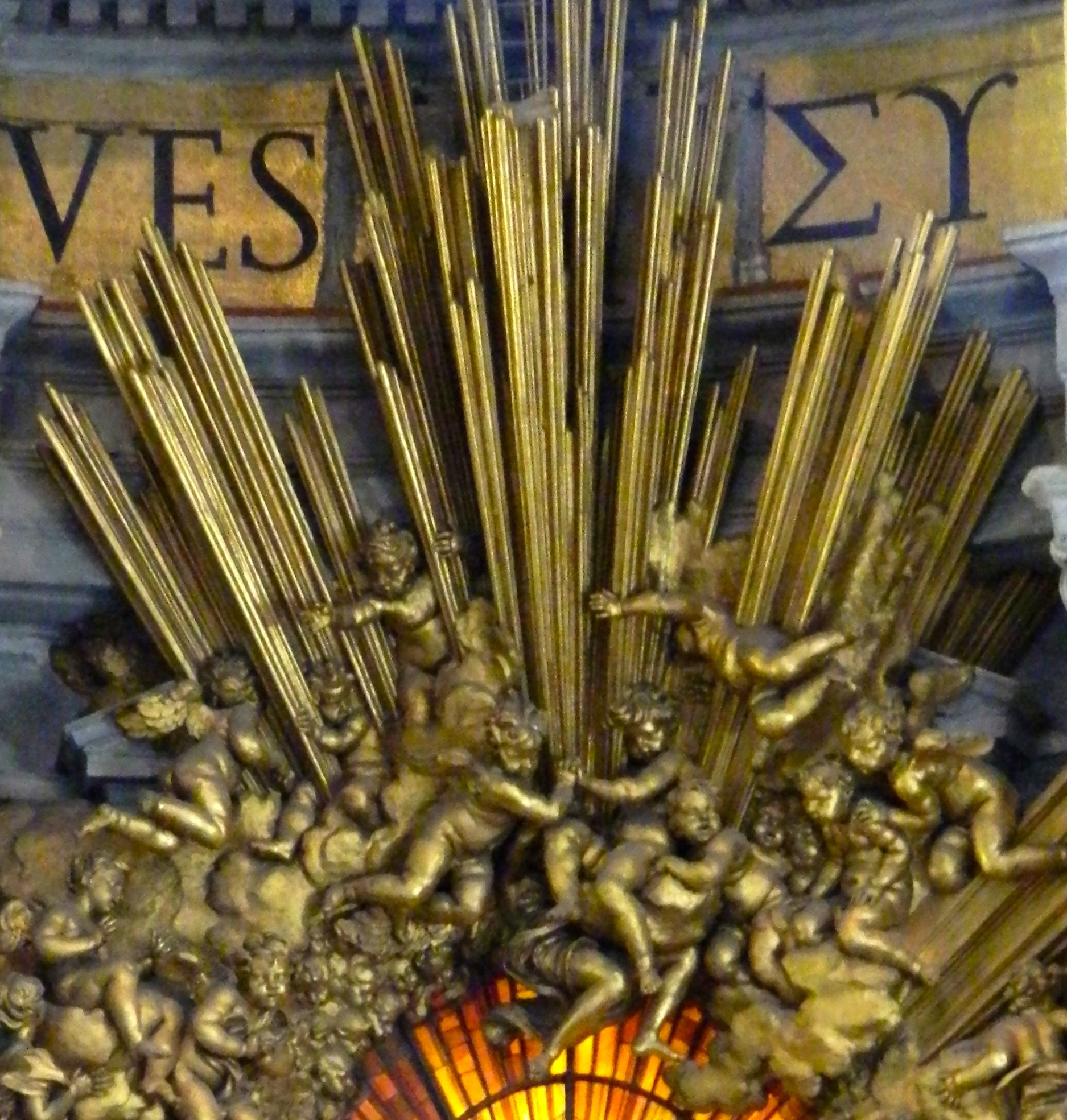
    A taste of heaven, from the altar at St. Peter's Basilica.
    A taste of heaven, from the altar at St. Peter’s Basilica.

    A couple of years ago, I ended our Christmas missive with a reflection on the fragility of life, for one close to us was killed in a car accident. I didn’t know that as I composed the letter, a beloved older friend was near death, having suffered a stroke. We often live in a state of denial, but for everyone, one day our earthly tent will be destroyed.

    Yet Paul here speaks to the Corinthians about longing for his heavenly dwelling, which God the Builder and Architect has created and which moths and rust will not destroy. It’s another variation of the already-not yet which we spoke of in previous weeks. We mentioned how we have been redeemed but are not yet completely sanctified; here we note that we groan on earth as we anticipate the wonders of heaven. Namely our rich communion with God.

    I love how Paul reverses the wisdom of the world with his phrase, “swallowed up by life” (in contrast to death being the great swallower). All the remnants of our old self – the mortal – will be swallowed up by the true and everlasting light and life in our heavenly dwelling. We will no longer be naked and ashamed, but clothed in a better outfit than we ever could have dreamed of.


    Prayer: Lord God, help me to live with an eternal perspective today, remembering that people and your word will be all that remains eternally. Plant in me the hope of heaven, which you promise will not disappoint.

  • Devotional of the week: Slaves to righteousness

    But thanks be to God that, though you used to be slaves to sin, you have come to obey from your heart the pattern of teaching that has now claimed your allegiance. You have been set free from sin and have become slaves to righteousness. I am using an example from everyday life because of your human limitations. Just as you used to offer yourselves as slaves to impurity and to ever-increasing wickedness, so now offer yourselves as slaves to righteousness leading to holiness… But now that you have been set free from sin and have become slaves of God, the benefit you reap leads to holiness, and the result is eternal life. (Romans 6:17–20, 22)

    Photo credit: Eagle by HooLengSiong on Flikr
    Photo credit: Eagle by HooLengSiong on Flikr

    The theme of leaving behind the old self and embracing the new shines through the letters of the apostle Paul. Of course this follows from his dramatic conversion. For one moment he was persecuting Christians to the point of death while the next he was rendered blind as Jesus revealed himself to him, changing his life (and the world) forever.

    But as we see in today’s passage, the new life doesn’t happen automatically. One’s will needs to be involved and committed. Paul employs the example of slavery, showing how we need to offer ourselves – our minds, hearts, emotions, actions – to right living before God. This then produces purity, holiness, and eternal life.

    I recently heard an illustration that warns against our temptation to entertain sin. An eagle sees a fresh carcass floating on some ice, but moving toward a waterfall. The ice provides the eagle a place to land and from which to pick at the carcass. As the waterfall approaches, the eagle sneaks in just a few more bites. But when it tries to lift off, it finds its claws are frozen into the ice and falls to its death.

    No, I’m not suggesting we are heading for that waterfall! For as Paul says, because we have become slaves to God, we will have eternal life. But the eagle can be a vivid cautionary tale against living out of the old self.

    For reflection: “Therefore, if anyone is in Christ, the new creation has come: The old has gone, the new is here!” (2 Corinthians 5:17).

  • Devotional of the week: Born again

    “How can someone be born when they are old?” Nicodemus asked. “Surely they cannot enter a second time into their mother’s womb to be born!” Jesus answered, “Very truly I tell you, no one can enter the kingdom of God unless they are born of water and the Spirit. Flesh gives birth to flesh, but the Spirit gives birth to spirit. You should not be surprised at my saying, “You must be born again.” The wind blows wherever it pleases. You hear its sound, but you cannot tell where it comes from or where it is going. So it is with everyone born of the Spirit” (John 3:4–8).

    Photo credit: Waiting for the Word, found on flikr
    Photo credit: Waiting for the Word, found on flikr


    An older friend of mine speaks freely of being “born again” to those whom she meets – shop assistants, taxi drivers, professional contacts. Part of me cringes as she employs this language, for the term has fallen out of fashion. It’s even become tainted, bringing up images of over-zealous fundamentalist Christians shouting, “Ye must be born again”!

    But I shouldn’t be embarrassed, for the source of the words is Jesus. When Nicodemus, a Pharisee who was on the Jewish ruling council, conversed with Jesus, he seems to be taking Jesus literally and not understanding the role of the Spirit in birthing a new person. We might not be able to see the Spirit physically, as perhaps Nicodemus was trying to do, but we will witness its evidence in our lives and in the lives of others – as with the wind blowing through the trees.

    John doesn’t tell us here if Nicodemus was born of the Spirit (later we learn that he joined Joseph of Arimathea to bury Jesus’ body so we can guess that his earlier encounter brought life). Instead John moves on to some of the most famous verses in the Bible, about God so loving the world that he gave his one and only Son (John 3:16)… Our new birth comes from the transforming work of God through Jesus on the cross, that we might escape condemnation and enter the light.

    Prayer: Heavenly Father, we don’t fully understand how your Spirit works in our lives. Reveal to us your transforming nature, that we might know and believe.

  • Devotional of the week: A new heart and a new spirit

    “It is not for your sake, people of Israel, that I am going to do these things, but for the sake of my holy name, which you have profaned among the nations where you have gone… I will sprinkle clean water on you, and you will be clean; I will cleanse you from all your impurities and from all your idols. I will give you a new heart and put a new spirit in you; I will remove from you your heart of stone and give you a heart of flesh. And I will put my Spirit in you and move you to follow my decrees and be careful to keep my laws.” (Ezekiel 36:22, 25–27)

    DSCN2550

    We might think that the Holy Spirit is absent in the Old Testament, but he is alive – if sometimes hidden. Here God says that he will give the Holy Spirit to his people, to live and move amongst them and to lead them to holiness.

    In Ezekiel’s words we see turning from the old self to the new as a process of conversion. First is an outward cleansing (purification); second is a heart transplant (renovation); third is a filling with the Holy Spirit and the right living that results (sanctification). Of course people will have different experiences of coming to faith in the triune God, but these steps reveal the total level of transformation it entails. God changes our hearts and our spirits, which in the Hebrew understanding meant not just our emotions but also our wills.

    And why does God go to these lengths to restore his fallen people? For his glory, for his name was being profaned as they lived outside of the Promised Land. As the neighboring nations witness God saving his people, they will realize his power and grace.

    A heart of stone is a cold, lifeless, often bitter thing. The Lord would remove any pebbles or rocks that lodge in our hearts, that his Spirit might flow through us. Heart surgery is painful, but as God unclogs our arteries and cleans out any built-up muck, we reap physical, emotional, and spiritual rewards.


    For reflection: “Create in me a pure heart, O God, and renew a steadfast spirit within me” (Psalm 51:10).

  • Devotional of the week: Discordant music

    “My people come to you, as they usually do, and sit before you to hear your words, but they do not put them into practice. Their mouths speak of love, but their hearts are greedy for unjust gain. Indeed, to them you are nothing more than one who sings love songs with a beautiful voice and plays an instrument well, for they hear your words but do not put them into practice” (Ezekiel 33:31–32).

    I'm sure this organ could make some clanging noises - or beautiful music. Taken in a church in Gloucestershire; wish I could remember which one!
    I’m sure this organ could make some clanging noises – or beautiful music. Photo taken in a church in Gloucestershire; wish I could remember which one!

    The prophet Ezekiel wrote after the fall of Jerusalem, when the Jewish people were exiled to Babylon. The unthinkable happened and no longer could they worship in the temple or live in their familiar city. In their anguish they must have wondered if the Lord had abandoned them. But they also allowed their pain to seep into a growing distance from God. They became complacent and removed from the cares of the Lord.

    The Lord tells Ezekiel that his prophecies are not penetrating the facades of his people; the words only waft above them as beautiful but meaningless music. For greedy hearts hide under their proclamations of love. Their spiritual state sounds similar to that of the church at Sardis, to whom Jesus wrote through the apostle John: “I know your deeds; you have a reputation of being alive, but you are dead. Wake up!” (Revelation 3:1–2). Or indeed to the church at Laodicea, whom he called lukewarm (Revelation 3:16).

    Sloughing off the old self and living out of the new entails our whole lives. In the birthing process, the baby bird grows stronger and more sure of itself as it pecks through its shell. So too will our souls gain weight and wisdom as we dedicate our everything to the Lord – our thoughts, words, and actions. Whatever stage of life we’re in, whether we’re in the process of breaking through the shell or soaring through the air with fully developed wings, may we lean on God as our source of everlasting strength and hope.

    Prayer: Lord Jesus, like the disciples in the Garden of Gethsemane, we struggle to stay awake. Stir us, we pray, that we might not become smug spiritually or unconcerned for the world around us.

  • Devotional of the week: A royal diadem

    “The nations will see your vindication, and all kings your glory; you will be called by a new name that the mouth of the Lord will bestow. You will be a crown of splendor in the Lord’s hand, a royal diadem in the hand of your God. No longer will they call you Deserted, or name your land Desolate. But you will be called Hephzibah,and your land Beulah; for the Lord will take delight in you, and your land will be married. As a young man marries a young woman, so will your Builder marry you; as a bridegroom rejoices over his bride, so will your God rejoice over you” (Isaiah 62:2–5 NIV).

    Photo credit: found on flickr by archer11.
    Photo credit: found on flickr by archer11.

    We might feel uncomfortable applying the language of the prophet Isaiah to our lives, and men in particular might struggle to call themselves a royal diadem or the bride of Christ. But as CS Lewis said, God is so masculine that we are all feminine in response to him. And so male or female, we can ask God to reveal how his loving words from centuries ago can speak into our spirits and souls today.

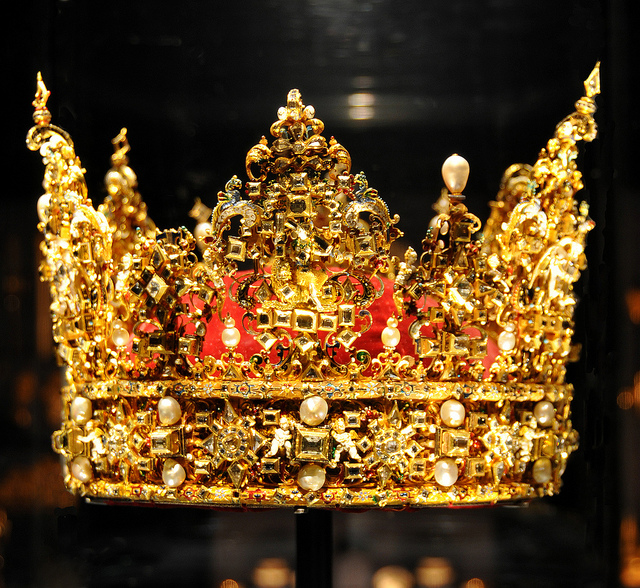
    Being a crown of splendor in the Lord’s hand makes me think of Jesus on the cross, wearing his crown of thorns. He who could take the place of the righteous king yet endured pain for our sakes. So that we too can be sons and daughters of the King, wearing a jewel-encrusted crown as bestowed by our heavenly Father.

    No longer do we have to endure desolate lives of emptiness. For God reassures his people that he dwells with us and delights in us. He who has created us – the Builder – who has set our foundations into place, will rejoice over us even as a bridegroom on his wedding day.

    Living out of the new self entails embracing our identity as the beloved. Our new name reflects joy, rejoicing, delight, and love. What name could you claim today?

    For reflection: “‘Come, I will show you the bride, the wife of the Lamb’… It shone with the glory of God, and its brilliance was like that of a very precious jewel, like a jasper, clear as crystal” (Revelation 21:9, 11).