Category: Pilgrim devotionals

  • Devotional of the week: Aim at heaven (11 in Pilgrim series)

    Photo: Baigal Byamba, flickr
    Photo: Baigal Byamba, flickr

    All these people were still living by faith when they died. They did not receive the things promised; they only saw them and welcomed them from a distance, admitting that they were foreigners and strangers on earth. People who say such things show that they are looking for a country of their own. If they had been thinking of the country they had left, they would have had opportunity to return. Instead, they were longing for a better country—a heavenly one. Therefore God is not ashamed to be called their God, for he has prepared a city for them (Hebrews 11:13–16).

    A couple of years ago, as we and our children were discussing the evening’s Bible story – Jesus with the woman at the well – we talked about nationalities, for Jesus as a Jewish man talking with a Samaritan woman would have broken social conventions. We discussed national allegiances, for our children have two: British and American. To which my son said that he felt more British than American – to my chagrin but not to my surprise.

    The kids – and now I – have dual citizenship, but as Christians we all have dual or triple or more citizenship, with our most important passport aligning us to the heavenly country. We hold our earthly citizenship lightly, knowing that our lives here are an itty bitty dot compared with the length of eternity.

    These verses from Hebrews underline how the ancients were living in view of heaven. The passage forms an interlude, when the writer pauses in his great list of the heroes who lived by faith to emphasize their eternal perspective. As with the psalm we read last week that spoke of being a foreigner and stranger, the heroes listed in Hebrews also knew that their heavenly passport was the important one.

    Are we living in the light of eternity? One way I like to get heaven into my imagination, so to speak, is to chew over the last chapters of Revelation. The imagery soaks into my heart and mind, and for a few minutes at least the cares of this world lessen.

    For reflection: “Aim at Heaven and you will get earth “thrown in”: aim at earth and you get neither” (CS Lewis, Mere Christianity).

  • Devotional of the week: Pilgrims by faith (10 in Pilgrim series)

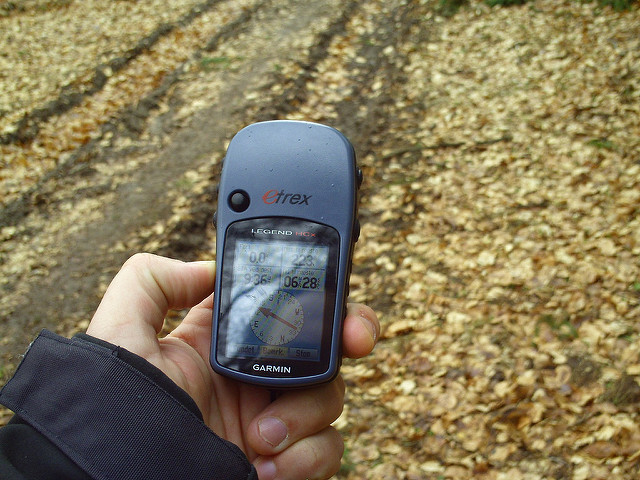
    Photo: geocaching.smartlog.dk, flickr
    Photo: geocaching.smartlog.dk, flickr

    By faith Abraham, when called to go to a place he would later receive as his inheritance, obeyed and went, even though he did not know where he was going. By faith he made his home in the promised land like a stranger in a foreign country; he lived in tents, as did Isaac and Jacob, who were heirs with him of the same promise. For he was looking forward to the city with foundations, whose architect and builder is God (Hebrews 11:8–10).

    As we near the end of this journey of engaging with the concept of pilgrimage, we return to Abraham, Isaac, and Jacob through this faith-building passage from the letter to the Hebrews. This chapter lists hero after hero in the Bible who followed God’s call on their life. They lived by faith while enduring hardship, welcoming from afar the fulfillment of the promises of God.

    For me, a line from our text that stands out is that Abraham didn’t know where he was going. He didn’t have the latest GPS update, his travel route planned out in detail down to which hotel he would stay in on night twenty-three. Rather he set out, trusting God, with herds and children and servants and household goods, journeying laboriously through heat and sunshine. I’m continually directionally challenged, so the thought of going on a journey without Gertie, our so-named GPS, sends shivers down my spine. I’m a much more content traveler when someone else is navigating – at least when it’s a physical journey.

    And Abraham made mistakes: to Pharaoh he passed off his wife as his sister so that the Egyptians wouldn’t kill him; he gave into Sarah’s request that he sleep with her maid so to hurry up the process of him receiving the promised heir. Yet the writer to the Hebrews doesn’t mention these errors in judgment; rather he says that Abraham obeyed and went. I find that encouraging. Though we may follow the wrong course or get off-track, God forgives us and, if we are faithful, will say that we too obeyed and went.

    Prayer: Lord God, direct my footsteps this day that I might walk the path that leads to joy, peace, and righteousness.

  • Devotional of the week: Our flimsy tent (9 in Pilgrim series)

    Photo: Michael Pollock, flickr
    Photo: Michael Pollock, flickr

    For we know that if the earthly tent we live in is destroyed, we have a building from God, an eternal house in heaven, not built by human hands. Meanwhile we groan, longing to be clothed instead with our heavenly dwelling, because when we are clothed, we will not be found naked. For while we are in this tent, we groan and are burdened, because we do not wish to be unclothed but to be clothed instead with our heavenly dwelling, so that what is mortal may be swallowed up by life. (2 Corinthians 5:1–4)

    When growing up, I would go on a yearly wilderness canoe trip in northern Minnesota. We would eschew plumbing and comfortable beds for the wonders of being close to nature. So close that just a flimsy tent would be between us and the outside world. Most nights we would sleep well, if somewhat cramped, a cool breeze wafting through the screen. But one night stands out in my memory: the rains felt like floods and our tent’s walls became saturated with water. Droplet after droplet came in, soaking our sleeping bags and making us miserable. We wondered if the night would ever end.

    Tents are flimsy things, and necessarily so. For who would want to haul bulky boards and nails on a long portage? So too our bodies, as the Apostle Paul says in his letter to the Corinthians. But our culture resists Paul’s words, with its ever more invasive forms of plastic surgery to stave off aging. Or the latest miracle cream to reduce wrinkles. Or the latest gadget or fast car or trophy wife. But Paul speaks of the eternal realities under which we live.

    Our hope is in heaven, when we will enjoy a dwelling made with the best building materials, which will never leak, rot, get moldy or break. We won’t need Botox or surgery or exorbitantly expensive face creams – or the latest Ferrari or yacht or smartphone. None of that will matter – it will be “swallowed up” – as we embrace true living. Come, Lord Jesus!

    Prayer: Lord, we want not to be overly concerned with our earthly tent. Help us to focus on what truly matters.

  • Devotional of the week: Transformed (8 in Pilgrim series)

    Photo: Julie Raccuglia, flickr
    Photo: Julie Raccuglia, flickr

    Therefore, I urge you, brothers and sisters, in view of God’s mercy, to offer your bodies as a living sacrifice, holy and pleasing to God – this is your true and proper worship. Do not conform to the pattern of this world, but be transformed by the renewing of your mind. Then you will be able to test and approve what God’s will is – his good, pleasing and perfect will (Romans 12:1–2).

    In writing to the Romans, the Apostle Paul delivers a lot of theology in the first eleven chapters – salvation, justification, righteousness, freedom. Then he pens a big “therefore.” What does all of it mean? Listen up, he seems to say, this is how to live it out.

    We think about his “therefore” this week as we consider the internal transformation of a pilgrim that results in changes to our behavior. Paul tells the Romans to start with offering their bodies to God. No longer do they make animal sacrifices, for the new covenant brought forth by Jesus supersedes that. Rather, now they give themselves as a living sacrifice. And God will not reject them as he would previously an imperfect dove or bull.

    Then Paul says not to conform. Living in a caustic world, we can easily sink to the level of the prevailing culture as we give in to gossip, angry thoughts, bitter recriminations. But God through his indwelling Spirit can change the pattern of our thoughts as we submit to him. Perhaps we can call to mind that the Lord dwells within through a hourly alarm on our phone. Or each time we relieve ourselves. Or when we are about to blast out a series of unhelpful or hurtful words. For when we are transformed, then we will understand how God wants us to live. We’ll learn his “good, pleasing and perfect will.”

    For reflection: “So whether you eat or drink or whatever you do, do it all for the glory of God” (1 Corinthians 10:31).

  • Devotional of the week: Gifts now; gifts later (7 in Pilgrim series)

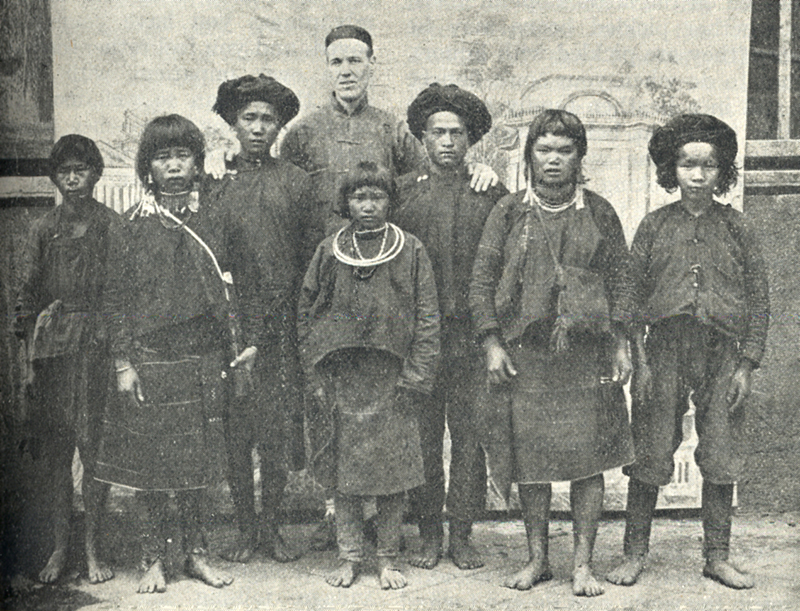
    James Fraser and some of the people he introduced to Christ.
    James Fraser and some of the people he introduced to Christ.

    Then Peter spoke up, “We have left everything to follow you!” “Truly I tell you,” Jesus replied, “no one who has left home or brothers or sisters or mother or father or children or fields for me and the gospel will fail to receive a hundred times as much in this present age: homes, brothers, sisters, mothers, children and fields – along with persecutions – and in the age to come eternal life.” (Mark 10:28–30)

    Our text comes just after the rich man asks Jesus how to enter the kingdom. Jesus’ words to him are stark: sell his possessions, give to the poor, and follow him. The disciples are amazed. Then Jesus gives the assurance above – those who renounce family members and livelihoods and who endure ill-treatment will receive a hundredfold of blessings.

    This passage makes me think of missionaries of old, who would leave their home for a far-flung country never to return, or to come back decades later to a few remaining relatives whom they might not recognize. James Fraser (1886–1938) was such a pilgrim. He gave up what would have been a budding career as an engineer – or a concert pianist – to live among the remote tribal people in China. What he relinquished was great, but what he gained was everlasting. For through his dependence on God as expressed through a disciplined program of prayer (shared with his prayer partners at home), he witnessed many Lisu Chinese people come to faith.

    God might not be asking us to be mission partners in a remote village. But what he seeks in us, as with the young rich man, is a heart willing to eschew the things that may have become an idol to us – even our family members or our homes or our work. Can we say yes to Jesus as he asks us to follow him, trusting that we will receive a hundred times as much of what we say no to?

    For reflection: “Now to him who is able to do immeasurably more than all we ask or imagine, according to his power that is at work within us, to him be glory in the church and in Christ Jesus throughout all generations, for ever and ever! (Ephesians 3:20–21).

  • Devotional of the week: Set toward Jerusalem (6 in Pilgrim series)

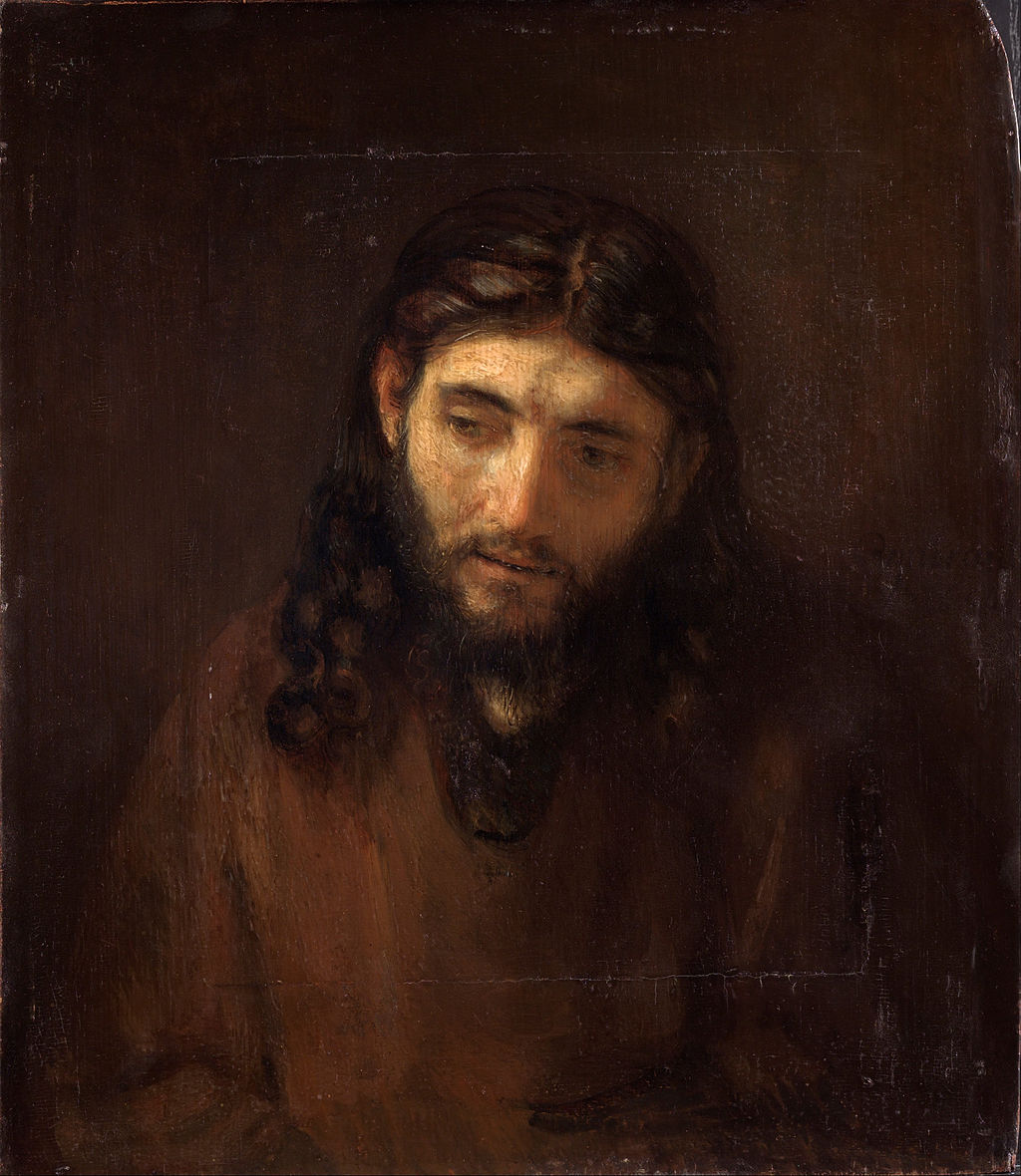
    Rembrandt, public domain
    Rembrandt, public domain

    As the time approached for him to be taken up to heaven, Jesus resolutely set out for Jerusalem. And he sent messengers on ahead, who went into a Samaritan village to get things ready for him; but the people there did not welcome him, because he was heading for Jerusalem. When the disciples James and John saw this, they asked, “Lord, do you want us to call fire down from heaven to destroy them”? But Jesus turned and rebuked them. Then he and his disciples went to another village. As they were walking along the road, a man said to him, “I will follow you wherever you go.” Jesus replied, “Foxes have dens and birds have nests, but the Son of Man has no place to lay his head.” Luke 9:51–58

    Having spent our previous weeks in the Old Testament in this series on pilgrimage, we now turn to the life of Jesus, which is fitting as we approach Ash Wednesday. In one sense Jesus’ whole human life was a pilgrimage, namely as one of the Godhead who became man and dwelt among us before returning to heaven.

    This week’s reading comes as Jesus sets out for Jerusalem and the cross, knowing the sacrifice he will make. As part of this, he begins preparing his disciples for his death. When James and John thought the unwelcoming village would need judgment, Jesus rebukes the them. Rather than punishment, now was the time for grace and proclamation.

    Then another man appears, saying that he wants to follow Jesus – probably as one would follow a rabbi, learning from him by walking behind him. Jesus replies that though even the wild animals have holes in which to escape, he does not enjoy such a refuge. Thus the cost of following him will be great. But the rewards will be eternal.

    We often shy away from speaking of the sacrifice required of disciples of Christ when sharing with someone enquiring about our faith. Jesus, in contrast, is clear. Discipleship is costly, but worth it. As we share with those whom we meet, may he give us winsome words filled with the right balance of grace and truth.

    Prayer: Lord God, sometimes we fear that you will make us renounce what we love. Give us strength and courage to follow you, and strike hope and faith in us that we may believe your promises.

  • Devotional of the week: True repentance (5 in Pilgrim series)

    “In those days, at that time,” declares the Lord, “the people of Israel and the people of Judah together will go in tears to seek the Lord their God. They will ask the way to Zion and turn their faces towards it. They will come and bind themselves to the Lord in an everlasting covenant that will not be forgotten.” Jeremiah 50:4–5

    Rembrandt_Harmensz._van_Rijn_-_Jeremia_treurend_over_de_verwoesting_van_Jeruzalem_-_Google_Art_Project
    Rembrandt van Rijn, Jeremiah Lamenting the Destruction of Jerusalem, c. 1630

    These few lines of prophecy about the Israelites come in the midst of a greater warning from the prophet Jeremiah to the people of Babylon. At this time, the Israelites had split into the northern and southern kingdoms, and thus lived in a state of disunity. Jeremiah is known as the weeping prophet because his words from the Lord often speak of impending destruction.

    The prophecy here tells of God’s people who have turned away from him. No longer are they eager to follow his laws and decrees. A series of corrupt kings has added to the debauchery. But Jeremiah heralds a time when the people of both kingdoms will bow their knees and return to the Lord. With tears they will seek the way of Zion.

    We might find the book of Jeremiah depressing, but verses such as these – tucked away in the midst of prophecies of doom – bring hope. Our pilgrimages are often filled with wrong or missed turnings, whether through sins of omission or commission. But when we seek the Lord, he will extend to us his everlasting covenant.

    The Lord doesn’t demand that we come to him with weeping before he will forgive us. But tears of remorse are often a sign of true repentance. Sometimes when I’m having to discipline my children, I see them move from being somewhat sorry to being deeply so – perhaps because of the stronger consequences I have to enact. Eventually, they show true sorrow over the infraction. What will it take for us to repent?

    Prayer: “Have mercy on me, O God, according to your unfailing love; according to your great compassion blot out my transgressions. Wash away all my iniquity and cleanse me from my sin” (Psalm 51:1–2).

  • Devotional of the week: The sin that separates (4 in Pilgrim series)

    Hear my prayer, Lord, listen to my cry for help; do not be deaf to my weeping. I dwell with you as a foreigner, a stranger, as all my ancestors were. Look away from me, that I may enjoy life again before I depart and am no more. Psalm 39:12–13

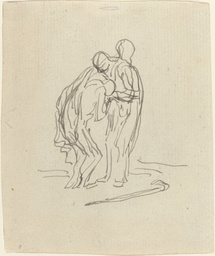
    Honoré Daumier (French, 1808 - 1879), The Prodigal Son, pen and black ink with wash on laid paper, Rosenwald Collection
    Honoré Daumier (French, 1808 – 1879), The Prodigal Son, pen and black ink with wash on laid paper, Rosenwald Collection

    This song, probably from King David, expresses repentance. Stricken with illness, David feels silence from God and pleads that the Lord will bridge the distance that has become a wedge between them. The silence makes him feel like a foreigner and a stranger from God. Bereft, he seeks that their relationship be restored.

    From the point of view of pilgrimage, this psalm echoes the theme of dislocation. The Hebrew words that David uses for “foreigner” and “stranger” broaden our understanding of this sense of not being at home (which I’m indebted to The NIV Application Commentary for illuminating). The Hebrew word for foreigner refers to someone who was not an Israelite but who inhabited the Promised Land, although without full rights. They may have been someone such as a servant or employee of an Israelite family. Another meaning of the word describes anyone not living in their native land – and thus this term could be applied to the Israelites themselves as they travelled to Canaan.

    Thus to be a stranger and a foreigner meant living with tenuous rights. The landowner could become fickle and throw them out. Their ability to prosper is limited. And this is how the psalmist feels – he knows that his sin has rebuked his standing as a favored son. Now he is on the outside, looking in. He is as the prodigal son, tending the pigs and yearning for his father’s embrace.

    Because we are sinful, our journeys entail times of separation from God due to our wrongdoing. But as with David and the prodigal son, when we repent, God in his mercy closes the gap. He runs toward us, embraces us, puts on the prized coat over our pig-slopped clothes and rejoices that we are home.

    For reflection: “Let’s have a feast and celebrate. For this son of mine was dead and is alive again; he was lost and is found” (Luke 15:23–24).

  • Devotional of the week: Your people, my people (3 in Pilgrim series)

    All made in the image of God. Photo: Kat, flickr
    All made in the image of God. Photo: Kat, flickr

    “Look,” said Naomi, “your sister-in-law is going back to her people and her gods. Go back with her.” But Ruth replied, “Don’t urge me to leave you or to turn back from you. Where you go I will go, and where you stay I will stay. Your people will be my people and your God my God. Where you die I will die, and there I will be buried. May the Lord deal with me, be it ever so severely, if even death separates you and me.” Ruth 1:15–17

    Some eighteen years ago, a verse from the book of Ruth was impressed on my mind as my new husband and I approached the town where he would be a curate: “Your people will be my people and your God my God.” The thought was daunting, for I was not long in the UK and was still getting used to the ways of my new countrypeople. As we entered the high street, these words reverberated within me. So much so that I wondered if living there would entail a cost.

    Our time there was cut short, for tensions within the parish meant that the vicar was signed off on stress-related sick leave. My husband was left adrift. I began to consider whether I really did want “these people” to be “my people,” for I had witnessed behavior that left me sad and disquieted. But I knew that whatever their actions, these were still “my people,” for I too had the propensity for similarly uncharitable thoughts and deeds.

    In the book of Ruth, we see a daughter-in-law so committed to her dead husband’s mother that she is willing to forsake her country and move with Naomi back to Bethlehem. Ruth becomes a pilgrim, serving her mother-in-law with grace and selflessness. For many, the story is familiar – Naomi finds a relative who agrees to marry Ruth, thus redeeming her under the law so that she can carry on the family line. Ruth and Naomi’s needs for protection, care and love are met.

    All over the world, God’s people are our people. Who will he send on your path today?

    Prayer: Lord, open my eyes and my heart to embrace your children.

  • Devotional of the week: A change of heart (2 in Pilgrim series)

    "David Roberts The approach to Mount Sinai" by David Roberts - Bonhams. (Public domain)
    “The approach to Mount Sinai” by David Roberts – Bonhams. (Public domain)

    Now Moses said to Hobab son of Reuel the Midianite, Moses’ father-in-law, “We are setting out for the place about which the Lord said, ‘I will give it to you.’ Come with us and we will treat you well, for the Lord has promised good things to Israel.” He answered, “No, I will not go; I am going back to my own land and my own people.” But Moses said, “Please do not leave us. You know where we should camp in the wilderness, and you can be our eyes. If you come with us, we will share with you whatever good things the Lord gives us.” So they set out from the mountain of the Lord… (Numbers 10:29–32)

    Hobab was Moses’ brother-in-law, tied through marriage. Moses appeals to him to join them as the Israelites leave Mount Siani for Canaan. Hobab first says no, for he wants to return to his people. But Moses pleads with him, knowing he’ll be an asset in the wilderness. The biblical account doesn’t tell us what made Hobab change his mind and join Moses. Was it a conviction from God that this was the right way forward? Pity or compassion for Moses? A puffed-up desire to be a hero?

    We don’t know. It could be a combination of the above, for we often have mixed reasons in undertaking new ventures. And even though our hearts may not be clean and pure, God still uses us. He changes our sometimes divided heart, cleansing the black and gunge and making us clean.

    When I’m out walking in the park by our home in north London, often I’m in my own world. One day, however, I heard another American accent. After walking past I felt the nudge to talk to her, but I resisted. As I continued my circuit the feeling remained. Finally I struck up a conversation and learned that the woman was newly transplanted, having come from Iowa, the state right next to my native Minnesota, and had been feeling lonely and disconnected. Our conversation brought her encouragement, and I was grateful that I had heeded God’s nudge to reach outside my comfort zone and share his love.

    On a much larger scale, Hobab changed his plans radically as he said yes to Moses. Moses was then able to follow God in the wilderness through the ark, complemented by Hobab’s hands-on experience. A good partnership resulted. As you reflect on Moses and Hobab, consider how God might want to mold you this day and this week. How might 2016 shape up as you hear and heed his voice?

    Prayer: Lord, make my heart my heart soft and help me heed your nudges. Amen.