Valentin de Boulogne – Blaffer Foundation Collection, Houston, TX
You then, my son, be strong in the grace that is in Christ Jesus. And the things you have heard me say in the presence of many witnesses entrust to reliable people who will also be qualified to teach others. Join with me in suffering, like a good soldier of Christ Jesus. No one serving as a soldier gets entangled in civilian affairs, but rather tries to please his commanding officer. Similarly, anyone who competes as an athlete does not receive the victor’s crown except by competing according to the rules. The hardworking farmer should be the first to receive a share of the crops. Reflect on what I am saying, for the Lord will give you insight into all this (2 Timothy 2:1–7).
Paul fills his letters with vivid images that stick in the mind and imagination. As he passes along to Timothy his final words of wisdom, and his longings for the fulfillment of the gospel, he uses examples from ancient times that Timothy would have been familiar with – a soldier, athlete, and farmer. Those working tirelessly for the gospel may not appear to reap the same concrete results as those yielding crops or winning races, but Paul trusts that Timothy will understand his examples as the Lord gives him insight.
The three examples have in common their hard work and faithfulness to produce a result: soldiers follow in obedience; athletes submit their bodies to training; farmers cultivate and care for the land. Each of the three shows their commitment through their training, devotion, and consistency. So too, infers Paul, should the Christian commit to their life of godliness and right living.
Note too that neither a soldier, athlete, nor farmer knows in advance what the end result of their efforts will be, whether a battle or competition will be won or lost, or whether they will be harvesting a large or small crop. Their faithfulness and dedication to the task is what matters.
Prayer: Lord God, we may be at the beginning of our journey in life with you, at the end, or somewhere in the middle. Wherever we are on this road, we ask you to help us to be faithful, for your glory.
I thank God, whom I serve, as my ancestors did, with a clear conscience, as night and day I constantly remember you in my prayers.Recalling your tears, I long to see you, so that I may be filled with joy. I am reminded of your sincere faith… For this reason I remind you to fan into flame the gift of God, which is in you through the laying on of my hands. For the Spirit God gave us does not make us timid, but gives us power, love and self-discipline. So do not be ashamed of the testimony about our Lord or of me his prisoner. Rather, join with me in suffering for the gospel, by the power of God. He has saved us and called us to a holy life… (2 Timothy 1:3–9, abridged)
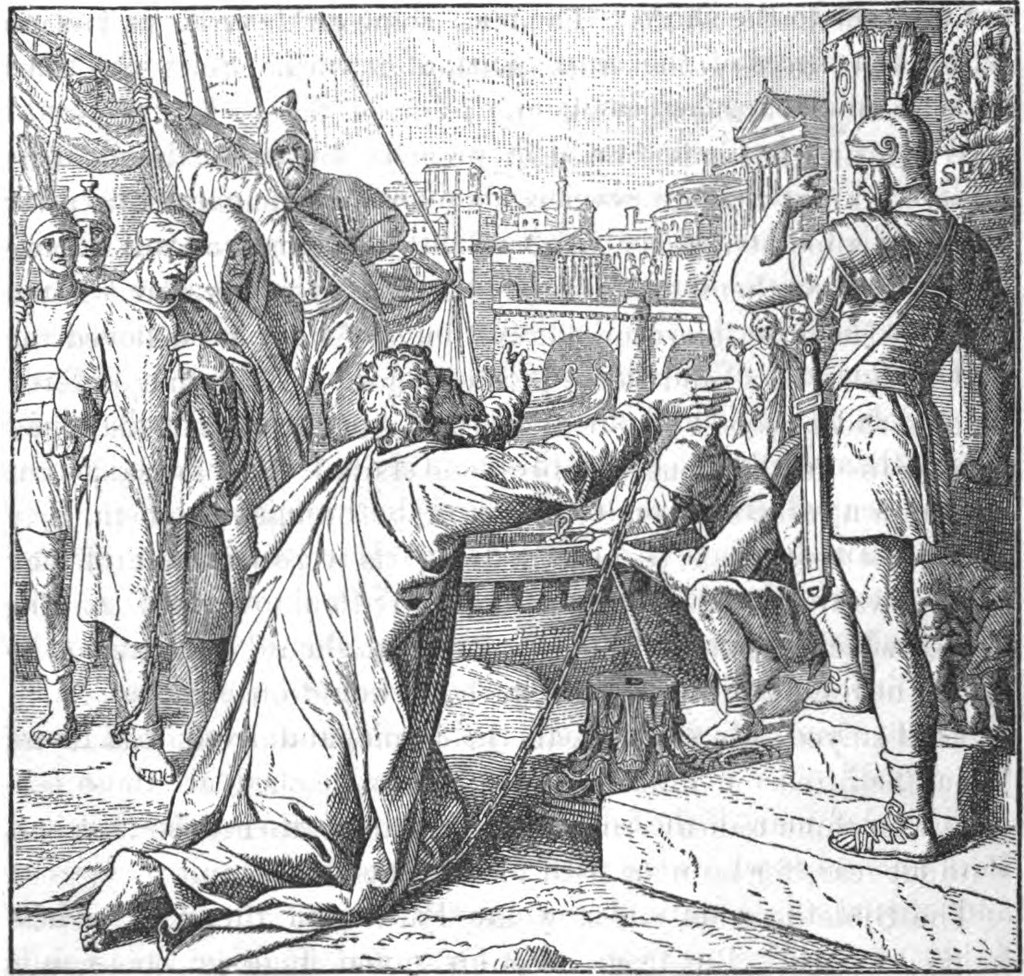
Paul opens his second letter to Timothy in a more gentle manner than he uses in his first. Many biblical commentators think that by the time he wrote this letter, the crisis with the false teachers had passed, which Paul addressed not only in 1 Timothy but in Titus. He probably wrote this letter four years after he wrote 1 Timothy, dictating his words while in chains during his second imprisonment in Rome, soon before his execution. These are therefore his last words to his beloved friend and one whom he mentored in the faith; one for whom he prays for “night and day” (v.3) and longs to see one last time.
In 1 Timothy Paul emphasizes our part in working out our faith in practice, and in this letter he also highlights the role of God’s transforming power. For instance, Timothy should “fan into flame” the gifts that God has given him. Although Timothy may take the initial action, a power other than he brings about the result (as wind will stoke a fire, so the Lord will blow his Spirit into Timothy). The Spirit’s working will yield the gifts of power, love, and self-discipline as Timothy pursues a holy life.
May the triune God fan into flame our faith.
For Reflection: “Is not my word like fire,” declares the Lord, “and like a hammer that breaks a rock in pieces?” (Jeremiah 23:29)
But you, man of God, flee from all this, and pursue righteousness, godliness, faith, love, endurance and gentleness.Fight the good fight of the faith. Take hold of the eternal life to which you were called when you made your good confession in the presence of many witnesses. In the sight of God, who gives life to everything, and of Christ Jesus, who while testifying before Pontius Pilate made the good confession, I charge you to keep this command without spot or blame until the appearing of our Lord Jesus Christ, which God will bring about in his own time – God, the blessed and only Ruler, the King of kings and Lord of lords, who alone is immortal and who lives in unapproachable light, whom no one has seen or can see. To him be honor and might forever. Amen (1 Timothy 6:11–16).
As Paul brings his letter to conclusion, he warns Timothy not to act as the false teachers, but to “fight the good fight of the faith” (v12). Note his list of spiritual practices for Timothy to embrace – to flee ungodliness, pursue righteousness, take hold of eternal life, keep these commands. We are to live out the gift of life in the kingdom of God every day, employing our wills, minds, and bodies.
Paul in his other letters often speaks of putting off the old self and embracing the new (see Ephesians 4:22–24, for example), again emphasizing this practice as an active one. Living in the fallen world as we do, and being subject to our sinful nature, we need to put on the new self daily. We may do so through such actions as confession and receiving forgiveness, asking for God’s help in making wise and godly choices, and filling our mind with his words.
For we know, as Paul says, that our God is the only Ruler, King and Lord, he who is immortal and unapproachable, but he who makes the way clear for us to rest in his love.
Prayer: Father God, help me shed any of my habits that are unhealthy, that I might live out of my redeemed self.
But godliness with contentment is great gain. For we brought nothing into the world, and we can take nothing out of it. But if we have food and clothing, we will be content with that. Those who want to get rich fall into temptation and a trap and into many foolish and harmful desires that plunge people into ruin and destruction. For the love of money is a root of all kinds of evil. Some people, eager for money, have wandered from the faith and pierced themselves with many griefs (1 Timothy 6:6–10).
Some ask, “How much is enough?” And another will answer, “Just the next deal/conquest/thing to buy.” For the human heart wants and yearns for fulfillment, and when we aren’t seeking God to fill those empty spaces, we’ll look to all sorts of other things to fill the void. Such as money to buy us stuff – for social status, ease of convenience, gratification.
Note in the text that Paul says that the love of money can lead to evil – not that all money leads to evil, nor that money itself is evil. Rather he’s speaking about the state of people’s hearts, namely what are they desiring. As they plot and plan about acquiring the next best thing, they can find it increasingly difficult to resist temptation, which can lead to ruin. Paul, in contrast, counsels contentment with what we have. After all, we can’t take any of our stuff with us into the next life, and the Lord would have us seek his love, peace, and joy as true riches to share.
I’ve met people who don’t have many material possessions and yet foster a stingy attitude, and I’ve met people with a lot of money who not only are generous, but don’t seem defined by their worldly wealth. As Paul says, it’s all down to the state of our hearts.
Over to you. How much is enough?
Prayer: Father God, we yearn for contentment; we yearn for you. By your Holy Spirit, fill the places in our souls that feel empty and void, that we might desire aright.
The elders who direct the affairs of the church well are worthy of double honor, especially those whose work is preaching and teaching. For Scripture says, “Do not muzzle an ox while it is treading out the grain,” and “The worker deserves his wages.” Do not entertain an accusation against an elder unless it is brought by two or three witnesses. But those elders who are sinning you are to reprove before everyone, so that the others may take warning. I charge you, in the sight of God and Christ Jesus and the elect angels, to keep these instructions without partiality, and to do nothing out of favoritism (1 Timothy 5:17–21).
The Church of England may have its faults, but as a vested party (as one married to an Anglican vicar), I think their system of paying their clergy works well in principle (notwithstanding the families where the spouse doesn’t work, and who can struggle financially). For all clergy are paid roughly the same stipend, whether theirs is a large church or a tiny one, and the more wealthy churches pay into a central fund that finances churches in poorer areas. With a standard stipend, clergy aren’t tempted to move from post to post to seek a larger salary.
Paul touched on this issue of not playing favorites in his letter to Timothy – although he emphasizes Timothy’s actions regarding the elders, namely how he should act wisely, impartially, and with justice. They are to be remunerated for their work, Paul says, but they are also to be held to account. I wonder if Paul was picturing the elders as he wrote his letter, for he had spent three years at the church in Ephesus previously.
It’s beneficial to consider the work of the elders, not least so that we can pray for and support those in positions of church leadership. Friends say how much they value the prayers of the people in their congregation, even, and perhaps especially, when there are areas of division.
For reflection: What do you think is behind Paul’s command not to “entertain an accusation against an elder unless it is brought by two or three witnesses”?
If you point these things out to the brothers and sisters, you will be a good minister of Christ Jesus, nourished on the truths of the faith and of the good teaching that you have followed. Have nothing to do with godless myths and old wives’ tales; rather, train yourself to be godly. For physical training is of some value, but godliness has value for all things, holding promise for both the present life and the life to come. This is a trustworthy saying that deserves full acceptance. That is why we labor and strive, because we have put our hope in the living God, who is the Savior of all people, and especially of those who believe (1 Timothy 4:6–10).
The trend of the yearned-for perfectly shaped and sculpted body continues in our culture as we run, train, jump, pump iron, dance, and eat foods from the latest diet, whether low or high GI, protein, or other. But do we focus enough on the training of our soul? Do we have fit bodies but fat minds, in the memorable title by Os Guinness (Fit Bodies, Fat Minds, Baker, 1994)?
Paul speaks of Timothy being nourished by the food that lasts – that is, the truths of the faith and the good teaching he’s received, whether through his mother and grandmother, other church leaders, or Paul himself. Why, Paul says, should we neglect the state of our souls in favor of the state of our bodies, when our souls will be those which live on into eternity?
Many Christians seek to practice the spiritual disciplines regularly, such as Bible reading and study, being thankful, taking time for silence and solitude, and doing acts of mercy in secret. They find doing so in community to be mutually beneficial. May we continue to spur each other on towards love and good deeds (Hebrews 10:24).
Prayer: Father God, through the power of your Holy Spirit, help us to train ourselves in righteousness, that we might reflect your grace and your glory to a hurting world.
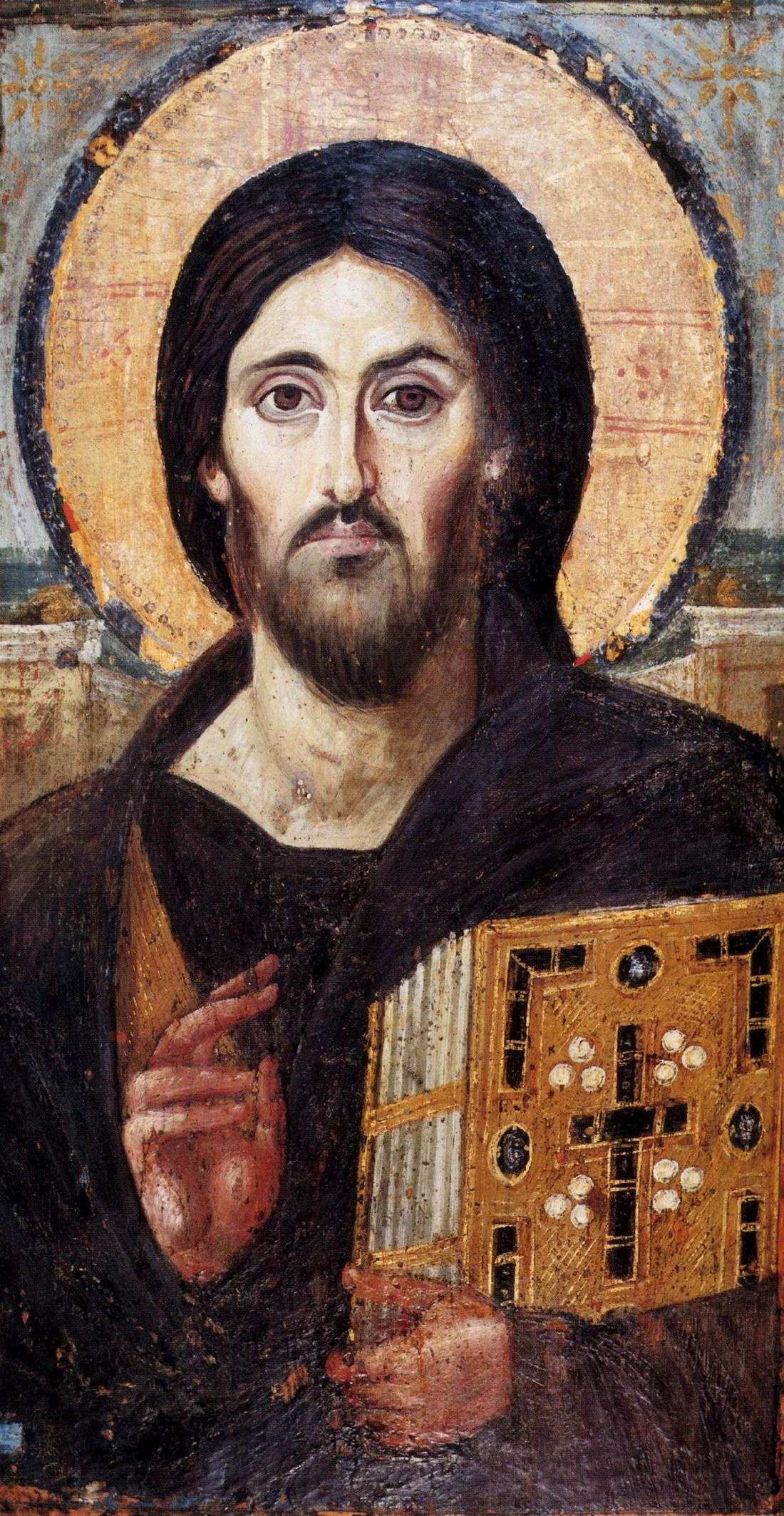
The oldest surviving panel icon of Christ Pantocrator, encaustic on panel, c. 6th century.
Although I hope to come to you soon, I am writing you these instructions so that, if I am delayed, you will know how people ought to conduct themselves in God’s household, which is the church of the living God, the pillar and foundation of the truth. Beyond all question, the mystery from which true godliness springs is great: He appeared in the flesh, was vindicated by the Spirit, was seen by angels, was preached among the nations, was believed on in the world, was taken up in glory (1 Timothy 3:14–16).
As Paul moves from his opening remarks to addressing the false teaching that had been abounding in the church at Ephesus, he doesn’t want to lose sight of Jesus. Theologians differ in their views over the form and structure of the hymn of praise in verse 16, but the content is clear – the second person of the Trinity shapes our faith and practice. We may not fully understand the mystery of God becoming man and returning to heaven, but we know that through his dwelling in us we can bear the fruit of goodness and godliness.
Take a moment to consider the words of the ancient song, such as Jesus appearing in the flesh. As the opening of John’s gospel puts it, “The Word became flesh and made his dwelling among us. We have seen his glory, the glory of the one and only Son, who came from the Father, full of grace and truth” (John 1:14). Our God through Jesus is fully acquainted with the feelings we experience, such as joy and grief.
The rest of the hymn also reflects his dual nature of God and man. For instance, as a man he has been preached amongst the nations and believed by millions around the world. In terms of him being God, angels have seen him and he was taken from earth into heaven.
How does Jesus being both divine and human affect you?
For reflection: “The true light that gives light to everyone was coming into the world… Yet to all who did receive him, to those who believed in his name, he gave the right to become children of God” (John 1:9, 12).
I urge, then, first of all, that petitions, prayers, intercession and thanksgiving be made for all people – for kings and all those in authority, that we may live peaceful and quiet lives in all godliness and holiness. This is good, and pleases God our Savior, who wants all people to be saved and to come to a knowledge of the truth. For there is one God and one mediator between God and mankind, the man Christ Jesus, who gave himself as a ransom for all people (1 Timothy 2:1–6).
In September 2015, Queen Elizabeth II surpassed Queen Victoria to be the longest reigning monarch of the United Kingdom. As an American who is now also her subject, I’ve harbored mixed feelings and views about the monarchy over the years. But I am humbled by the Queen, who has served her country tirelessly as part of her duty and calling. It’s an hono(u)r to pray for her and her reign.
We might feel jolted by Paul’s command to Timothy to pray for rulers and kings, coming so soon in this letter of instructions for Timothy. But Paul yearns that the gospel would be proclaimed and accepted, and he knows that a just and ordered society will better foster its message as one that people can hear and heed than when they dwell in a culture of corruption. Note too the various ways Paul wants the church to pray – through petition, prayer, intercession, and thanksgiving – for he knows that God hears our prayers.
We might find it difficult to pray for our rulers, especially if we find their policies differing from what we hold to. But prayer is something constructive that we can engage with, as we ask God to help shape our societies to be places where people can thrive in freedom and faith. Perhaps you could join with others from your neighborhood or church, once a month or once a term, to pray for your local and national leaders. We trust that God hears us, and responds.
Prayer: Lord God, you are the ultimate Ruler, just and fair. We give you thanks for those in authority over us, praying that they would embody values of wisdom, justice and mercy.
Even though I was once a blasphemer and a persecutor and a violent man, I was shown mercy because I acted in ignorance and unbelief. The grace of our Lord was poured out on me abundantly, along with the faith and love that are in Christ Jesus. Here is a trustworthy saying that deserves full acceptance: Christ Jesus came into the world to save sinners – of whom I am the worst. But for that very reason I was shown mercy so that in me, the worst of sinners, Christ Jesus might display his immense patience as an example for those who would believe in him and receive eternal life. Now to the King eternal, immortal, invisible, the only God, be honor and glory for ever and ever. Amen (1 Timothy 1:13–17).
The apostle Paul could have written the original “triumph over tragedy” story – the killer who was blinded by the light, transformed, and changed, and then sent to love the ones he had persecuted. Though his life was not one of smooth sailing, he never forgot who he had been, and who – and Whose – he now was. As he says to Timothy, he was once a violent slayer of God’s reputation. But now he was redeemed and renewed; one whom God promised eternal life because of his great mercy and love.
His reference about being the sinner-made-new shows the power of narrative and testimony, for as his life reflects, God can effect lasting change. He’s no longer a blasphemer or persecutor, but one filled with faith and love, and he cannot contain his worship for the God who saved him (v 17).
Whether our history reflects stories of betrayal and heartbreak or those of love and acceptance, we can join Paul in his song of praise for the One who deserves our honor and reverence.
For reflection: “But thanks be to God that, though you used to be slaves to sin, you have come to obey from your heart the pattern of teaching that has now claimed your allegiance. You have been set free from sin and have become slaves to righteousness” (Romans 6:17–18).
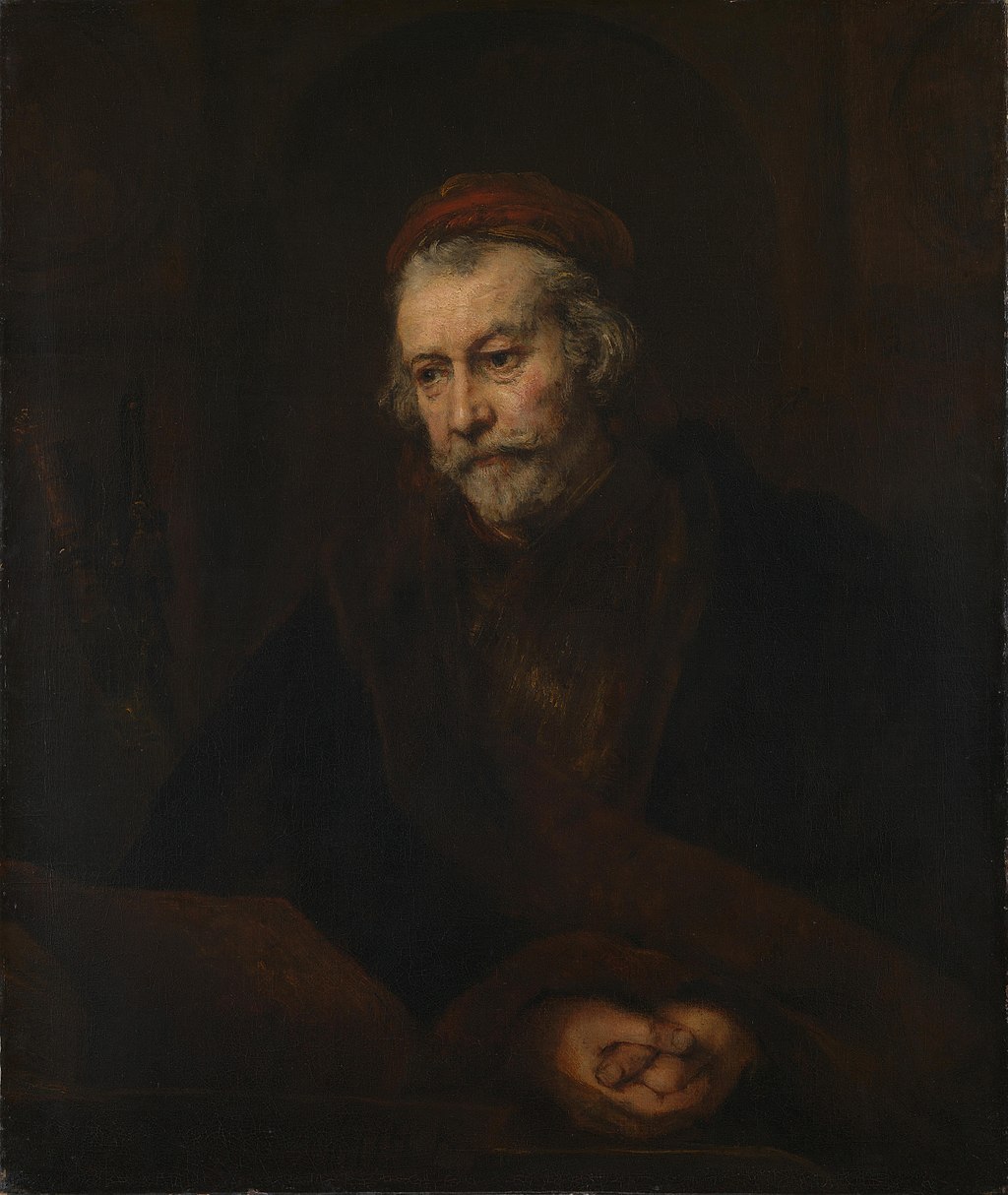
Painting by Blaffer Foundation Collection, Houston, TX, Public Domain
Time for a new devotional series! For the next few months, I will be sharing weekly thoughts based on 1 and 2 Timothy. We’ll explore how the Apostle Paul sometimes gets a bad rap as being misogynistic, harsh, and didactic. But perhaps he’s seen this way when people forget that we’re only reading half of the conversation, as Conrad Gempf points out in How to Like Paul Again. If we don’t consider the bigger picture, we might be confused as to why Paul would tell one church that they needed to tighten up (the Corinthians) whereas he tells another they should loosen up (the Galatians). When we delve more deeply into the clues in the letters and those in the book of Acts, we may grow to understand Paul’s heart and hopes not only for the gospel, but for the growth and flourishing of those in the early church.
In his letters to Timothy, Paul writes to a younger man whom he has mentored. In his first letter he knows that Timothy faces the effect of false teachers who are leading people astray. Such is the level of his concern that he uses strong language to encourage Timothy to root out the heresy and lead the people into the ways of truth and life. He instructs him about church life and how the leaders should live, and how they should treat the widows in their midst.
1 Timothy also contains a controversial passage where Paul forbids women to speak in church (2:11–15). I haven’t included it in our daily readings, partly because our space is limited – in contrast to the doctorate dissertations, articles, and books written on it. But I also don’t want to impose my view on you in your daily engagement with the Bible.
As we’ll see, Paul wrote his second letter to Timothy after his letter to Titus, when he was still concerned about the influence of false teachers. By the time of this final letter, that crisis seems to have passed, but Paul faces execution in Rome at the hands of Nero. His letter to the man he mentored, whom he now sees as an equal, contains his last words. He sums up the charge he leaves Timothy with as he embraces his final homecoming.
I pray our journey into these pastoral letters will enrich, challenge, and encourage you.
As I urged you when I went into Macedonia, stay there in Ephesus so that you may command certain people not to teach false doctrines any longer or to devote themselves to myths and endless genealogies. Such things promote controversial speculations rather than advancing God’s work – which is by faith. The goal of this command is love, which comes from a pure heart and a good conscience and a sincere faith. Some have departed from these and have turned to meaningless talk. They want to be teachers of the law, but they do not know what they are talking about or what they so confidently affirm (1 Timothy 1:3–7).
False doctrines, myths, and endless genealogies – the apostle Paul instructed Timothy to stay where he is so that he can speak against the teachers who, as Paul’s says clearly, don’t know what they’re talking about. Paul doesn’t mince his words when naming the truth about others spreading falsehoods, but neither is he overly concerned with rules for rules sake. What he’s most keen to stress is love, which he says is the goal of the life of faith.
I wonder what Paul would say to Christians today. Have we, on the one hand, become too worked up over naming false teaching? Or on the other, have we embraced myths and thus utter meaningless talk? Or do we land somewhere in between? No doubt we all veer one way or another at times, and therefore we need a dose not only of humility but of the indwelling of the Holy Spirit to keep us walking in step with God.
We can ask the Lord to make love our goal, helping us keep a pure heart, a good conscience, and a sincere faith. As he molds us, he may gently reveal the stances we grasp too strongly or the areas in our lives in which we need to tighten up. His correction is soaked in love, not condemnation, making it all the easier to welcome and receive.
Prayer: Purify my heart, Lord, and cleanse my conscience, that my works might bring you glory and spread your love.