Category: Devotionals

  • Devotional of the week – Redemptive suffering (4 in John 15-16 series)

    “They will treat you this way because of my name, for they do not know the One who sent me.” John 15:21

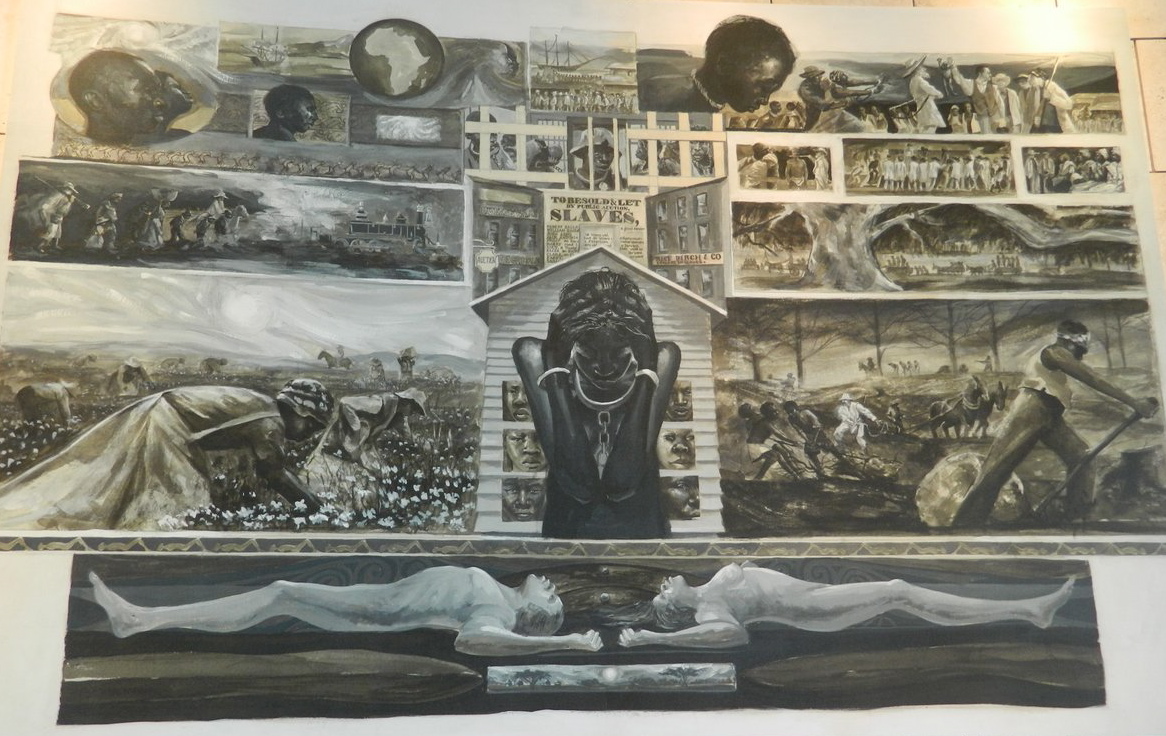
    Painting displayed in the National Underground Railroad Freedom Center in Cincinnati, Ohio
    Painting displayed in the National Underground Railroad Freedom Center in Cincinnati, Ohio

    In the West we currently enjoy religious freedom, and take for granted the ability to meet with other believers to pray and worship together. This freedom is not enjoyed by many brothers and sisters around the world, such as in China or in the United Arab Emirates. For instance, Christians in North Korea are tortured for their faith. Chinese believers from the house churches were barred from traveling to Lausanne III in 2010, the largest Christian gathering in history. Or in the UAE, Christian expatriates are allowed to worship in their own churches, but legally may not share their faith with locals.

    This section of John’s gospel must provide precious sustenance to these believers. They are misunderstood, misaligned, maltreated, and perhaps even tortured or killed because of the name of Jesus. But they can cling to the promise that God’s Holy Spirit is with them, purifying them and speaking through them.

    What can we learn from the suffering church? Many things, no doubt, but one that stands out is the strength of their commitment. Can we too live as though our whole lives depend on our belief and trust in God? Do we focus on the essentials of our faith and let the minor concerns drop? Do we believe in the power of God to bring real change and renewal?

    May the example of the persecuted church inspire and convict us this day.

    Prayer: Lord Jesus, you were persecuted, and so are many around the world. Redeem their suffering for your glory.

  • Devotional of the week – The Royal Family (3 in John 15-16 series)

    Remember the words I spoke to you: ‘No servant is greater than his master.’ John 15:20

    A house fit for a queen. Osborne House on the Isle of Wight.
    A house fit for a queen. Osborne House on the Isle of Wight.

    My son has had a fascination with the British monarchy over the years, and I’ve learned much about kings and queens as we’ve visited royal palaces and read biographies. I simply cannot imagine one of these exalted persons lowering themselves to the level of a servant. And yet this is what Jesus – the King of Kings – did when during the Last Supper he washed the feet of his disciples. He, the Teacher and Lord, got dirty in the service of others. So too must we: “I have set you an example that you should do as I have done for you. I tell you the truth, no servant is greater than his master” (John 13:15-16).

    Now as Jesus talks about persecution, he hearkens back to his words about the servant/master relationship. We must serve one other, and because servants aren’t greater than their masters, we must expect to be treated with spite or taunting, as he did. We will not be exempt from suffering, for his Father did not spare him. But as we will see in an upcoming reading, God will send his Spirit to us – the Advocate and Counselor – who will fill us with his presence and speak on our behalf.

    We may not be a member of the British royal family, but we are daughters and sons of the King. Though we may suffer, our adoption into his family is secure.

    Prayer: Our Lord God and King, reign in our hearts today, that we might love and serve you.

  • Devotional of the week – Heavenly citizens (2 in John 15-16 series)

    As it is, you do not belong to the world, but I have chosen you out of the world. John 15:19

    Photo: Ian Mackenzie, Flickr
    Photo: Ian Mackenzie, Flickr

    I have two passports – one from America, the land of my birth, and one from Britain, my adopted country. I will always have divided loyalties, whether in which sports team to support or which lingo to speak. But my most important citizenship is my heavenly one, to which Jesus refers here. For he has chosen us out of the world, and we do not belong to it.

    What does it mean to be a citizen of heaven? To be “in the world but not of it”? Christians throughout the ages have interpreted this question differently. Some remove themselves completely from the world. Others so accommodate it that they lose their Christian distinctiveness. Many struggle somewhere between the two poles, seeking to keep in tension engaging the world on the one hand while being a transforming force in it on the other.

    As we keep our sights fixed on God’s promises of his heavenly city, we will see our struggles and travails with his eternal perspective. He can pull us back when we are too engaged with worldly things, such as watching a dodgy television program. He can shed wisdom on the challenges we face, reminding us that he will never leave nor forsake us. He will strengthen and undergird us, helping us to be his witnesses in a world hungry for grace.

    Heavenly Father, as aliens and strangers on earth we long for a heavenly country. Help us to live by faith.

  • Devotional of the week: Strength in Persecution (1 in John 15-16 series)

    If the world hates you, keep in mind that it hated me first. John 15:18

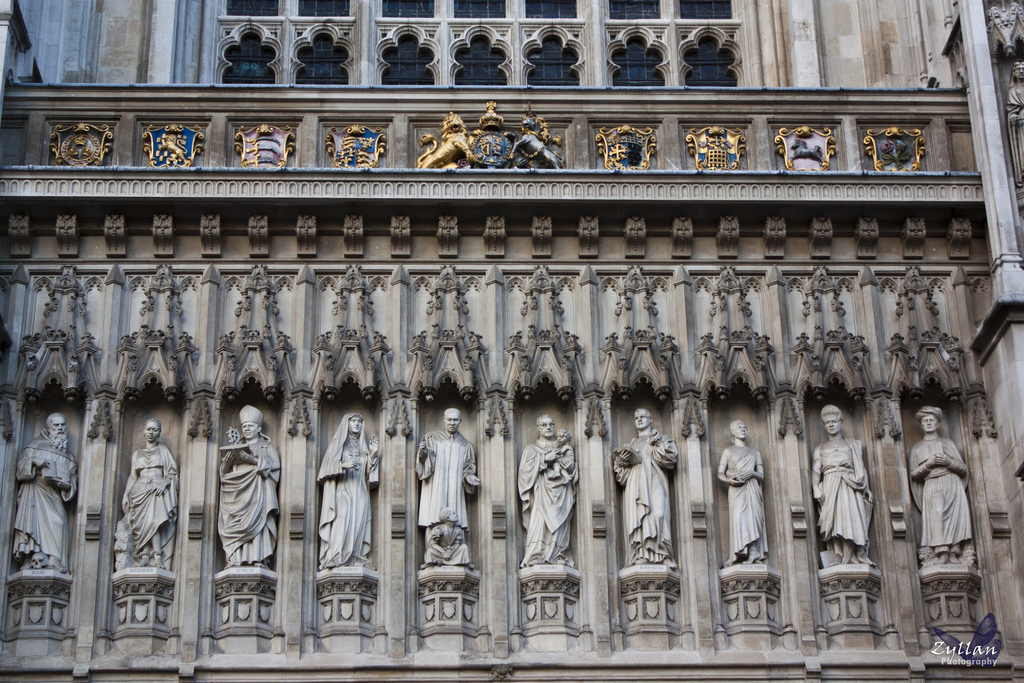
    Photo: "Londres: The ten Christian Martyrs in Westminster Abbey" by Zyllan Fotografía on Flickr
    Photo: “Londres: The ten Christian Martyrs in Westminster Abbey,” Zyllan Fotografía, Flickr

    If we come to Christ as a new convert, we often enjoy a lovely honeymoon period. So to hear these words of Jesus can be a shock and a surprise – is this what we signed up for?

    Some background is helpful as we delve into our passage for the next weeks, which is John 15:18-16:4. Jesus and his friends have finished their last meal together, and Judas has left, intent on betrayal. Jesus and the now-eleven disciples make their way to the Mount of Olives, where Jesus will later be arrested. In what is called the Final Discourse, Jesus teaches the disciples and prays with them.

    After telling his followers how to abide and live in him, Jesus says how they will suffer persecution because the world persecuted him first. We should not be surprised by this mistreatment, for the light of Jesus in us will make visible the evil in the world. Living for Christ might entail something seemingly trivial, such as opposing gambling at our local school. Or something more serious, such as not allowing a co-worker to fudge the truth. Or perhaps we may even be called to stand in solidarity with sisters and brothers around the world who are being tortured for their beliefs.

    Whatever level of persecution we face, we know that Jesus through his Holy Spirit will give us strength. We can count on him.

    Prayer: Lord Jesus, you suffered a horrific death so that I might live in freedom. Help me to live freely today, this week, this month, this year.

  • Devotional of the week: A new name

    Whoever has ears, let them hear what the Spirit says to the churches. To the one who is victorious, I will give some of the hidden manna. I will also give that person a white stone with a new name written on it, known only to the one who receives it. (Revelation 2:17)

    Photo credit: "White Stone" by Anna, Flikr
    Photo credit: “White Stone” by Anna, Flickr

    A couple of women I know have changed their given names. One suffered sexual abuse, and by changing her name she was cutting painful ties. Another didn’t want to be defined by her name’s meaning, which was “bitter.” Instead she wanted to be known by a name that denotes “grace.”

    Our passage comes from the letters of Jesus, as revealed to the aging disciple John. Jesus says to the church at Pergamum that he will give them a white stone with a new name on it, known only to the recipient. Several meanings of this white stone have been put forward, as summarised by Craig Keener in the NIV Application Commentary (pp. 126–27). One is that in the ancient world, people used pebbles for admission to events; in this case, for a messianic banquet. Another is that in some ancient courtrooms, the jurors would cast a white stone for acquittal and black for conviction. (Thus Jesus would be the judge over what the Pergamum Christians were suffering.) Or the white stone could symbolize purity and eternal life, or a new name signifying a new identity.

    The symbolic possibilities are rich. Applying the promise to our own lives hearkens to the promises we examined in Isaiah 62. Our new name might be one that we publicize as we embrace our new, redeemed self. Or it might be one that we keep hidden, the name that we hear when we call to the Lord and listen for his affirming words of love.

    We are no longer bound to the old way of life. As we live out of our new selves, may we reflect the attributes of the One who created us, who made us for himself.

    For reflection: “Let us rejoice and be glad and give him glory! For the wedding of the Lamb has come, and his bride has made herself ready” (Revelation 9:17).

  • Devotional of the week: Christ in all

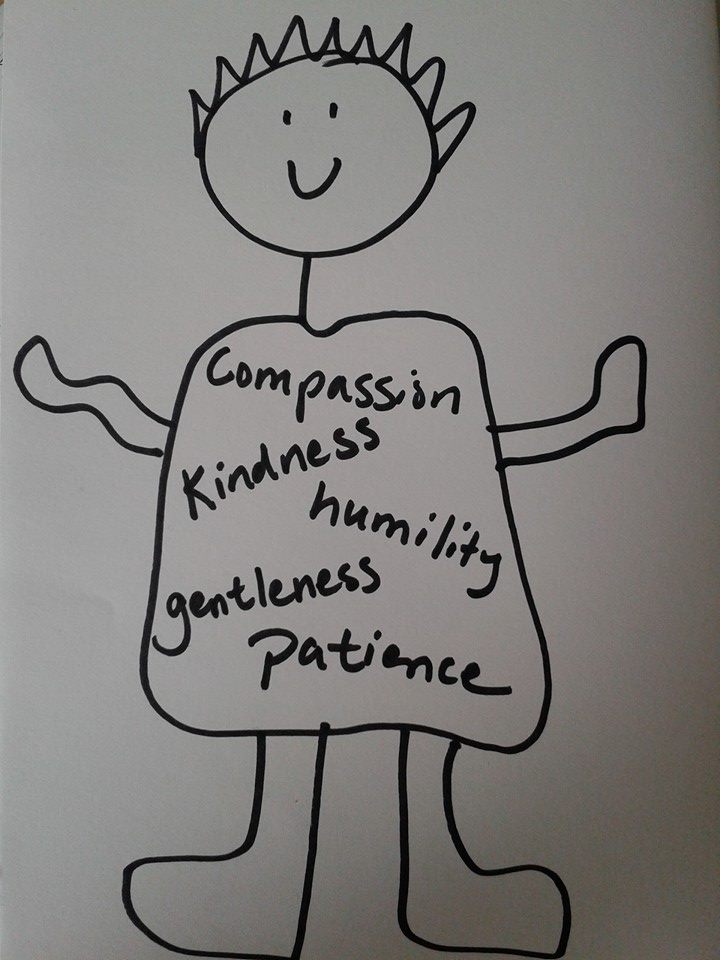
    Yep, clearly the artists in my family are my dad and daughter, not me... (This is my creation, not my daughter's!)
    Yep, clearly the artists in my family are my dad and daughter, not me… (This is my creation, not my daughter’s!)

    Do not lie to each other, since you have taken off your old self with its practices and have put on the new self, which is being renewed in knowledge in the image of its Creator. Here there is no Gentile or Jew, circumcised or uncircumcised, barbarian, Scythian, slave or free, but Christ is all, and is in all. Therefore, as God’s chosen people, holy and dearly loved, clothe yourselves with compassion, kindness, humility, gentleness and patience. Bear with each other and forgive one another if any of you has a grievance against someone. Forgive as the Lord forgave you. And over all these virtues put on love, which binds them all together in perfect unity. (Colossians 3:2–5; 9–11)

    Sadly, often in church life we fight battles with each other, sister against sister; brother against brother. Perhaps we think that we hold the whole truth and they fall short. Or a difference of opinion over a point of doctrine becomes the opening clash of a long and drawn-out war, which leaves lives bruised and relationships impaired. Or a matter of personality morphs into a heated battle that remains long in the memory of those involved.

    As the wife of a vicar, I’ve witnessed these spats between siblings, sometimes being wounded in the process. I don’t count myself as an authority on conflict resolution; nor do I claim to hold an infallible grasp on Truth. But we can see a way forward in our church family life through Paul’s letter to the Colossians. As we live out our redeemed lives, Christ is all and is in all. We can take off the old clothes, those old rags that hold the memory of conflict, and put on the clothes of Christ – compassion, kindness, humility, gentleness, patience, forgiveness, love.

    Wearing his garments, we are more able to live in harmony and peace with our sisters and brothers, especially if we remember that Christ sacrificed himself for them, as much as for us. As we live out of our new self, we can then move forward in unity, being freed from infighting and enabled to forgive as we seek to love and serve others and God.

    For reflection: “And let us consider how we may spur one another on toward love and good deeds, not giving up meeting together, as some are in the habit of doing, but encouraging one another – and all the more as you see the Day approaching” (Hebrews 10:24–25).

  • Devotional of the week: Give thanks

     We continually ask God to fill you with the knowledge of his will through all the wisdom and understanding that the Spirit gives, so that you may live a life worthy of the Lord and please him in every way: bearing fruit in every good work, growing in the knowledge of God, being strengthened with all power according to his glorious might so that you may have great endurance and patience, and giving joyful thanks to the Father, who has qualified you to share in the inheritance of his holy people in the kingdom of light. For he has rescued us from the dominion of darkness and brought us into the kingdom of the Son he loves, in whom we have redemption, the forgiveness of sins (Colossians 1:9–14)

    Photo credit: woodleywonderworks on flickr
    Photo credit: woodleywonderworks on flickr

    A primary characteristic of the new life is a spirit of thankfulness. Here Paul and Timothy are writing to the church at Colossae, and in these opening verses they pray that the believers will live out their new life. Not only that they might be strengthened so that they might endure and be patient, but all the while “giving joyful thanks to the Father.”

    In the West today we so easily see what we’re missing, especially when advertising slogans continually reassure that “you’re worth it.” We might pine after physical things such as the latest smartphone or tablet. Or in our relationships – such as longing for a baby, to be married, for our kids to find fulfillment and so on. And yet when we stop and ponder all that we have, our outlook changes. We begin to wonder at the treasures we’ve already received. Our senses become open to beauty in all its places, even if just hearing the birdsong in a concrete jungle.

    Poets and philosophers have seen thanksgiving as an overriding virtue throughout the ages. For instance, GK Chesterton said in his A Short History of England, “I would maintain that thanks are the highest form of thought, and that gratitude is happiness doubled by wonder.” Good advice for the new life.

    Prayer: Triune God, change my spirit that I might give thanks in all things. Let me know how you pour out your love and mercy on me, making me clean.

  • Devotional of the week: New clothes

    You were taught, with regard to your former way of life, to put off your old self, which is being corrupted by its deceitful desires; to be made new in the attitude of your minds; and to put on the new self, created to be like God in the true righteousness and holiness (Ephesians 4:22–24).

    383855472_512c98e947
    Photo credit: robe pattern by peagreengirl as found on flickr

    I used to have a garment that I called my “traveling sweater.” For some reason I deigned it the best and most comfortable item of clothing to wear on an airplane. But after many a journey, instead of being white, it turned slightly grey and shapeless, sporting some holes. Still I loved it, so much that my mom and sister finally had to recommend that I retire my favorite travel companion.

    Putting off the old self and putting on the new can feel like leaving behind a familiar way of life. Even if the former way of life leads to pain, heartache, angst, anger, and destruction, we fear what we might encounter in the new. Will we have fun? Will we be fulfilled? What will I have to give up?

    But as we don our new clothes in Christ, our minds and hearts are made new. We begin to see how misshapen our old clothes were; how tight they felt and how we couldn’t breathe in them. The trousers, in fact, gave us indigestion. Whereas our new clothes not only reveal who we really are, but they enable us to soar in freedom, truth, and holiness.

    In what might be the clearest passage about the old and new selves, Paul points out three imperatives: put off our old self; be made new in our minds; put on the new self. Elsewhere he speaks of living “in Christ,” which gives us the power and strength to live out these imperatives. As we do so, we will be “created to be like God,” which hearkens back to the Genesis account of creation. Through our continued donning of the new self we can live as God intended, with right living and holiness.


    Prayer: Lord Jesus, help me to cast off any clothing of the past that I need to leave behind. Renew my mind that I might put on my new self.

  • Devotional of the week: An eternal perspective

    For we know that if the earthly tent we live in is destroyed, we have a building from God, an eternal house in heaven, not built by human hands. Meanwhile we groan, longing to be clothed instead with our heavenly dwelling, because when we are clothed, we will not be found naked. For while we are in this tent, we groan and are burdened, because we do not wish to be unclothed but to be clothed instead with our heavenly dwelling, so that what is mortal may be swallowed up by life. Now the one who has fashioned us for this very purpose is God, who has given us the Spirit as a deposit, guaranteeing what is to come (2 Corinthians 5:1-5)

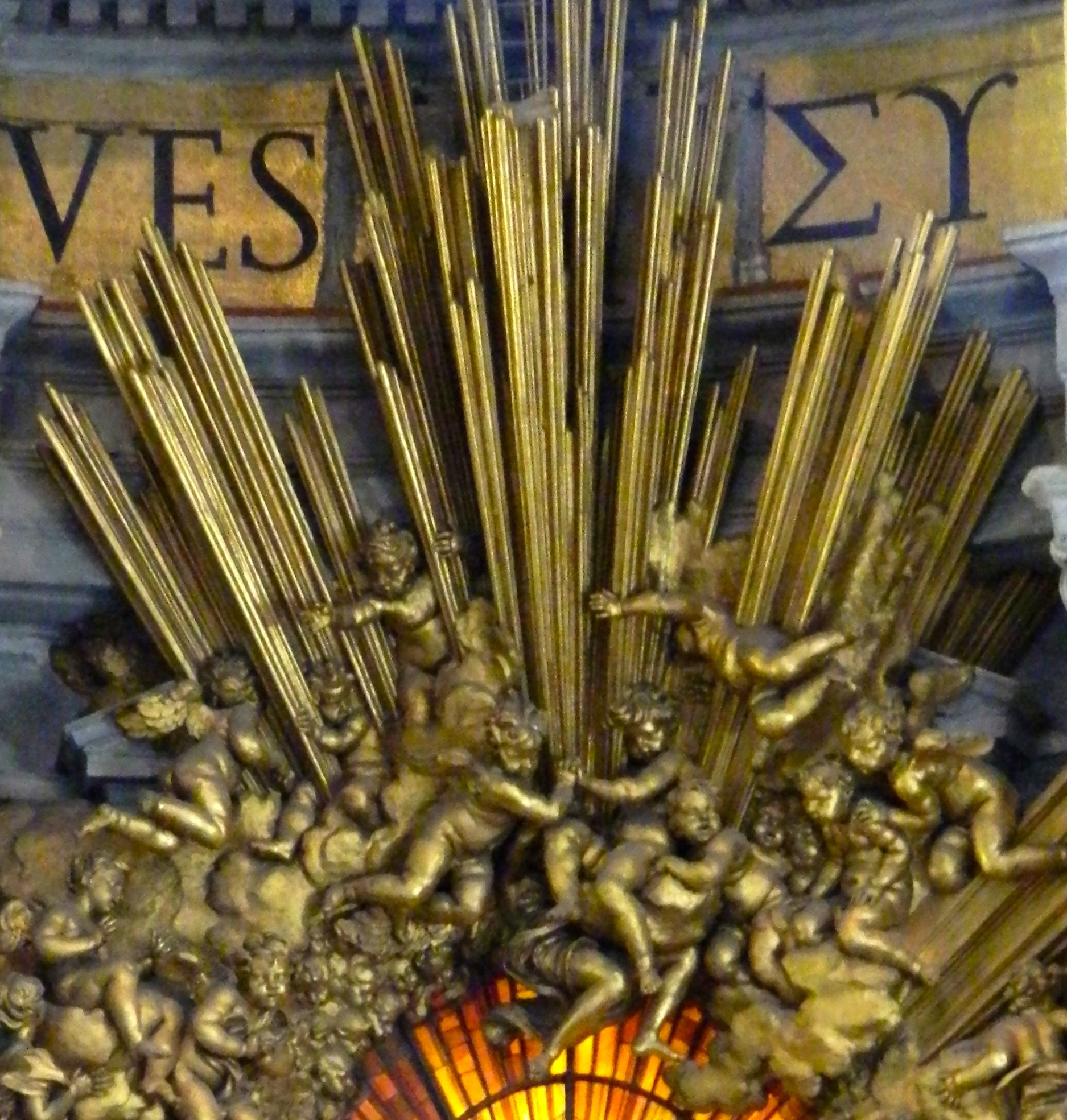
    A taste of heaven, from the altar at St. Peter's Basilica.
    A taste of heaven, from the altar at St. Peter’s Basilica.

    A couple of years ago, I ended our Christmas missive with a reflection on the fragility of life, for one close to us was killed in a car accident. I didn’t know that as I composed the letter, a beloved older friend was near death, having suffered a stroke. We often live in a state of denial, but for everyone, one day our earthly tent will be destroyed.

    Yet Paul here speaks to the Corinthians about longing for his heavenly dwelling, which God the Builder and Architect has created and which moths and rust will not destroy. It’s another variation of the already-not yet which we spoke of in previous weeks. We mentioned how we have been redeemed but are not yet completely sanctified; here we note that we groan on earth as we anticipate the wonders of heaven. Namely our rich communion with God.

    I love how Paul reverses the wisdom of the world with his phrase, “swallowed up by life” (in contrast to death being the great swallower). All the remnants of our old self – the mortal – will be swallowed up by the true and everlasting light and life in our heavenly dwelling. We will no longer be naked and ashamed, but clothed in a better outfit than we ever could have dreamed of.


    Prayer: Lord God, help me to live with an eternal perspective today, remembering that people and your word will be all that remains eternally. Plant in me the hope of heaven, which you promise will not disappoint.

  • Devotional of the week: Slaves to righteousness

    But thanks be to God that, though you used to be slaves to sin, you have come to obey from your heart the pattern of teaching that has now claimed your allegiance. You have been set free from sin and have become slaves to righteousness. I am using an example from everyday life because of your human limitations. Just as you used to offer yourselves as slaves to impurity and to ever-increasing wickedness, so now offer yourselves as slaves to righteousness leading to holiness… But now that you have been set free from sin and have become slaves of God, the benefit you reap leads to holiness, and the result is eternal life. (Romans 6:17–20, 22)

    Photo credit: Eagle by HooLengSiong on Flikr
    Photo credit: Eagle by HooLengSiong on Flikr

    The theme of leaving behind the old self and embracing the new shines through the letters of the apostle Paul. Of course this follows from his dramatic conversion. For one moment he was persecuting Christians to the point of death while the next he was rendered blind as Jesus revealed himself to him, changing his life (and the world) forever.

    But as we see in today’s passage, the new life doesn’t happen automatically. One’s will needs to be involved and committed. Paul employs the example of slavery, showing how we need to offer ourselves – our minds, hearts, emotions, actions – to right living before God. This then produces purity, holiness, and eternal life.

    I recently heard an illustration that warns against our temptation to entertain sin. An eagle sees a fresh carcass floating on some ice, but moving toward a waterfall. The ice provides the eagle a place to land and from which to pick at the carcass. As the waterfall approaches, the eagle sneaks in just a few more bites. But when it tries to lift off, it finds its claws are frozen into the ice and falls to its death.

    No, I’m not suggesting we are heading for that waterfall! For as Paul says, because we have become slaves to God, we will have eternal life. But the eagle can be a vivid cautionary tale against living out of the old self.

    For reflection: “Therefore, if anyone is in Christ, the new creation has come: The old has gone, the new is here!” (2 Corinthians 5:17).