Category: Psalm 18 devotionals

  • Devotional of the week: Psalm 18:46–50

    The Lord lives!

    The Lord lives! Praise be to my Rock! Exalted be God my Saviour! He is the God who avenges me, who subdues nations under me, who saves me from my enemies. You exalted me above my foes; from violent people you rescued me. Therefore I will praise you, Lord, among the nations; I will sing the praises of your name. He gives his king great victories; he shows unfailing love to his anointed, to David and to his descendants forever. (Psalm 18:46–50, NIV)
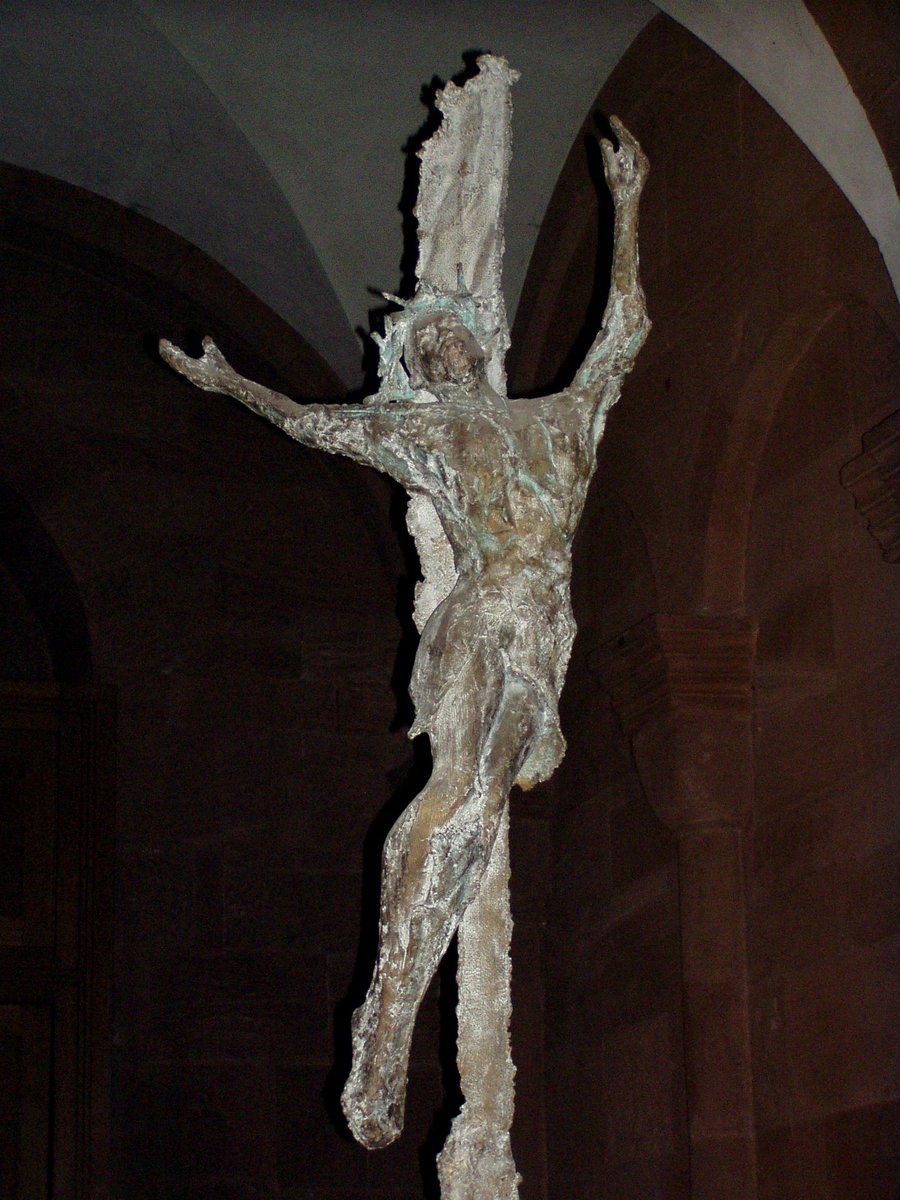
     

    "Christus" by Karlheinz Oswald, 1998 in Mainz Cathedral, Germany. I was unexpectedly moved by this sculpture when we visited in 2006.
    “Christus” by Karlheinz Oswald, 1998 in Mainz Cathedral, Germany. I was taken with this sculpture when we visited in 2006.

    As we come to the end of our journey through Psalm 18 (and thank you for joining me over the past Mondays), David sings forth praise to the God his Rock who has saved him. This psalm, like so many others, prefigures Christ our Lord, for he without sin can sing it like no other.

    Some Christians pray through this psalm as they remember Jesus’ trial before Pilate, his death and resurrection. They think about the cords of death entangling and confronting him (verses 4–5). They see God’s anger at the death of his beloved as he made the earth quake and shook the foundations of the earth (verses 7–15). They praise the Lord Jesus for his purity and lack of sin (verses 20–27). They lift their spirits in worship at the victory of Jesus over the gates of hell and death as he vanquished the enemy (verses 32–45). And they proclaim his kingdom as they join him in songs of praise to the living Lord who is their rock and savior (verses 46–50).

    As we conclude, let us join our voices in praise to the God who loves us. Let us thank him who created us, the Lord Jesus who died to save us, the Holy Spirit who fills us with his cleansing, purifying presence. He is our rock and foundation; he shields us from our enemies; he provides us a refuge of shade and protection. We know that though the rivers might wash over us, he reaches down from on high and takes hold of us, drawing us out of deep waters. He brings us to a spacious place where we can flourish and grow. Praise his holy and wonderful name!


    Prayer: You, Lord, are perfect, and you help us in all that we do. We will sing praises to your name, our rock and salvation. The Lord lives!
  • A devotional for the week: Psalm 18:37–45

     Just war?

    I pursued my enemies and overtook them; I did not turn back till they were destroyed. I crushed them so that they could not rise; they fell beneath my feet. You armed me with strength for battle; you humbled my adversaries before me. You made my enemies turn their backs in flight, and I destroyed my foes. They cried for help, but there was no-one to save them—to the Lord, but he did not answer. I beat them as fine as windblown dust; I trampled them like mud in the streets. You have delivered me from the attacks of the people; you have made me the head of nations. People I did not know now serve me, foreigners cower before me; as soon as they hear of me, they obey me. They all lose heart; they come trembling from their strongholds. (Psalm 18:37–45, NIV)

    DSCN6707

    When I first decided to write Bible reading notes for Psalm 18, I thought what a wonderful Psalm in which to delve. But I didn’t want to write on the above verses. They are just so graphic: destroying of foes; beating as dust; trampling in the mud. Not exactly refreshing morning reading.

    I looked to the commentaries for some help, but they seemed to skip over this section. But in Gleason L. Archer’s Encyclopedia of Bible Difficulties I gained some insight. He makes a compelling argument for the right to self-defense by law-abiding citizens. As he says, “How could God be called ‘good’ if He forbade His people to protect their wives from ravishment and strangulation … or to resist invaders who have come to pick up their children and dash out their brains against the wall?” (p. 219) More graphic images, I know. But we live in a fallen world that often doesn’t follow God’s rule, so we need to face up to these painful realities.

    You may completely disagree with Archer’s theory, or you may embrace it as your own. Whatever position we hold, we can affirm that the Lord yearns for shalom – his holistic peace – in all its fullness, whether in our nations, communities, or families.

    Prayer: Lord, we pray for the war-torn areas of the world and the many victims of fighting: the women who are raped; the men who are killed; the children who are maimed and orphaned. Bring peace, we pray.

  • A devotional for the week – Psalm 18:32–36

    Boot camp

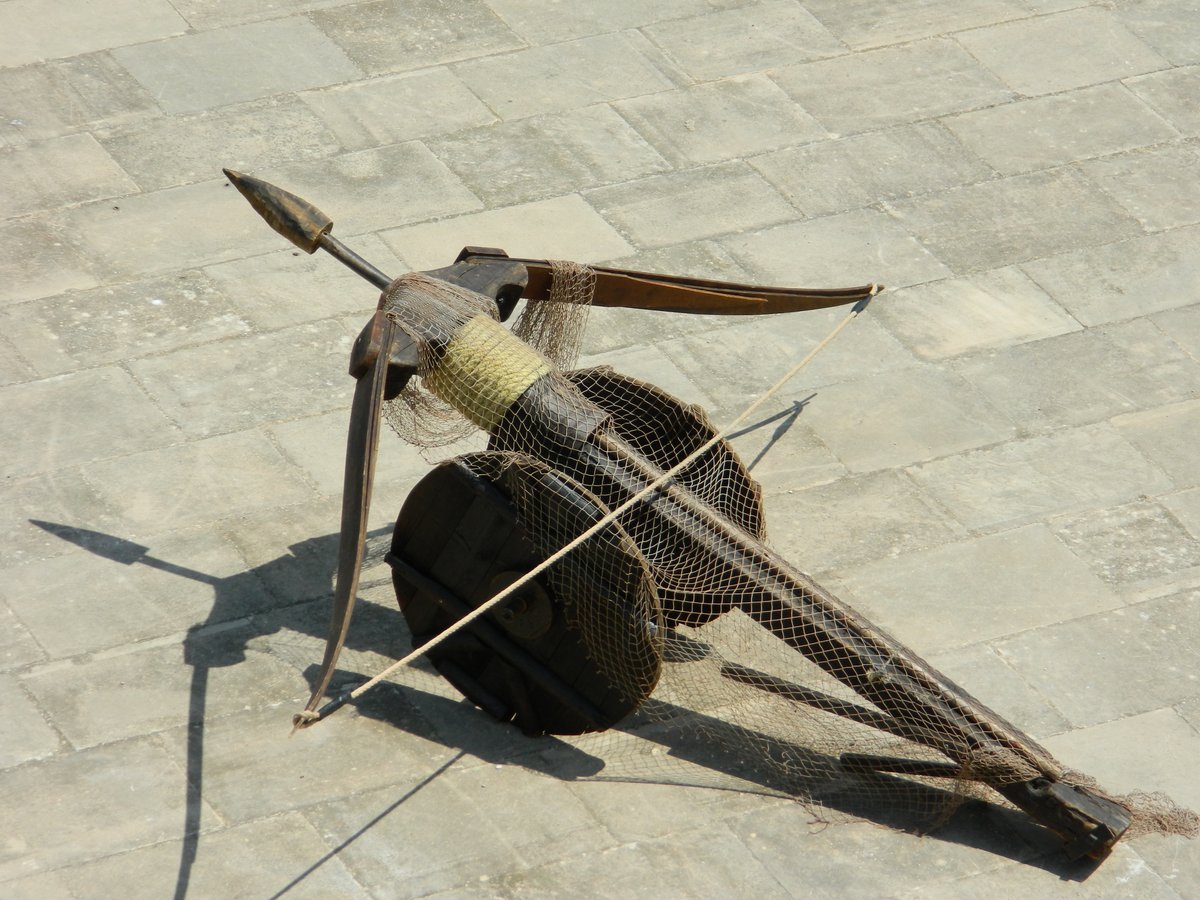
    It is God who arms me with strength and keeps my way secure. He makes my feet like the feet of a deer; he causes me to stand on the heights. He trains my hands for battle; my arms can bend a bow of bronze. You make your saving help my shield, and your right hand sustains me; your help has made me great. You provide a broad path for my feet, so that my ankles do not give way. (Psalm 18:32–36, NIV)

    DSC00097-001

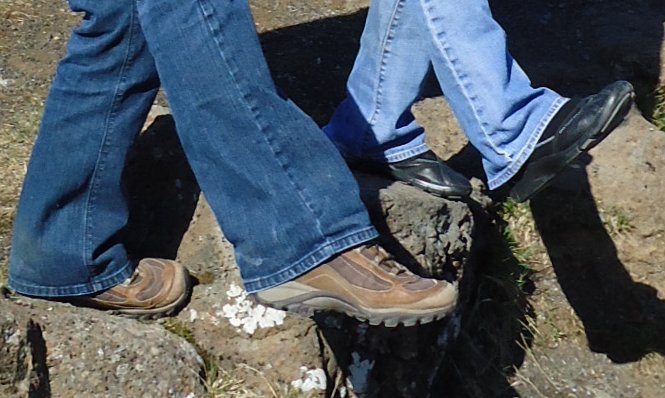
    Have you ever twisted your ankle? I did once when on a wilderness adventure in northern Minnesota as we were trekking across the Grand Portage with canoes and packs on our backs. The ground was wet and for some dumb reason we made the epic journey (some 9 miles) at night. After many hours I slipped and fell. Although the backpacks provided a cushion, my ankle contorted unnaturally. I felt every painful step.

    As Christians we may trip and fall, but as we follow God he will make our way secure. So says David, who turns his song of thanksgiving into a personal litany of the ways God has helped him. With God he has the grace and surety of a deer in a high place, which I would have appreciated on that slippery trail. Again Yahweh is his saving help, shield, and sustenance who provides a spacious path for his feet.

    One of the commentators likens these verses to a “boot camp for warriors” similar to the spiritual armor that Paul outlines to the Ephesians (such as the belt of truth, breastplate of righteousness and shield of faith). We may not have to rout our enemies, but we do battle against the “spiritual forces of evil in the heavenly realms” (Ephesians 6:12).

    May I extend a rallying call that we to take up our shield against the fiery darts of the enemy, whether they be words of discouragement or an insipid disbelief in the power of the almighty God. If we call on the Lord, he will train our arms as we hold the sword of the Spirit, the word of God, while praying for all the saints.


    Prayer: Lord, you are my shield, defender, strength, and security. Your right hand sustains me and you provide a broad path for my feet. Train me to serve and love you.


  • Devotional of the week: Psalm 18:30–31

    Rock of ages

    As for God, his way is perfect: The Lord’s word is flawless; he shields all who take refuge in him. For who is God besides the Lord? And who is the Rock except our God? (Psalm 18:30–31, NIV)


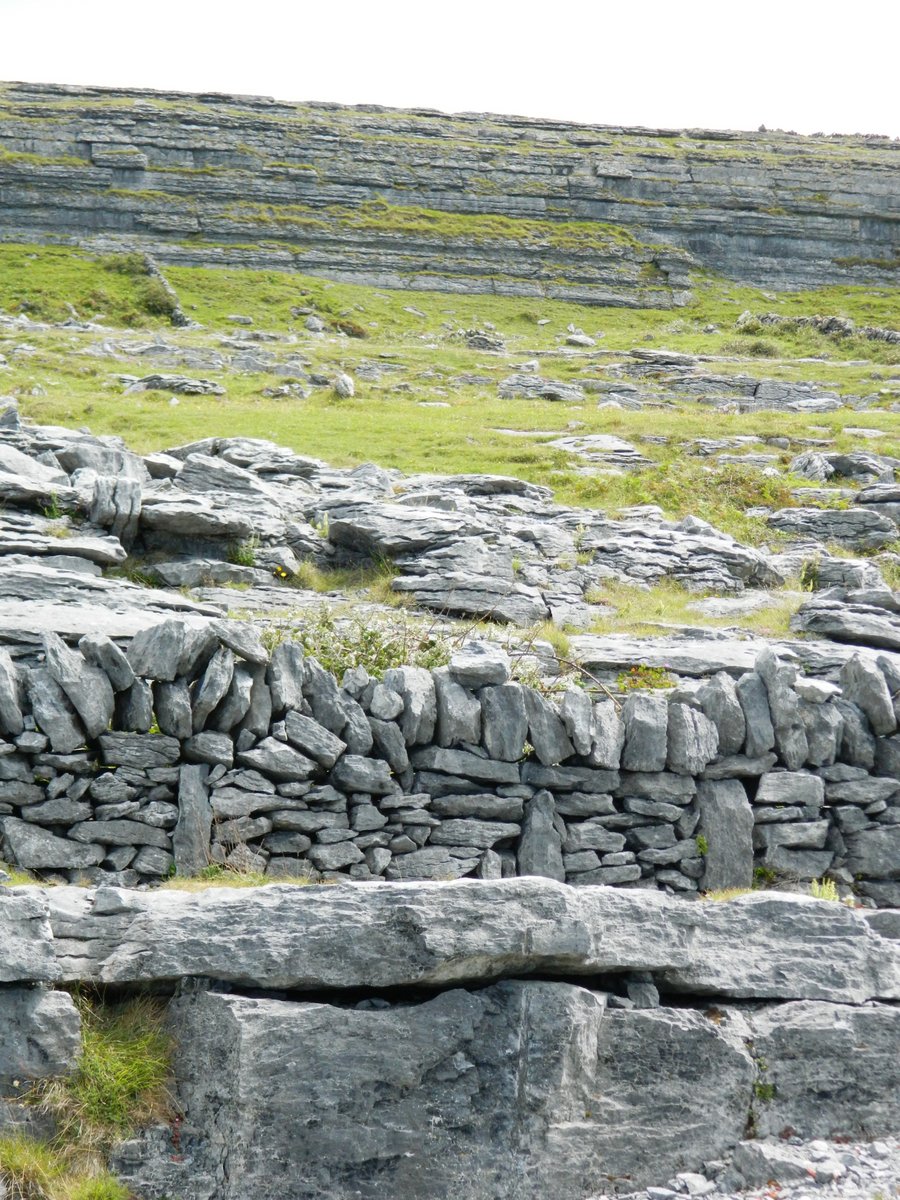
    I know I should have a picture of rocks from the Holy Land, but the rocks on the West Coast of Ireland speak to me deeply.
    I know I should have a picture of rocks from the Holy Land, but the rocks on the West Coast of Ireland speak to me deeply.

    Today David again calls God the rock who provides him refuge. It may seem repetitious, but as Charles Spurgeon said in The Treasury of David, “Second thoughts upon God’s mercy should be and often are the best.”

    As Moses was preparing the Israelites to go into the Promised Land, he sang a song about the Lord and uses very similar words to David’s: “He is the Rock, his works are perfect…” (Deuteronomy 32:4). Clearly God as the rock, sure foundation, and provider of refuge was an important image to our heroes in the faith.

    In the desert lands of the Bible, rocks were a welcome sight as they would provide shade from the scorching heat of the sun. Underneath their cover the desert creatures and plants would flourish, and a weary traveler would find shelter, rest, and perhaps even a spring of water. Rocks were also the foundation to the fortresses that would provide safety from attacking troops.

    The image of the rock is important in the New Testament too. Jesus says that those who put his teachings into practice are like “a wise man who built his house on the rock” (Matthew 7:24). Though the elements raged against it, it didn’t fall. And Jesus renamed Simon “Peter,” the Greek word for rock, saying, “and on this rock I will build my church” (Matthew 16:18).

    God wants to be the foundation of our lives. He is filled with the strength that does not waver and a solidity that will not crack. As we look to him for help, he will provide shelter and refreshment. The need might be financial – negative equity on a mortgage or out-of-control fuel prices. The need might be emotional – for someone to love and be loved by. Or it might be physical – for healing and restoration. He will provide answers; perhaps not as we would, but according to his mercy and wisdom. For his way is perfect and his word is flawless.


    Prayer: Lord God, you are the rock of our lives, a mighty fortress who never fails. We look to you for shelter, rest, and refreshment.


  • Devotional of the week: Psalm 18:28–29

    God, our source

    You, Lord, keep my lamp burning; my God turns my darkness into light. With your help I can advance against a troop; with my God I can scale a wall. (Psalm 18:28–29, NIV)

    DSCN1914

    As David recounts the works of God, he acknowledges that everything comes from the Lord – oil for his lamp, military help, strength to climb a wall. His song rises out of the many years of trusting God and seeing him deliver, whether it was when David defeated Goliath with God’s help, five stones and a sling, or when the Lord gave him a hiding place from Saul.

    These testing times provided David with a choice; he could trust God to take him through the difficulties or blame him because things weren’t going to plan. As we’ve seen over the past Mondays, David wasn’t perfect, but he learned from his mistakes and sought after God. And after a lifetime of seeing God make good on his promises, he wants to attribute all the glory and honor to him.

    Our Western world is so different from that of David’s. We have the conveniences of modern life such as travel, communication, and technology. With all of these things making our lives easier (but more complicated), we can be tempted to think that we control our lives. But if our hearts are tender towards God, we see that he is the source of all we have and do. Sometimes, however, we only turn to God as a last resort because of disaster, calamity, or sickness.

    How can we follow David’s lead in attributing all the glory to the Lord? Perhaps it is in offering to God that misunderstanding with a friend. To seek his wisdom when our children go off the rails. To ask him to help us see that annoying person as he sees them. To say thank you when we complete a project, have a joyous time with a loved one, or make it to our destination safely.

    God’s help is as present today as it was for David. As we trust in him moment by moment, we too will be able to say that he has provided for our needs and turned our darkness into light.


    Prayer: “Yours, Lord, is the greatness and the power and the glory and the majesty and the splendor, for everything in heaven and earth is yours” (1 Chronicles 29:11).

  • A devotional for the week: Psalm 18:22–27

    Righteousness and faithfulness


    “All his laws are before me; I have not turned away from his decrees. I have been blameless before him and have kept myself from sin. The Lord has rewarded me according to my righteousness, according to the cleanness of my hands in his sight. To the faithful you show yourself faithful, to the blameless you show yourself blameless, to the pure you show yourself pure, but to the devious you show yourself shrewd. You save the humble but bring low those whose eyes are haughty.” (Psalm 18:22–27, NIV)

    scenery 034edit

    As we read these verses (and verses 20–21 from last week, which you may have thought I was sidestepping), we might want to ask, “Excuse me, David? What about sleeping with Bathsheba and getting her husband killed? That’s blameless behavior?”

    But his song seems to illustrate a more general principle, namely that if we follow God’s ways, he will protect and prosper us. After all, David suffered the consequences of his big mistake, just as we often endure trials when we turn from God’s commands.

    We need to tread carefully here. For although God may allow suffering in response to our sins, sometimes things go amiss even though we’ve done no wrong, such as with Job or the man born blind (see John 9:3). And sometimes those who do evil still prosper. But generally I believe the principle holds true.

    We can look to Psalm 1 for an affirmation of this truth. There we see the wicked who are like chaff whom the wind blows away. But those who delight in the law of the Lord “are like a tree planted by streams of water, which yields its fruit in season and whose leaf does not wither—whatever they do prospers” (v. 3).

    So although David was not without sin, God still called him “a man after my own heart” (Acts 13:22). He made big mistakes, but came back time and again to seek the forgiveness and to be put on the right track. Like David, no matter what our sins are, we can be made righteous, clean, faithful, blameless, pure, and humble.


    For prayer: “Create in me a clean heart, O God, and renew a right spirit within me. Cast me not away from your presence, and take not your Holy Spirit from me. Restore to me the joy of your salvation, and uphold me with a willing spirit” (Psalm 51:10–12, ESV).

  • Devotional of the week: Psalm 18:19–21

    A spacious place


    He brought me out into a spacious place; he rescued me because he delighted in me. The Lord has dealt with me according to my righteousness; according to the cleanness of my hands he has rewarded me. For I have kept the ways of the Lord; I am not guilty of turning from my God. (Psalm 18:19–21 NIV)


    DSCN2678
    Near the Kylemore Abbey in Connemara, County Galway, Ireland. A spacious place.

    I don’t think I’m claustrophobic, but I can readily imagine David’s relief when the living Lord led him from his cramped hiding place in the rocks and crags out to a spacious place. I love being out in the wide world of creation, and especially by the side of an ocean or a lake. The pounding surf provides a rich backdrop to the vast waters that stretch as far as the eye can see. Or the placid glass-like surface of the lake emulates peace. As I gaze out, I find deep rest and contentment.

    Maybe that oceanside or lakeside view is one you behold regularly, but for me it is more of a rare treat. I have to seek the Lord’s spacious place in the stuff of daily life, such as in my light and sunny study in our Victorian vicarage, the freedom I feel after meeting a deadline, or my joy at glimpsing a bubble floating up outside my window, courtesy of our kids playing below.

    And of course the most spacious place is in knowing the love and affirmation of our heavenly Father. Taking some images from Scripture, we are his beautiful one (Song of Songs 2:13), a lily among thorns (Song of Songs 2:2), and the apple of his eye (Psalm 17:8). Or as Moses said in blessing the Israelites as they entered the Promised Land, “The eternal God is your refuge, and underneath are the everlasting arms” (Deuteronomy 33:27).

    Whatever our circumstances, God will take us to a spacious place. As we look to him, we can leave behind the need to acquire more stuff, more deadlines or deals, or more friends on Facebook. He will comfort us in our grief and bind up our wounds. He reaches out through Jesus and says, “Come to me, all you who are weary and burdened, and I will give you rest” (Matthew 11:28).


    Prayer: Father, I give you my fears, desires and dreams. Take me to your spacious place, that I might be set free to love and serve you.

  • A devotional for the week: Psalm 18:13–18

    Search and rescue


    The Lord thundered from heaven; the voice of the Most High resounded. He shot his arrows and scattered the enemy, with great bolts of lightning he routed them. The valleys of the sea were exposed and the foundations of the earth laid bare at your rebuke, Lord, at the blast of breath from your nostrils. He reached down from on high and took hold of me; he drew me out of deep waters. He rescued me from my powerful enemy, from my foes, who were too strong for me. They confronted me in the day of my disaster, but the Lord was my support. (Psalm 18:13–18, TNIV)

    IMG_0738

    For the last few Mondays we’ve been looking at Psalm 18. We continue by focusing today on God’s power and might, which continue to dominate David’s song of thanksgiving. Commentators believe that David here is alluding to previous acts of God. How God moved the waters from the sea probably refers to the parting of the Red Sea when the Israelites fled from Egypt (see Exodus 14) and when they crossed the Jordan River as they entered the Promised Land (see Joshua 3).

    In referring to these acts of deliverance, David is saying that the God of his fathers – Abraham, Moses and Joshua – is his God too, and that he has saved him on an equally mighty scale. David makes the song personal when he tells how Yahweh reached down and rescued him from the deep waters that threatened to overwhelm him. His foes were too strong, but the saving God intervened.

    As we pray through this Psalm this week, take a moment to wonder in the power of the Lord who loves us. Put yourself in David’s beaten, leathery shoes as you imagine him thinking back to God’s liberating rescue. Allow yourself to marvel at God’s mighty acts, like the moving and halting of waters in a sea or a flooded river to allow his chosen people a pathway to escape.

    God is no less powerful today. As we cry out to him, he will lovingly send down a search-and-rescue team to scoop us out of the waters that threaten to overcome us.


    Prayer: Lord Jesus, we sometimes forget your power, as did the disciples who cowered in the boat as the waters raged around them. But you calmed the storm in an instant. Help us to look to you to bring peace in the storms of our lives.


  • Devotional of the week: Psalm 18:8-12

    Holy, holy, holy is the Lord God Almighty


    Smoke rose from his nostrils; consuming fire came from his mouth, burning coals blazed out of it. He parted the heavens and came down; dark clouds were under his feet. He mounted the cherubim and flew; he soared on the wings of the wind. He made darkness his covering, his canopy around him—the dark rain clouds of the sky. Out of the brightness of his presence clouds advanced, with hailstones and bolts of lightning. (Psalm 18:8–12, NIV)

    DSCN3439

    As David tells of God’s deliverance, he uses powerful images to show how Yahweh manifests himself to his people. We see God’s anger at evil and sin through the smoke, consuming fire, and burning coals. Fire, and especially consuming fire, is a common metaphor in the Bible. It purifies and cleanses all that is not holy as it dispels the darkness. Like the fiery sun, it is the source of life.

    Though holy to the core, God in his graciousness hides himself in the dark clouds, for his presence would overwhelm us. We who are sinful cannot stand before him unaided. Even hidden, his brightness shines through.

    God’s holiness is an attribute we modern people often dismiss, ignore, or dilute. For instance, we may fail to name sin when it pervades our lives. It may be systemic evil, such as racism or classism, that we disregard. It may be our “harmless gossip” at church, school, or work. It may be a root of bitterness to which we cling. We so easily compromise, rationalize, and liberalize.

    But God calls us to be holy as he is holy. And through his Holy Spirit he enables us to live a life of righteousness, truth, and love. As the apostle Paul wrote to the Galatians, “Those who belong to Christ Jesus have crucified the sinful nature with its passions and desires” (Galatians 5:24). He will give us the resources we need to be holy, to stand up for truth with a spirit of grace. And out of this will flow his life-affirming gifts: ‘the fruit of the Spirit is love, joy, peace, patience, kindness, goodness, faithfulness, gentleness, and self-control” (Galatians 5:22).


    For prayer:  “Therefore, since we are receiving a kingdom that cannot be shaken, let us be thankful, and so worship God acceptably with reverence and awe, for our ‘God is a consuming fire’ ” (Hebrews 12:28–29).

  • Devotional of the week: Psalm 18:4–7

    Deadly cords and snares

    The cords of death entangled me; the torrents of destruction overwhelmed me. The cords of the grave coiled around me; the snares of death confronted me. In my distress I called to the Lord; I cried to my God for help. From his temple he heard my voice; my cry came before him, into his ears. The earth trembled and quaked, and the foundations of the mountains shook; they trembled because he was angry. Psalm 18:4–7 (NIV)

    As David continues his song of thanksgiving, he recounts how God has saved him. His imagery is gripping: death, destruction, and the grave. He speaks of the ensnaring cords that circle him, trap him and knock him to his knees. The torrents of destruction spark images of floods of rushing, swirling, deadly water.
    freeimage-4136724-web
    © Akarelias | Dreamstime Stock Photos & Stock Free Images

    But he calls to the Lord for help and his voice is not ignored. Yahweh in his heavenly abode hears the cry of the oppressed. He who is all-powerful and all-holy makes the earth tremble through his anger at injustice.

    The Lord wants to save us from any binding cords. They may be the pain of a friend’s betrayal; disease that wastes the body and taxes the mind; the depression that feels like a suffocating cloak. Or they may be the fear of failure; a crippling lack of self-confidence; an addiction to comfort eating, shopping, sex or other self-soothing behavior.

    In our fallen world there aren’t always easy answers to the litany of the snares of death. But our God is the champion of his people, whether or not the cords are of our making. He’s not locked away in a distance palace, but when we cry out, as David did, our voice reaches his ears.

    And he responds. Sometimes he shakes the earth with his anger, like Jesus raging against those selling cattle and exchanging money in the temple. Or he is a rock in turbulent times, as we saw last week. Or he sends healing, like that heralded by the prophets Isaiah and Jeremiah (see Isaiah 58:8 or Jeremiah 33:6) or that enacted by Jesus as he healed the lepers or the hemorrhaging woman.

    Like David, we can cry out to God, for he hears us and will free us from our cords of death.


    Prayer: Lord, the waters are rushing over me. Come and rescue me; hear my cry.