Category: Isaiah 6 devotionals

  • Devotional of the week: Commissioned

    “Whom shall I send? And who will go for us?” And I said, “Here am I. Send me!” Isaiah 6:8

    Photo: Creative Commons, Gideon
    Photo: Creative Commons, Gideon

    I’ve had the above verse hanging on my wall for years, for it reminds me that God empowers us to bring his love to a hurting world. We might not even have to move geographically.

    Now that Isaiah has been purified, he of clean lips will speak God’s message to the Israelites. He volunteers for the task, though at times the road will be rocky. For his is a message of God’s judgment, for the people have hardened their hearts. If they repent, the Lord will hear their cries for mercy and will release them from their sin.

    During this seven-week series on the prophet Isaiah, we’ve seen how his cleansing experience prepared him for his work of service. When the curtains opened, he was humbled to see the true and living God in all of his glory, and he realized the extent of his sinfulness. But God redeemed him and enabled him to speak on his behalf.

    Similarly, God has work for each of us. How is he calling you to use your unique combination of gifts, wisdom, experience, and passions to love his hurting world? Might he have placed you just where you are to love a certain neighbor or colleague? Or might he be calling you somewhere else to start a new work?

    May we be attuned to his Holy Spirit, that we might be ready and willing to answer his call.

    Prayer: Lord God, send us out in the world to love and serve you, speaking truth and love.

  • Devotional of the Week: The freedom of forgiveness

    “See, this has touched your lips; your guilt is taken away and your sin atoned for.” Isaiah 6:7

    Crucifix, Henri Matisse, Vatican Museum
    Crucifix, Henri Matisse, Vatican Museum

    I love how the Old Testament foreshadows the New. Isaiah has confessed that he is a man of unclean lips and declares that he’s ruined; finished. But God sends a messenger to bring release from his sins. As the God of flame sends a red-hot coal to touch Isaiah’s lips, his sin is atoned for. He is now fit to be God’s conduit of his message. His prophet.

    God was sending his message to his people, the Israelites, calling them to repent. Years later he would send his own Son to be his message, again calling his people to repent, turn from their sins, and embrace the overflowing life he wants to bestow on us all.

    The cross of Jesus is a place of exchange where we can continue to bring the sins we commit and those committed against us. As we nail them to the cross or leave them at the feet of Jesus, we will find release. In their place, the Lord will bestow on us his love, mercy, grace, peace and joy.

    Perhaps you could construct a cross out of twigs or boards. Take some time to ask God to reveal to you anything that you might need to be free of – a false name you have taken on, or burdens of wrongs you’ve done or those done against you. Write them out and pin in – or hammer – them to the cross, knowing that through the power of Jesus’ atoning blood, you are free. Free from the sins or the false names, you can open your hands to receive God’s gifts.

    Prayer: Lord Jesus, thank you for your amazing sacrifice, that I might live with joy and freedom. Amen.

  • Devotional of the week: Controlled Burn

    “Then one of the seraphim flew to me with a live coal in his hand.” Isaiah 6:6

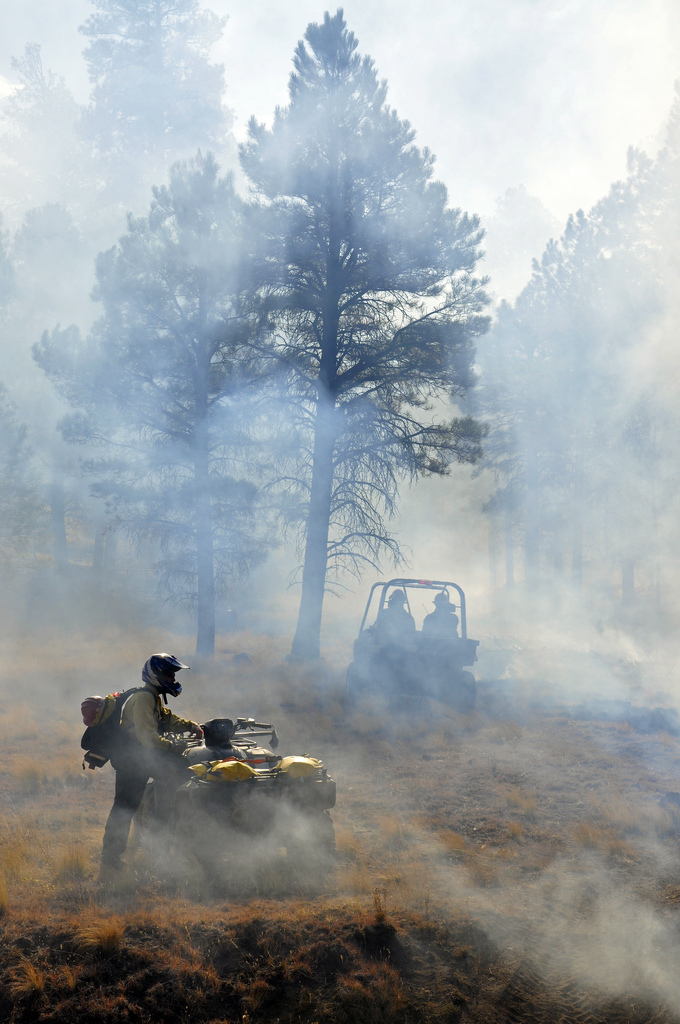
    Firefighters monitor the fire line during a prescribed burn. Taken by Brady Smith. Credit: USDA Forest Service, Coconino National Forest.
    Firefighters monitor the fire line during a prescribed burn. Taken by Brady Smith. Credit: USDA Forest Service, Coconino National Forest.

    Our usual reaction to a forest fire is negative as we think of wildlife killed, flames raging out of control, damage done. But a controlled burn is a technique in forest management, when a fire is set in a prescribed area to burn off the leaves and undergrowth that would result in a hotter fire later. These fires are cleansing and help the germination of certain types of trees.

    I wonder what Isaiah thought when he saw the seraphim approach him with a burning-hot coal. Fear, as we might feel when we hear of a forest fire? And yet this coal, touched to Isaiah’s lips, brings cleansing. The God who is flame burns away the dross in Isaiah’s heart, so that his lips are clean.

    As I look back over my life, I see times of cleansing fire as allowed by God. Though I prayed and committed myself to the Lord, I didn’t receive the answers I so desperately longed for. The result was confusion and pain. And yet as the days and months passed and I continued to look to God for love, affirmation, and direction, I could (eventually) see how his holy fire was burning away my impurities and redirecting my desires.

    Are you going through a controlled burn? If so, may the Lord strengthen you as he brings purity.

    Prayer: Father of light, may we see your burning in our life as a thing of cleansing. We submit to you. Amen.

  • Devotional of the week: Unclean

    “Woe to me!” I cried. “I am ruined! For I am a man of unclean lips.” Isaiah 6:5

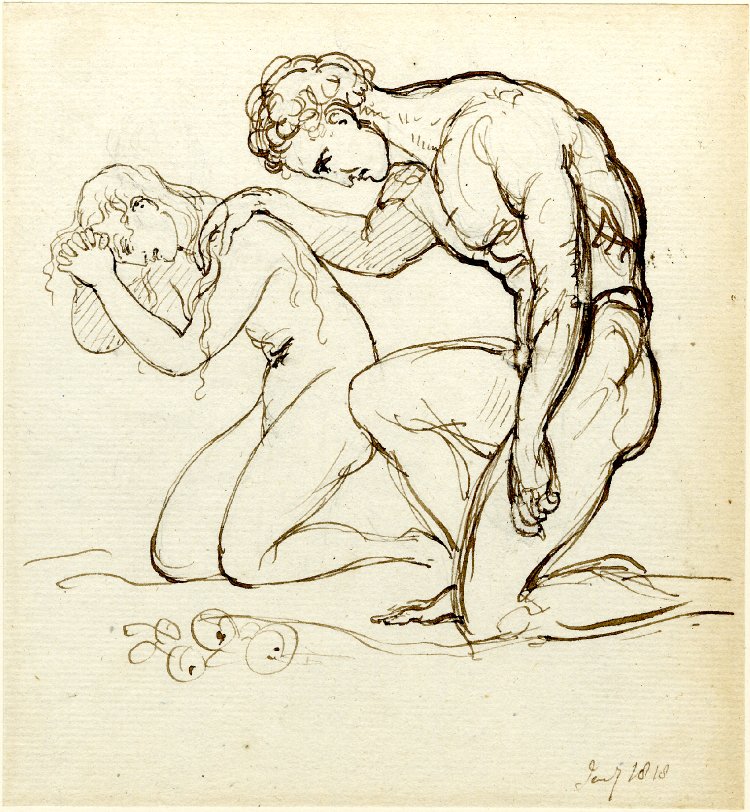
    "Adam and Eve" by George Hayter - British Museum (public domain)
    “Adam and Eve” by George Hayter – British Museum (public domain)

    My kids are still young enough that when they have done something wrong, they usually confess straight away. They (thankfully) haven’t yet learned how to hide their shame or guilt. But at some point they will probably acquire this practice, whether as a coping strategy in the tough world or for more self-interested reasons. May the Lord help my husband and me to train them in keeping a pure heart.

    Isaiah, when faced with the holiness of God, comprehends immediately the depth of his sin. He had been warning the Israelites about their transgressions, but here before the holy God he sees that neither is he worthy. Isaiah knows what God has been saying about the sins of his people, for he has been the conduit of his message. Surely, he thinks, he is ruined.

    Jesus later told the Pharisees that “the things that come out of a person’s mouth come from the heart, and these defile them” (Matthew 15:18). Likewise Isaiah realizes, as he looks on the holiness of God, that out of his lips come the impurities of his heart. But as we will see next week, God sends him help for his redemption – just as he has for us.

    Have you experienced an utter realization of the depth of your sin? If so, how did you respond? And how did God?

    Prayer: Heavenly Father, we repent for the sins of our heart and our mouths. Live in and through us, that our words would be as sweet as honey.

  • Devotional of the week: Holy Times Three

    “Holy, holy, holy is the Lord Almighty; the whole earth is full of his glory.” Isaiah 6:3

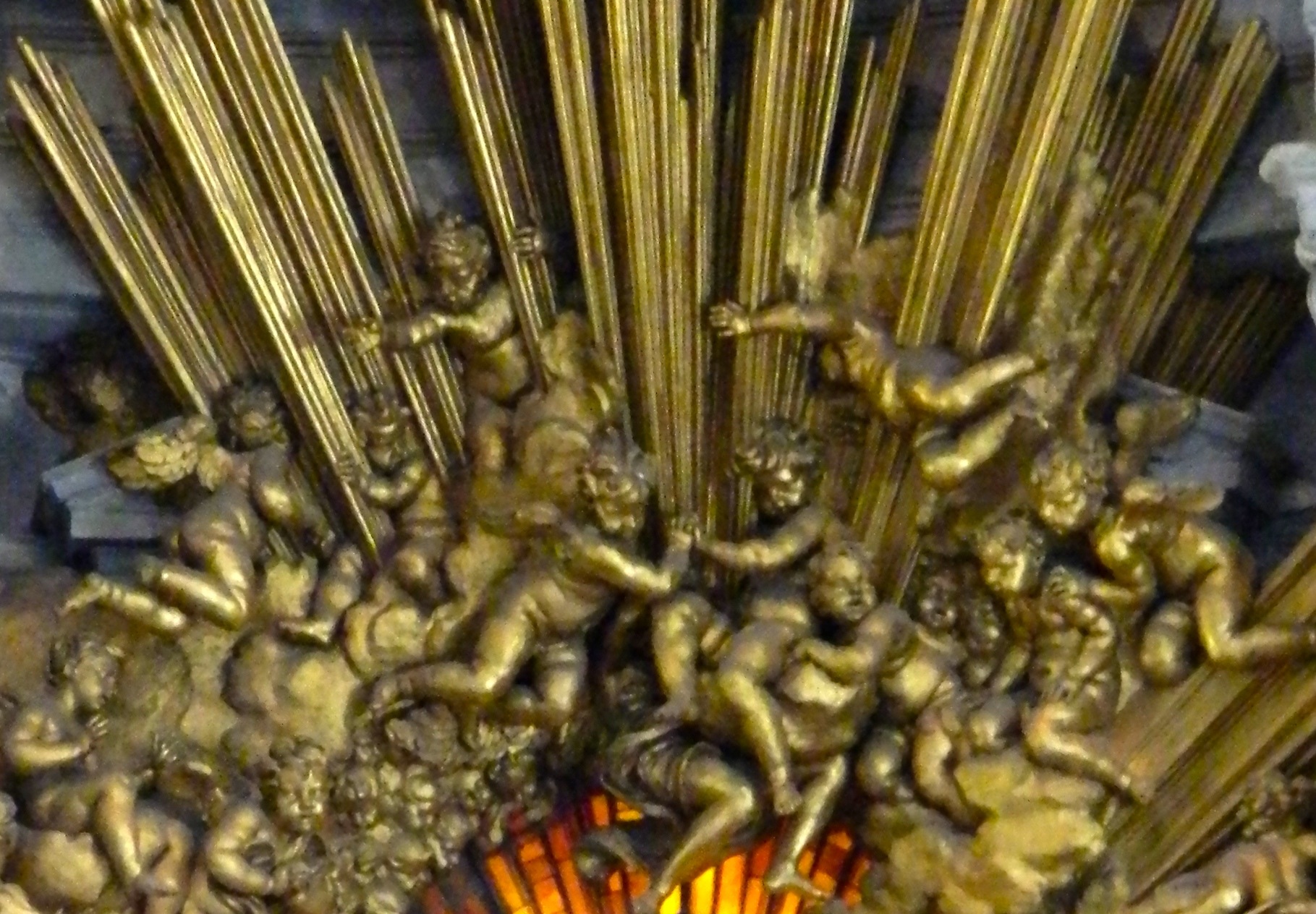
    Not six-winged, but not a cuddly rendition of an angel either... This one found in a church in Rome.
    Not six-winged, but not a cuddly rendition of an angel either… This one found in a church in Rome.

    The six-winged creatures in Isaiah’s vision aren’t the cuddly angles that grace today’s greeting cards and posters. No, these that Isaiah sees are solid and huge, for when they speak the walls and foundations reverberate and the temple fills with smoke. They cry out, “Holy, holy, holy!” Why three times? Because Hebrew, the original language, has no superlative such as we have in English: “holy,” “holier” and “holiest.” And although a double emphasis is sometimes employed in Hebrew, a triple repetition is more rare. God deserves the top praise.

    The vision that Isaiah sees is similar to that glimpsed by Jesus’ disciple John on the island of Patmos. There the six-winged creature had “eyes all around, even under its wings” and never ceased to say, “‘Holy, holy, holy is the Lord God Almighty,’ who was, and is, and is to come” (Revelation 4:8).

    These creatures have a rightful fear of the Lord, which is a concept that has fallen out of favor today. But a healthy fear implies awe, reverence, a hatred of evil and a desire for holiness and purity to reign. It doesn’t preclude intimacy with God. Rather, we can develop a deeper relationship with him when we love what he loves and weep with him over the sin in this world – and in our hearts.

    May we continue to grow in a rightful fear and deep praise for our superlative God.

    Prayer: Lord, you are holy, holy, holy! May our praises echo those of the six-winged creatures forever crying, holy.

  • Devotional of the week: Angel wings

    Above him were seraphim, each with six wings: With two wings they covered their faces, with two they covered their feet, and with two they were flying. Isaiah 6:2

    St. Peter's Basilica, Vatican City
    St. Peter’s Basilica, Vatican City

    Our view of God can swing from one extreme to another. At one end, we might so favor intimacy with him that we speak only of “Jesus as my best friend,” or similar. But at the other end, we might see the triune God as so other that he is distant and not approachable.

    In the prophet Isaiah’s vision, the curtain opens and he sees God on his throne. So majestic is he that even just the train of his robe fills the temple. And around him are these seraphim, which are creatures with six wings. As Matthew Henry, the seventeenth-century biblical commentator, says, they are known as “burners,” for they “burn in love to God, and zeal for his glory against sin.” God, who is known as a holy flame elsewhere in the Bible (see for example Hebrews 12:29), is surrounded by creatures who would burn as flames. And even though they have not been marred by sin, they deem themselves unworthy to gaze upon the Lord. These creatures – to whom humans fall in awe – yet bow before God.

    I’m grateful that we can run to God as Abba, our Father. Never would I want to relinquish an intimate relationship with him. But neither do I want to lose a sense of reverence and wonder over the hugeness of our God – he who defines holiness.

    Prayer: Holy and living God, reveal your holiness to me, that I might cultivate a healthy sense of awe over your wonder and majesty.

  • Devotional of the week: Our King

    A new devotional series, this one based in one of my favorite Old Testament books, from the prophet Isaiah (6:1-8).

    In the year that King Uzziah died, I saw the Lord, high and exalted, seated on a throne… Isaiah 6:1

    Photo: Creative Commons, David Jones. The Imperial Crown of Austria in the Schatzkammer, Vienna
    Photo: Creative Commons, David Jones. The Imperial Crown of Austria

    As an American living in the UK, I’ve often harbored mixed feelings about the British royalty – after all, the colonists in the New World fought a war to be free of King George III. But living here for sixteen years, I’ve grown in respect and admiration for Queen Elizabeth II. She has exhibited seemingly tireless grace and diplomacy for over sixty years, which we rightly celebrated during her Jubilee in 2012.

    King Uzziah was another faithful ruler, who wielded more power in his day than British royalty do today. But at the end of his life his pride ruined him. He decided that he wanted to involve himself in matters at the temple and burned incense at the altar (which was the job of the priests). The Lord struck him with leprosy and he died. This was the year Isaiah received his commission as a prophet, which we will be reading about in this seven-week series.

    In contrast to the human king, Isaiah glimpses the true King who is seated on his throne of judgement. The people of Israel had been swayed by powerful King Uzziah and had, little by little, began to trust in him more than God. And so the Lord commissions a man – Isaiah – to bring his dual message of judgement and mercy to his people.

    Whatever your view of royalty, today consider the mighty King of all Kings who never slumbers nor sleeps.

    Prayer: King of Kings and Lord of Lords, we pay you homage. Reign in our lives today. Amen.