Today I have an article on Sacred Reading over at the Kingdom Life Now magazine. Here’s a taste.
Recently I led an exercise of meditative reading of the Bible. Four times I read the passage of Isaiah 43:1-8 with instructions to the women with a different emphasis in engaging with the text each time. About a month later, I was humbled to hear from one woman about how God spoke to her through the exercise. She said how she and her husband had been to Brunei in Southeast Asia a couple of weeks before the conference in Somerset, England, to visit their daughter and family (including three young grandchildren), who have lived there for the last seven years. While there, she learned that her son-in-law decided to apply for teaching jobs in Belgium, Singapore, and Oman. With Belgium being far closer to home, she and her husband were hoping this would be their final destination. She said,
When you read Isaiah to us the only sentences that I heard were verses 5 and 6, where it says, “I will bring your children from the East and your daughters from far-off lands.” How relevant to me were those words and I held onto them as a promise to me from God – that He was telling me that my son-in-law would get the job and my family would come close. I was so convinced that I told others what God was saying. So imagine the great joy when we heard on that he had been offered the job in Belgium and they were to start in September! No more 17 hour flight to see them! God truly had gathered my children from the East and my daughter from a far-off land.
She said that although before my talk she had never heard of lectio divina – a Latin phrase for the act of sacred reading – but now she had come across it several times.
Change Agent
This ancient practice of a slow, contemplative praying of the Scriptures moves what can be a merely rational process deep into one’s heart, for as we chew over a piece of Scripture, it sinks into our being. We begin to slow down, receive, and make a personal response. Continue reading.
Hearing God, I’m learning, is about heeding the nudges. Acting on those little prompts that pop into my mind, which I’m never completely sure are “just me” or are quite possibly the Lord. That sounds cheeky in and of itself, doesn’t it – I heard GOD. But that is the amazing mystery of the Lord on high communicating with his created ones.
Recently a fragment of a verse from Scripture made itself known to me, and I knew immediately that I should share it with a particular friend. The timing wasn’t convenient – it was after dinner, bath time for the kids, in the rush before the Vicar went to his church meeting. But in that moment I sensed that I should follow the nudge.
The phrase that flitted through my mind was, “I lift mine eyes to the hills; from whence does my help come? My help comes from the Lord, the Maker of heaven and earth.” Not being one of those people who can tell you chapter and verse when it comes to the Bible (and yes, the Vicar does have this uncanny ability), I didn’t know where it came from but guessed one of the Psalms. I looked it up online, and loved reading the whole chapter – Psalm 121 – as it continues in a wonderful vein, about how the Lord will not let our foot slip, and how he never slumbers or sleeps.
I texted my friend and she texted me back, saying my timing was perfect and sharing some other wonderful “coincidences” about her life, her children, and God, including: “How special peace feels…”
The Lord graciously used me to bring her comfort and the assurance of his love, but he’s not stingy with his blessings. I received by acting on that little nudge – not only receiving the love of my friend, but gaining confidence that in this instance the nudge was divinely inspired. I’ve been on this journey of hearing God for two decades now, and I certainly wouldn’t call myself an expert – I need these grace-filled experiences that teach me to open my ears and heart and obey.
The Lord – amazingly – uses his children for the meeting of his people’s needs. We are his hands and his feet to bring his love to his people.
How about you? Have you acted on those little nudges? If so, what happened?
One from the archives. I wrote this for Quiet Spaces
in 2008; it later appeared in Woman Alive and then in
Inspiring Women Every Day. And now for its final
resting place…
The incongruity of reading a murder mystery during a time set apart for communion with God was finally too much even for me. I packed up K Is for Killer in my duffel bag and vowed not to open the zipper.
I was at my favorite place of retreat, where I had met God previously. There I had decided against entering a marriage commitment; there I had received a fresh filling of God’s Spirit; there had I entered his presence in quiet and gentle ways. This time, however, I felt far from the Lord. I knew in my head that he was there even if I didn’t feel his presence, but my heart wasn’t so sure.
I had been silent for hours but was not truly quiet—the voices screaming inside drowned out any still, small voice of God. I was filled with pain and doubt. “Are you really speaking to me, God?” I cried out. “Is that really you I’m hearing, or is it just my heart? Or something else? I don’t want to anchor my life on what’s not real. Are you there? Can I hear you?”
Anguish had filled me for weeks. I had announced that I was leaving the Christian organization I was working for to join another Christian group in a different city, but my plans had fallen through. Bottomed out, more like it. The opportunities I was pursuing evaporated as the doors slammed in my face. The embarrassment of announcing my intentions and then not leaving was painful, but more devastating was my belief that God had directed the move.
I yearned for God, yet couldn’t bear to approach him. After a few weeks, however, I knew I needed a place of quiet in which to face the pain and to seek God’s solace. Having made arrangements with the retreat centre, I began my time alone with a mixture of fear and anticipation. Yet here I was reading the latest Sue Grafton novel. I came to my senses and lugged my Bible, journal, and a blanket down to the nearby pond for a change of scene. After gazing at the serene waters and the wildlife around it, I was finally able to pour out my pain, disappointment, and confusion to the Lord. In the silence and solitude he met me; God the Father, God the Son, and God the Holy Spirit surrounded and silenced me with his love and peace. Once again, my heart knew and believed.
It would take many years of growing in maturity before I would be more confident in discerning the still, small voice of God. But that day at the convent was a turning point in my relationship, for once again I was able to trust and receive assurance from him. It was only when I silenced the competing voices and offered up to the Lord my unrealized hopes and dreams that I was able to enter into a deep quiet and hear his voice.
The roar of the stillness
Why is the spiritual discipline of solitude and its close partner silence so difficult for us modern people? The answer is seemingly obvious—we have manifold possibilities with which to fill our lives, much of it via the online world and our smartphones. Technology surely contributes to the cacophony surrounding us, but a deeper answer resides in the condition of the human heart. Blaise Pascal was onto it back before Blackberries (in the 1600s) when he said that all our miseries derive from not being able to sit alone in a quiet room.
What do you hear? The Whispering Arch at the monastery at Clonmacnoise in the Republic of Ireland. According to legend, here the monks would listen to confessions; the confessor would stand at one end of the arch and the monk on the other side. Only the monk could hear the whispered sins.
Or Augustine of Hippo in his famous line from his Confessions puts it succinctly: “For you have formed us for yourself, and our hearts are restless until they find their rest in you.” The God-shaped vacuum inside of us cries out to be filled. If we don’t turn to God, we will look to something else, such as pulp fiction, food, wine, sex, shopping, or even the building of God’s kingdom. Turning down the volume of the outside noise and taking away the comfort-crutches leaves us on our own, naked before God. And for many, like me on that day in the convent, that is chilling.
Indeed, silence is frightening, Dallas Willard says in his fine book The Spirit of the Disciplines, “because it strips us as nothing else does, throwing us upon the stark realities of our life. It reminds us of death, which will cut us off from this world and leave only us and God.” He continues, “In solitude, we confront our own soul with its obscure forces and conflicts that escape our attention when we are interacting with others…. We can only survive solitude if we cling to Christ there.”
And that is what I found; when I finished falling, I landed on Christ. Never are there more welcoming arms; never is there a more solid foundation.
“Be still and know”
Many of us run from solitude and silence, but these disciplines are vital to a flourishing and robust spiritual life. Setting aside time in the day, week, month, and year to be alone with God will feed our souls as nothing else will. I hear you respond, “My schedule is already too full—I can’t possibly fit in another thing.” As a parent of young children, I can relate. At such stages of life—or, for example, if you’re caring for a sick loved one—an offsite retreat may be out of the question.
Richard Foster in his classic Celebration of Discipline speaks to this dilemma:
Solitude is more a state of mind and heart than it is a place…. If we possess inward solitude we do not fear being alone, for we know that we are not alone. Neither do we fear being with others, for they do not control us. In the midst of noise and confusion we are settled into a deep inner silence. Whether alone or among people, we always carry with us a portable sanctuary of the heart.
He recommends that we make the most of what he calls the “little solitudes” of the day, such as the early morning before the family awakes, during our morning cuppa, while in traffic or commuting, when we glimpse a tree or a flower. As he says, “These tiny snatches of time are often lost to us. What a pity! They can and should be redeemed.”
But maybe you are able to get away for a twenty-four hour (or longer) retreat for silence and solitude. I’ve always found the best settings to be those nestled in a lovely spot of nature, for there are fewer distractions and the surroundings themselves lead to worship of the Creator. The trees of the wood sing out in joy before the Lord; the sea roars and the fields rejoice. God’s handiwork is awe-inspiring and produces a grateful heart.
One of my strong petitions while on retreat (and not limited to then) is to enter into a deep silence so that I can hear the voice of the Lord and receive from him. I’m easily distracted and, like Martha while Jesus was visiting, “worried and upset about many things” (Luke 10.41). For me to release those niggles often takes a conscious effort in prayer, usually through writing out my meditations on a verse of Scripture or spending time praising the Lord in song. For example, in seeking quietness I might pray through a verse from Isaiah (30:15): “In repentance and rest is your salvation, in quietness and trust is your strength…” But sometimes what I need most is simply a nap – and that’s the most “spiritual” thing I can be doing.
Whether we’re able to get away for a couple of hours, a couple of days, or not at all, the practice of solitude and silence can bring us not only into communion with God, but into a newfound freedom. Through it we can be released from the need to fill our time with words, distractions, self-soothing behavior, or the pressing desire for the approval of others. For when Jesus says, “Come to me, all you who are weary and burdened, and I will give you rest,” we can believe and know that he is speaking to us.
As we meet with the God of the universe, the One who bids us call him Abba, we are changed into his likeness. His presence is beyond compare—far and above any murder mystery.
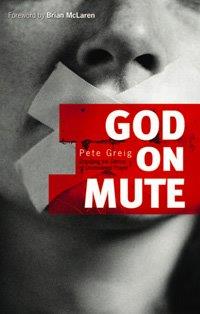
God on Mute: Engaging the Silence of Unanswered Prayer
Pete Greig (Survivor/Kingsway, ISBN 9781842913178)
Some years ago, my faith was seriously rocked when I thought God was telling me to move from one city to another, and then everything fell through with the move. I didn’t know what to believe. Was God out there? Did he care? Was he speaking to me? What was I hearing?
I would have loved to have been able to read God on Mute back then. Through God’s grace I was able to mature in my faith, but it was a long and lonely road to travel, filled with hurt, questions, doubts. Perhaps Pete’s book will shorten the path of others. I hope so; because of God’s seeming silence, many Christians lose their faith or allow it to be it watered down to an insipid state.
Pete Greig is a co-founder of the 24-7 Prayer movement, which has touched people around the world. He’s written about this prayer movement in another book, but this one is a profoundly personal yet deeply biblical exploration of unanswered prayer.
Just weeks after the birth of their second son, Pete’s wife Samie suffered a horrible seizure. After rushing her to the hospital, they learned that she had a tumor in her head the size of an orange. As Pete says, “Why, I wondered darkly, hadn’t my prayers made any notable difference when Samie and I needed God’s help more than ever before?” And, “Here I am, one of the leaders within a prayer movement … and (dare I admit it?) my deepest prayers are impotent…” (p. 38-39)
Pete searched for answers to the profound question of unanswered prayer, and determined that the book needed to be written that would fit between his wife’s “Reader’s Digest and a cappuccino.” God on Mute is the result of their years of prayers, searching, and reflection.
It’s been a few years since I read this book, and I’d love to read it again, slowly. First time round I was propelled by the story of Pete’s wife, Samie, as she discovered the brain tumor and her subsequent epilepsy. I was gripped by this human drama, especially as my brother has struggled with epilepsy nearly his whole life.
A book I will give to others and reread. It’s a treasure trove of wisdom which also poses the questions some are too afraid to raise.
This book has been out a few years; have you read it? What stories do you have of unanswered prayer?
I’ve long been fascinated by the subject of hearing God. In my twenties I edited Leanne Payne’s book on the subject, Listening Prayer. Engaging with her manuscript set me on a path of seeking God’s voice fervently. I felt awe the first time his whisper reverberated in my spirit: “I love you, beloved. You are mine.” But eventually my unbridled excitement that the God of the universe would actually speak to me led me to ignore the practice of testing what I was hearing (even though Leanne Payne counsels against this). For instance, I believed I heard God tell me to move cities to work with a Christian ministry, a place that conveniently was home to the man that I believed God was telling me to marry.
You can probably guess that none of that happened – the move or the marriage. My hopes and faith splattered when my plans came to naught. I didn’t know what to think or believe.
And yet I couldn’t give up listening to God. I tried, but I couldn’t cut the lifeline that had been giving me hope and love and affirmation – even though I had messed up in the interpretation. That major crash helped me to mature as I learned to wait before God, asking him to clarify and affirm what I was hearing – through the Bible, through his still, small voice, through trusted friends and family.
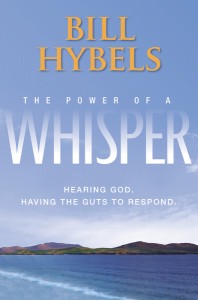
I still gobble up books on this topic, always learning something new about our mysterious relationship with our Creator. When I heard about Bill Hybels’, I was surprised. I thought of him as a high-powered pastor and founder of the massive Willow Creek empire. My husband, also a pastor, has enjoyed his books, but I haven’t read any closely. Yet when I picked up The Power of a Whisper, I didn’t want to put it down. He tells the story of how God’s whispers have changed the course of his life, including creating Willow, learning how to parent, aching for the poor and so on. God has continually shaped him through these sometimes gentle, sometimes persistent communications from above. This book has mellowed my perception of him as an author.
I thought his book could have been reduced by about a third – it started to feel a bit too long and unwieldy towards the end – but would recommend it as an introduction to hearing God. It’s especially suitable for any type-A guys in your life (I passed along my copy to the vicar with whom I sleep, and he’s loving it).
Other books on the topic? Leanne Payne’s, as I mention above, as well as Dallas Willard’s Hearing God and Joyce Huggett’s Listening to God.
But my resistance was futile, and having relinquished my fears, I am penning my first blog post. I promise to feed the monster regularly – at least three times a week – with posts, including stories and anecdotes of how God shows up in our lives regularly. I love it when he does that.
I have a long-distance friend with whom I enjoy a slap-up meal when we meet up. We talk of books, love, literacy, disability, travels… give us a Jamie Oliver restaurant and we can chat into the night.
Recently I emailed her about a book-related issue, and as I started to sign off, I had the sudden thought that I should ask her about men. Such as if any of that vast mass of humanity had come to his senses yet and asked her out. As a spiritual rule I try to be sensitive and not bring up, again and again, what can be painful subjects. To the infertile couple: “Any news?” To the hoping singleton: “Any men?” It’s just not helpful, is it.
So with some fear and trepidation, I asked about the man situation, keeping it short and light. She wrote back the next day with delight, saying that yes indeed there was a guy and things were cool and exciting and…
And I sat back and thought, “Wow God. Your Spirit prompted me there, didn’t it?” I acted on a little thought, stepping out in faith, which resulted in my friend and I sharing a new layer of intimacy. Delighting in the wonder of young love when possibilities seem unlimited and quirks are charming. Giving thanks for prayers answered.