Category: Authors

  • Interview with Max Lucado

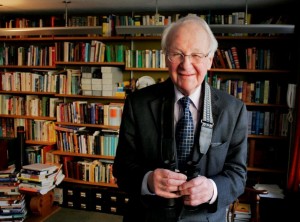
    I love books and reading, and in running the Woman Alive Book Club I get to interview some great authors. Here’s an uncut interview with the legendary writer Max Lucado.
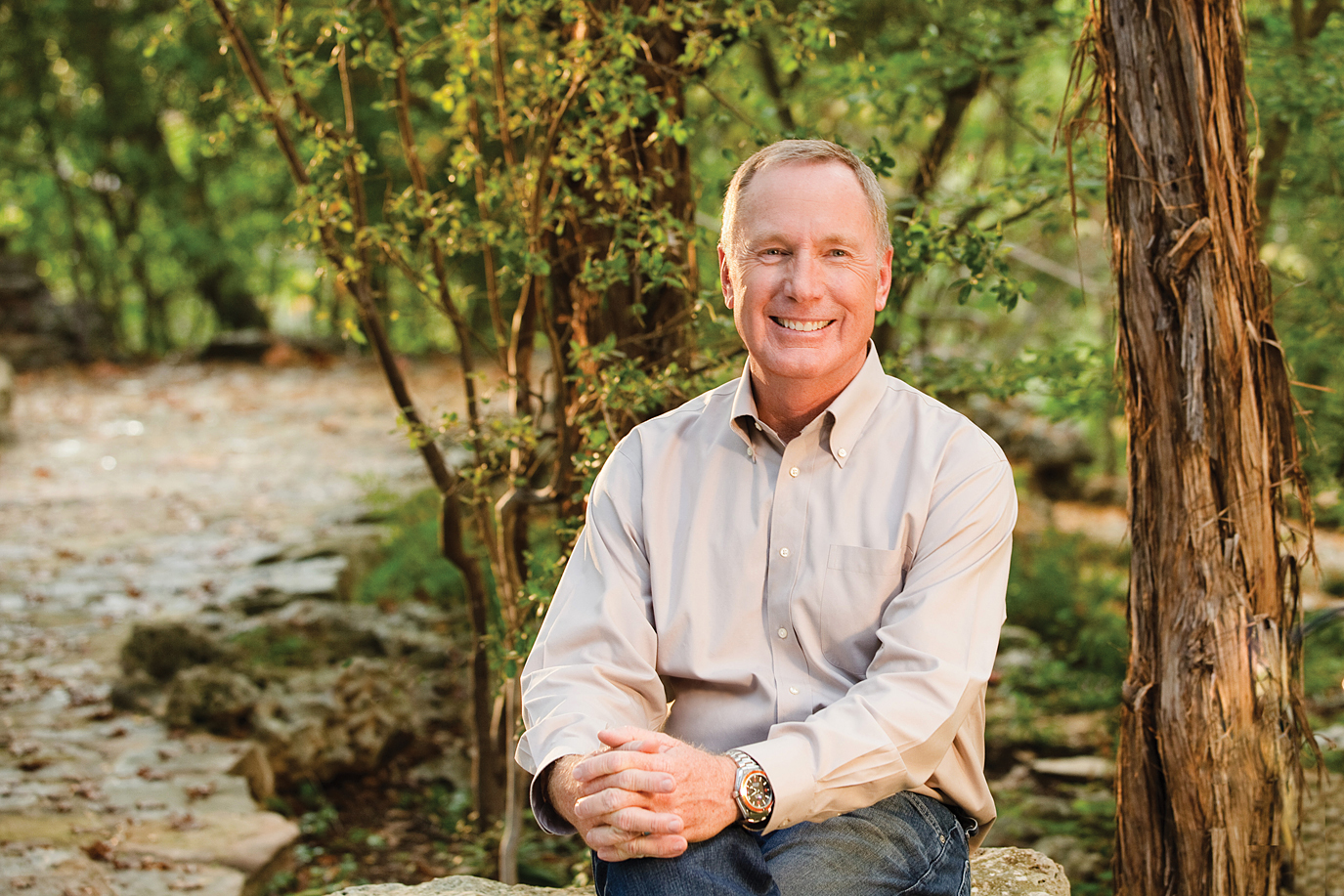
    Lucado_750_WPGABP: Writing seems to just flow out of you. Is that true? Or do you ever hit a writer’s block?

    ML: It’s as not as true as people might assume, but on the other hand, I’ve never hit a writer’s block and so the bad news is that I find writing to be very difficult. It takes a lot work; it’s agonizing and challenging. Some days I hate it! But the good news is that all these years God has provided and I’ll just put forth the least amount of effort he seems to bless it with a rewarding thought.


    ABP: How do you stay humble, being dubbed America’s Pastor and with over 100 million products sold?

    ML: I don’t know if I always do! I wrestle with humility or lack thereof. I can tend to put myself first. Even though I’ve written a book called, It’s Not About Me, there are many times I think it is! And so I don’t think I deserve a high grade for humility, and I’m not sure how you measure someone’s humility anyway. You know that story about the boy who got the badge for being most humble and then he got it taken away because he wore it!


    ABP: Can you share any stories of how your children’s books have changed lives?

    ML: The book You Are Special has in my life provided the most rewarding story. Specifically the distribution of this book in China. There is a ministry called “You Are Special China” and it exists just to distribute that story among orphanages and schools in all the provinces in China. And they send back some wonderful stories. One in particular regards a school for the deaf. As they were being read this story, the story tells them that they were made by God and that God has a special place for them. The person who shared the story said that he heard the children start to wail. Start to cry. Because they’d never been told that before. And it touched such a deep, deep longing in their hearts. I wish I could have been there to see those kids with this particular response to that book.


    ABP: When you’re in glory, how would you like to be remembered?

    ML: Hmm. I think what brings me the most joy is that my three daughters all walk with God. When I first got into ministry, a good friend said, “Don’t sacrifice your family on the altar of Christian service.” And through the years I have seen how that could happen because ministry has its unique demand and stresses and many children and marriages suffer because of ministry. But I’m over 30 years into this ministry stuff (started in 1979) and my marriage has never been stronger and my children are all walking with the Lord. And for that I am most grateful.


    ABP: Besides the Bible, what books have influenced you most?  Are there specific books you turn to in a crisis?

    ML: I’ve always got a lot of encouragement from the writings of John Stott. I feel like he had such a grip on Scripture. His is not the writing that I necessarily turn to for inspiration but more for careful dissection of Scripture. Of all the writers, I’ve really enjoyed him. There’s another commentary, another writer by the name of Dale Bruner. And he’s written commentaries on Matthew and John, and there’s just something about the way he studies that I find inspiring. Again they aren’t inspirational books. You won’t find them on the lower level of a bookstore, but for people who are serious about getting into a Bible study, I’ve often recommended those two writers.


    Max Lucado is an author, pastor, minister and dad. With more than 100 million products in print, he is one of America’s most widely read authors. He and his wife, Denalyn, live in San Antonio, Texas, where he serves the Oak Hills Church.

  • An interview with a favorite author, Conrad Gempf

    ConradImageI got to know Conrad Gempf back when I worked for Zondervan, publishing fantastic UK authors. Although Conrad’s not a “UK author,” even though he got branded as such. He’s an American (from Jersey!) who has lived here a lot longer than I have. And I’m happy to report that he’s not lost his Yankee accent. He’s wry; he’s observant; he’s funny; he’s caring. All around a great guy. We’ve spent a couple of Thanksgivings together as families; his cranberry nut bread is to write home about.

    Professionally I love working with him because he’s got the ability to communicate the deep truths of the gospel in a clear, succinct and witty way. He’s an academic but doesn’t live in any ivory tower. After a few years of not working together, last year we, through Authentic Media, got to produce his fabulous book on the Apostle Paul: How to Like Paul Again. I can’t recommend it highly enough.

    Here’s a short interview with him focused on his reading interests (he’s the one who, many years ago, put me on to Malcolm Gladwell):


    Some Christians of my generation can’t believe anyone wouldn’t like Paul. But many, perhaps most, of my students have real trouble with him, particularly with his views – or what they think are his views – about gender issues and other “hot potato” topics. But it’s short-sighted to decide whether to like someone by whether they agree with you, or what they can do for you. Probably all of us have one or two people that we love to bits even though they hold some pretty dumb opinions. You really want to make such decisions on the basis of a person’s underlying integrity and values and motives.

    I’ve written popular-level books about Jesus, and now on Paul. My next project will probably be a more academic piece. One of the areas I’m interested in is in Jesus’ predictions about the End Times, a hotly debated area in my field. If it goes well, perhaps there would be room for a popular-level book on the same subject. Because Paul often uses “armour of God” imagery when he’s talking about End Times, a title I’m considering is: The End of the Universe: What to Wear.

    One of the characteristics I most want my writing to display is that I take Him seriously but don’t take myself seriously. I’ve actually learned a lot from comedy writers – how to emphasize the profound and cosmic by placing it with not just the ordinary but with the particular. Woody Allen once said he believed in a Deity who was in control of the universe except for certain parts of New Jersey. So my books about the New Testament bring in examples like John Deere tractors, Clark Kent, and a World War I aeroplane called a Nieuport 27. Even if you don’t know these names, the use of something so particular can be humorous. And if, by chance, you do know, well, author and reader share a warm private chuckle.

    I count a variety of authors as influences and favorites. Some are obvious choices, like CS Lewis, who writes so simply but with boundless intelligence and imagination. How I long to be like that! But I’ve also been fascinated by the writing styles of Raymond Chandler, Woody Allen, Malcolm Gladwell, Aaron Sorkin, Robert Farrar Capon, and Abraham Joshua Heschel. What a lively conversation a room full of them would be!

    I think I’ve used a different word processor for every major project I’ve written. The first chapters of my PhD thesis at Aberdeen were written on a word processor I programmed myself and the files were stored on cassette tapes! Lately, I enjoy writing on my iPhone with a small flat Apple keyboard on a simple word processor called WriteRoom. On the Mac itself, Scrivener is wonderful.

    I’m often asked why an author who is as ‘into’ technology as I am doesn’t make use of tools like Facebook. My answer may sound familiar. I think it’s short-sighted to align yourself with companies and services based solely on what they can do for you. I really want to make such decisions on the basis of a company’s or service’s underlying integrity and values and motives.

    Conrad Gempf is a Christian, husband, father, writer, teacher, speaker, introvert and idealist. His latest book is How To Like Paul Again: The Apostle You Never Knew. His website is gempf.com.

  • Book reviews – Waking Up in Heaven and Kisses from Katie

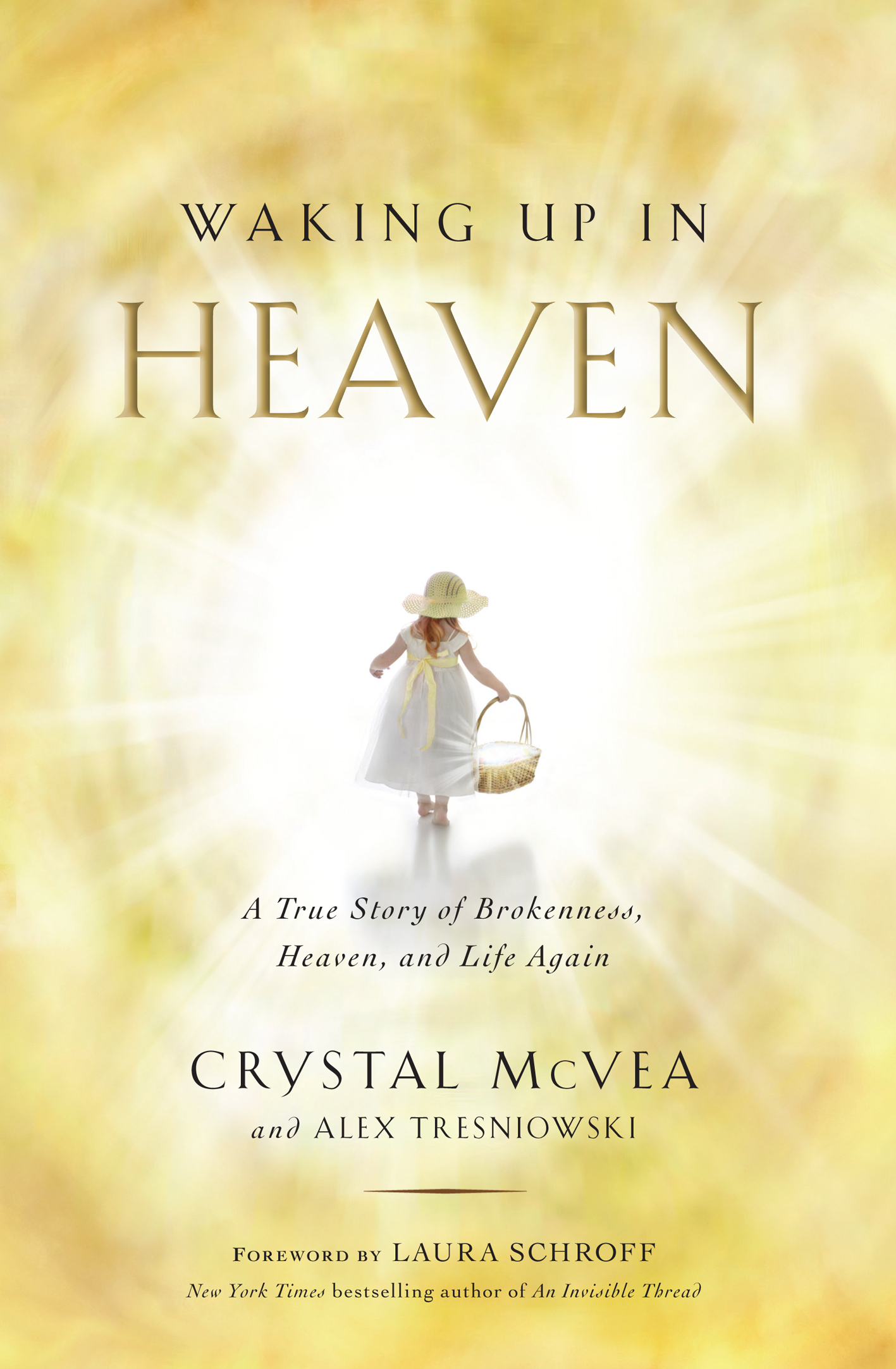
    I love reading Christian biographies; they remind me that God can do amazing things in and through his people. Here are two books that chronicle two remarkable women, which I came across in my publishing work with Authentic Media (we secured the Commonwealth rights for them). The first is a story of someone who dies and spends time in heaven. When I first heard that yet another heaven book had appeared, I was skeptical. But I started reading Waking Up in Heaven and was gripped, for Crystal’s life has been filled with drama even without the otherworldly journey.

    9781780781136As a young child Crystal suffered repeated sexual abuse, and could never feel clean – she got baptized four times as a teenager in her quest to slough off the old self. She got pregnant at seventeen and had the baby, but at nineteen had an abortion. Married at twenty but divorced after six months when she found out he was a drug addict. But when at last she found a really good guy to marry, and her life seemed sorted, she fell into a deep depression. Why? She didn’t feel worthy of her husband and his love (rooted out of the feelings of shame and self-hatred that she had endured all her life). And that’s when she died for nine minutes and experienced a life-changing transformation in heaven… You’ll have to read it to find out more!

    I should mention another heaven book: Dr. Mary Neal’s To Heaven and Back. She’s an orthopedic surgeon, and her prose is not chatty like Crystal’s, but her scientific medical stance makes for a compelling read.

    9781780780894Another life-changing journey is that of Katie Davis. In her year before going to university, she went on a shortterm mission trip to Uganda. She fell in love with the people and the place, and knew that God was calling her to return there. But how would her family and her boyfriend react? At first she left the comfortable surroundings of her home in America for a year to immerse herself in Uganda; the plan was then to return to her life – her family, her boyfriend, her studies. But as the time drew to a close, she knew she had to stay. And she had to begin a family made up of one parent and otherwise destitute orphans.

    In the years since, Katie has settled in Uganda and is in the process of adopting thirteen girls. A crazy path in the eyes of the world has been her following the call of Jesus. Radical obedience and the sharing and receiving God’s love.

    What stories of God’s transforming love are you reading?


    Publishing info: Waking Up in Heaven, Crystal McVea and Alex Tresniowski (Authentic, ISBN 9781780781136) and Kisses from Katie, Katie Davis and Ben Clark (Authentic, ISBN 9781780780894)

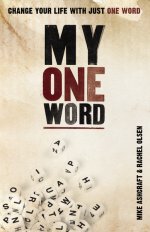
  • What’s your word? A book review for the new year

    Are you a list person? Do this; do that; scratch it off your list. Lists can focus the mind, but sometimes we create lists to foster (or manufacture) spiritual growth. Change this; read that; be that person. And yet we aren’t made to respond to such dictates, as if we were robots. Love, rather than guilt, is a better inducer of change.

    9780310318774My One Word is a brilliant seemingly easy approach to spiritual growth, and a way to lose the lists and effect real change. Before God, choose one word for the year. The word will be “the lens through which you examine your heart and mind for an entire year” (p. 24). It will best reflect what you hope God will do in and through you. Say you choose trust. That’s the word you bring to mind when you receive the shattering news that you’ve lost your job. Or when you send off your teenage daughter on an overnight visit with her friend. Or when your grandson needs a medical procedure. Or when you move out of your comfort zone and visit the neighbour you suspect is hurting. Choosing one word becomes the way to change our outlook and behaviour, especially when we pray through it and seek it (or the principles behind it) in Scripture.

    When I first read this book last January, I loved the idea. After praying for a few weeks, a word reverberated through my being: flourish, with a verse to go along with it: Isaiah 55:10–11 (“As the rain and the snow come down from heaven, and do not return to it without watering the earth and making it bud and flourish, so that it yields seed for the sower and bread for the eater, so is my word that goes out from my mouth: It will not return to me empty, but will accomplish what I desire and achieve the purpose for which I sent it”). But I questioned that I got the word right. It seemed a bit cheeky to choose such a wonderful word. Yet I couldn’t get away from the idea that this was to be my word for the year.

    But I didn’t put into place the many helpful suggestions the authors give about how we can own our word and incorporate it into our daily lives – I didn’t slap it on my computer monitor, for instance, or stick it up on the fridge. After a month or so I forgot about it. And only when I was leafing through my stacks of review books did I realize I’d let this drop. So a few months later, I started to follow through on my earlier good intentions. And as I look back at 2013, I do see flourishing and growth: the joy of friendships. The love of family. Stretching and enriching work. Finally joining a gym and loving group exercise. The close presence of God through it all.

    What might your word be for the coming year? According to the authors, the ten most-chosen words are: trust, patience, love, discipline, focus, faith, surrender, peace, listen, and joy. All rich and wonderful words, but no doubt God will have just the right one for you.

    I invite you to read this encouraging and often moving book and to join me in choosing just one word. May God transform our hearts and minds through the work of his Spirit.


    My One Word: Change Your Life with Just One Word. Mike Ashcraft & Rachel Olsen (Zondervan, ISBN 978-0310318774)

  • Talking about books with RT Kendall

    You may know that I run the Woman Alive Book Club. This month’s interview (reproduced here, uncut, with thanks to Woman Alive) is with the prolific writer, RT Kendall (author of over 50 books). He was the senior minister of Westminster Chapel in London for 25 years. He lives with his wife in Tennessee, and continues to preach, teach, and write.

    RT KendallI pray a lot about writing books and seek the leadership of the Holy Spirit in the entire process. I refuse to write until I am gripped. Some of my books were sermons. My book God Meant it for Good was a series of Sunday-night sermons on the life of Joseph from Genesis 37-50. They were originally typed from a tape recorder, then edited to make them more readable. The same is true of  All’s Well that Ends Well (life of Jacob) and A Man After God’s Own Heart  (life of David). But other books I type at my computer. Sometimes a publisher will ask for a particular subject, sometimes I will get inspired to write on a subject. I like to think that at the bottom of all this is the anointing of the Holy Spirit. But at the end of the day no matter how inspired I may feel if people don’t purchase the books they won’t get read!

    Total Forgiveness has sold the most copies (also in 20 languages) of my books and I have received the most letters from people who read it. That book has apparently healed marriages, got family members speaking to each other. I could almost have a book made up of testimonies of readers.

    There is not a pastor who does not have people say, “I know God forgives me but I cannot forgive myself.” Totally Forgiving Ourselves has set people free in a wonderful way, but I give God all the glory for this. It’s not me. I have had to do what I tell people to do – I had to forgive myself for not being the good parent I should have been when the children were growing up. I put my church and sermon preparation first thinking I was putting God first. I now believe if I had put my family first I would have preached just as well but I can’t get those years back. I have forgiven myself – I really have! And this has helped others to do the same.

    I have been criticized for the title of my latest book – Totally Forgiving God – and  I understand this. It sounds like God is guilty of something. But he is absolutely pure, just, and righteous. That said, he allows things to happen which he could have stopped (since he is omnipotent). We have to forgive him – set him free, let him off the hook – for the things he allowed to happen. The book is largely an exposition of the Book of Habakkuk and demonstrates how we must wait until the Last Day for God to clear his Name. I have received testimonies of people who said that book set them free.

    We love Britain and would live there tomorrow if we could. It is too expensive. My best friends are in Britain; my happiest memories are in Britain. It was at Oxford I received my research degree; it was in London I was given an international platform. I would never have written a book had I been pastor elsewhere. So I am grateful to God for the privilege of having lived in England. Louise and I take every opportunity to visit when we can. The nostalgia is deep in us.

    When I was young I identified with Joseph. Now that I am old I identify with Jacob. When I read about Jonah I say “I am Jonah” – the Jonah who went the opposite direction from what he was told to do; I am also the carnal Jonah who pouted from not being vindicated. My latest book to be published in the USA is on Elijah. I identify with him – a very self-centered man who took himself too seriously.

    My book on David is called A Man After God’s Own Heart. I identify with him in many ways, especially in his days of preparation before he became King. But what I admire most about David was how he handled himself when in exile and let God do the vindicating.

    Although I have not written a book on Paul – only preached from his letters – he is the one I look forward to talking with in heaven. I want to see what marks he will give me for how well I interpreted Romans, Galatians and all his Epistles. I will also ask him, “Did you write Hebrews?” (I think he did, but nobody agrees with me).


  • Keep calm and keep reading

    Experiencing a Book Utopia


    As I walked into the converted railway station, I caught my breath. Was this paradise?

    People nestled around a crackling fire, gathering their hot drinks and cookies to settle in with a good book. I looked at the shelves, hardly knowing where to stay my gaze, titles vying for my attention. My fleeting glance took in a new biography about Anne Frank. A Second World War book my husband would like. The Kazuo Ishiguro novel I had lent out before reading and never got back.

    barter1I ventured past the first room, my senses on overload. Above me was a massive mural of famous authors, commissioned by the owners. On the top of the stacks ran a miniature train, chugging along. Snippets of poetry sang from the walls and on signs between the stacks. I could hardly breathe, trying to take it all in.

    Philosophy, religion, biography, fiction. I moved into the main room not knowing where to start. All these volumes, so much love and care poured into their creation, then cast off by their first (or second, or third) owners. Now here to be discovered and loved again. Those from centuries gone by, locked in cabinets, their prices dear. Books from recent years, carefully arranged by category and alphabet.

    I wandered throughout the stacks, fingering books, overwhelmed. After jumping from section to section, unable to form a systematic plan of browsing, I came upon an article from the Newcastle Journal featuring the owners of this amazing secondhand bookshop in Alnwick, Northumberland. Reading it filled my craving for setting and character related to this magnificent place, and my heartbeat started to slow.


    Barter Books was the brainchild of an American woman and an Englishman – a strikingly good combination, I’d say. Mary and Stuart Manley met on a trans-Atlantic flight when Stuart, captured by the intriguing woman across the way, tried to figure out a way to meet her. He pondered through the first in-flight film and then hatched a plan. He dropped a note in her lap, saying, “If you want to talk to me, raise your hand.” Although she had requested a seat on her own, wanting to spend the time reading, she thought, “This is too good – so I raised my hand.” They talked the whole flight and married three years later.

    Stuart’s passion had been for model trains, and he ran a small shop in the old Alnwick rail station for ten years, struggling to stay afloat with issues of cash-flow and never reaching comfortable success. Mary loved books, and on a trip to Lindisfarne to do some voluntary work she came up with the idea of starting a secondhand bookshop. “I thought maybe I could start a secondhand bookshop and call it Barter Books, have a little barter system.”

    Spot the train?
    Spot the train?

    They started it in a tiny part of the building, and it soon became apparent that second-hand books were the way to go. They sold off the rail models, which cleared off their overdraft and enabled them to invest in remodeling the railway station – a strategy they have employed since they started the bookshop in 1991. As Mary says, “We’d make a bit of money and then throw it back into the shop. We still do – it’s our pleasure really and it’s good business too.”

    The rail station was built in the 1880s and closed in 1968. It’s a massive structure for a small town, brought about by the influence of the Percy family, who have held the title of Duke or Earl of Northumberland since the Middle Ages. Stuart says, “They built this station because of the Duke of Northumberland and to impress visiting royalty and that kind of thing, so that it would be a showpiece for the North East Railway. It was only a 7,000 population town – it hardly merits a wooden hut never mind a twin-barrelled 32,000 square feet railway station.”


    The poster, which found fame through word-of-mouth excitement by visitors to Barter Books.
    The poster, which found fame through word-of-mouth excitement by visitors to Barter Books.

    Barter Books not only breathes new life into a disused railway station and feeds booklovers’ obsession, it birthed a modern phenomenon. Early in the millennium, Stuart bought a lot of books at auction. Although the books weren’t worth much, a folded poster in one of them was: the now ubiquitous poster from the Second World War, “Keep Calm and Carry On.” They thought it was wonderful so hung it on the wall, and people started asking where they could buy it. They made copies and it became hugely famous. As Stuart says, “We had no idea when we found it that it was going to grow into such a monster.”

    Mary adds, “We haven’t got rich on it because it’s out of copyright. In fact, we’ve learned what sharks there are out there. One man tried to sue us for selling any of it, because he wanted to establish a copyright for himself. You really learn.”


    The amazing author mural, which took two years to paint.
    The amazing author mural, which took two years to paint.

    Pulse regulated, I was ready to browse the books, on the lookout for gems. I worked from one room to the other, spending the most time in the religion and biography sections. I was bemused to see a compilation book from my division when I was an editor at HarperCollins in the religion stacks, but was disappointed that the books on writing were on the paltry side. (Later, after I had made my purchase and was nearly ready to go, I discovered in a separate room the volumes on bookbinding and typesetting – an area to explore during my next visit.) I toyed with buying an early copy of Cranford by “Mrs Gaskell,” but decided I shouldn’t spend the money and bought the £2 film-tie-in paperback instead.

    Your local bookshop might not live in a former railway station, but it too will house gems that only need uncovering. If we don’t support these vital repositories of stories, learning, and enrichment, they will become relics of an age gone by.

    Thanks to Mary Manley for permission to include her and Stuart’s quotes from the interview with the Newcastle Journal. I happened upon her in the First Waiting Room during my second visit and enjoyed our conversation, two Midwesterners now living in the UK.

  • Lunch with their publisher, by Conrad Gempf

    One of the joys of my portfolio lifestyle is the commissioning/acquisitions editorial work I get to do with Authentic Media. Like working with the amazing Conrad Gempf, whose book on the apostle Paul you really shouldn’t miss. Conrad has graciously agreed for me to post his amusing rendition of one of those publisher lunches…

    “Well, first of all,” Amy began, “How great you all could make it!”

    Nods and smiles all around the table, except John, gazing thoughtfully out the window.

    “And I guess,” she continued, “that you were all as excited as I was to receive Mark’s….” she elongated the name, turning toward Mark, beaming, as he looked down, slightly embarrassed “…first few chapters. Weren’t they super? So how is work going with all of you?”

    Photo by Geoff Peters 604 as found on Flickr
    Photo by Geoff Peters 604 as found on Flickr

    Mark, breathless, before anyone else could speak: “You know, I just sat down and right away I knew what I had to say. I just had to start with John and bam then Jesus comes along and next thing you know he’s out there doing miracles and right away the disciples come along and they start to mess things up and Jesus immediately corrects them and leads them further till they get to Jerusalem and the whole thing. It’s really written itself.”

    “So, uh,” Luke turned to Mark with narrowed eyes, “just how far along into the story are you?”

    “Oh, I’m done,” Mark said, “well… pretty much done. I just can’t quite think of an ending…”

    “That’s great!” said Amy, “I’m sure one will come to you. What about the rest of you? How far along are you, Matthew?”

    “I found Mark’s chapters a great inspiration,” Matthew said, “I guess I’m about halfway through now. I couldn’t help feeling, though, that Jesus’ teaching deserved more space, so I’m trying to work in some of the big sermons.”

    “Right…” said Amy, encouraging but warning at the same time, “But we want to keep that story moving along, too, right?”

    Mark nodding in agreement with Amy, at the others.

    “Well, that’s why I spread that teaching around more,” said Luke, “Rather than discrete subsections all in one place. I’ve also found a lot of revealing evidence from before Jesus’ ministry that sets the whole matter in context.”

    Before Jesus’ ministry?” asked Mark, surprised, “Besides John’s baptism?”

    “Oh, yeah,” said Luke, “There is suggestive and useful material about his parents and when he was a child and all…”

    “And the wise men who visited,” said Matthew. “Like the Queen of Sheba visiting Solomon,” he said more softly, almost dreamily.

    “We should definitely look at those stories and see if they help,” said Amy, already turning her gaze on the silent member of the party, “What about you, John? Don’t be shy… Have you started right in with a bang like Mark? Or are you finding other early stories, too?”

    “Well, it seems to me…” began John; but just then the waitress arrived at the table, set a pitcher of water down and said, “Hi everybody! Ready to order at all, or do you need a few more minutes?”

    The boys let Amy order first.

    “The goat’s cheese salad please,” she said, “and could you put the dressing on the side?”

    The waitress wrote then looked at Matthew.

    “The pastrami on rye, please,” he said, finger on the place in the menu, “Light on the mustard, please.”

    The waitress nodded with a smile and turned to Mark.

    “Bangers and mash… wait… no.. Fish and chips!” roared Mark, very nearly smacking his lips, “Sounds great. Is there vinegar?”

    “Yes, sir,” said the waitress, scribbling and looking up.

    “I’ll have the veal parmesan, please,” said Luke, nose in the menu, “with the tagliatelle,” looking up: “with simple olive sauce rather than more tomato sauce if that’s alright?” then looking back down after a nod from the waitress, “Tell me about the seasonal vegetables: what have you got today? Are they fresh?”

    She recited her list, having just received it a few minutes earlier from cook.

    “That sounds acceptable,” Luke said, finishing by closing his menu with a flourish.

    Everyone turned to John. He looked at them.

    “Hmmm? What?” he said.

    “Time to order, John,” said Luke helpfully.

    “Ah, yes. Well, young lady,” he said, looking into the waitress’s eyes, “I’ve looked at the whole menu…” she nodded and smiled. He smiled back, “And then,” he said, eyes twinkling, “at the specials board. Your chef,” he said, “he’s really all about the roasts, isn’t he?”

    “He is,” the waitress said with an air of fondness in her voice.

    “And, unless I’m mistaken, specializes in and favours the lamb?”

    “Why… yes… but how did you….?”

    “Then by all means, let me have that!” said John, satisfied and leaned back.

    “Should we order some wine?” Matthew asked the others.

    John glanced at the pitcher of water and smirked, saying, “Yes. Let’s.”

    Amy took a deep breath and said, “Now; we need to think of a title.”

  • Am I Beautiful?

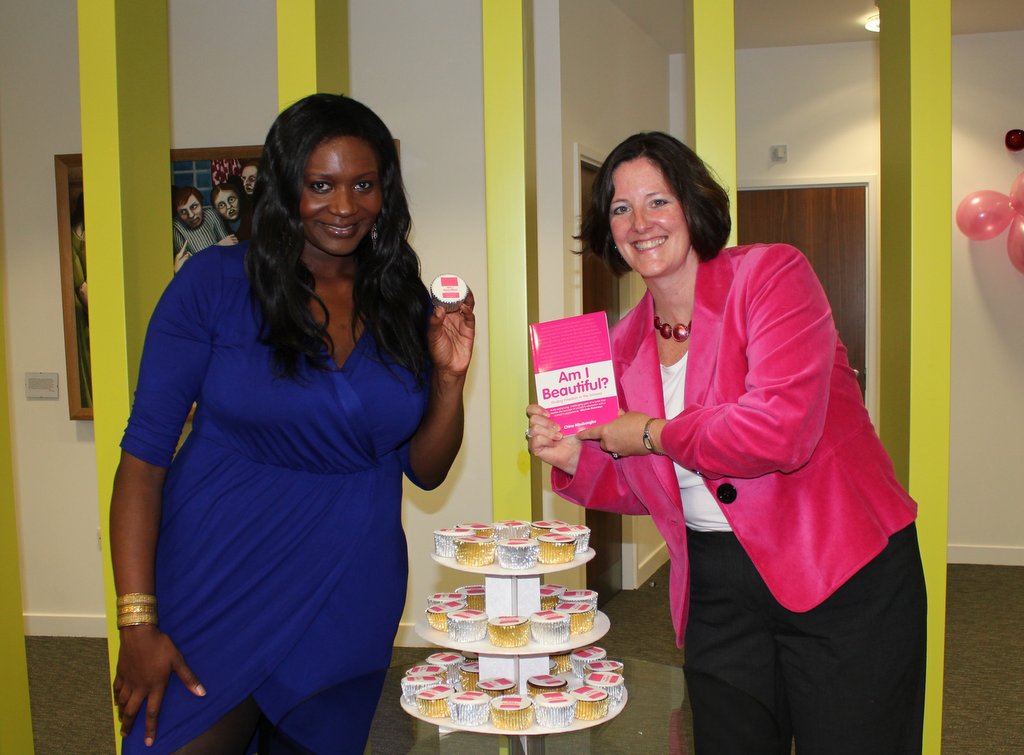
    We met in the ladies’ loo, an unplanned meeting that seemed appropriate, given the evening’s agenda. Author and editor stood under the harsh fluorescent lights, applying makeup and (in my case) moaning about having a bad-hair day. All the while appreciating the irony that we were worrying about our appearances while celebrating the launch of her new book on beauty, inside and out.

    AIB launch 007
    Author and editor. You can guess who is who!

    Chine Mbubaegbu has penned Am I Beautiful? from an achingly vulnerable place. She admitted last night, in our Q&A session, that her first draft originated from her journalist self. When Claire Musters and I, who edited her book (with Claire doing the lion’s share of the editing), received the first draft, we were… disappointed. Chine later admitted that she had hoped for a sort of Christian-Malcolm-Gladwell type of treatment on the subject of beauty – what is beauty, how Christian women deal with the world’s expectations and our own, and so on. But although her treatment was good, Claire and I wondered, where was the book’s heart beat? Where was the story lurking underneath the story?

    With some gentle (but painful) prodding, Chine reworked the book. Transformed it – in the hours between getting home from her day job before going out at night (ah to be in one’s 20s!). The result is a narrative that not only contains the voices of other women and theological reflections and social observation, but the gut-wrenching stories of a woman in her journey to come to terms with how her outside packaging, so to speak, affects her emotions, thoughts – and her soul.

    Last night, in echoes of the thought-provoking TED talk by Chimamanda Adichie, Chine told the story of her five-year-old self in primary school, drawing a self-portrait. She chose a yellow crayon for her hair and blue for her eyes. Only when one of her friends exclaimed, “That doesn’t look anything like you!” did she realize her folly. She, born in Nigeria, had black hair and brown eyes. The only girl with dark skin in her class, she felt an outcast. She didn’t realize her own beauty.

    Some of the crowd assembled to celebrate Chine's book.
    Some of the crowd assembled to celebrate Chine’s book.

    The evening was a smash, filled with bookstore people, friends and family of Chine, movers and shakers and bloggers and tweeters. I loved the Q&A session, and thought the last question was apposite, asked by a man: “I have one daughter and another who is going to be born any minute. How do I let them know that they are beautiful?”

    It’s a question I ask myself when raising my daughter. As Chine said, yes of course, tell them that they are beautiful, but praise them too for being clever and kind and for working hard and for being loving and… I know some people make it a practice not to tell little girls that they are cute – because so often that can be our only reaction. I wonder if as long as we praise them for a myriad of things, including that they are beautiful could act as a deposit against the tirade of society’s (and their peers’) assessment that they are found wanting. What do you think?

    I end with the final question I asked Chine during our Q&A: “How do you answer the question in the title of the book?”

  • Becoming ourselves – Agnes Sanford

    I love hearing about heroes of the faith, especially those who might be overlooked today. One is Agnes Sanford, a pioneer in the healing-prayer movement in the twentieth century. Before she died at the age of eighty-four in 1982, Newsweek magazine hailed her as one of six people who shaped religious thought in the twentieth century. But before God used her so powerfully, she had to work through a painful journey of self-discovery and acceptance.

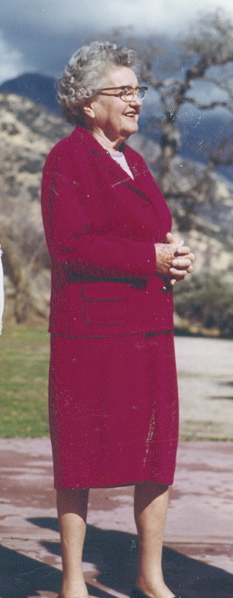
    Agnes Sanford photoAgnes grew up in China, the daughter of missionaries. Her struggle to release her true self came when she was living in the States, married to a pastor. Her husband Ted had been raised in a clergy household, and Agnes loved his parents, especially his mother. At first, Agnes modeled the role of minister’s wife on her mother-in-law, but doing so brought forth a crisis of identity:

    I had determined to make myself exactly like Ted’s mother, whom I adored. I would then be, I felt, the kind of wife that he liked. Therefore, I completely denied my original nature and devoted every moment to fruitless endeavor. And so I reached the depths because I was doing violence to my own soul. (Sealed Orders, p. 106).

    She thought she should be the perfect host and companion to Ted in his ministry. But in doing so, she was denying the deeply creative part of herself that wanted to give birth to new life, whether through writing, prayer, painting, or other artistic ventures. The false self was keeping her true self from thriving:

    My wounds were too deep to be healed so easily. And what were those wounds? If anyone had asked me at the time, I would have said, first of all, that the real part of me was simply not living, the creative one who longed, not only for children, but also for the children of the mind to be brought forth.

    The basic trouble was that I had forgotten whence I came, and I did not know the sealed orders with which I had been sent to this earth. I sensed my thwarted creativity. I wanted to be a writer, and I could not, for all of my time and thought and attention was upon being a wife and mother.

    … At this time I came very near to the deepest depths and could easily have drowned in them…. I could no longer see beauty. And when one can no longer see beauty, one can no longer see God. (pp. 101-102)

    After a long struggle, Agnes sought counsel with a neighboring minister, knowing she needed to find a way out of the strangling depression. He brought clarity where she had been covered by a suffocating cloud:

    “Don’t you see you have been trying to be a square peg in a round hole? To make yourself into something you are not?”

    … “But nobody will like me if I am myself!” I cried. “Not Ted nor his family nor the parish nor anybody!”

    “They won’t have you, unless you let yourself be yourself,” said Hollis. (p. 111)

    With this, Agnes began to throw off the cloak of the ill-fitting clothes. Ted’s mother may have been created to fulfill the role of the “perfect minister’s wife,” but that garment didn’t fit Agnes. She would only be the best wife for Ted – and his parish – when she was living out of her redeemed self, that creative person whom God had called her to be.

    God sent his healing, but he wanted her to be involved as well: “I find that God will heal us up to the point of our being able to think and to pray and to reason, and from then on, while He still helps us, we must nevertheless fight the battles of life ourselves. I was becoming a new person: the original person whom I was born to be. And this was the exact opposite of the person whom I had tried for some six years to make myself – a perfect minister’s wife.” (p. 118)

    As Agnes stepped into her new clothes, she became that person. A writer, a painter, a woman devoted to prayer for people and the earth. And the world will never be the same because she flung off her rags and put on her royal robe, tailored just for her.

    Do you have a new set of clothes just waiting for you to don?


  • Just say no

    url
    “Uncle John” in his study. I got to meet him there once, when we were talking about the third edition of “Issues Facing Christians Today” (when I worked at Zondervan).

    Two years ago the world-famous theologian, pastor, author, and visionary, John RW Stott, died on 27 July 2011. I remember joining nearly two thousand others in St Paul’s Cathedral at his memorial service: archbishops and bishops were there; former churchwardens and vicars galore; scholars and publishers and laypeople. But missing were his wife, children and grandchildren – for he never married. Rather throughout his life he focused on fulfilling his calling with a laser-like focus. He said no to becoming a bishop; he said no to marriage; he said no to many good and worthy projects – articles, books, organizations – that would have distracted him from what he believed God was calling him to do. (And such was his personal discipline that he also always said no to seconds on food. Hmm; I could learn from that one!)

    That morning before I went to the memorial service, I received an invitation to write a book for a respected American Christian publisher – a publisher with whom I would love to work. In an economic climate where publishing contracts can be like hidden treasure, I was thrilled to be considered. The project would be fun but the deadline a killer – just eight weeks hence. I dreamed and thought and pondered and prayed. But sitting in St Paul’s Cathedral, taking in the throngs of people changed through the witness of one man’s commitment and focus, I realized that I had to Just Say No. I was torn, for in saying yes I would finally be a published author. But what would be the cost?

    A frazzled life in the coming days and weeks. A husband and children wondering where their wife and mother disappeared. Less sleep. Less prayer. Less fun with girlfriends. Less exercise and more eating of the wrong things.

    YRPJsr
    Created by Nicki, www.keepcalmstudio.com.

    The hidden but bigger cost, however, would come from not doing what I know I need to tackle. Namely finishing of the draft of my book – the memoir of how I looked for love and acceptance in men, and finally found my identity in God. Of how I’ve learned to turn off the talk fuelled by self-hatred and to listen instead to the One who created me and loves me.

    What’s your calling? Who has God made you to be? Perhaps you’ve already sussed what drains or energizes you. If not, or if you get muddled and sometimes say yes to things you shouldn’t – as I do – join me in slowing down and listening to God’s whisper. Saying no might mean that later, for something better, you can Just Say Yes.

    Is God asking you to say no – or yes? Is he inviting you to a new adventure that he’d love for you to embark on with him? Does he want you just to slow down? What are you sensing?