Category: 7 Ways to Pray Blog Series

  • ‘Rummaging For God’ by Penelope Swithinbank: 7 Ways to Pray blog series

    How can we look back with God in order to move forwards? Penelope Swithinbank shares from her years of spiritual direction how she helped someone recalibrate her decision-making process as she discerned her movements towards and away from God through the prayer of examen. I love the hands-on nature of Penelope’s exploration of this prayer practice, which can enrich our lives.
    Laura twisted her fingers and heaved a deep sigh.

    ‘I really don’t know what to do,’ she said. ‘I think my job’s about to be made redundant; my parents aren’t well and maybe I should move closer to them, but I love my job, my church and my home here. How do I know what God’s plans are for me? What if I step out of His plans?’

    As her spiritual director/counsellor, I felt God nudging me to give Laura a challenge. I suggested to her that for the next month, four whole weeks, she should ask herself two questions last thing at night.

    First, a question of consolation. ‘What am I thankful for today?’ ‘Where have I known true joy today?’ Or, ‘Where did I see God at work?’  

    And then a question of desolation. ‘Where did I fail God today?’ ‘Where was I not at peace today?’  ‘When or where was I not content, not filled with God’s Spirit?’

    I suggested Laura jot down her answers to the questions, just briefly, so that in a month’s time she’d notice any patterns, anything important, anything that the Lord wanted to point out or suggest to her.

    These two questions are the basis of the ‘Examen of Conscience,’ a centuries-old way of praying that helps us detect God’s Presence in our lives and discern where He is leading and guiding us. It was used by Ignatius of Loyola, (16th C) who recommended praying it daily – and then twice a day, so that people keep short accounts with God.

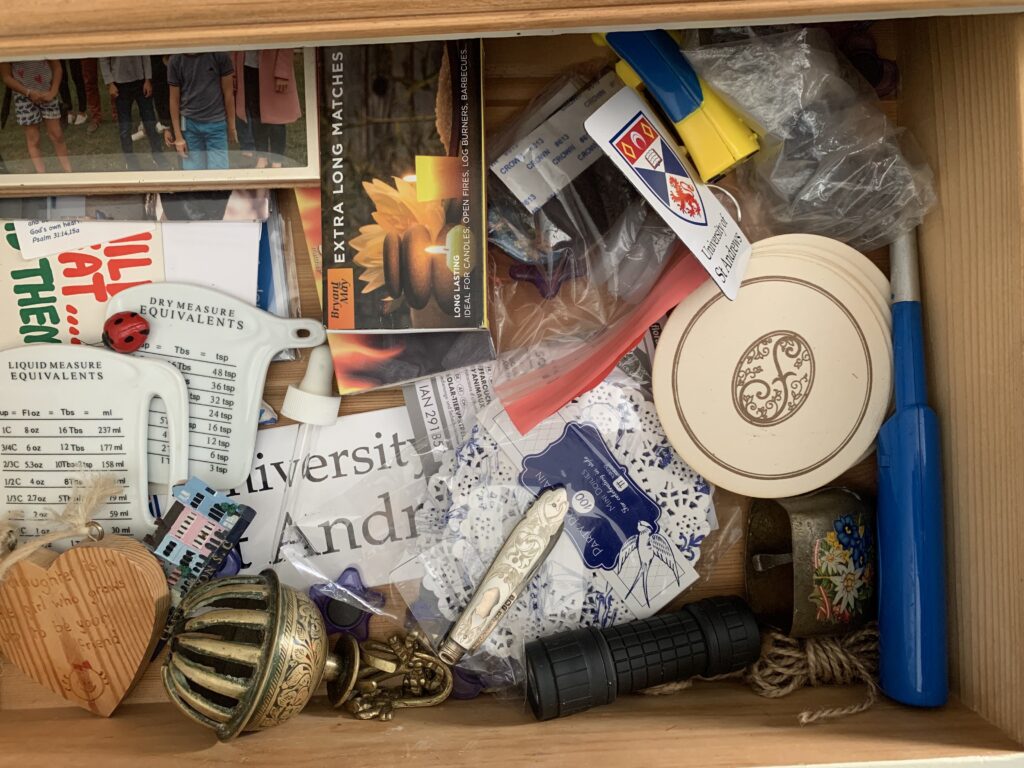
    Dennis Hamm describes it as ‘rummaging for God’ and says it’s like ‘going through a drawer full of stuff, feeling around, looking for something that you are sure must be there.

    It’s a rummaging back through the day, knowing that God was there, and we want to discover and be reminded of just where and how He was with us. A prayerfully going backwards through your day, with God’s help, to discern what’s most important – the things of God.

    We want to hear His voice today, not close our ears, (i) and the Examen is one way to help us to do that. While the traditional name is The Examen of Conscience, which sounds as though you’re just looking for moral failures, the word ‘conscience’ probably had a deeper meaning of ‘consciousness,’ of being alive and acknowledging it mindfully. And of being grateful for the many gifts and blessings of the past twenty-four hours. Who doesn’t like getting gifts – but how often do we give thanks for God’s gifts each day?

    Laura agreed to the challenge – and was very excited to try it. She even bought a lovely new journal for her daily Examen night prayer. Not everyone writes down what happens during the Examen, but I wanted Laura specifically to look for patterns and rhythms as she talked with God. I suggested that she begin each time by inviting the Lord to come and be with her and speak to her; then to ask herself the two questions and talk with Him about her answers, and finally to invite the Lord into what might lie ahead for the following twenty-four hours. (ii)

    A month later, a peaceful Laura reported back. Her earlier worried questions had receded, because she had discovered something far more important than the specific whats and wheres and hows.

    ‘God’s plan is for me to be more like Christ in my everyday life,’ she explained. ‘Where I live or what job I do is secondary. Important but secondary. And going to sleep having rummaged around and put it all to rest, and then invited God into the following day, has not only led to extraordinary peace but a much better night’s sleep!  I’m going to be making some important decisions in the next few weeks but now they’re based on a relationship with God and not on my fears and worries. And that’s made a huge difference to my everyday life.’

    (i) Come and kneel before this Creator-God,
    come and bow before the mighty God, our majestic maker!
    For we are those he cares for, and he is the God we worship.
    So drop everything else and listen to his voice!
    For this is what he’s saying:
    “Today, when I speak,
    don’t even think about turning a deaf ear to me”
    (Ps 95: 6-9, TPT)

    (ii) The five steps of the traditional Examen.

    Penelope Swithinbank is an experienced pilgrimage/retreat leader, conference speaker and Spiritual Counsellor. She has had an international ministry, including churches in America and the UK, and her most special memory is of opening the US Senate in prayer and being guest chaplain for a day. Penelope is an avid walker and spends a lot of her time stomping in the hills and valleys near her home outside Bath. 

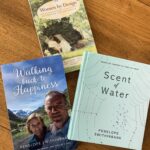
    She is the author of three books, Women by Design and Walking Back to Happiness; her third, Scent of Water, a devotional for times of spiritual bewilderment and grief, has just been published. She is a wife, mother and grandmother and says of the 6 grandchildren that they are so wonderful she should have had them first. www.penelopeswithinbank.com

    Order 7 Ways to Pray here, including in the US, UK, and Australia. The seventh way to pray is the examen, so you can explore this life-giving prayer practice further. You’ll also find lots of resources for small groups – videos and a leader’s guide – here.
  • “Wonder, Walking and Worship” by Fleur Tucker: 7 Ways to Pray blog series

    I really appreciate my new friend Fleur’s thoughts on wonder walking. I’ve never been to her amazing part of the world, and yes, I had to ask her what wattle is, but I too over the pandemic especially appreciated praying outside while noticing God’s amazing beauty. Could you get outside this weekend to do some wonder walking?

    In July 2020 I “stumbled” onto Wonder Walking. I was interstate in hotel quarantine for fourteen days. My Dad was dying in the local country hospital, but I wasn’t allowed to see him due to the COVID 19 restrictions on interstate travellers. Not being one for formal prayers, and coming as it did when I was only allowed 1 hour outdoor exercise daily, Wonder Walking was a literal God-send.

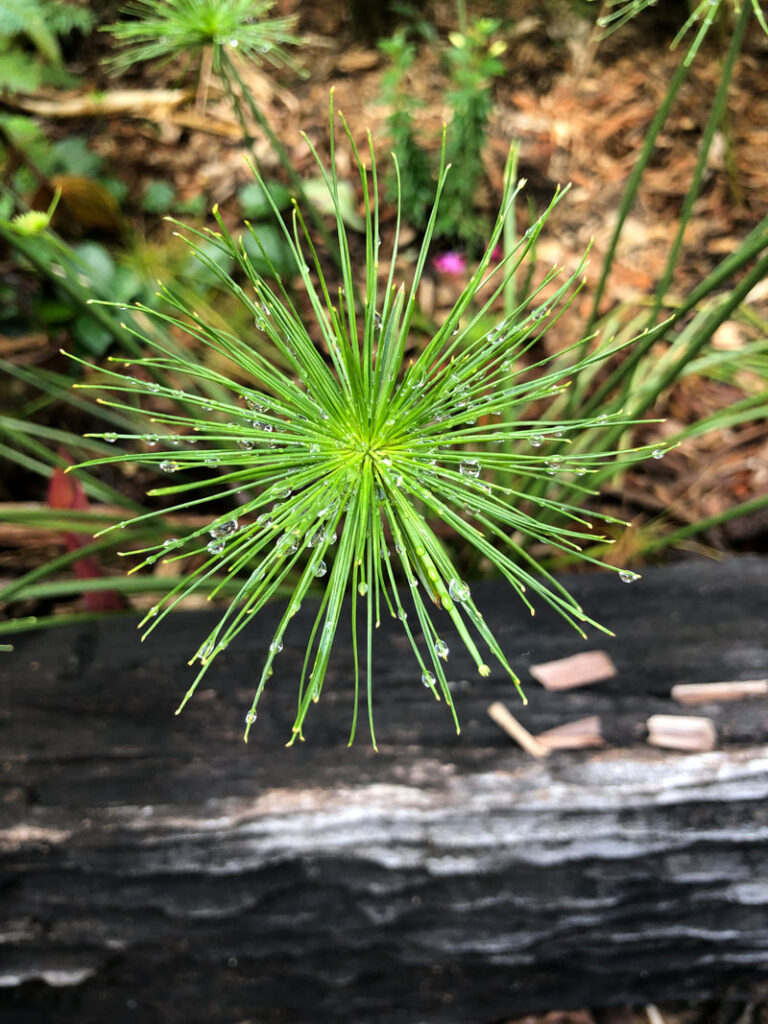
    The hotel where I was isolating was near a walking track that followed the old trainline into the town. Winding through vineyards and alongside open fields, the path was lined with spring blossom trees, wattle and olives. Animals grazed nearby and looked up as I passed. It was often quite cold, but I found great comfort in these walks as they allowed me to reflect on my grief, to pray for my Dad and to pour out my heart along with my tears to God. Sometimes I saw something really lovely like an unexpected vista as I rounded a corner or a love heart that a previous walker had made out of pebbles next to the track. When that happened, I stopped and took a photo on my phone. This made me really focus on the thing that had captured my imagination and created a greater sense of awe.

    Wonder Walking is sometimes called Awe Walking.(1) It is the practice of walking slowly through nature while noticing our surroundings. This deep engagement with nature has been shown to improve mental health, increase gratitude and mindfulness.(2) I would add that it also increases our awareness of God, the creator of our natural surroundings and leads quite naturally into worship and prayer. The hymn How Great Thou Art (3) draws a clear line between these things in the lyrics, “O Lord, my God, when I in awesome wonder consider all the worlds thy hands have made….Then sings my soul, my Saviour, God to Thee. How great thou art.”

    You can Wonder Walk anywhere. Your location does not matter – even people living in the inner city can find wonder in street trees, plants pushing through the pavement and sleepy cats cuddled up on apartment block windowsills. You might have to look a bit more closely, but sources of wonder are everywhere. When we take the time to notice the small details of leaves or are impressed with the majesty of tall trees, we tend to feel relatively insignificant. This “small self” (4) gives us a new perspective. It puts God in a place of pre-eminence and lifts our spirits.

    I found Wonder Walking so beneficial that I’ve continued the practice. It helps me to pray. Walking along while immersed in nature, my mind wanders towards matters of the heart. The things that I’m concerned about just bubble to the top. I can then easily lay them out before God, for His attention.

    Like art, nature has the ability to capture us in a way that restores our soul. Psalm 23 places David outside in nature, by a stream with open green pastures and he finds to restorative. Nature accesses parts of us that are less cerebral and more spiritual. In my experience, Wonder Walking improved my prayer life as it strengthened my connection to God so that I could more easily lean into Him. I come home having benefitted from fresh air, exercise and renewed appreciation for the provision of God.

    If you are looking for ways to reinvigorate your prayer life, I encourage you to consider Wonder Walking. Even if you don’t try it until you are away on holidays, you might start something that enriches your spiritual life so much, that you continue the practice when you return home.

    Footnotes

    1. https://ggia.berkeley.edu/practice/awe_walk
    2. https://bigthink.com/neuropsych/awe-walk/
    3. The lyrics to How Great Thou Art were written by Carl Boberg in 1886 after he was caught outdoors in a flash thunderstorm, then saw a rainbow when it ended. When he got home he opened his window, heard church bells ringing and put pen to paper in response to his experience, giving us this beloved hymn. https://www.staugustine.com/living/religion/2016-06-24/story-behind-song-how-great-thou-art
    4. https://www.ucsf.edu/news/2020/09/418551/awe-walks-boost-emotional-well-being

    Fleur lives in the very beautiful Northern Rivers region of Australia.  She authored the book Great Questions: a resource for carers in response to the need for local churches to train members in pastoral care.  Fleur is currently training to be a Counsellor.  She loves mentoring women, speaking at events and her new spiritual practice – Wonder Walking. [All photos courtesy of Fleur.]

    Order 7 Ways to Pray here, including in the US, UK, and Australia. You’ll find lots of resources for small groups – videos and a leader’s guide – here.
  • “Honest Prayer” by Peter Thomas: 7 Ways to Pray blog series

    What is true prayer? What should we pray about – and what should we not? Peter Thomas poses some questions worth considering. And yes, some of what he says is provocative! What do you think?

    “I gave up praying when my goldfish died.”

    Those words of a girl in our youth group are probably the most honest thing I have ever heard anybody say about prayer. My friend’s pet fish was ailing and she prayed that it would recover. The goldfish died so she lost her confidence in prayer and, for a time, abandoned her faith in God.

    What I am pleading for is reality and honesty in our praying.

    There is a world of difference between “saying our prayers” and true Christian prayer. Our “praying” is meaningless if we only say to God the kinds of things we think He wants to hear: good religious requests for suitably worthy causes. Sometimes we can find ourselves asking God for all kinds of things we don’t actually care about at all. We can pray for blessings for people we don’t know, just because these seem like pious topics for prayer. There are simply no examples of that kind of prayer in the Bible. Prayers in the Bible, not least the Prayers of Lament we find in the Psalms, are completely honest.

    Jesus makes this amazing promise:

    If you remain in me and my words remain in you, ask whatever you wish, and it will be given you. (John 15:7)

    God will give to disciples of Jesus “whatever you wish for”: whatever you really want. But these have to be things we actually care about. Not just passing whims but things we long for with a passion.

    Suppose one of my children came to me one day saying, “We saw a programme about children in Africa, there was this little girl who looked so hungry – I don’t know what her name was – she was only on for 10 seconds – but can we make sure she gets enough to eat and is never hungry again?” Suppose instead she came day after day saying, “There’s this little girl in my class and I’m so sad because she always seems hungry and never has new clothes and says she doesn’t have any toys – can we help her please Daddy, please?” You know which request I would answer.

    We can make the mistake of believing that it would be selfish to ask for things for ourselves, or for our family, or for our friends, or for our neighbours, or for our church. Some Christians seem to think that it is more spiritual to ask God for things on behalf of people who are half a world away, than it is to pray for ourselves and our nearest and dearest. That misunderstands prayer. Unless we really care about helping strangers in remote lands, unless we are passionate enough to send off a cheque, or unless we have friends working in those troubled areas, it is not deeply spiritual to say prayers about such people and places. Unless we really care about the requests we make, we aren’t really praying at all.

    When you are asking God for something, try this test. You could even call it ‘the Goldfish Test’. Suppose God does not grant your request. Would you feel really sad, really disappointed, maybe a bit angry? Would you feel let down if God did not answer your prayers? If you would not, if life would go on just as before, if your relationship with God wasn’t affected in the slightest if God didn’t answer this particular prayer, then you aren’t really praying at all – you’re just saying prayers. As Thomas Brooks once said,

    “Cold prayers always freeze before they reach heaven”.

    These lines from a hymn by S.S. Wesley make the point:

    “Let prayer be prayer, and praise be heartfelt praise; From unreality, O set us free”.

    We need to be completely honest with God about what we really want. True prayer is making requests where it will be very clear to everybody what answers God has given. Not beating about the bush. Not covering our bets. But specific requests for things we care about. We need to get real with God!

    Rev Peter Thomas is minister of North Springfield Baptist Church in Chelmsford, UK. He has been a minister for 35 years and serves as the Treasurer of The College of Baptist Ministers and as a trustee/director of the Eastern Baptist Association. He writes three blogs and various websites, and has published books on discipleship and on evangelism, all found at www.pbthomas.com 

    Order 7 Ways to Pray here, including in the US, UK, and Australia. You’ll find lots of resources for small groups – videos and a leader’s guide – here.
  • “You read the Bible where?” by Dave Faulkner: 7 Ways to Pray blog series

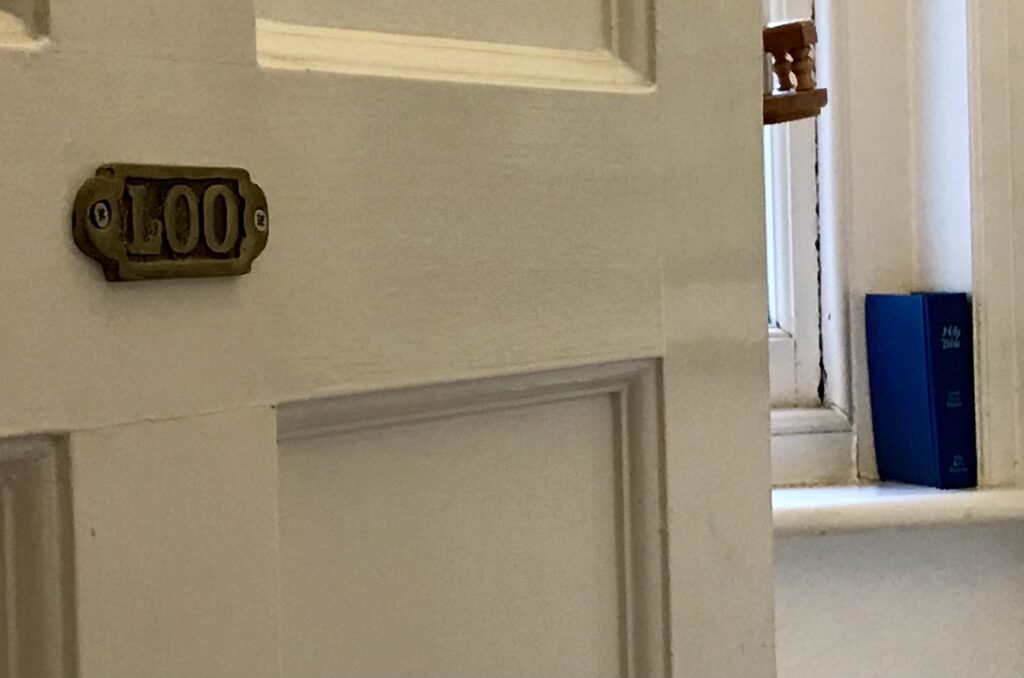
    Where should we pray? And when? How can we keep our relationship with God fresh? Join Dave Faulkner for some thought-provoking ideas about where to read the Bible (and the photo is the downstairs loo in the vicarage so he’s not alone!).

    “Well, I’ve never seen a Bible in the bathroom before.”

    So said my colleague Jackie, returning from a comfort break during a staff meeting at our manse.

    “Books yes, magazines yes, but a Bible? How holy are you?” she continued.

    Would that I were. The explanation is more prosaic.

    When our children were small, the only place I could grab peace and quiet for my daily Bible reading and prayer was when I visited that small room. Not only was a Bible there, so were my daily Bible reading notes from Scripture Union and my collection of prayer letters and prayer diaries from friends and Christian organisations. Those small children were now teenagers, but I still filed the Bible in that room.

    I must admit that after Jackie’s observation I moved it to my study.

    But it highlighted a prayer routine that had become stagnant, and I knew it. Read the assigned Bible passage, try to consider my own reactions, then read the notes. After that, go through the prayer requests.

    This practice had its virtues. Prayer diaries from Tearfund, Christian Solidarity Worldwide and others alerted me to worldwide needs I would otherwise have missed. Some of them have made it into church intercessions on Sundays as well.

    But for someone in the evangelical tradition, which loudly proclaims that Christianity is a relationship, not a ritual, it felt awfully like the latter.

    So what has modelled a more relational approach to prayer for me? There lies the irony: I have found that practices which originated in more liturgical spiritualities such as Catholicism to be doorways into a more conversational approach to God. Even a loose approach to Lectio Divina helps me talk with God about what he is saying through the Scriptures. The Examen can do something similar as I reflect on my day.

    For several years, the best introduction I have known to these prayer disciplines has been Ruth Haley Barton’s book and DVD Sacred Rhythms. When I was asked at a church meeting to provide teaching on prayer, that was the course I laid on. Sadly, the person who requested the teaching never attended the course: isn’t that always the way?

    But now I can put Amy’s book 7 Ways To Pray alongside Ruth Haley Barton. What I love about the book is that Amy gives a brief, simple introduction to the different prayer habits, and that’s enough to get you going. If you want more details, you can find other books. This gives her the space in each chapter for the worked examples of a particular prayer model in action. Amy puts flesh on the bones, and the form becomes more visible in the mind of the reader.

    None of this magically makes prayer simple. I still need to wrestle myself away from the screen, keyboard, and mouse that dominate my workspace. The Covid lockdown has made it even harder with a wife working from home and children studying at home, so the quiet spaces are more elusive. Maybe that’s good. My wife and I have to be very intentional to spend time together. Perhaps it isn’t surprising that it should be the same if I am to have a conversation with God.

    Although if push comes to shove, there is one small room I could utilise …

    Dave Faulkner is a Methodist minister and amateur photographer. He is married to Debbie and they have three children – a teenage girl, a teenage boy, and a cocker spaniel. Visit him at bigcircumstance.com or flickr.com/photos/davefaulkner

    I’m in good company, Dave; I have such a high regard for Ruth Haley Barton!

    Order 7 Ways to Pray here, including in the US, UK, and Australia. You’ll find lots of resources for small groups – videos and a leader’s guide – here.
  • Ambitious Prayer by Sam Richardson: 7 Ways to Pray blog series

    I’m thrilled to welcome Sam Richardson to the blog series this week. As the CEO of one of the key Christian publishers in the UK, he shares from a unique position. Make sure you read to the end.

    When I was interviewed for my job heading up the Christian publisher SPCK, one of the questions they posed was, “What should an SPCK book look like?”

    An answer popped into my head, even though I’m not a very visual person. It must have been a good answer because I got the job – and we still use the rule seven years later. I said, “It doesn’t have people with white teeth on the cover.”

    This was a shorthand way of saying that in the SPCK imprint we embrace generous orthodoxy, but there’s a line we don’t cross. In a particular type of Christian book, often but by no means always from America, the focus lies very much on worldly success, with the author appearing on the cover with their wealth and attractiveness shining out through their white teeth.

    For several years I lived in a fug of rather pharisaic self-satisfaction that, unlike the ‘blessed’ followers of the prosperity gospel whose books we won’t publish, I don’t just see Jesus as a shortcut to my own ambitions.

    Then someone asked me what I had been praying for recently.

    And my answer seemed suspiciously close to my list of personal ambitions at that moment in time: that we’d win some awards we were up for at work; that I’d be able to do a great training block for a marathon I had coming up; that my son would do well at school.

    While my goals may not have been as financial as the people with the white teeth, my prayer life still looked rather like I saw Jesus as a shortcut to my own ambitions.

    I’m reminded of how I used to play in a Christian football team and how we prayed as a team before every match. Certain people, including me, would find ways to pray that we would win – without explicitly praying that we would win. Things like “We pray that we will fulfil the potential you’ve given us today” or “We pray that you would send us home satisfied from this game”.

    Of course there’s nothing wrong with praying for ourselves if we align our hopes with God’s will (and of course he doesn’t care which football team wins). And there’s nothing wrong with being ambitious if our ambitions are aligned with God’s. But how can we move closer to finding that alignment?

    Amy Boucher Pye’s great new book 7 Ways To Pray has as its central chapter (which I suspect is no coincidence) a brilliant chapter on Hearing God. It covers both how we can be deliberate in creating opportunities for God to speak to us, and how we can be “more open to his nudges throughout the day.”

    How do I do this in my own prayer life? Here’s where I must make a confession. In fact a triple confession. Firstly, that I left these confessions to the end so that you wouldn’t give up on my blog about prayer. Secondly, that when I agreed to write this blog for Amy a few months ago, my prayer life was at a low ebb but I thought it would be fine by the time the deadline actually came around. And thirdly, that it isn’t fine yet.

    But having read 7 Ways to Pray I now have a rekindled ambition that I know is aligned with God’s will: to improve my prayer life. And I have a tool that I know will help: 7 Ways To Pray.

    I hope Amy may invite me back in a few months so I can tell you how I’m getting on.

    Sam Richardson is Chief Executive of SPCK, the Christian mission agency working through publishing. He studied Social and Political Sciences at Cambridge and then pursued a career in publishing at HarperCollins and Hodder & Stoughton. Sam is married to Sarah and they have three boys, two cats and a golden retriever. In his spare time he coaches and plays football and he may or may not be retired from running quite fast marathons.

    Yes, of course I will invite Sam back! Order 7 Ways to Pray here, including in the US, UK, and Australia. You’ll find lots of resources for small groups – videos and a leader’s guide – here.

  • The Problem of Productivity by Elizabeth Neep: 7 Ways to Pray blog series

    As we explore different ways to pray, we realize that sometimes the best practice is simply stopping and resting – or taking time to create, as we hear from my lovely editor, Elizabeth Neep. (And don’t miss last week’s funny and thoughtful contribution from my US editor, Dave Zimmerman.)

    One of Elizabeth’s creations.

    For most people, the global pandemic is synonymous with slowing down. Seemingly overnight, commutes were halted, city streets abandoned, projects and parties postponed. And yet, for me, things were only just getting started.

    After a season of waiting (one that looks shorter and shorter the further away I am from it), I entered this now iconic year with a new job, the opportunity to develop a brand-new imprint for SPCK and seven book deals to honour in my spare time. I don’t say this to show off (if the runaway success of John Mark Comer’s The Ruthless Elimination of Hurry is anything to go by, the glorification of busyness is no longer in vogue anyway!) but to say that, from the outside looking in, I was having my most productive year yet. And I was – professionally.

    The truth is, as ‘productive’ as I like to consider myself, we all have the same twenty-four hours in the day. And, for every moment I have spent advancing in my career, I have not spent my time doing other things: I see necessary life admin as an annoyance and my long-suffering boyfriend has had to be content with the scraps of my time. And the reason? I too often see ‘productivity’ as a linear line graph, a steady climb, countless things I can tick off the to-do list, neat and defined. Thankfully, God doesn’t see things the same way as me.

    I can’t tell you how many times I have come to God with my neatly structured agenda of the things I want to thank him for and say sorry for before swiftly moving on to my requests. I can’t tell you how many times I have asked for specific answers, for guidance, to then get nothing apart from a nebulous ‘just rest’ or ‘just be with me’ or (perhaps most frustratingly of all) ‘why don’t you go and paint?’. But why would I go and paint when I have a thousand jobs people are chasing me for? I don’t need to paint a picture or even know what to paint. And where on earth would I hang it? Time again God reminds me it’s not about the outcome. 

    Where my (perceived) productivity looks like an ascending line graph, God’s productivity looks like a deepening, the gentle sanding of a stone until it is shiny and smooth, a ‘task’ that is never ticked off the to-do list but is even more productive for the fact it’s never ‘done’. It’s the kind of productivity that sees us cultivate deep and long-lasting relationships, not by checking in once every month because we have to but laughing with each other late into the night because we want to. It’s the kind of productivity that brings us back to the pages of the Bible, the one book we can never finish because even though we’ve read the words before, we are invited to enjoy the same lines a million different ways. It’s the kind of productivity that scribbles over my agenda and asks me to paint, precisely because it’s not for anyone, and though I might not even know what I’m painting, God knows that somewhere along the way, I will stop thinking about the end product and just enjoy playing and resting with him.

    Which paradoxically, I am learning (again and again and again…) is the most productive thing we can ever hope to (not) achieve.

    Elizabeth Neep is a Senior Commissioning Editor at SPCK, where she heads up their Form imprint. She is also a novelist writing under her name and Lizzie O’Hagan, a trustee for Kintsugi Hope and can usually be found drinking flat whites around Central London. 

    Find out more about 7 Ways to Pray here, including how to pre-order in the US, UK, and Australia. Publication date is Tuesday!

  • A mountaintop experience by Dave Zimmerman: 7 Ways to Pray blog series

    Welcome to a new series on prayer! As I launch my book 7 Ways to Pray, I’m delighted to share with you each week a blogpost from someone special. One of the things I love about prayer is that we’re all so different and thus enjoy different ways to pray. Shining the spotlight on the experiences of others will be a rich and encouraging experience, as you’ll see from this first post.

    Who better to kick off the series than my editors? I have a huge respect for this breed of individual – having been one previously, I know how fragile the author ego can be, for instance. They bring an added extra to book projects, and the fingerprints of Dave Zimmerman, my US editor, and Elizabeth Neep, my UK one, are all over this project in fantastic ways. Today we hear from Dave – I challenge you not to chuckle (and then ponder deeply) – and next week we’ll hear from Elizabeth. Enjoy!

    Not every editor gets to work for a Big Five publisher (or Big Four these days, as some entities are too big to fail but not too big to be absorbed into something bigger). Not all of us can take the company jet to an author lunch, and order the jumbo shrimp instead of the shrimpy shrimp, and then fly back to the Big Apple to ring the bell at an IPO or accompany their author to a taping of The View. No, some of us do our editing in relative quietude, at the desks of nonprofits, serving as the metaphorical sous-chefs to our authors as they bake the metaphorical bread of their books for us to cast onto the metaphorical waters of the book selling marketplace, with hopes of many happy returns (and very few sad ones).

    Some of us on that end of the editorial spectrum, it should be said, occasionally do get to spend time in a castle. I can’t speak for my colleague Elizabeth Neep, Amy’s British editor for 7 Ways to Pray (although being in England she’s statistically more likely than I to drive past a castle on her commute). But drive past a castle on my commute I do, because tucked away on the front range of the Rocky Mountains of southern Colorado is the Glen Eyrie Castle and Conference Center, which, like NavPress, is a ministry of The Navigators. And every September that castle is opened to myself and my colleagues at The Navigators HQ for a day of prayer. 

    Dave and a colleague at the Glen Eyrie Castle and Conference Center. Photo by Kara Zimmerman.

    We pray for the various ministries of The Navigators. We pray for unity among our diverse and distributed staff. We pray for the needs of our world and our nation and for the resiliency of our shared mission. And we end our day by dispersing into extended periods of time alone with God.

    On one such day of prayer I decided I would take a hike as high into the hills as my little legs and delicate deck shoes would take me. I found a trail and kept on going, chatting with God as I went. The higher I went the thinner the air got, and the sparser the foliage. Eventually the trail leveled off relatively high against the tree line, and I decided to sit a bit and journal. 

    I am not a natural pray-er. Amy’s book has been very good for me in that way. I need prompts and practices to latch onto, because otherwise my mind wanders and my prayers turn to mutters. 

    On occasions like this day of prayer, however, I’m a little better able to focus. Prayer is the point of the day, and our program has primed my pump. I have lots of thoughts, but those thoughts are mostly turned toward God, thanks to the careful curation of my colleagues.

    Photo credit: Kara Zimmerman

    So there I found myself, at the top of a trail, pump primed, a journal in one hand and a pen in the other. I offered a moment of consecration and commenced to drafting a dialogue with God. It was pretty impressive if I do say so myself: earthy but elegant, pious but authentic. I was in some kind of zone.

    Then I got restless, so I started walking again, taking joy in the day. I had a thought and I decided to share it with God as I walked. “You know what would make this time of prayer perfect?” I offered. “I would love to see some wildlife.”

    It’s worth noting here that seeing wildlife on the grounds of the Glen Eyrie Castle and Conference Center is not at all uncommon. We are, after all, up against the Rockies, surrounded by mule deer and bobcats and bears and bighorn sheep. This was not, in my pious mind, an extravagant request.

    Out of the corner of my eye I caught a glimpse of movement. I turned my head and found myself face to face with a dragonfly.

    I turned to my left and saw a squirrel. I turned to my right and saw a bird.

    I turned my attention back to God. “That’s not what I meant.”

    “I know,” I believe God said to me in that moment. “I don’t care.” 

    It can seem like a faith crisis to hear the voice of God tell you he doesn’t care about what you want. I don’t know about you, but I have been steeped for some time in popular theologies that suggest God is actually preoccupied with what we want. The ways that we so often pray reflect that assumption: We list our requests or register our complaints or otherwise offer God a guided tour through our drama.

    That’s one reason why books on prayer abound, why books like Amy’s are so important. As natural and primal as talking to God is, what constitutes a meaningful conversation with God can easily get all jumbled up in our heads. We need guidance. We need a mix of confidence and humility. We need to think about what prayer is. And we need to get over ourselves a little. 

    On that day of prayer I had gotten a bit lofty. I needed to return to earth. In his grace, God gave me a lift.

    When I heard God say he didn’t care about my request, I pictured him smiling as he said it. I don’t have a mental image of what God looks like, for the record, any more than I heard an audible voice deliver me that message. But God made himself manifest to me in that lofty space, during that consecrated time, and I believe he conveyed clearly to me that (1) he was for me and (2) I could maybe take things down a notch. 

    I envisioned myself sharing a chuckle with God, remembering that I am made of the dust of the earth, like the grass that inevitably withers—but also remembering that it was God himself who breathed life into me, and that he made me, and you, a little lower than the angels, in his own image and likeness. 

    I ended my day of prayer shortly after I shared that laugh with the God of the universe. I walked back down the hill to the parking lot of the Glen Eyrie Castle and Conference Center, hopped in my car, and drove home. And I have remembered that divine encounter ever since.

    David Zimmerman is Publisher of NavPress, the publishing arm of The Navigators. He started his editorial career at InterVarsity Press. His Twitter bio says that he’s a “Middle aged middle child in middle management. I work as a publisher of Christian nonfiction. I’m interested in books, music, work, and everyday life.” Find him at Twitter.

    Find out more about 7 Ways to Pray here, including how to pre-order in the US, UK, and Australia.