Join me in practicing the presence of God on the beautiful shores of the island of Iona, in the inner Hebrides in Scotland. God loves when we welcome his presence in our lives – he’s always there with us!
In the video I share this gorgeous Celtic prayer, as collected in the Carmina Gadelica:
Come I this day to the Father, Come I this day to the Son, Come I this day to the Holy Spirit powerful: I come this day with God, I come this day with Christ, I come this day with the Spirit of kindly balm.
God, and Spirit, and Jesus, From the crown of my head To the soles of my feet; Come I with my reputation, Come I with my testimony, Come I to Thee, Jesu – Jesu, shelter me.
I’ve often heard the longest journey being described as that between head and heart. That was certainly true in my life. I think you will find encouragement in reading Edward‘s account of reaching a low point in his life, and God changing him through prayer and contemplation.
About 12 years ago my life went pear-shaped. Over a period of four years, I found myself divorced, unemployed and diagnosed with cancer. I was devastated. My Bible study group leader told me that I was a broken man. Throughout this time I did not lose my faith and still went to church and attended Bible studies. But he was right, in my late 50’s, I was a broken man.
I became a Christian in my teens. I had studied theology at college and had a good knowledge of the Bible. I had always been in good health and had had a good deal of success in my career. I was happily married, lived in a desirable part of the country, and had two lovely sons. I had a comfortable life. But like Job, I suddenly found myself in pain and suffering.
Eventually, I started a moderately successful business and following treatment, my cancer went into remission. As the months went by, I thought about why I had become a broken man. Of course there was all the bad stuff I had experienced, but slowly I realised that my faith was all in my head and not in my heart. I had spent my life reading the Bible, going to Bible studies, and talking to Christian friends but I had never really given much time to talking and listening to Jesus in silence, prayer and contemplation. I reflected on Jesus knocking on the door of my heart and realised that I had never stopped and listened to what he was saying to me, other than what he was saying to everyone else. I knew the Bible but I did not know.
At this time I joined an online Christian dating site and saw someone who would later become my wife. It started when I saw her photograph and read her profile. I liked what I saw. At that point we were only able to know facts about each other such as, our age range, our jobs, and the colour of our hair. We got to know about each other. What we knew was only in our heads, not in our hearts. As we started to write to each other and later we met each other, we got to know each other much better. It was by meeting each other that we began to develop a much deeper relationship than merely reading her dating profile could offer.
I believe my experience of getting to know my wife is much like getting to know Jesus. Being with Jesus in contemplation and silence, listening and talking to Jesus by reading and praying over the Bible, and going to special places to enjoy God’s presence are key ways to develop our relationship with God.
I recently spent time contemplating and praying about Mary visiting Elizabeth and John the Baptist leaping with joy in his mother’s womb when Mary visited. In contemplation, I thought about what it was like for me to be in my mother’s womb. I am sure my mother felt joy but I also think she would have been afraid. My mother was an anxious person. As I grew up my mother slowly developed mental-health issues and had a number of in-patient psychiatric admissions. I found these times difficult and often did not treat her as I should have done. I was angry at my mother and some of things she had done to me. I did not realise at the time, that it was because of her poor mental health. Even in my late sixties I still felt a tremendous amount of guilt. But by becoming still, imagining myself in my mother’s womb, listening and praying to God I started to sense a forgiveness towards my mother and a feeling that I was free from guilt. God has not finished with me yet.
Edward Hartley is a retired nurse and lives in Scotland. With his wife, he attends a lively evangelical episcopal church. He enjoys exploring Scotland and spends much time dog walking. He is interested in Ignatian spirituality and receives spiritual direction.
Order 7 Ways to Pray here for more ways to encounter God.Sign up for Amy’s monthly newsletter, including a prayer practice.
I’ve got such a treat for you with Alison’s wonderful ponderings about prayer and life and shifting an outlook through a simple practice. I’ve written about the way of praying that is the examen, but Alison’s pared-down approach is one that I could incorporate into my life. Her vivid descriptions will capture your imagination; enjoy!
Sitting down to pray has always been a struggle for me, the world full of so many distractions, but what I longed for was a deepening faith, to be able to be still with God and increase my ability to love one another, (especially the ones I don’t even like!). I knew it was only prayer that could help me, so I spent many years searching out a way for me to pray that might open and grow my heart.
For me prayer has become my opportunity to actively participate in the universe by communicating with God. I notice something and as a continual action pass it over to God, whom I trust will bear witness and hold whatever it is I’ve past on in prayer. Perhaps I’ve noticed that the sky looks unbelievably beautiful this morning and how it gives the perfect backdrop for the starlings with their synchronised swooping and diving of the autumnal murmuration. Or I notice a lady in a green scarf who limps in the supermarket queue and looks like she’s having a difficult day, though I truly have no idea. Or maybe I’m just wowed by the welcome I receive when I went attend to a new church. Small things, things that might seem inconsequential in the scale of the whole of the universe, a beautiful smile, a voice choked with tears, a friend’s snazzy new jumper, but everything, everything matters.
I’ve noticed that the more I take notice of the world around me, the more aware I am of what I am blind to. My biases and prejudices; my lack of knowledge and understanding of so much that limits my world view. And whilst this way of praying has illuminated my own inability to grasp and understand so much, paradoxically I feel myself actively being drawn deeper in my relationship to God and the universe. For me, praying this way feels like it’s embedded in my being and part of who I am; no longer is it just a twice daily activity.
It all started with the Examen; I say Examen, but with a simplistic adaption. At the time my life was already complicated, and I wanted – needed – to be able to commit to a method of pray that I could stick with. I discovered that early morning worked for me to sit alone with a lit candle, in a space where I could reflect on my previous day. I used three headings to guide my self-reflection:
Consolation; what was wonderful,
Desolation, what wasn’t wonderful,
What else I noticed.
For each heading I would write without hesitation the mundane, the wow, the bitter.
At the time life was particularly bitter and I really needed to hold onto God as a source of strength. I’d write in a journal, splurging out across the pages what I found to be mundane, wow or the disappointments of my previous day. I noticed how easily I found it to repeatedly rant on about the same old ‘stuff.’ And I began to see things that I take for granted: a loving supportive family, the therapeutic nature of sharing laughter, the astonishing emerald colour of the grass this morning scattered with blobs of shimmering diamond drops of dew. Lately I often find myself being irreverent to the questions; my pencil easily and eagerly covers several pages in a very short time.
Praying this way in all humility feels like I’m emptying myself out before God. The action of prayer seems to unearth hints and whispers of my true self. The bad crazy bits and so much else that I’d much rather edit out all get included in my prayers. And I’ve noticed that the more I pray this way, my self-acceptance of both my limitations and my gifts grows. There may yet be simmerings of peace.
As a way of praying, I’ve found it’s highly addictive!
Alison Robertsis a wife, mum, grandmother, priest, spiritual director, dog owner and general lover of wild colour, people and places, who especially loves swimming in the sea in North Devon.
Order 7 Ways to Pray here for more ways to encounter God.Sign up for Amy’s monthly newsletter, including a prayer practice.
I appreciate Kate’s statement that we can move forward as we look back. In fact, one of the 7 ways to pray in my book is the prayer of examen – just that! Kate encourages us to chart out our soul’s stories in writing as an act of prayerful remembrance. I hope you’ll consider doing so. I agree with her that writing is a powerful and creative act that God can bless us in and through.
‘Memory is the scribe of the soul’ (Aristotle).
There are many different ways to pray but one of the most ancient involves remembrance. Throughout the scripture, God’s people are told to look back and treasure their memories of how God has worked in the world on their behalf – in fact the exhortation to remember appears 130 times in the NIV translation of the Bible.
In his final sermon before entering the Promised Land, Moses recounted the extraordinary acts of God on behalf of the Israelites and told the people to ‘ask about the former days’ (Deut. 4:32), reminding them that ‘you were shown these things so that you might know that the Lord is God’ (Deut. 4.35).
God wants us to live in remembrance, which is why self-examination is central to our faith and the practice of prayer. The term ‘religion’ derives from the Latin word religio, which means careful consideration. A prayerful life is a considered life – one in which to look back and remember all that God has done for us.
Prayerful remembrance is particularly powerful when we are facing tough times. When in fear for his life, David prayed, ‘I remember the days of long ago; I meditate on all your works and consider what your hands have done’ (Ps. 143.5). God wants us to look back to see where he has been at work in our lives, how his unseen hand has guided our trajectory, lifting us up even in the darkest moments.
In the midst of the messiness and challenges of life it can sometimes be hard to understand God’s purpose, but as Jesus told his disciples, ‘You do not realise now what I am doing, but later you will understand’ (John 13:7).
The reality is that each of us has a ‘soul story’ – a unique story about the part of us that connects with and experiences God over our lives. This is a story that God wants us to understand because when we remember, we can begin to see our life narrative as a transformative adventure full of meaning and purpose. God wants us to look back in order to move forwards.
He also wants us to share our soul stories. Throughout the Bible God’s people are encouraged to tell of all that God has done for us, and that still applies today. Speaking of the way that God has worked in our lives is a profound prayer of gratitude.
This may sound a fairly daunting prospect but the Latin word vocare, which means to call, comes from the same root as vocalis, which means having or finding your voice. We are called to find our voice; to tell the story of how God has been at work in our lives to inspire and encourage others on their faith journey. This doesn’t mean we all have to be authors or evangelists – all God wants us to do is to share our experience of him with those around us and he will do the rest.
Kate Nicholas is an author, broadcaster and preacher. Her latest book is Soul’s Scribe – a guide to understanding and sharing your soul story. Find out more about her books, blog and online course, Write Your Soul Story, at her website.
Order 7 Ways to Pray here for more ways to encounter God.Sign up for Amy’s monthly newsletter, including a prayer practice.
I love hearing how God brings Scripture alive in the lives of his people, and appreciate Vicki sharing her experience of Bible journalling and how through it God revealed an area of lack in her life. I trust you too will find encouragement here. How could you journal with the Bible today?
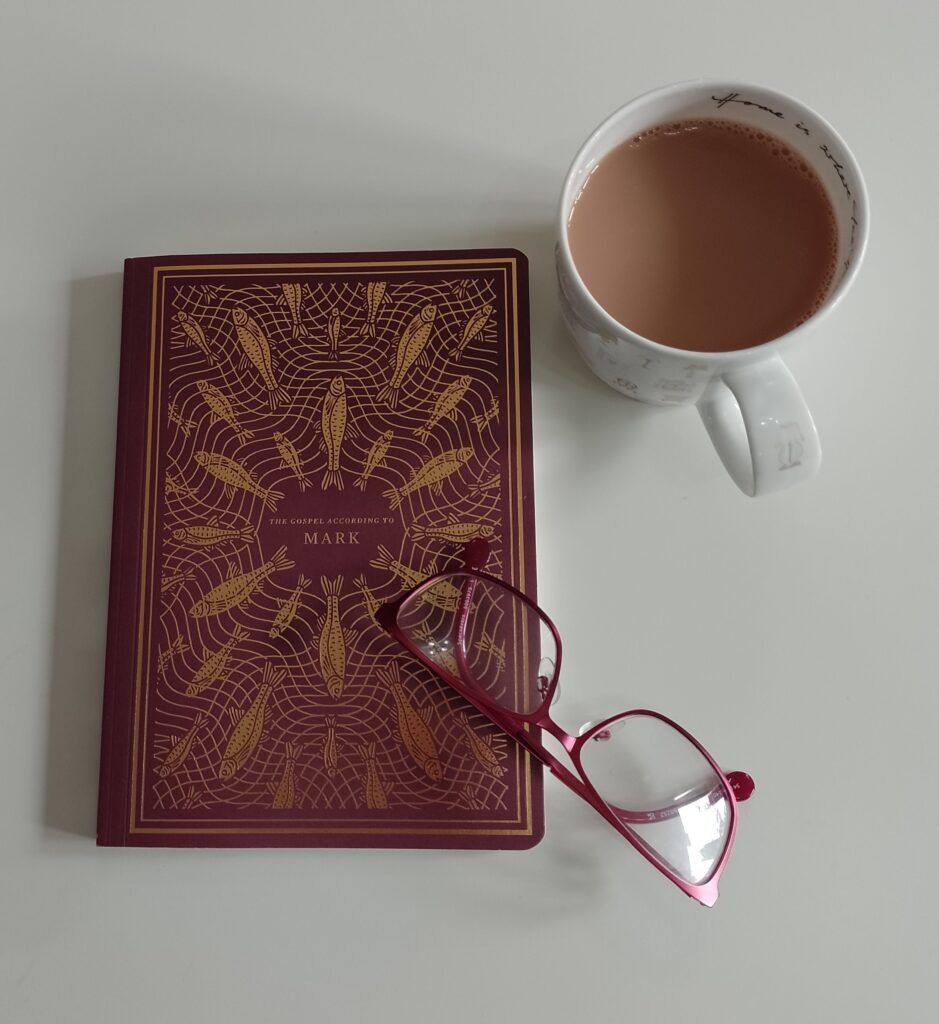
My son and daughter, knowing how much I love reading God’s Word and journalling or writing about it, gave me a wonderful gift for my birthday this summer. It was a set of Illuminated Scripture Journals (the Gospels). Opposite each printed text page is a page with lightly printed dots which provides space to engage creatively with God’s Word.
These books have helped me slow down in my reading of scripture, meditate on it and write down my thoughts and prayers. They have really helped me to engage with scripture and connect with God as I hear him speak to me through his Word and as I respond to him.
Let me share one example with you from Mark 10:35-52. God very clearly drew my attention to Jesus’ response to James and John (his disciples) and to Blind Bartimaeus. He responded to both their requests with the same words. “What do you want me to do for you?” I had never noticed this before. His response is not a judgemental one, or annoyance of being interrupted, but one showing his care and compassion for them.
I had grown up in a family where money was always tight and as our resources were limited, I was always careful what I asked of my parents.
I hadn’t realised I had taken this same mentality into my relationship with God. I realised that day as I read scripture, I had been reticent to ask God for things just as I was reticent to ask of things from my parents. I realised I didn’t like to ask God for things for myself because I didn’t want to be selfish. I thought I should be praying for others, rather than for myself. My belief was that it was OK to ask for my needs to be met but not bother him with things I would like to have.
I had somehow overlooked the truth that God has unlimited resources and that he longs to bless us with everything that belongs to him. He is a good God and a loving Father who loves to give us good things.
That morning, he asked the same question of me, “Vicki, what do you want me to do for you?”
I was amazed by this; He was inviting me to ask him anything. I realised he was genuinely interested in what I would say and ask because he loves and cares for me.
I became aware through scripture reading and journalling that just as the crowd tried to silence the blind man from presenting his request to Jesus, that things in my life try to silence me from presenting my requests to Jesus. The truth is, Jesus wants to know what our desires and requests are, and when they align with his will for us, he delights in meeting our requests. Sometimes in ways which are far better than we could ever have dreamed or imagined.
The whole experience was very freeing for me. I enjoyed a precious time prayer journalling and having a relevant conversation with Jesus.
If you enjoy prayer journalling, then I highly recommend these books to you. As I have used them, I have found my quiet time and prayer time with God have been rejuvenated. Prayer journalling is changing the way I converse with God, and I love that I have a written record of our times of communion.
Vicki Cottingham is a blogger and self-published author and has written several devotional books. Her latest set of books are, “Pause in God’s Presence: Praying the Psalms Vol 1 & 2”. All her books are available from Amazon or directly from her. For more information on her and to read her devotional blogs and book reviews go to her website.
Order 7 Ways to Pray here for more ways to encounter God.Sign up for Amy’s monthly newsletter, including a prayer practice.
So encouraging to read Joy’s reflections on her early-parenting years and how God met her through them. She shares how she turned the mundane moments of sweeping up the breakfast crumbs into a time of communion with God. Whatever your season of life, I think you’ll be inspired.
Reflecting back to my time as a stay-at-home mother of two young children under the age of five, I recall hardly having a moment to myself. Those equally beautiful and challenging years of day-in, day-out, around-the-clock childcare made it difficult to have an uninterrupted cup of tea, let alone a proper quiet time with God! And it was in that stretching season of my life, where realistically there was no way of keeping to a consistent moment with God, that I encountered Him in a very tangible and practical way.
I remember feeling looked after and guided by the Holy Spirit while I swept crumbs from underneath the table before the next mealtime and prepared endless dinners and snacks. Comforting my three-year-old daughter after a bad dream and nursing my baby son in the middle of the night, I could sense that God’s presence was right there with me. Or when I was up early sorting the dishes and preparing breakfast, it’s as if God was opening my eyes to see that there wasn’t a legalistic right or wrong time to pray. Any moment, great or small could be used as an opportunity to speak with God, invite Him into my days, seek His wisdom, and share my heart.
I started inviting Him more and more into my everyday happenings—finding that at the core of prayer is a person’s heart and willingness to share freely with God Almighty. We, by our very design, are created to be in relationship with God the Father, made possible through Jesus the Son, and connected through the Holy Spirit.
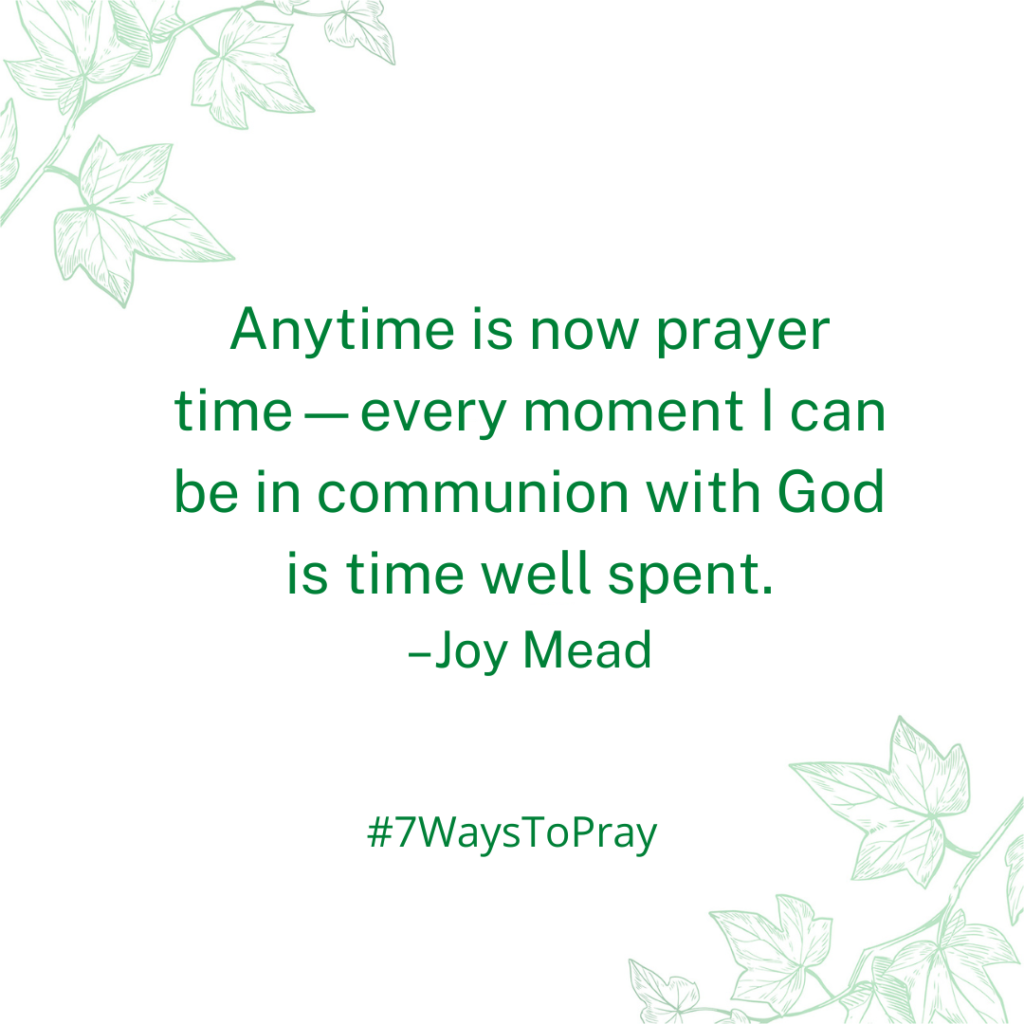
For me, anytime is now prayer time—every moment I can be in communion with God is time well spent. From praying as I drive the children to school to singing worship songs as I put on a load of laundry, from appreciating nature in the garden to going grocery shopping, there are so many little moments that we can share with God throughout our days. Nothing is too insignificant for Him, and because of Jesus, we should confidently approach His throne (Heb 4:16) just like children run straight to their parents when something is needed.
My prayers can sometimes be lengthy, but often, they are an accumulation of short sentences dispersed throughout my day’s activities. Whether you are able to have a regular morning quiet time or perhaps your prayers are “on the go,” let us creatively welcome any and every moment as an opportunity to grow in our relationship with God, seek His will in our lives, and embrace His answers with open eyes, minds, and hearts.
“Let us then approach God’s throne of grace with confidence, so that we may receive mercy and find grace to help us in our time of need.” Hebrews 4:16 NIV
Joy A. Mead is a Jesus-loving, American mother living in the United Kingdom with her British husband and their two wonderful children, a daughter and a son. She passionately encourages mothers to persevere and be intentional in their role, grow closer to God through their journeys of motherhood, and to seek Jesus in their everyday living through writing on her blog. Her first book, Taking Care of Mama will be released in Spring 2023 at Wipf and Stock Publishers. Connect with her on her website.
Order 7 Ways to Pray here for more ways to encounter God.Sign up for Amy’s monthly newsletter, including a prayer practice.
I’ve appreciated getting to know Ruthann recently and have been moved and inspired by how she is negotiating life after the death of her husband. Her prayer life is blossoming and she’s feeling God’s nearness. I think you’ll be inspired too!
I have been journaling my journey as a widow since the passing of my husband, Norman. Our marriage was nearly 40 years. We were good friends, and our ongoing conversations were about anything that needed words: family, his illness and all the details that go into years of the stressors of care, finances, travel to doctors and more. As Norman’s illness intensified, our conversations were of things one considers as life races toward physical death. Of course, we talked of our relationship and of our relationship to God, both as individuals and as a couple. And how I would get along without Norman.
When he passed, I began to frequently read Our Daily Bread as a midday pick-me-up and an affirmation of God’s love and presence. The two questions following the daily text reading most often needed more than a quick response. So I began writing down my thoughts and responses to these questions, sometimes enjoying a smile as I knew how Norman would have added to my own thoughts, or argued for one of his to be included!
What began as an Our Daily Bread “go-along” became more complex. My little sticky notes and backs of envelopes became a real, daily journal. Each day, I write down things I am thankful for, maybe some random thoughts or feelings of grief, a verse that speaks to something I am working through, or a reminder that I am God’s work in progress. And of course, my answers to the Our Daily Bread questions.
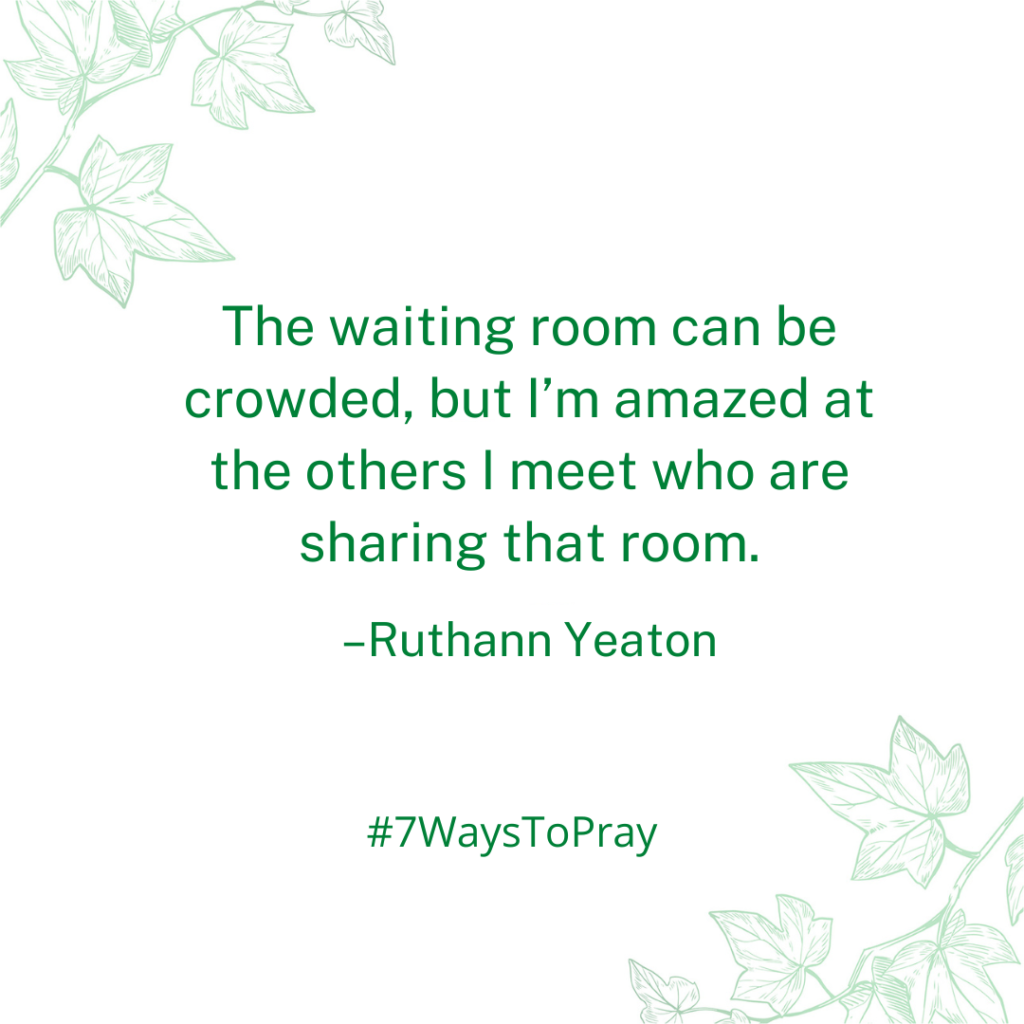
And there is a prayer list. I like this written reminder of those who need prayer (including me!) and it is joyful to write down God’s responses and answers to the prayers. The waiting room can be crowded sometimes, but as I’m waiting for God’s response or plan, I’m amazed at the others I meet who are sharing that room. And what’s more amazing is when someone asks me to pray for them—what an honor! And onto the list they go! There are so many resolutions: a baby born premature, yet surprising doctors who expected him to be in the hospital far longer; a life-long friend whose husband deals with much physical pain, yet perseveres and remains joyful and hopeful, knowing the love his friends hold as they pray for this pain—knowing that God is listening; or my prayer for help with my own loneliness that brought a new friend into my life. It is so humbling, yet powerful, to thank God for his answers to an item on this list.
All of this started with my need to bring sustenance to my life following the loss of my husband and best friend. But as I write in this journal, it is so much more. There are times when I can “hear” my husband’s response to the questions, and that memory becomes a journaled reminder of our marriage and the discussions—agree or not—that filled our days and years. Perhaps, at first, this journal was a way to continue the conversations with Norman? I can’t answer that, but I have my suspicions! I do know these Our Daily Bread readings and journaling have helped me grow as a widow with purpose and determination to thankfully receive God’s blessings—and share them—as I learn how to live this new life.
Ruthann Yeaton is a retired widow reinventing her life after years as an insurance-providing breadwinner and then caretaker. Her life is simpler now, yet busy with friends she missed, new friends, my adult children and a new grandchild. She lives in a huge old house, and spends some of her time working on the “downsize,” although that is not always the best way to enjoy one’s hours! Her daily walks are perfect times to pray, sing (really, you don’t want to hear that, but the cornfields don’t seem to mind), and admire the beautiful colors of midwestern farm country. Way back in the day, she studied Art; now she studies the Art of God’s masterpiece, and it is remarkable in the visual changes, the music of nature, the smells of a field of clover, the play of light on snow.
Order 7 Ways to Pray here for more ways to encounter God.Sign up for Amy’s monthly newsletter, including a prayer practice.
How gratitude can lead to change and intimacy with God… I love Teresa’s account of this simple but profound practice, which has led to transformation in her life. How might you incorporate giving thanks into your morning routine?
Many years ago, after reading yet another of those news reports where, after a near-death experience, someone found a new appreciation of life, I decided to follow their example of appreciation – thankfully without the trauma! That began by expressing gratitude to God, first of all, for waking up; for the gift of a new day. I have shared the following short routine in my workshops, articles, and in my new prayer guide, Pray Then Listen, A heart-to heart with God.
Hands and Thanks
As soon as you wake up speak to God, saying, “Thank You, dear Lord, for the gift of this new day.”
Open your eyes, brush one hand over the other. Then say something like this: “Thank You, dear heavenly Father, that I can still see, feel, and move, and for all the other workings of my body.”
This simple routine brought a huge benefit to my life as in doing this I had begun to make Christ the foundation of my day. Following on from that, the natural progression was to invite Him to share my day. Every part of it. That meant that, on top of my formal prayers, I began to speak to God informally too. If I had a challenge to face – I asked for His help. A task to carry out, as it twisted and turned – I asked His advice. Saw something beautiful in nature – I praised Him. Working as a journalist – I specifically asked His help with my writing. And so on so on.
All of this had also moved me into the two-way street of prayer. Instead of using God as a sort of sounding board, I was talking to Him from my heart and then expectantly listening and watching for His answers. My life has been enriched beyond measure.
When I began to read Amy’s 7 Ways to Pray, Time-tested practices for encountering God I recognized a fellow practitioner of this way to live. I could identify with much of her walk with Christ. The specifics of her life were very different to mine but her life’s journey led to the same place: that wondrous close relationship with our Living Lord. For this reason, I love Amy’s book! With the Bible as the hub I enjoy being refreshed by authentic, well-written, books such as hers which show us how to draw ever-closer to our Maker.
On my own path I realized some time ago that, in the way I now lived, I was actually edging towards that high goal of continuous prayer highlighted by St Paul: “Rejoice always, pray constantly, give thanks in all circumstances; for this is the will of God in Christ Jesus for you.” 1 Thessalonians 5:16-17.
All this began by simple gratitude for each new day.
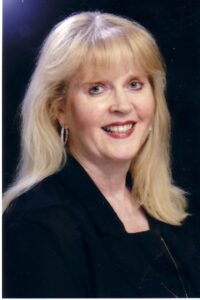
Teresa O’Driscoll, born and raised in Cardiff, Wales, spent many years working as a journalist in Athens, Greece. Now back in her native city she writes books, articles and blogs, and runs writing and spiritual / self-development workshops. Her latest book, Pray Then Listen, A heart-to-heart with God is published by Circle Books. Visit her at her website.
Order 7 Ways to Pray here for more ways to encounter God.Sign up for Amy’s monthly newsletter, including a prayer practice.
I’ve had the absolute delight of walking by the sea near to where Jean lives; I can only imagine what that must feel like as one’s daily walk. We can’t all live close to the sound of crashing waves or the gentle lapping of water, but we can all walk with God. As you take a few moments to read and ponder, why not set aside some time to enjoy God’s presence?
As a child, I grew up by the seaside, on the beautiful north coast of Ireland. Some of my early memories include long walks on the beach, frequently with my favourite aunt, as we talked together and she pointed me to Jesus. As a young teenager I remember lying in the sandhills above the beach reading a book, feeling God’s presence as he spoke to me through it.
Having lived in various situations around the world, these days I live by the seaside once more. And it’s there that I still experience my closest moments to God.
In 7 Ways to Pray Amy talks about ‘practising the presence of God’ as Brother Lawrence described it. This lay monk has always struck a chord in my heart. Brother Lawrence practised God’s presence while working in the kitchen, and I do a bit of that too, but for me walking along the coast has always brought me close to God. I think of the reference to Enoch in Genesis 5: 24, ’Enoch walked with God.’ In Luke 24:15 we read of the two walking to Emmaus when ‘Jesus himself came up and walked along with them.’ I love that idea of walking with God as I physically take my daily walk.
2 minutes of pondering God our Rock on the South Coast of England with Amy
Walking along the coast, in awe at the changing colours of the sky and its reflection in the sea, my heart lifts in praise to the Creator of such beauty. On a windy day when I am struggling to keep upright, the rigging on the yachts rattling in the harbour, the waves crashing against the rocks and the gulls calling out in joy, I am reminded of his almighty power. And on a quieter day I sit on a rock, bathed in the warmth of God’s love, soothed by the gentle lapping of water on the shore, feeling God’s peace settling on my heart, hearing his ‘still small voice.’ It is in these moments above all that I feel God’s nearness, as my thoughts are stilled and focused on him and a sense of calm displaces my anxieties and concerns.
At such times, words are not always necessary. Amy quotes Brother Lawrence, ‘My prayers are nothing other than a sense of the presence of God.’ Sometimes being aware of God’s presence takes us beyond words. For me, these occasions often happen when I’m outside in nature, aware of God’s creation around me. For you it may be different.
Not all of us live by the seaside. Not all of us can easily walk, or be, in a beautiful place. Perhaps like Brother Lawrence most of your day is taken up in mundane tasks, in a repetitive job, in caring for others. But wherever we are, God is there. Can I encourage you today to be intentional about ‘practising God’s presence’? Find your special place where God feels near and make yourself available to him there.
The two on the road to Emmaus urged him strongly, ‘Stay with us.’ Then their eyes were opened and they recognised him.
(Luke 24)
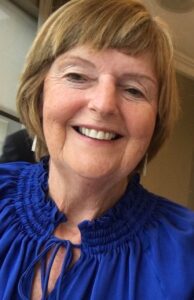
Having worked in theological education in Kenya and the Christian charity Care for the Family in Ireland, Jean Gibson enjoys sharing the stories of people who inspire her. Her books include Seasons of Womanhood, Journey of Hope and An Open Door. Details can be found on her website.
Order 7 Ways to Pray here for more ways to encounter God.Sign up for Amy’s monthly newsletter, including a prayer practice.
What an insightful post by Tasher about our need to listen at least as much as we talk when we pray, as inspired by his observations of his wife’s friendships. I hope you’ll read, enjoy, and put his advice into practice!
So the Lord spoke to Moses face to face, as a man speaks to his friend. (Exodus 33:11)
I never really understood prayer to be talking with God as if He is a friend—the kind you tell everything—until I observed my wife and her friends.
My wife, Jennifer, is on the phone every two or three weeks with Lindsay, her friend of almost three decades. She and Lindsay met on a serendipitous camping trip when she was nine. They wrote to each other every year from then on through college. They shared in each other’s lives through weddings, miscarriages, and the births of all six children. They talk about each child’s idiosyncrasies, eating preferences, the cute things that three-year-olds say and even the goals of their entrepreneurial husbands. Each call is a feast of excitement and ends because mothers must return to their children.
In my estimation, the hallmark of friendships like these is listening. I have yet to meet someone whose complaint was that their best friend listens too much. Many people, however, are known for their talking.
In fact, most of us talk at God.
We have been taught what to say and how to say things to God in prayer. We’ve even received formulae about how to order things, whether to quote scripture or not and the real meaning of praying in Jesus’ name. While these ways to pray have varying degrees of merit, they’ve often produced extravagant, eloquent talkers and deplorably poor listeners.
We turn up to prayer with our cries and complaints, scriptures and supplications, with our fears, needs, pleas, praise and thanksgiving. God is pleased because He wants to hear all of it. I’m guessing He’s also disappointed because as soon as we are done presenting that list, we move on to the next thing. God thus becomes that friend who never gets an opportunity to participate in the conversation. Imagine how the story would have gone if Moses had said, “Please, show me Your glory,” then went back to hearing the people’s complaints and judging between them.
Do we not do the same? Do we ask God for help or direction and then get back to whatever task is before us? After we empty ourselves of our cares, worries and burdens and then move on to the next thing, what will fill that space? Won’t it be more of the same? More overwhelm. More feelings of inadequacy. More pressure and increasingly feeling rushed. In Philippians, the Holy Spirit promises a peace that will have others, and you, wondering how you can be so calm and content given your circumstances. We are guaranteed to miss that blessing if we don’t take the time to let Him fill us up.
Jesus assured us that the Father knows that we need all “these things” (Matthew 6:32). Our approach to prayer, then, shouldn’t be as if we are talking to someone who doesn’t know what is going on in our lives. It should be more about creating space to hear what God has to say. God has an answer for whatever question and provisions for whatever the need.
While God always acts to provide for our needs, He desires that as the deer pants for the water, we thirst and long for Him. As He fills us with Himself, we come to know His presence. Then we feel His peace, strength, comfort and healing.
Stillness is a prerequisite to knowing God and hearing from Him. (Psalm 46:10) Make time, after you finish talking, to be still. Cultivate the ability to discern God’s voice from the rest of the noise. (Amy addresses this in her book 7 Ways to Pray.) Enter into your prayer time intent on doing more listening than talking. Grab a journal and in that stillness, write down what you hear.
If we listen twice as much as we talk, we’ll find that God is always speaking and that He answers every prayer.
Tasher Adaarewa is an author (Decision Design) and entrepreneur. He provides coaching and consulting for Christian businesses to help them realize the vision God gave them. More of his work can be found at tactgroupinc.com
Order 7 Ways to Pray here for more ways to encounter God.