Author: Amy Boucher Pye

  • Five Minute Friday: Silence (#FMF)

    A pregnant pause.
    A companionable silence.
    An awkward pause.
    The sound of silence.

    Silence –
    It can be deafening
    It can be rich
    Or a source of strength
    Or a drain of energy
    Some crave it
    Others run from it

    I love a good block of silence in my days. When Mondays come around, I’m delighted to be in my sunny study, writing or answering emails, or pondering. The quiet gives me time to process all that’s going on in my heart and in my head, for my thoughts seem to swirl around and around. I need time alone to catch some of those thoughts and process them. To get them down on paper and to make sense of them before God. To seek his inspiration, help, comfort, and love.

    Over the summer, I worked on my dissertation for my master’s in Christian spirituality. I had three weeks in our home basically on my own – first the kids were at camps and my husband was on retreat, and then my husband took them on holiday. During the weekends we’d reconvene, all together in the vicarage, with the noise and hum of daily life once again appearing. And then they’d leave, and I’d be alone.

    Me in my sunny, silent study. A happy place – usually.

    The first week I relished the silence, thrilled to be able to work uninterrupted as I slogged forth in laying down a first draft.

    The second week I made sure I left the house a few times, set up a few video chats with friends, and was glad that my husband was home for a few of the days.

    The third week I cried, feeling sorry for myself as I knew I had not only the excruciating work of rewriting my draft, but had to live in what now felt like crushing silence.

    I made it through the summer alone. I know now that although in my daily life I yearn for slices of silence, I too need times with others.

    How about you? What does silence mean to you?


    This post is part of the weekly Five Minute Friday link-up. You can find today’s prompt here.

  • Watercolor Wednesday: Days Gone By

    By Leo Boucher.

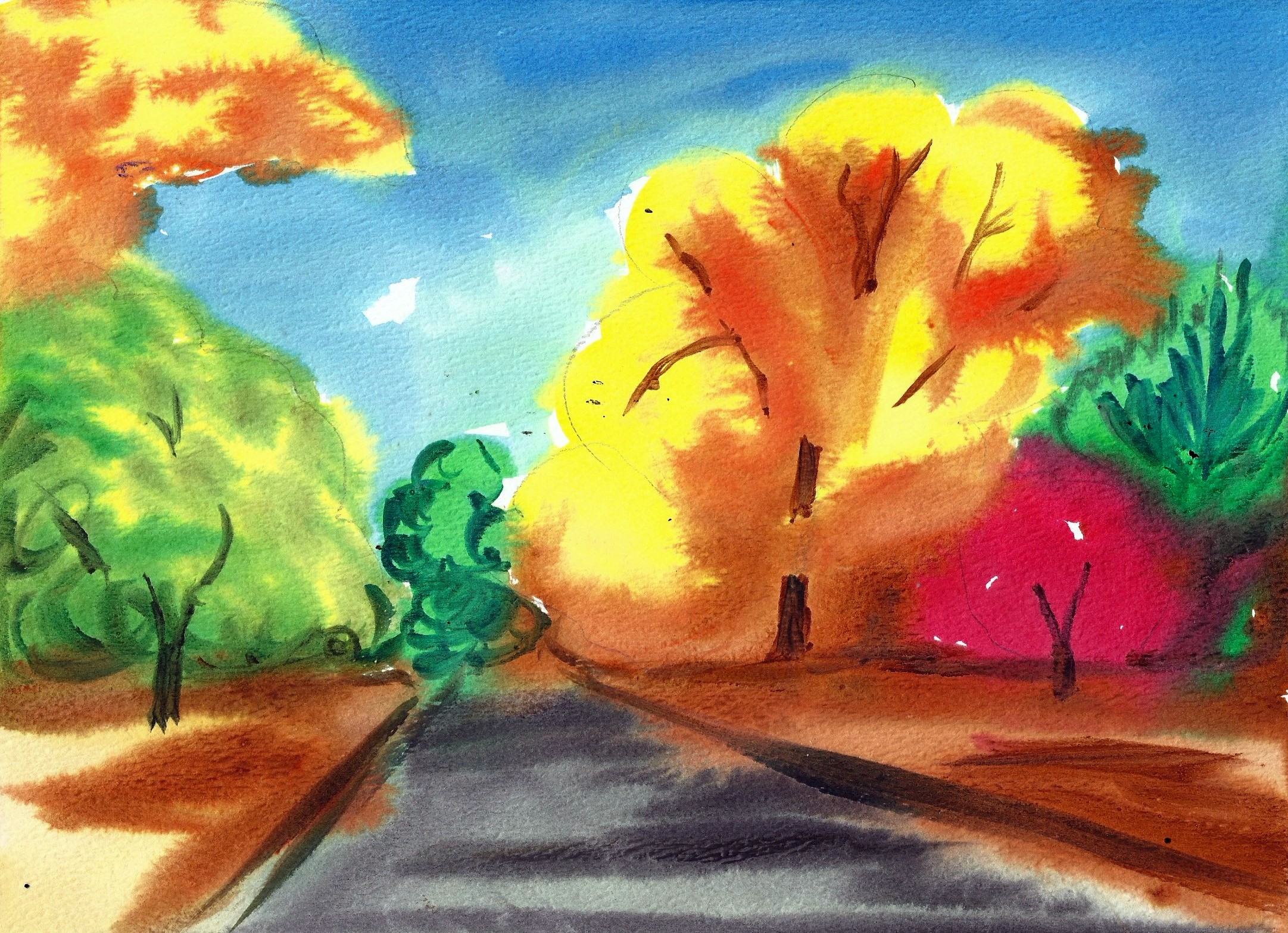
    This autumn scene speaks to me of an age gone by. A time before electronic devices and everyday mass shootings. A time for reading, gardening, and talking to the neighbors while delivering a homemade cake. But those days had their own challenges, such as people in a minority not having a voice, or cultural expectations reducing the number of creative expressions workwise (can you imagine many people with a so-called portfolio lifestyle back then?).

    Keeping with the autumnal theme, what has died from that era to give us what we have now? What do you wish hadn’t perished? What are you grateful for in this new day?

  • Devotional of the Week: Fenced In

    The boundary lines have fallen for me in pleasant places. (Psalm 16)

    When taking a walk in Minnesota, I noticed a sign: “Dog protected by invisible fence.” Though no barking canine rushed toward me, I knew had there been one, I would have been safe – contrary to the ironic sign.

    As I considered this fence that I couldn’t see, I thought of Psalm 16, for in it David says, “The boundary lines have fallen for me in pleasant places” (v. 6). What boundary lines? David likely wrote this song when he was on the run from Saul, facing the trials of living in a foreign country and dwelling among wild animals.

    David is speaking poetically of the Lord’s goodness to him. Through the challenges he faced over the years, such as guarding sheep from predators, his faith in God became solid and mature. Because he trusted the Lord, he knew that although he endured trials and hardship, his situation was secure. He found contentment in the Lord’s goodness to him.

    Perhaps you can relate to David as one who is harassed and on the run. Whether frightened or content, we can ask God for eyes to see the boundary lines he has drawn for us. We can rest in the knowledge that he himself is our security and safe haven in this life and in the life to come. We root our hope and confidence in Christ.

    Prayer: Father God, thank you for the gift of salvation, which imparts to us our security in this life and in the next. May we share this gift today.

  • Five Minute Friday: Unfelt Needs (#FMF)

    A writing friend encouraged me to join the #fiveminutefriday clan with writing for five minutes (yes, it’s self-explanatory) on their prompt. Here are my thoughts on what we need. Have five minutes and want to join in?

    What do I think of when I hear the word needs? What pops into my head is felt needs. It’s an awful-sounding buzz phrase in publishing circles, in which products are created to meet someone’s felt needs. The needs we feel. The needs that will make us part with money.

    Felt needs.

    But what about the unfelt needs? What about the needs that aren’t sexy or those I might miss? The need to love and be loved. The need to love God and be loved by him. The need to make a difference, help people encounter him, serve others. To learn; to grow; to effect change. Those things aren’t necessarily quantifiable or something to be packaged into a saleable form.

    What unfelt needs am I aware of today, and how can I see God’s hand in them? What unfelt needs can I call forth in others?

    How can my writing meet hidden needs? Needs that might not be heralded or lauded? Can I be brave enough to write something that might be overlooked?

    Unfelt needs. What do you think?


    This post is part of the weekly Five Minute Friday link-up. You can find today’s prompt here.

  • Weekly Watercolor: Beauty or weed?

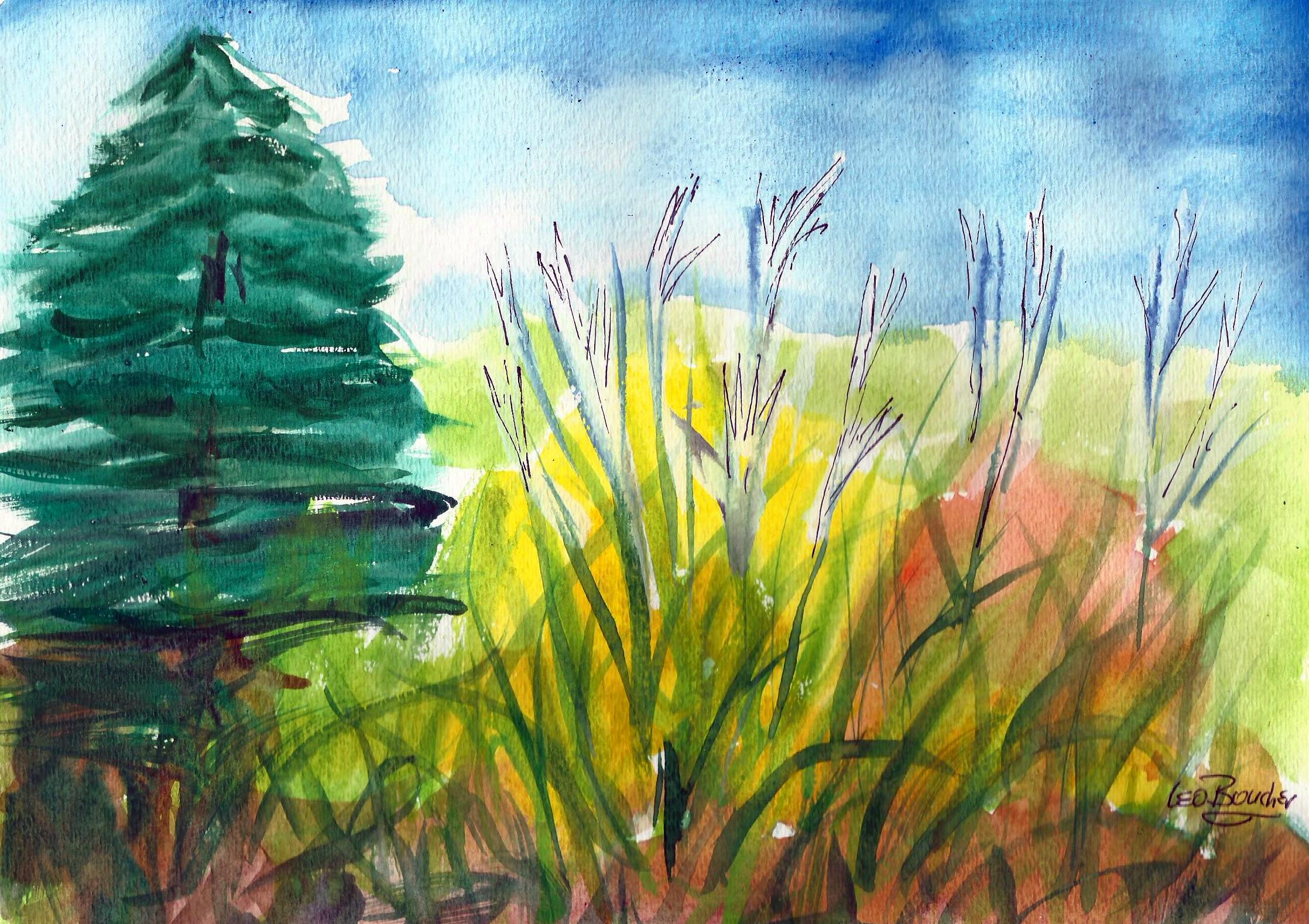
    By Leo Boucher

    The wild grasses sway in the wind, shimmering against the sunshine. Some think pampas grass is beautiful, while others see it as an invasive weed that is difficult to remove. Sales of the plant have fallen in the UK with the cultural connotation of the plant in the front garden being an invitation to swingers (who knew!?).

    Whatever you think of this plant, here’s an autumnal look at life. Hints of color next to the evergreen tree – the only sign of green to come in the tundra of Minnesota to come, the setting for this painting by my dad, Leo Boucher.

  • Forgiveness Fridays: Forgiveness, Martin Luther and Jonah by Michael Parsons

    With the 500th anniversary of the Reformation next week, I thought it appropriate to feature a post on forgiveness and Martin Luther, written by one who knows a lot about the reformer, Michael Parsons. He also was my editor for The Living Cross, and was one of my three readers for my MA dissertation on Calvin. He’s a gentle and insightful teacher, as you’ll see here.

    In a year that commemorates the beginnings of the European Reformation, it seems appropriate to say something about Martin Luther. Those who know anything about Luther will know that he never minimizes the seriousness of sin; nor, however, does he minimize the grace of forgiveness. Indeed, he exalts in it. And the biblical story of Jonah gives him ample opportunity.

    Luther spots at least two sins in Jonah’s behaviour. First, Jonah should have accepted the will of God (Jonah 1) and should have been ‘most happy to carry it out’. Instead, he runs away. Second, he sins, in being angry to the point of wanting to die (Jonah 4). What impresses me, however, is how positive the reformer is about all this. Luther moves from a negative situation (the sin of Jonah) to extremely positive application. In that, he might be an example to us today.

    1. Luther rejoices to see that Old Testament saints sinned! Notice how he puts this: ‘even the greatest and best saints sin grievously’. Read that again. They sin, but they remain ‘the greatest and best saints’! Jonah chapter 4 gives the clue. Luther notices that the prophet continues to converse with God, ‘He chats so uninhibitedly with God as though he were not in the least afraid of him … he confides in him as in a father.’ Luther insists that the bottom line is not the prophet’s sin, but that Jonah ‘is God’s dear child’.
    2. Look at Luther’s amazing application: ‘[W]e learn that God permits his children to blunder and err greatly and grossly. … [W]e observe how very kindly, paternally, and amiably God deals with those who place their trust in him in times of need. … It is the daily sin of a child that the heavenly Father willingly bears in his mercy.’ Again, re-read that last comment. The Lord mercifully forgives us daily – that’s grace!
    3. Luther applies it again in a very personal way: ‘I remain in the kingdom of grace when I do not despair of God’s mercy, no matter how great my sin may be, but resolutely pin mind and conscience to the belief that there is still grace and forgiveness for me.’ Notice the italicized words, ‘no matter how great my sin may be’. He concludes that divine ‘mercy asserts itself and proves stronger than all wrath’. And again, ‘All sins which let grace triumph and reign are forgivable.’

    So, Luther moves from a negative situation to extremely positive application. He wants us to see outside the confines of the human dilemma to the wider context of the love of God. Luther’s main intention is to encourage us, and particularly those of us who preach, to trust in the grace and goodness of God. Therefore, he stresses God’s grace in forgiveness and in an openness to receive sinners who return to him.

    One of Luther’s repeated comments (though I don’t remember it in his lectures on Jonah) is that in Jesus Christ we already have everything. It is this truth that underlines his application. We are loved, we are forgiven daily, because the Father loves us in Christ.

    Michael Parsons is currently commissioning editor for The Bible Reading Fellowship. He is the author of several books on the Reformation and an Associate Research Fellow at Spurgeon’s College.
  • Watercolor Wednesday: The movement of autumn

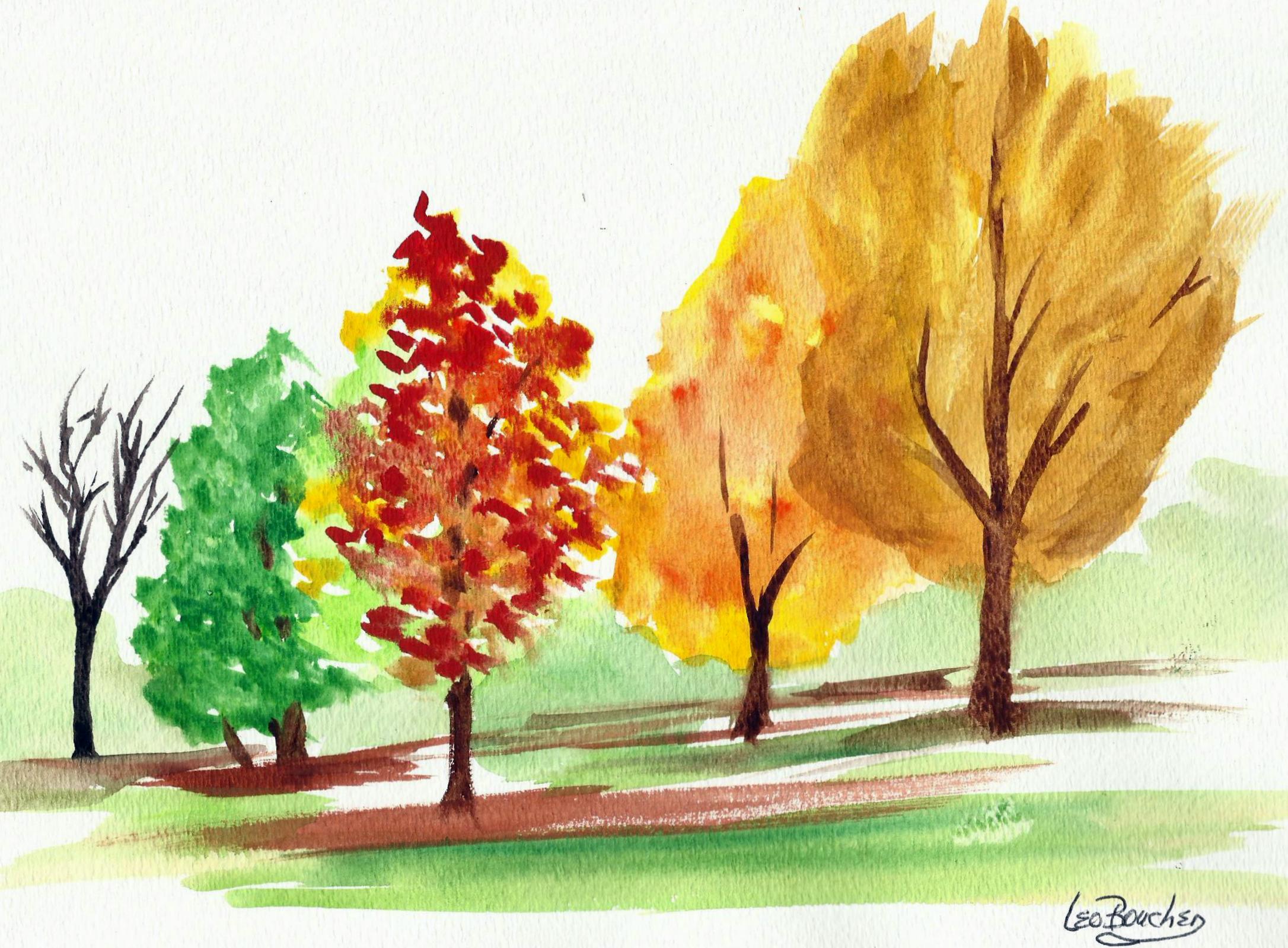
    By Leo Boucher.

    We’re having a taste of summer this week on a quick trip to Spain, but I know elsewhere the Fall feeling is in full flow. My dad sent me a few new watercolors for the season this week, and I love the movement he captured in this one.

    I suppose the meaning of the movement of autumn is towards death and dying, however beautiful the colors are. But out of death can come new life. May it be so in our lives.

  • Weekly Watercolor: The Colors of Autumn

    By Leo Boucher

    We don’t get as many glorious colors in the autumn here in the UK as in Minnesota, so for today I soaked in the yellows and golds as I walked by the brook (as I documented on Instagram), and will enjoy the reds and oranges of the land of my birth via my dad’s art.

    What do you enjoy about this season of fall/autumn?


  • Waiting – a poem

    Waiting. We all do it, like it or not. Sometimes the waiting is tinged with celebratory anticipation, such as for the birth of a baby. Often it’s surrounded in heartache, with echoes of, “How long, Lord?” Sometimes it surrounds the mundane, such as being stuck in a stifling Tube carriage waiting to exhale.

    What are you waiting for?

    The sweat
    I can feel
    Dribbling
    Down my back

    I can do
    Nothing
    Can’t dab it
    Can’t swab it
    Have to let it slide
    Trickle
    Dribble
    Down my neck
    And my back

    I hold myself in
    Trying
    Wishing
    To make myself smaller

    One arm above me
    Clutching the handrail
    The other hanging
    Laden with bags

    I suck in my breath
    Waiting
    Counting the stops
    Feeling the sweat

    Closed in around me
    To the left
    To the right
    In front of
    And behind me
    People

    One tall and foreboding
    One behind me, unseen
    But pressing against me
    In the crush
    The mass of humanity
    In this metal container

    How long, I wonder
    How long
    The stops come
    And they go
    And finally
    A few leave
    At Green Park

    Some space
    To air out
    To breathe
    To exhale

    And at last I exit
    At last I leave
    The final walk home
    I suck in the air
    London air
    How fresh,
    I know not
    But sweet
    To me

    © 2016 by Amy Boucher Pye


    This is part of the synchroblog on waiting, to celebrate the release of Those Who Wait: Finding God in Disappointment, Doubt and Delay by Tanya Marlow – out now. See more here and link up to the synchroblog here.

  • Weekly devotional: Light and dark

    “Land of Zebulun and land of Naphtali, the Way of the Sea, beyond the Jordan, Galilee of the Gentiles – the people living in darkness have seen a great light; on those living in the land of the shadow of death a light has dawned.” From that time on Jesus began to preach, “Repent, for the kingdom of heaven has come near.” (Matthew 4:15–17, TNIV)

    Our world is filled with light and dark, and the latter seems to be winning lately. The flood of the #metoo statements in our social media feeds brings us sadness and pain. Governments seem corrupt; racism and classism seem to increase; we lose heart. We need the fulfillment of Isaiah’s prophecy, that those living in darkness would see a great light. We need Jesus to come.

    Darkness and light have levels of meaning in Scripture. Darkness implies a place where evil reigns. It nurtures anger, violence, adultery, and other sins of the flesh, as well as bitterness, pride, envy, greed and other sins of the spirit. The shadow of death closes in on the living, extinguishing all in its path.

    But God coming to earth through his son Jesus is the light that dispels all darkness and fear. As King David echoes in the Psalms, “The Lord is my light and my salvation – whom shall I fear?” (27:1) With the coming of Jesus, no longer are we oppressed by the grey or black.

    In our fallen world, however, we still have the darkness. I remember when our community in North London was rocked by the news of a sexual assault in our local park. “Never in my sixteen years here have I heard of such a thing,” said one mother at the school gate. Where people don’t know Jesus, darkness will lurk – even in our carefully cultivated public spaces.

    We can respond with bitterness or anger, or we can work to spread Christ’s light, receding the darkness, bit by bit. As Paul wrote to the church at Thessalonica, “You are all children of the light and children of the day… Since we belong to the day, let us be sober, putting on faith and love as a breastplate, and the hope of salvation as a helmet” (1 Thessalonians 5:5, 8).

    May we not lose hope.

    Prayer: Lord Jesus, light of the world, shine in and through me, that you may dispel the darkness.