 When Nicholas and I first married, and I moved to the UK, we decided to call wherever we were living “home.” We knew that words bind up reality, so we wanted to embrace with our lingo the new truth in our lives. This would prove harder for me, of course, being the one to leave family, friends, wide highways, and good plumbing, and if we were having a spat we wanted to curtail any reckless words such as, “I want to go home!” For I was at home.
But though we were intentional, early on in our life in the UK I often felt homeless, partly because we knew we’d only live for a few months at Ridley Hall in Cambridge where Nicholas was training for ordained ministry. Then his first curacy descended into upheaval not long after we arrived when the vicar was signed off sick, so the question of whether we’d stay or go seemed to cling to us, keeping us from settling. We moved after only two years, to another curacy, which again felt transient as we stayed there another two years for Nicholas to finish his apprenticeship period. Home was where we lived, but rooted we were not. Only when we landed in our first vicarage, having our first child a month later, were we able to settle in and breathe.
Embracing a concept of home – though we took a few years to reach this place physically – helped us to create a space for loving, thriving, and resting. A place to be; a place to relax; a place to create; a place to welcome others. For Nicholas this sense of home was redemptive, for he had moved around so much in his life, such as going to boarding school at the age of eight, and later, when he went to theological college (US: seminary) in his thirties, selling his flat and therefore in a sense being homeless during that three-year period (and finding being booted out of college during the summer holidays particularly hard).
So home is something we’ve tried to foster, and the addition of children has been a wonderful blessing and joy to vicarage life. This drafty Victorian spacious place with its high ceilings, sinks with their single faucets (UK: basins with taps) in several of the bedrooms, and condensation-forming sash windows has provided the backdrop to their lives. But of course home means so much more than the physical structure; it’s the people and the customs and rituals that we practice throughout the seasons that bring meaning and fulfillment.
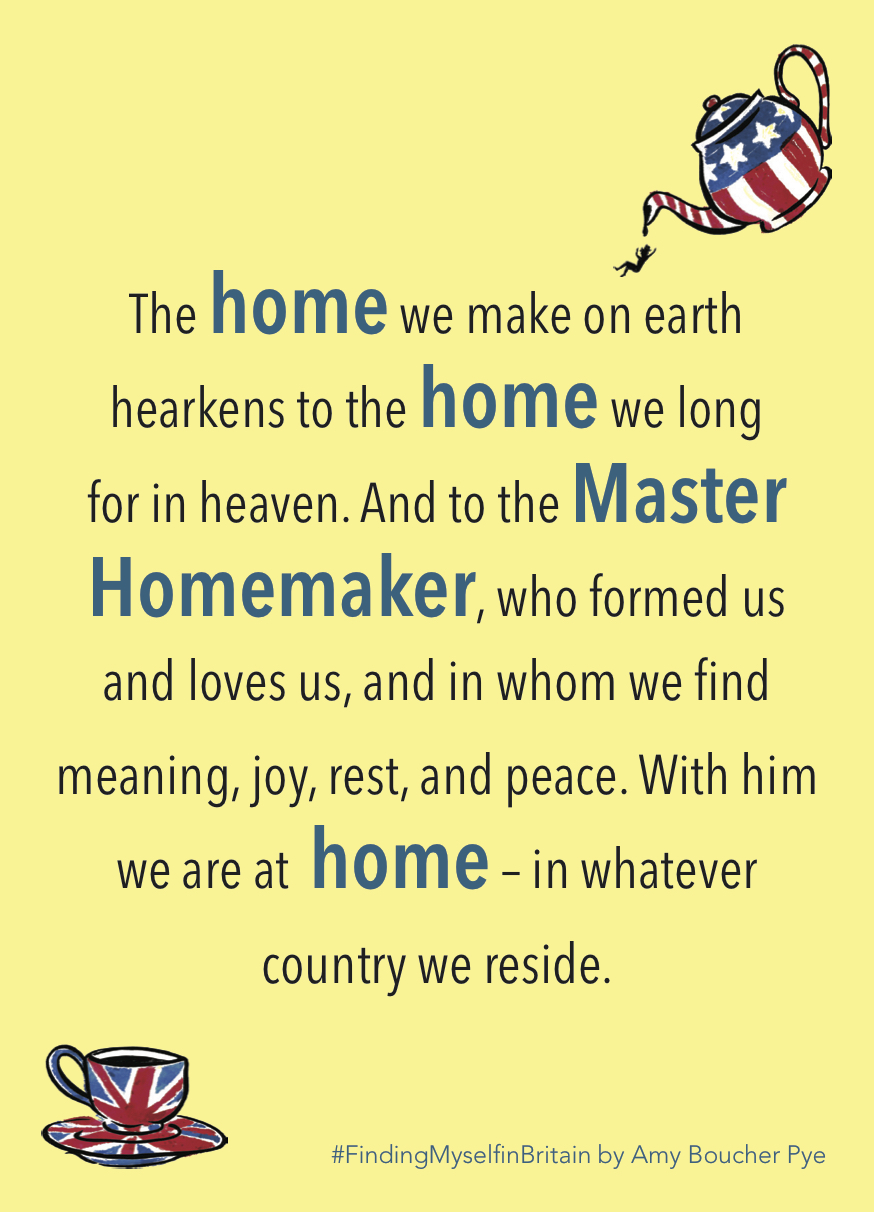
I’m delighted to kick off this series, “There’s No Place Like Home,” which will run at least through the Spring of next year, as I’ve had a humbling and wonderful response from fellow writers and makers-of-home. The blog posts will appear on Fridays, all exploring different aspects of home. Next week we look at the crisis of homelessness from the renowned thinker Os Guinness, and in the weeks following we will experience so many riches including novelists Rachel Hauck, Sharon Brown, and Katharine Swartz; bloggers Ben Irwin, Tanya Marlow, Amy Young, and Tania Vaughan; and authors addressing issues in the Christian life such as Cathy Madavan, Bev Murrill, Sheridan Voysey, Penelope Swithinbank, and Catherine Campbell. As a VW (vicar’s wife), I don’t think of myself only with that label, but no doubt being married to pastors and ministers will inform the thoughts of Amy Robinson, Debbie Duncan, and Claire Musters. And this is only a taste of the glories to come! Yes, I’m excited!
To launch the series, I’m delighted to give away two copies of Finding Myself in Britain, including recipe cards – and I won’t limit the giveaway to the UK either, so wherever you live, please enter. To do so, share in the comments what home means to you. You can wax lyrical or jot down a word or two. I’ll choose the winners on 27 November – yes, otherwise known as Black Friday. It will be lovely to give away my book-baby on that day of consuming.
Is it true for you that “There’s No Place Like Home”?


Leave a Reply